The rise of the far-right and their simplistic scapegoating of migrants and minorities reveals a sad reality hitting Europe. The rise of the far-right does not expose the obvious but the fact that we have failed to educate generations after the horrors of World War 2.
If there is one matter that characterizes an autocratic state like Nazi Germany, it is the fact that the system gave people the right to oppress and murder on an industrial scale. It wasn’t the “rotten apples” at the top who made it possible, but with the support of the masses.
Teaching and institutionalizing racism, us versus them, is a sure way of gaining political and finally, autocratic power, as we saw in Germany after 1933.
Populism is like a drug addict who needs a constant. The drug addict gets the fix but it does not resolve his main problem: addiction and destruction of the person’s physical and mental health.
In Finland, the “drug-addict” political parties that capitalize on scapegoating migrants and minorities are the Perussuomalaiset (PS)*, National Coalition Party (NCP), and Christian Democrats, and to an ambivalent extent the Swedish People’s Party and Social Democrats.
Only the Greens and Left Alliance have given a flat no to the present political development that normalizes racism and social exclusion.
The saying sits well with Prime Minister Petteri Orpo’s government. Can you teach a party like the Perussuomalaiset (PS)* to be civil and ditch their racism? For the PS to turn in a new political leaf and abandon their nationalist rants and xenophobia would be tantamount to political harakiri.
One matter that I have never grasped and accepted is how so-called mainstream parties like the National Coalition Party (NCP), the media, allow politicians of the PS to bash and denegrate migrants and minorities.
The latest scandal to hit the government involves minister of foreign trade and development, Ville Tavio, a PS politician who has made a name for himself as a far-right homophobe, Islamophobe and xenophobe.
The unilateral decision by Tavio not to participate in a gender-equality alliance for the rebuiling of Ukraine which also include sexual minorities, has received a lot of criticsm from President Alexander Stubb.
“I hope that in the future we will not see similar mistakes from the ministry for foreign affairs, that the president will not be informed of matters that belong to the minister for foreign trade and development cooperation, but are related to our foreign and security policy,” Stubb was quoted as saying in Yle News.
Just as the dust was settling, Tavio was quoted in Helsingin Sanomat by stating: “I support the rights of sexual minorities. The Perussuomalaiset will secure a better Finland for sexual minorities in general by opposing Islamzation.”
Minister for Foreign Trade and Development Ville Tavio. Source: Kauppalehti.
Even if we can point out the NCP’s political sin of going to bed with the PS, Finland has the government it deserves. If you look at their over first year in government, the question is what type of Finland will we have at the end of their term in 2027?
What will our welfare state look like and how much will social inequality grow and polarize our country? Would you dare to see? It would be naive to believe that Prime Minister Petteri Orpo’s government will strengthen our welfare state The only matter it will strengthen is social inequality. As mentioned in a previous posting, about one third of Finnish voters are racist. The rise of the PS is a good example of the latter.
Going back to the original question: Can you teach a dog new tricks?
No, but if its racism is stongly grounded on racism, nationalism and social exclusion, then you can. The dog does not learn new tricks per se but is emboldened to carry out its old tricks.
In my opinion In Finland, the far-right can be understood as an underlying connection of ideological alignment shared between political parties, political groups within parties, individuals. Ideological outlooks that are characterized by extreme nationalist, anti-immigrant, and too often racist views.
These groups typically promote the preservation of a perceived “pure” or “authentic” white Finnish identity, which they see as threatened by a loss of “traditional” social values, immigration, multiculturalism, and specified scapegoated communities – with Muslim, African and Roma communities being the primary (though not the only ones, the list goes far longer and includes every group or community that isn’t perceived Finnish) targets. A strong belief in the “Great Replacement Theory” and climate change denial, as well as a rejection of liberal democratic principles, free media, diversity, and policies that promote inclusion, human rights, and equality frameworks.
The far-right is far from a unified, homogeneous movement confined to a single, well-defined party. Instead, its influence often spreads across various parties, including those that present themselves as centrist, national (center-right or right-wing), and even occasionally “liberal” to some extent. Within these parties, a wide spectrum of views exists, ranging from liberal to highly conservative. As a result, tolerance levels—and attitudes toward racism—vary significantly across this ideological scale, reflecting the diversity of opinions within these political groups.
When key triggers such as xenophobia, Islamophobia, the questioning of human rights (under the guise of “security”), migration, and the right to seek asylum are activated—often in response to specific events or contexts—they are typically deployed to target minorities. It is still surprising to some when populist rhetoric and calls for restrictive or exclusionary laws, aimed at one or more racialized minorities, emerge from members of mainstream political parties. These parties often align with far-right, explicitly nationalist factions. Given the shared ideological foundations of nationalism, aversion to foreigners, racial intolerance, and beliefs in racial superiority, their cooperation and partnership are unsurprising.
The term “BURANA,” an inside joke in Finland akin to a “one-size-fits-all” solution, is a fitting metaphor for the far-right’s scapegoating tactic. This rhetorical “duct tape” is used to channel public frustration toward specific minority groups. During times of perceived economic hardship, far-right movements attempt to garner support by positioning themselves as the defenders of “the originals,” while portraying racialized minorities as outsiders and threats. This oversimplified narrative is used to blame these communities for everything from rising prices, cuts in healthcare, and higher taxes—even bad weather, the only aspect of climate change they are willing to acknowledge. Conveniently, this tactic distracts from the far-right’s own political and economic failures, deflecting attention to external scapegoats.
*Ibuprofen, or Burana, is a nonsteroidal anti-inflammatory drug that is used to relieve pain, fever, and inflammation.
“I do not consider [Prime Minister] Petteri Orpo to be a racist. But the fact is that as Prime Minister he enables, legitimizes, and in a way I think incites that thinking in this coalition in Finland. Is that civilized? In my opinion, it is not.“
Kirsi Piha, a former National Coalition Party (NCP) MP and candidate for Helsinki mayor, announced her resignation from the NCP due to its bond with the radical-right Perussuomalaiset (PS)* party. “I think [the government] policies are inward-looking,” she said. “They are based on prejudice and hatred, it is based on zero-sum game thinking, and therefore pure racism.”
PS Minister for Foreign Trade and Development Ville Tavio, who has expressed an affinity for French far-right leader Marine Le Pen and Poland and Hungary, was the latest scandal to chip another chip off Finland’s international image.
Tavio unilaterally decided Finland would not join an international gender-equality alliance to rebuild Ukraine. Such an alliance promotes sexual and gender minorities, which are red flags for Tavio’s homophobic political worldview.
Tavio’s decision, which would put Finland in the same league as Poland and Hungary on sexual minority issues, according to University of Helsinki researcher Johanna Vuorelma, got a swift reaction from President Alexander Stubb.
“I hope that in the future we will not see similar mistakes from the ministry for foreign affairs, that the president will not be informed of matters that belong to the minister for foreign trade and development cooperation, but are related to our foreign and security policy,” said Stubb.
Obsessed by conspiracy theories like the Great Replacement, Tavio never responded to a rebuttal I wrote in Helsinki Times.
Considering how racism has shed its roots in Finland thanks to Orpo’s government, PS MP Jenni Simula ridicules Social Democratic chairperson Antti Lindtman by shouting, “can we get that in Arabic too,” after he says a few words in Swedish, Finland’s official language.
Simula is a member of the far-right Suomen Sisu association and the former secretary of ex-MP Olli Immonen, a former chairperson of Suomen Sisu.
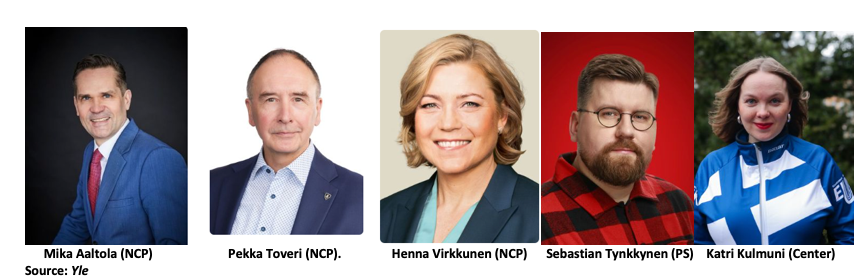
Another example of how Finland has lost its moral compass was the naming of Henna Virkkunen as EU executive vice-president for tech-sovereignty, security and democracy.
Virkkunen, who is an NCP MEP, would not care less for the fate of those crossing and drowning in the Mediterranean.
In the 2019 MEP election, she responded in the Alma Meter election compass in the affirmative to question 13 (1): “The EU must save all those migrants who are at risk of drowning attempting to cross the Mediterranean to Europe.”
Virkkunen “disagreed” that the EU must save those migrants crossing the Mediterranean from drowning.
Virkkunen is in “good” company. The five MEPs would not care if people died after being pushed back at the border. Three are the ruling National Coalition Party, the Perussuomalaiset*, and the opposition Center Party.
The paper, written by Enrique Tessieri in 2009 for the Social Science Department of Turku University, explains how sociological intervention helped promote and strengthen cultural sensitivity at a folk high school 14 kilometers from the Eastern Finnish city of Mikkeli. From 2010-2011, Otava Folk High School became the first school in Eastern Finland – if not nationally- to offer halal meat regularly to its Muslim students.
One of the positive changes that sociological intervention brought was bringing down the fences between us and them by creating a more inclusive climate. “Otava Folk High School was one of the first in 2010 to serve regularly halal meat in Finland 2-3 times a week to students, which are mostly Muslims. In order to promote inclusiveness, students are no longer called migrant students but multicultural students. Otava Folk High School offers different types of education but the most important for multicultural students include upper secondary school, comprehensive school, predatory comprehensive school, and Finnish language and culture courses for asylum seekers.” (See “The Shifting Global World of Youth and Education,” edited by Mabel Ann Brown, Routledge, 2018, page 105).
While these changes were promoted with the help of sociological intervention and cultural sensitivity, they were short-lived in 2018 by Principal Harri Jokinen, who cited economic factors.
If you are going to promote cultural diversity and sensitivity at a school, it depends a lot on the management, in the case of Otava Folk High School,, on the principal.
The problem with this law is that it calls into question the whole idea of the rule of law. It allows the Finnish government to declare that there is a threat at the border of a “hybrid invasion”. This declaration can be made based on secret security information the government may claim to have and no court can examine and rule on the validity of the information. The declaration of a hybrid invasion will allow the border authorities to turn away anyone and everyone no matter what danger they are facing. This can include both foreigners and Finnish citizens as the authorities have emergency powers to forgo examination of documents and identities. In fact as Minister Mari Rantanen has stated, the persons crossing the border may not even know themselves that they are involved in a hybrid invasion. So there is no real way of knowing who the government is “pushing back” at the border or why or what will happen to them outside Finland. In fact, if there are people the government does not like, the government now has the powers to expel, beat up or even shoot dead persons they do not like without legal accountability. All they have to do is wait until these unlikeable people are at a border point and then enact this new so-called law which can be done in very short order.
“Pushbacks” carried out under this law are not appealable or open to judicial review. Backers of the law argue that it will only be applied in rare and unusual situations.
They said the same about the Valtalaki when it was adopted. It was enacted for the first time during the Corona epidemic to close off Uusimaa from the rest of the country. The problem is that when such laws for rare powers are adopted, the government soon finds ways to use them to extend their power, The Valtalaki was challenged in Parliament and eventually ended by a vote by MPs. The “Pushback Law” is special in that it has no provision for parliamentary review. The EU human rights court may yet weigh in on the law but there are forces at work to also erode the rule of law in the EU with a similar law EU wide. And you thought the rule of law was sometning Finland champions in the world?
*Ahti Tolavanen is a regular Migrant Tales contributor and a member of the editorial board.
Siksi en aio enää äänestää maahanmuuttajataustaisia poliitikkoja, koska olen pettynyt heidän toimintaansa. Moni meistä maahanmuuttaja- taustaisista äänestäjistä, odotti heidän edustavan meitä ja puhuvan rasismia ja syrjintää vastaan. Sen sijaan monet heistä näyttävät sopeutuvan valtavirtapolitiikkaan, keskittyen vain oman uransa edistämiseen.
Heidän kantansa ovat usein joko mitäänsanomattomia tai jopa edistävät suomalaiseen politiikkaan juurtunutta rasismia. Äänestimme heitä, koska uskoimme heidän olevan niitä, jotka taistelevat meitä kohtaavaa syrjintää vastaan. Mutta todellisuudessa he eivät vain jätä puuttumatta ongelmiin, vaan joskus jopa vahvistavat vastakkainasettelua ja pitävät yllä stigmaa, jonka kanssa maahanmuuttajat Suomessa kamppailevat.
Tämä on ollut suuri pettymys.
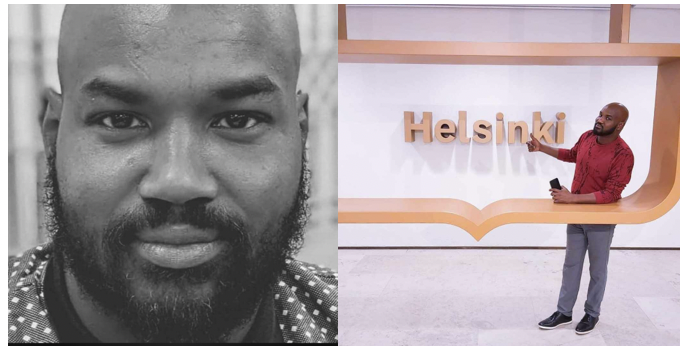
*Mahad Sheikh Musse on työskennellyt yli 20 vuotta nuorten ohjaajana Helsingissä. Hän on myös Migrant Talesin säännöllinen kolumnisti-kirjoittaja.
In light of the rise of the far right and the anti-migration megaphone getting louder in Finland and Europe, are we at a crossroads? Does it boil down to two factors: inclusion or exclusion?
One of the matters missing today in our ever-growing culturally diverse society is credible pathways to inclusion and citizenship. This may be easier said than done considering how narratives are stacked against migrants and minorities by politicians, the media, and the public.
But how can we speak and advance inclusion and citizenship if our politicians, and institutions are more interested in stressing us versus them?
Historically, Finland has done everything possible to put the breaks on migration. In the 1970s, when Finns were emigrating in droves to Sweden, the government at the time could plug the labor shortage with migrants.
You guessed right: it turned down such an opportunity and today we are paying a high price for such short-sightedness.
And let’s not forget the hostile environment, which like in the UK in 2012, passed laws to make staying in the country as difficult as possible.
Few if any brave voices are coming out from the jungle to challenge institutional racism and exclusion.
Let’s look at Finland’s migration policy, which Interior Minister Mari Rantanen has called a paradigm shift. Such policies are driven by mistrust and suspicion of our ever-growing culturally diverse communities. If we continue on this ruinous path, we will fail at building a well-functioning society.
Here is the sobering news: To alleviate our demographic woes and the negative environment against migrants and minorities, we will have to rewrite our new identity based on inclusion and citizenship.
Who we are and how we ientify depends on us and must be respected. The aim is not to become a carbon copy of Matti or Maija Meikeläinen but to celebrate our identity on our own terms.
If Finland fought heroically in the Winter War (1939-40) against all odds, it can overcome the next challenge that is based on its future survival and wellbeing
Center Party Chairperson Antti Kaikkonen gave a long interview on Saturday’s Ykkösaamu. Apart from all his views about the government’s program to bring growth during extreme austerity, Kaikkonen is asked about labor migration at the end of the interview.
He said Finland needs labor migrants. He said, “We don’t need criminals, we don’t want bums.”
This is an odd statement coming from a politician who got in 2013 a suspended prison sentence in a financing scandal.
Finland’s memory is short and selective.
YLE’s Ykkösaamu: “We don’t need criminals, we don’t want bums,” said Antti Kaikkonen.
Tweets @reija_harkonen: “[Center Party Chairperson Antti] Kaikkonen has been sentenced to prison for abuse of a position of trust. Now he is using the trust of the Center Party’s members by publicly moving the party into the mainstream racist fold.
About 20% – if not more – of Finnish voters are racist di**heads.
Few, if any, were alarmed by the Perussuomalaiset (PS)* victory in the 2011 election, which raised the number of MPs to 39 from five previously. Too many believed, incorrectly, that the PS would implode like what happened with the Rural Party in 1972 after winning two years earlier 17 seats from one previously.
The PS did not implode but became the most successful party in general elections and continued its assault and chipping away at Finnish democracy. The PS and others like the National Coalition Party (NCP) disagree with the country’s liberal opening up after it became an EU member in 1995.
Many reforms were made at the end of the 1990s like the new Constitution, citizenship law, and others that encouraged inclusion and non-discrimination.
Apart from making Finland a more inclusive country that guarantees Human Rights and social equality, the present government is taking us in the opposite direction. Apart from trade union and the most vulnerable members of our society, the government is tearing away at the rights of migrants and asylum seekers.
The iliberal reforms even encouraged parliament in July to pass a law that shelves Human Rights, our constitutional rights, and international obligations by denying people asylum at the Finnish-Russian border.