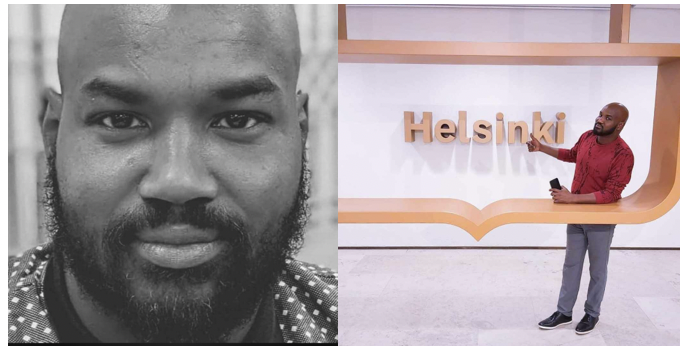
MTV reporter Ivan Puopolo must be the most opinionated reporter working for the mainstream media. His reporting is not credible because he breaks one of the golden rules of journalism: do not editorialize in your stories.
Puopolo’s interviews and stories are full of toxic opinions. Apart from his non-existent credibility, he does a lot of harm to MTV.
Apart from also being a mouthpiece for the far-right Perussuomalaiset (PS)* party, helping politicians like PS chairperson Riikka Purra spread the great replacement theory and victimizing migrant youths, a recent interview with Esko Aho is a case in point, whom he interviewed without mentioning the former prime minister´s links with Putn´s Russia.
Another question that I have asked MTV is Puopolo´s role in the television station’s ads below.
On the left MTV was active in portraying black and brown youths as criminals even if the police estimated at the time 150-200 youths belonged to gangs. On the right, Puopolo interviews Interior Minister Mari Rantanen about the new integration plan. Not the person with the knife. MTV has done a lot of harm in spreading racism and polarizing viewers. You can read more about the role of the media, police, and politicians in spreading racism.
I emailed this complaint to MTV but have not heard back from the private media company.
Monet maahanmuuttajataustaiset vanhemmat kohtaavat Suomessa vakavia haasteita lastensa kasvatuksessa, erityisesti silloin, kun nuoret ajautuvat ongelmiin päihteiden tai rikollisuuden parissa. Kun yhteys lapsiin katkeaa ja perheet kokevat viranomaisten tarjoaman tuen riittämättömäksi tai väärin ymmärretyksi, jotkut vanhemmat päätyvät äärimmäisiin ratkaisuihin, kuten lähettämään lapsensa takaisin kotimaahansa.
Tämä ei ole uusi ilmiö – jo 1990-luvulla vastaavanlaiset haasteet tulivat esiin, mutta tuolloin keskiössä oli usein ajatus, että heikko kielitaito olisi suurin este kotoutumiselle. Vaikka kielen oppiminen on tärkeää, se ei kuitenkaan yksin riitä ratkaisemaan monikielisten nuorten ja heidän perheidensä syvempiä kotoutumishaasteita. Keskeinen ongelma on luottamuspula viranomaisten ja vanhempien välillä.
Moni vanhempi kokee, että heidän perheensä erityistarpeet jäävät huomiotta tai että tarjotut palvelut eivät ymmärrä heidän kulttuuritaustaansa. Tämä johtaa siihen, että vanhemmat etsivät vaihtoehtoisia ratkaisuja, vaikka ne olisivatkin radikaaleja ja riskejä täynnä. Luottamuksen rakentaminen on avainasemassa, jos haluamme auttaa perheitä ja nuoria löytämään paikkansa suomalaisessa yhteiskunnassa ja vähentää näitä äärimmäisiä toimenpiteitä.
Yksi ensimmäisistä askelista on tarjota monikielistä ja kulttuurisensitiivistä tukea. On tärkeää, että viranomaisilla on riittävästi resursseja tarjota palveluja useilla eri kielillä, jotta perheet voivat ilmaista huolensa ja tarpeensa omalla äidinkielellään. Tämän lisäksi kulttuurisensitiivisyys tarkoittaa ymmärrystä siitä, että maahanmuuttajataustaisilla perheillä voi olla erilaisia tapoja käsitellä haasteita. Se, mikä on normaalia yhdessä kulttuurissa, voi olla täysin vierasta toisessa, ja siksi viranomaisten on mukautettava toimintaansa ymmärtääkseen paremmin perheiden taustoja ja tilanteita.
Luottamus viranomaisiin syntyy, kun he ovat läsnä ja helposti lähestyttäviä. Tämä edellyttää tiivistä yhteistyötä maahanmuuttajataustaisten yhteisöjen kanssa. Järjestöjen ja yhteisöjen rooli on tässä keskeinen, sillä ne tuntevat perheiden arjen ja haasteet ja voivat toimia siltana perheiden ja viranomaisten välillä.
Yhteisöissä toimivat kulttuuritulkkaajat tai mentorit voivat auttaa selittämään vanhemmille, miten suomalainen järjestelmä toimii, ja toisaalta tuoda viranomaisille ymmärrystä perheiden tilanteista. Tällä tavoin voidaan välttää väärinkäsityksiä ja luoda avointa ja rakentavaa dialogia.
Ennaltaehkäisy on tärkeä osa kotouttamistyötä. Monikielisten nuorten kohdalla varhainen tuki voi estää monia ongelmia kehittymästä. Kouluissa, nuorisotyössä ja muilla areenoilla on tärkeää tunnistaa nuorten haasteet ja tarjota heille turvallinen ympäristö, jossa he voivat käsitellä identiteettikriisejä, syrjinnän kokemuksia tai muita kohtaamiaan haasteita.
Mitä varhaisemmin näihin kysymyksiin puututaan, sitä paremmin voimme estää nuoria ajautumasta päihteisiin, rikollisuuteen tai muihin vaikeuksiin. Nuorten identiteetin tukeminen on ratkaisevaa. Monikielisillä ja monikulttuurisilla nuorilla on usein ristiriitainen suhde omaan identiteettiinsä: he voivat kokea, etteivät kuulu täysin suomalaiseen yhteiskuntaan, mutta eivät myöskään kokonaan omaan kulttuuriinsa.
Turvallinen ympäristö, jossa heidän taustansa hyväksytään ja sitä arvostetaan, on elintärkeä heidän hyvinvoinnilleen. Nuorille on tarjottava mahdollisuuksia löytää oma paikkansa suomalaisessa yhteiskunnassa samalla, kun he voivat kunnioittaa omia juuriaan. Monikulttuuriset nuorisotilat, vertaistukiryhmät ja koulun monikulttuurinen kasvatus ovat konkreettisia keinoja tukea nuoria heidän identiteettinsä rakentamisessa.
Lopulta kotouttamisen ja tukemisen perusta on luottamus. Tämä luottamus syntyy avoimesta vuorovaikutuksesta, kuuntelemisesta ja ymmärryksestä. Se ei kehity hetkessä, vaan vaatii jatkuvaa läsnäoloa ja sitoutumista. Viranomaiset voivat rakentaa tätä luottamusta olemalla aktiivisesti mukana monikielisten yhteisöjen arjessa, tarjoamalla selkeitä ja saavutettavia palveluja sekä kuuntelemalla perheiden tarpeita ja huolia.
Kun vanhemmat tuntevat, että heidän huolensa otetaan vakavasti ja että he voivat luottaa viranomaisten tarjoamaan tukeen, he eivät koe tarvetta turvautua äärimmäisiin ratkaisuihin, kuten lastensa lähettämiseen ulkomaille. Vahva yhteys vanhempien, nuorten ja viranomaisten välillä luo pohjan turvalliselle kasvulle ja kotoutumiselle. On tärkeää, että nuoret voivat kasvaa turvallisessa ympäristössä, jossa he voivat tuntea itsensä itsevarmoiksi ja osaksi yhteiskuntaa, taustastaan riippumatta.
Turvallinen ja itsevarma nuori, joka tuntee kuuluvansa osaksi sekä omaa kulttuuriaan että suomalaista yhteiskuntaa, on avain onnistuneeseen kotoutumiseen. Tässä onnistuminen vaatii meiltä kaikilta yhteistä ponnistusta: viranomaisilta, vanhemmilta, yhteisöiltä ja koko yhteiskunnalta. Meidän on luotava olosuhteet, joissa nuoret voivat kukoistaa ja löytää paikkansa, oli heidän taustansa mikä tahansa.
On Wednesday’s A-studio talk show, viewers got once again a taste of the depths of fascism and racism of the Perussuomalaiset (PS) through MP Joakim Vigelius. One of the matters that surprised me was how the host, Petri Raivio, did not stop to fact-check Vigelius’ brazen lies.
Since the Finnish media rarely fact-checks or takes a clear stand in its editorials on migration policy issues, spreading lies and half-truths by xenophobes is fairly easy.
Apart from being a charlatan, Vigelius insulted on the show Social Democrat Vice President Nasima Razmyar with his racist remarks. The PS MP maintained that people from the Middle East and Africa should not come as quota refugees to Finland next year because they “don’t integrate” and are “a threat to society.”
He argued, in front of a woman who was born in Afghanistan that people like her are mostly unemployed, cannot live off their means, have problems following laws, and are prone to commit crimes even if she is a living example of the opposite of his lies.
Another incredible matter that came to light on the talk show was his exaggeration and racism about Europe’s migration problem. Imagine, Vigrlius is worried about such a problem even if Finland had last year 5,372 asylum seekers, according to Statistics Finland.
The asylum seekers coming to Europe are only a drop in the bucket of all those in the world fleeing strife.
Migrant Tales insight:Without Aleksanterinliitto ry, the opinions of Finland’s Russian-speaking community would not be heard loud enough. According to Alexey Bulvatsev, the closing of the border has hurt families in Finland and Russia and made travel to Russia more difficult. And adds: “According to the petitioner, Finland is likely to be in breach of EU law, firstly because Finland’s entry and transit ban on all Russian citizens entering the EU for tourist purposes is in breach of Article 6, paragraph 1 (e) of Regulation (EU) 2016/399 and Regulation (EU) 2018/1806. Secondly, in view of the petitioner, the closure of the Finnish-Russian border following cases of asylum seekers from third countries crossing the border infringes Article 26 of Regulation (EU) 2016/399 and Article 27 of Directive 2004/38/EC.”
The petition asks the EU to halt Finland’s illegal policy at the Finnish-Russian border.
Alexey Bulavtsev of Alexsanterinliito ry, an association that supports and protects the rights and freedoms of Russian-speaking Finns, has submitted a petition to the European Parliament to protest the closing of the Finnish-Russian border.
The petitioner refers to the decision of the Finnish government to completely close the Finnish-Russian border in response to the hybrid attack of the Russian Federation on Finland. Bulavtsev alleges that the public has not been informed of any facts that could link the problem of higher than usual number of asylum seekers at the Finnish border to Russia’s presumed hybrid attack on Finland. According to the petitioner, this decision had a negative impact on Finnish families with family ties to the Russian Federation, as it had become difficult for legitimate residents of Finland to travel to Russia. The petitioner alleges that the closure of the land border by the Finnish authorities has a negative impact on the conditions of the inhabitants of the Finnish regions bordering Russia and would damage the economy in eastern Finland. He states that even the postal service between Finland and Russia has been discontinued, which is why the right of Finnish residents to family life guaranteed by Article 12 of the Universal Declaration of Human Rights is limited. According to the petitioner, Finland is likely to be in breach of EU law, firstly because Finland’s entry and transit ban on all Russian citizens entering the EU for tourist purposes is in breach of Article 6, paragraph 1 (e) of Regulation (EU) 2016/399 and Regulation (EU) 2018/1806. Secondly, in view of the petitioner, the closure of the Finnish-Russian border following cases of asylum seekers from third countries crossing the border infringes Article 26 of Regulation (EU) 2016/399 and Article 27 of Directive 2004/38/EC. The petitioner asks the European Commission to issue a regulation to the Finnish government to correct the allegedly illegal acts.
With poll ratings heading south and the municipal election approaching in April, parties like the Perussuomalaiset (PS)* are turning (as usual) to racism and bigotry. They do this because they are fascists to the core.
The media in Finland is part of the country’s racism problem. Since it is white, it would care less for the well-being of migrants and minorities. How many editorials have Finland’s largest daily, Helsingin Sanomat, written about the PS’ and the government’s draconian migration policy?
Zero.
All of this tightening and making life harder for migrants and minorities living in Finland is ok if you explain your flimsy reason: security.
Despite the reasoning, the PS and the government offer no proof that migrants are a threat. Here is a question to the government: Why is Finland’s migration policy so hostile to migrants?
Remember Finland’s day of infamy in July when it passed the pushback law? Well, there has been no rush of migrants to the border. The only fact is that the border continues to be closed, and businesses in cities like Lappeenranta suffer economic hardships.
On the left, Minister of Transport and Communication/Interior Minister Lulu Ranne is smiling because she is announcing how Finland will tighten its migration policy and enforce harsher sentences against migrants. On the right, is a picture that unmasks Ranne as a bully and racist. She is saying to migrants enter Finland at your peril. Sources: Suomen Uutiset and Haleingin Sanomat.
The government continues to shamelessly expose its racist policies. The latest of these is a Helsingin Sanomat scoop that claims the PS wants to exclude Muslims from the quota-refugee scheme in 2025.
The plan, promoted by Ranne and Mari Rantanen, on leave as interior minister until the end of the year, should not surprise us since it is another example of Finland’s zero asylum seeker policy.
Maahanmuuttajataustaisten ja monikielisten nuorten kotoutuminen on usein esillä yhteiskunnallisessa keskustelussa, ja kieli mainitaan toistuvasti suurimpana haasteena. Pitkän urani aikana nuorisotyön ammattilaisena olen kuitenkin nähnyt, että kieli ei suinkaan ole se merkittävin este, jonka nämä nuoret kohtaavat. Haasteet ovat syvemmällä – ne liittyvät asenteisiin, rakenteelliseen syrjintään ja maahanmuuttovastaisuuteen, jotka vaikuttavat monien nuorten elämään.
Kieli on vain osa tarinaa. Monet ajattelevat, että maahanmuuttajataustaisten nuorten haasteet johtuvat siitä, etteivät he osaa riittävän hyvin suomea. On totta, että vastikään Suomeen muuttaneilla nuorilla kielitaito voi olla esteenä esimerkiksi opiskelussa tai työelämään pääsyssä. Kuitenkin suurin osa täällä syntyneistä ja pitkään asuneista nuorista puhuu suomea sujuvasti, ja silti he kohtaavat syrjintää ja ulkopuolisuuden tunnetta. Miksi?
Kieli ei selitä sitä, miksi täällä syntyneet ja kasvaneet nuoret kokevat, etteivät he kuulu tähän yhteiskuntaan. Kielitaito ei suojaa heitä rakenteelliselta rasismilta, ennakkoluuloilta ja syrjinnältä, joita he joutuvat kohtaamaan arjessaan.
Kouluissa ja nuorisotiloissa näemme yhä uudelleen, miten nuoret, jotka ovat syntyneet ja kasvaneet Suomessa, joutuvat taistelemaan saadakseen samanlaisen kohtelun kuin kantasuomalaiset ikätoverinsa.
Muukalaispelko ja maahanmuuttovastaisuus – todelliset haasteet
Yksi suurimmista ongelmista, joita maahanmuuttajataustaiset nuoret kohtaavat, on muukalaispelko ja maahanmuuttovastaisuus. Tämä ei näy pelkästään katukuvassa, vaan se on myös syvällä yhteiskuntamme rakenteissa.
Kun julkinen keskustelu ruokkii maahanmuuttovastaisia asenteita ja jopa parlamentaarikot voivat esittää rasistisia lausuntoja ilman seuraamuksia, ei ole yllättävää, että nuoret tuntevat itsensä ulkopuolisiksi.
Nuoret seuraavat tarkasti, mitä yhteiskunnassa tapahtuu. He näkevät, miten heidän taustansa vuoksi heidät leimataan ja heihin kohdistetaan ennakkoluuloja. Tämä synnyttää epäluottamusta ja turhautumista.
Yhä useammin maahanmuuttajataustaiset nuoret kokevat, että heitä ei oikeasti haluta osaksi yhteiskuntaa, vaikka he puhuvat kieltä ja pyrkivät sopeutumaan. Kun yhteiskunnallinen ilmapiiri on vihamielinen, on vaikea ylläpitää anti-rasistista työotetta. Viranomaistyössä pyritään tarjoamaan turvallisia ja tasa-arvoisia tiloja kaikille nuorille, mutta kuinka voimme tehdä tämän tehokkaasti, jos yhteiskunta ei tue näitä arvoja?
Jos nuoret näkevät, että rasistinen vihapuhe saa julkisessa tilassa hyväksyntää, heidän on vaikea luottaa siihen, että me aikuiset olemme heidän puolellaan. Rakenteellinen rasismi on tunnustettava On helppo sanoa, että syrjintä johtuu vain kielimuurista tai nuorten sopeutumattomuudesta, mutta tämä on vain osa totuutta.
Todellisuudessa suurin ongelma on rakenteellinen rasismi, jota esiintyy niin työelämässä, koulutuksessa kuin arjen kohtaamisissa. Tämä rasismi ei ole aina avointa, mutta se vaikuttaa siihen, miten nuoret kokevat paikkansa yhteiskunnassa.
Yhteiskuntamme tulisi keskittyä enemmän siihen, miten voimme murtaa nämä rakenteet. Anti-rasismityö ei voi olla vain nuorisotyön ammattilaisten tai koulujen vastuulla – sen täytyy olla koko yhteiskunnan yhteinen tehtävä. Meidän on puututtava asenteisiin, jotka ajavat nuoria marginaaliin, ja vaadittava vastuullisuutta myös niiltä, jotka tekevät päätöksiä yhteiskunnassa.
Nuorilla on oikeus kuulua yhteiskuntaan
Maahanmuuttajataustaisilla ja monikielisillä nuorilla on samat oikeudet kuin kenellä tahansa muulla nuorella tässä maassa. Heillä on oikeus tulla kohdelluksi tasa-arvoisesti, ilman ennakkoluuloja tai syrjintää. Heillä on oikeus tuntea, että he kuuluvat tähän yhteiskuntaan – eivätkä vain vierailijoina, vaan täysivaltaisina jäseninä.
Meidän on yhdessä luotava sellainen yhteiskunta, jossa nuoret voivat kasvaa ja kukoistaa ilman pelkoa tai epävarmuutta siitä, hyväksytäänkö heidät. Tämä ei tapahdu pelkästään kielen oppimisen tai kotouttamistoimenpiteiden kautta. Se vaatii meiltä kaikilta rohkeutta kohdata omat ennakkoluulomme, haastaa rakenteelliset ongelmat ja taistella sen puolesta, että jokainen nuori tuntee olevansa osa tätä yhteiskuntaa.
While politicians of the Finns Party (PS) and National Coalition Party beat their chests every time Finland tightens its migration policy, the two minor government parties, the Swedish People’s Party and Christian Democrats, look the other way with shameful silence.
The government, especially the PS, claims that its anti-immigration policies will make us stronger as a nation. The logic has a striking connection with the Nazi racebook. In that logic, they believed that getting rid of the Jews would help make the Germans realize their full potential and become the master race.
Today in Finland, like in other countries of the EU there is a similar logic: Let’s stop people like Muslims from settling inside our borders.
Finland’s transformation from a liberal Nordic welfare state to one that is showing signs of becoming iliberal is concerning to say the least. If there was a watershed that pushed Finland in this direction it was in July, when it approved the pushback law by denying people asylum thereby shelving its Human Rights commitments, Constitutional rights and internaitonal agreements.
This pictures the long struggle by Interior Minister Mari Rantanen, Finance Minister Riikka Purra, and the Perussuomalaiset* to shelve Human Rights, Constitutional Rights, and international agreements by Finland thanks to the passage of the pushback law in July. Source Twitter/Kalle Koponen, HS
Other shameful policy changes will weaken us and impoverish Finland.
Some of these include:
· changing the period of residence for citizenship from five to eight years; · tougher requirements to get permanent residence and citizenship; · prohibiting asylum seekers from getting a work permit; · residence permits granted under international protection will become temporary and their duration will be the EU minimum; · speeding up deportations and asylum applications; · tighter family reunification requirements; · if laid off and cannot find new employment, a person will be forced to leave the country in three (non-specialists) or six months (specialists); · taking away the right of undocumented migrants (excluding children and others in a particularly vulnerable position) to only have access to emergency health care services; · reviewing dual citizenship rights to Russian nationals.
A record number of suspected hate crimes* were reported in 2023, rising by 28.99% to 1,606 cases compared with 1,245 cases the previous year, according to the Police University College. The author of the report, Jenita Ranta, blamed “societal factors” like the Russian aggression in Ukraine, and the poor economic situation of people that fuel hate crime.
Ranta talks about these above factors but is silent about an obvious factor: racism in Finland.
Moreover, if last year was a record, we expect 2024 to be another record year when it comes to hate crimes.
The hate crimes reported to the police are only the tip of the iceberg.
As in previous years, hate crimes due to ethnic or national background stood at 68% of all hate crimes, rising last year by 17.42% to 1,092 cases versus 930 cases. That was followed by hate crimes on the grounds of religion or belief (10.3% of all hate crimes), which jumped by 36.36% to 165 cases.
By national group, the Somalis were one of the most affected by hate crimes as were Muslims.
The majority of hate crimes were physical assaults and verbal insults.
“Under this group, the biggest group of victims were Muslims. In the statistics on last year’s hate crime reports, it is noteworthy that for the first time ever, there were more suspected hate crimes against Jews or Jewishness than there were suspected hate crimes against Christians. However, Islamic people were most commonly targeted,” according to the Police University College.
Hate crimes committed against sexual minorities (10.6% of all hate crimes) rose by 53.57% to 215 cases, while disability (8%) saw the biggest rise, soaring 137.04% to 128 cases.
*”In general terms, hate crime is a crime motivated by prejudice or hostility towards the victim’s ethnic or national origin. The crime may also be targeted at members of the majority population.” Police University College
Watching a Yle news broadcast on the arrival of Filipino practical nurses at Helsinki-Vantaa Airport, I could not hold back my concern for these migrants and how they could fall prey to greedy employers. It has happened too many times before.
The government of Prime Minister Petteri Orpo, which continues to implement its racist and hardline migration policy, reiterated that it wants labor migrants from four countries: the Philippines, India, Vietnam, and Brazil. In the face of the government’s extreme tightening of migration policy, the government – especially the Perussuomalaiset (PS)* – would be willing to give migrants from these countries a chance to move to Finland and plug our chronic labor shortage.
Reading the minds and past policies of the PS and the National Coalition Party (NCP), it’s clear that some of these future practical nurses have fallen into a trap. Apart from living in a difficult climate and culture compared with their home country, they will be effectively at the mercy of their employers.
How long will it take before some of their stories of exploitation will come to light? This is a valid question because we not only have many cases backing up such a situation but also Finland’s unpreparedness to defend the rights of foreign workers.
Apart from this sad reality, Finland’s government and its migration policy are the clearest examples that parties like the PS will admit to a flaw in their demographic calculations but are ready to accept migrants who will not challenge their white Finnish privilege and promise to be subservient to the system.
Prioritizing migrants from four countries is a flawed plan that will only create more division among the migrant communities since the government has gone as far as to further categorize people as “good” and “undesireable” migrants.
Maahanmuuttajataustaisilla lapsilla ja nuorilla voi olla raskasta lukea jatkuvasti korkeassa asemassa olevien ihmisten levittämiä rasistisia tai syrjiviä viestejä. Tällaiset puheet saattavat herättää turvattomuuden tunnetta, ulkopuolisuuden kokemusta ja pelkoa.
Kun lapset ja nuoret huomaavat, että heidän taustaansa tai oppimistuloksiaan käytetään perusteena leimata heidät ongelmiksi, he voivat alkaa epäillä omaa arvoaan ja paikkaansa yhteiskunnassa.
Tällaiset puheet voivat johtaa myös siihen, että maahanmuuttajataustaiset lapset pelkäävät kouluun menemistä, koska he kokevat olevansa jo valmiiksi altavastaajia ja leimattuja. He voivat tuntea, että heidän täytyy todistella kykyjään jatkuvasti enemmän kuin muut, ja että heidän epäonnistumistaan käytetään todisteena heidän “kuulumattomuudestaan” tähän maahan.
Tämä voi lisätä paineita ja ahdistusta, ja pahimmillaan estää heitä osallistumasta täysipainoisesti koulunkäyntiin tai muuhun yhteiskunnan toimintaan. Tällaisessa ilmapiirissä kasvaessaan lapset ja nuoret eivät tunne olevansa tuettuja, vaan pikemminkin hylättyjä.
He voivat tuntea, että heitä syyllistetään asioista, joihin he eivät voi itse vaikuttaa, kuten maahanmuutosta tai siitä, kuinka kauan he ovat asuneet maassa. Tämä voi pahimmillaan estää heitä näkemästä tulevaisuudessaan mahdollisuuksia ja uskomasta itseensä.
On tärkeää, että päättäjät ja aikuiset ylipäätään viestivät näille lapsille, että heitä arvostetaan ja tuetaan, ja että heidän taustansa ei määritä heidän arvoaan tai mahdollisuuksiaan.