Migrant tales
Menu
  • #MakeRacismHistory “In Your Eyes”
  • About Migrant Tales
  • It’s all about Human Rights
  • Literary
  • Migrant Tales Media Monitoring
  • NoHateFinland.org
  • Tales from Europe
Menu

Category: All categories

Kokoomus MP still points accusing finger at migrant women for buying new baby carriages

Posted on September 1, 2014 by Migrant Tales

Even if parliamentary elections are in April, some politicians, like National Coalition Party (Kokoomus) MP and Espoo city councilwoman Pia Kauma, are openly attacking migrants. She’s the conservative politician who stated on Friday that migrants shouldn’t buy new baby carriages with welfare money. 

Kauma got an opportunity on Monday to present her case on YLE’s A-Studio.

The interview, in my opinion, exposed her greed and political opportunism. How many times have anti-immigration politicians in the James Hirvisaari league tried to capitalize on the urban tale that migrants get more social welfare than white Finns.

“What irritates ethnic Finns is that they aren’t treated equally in this country,” said MP Kauma.

Not treated equally?! I wonder if she’s ever read Pekka Myrskylä’s blog, which shows conclusively that the majority of migrants in Finland live in poverty and get less social welfare than white Finns.

Marja-Leena Remes, a social worker at Espoo who was a gust on the same program as Kauma, stated that she didn’t have any evidence that migrants get more social welfare than white Finns. According to her, the city of Espoo only gives 200 euros in assistance to buy baby carriages.

Good luck if you’re going to buy a new baby carriage with that sum of money.

It’s clear from the A-Studio interview that Kauma bases her claim on he-said-she-said rumor.

Sakari Timonen is one of the best anti-racism bloggers in Finland. He states on a recent blog headlined Crusade against baby carriages that of the city of Espoo’s annual budget of 1.573 billion euros, only 3% (48.146 million) of this sum is allocated for social assistance, which could include the 200 euros for buying baby carriages.

Kuvankaappaus 2014-9-1 kello 23.14.01

See A-Studio interview (in Finnish) here.

Why then is Kauma making such a big deal about this matter if it’s only a storm in a tea cup?

Because she’s craving for media attention and because she knows that by fueling the envy of white Finns against migrants and minorities she’ll get media attention and supporters.

This is the same prank that anti-immigration politicians like Perussuomalaiset (PS)* MP Jussi Halla-aho, Hirvisaari, Olli Immonen, Juho Eerola and others used to get elected in 2011.

Shame on the National Coalition Party and Kauma.

Expect more hostility from more politicians like her as parliamentary elections near in April.

* The Finnish name for the Finns Party is the Perussuomalaiset (PS). The English names of the party adopted by the PS, like True Finns or Finns Party, promote in our opinion nativist nationalism and xenophobia. We therefore prefer to use the Finnish name of the party on our postings.

Racism is dirty and expensive business for any society

Posted on August 10, 2014 by Migrant Tales

A study by the Ombudsman of Minorities in Finland reveals that over two thirds of Finnish Roma that were surveyed said they had experienced discrimination in the past year, according to a Migrant Tales story published Sunday. While these types of studies are needed and are highly important, they continue to remind us of a disturbing fact: racism is still alive and kicking in this country.

Näyttökuva 2014-8-10 kello 19.05.19

Read full story here.


While the bad news is that racism is a social issue in this country, the good news is that it is being challenged by migrants and minorities like the Roma.

One of the most important matters to keep in mind when looking at a social ill like racism is that it’s messy and expensive business.

Apart from squandering human resources and opportunities, racism and bigotry usually serve people with low self-esteem, lazy journalists, unjust power structures,  greedy and opportunistic politicians from populist parties like the Perussuomalaiset (PS)* that have built their political careers by spreading hatred and prejudices of other groups.

Even if some parties like the PS claim to be “patriotic” because they want us to believe that they are serving the country’s best interests by spreading intolerance, they are actually the biggest  menace to our society. Maintaining high unemployment by victimizing certain groups costs tax-payers an arm and a leg.

One of the many examples of the hatred and suspicion that politicians spread about migrants is Mäntyharju PS councilwoman Tanja Hartonen-Pulkka, who writes that Finland will no longer be Finland because at this rate white Finns will be a minority in their country.

Economist Paul Krugman wrote recently in a New York Times opinion piece how inequality was a drag and how it was a drag on economic growth He writes:

Specifically, if you look systematically at the international evidence on inequality, redistribution, and growth — which is what researchers at the I.M.F. did — you find that lower levels of inequality are associated with faster, not slower, growth.

Thus if racism fosters economic and social inequality, we should take effective steps to challenge it. We shouldn’t be reading about surveys like the one by the Ombudsman for Minorities, but hopefully in the future how such cases have plummeted.

One reason why we are still very much in denial about intolerance is because those who have power still do too little to tackle the problem for a simple reason: It doesn’t affect them directly. Thus racism and social exclusion could be seen as a stalemate where those are hostile to you still haven’t figured out how to banish you altogether.

Certainly one of the biggest fallacies about integration, or two-way adaption, is that it actually happens on a wide scale. Certainly this type of discourse serves the interests of the majority culture.

A good example of the latter was a retired teacher I spoke to about two years ago. The person, who claimed to be an expert on “multiculturalism,” complained to me about the Muslim religion. I asked: “What are you offering in return for their religion? Our hatred and suspicion?

Our society has still a long way to go before it begins to respect cultural and ethnic diversity. In this task, migrants and minorities must do much more these days to represent themselves and challenge the very structures that encourage assimilation and only speak of integration as an ideal.

Finland has the means but do we have the will?

* The Finnish name for the Finns Party is the Perussuomalaiset (PS). The English names of the party adopted by the PS, like True Finns or Finns Party, promote in our opinion nativist nationalism and xenophobia. We therefore prefer to use the Finnish name of the party on our postings.


Noticias Capital: Colombian undocumented migrant dies while in custody in Finland

Posted on August 1, 2014 by Migrant Tales

A Migrant Tales visitor got in touch with us from Colombia and shared a sad piece of news about a twenty-six-year-old  Colombian who died while detained by the police in a Finnish jail. The police claim that the young man, Sergio Camilo Becerra González, committed suicide but the parents suspect that he was a victim of xenophobia, according to Caracol. 

The father of the victim said that he had heard of five similar cases where undocumented migrants had died under police detention in Finland.

Becerra González had come to Finland in May to study acrobatics. He was accepted to study at a school after he passed a three-day entrance exam.

News report (in Spanish) on Noticias Capital of Colombia about the death of Sergio Camilo Becerra González.


Becerra González won twice the Colombian cheerleader championship and was once crowned Latin American champion. His dream was to come and study acrobatics in Europe. He first went to France to study on a scholarship but was turned down a residence permit. He then came to Finland on an invitation by an acrobatics school.

The parents of the deceased claim that they are certain that their son didn’t commit suicide, according to Caracol.

”They told us that he had had some problems [in Finland],” said the mother Amanda González, ”we started to make some phone calls to some friends he had made in Helsinki, and they told us Tuesday by chat about his death.”

The parents want their son to be flown to Colombia for a new autopsy.


Anonymous, an immigrant woman: Moment in time

Posted on July 12, 2014 by Migrant Tales

What would you say if the only treasure you have in life is what Anonymous calls the Mighty Pen? “The color [of the ink] doesn’t matter because appears on paper has strength,” she said.  “It’s a normal pen but it has strength. Give a real picture of my life.”

Migrant Tales has been in touch with Anonymous for some months. She is in an institution in Finland diagnosed with paranoia. She disagrees with the diagnosis. Her beautiful poetry speaks volumes about her plight and that of other migrant women.

IMG_1715

A moment in time could be the sunset behind the horizon telling you with its beauty to never lose hope. Photo by Enrique Tessieri.

____________

Moment in time

The mighty pen is dense

In an assimilated sense

Becomes an immigrant victim defense

Of a true story untold

Uncovering offense

Of the scope in magnitude in lens

Is trampled on the answer from whence

And covers the origin of a feud so immense

Which came to a boil for consecutively four years hence.

We are bound by a culture of disbelief so intense

Drugged us into the irony of democratic society

Where law prevails to fence and provide a shed and protection

For the vulnerable when entices hence

Never been envisioned by those who believe in the rule of law itself

But Drawn along is the will to ensconce as seeing is believing doesn’t make sense

No longer sufficient the offset the wrong so dense

Facing us in the agony of grave abuse of the law condense

Harassment on scale that has never been experienced hence

By any immigrant women in vivid detail so intense.

See also:

Anonymous: Symbol of hope                                                                                                                                                                                      Anonymous: Against all odds human spirit cannot be crushed                                                                                                                                      From Anonymous to Dana

Migrants’ Rights Network: The anti-immigrant message stumbles, but who will come out on top?

Posted on May 19, 2014 by Migrant Tales

By Don Flynn*

Don_web_0

Only a few days left before the vote in the European and local election poll. The anti-immigrant hardliners are taking flack after an inept radio interview performance by the leading Ukipper. But has the liberal mainstream the gumption to allow it forge past them with an optimistic message about diversity?


For anyone concerned with the rights of migrants, the gloomiest prognosis of where we might be four days ahead of polling for the European Parliamentary and local elections was that a strong anti-immigration narrative was being injected into the public discussion by the mainstream parties and this was pointing to a landslide victory for parties demanding a clampdown on the movement of people.

“Are you thinking what we are thinking?”

But despite the platform that the Ukippers have managed to create for themselves and the prominence given to their ‘They are After Your Job’ message it is still not clear that the populist right wing party is ruling the roost in quite the way they hoped.

Nigel Farage’s ‘car crash’ interview with LBC’s James O’Brien last week was the first occasion when the man who appeared immune to bad news seemed to have come unstuck with the wider public. His floundering attempt to explain why anxiety about hearing foreign languages being spoken on trains drained away a good deal of the credibility he has had with voters who appreciated his ‘cheeky chappie’ view of the world. The unease mounted as he went on to disparage Romanians, claiming that anxiety about having them as neighbours was bound to be justified by common-sense.

The misgivings that began to be aired after this interview do not yet amount to a wholesale rejection of the xenophobic messages that have been coded into the UKIP campaign. The desire to register a protest against the mainstream parties remains strong amongst a large section of the population and it will seem to many that a vote for Farage’s party will be the best way to do this.

But at the same time a sense of the repugnance to overtly anti-immigrant messages can be seen as making itself felt as we move closer to polling day. It is a mood rather similar to the one that scuppered the chances of Michael Howard when he led the Conservative general election campaign in 2005, when his ‘Are you thinking what we are thinking?’ message had the effect of reminding at least a segment of voters that politicians can mess with you head and lead you in directions which, in your heart of hearts, you really don’t want to go.

Political parties and their messages

When the history of this election campaign comes to be written it might well prove to be the case that the most significant turning point with regard to the public mood on immigration has come from the currents that cluster around the Conservative party rather than the centre left. Back at the beginning of May the centre right think tank Policy Exchange published its report, Portrait of Modern Britain, which predicted the rise of the proportion of black and minority ethnic people in the UK from their present 14% to around one-third of the population by the mid-century.

The report provided an account of communities which are at ease with their identities as being both black, Asian and British citizens and, if anything, even more committed to the future of the country than many amongst their white counterparts. The message that trailed across the media for a few critical days was that we do not have to be overwhelmed with anxiety about diversity and should indeed be more confident that society is sufficient robust and adaptable to allow us to be optimistic about the future.

If this piece of Tory research provided reasons for thinking that anti-immigrant paranoia might yet be turned, the same cannot be said for the Labour party’s main contribution to the discussion these past few weeks. The party’s leader has continued to hark on the theme of immigration eroding living standards and needing to be controlled as part of his strategy of coming to the aid of the ‘squeezed middle classes.’

At one point Mr Miliband seemed to be marking out a distinct approach to the public conversation when he set out his view in speeches that the exploitation of migrant workers needed to be tackled through rigorous enforcement of the minimum wage and control of agencies that channelled migrants into low paid jobs.

If there was merit in this basic idea it needed to be developed with a clear argument about the nature of the rights that ought to be in the grasp of all newcomers to the UK to ensure that they were able to join the ranks of other groups who were fighting against poverty and marginalisation.

But this has not happened and what was once an interesting idea is now in danger of morphing into UKIP-lite, with anxiety about migrants’ presence in the labour market taking the place of them speaking their own languages on public transport.

After the elections…

In just a few days time new political debate will replace the one about who comes top of the election popularity poll. The speculation will have to give way to the evidence and the question then to be answered is what 22 May and its European and local elections have really revealed to us about the state of the public mood about, amongst other issues, the vexed question of immigration.

Our bet is that the answer will require a much more nuanced understanding of what is going on other than the simplistic interpretation of it showing an inexorable rise of anti-immigrant sentiment.

The other part of the picture will be the signs of a public mood which is beginning to rally xenophobia and wanting a more progressive politics which will help us to feel more at ease, rather than more anxious, about the increasing diversity of our communities.  We can only hope that there will be enough politicians around on that day who are sufficiently canny to clock the emergence of this mood, and ready to put in the work to help it flourish in the mainstream.

Read original story here.

This piece was reprinted by Migrant Tales with permission.

* Don Flynn, the MRN Director, leads the organization’s strategic development and coordinates MRN’s policy and project work. he is a regular and sought-after speaker at conferences, seminars and lectures on behalf of MRN. 

An opportunist called PS MP Jussi Halla-aho of Finland

Posted on February 9, 2014 by Migrant Tales

If there’s one politician who has successfully made a career by spreading racism and victimizing a group like Somalis in Finland, that politician is Perussuomalaiset (PS) MP Jussi Halla-aho, who is running for MEP. Apart from playing on people’s fears about migration and cultural diversity, the PS MP is a very unthankful person. 

Kuvankaappaus 2014-2-9 kello 15.24.01

Read full story here.

Those people that Halla-aho commonly victimizes in Finland, like African Muslims from Somalia, are the ones who gave him for the time being a political career.

Just like many far-right anti-immigration politicians, Halla-aho actually believes that he can say anything he wishes, rewrite history and contrive arguments that are  nothing more than hearsay and storms in teacups.

While Halla-aho’s party does well in opinion polls, the presidential and municipal elections were a far cry from the historic result that the right-wing populist party gained in the 2011 parliamentary elections.

Even if Halla-aho and the PS want to show that they are unbeatable and immortal, the truth is that they are very vulnerable and know that returning back to the minor political leagues is always a scenario.

Just like when calling a pyromaniac to put out a fire, Halla-aho visited Lieksa on Saturday, which was in the national media spotlight again in December when a councilman of the same party as the PS MP said he wanted to meet in a “Somali-free” room.

One of the big lies that Halla-aho has spread in Finland is that migration is negative because those coming here are only Africans, Muslims and from Somalia.

He forgets to point out that the majority of migrants in Finland work and that the groups he victimizes are a small minority.

“Problems don’t arise from someone making imprudent statements about immigrants and speaking badly of them,” he was quoted as saying Saturday on Karjalainen. “The problem lies in some immigration groups that have given a negative picture of themselves with their own actions.”

The claim by Halla-aho is ludicrous because it is a common debating tactic used by politicians like him to shift the blame on the victim.

His statement is similar to blaming Jews in Nazi Germany for the Holocaust.

  • There was very good coverage of Halla-aho’s visit to Lieksa by MTV3. 

Migrant Tales kiittää “internet netsi” ja Scripta blogia

Posted on January 26, 2014 by Migrant Tales

Syyskuu 8 päivä 2008 oli historiallinen Migrant Tales blogille. Silloin olin lähellä  lopettaa blogini. Kaikki muuttui syyskuun 8 päivänä kun Migrant Talesia vastaan  hyökättiin Scripta blogista. Eräs “internet netsi” ilmoitti meistä Scriptan seinälle: “Tuolta voitte lukea kuinka kamalan rasistinen maa suomi on, uskokaa ny!”

Kiitoksia “Internet netsi”* ja Jussi Halla-ahon Scripta blogille, että annoit minulle voimaa jatkaa. Olemme tänään yksi Suomen tärkeimmistä rasisminvastaisista äänistä.

Muutamat kommentit, joka kaappasin Scripta blogista sinä tärkeänä päivänä:

banner

Nimi: Old No. 7                                                                                                                                                       Mitä teen: Kommentoin                                                                                                                                     Viesti: Mikäs mies tuo Enriikke Tessieeri on olevinaan? En oikein tykästynyt miehen teksteihin, tuntui vähän siltä että näppäimistöön kajotessaan Enriquella on alkanut pyryttää pahemman kerran. Eipä sillä, varmasti Suomessa on syrjintää, ryssävihaa, sovinismia ynnämuuta, mutta mitä sitten? Eikö niitä voitaisi jo laskea suomalaiseen kulttuuriin, on niistä niin kauan valitettu. Ja kun ne olisivat virallisesti meidän kulttuuriamme, voisimme vedota silmät vetistäen tiedostaviin tahoihin että meidän kulttuuriamme on suojeltava maahanmuuttajien vastaavalta. Se luultavasti toimisi….Ai ei? Ainiin, unohdin ihan: Ennenkö voimme aloittaa kitisemisen, täytyy joka iikan käydä pyörimässä avotakassa tai hiilikellarissa. Jos ei sellaista ole lähellä, joku voi tulla hakemaan kauan paikallaan maanneen kahden euron kolikon sänkyni alta, ajanee saman asian. Josta tulikin mieleeni että voisinkin siivota talouteni, tämä alkaa näyttää afgaanin majalta. Jatkakaa. 12. syyskuuta 2008 16:53:35

Nimi: Martti Suni                                                                                                                                                    Mitä teen: Kommentoin                                                                                                                                    Viesti: Luin tuota blogia ja kommentteja aika pintapuolisesti mutta siitä syntyi vähän sellainen vaikutelma enemmän tai vähemmän ulkomaalaisesta joka luulee ymmärtävänsä syväluotaavan tarkasti suomalaisen yhteiskunnan ominaispiirteitä ja sitten kertoo tyhmille suomalaisille miten asiat ovat. Ihan vakavissaan selittää jostain miten Suomessakin eri alueilta tulevien välillä on ongelmia ja “rasismia” ja sitten vetää jotain karjalan evakkojuttuja esimerkiksi mistä on lukenut jostain historian kirjoista ihan niinkuin sellaisilla olisi jotain tekemistä nykypäivän kanssa. Tuli vähän Finlandforthoughtin Phil(?) mieleen. Ja ratkaisuhan kaikkeen on lisää monikulttuurisuutta ja jos olet erimieltä sinulla on joko jokin syndrooma päällä tai vähintään olet liian vanha, rasisti tai edustat pienenpientä vähemmistöä. 12. syyskuuta 2008 15:50:30

Nimi: Herja                                                                                                                                                              Mitä teen: Kommentoin                                                                                                                                    Viesti: Olipa aikamoista paskaa. Olen joskus kommentoinut tuon Enriquen blogia ja täytyy sanoa, että mieheen ei uppoa mikään argumentti ja aina löytyy se mokuttajan ABC:n vakiovastaus selitykseksi monikulttuurisuuden ongelmille. Sitten jos senkin tyrmää niin tulee uusi ad hoc-selitys joka voi olla ristiriitainen edellisen kanssa.
12. syyskuuta 2008 15:42:18

Nimi: Martti Suni                                                                                                                                                    Mitä teen: Ilmoitusasia                                                                                          Viesti: http://nemoo.wordpress.com/ Olipa aikamoista paskaa.                                                                           12. syyskuuta 2008 15:33:17

Nimi: intternet netsi                                                                                                                                        Kotisivu: http://nemoo.wordpress.com/                                                                                                         Viesti: http://nemoo.wordpress.com/ Tuolta voitte lukea kuinka kamalan rasistinen maa suomi on, uskokaa ny!
12. syyskuuta 2008 14:32:34

*Hän on Onkko Hommaforumissa.

Migrant Tales (July 20, 2013): Somali-Finn Abdulah: Living in no-man’s land (Part I)

Posted on December 18, 2013 by Migrant Tales

Even if I have never met Abdulah* in person but only by phone and through his comments on Migrant Tales, it’s as if we’ve known each other for a long time. Abdulah moved to Finland from Somalia in 1990 with his parents and six sisters. He was eight at the time. 

When Abdulah came to Finland, there were only 21,174 immigrants living in the country, accounting for a mere 0.4% of total population, versus 183,133 (3.4%) today, according to the Population Registration Center.

“For a child from Somalia, moving to Finland was at first exciting,” he says. “We were starting a new life in a new country. I was fascinated by the snow.”

Abdulah says that his brief honeymoon with Finland ended abruptly when he started elementary school. He was the school’s first and only black student.

“That’s when the bullying started; I was even attacked physically by my classmates,” he continues. “Something bad happened to me almost every day at school.”

Abdulah says that once all of his classmates, which numbered about 20, waited to attack him after school. Even a school “friend” assaulted him once with a knife.

Abdulah says that he’s tried to make friends with Finns but it has been virtually impossible. He did make some friends at school but their friendship never lasted long.

L_1000-Medium-235x300

This type of tabloid ads were common in the early 1990s. It reads: “Armed refugee hater chased after blacks.”

“First they’re your friend and then they abandon you,” he says. “I was nine when I met a very nice boy at school. On the way to his home a friend of his meets us and asks him why he’s with me. He then told me right their on the spot that he could no longer be my friend.”

Even if the bullying has left deep scars on Abdulah, one of the worst memories he recalls was when he was nine and walking with his mother to the market.

“A drunk man attacked me on the street and started insulting me,” he says. “My mother called out for help but nobody came. That incident really traumatized me. I was only a child.”

Abdulah admits that growing up and living in Finland has made him paranoid. The election of an anti-immigration party like the Perussuomalaiset didn’t help dispel his fears about racism against Somalis in Finland.

The matter that concerns Abdulah the most about the Perussuomalaiet is their belief that Finns should not have children with blacks.

“With the election victory of the Perussuomalaiset that brought to parliament some fascist [anti-immigration] politicians like Jussi Halla-aho, James Hirvisaari and others, things started to turn ugly in this country from an already very bad situation for Somalis and blacks.”

*Abdulah’s name has been changed to protect his identity.

Migrants’ Rights Network: Migrants are undermining working conditions? No – blame 30 years of government deregulation for that

Posted on November 25, 2013 by Migrant Tales

By Don Flynn*

Don_web_0


There’s a lot more discussion nowadays about the exploitation and rock bottom standards in the way the British labour market operates. But it looks like we’ve needed the presence of migrants to show us all just how bad things have become. 

Kuvankaappaus 2013-11-25 kello 15.07.09


Read full blog entry here.

The Institute of Employment Rights – a ‘think tank for the labour movement’ – held a stimulating one-day conference on ‘labour migration in hard times’ yesterday in central London.  The conversation followed the issues raised in a new book of that title published by the Institute which reviewed the predicament that migrants were finding themselves in.

The event brought together a well-informed group of people with links to the trade union movement, migrant groups, and researchers involved in industrial relations issues.

The default mood surrounding such discussions is supposed to be one of profound gloom, seeing only problems stacking up but very little reason to believe we can have a decent crack at solving them. But, though optimism would be the wrong word to describe what people felt, there was a definite sense amongst the experts that issues were beginning to appear on the horizon which might provide the opportunity for labour rights activists to gain some purchase over the headlong rush of events.

Bernard Ryan, who edited the new book, talked about the somewhat ironical fact that the presence of large numbers of migrant workers has highlighted the fact that naked, brutal exploitation is alive and well across large parts of the UK labour market.

Grinding exploitation

Would this fact have been so readily clocked if the reference point had solely been members of the native British underclass? There are depressing reasons to think not. The defeats inflicted on organised labour from the 1980s onwards raised the notion that British workers were an indolent, feather-bedded lot to first place in the narrative of the life of the nation, and from that point it has been extraordinarily difficult to get over the real sense of just how desperately and grindingly hard life has become for a large proportion of wage workers in recent decades.

Then along came the migrants, with their supposed infinite capacity for hard work in the most gruelling of conditions. Their predicament gave us something to marvel at, with the exoticism that came from the person being a Lithuanian fieldworker or a Ghanaian healthcare assistant working a 60 hour work for the bare minimum wage adding more lustre to the story than if they were a mere geordie, scouser or brummie.

One contributor to the discussion after another made the same point: a large part of our working population has had to adjust its expectation and three decades of deregulation and casualisation of employment practices have brought us to the point where we should be proclaiming from the rooftops that for very many people, work just doesn’t pay.

The presence of migrants provides us with the opportunity to marvel at the apparently heroic efforts of this one group of workers to drag out subsistence from the conditions of their lives at the same moment when we blind ourselves to the fact that there are now hundreds of thousands of people who are not migrants who are being pitched into exploitative labour markets in the expectation that they will find some sort of a way to scratch out an existence on wages which are now widely acknowledged to be below levels needed to secure a decent life for any individual and her dependents.

Something more was added to our knowledge of the way labour markets now operate in the form of a separate report published by the Joseph Rowntree Foundation. Forced Labour’s Business Models and Supply Chains sets out the ways in which the UK economy as a whole functions to deliver up a workforce which is at its most extreme ends vulnerable to forced labour – the term given to modern-day slavery.

Tackling exploitation

Deregulated workplaces and informality in terms of recruitment practices and contracts of employment have created conditions which effectively require businesses to build brutal exploitation into their daily operation if they are to survive in competitive markets. The argument that the supposedly unnatural work ethic of migrants has brought this situation into being need to be ditched once and for all.

The evidence which both the JRF and the IER have set out shows the risks which have accumulated in the world of work as a consequence of years of deregulation of labour markets. Even The Economist, the voice of business, has added its view to what follows on when standards drop to rock bottom levels, to the point, as with the minimum wage, that even those regulations that do exist go largely unenforced. A comment piece published this week argues that the failure to uphold rules when they do exist ends up as another form of immigration policy, but one which actively draws workers who are most poorly equipped to fight their corner more deeply into the trap of exploitation.

The IER book makes the case in ringingly clear terms: migrant and native workers need to be together in this business of fighting their corner against exploitation. The conditions for the race to the bottom in the jobs market did not come about because migrants started to arrive in the country. Its essential features had already been put in place during the course of the 1980s when the government piled anti-union legislation on the statute book and gave the green light to employers to push back against decent wages and working conditions.

The way out of this predicament is solidarity between all groups of workers and a renewal of the regulation of employment conditions and the capacity of trade unions and other workforce protection agencies to ensure that standards are maintained. So, we know what the problem is:  time to act together to provide the solution.

The IER book ’Labour migration in hard times: Reforming labour market regulation’, edited by Bernard Ryan, can be ordered from www.ier.org.uk. 

Read original story here.

This piece was reprinted by Migrant Tales with permission.

*Don Flynn, the MRN Director, leads the organisation’s strategic development and coordinates MRN’s policy and project work. He is a regular and sought-after speaker at conferences, seminars and lectures on behalf of MRN.

Meet the Somalis – the illustrated stories of Somalis in seven cities in Europe

Posted on November 17, 2013 by Mark

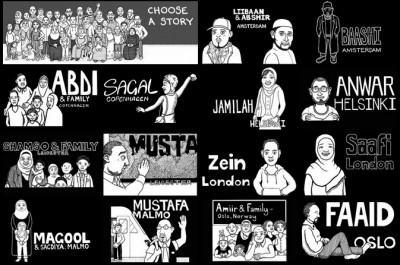
The Open Society Foundations have recently published a fascinating set of seven illustrated stories, called ‘meet the Somalis‘, covering the experiences of Somalis living in cities across Europe.

On November 21, this will coincide with the publishing of the Foundations’ research report “Somalis in Helsinki”.

Meet the somalis

To quote the Foundation’s website: “The Somali community in Europe is a vibrant, diverse minority group, including people of Somali origin born in Europe, Somali refugees and asylum seekers, and Somalis who have migrated from one country in Europe to another. There are no accurate figures for the number of Somalis in Europe, but on the whole they are among one of the largest minority groups.

The illustrated stories focus on challenges faced by Somalis in their respective cities in Europe and issues raised in the Somalis in European Cities research, including education, housing, the media, employment, political participation, and identity.”

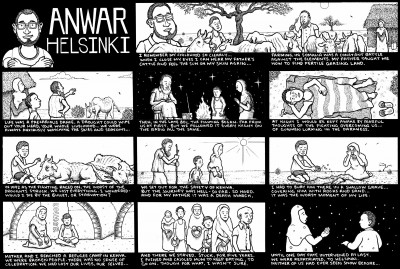
One of the featured illustrated stories is about Anwar from Helsinki.

Meet the Somalis

The Open Society Foundations work to build vibrant and tolerant democracies whose governments are accountable to their citizens.

Illustrations reproduced by permission.

  • Previous
  • 1
  • …
  • 25
  • 26
  • 27
  • 28
  • 29
  • 30
  • 31
  • …
  • 119
  • Next
Read more about documentary film
Read more

Recent Posts

  • Finland’s tabloids Iltalehti and Ilta-Sanomat are the pits
  • Riikka Purra’s Dr Jekyll and Mr Hyde mask
  • Double standards
  • Perussuomalaiset: Uusi logo, sama vanha juttu
  • Taco Trump

Recent Comments

  1. Absolutely Socking: Racist Finnish Facebook group against human rights gets flooded with socks on Musta Barbaari’s mother and sister charged by the police in “ethnic profiling” case
  2. Ilkka Nuotio on Pekka Myrskylä: “Tilastot kertovat toista kuin poliittinen keskustelu”
  3. Genrih Soinkara on The war in Ukraine and the Russian-Finnish border crisis are showing Finland’s ugly side
  4. Ahti Tolvanen on Comment by Ahti Tolvanen on the Helsinki +50 conference
  5. Angel Barrientos on Angel Barrientos is one of the kind beacons of Finland’s Chilean community

Archives

  • June 2026
  • May 2026
  • April 2026
  • March 2026
  • February 2026
  • January 2026
  • December 2025
  • November 2025
  • October 2025
  • September 2025
  • August 2025
  • July 2025
  • June 2025
  • May 2025
  • April 2025
  • March 2025
  • February 2025
  • January 2025
  • December 2024
  • November 2024
  • October 2024
  • September 2024
  • August 2024
  • July 2024
  • June 2024
  • May 2024
  • April 2024
  • March 2024
  • February 2024
  • January 2024
  • December 2023
  • November 2023
  • October 2023
  • September 2023
  • August 2023
  • July 2023
  • June 2023
  • May 2023
  • April 2023
  • March 2023
  • February 2023
  • January 2023
  • December 2022
  • November 2022
  • October 2022
  • September 2022
  • August 2022
  • July 2022
  • June 2022
  • May 2022
  • April 2022
  • March 2022
  • February 2022
  • January 2022
  • December 2021
  • November 2021
  • October 2021
  • September 2021
  • August 2021
  • July 2021
  • June 2021
  • May 2021
  • April 2021
  • March 2021
  • February 2021
  • January 2021
  • December 2020
  • November 2020
  • October 2020
  • September 2020
  • August 2020
  • July 2020
  • June 2020
  • May 2020
  • April 2020
  • March 2020
  • February 2020
  • January 2020
  • December 2019
  • November 2019
  • October 2019
  • September 2019
  • August 2019
  • July 2019
  • June 2019
  • May 2019
  • April 2019
  • March 2019
  • February 2019
  • January 2019
  • December 2018
  • November 2018
  • October 2018
  • September 2018
  • August 2018
  • July 2018
  • June 2018
  • May 2018
  • April 2018
  • March 2018
  • February 2018
  • January 2018
  • December 2017
  • November 2017
  • October 2017
  • September 2017
  • August 2017
  • July 2017
  • June 2017
  • May 2017
  • April 2017
  • March 2017
  • February 2017
  • January 2017
  • December 2016
  • November 2016
  • October 2016
  • September 2016
  • August 2016
  • July 2016
  • June 2016
  • May 2016
  • April 2016
  • March 2016
  • February 2016
  • January 2016
  • December 2015
  • November 2015
  • October 2015
  • September 2015
  • August 2015
  • July 2015
  • June 2015
  • May 2015
  • April 2015
  • March 2015
  • February 2015
  • January 2015
  • December 2014
  • November 2014
  • October 2014
  • September 2014
  • August 2014
  • July 2014
  • June 2014
  • May 2014
  • April 2014
  • March 2014
  • February 2014
  • January 2014
  • December 2013
  • November 2013
  • October 2013
  • September 2013
  • August 2013
  • July 2013
  • June 2013
  • May 2013
  • April 2013
  • March 2013
  • February 2013
  • January 2013
  • December 2012
  • November 2012
  • October 2012
  • September 2012
  • August 2012
  • July 2012
  • June 2012
  • May 2012
  • April 2012
  • March 2012
  • February 2012
  • January 2012
  • December 2011
  • November 2011
  • October 2011
  • September 2011
  • August 2011
  • July 2011
  • June 2011
  • May 2011
  • April 2011
  • March 2011
  • February 2011
  • January 2011
  • December 2010
  • November 2010
  • October 2010
  • September 2010
  • August 2010
  • July 2010
  • June 2010
  • May 2010
  • April 2010
  • March 2010
  • February 2010
  • January 2010
  • December 2009
  • November 2009
  • October 2009
  • September 2009
  • August 2009
  • July 2009
  • December 2008
  • November 2008
  • October 2008
  • September 2008
  • August 2008
  • July 2008
  • June 2008
  • May 2008
  • April 2008
  • March 2008
  • February 2008
  • January 2008
  • November 2007
  • October 2007
  • September 2007
  • August 2007
  • July 2007
  • June 2007
  • May 2007

Categories

  • ?? Gia L?c
  • ????? ?????? ????? ???????? ?? ??????
  • ???????
  • @HerraAhmed
  • @mondepasrond
  • @nohatefinland
  • @oula_silver
  • @Varathas
  • A Pakistani family
  • äärioikeisto
  • Abbas Bahmanpour
  • Abdi Muhis
  • Abdirahim Hussein Mohamed
  • Abdirahim Husu Hussein
  • Abdirisak Mahamed
  • About Migrant Tales
  • activism
  • Adam Al-Sawad
  • Adel Abidin
  • Afrofinland
  • Ahmed IJ
  • Ahti Tolvanen
  • Aino Pennanen
  • Aisha Maniar
  • Alan Ali
  • Alan Anstead
  • Alejandro Díaz Ortiz
  • Alekey Bulavsev
  • Aleksander Hemon
  • Aleksanterinliitto
  • Aleksanterinliitto ry
  • Aleksanterinliitto ry:n hallitus
  • Alex Alex
  • Alex Mckie
  • Alexander Nix
  • Alexandra Ayse Albayrak
  • Alexis Neuberg
  • Ali Asaad Hasan Alzuhairi
  • Ali Hossein Mir Ali
  • Ali Rashid
  • Ali Sagal Abdikarim
  • Alina Tsui
  • Aline Müller
  • All categories
  • Aman Heidari
  • Amiirah Salleh-Hoddin & Jana Turk
  • Amin A. Alem
  • Amir Zuhairi
  • Amkelwa Mbekeni
  • Ana María Gutiérrez Sorainen
  • Anachoma
  • Anders Adlecreutz
  • Angeliina Koskinen
  • Anna De Mutiis
  • Anna María Gutiérrez Sorainen
  • Anna-Kaisa Kuusisto ja Jaakko Tuominen
  • Annastiina Kallius
  • Anneli Juise Friman Lindeman
  • Announcement
  • Anonymous
  • Antero Leitzinger
  • anti-black racism
  • Anti-Hate Crime Organisation Finland
  • Anudari Boldbaatar
  • Arshiya Nasser
  • Aspergers Syndrome
  • Asylum Corner
  • Asylum seeker 406
  • Athena Griffin and Joe Feagin
  • Autism
  • Avaaz.org
  • Awale Olad
  • Ayan Said Mohamed
  • AYY
  • Barachiel
  • Bashy Quraishy
  • Beatrice Kabutakapua
  • Beri Jamal
  • Beri Jamal and Enrique Tessieri
  • Bertolt Brecht
  • Boiata
  • Boodi Kabbani
  • Bruno Gronow
  • Carmen Pekkarinen
  • Çelen Oben and Sheila Riikonen
  • Chiara Costa-Virtanen
  • Chiara Costa-Virtanen
  • Chiara Sorbello
  • Christian Thibault
  • Christopher Wylie
  • Clara Dublanc
  • Dana
  • Daniel Malpica
  • Danilo Canguçu
  • David Papineau
  • David Schneider
  • Dexter He
  • Don Flynn
  • Dr Masoud Kamali
  • Dr. Faith Mkwesha
  • Dr. Theodoros Fouskas
  • Edna Chun
  • Eeva Kilpi
  • Emanuela Susheela
  • En castellano
  • ENAR
  • Enrique
  • Enrique Tessieri
  • Enrique Tessieri & Raghad Mchawh
  • Enrique Tessieri & Yahya Rouissi
  • Enrique Tessieri and Muhammed Shire
  • Enrique Tessieri and Sira Moksi
  • Enrique Tessieri and Tom Vandenbosch
  • Enrique Tessieri and Wael Che
  • Enrique Tessieri and Yahya Rouissi
  • Enrique Tessieri and Zimema Mhone
  • Epäluottamusmies
  • EU
  • Europe
  • European Islamophobia Report
  • European Islamophobia Report 2019,
  • European Union
  • Eve Kyntäjä
  • Ezequiel Caldeiro
  • Facebook
  • Fadumo Dayib
  • Faisa Kahiye
  • Farhad Manjoo
  • Fasismi
  • Finland
  • Fizza Qureshi
  • Flyktingar och asyl
  • Foreign Student
  • Fozia Mir-Ali
  • Frances Webber
  • Frida Selim
  • Gareth Rice
  • Ghyslain Vedeaux
  • Global Art Point
  • Great Replacement
  • Habiba Ali
  • Hami Bahadori
  • Hami Bahdori
  • Hamid
  • Hamid Alsaameere
  • Hamid Bahdori
  • Handshake
  • Harmit Athwal
  • Hassan Abdi Ali
  • Hassan Muhumud
  • Heikki Huttunen
  • Heikki Wilenius
  • Helsingin Sanomat
  • Henning van der Hoeven
  • Henrika Mälmsröm
  • Hser Hser
  • Hser Hser ja Mustafa Isman
  • Husein Muhammed
  • Hussain Kazemian
  • Hussain Kazmenian
  • Ibrahim Khan
  • Ida
  • Ignacio Pérez Pérez
  • Iise Ali Hassan
  • Ilari Kaila & Tuomas Kaila
  • Imam Ka
  • inside-an-airport
  • Institute of Race Relations
  • Iraqi asylum seeker
  • IRR European News Team
  • IRR News Team
  • Islamic Society of Norhern FInland
  • Islamic Society of Northern Finland
  • Islamophobia
  • Jacobinmag.com
  • Jallow Momodou
  • Jan Holmberg
  • Jane Elliott
  • Jani Mäkelä
  • Jari Luoto
  • Jari Taponen
  • Jegor Nazarov
  • Jenni Stammeier
  • Jenny Bourne
  • Jessie Daniels
  • Joe Davidow
  • Johannes Koski
  • John D. Foster
  • John Grayson
  • John Marriott
  • Jon Burnett
  • Jorma Härkönen
  • Jos Schuurmans
  • José León Toro Mejías
  • Josue Tumayine
  • Jouni Karnasaari
  • Juan Camilo
  • Jukka Eräkare
  • Julian Abagond
  • Julie Pascoet
  • Jussi Halla-aho
  • Jussi Hallla-aho
  • Jussi Jalonen
  • JusticeDemon
  • Kadar Gelle
  • Kaksoiskansalaisuus
  • Kansainvälinen Mikkeli
  • Kansainvälinen Mikkeli ry
  • Katherine Tonkiss
  • Kati Lepistö
  • Kati van der Hoeven-Lepistö
  • Katie Bell
  • Kättely
  • Kerstin Ögård
  • Keshia Fredua-Mensah & Jamie Schearer
  • Khadidiatou Sylla
  • Khadra Abdirazak Sugulle
  • Kiihotus kansanryhmää vastaan
  • Kirsi Crowley
  • Koko Hubara
  • Kristiina Toivikko
  • Kubra Amini
  • KuRI
  • La Colectiva
  • La incitación al odio
  • Laura Huhtasaari
  • Lauri Finér
  • Leif Hagert
  • Léo Custódio
  • Leo Honka
  • Leontios Christodoulou
  • Lessie Branch
  • Lex Gaudius
  • Leyes de Finlandia
  • Liikkukaa!
  • Linda Hyökki
  • Liz Fekete
  • M. Blanc
  • Maarit Snellman
  • Mahad Sheikh Musse
  • Maija Vilkkumaa
  • Malmin Kebab Pizzeria Port Arthur
  • Marcell Lorincz
  • Mari Aaltola
  • María Paz López
  • Maria Rittis Ikola
  • Maria Tjader
  • Marja-Liisa Tolvanen
  • Mark
  • Markku Heikkinen
  • Marshall Niles
  • Martin Al-Laji
  • Maryan Siyad
  • Matt Carr
  • Mauricio Farah Gebara
  • Media Monitoring Group of Finland
  • Micah J. Christian
  • Michael McEachrane
  • Michele Levoy
  • Michelle Kaila
  • Migrant Tales
  • Migrant Tales Literary
  • Migrantes News
  • Migrants' Rights Network
  • MigriLeaks
  • Mikko Kapanen
  • Miriam Attias and Camila Haavisto
  • Mohamed Adan
  • Mohammad Javid
  • Mohammad M.
  • Monikulttuurisuus
  • Monisha Bhatia and Victoria Canning
  • Mor Ndiaye
  • Muh'ed
  • Muhamed Abdimajed Murshid
  • Muhammed Shire
  • Muhammed Shire and Enrique Tessieri
  • Muhis Azizi
  • Musimenta Dansila
  • Muslimiviha
  • Musulmanes
  • Namir al-Azzawi
  • Natsismi
  • Neurodiversity
  • New Women Connectors
  • Nils Muižnieks
  • No Labels No Walls
  • Noel Dandes
  • Nuor Dawood
  • Omar Khan
  • Otavanmedia
  • Oula Silvennoinen
  • Paco Diop
  • Pakistani family
  • Pentti Stranius
  • Perussuomalaiset
  • perustuslaki
  • Petra Laiti
  • Petri Cederlöf
  • Pia Grochowski
  • Podcast-lukija Bea Bergholm
  • Pohjois – Suomen Islamilainen Yhdyskunta
  • Pohjois Suomen Islamilainen Yhyskunta
  • Polina Kopylova
  • Race Files
  • racism
  • Racism Review
  • Raghad Mchawh
  • Ranska
  • Rashid H. and Migrant Tales
  • Rasismi
  • Raul Perez
  • Rebecka Holm
  • Reem Abu-Hayyeh
  • Refugees
  • Reija Härkönen
  • Remiel
  • Reza Nasri
  • Richard Gresswell
  • Riikka Purra
  • Risto Laakkonen
  • Rita Chahda
  • Ritva Kondi
  • Robito Ibrahim
  • Roble Bashir
  • Rockhaya Sylla
  • Rodolfo Walsh
  • Roger Casale
  • Rostam Atai
  • Roxana Crisólogo Correa
  • Ruth Grove-White
  • Ruth Waweru-Folabit
  • S-worldview
  • Sadio Ali Nuur
  • Sami Rusanen
  • Sandhu Bhamra
  • Sara de Jong
  • Sarah Crowther
  • Sari Alhariri
  • Sarkawt Khalil
  • Sasu
  • Scot Nakagawa
  • Shabana Ahmadzai
  • Shada Islam
  • Sharon Chang blogs
  • Shenita Ann McLean
  • Shirlene Green Newball
  • Sini Savolainen
  • Sira Moksi
  • Sonia K.
  • Sonia Maria Koo
  • Steverp
  • Stop Deportations
  • Suldaan Said Ahmed
  • Suomen mediaseurantakollektiivi
  • Suomen Muslimifoorumi ry
  • Suomen viharikosvastainen yhdistys
  • Suomen viharikosvastainen yhdistys ry
  • Suomi
  • Supermen
  • Susannah
  • Suva
  • Syrjintä
  • Talous
  • Tapio Tuomala
  • Taw Reh
  • Teivo Teivainen
  • The Daily Show
  • The Heino
  • The Supermen
  • Thomas Elfgren
  • Thulfiqar Abdulkarim
  • Tim McGettigan
  • Tino Singh
  • Tito Moustafa Sliem
  • Tobias Hübinette and L. Janelle Dance
  • Transport
  • Trica Danielle Keaton
  • Trilce Garcia
  • Trish Pääkkönen
  • Trish Pääkkönen and Enrique Tessieri
  • Tuulia Reponen
  • Uncategorized
  • UNITED
  • University of Eastern Finland
  • Uyi Osazee
  • Väkivalta
  • Vapaa Liikkuvuus
  • Venla-Sofia Saariaho
  • Vieraskynä
  • W. Che
  • W. Che an Enrique Tessieri
  • Wael Ch.
  • Wan Wei
  • Women for Refugee Women
  • Xaan Kaafi Maxamed Xalane
  • Xassan Kaafi Maxamed Xalane
  • Xassan-Kaafi Mohamed Halane & Enrique Tessieri
  • Yahya Rouissi
  • Yasmin Yusuf
  • Yassen Ghaleb
  • Yle Puhe
  • Yuliet Tresa
  • Yve Shepherd
  • Zahra Khavari
  • Zaker
  • Zalina Ametova
  • Zamzam Ahmed Ali
  • Zeinab Amini ja Soheila Khavari
  • Zimema Mahone and Enrique Tessieri
  • Zimema Mhone
  • Zoila Forss Crespo Moreyra
  • ZT
  • Zulma Sierra
  • Zuzeeko Tegha Abeng
© 2026 Migrant tales | Powered by Minimalist Blog WordPress Theme