Migrant tales
Menu
  • #MakeRacismHistory “In Your Eyes”
  • About Migrant Tales
  • It’s all about Human Rights
  • Literary
  • Migrant Tales Media Monitoring
  • NoHateFinland.org
  • Tales from Europe
Menu

Author: Mark

Being responsible in debates about immigration and extremism

Posted on March 4, 2015 by Mark

Extremism almost never sees itself as ‘extreme’

When I was young I studied ‘brainwashing’ as part of my studies in psychology. One feature that constantly emerged was how ‘extreme’ interpretations of events typically took a grain of truth and wrapped it up in a generalisation such that it would act as a shield to any criticism, especially convincing and obvious counterarguments that threatened to unravel the persons’ warped world-view.

This is always tricky ground, for several reasons. This bias is something we all share to different degrees, and so it’s easy to reverse the argument if you start trying to point it out. Being ‘brainwashed’ is to an extent common, we even have an everyday term for it – we call people ‘opinionated’. Brainwashing is, in essence, accepting information as true without fully assimilating it as an independently thinking, critical and empathic individual. In the context of racism debates today, we might talk of pathological bias. Continue reading “Being responsible in debates about immigration and extremism”

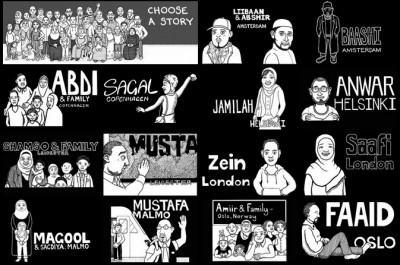
Meet the Somalis – the illustrated stories of Somalis in seven cities in Europe

Posted on November 17, 2013 by Mark

The Open Society Foundations have recently published a fascinating set of seven illustrated stories, called ‘meet the Somalis‘, covering the experiences of Somalis living in cities across Europe.

On November 21, this will coincide with the publishing of the Foundations’ research report “Somalis in Helsinki”.

Meet the somalis

To quote the Foundation’s website: “The Somali community in Europe is a vibrant, diverse minority group, including people of Somali origin born in Europe, Somali refugees and asylum seekers, and Somalis who have migrated from one country in Europe to another. There are no accurate figures for the number of Somalis in Europe, but on the whole they are among one of the largest minority groups.

The illustrated stories focus on challenges faced by Somalis in their respective cities in Europe and issues raised in the Somalis in European Cities research, including education, housing, the media, employment, political participation, and identity.”

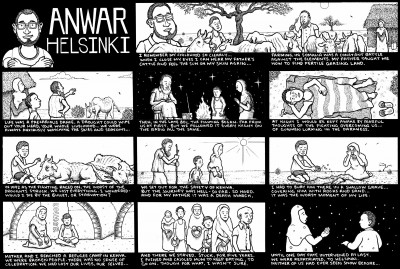
One of the featured illustrated stories is about Anwar from Helsinki.

Meet the Somalis

The Open Society Foundations work to build vibrant and tolerant democracies whose governments are accountable to their citizens.

Illustrations reproduced by permission.

Bank accounts for the stateless – money laundering legislation is not an excuse for financial exclusion

Posted on November 16, 2013 by Mark

This post follows on from a recent post by Enrique on continued practices of financial exclusion in relation to individuals who have had difficulties establishing their identification with Finnish authorities and have subsequently had problems opening bank accounts. It is also a response to one commentator’s fallacious claim that money laundering legislation is an adequate justification for such financial exclusion.

From what I understand of the EU legislation (Directive 2001/97/EC [FI:,EN:]) that covers this issue of money laundering, the banks are allowed as part of their due diligence to establish the identity of the entity involved and to also establish the purpose and nature of the ‘business relationship’. This involves obtaining supportive evidence, and does not specifically establish what these documents must be, thus giving some freedom to institutions to establish their own practices.

This, my friend Enrique, is probably the key reason that different banks are applying different practices. Also, imprisonment and fine are typical penalties attached to these regulations in member states, though I don’t know the specifics of Finland. This may be another reason for the inflexibility of some banking institutions.

However, in applying those practices, it’s worth exploring the EU Directive in more detail to see exactly who and what this Directive is aimed against:

The further stipulations of the legislation are particularly informative:

1) It sets out in part 2 of Article 3 a benchmark requirement on identification also on the transfer of funds of €15 000 or more.
2) It then goes on to point out that institutions can, where there is doubt about whether the account is being used on their own behalf, take reasonable measures to ascertain the real identity of those on whom they are acting.
3) It goes on to state (part 11) that Member States can take measures deemed necessary to establish the identity of persons particularly when not present face-to-face. The Directive specifically mentions the implications for ‘online commerce’ involved in this part.

So, the issue of money laundering typically involves larger sums of money that would normally be irrelevant to processing social security payments or even salaries. It also establishes that non-face-to-face transactions and those involving individuals working on behalf of other individuals (i.e. lawyers, accountants) as being the key target of the Directive. I.e. stateless persons (inter alia refugees) are nowhere mentioned as a particular ‘target group’ for these money laundering requirements, PS Voter, and of course, why would they be?

“The other key issue here is that this objective of minimising possibilities for money laundering also have to be balanced against the need to avoid financial exclusion!”

This is where interpretation of these requirements would of course allow individuals whose circumstances make ID incomplete to acquire basic banking services.

Guidance on this matter for banking institutions in the UK is provided by the Joint Money Laundering Steering Group (JMLSG). It is worth reproducing here some the key elements of this guidance in summary:

Access to basic banking facilities and other financial services is a necessary requirement for most adults. It is important therefore that the socially/financially disadvantaged should not be precluded from opening accounts or obtaining other financial services merely because they do not possess evidence of their identity in circumstances where they cannot reasonably be expected to do so. Internal procedures must allow for such instances and must provide appropriate advice to staff on how identity can be confirmed under these exceptional circumstances and what local checks can be made.

M3.1.5G states that the exceptions to guard against financial exclusion aim to help relevant firms ensure that where people cannot reasonably be expected to produce detailed evidence of identity, they are not denied access to financial services. Although a relevant firm must always take reasonable steps to check who its client is, relevant firms will sometimes be approached by clients who are at a disadvantage, or who otherwise cannot reasonably be expected to produce detailed evidence that helps to confirm identity. Examples could be where a person does not have a passport or driving licence, or whose name does not appear on utility bills.

ML 3.1.6G states that where a relevant firm has reasonable grounds to conclude that an individual client is not able to produce the detailed evidence of his or her identity and cannot reasonably be expected to do so, the relevant firm may accept as identification evidence a letter or statement from a person in a position of responsibility who knows the client, that tends to show that the client is who s/he says s/he is, and to confirm his/her permanent address if s/he has one.

4.110. ML 3.1.7G provides that examples of persons in a position of responsibility who know the client include solicitors, doctors, ministers of religion, teachers, hostel managers and social workers.

4.111. The list is not exhaustive and other examples might include, for example, district nurses or midwives who have visited the client in their homes, care home managers, prison governors, probation officers, police officers and civil servants, Members of Parliament, members of the Scottish Parliament or the Northern Ireland Assembly, a Justice of the Peace, a local or county councillor, or the staff in the registry of a higher education or further education institution

I’m sure there should be similar guidance available to Finnish banking institutions from a relevant central government agency dealing with money laundering? If not, then why not? Financial exclusion is not a priority or issue for the Finnish government?

In the UK, the advice also goes further in stating that a bank branch will typically have a ‘money laundering reporting officer’, whose responsibility it is to oversee these policies at branch level, and that a direct meeting with this individual in problematic cases will more easily lead to a solution, as they can make decisions in regard to ‘non-standard’ cases.

It should now be quite clear to you PS Voter that this issue of ‘money laundering’ cannot be offered as an excuse for continuing an inflexible practice of financial exclusion!

Confessions of a recovering racist

Posted on July 20, 2013 by Mark

Society has achieved at least one significant victory in the fight against racism – it has succeeded in making open racism a dirty concept. The power of stigma that worked so effectively to reinforce racism has been harnessed to turn the tide against open discrimination – at least in polite society. Today, in most public discourse, it is social suicide to admit to any kind of open racism. This stigmatisation of racism is only one victory however in the long fight to rid society of its most pernicious form of exploitation.

Racism is the invention of social categories based on arbitrary physical and cultural characteristics so that a dominant ethnicity can justify and exercise dominance over other ethnicities. Cutting through the social science verbiage, it is when the ‘big noses’ suddenly announce that only people with big noses are smart enough and advanced enough to rule the roost. I’m sure you get the idea.

Even though society has succeeded in making open racism a social anathema, racism hasn’t disappeared. Likewise, there has always been disguised racism – the kinds of discrimination that are hard to identify, very hard to prove outwardly and sometimes also very hard to admit. Following the successes of civil rights movements, covert racism has become the default position for a significant portion of whites. The same is certainly true of Finland also.

For example, ideas of racial superiority have given way to ideas of cultural superiority. Industrial and economic advantage are taken as signs not of exploitation or historical expedience, but of superiority in cultural evolution, something to be celebrated, defended and held as a matter of national pride. Indeed, such a position of superiority is taken as a perfectly natural justification for advancing second-class or stigmatised citizenship for all manner of peoples from other places, particularly those from the developing world.

The notion of the ‘developing world’ is problematic for this reason. It has built into it a value system that naturally places societies – and by implication their citizens – into a scale, a  hierarchy in social development and evolution, with Western societies standing aloft of the developing world. This hierarchy in turn serves as implicit evidence of the cultural superiority of the white races over other ethnicities. Even if it is nowadays recognised as an accident of history, it is still defended to the hilt as a justification for a wall of separation, to keep out the economic migrants from the South, Asia and the Middle East.

But it’s not merely an economic argument. In the populist/fascist discourses, disadvantaged migrants always morph naturally into the barbarians. Cultural superiority over the barbarians is assumed in all areas of society, politics, science, morality, technology, education, lifestyle, freedoms etc. Moreover, we are told we must protect our hard-won resources and superiority from the threat of the uncivilized barbarians.

This is so taken for granted that it seems impossible to argue anything other than the total superiority of the West. This is the pernicious nature of racism and its implicit notions of superiority – where social values are attached not to human beings, as emotional and intellectual beings of ‘equal standing’, but rather as units of an economic powerhouse whose economic advantage and cultural development is assumed to provide moral authority in all matters cultural and political. So that when people of other ethnicities attempt to articulate the nature of discrimination, the default position is that there must be some intellectual or cultural deficiency behind it.

There is a tremendous irony here. People of colour fought tooth and nail (as did many whites) for civil rights to be enshrined within the core of Western democracies. Not merely enshrined, but enacted, defended and supported by legislation and institutions to defend those rights. And now, this very advancement in civil and human rights is offered as part of the key evidence that maintains a sense of social superiority over the developing world. Time and again you hear today attacks on Muslim or African immigrants on the basis of human rights or civil organisation, with little or no thought to how those rights were actually won and by whom.

Today, the naturalistic (genetic) parts of racist dogmas have to a large extent been abandoned, but the ‘order’ and cultural hierarchies remain, and the ‘order’ is almost exactly as it was before, except that in addition to Jews, Gypsies, Africans and Indigenous peoples, you now have Muslims added to that list of untouchables. And for many of those opposed to Muslims, a very cynical strategy of the enemy of my enemy is my friend is adopted, much to the disbelief and disgust of the vast majority of Jews.

The ideology of the big noses today tells us that the West has fought hard to win its dominant position in the world and must therefore defend itself against the barbarian horde waiting at the gates  (infamously dubbed the ‘Gates of Vienna’ by the fascists). In the cold light of day you could see this as a justifiable form of self-preservation, were it not for the fact that it’s totally unnecessary. It’s quite feasible to accept that economically, the West must preserve a border and control levels of immigration. It’s merely a practical necessity related to the difficulties of any migrating population. Even if the most educated of Americans were to head en masse for Europe, the difficulties of catering for increased housing, increased jobs in the economy, language training, cultural adaptation and integration would require time and resources to manage effectively.

So when it comes to controlling immigration, the notion of having to defend cultural superiority is a red herring. Deprivation is not the sole preserve of cultural Others – all parts of Europe have experienced varying degrees of social deprivation over the centuries, brought about not by any innate cultural inferiority, but by exploitation, poverty and an enforced class system.

The new class system being put forward by Europe’s and Finland’s populists demands second-class citizenship for citizens whose origins are outside of Europe, or who are Roma, or who are Muslim, or who are homosexual. This class system says it’s okay to take immigrants from North Africa to clean and cook for Europe’s capitalists just as long as they go home again when the economy starts to tank due to the excesses of the banking elites. This class system says it’s okay to bleed the developing world of its very limited resources in health care personnel to cater for the ever growing numbers of older persons in Europe. This class system says that it’s okay to put financial and practical obstacles in front of immigrants that result in parents being kept apart from their children and husbands from their wives.

Indeed, a further irony is that today’s populism serves only to detract attention from the excesses of corporate elites by focusing on immigration as the pressing problems of the day. We are encouraged to turn a blind eye to the problems of growing inequalities within European societies. Better yet, for some, all inequalities can be reduced in their final analysis to those evil immigrants sucking out the slack from the welfare economy.

The whole notion of cultural superiority, while a useful distraction for those that cook the books in the guise of ‘investment practices’, is unnecessary to understanding or debating how to manage immigration effectively. It’s a practical issue after all. If you accept a new population to exploit and then fail to properly finance the transition process, then deprivation and all of its evils will emerge. If the global community fails to properly address economic development outside of the wealthy economies, then this will create migration pressures, the conditions for war and its subsequent population displacements, and provide further fuel for extremists within the developed and developing countries.

Today’s racists are somewhat immature. I’m being kind, of course. They see the barbarian hordes waiting at the gates. That’s the narrative and they push it at every single opportunity. They ignore social problems as facets of all societies. Crime becomes a problem especially of ethnic groups. Human rights violations become a problem especially of ethnic groups. Language problems become the problems especially of ethnic groups. Cultural tension and misunderstanding become the problems especially of ethnic groups. They ignore the fact that each of these issues applies to every population regardless of ethnicity. They ignore the significant problems of stigmatisation that result from their peddling of this narrative. They ignore the problems of heightened inter-ethnic tension and increased assaults against visible minorities. They see only the barbarians – like Trojan horses – attacking the fabric of their superiority from within and waiting at the walls to attack from without.

So, in defending the rights of Westerners they actually envisage ways in which the barbarians are to be denied the full rights of citizenship: the right to family, the right to equal status before the law, the right to political advocacy, the right to security, the right to dignity.

The racists of today run around in nappies. It’s a fantastical notion, I know, but quite telling. These nappy-clad racists wallow in their own ideological manure, completely oblivious to the crap that swims in their underwear and the stench of racism that fills the air wherever they go. They wave imaginary swords and play at heroes fighting the barbarians. They imagine themselves belonging to an order of knights sworn to protect the virtue of Western superiority.

In one sense, this has nothing to do with the grown-up world, but the victims of this would-be macho heroism are real nonetheless. The harms of racism, overt or covert, are very real. The potential for undermining the rights-based society they say they value is very real too, as populist groups make inroads into the political establishment across the EU by exploiting this narrative of the barbarian hordes and its implicit notions of cultural superiority.

Migrant Tales Literary: If you are a Finn

Posted on May 22, 2013 by Mark


If you are a Finn, what is a Fonn?

Was your flag blue and white, or was it lilac and yellow?

Sorry, what was that again? Sano säki mua suks?

Or was it san snää mnuu snuuks?

So who hates who in this mnuu snuu, I wonder?


So, I am the maahanmuuttaja.

There is only one of us, after all.  — Ha, you wish!

I am a mover of countries, apparently!

I see that my country certainly moved with me!

Was I a ulkomaalainen! Or was I a tulokaslaji?


A Finn…

sweats to get clean

swims in ice to get warm

drinks vodka to get thirsty

stays silent to communicate


Still, it’s not all contradictions.

Finns sleep. Finns clean their teeth. Finns talk (yes they do!).

Finns laugh. Finns smile. Finns walk (oh, and Finns pooh!).


Finns.

You know, people from Finland (or was that Funland?).

Finns.

You know, where the cocks crow a bit funny, like “cock-a-coockle-coo”

Finns.

You know, not Swedes. Oh, but wait, some of them speak Swedish, too!

Finns.

Tree lovers. True lovers. Nature lovers. Lake lovers. Because love is quite unique to Finland, don’t you know!

Finns.

Because F comes before G, and I comes after H, and N comes after M and oh, that, once again, and then S comes before T. And then, finally, we’re done.

Finns.

Because there is something extra special about Suomi.

Sacred, even!


So if you are a Finn. What am I, then? What am I to you?

Someone else, not a Finn, not so lucky, perhaps?

Not kin, to a Finn. But born into a dustbin. Just, someone “…from somewhere else!”


Do the birds in Finland know that they are Finnish?

That they are special?

Why not? – someone should tell them. Hey, suomalainen lintu – kuuntele!

Sä oot erityinen!

Every one of you! And the worms you eat, too.

All special. Loveable. Valuable.

Cos your Finnish.


I’m not a Finn.

I guess that means I’m finished.

…

..

.

Growing up in Finland as an immigrant – a personal story!

Posted on March 28, 2013 by Mark

D4R is a regular poster in the comments on Migrant Tales. We are very grateful that he has shared some of his experiences of growing up and dealing with discrimination in Finland. Here is the first part of a long comment he made on one post, which deserves to be read by as many people as possible.

D4R is currently studying in further education and has made huge strides in finding ways to move forward from his difficult experiences, in spite of having had his educational opportunities previously undermined by daily racism.

His idealism is remarkably strong and clear, and his message is one of tolerance and understanding, in spite of the fact that he was often shown neither of these.

He has our deep admiration on MT for his strength of character and his determination to avoid bitterness and to build bridges of understanding.

D4R: Growing up in Finland was one of [the most] challenging things that I have faced during my life time. (excuse my poor English language writings) When I came to Finland I was a small boy; I started school at age of around 8. I have faced hardship in school and outside of school coming from people who were hating my ethnicity.

I have been jumped on and called names by people of different type of ages; they could have been adults or kids, woman or men, it was horrible. I remember at school when we kids were in the class and the teacher wasn’t in the class, kids used to shout at me like you’re a welfare leecher, that I’m a bum, and this was coming from kids who were 8 years old.

At that time I could not understand why were they calling me a bum. No way could they figure that out; these all were things they had heard from their parents; it was stuff that’s being discussed at their homes. All these things deeply affected me mentally and it was taking a toll on me physically. I was getting sick every short period of times, the abuse was continuous at school. I was being bullied almost every single day.

Sometimes when my parents send me to school I just went to the park and spent the rest of school time there alone so I could avoid going to school and facing the abuse I was getting there daily. One day my teacher called us at home and told my parents that I was being absent from school and they held a meeting with my parents, and so we went there to meet the teachers.

In there we discussed about me why was I being absent and why was I not focusing on anything at school. I just can’t understand how come nobody understood my problems; they all blamed me and nobody paid attention to the negative environment I was in at the time. How can you function and concentrate on anything when you’re being taken as a target, you’re being called names every day, when you get jumped on by several people just because of your ethnicity.

Honestly, it was like in the jungle with a pack of animals, no mercy. There were a few kids who were kind to me; I guess their parents were raising them properly, but most of the kids put me through hell. This abuse continued through my teenage years, and every time I made a complaint I was told that they’re going to do something about it but with no results, the kids and teenagers were freely abusing me.

Every year that passed by was getting worse than the previous one, and my grades were degrading to a point where my parents were getting concerned about me; they could figure out what was really happening to me. My personality changed, I become isolated even at home. I was in pain and nobody was there to understand my pain. I used to come home and shut myself in my room. There was nobody that I could talk to, they couldn’t care less at school and my poor parents didn’t know what was wrong in me; even if they knew, what could they do about it? Nothing.

Every morning when I had to go to school I was depressed, I was depressed to go and meet those evil people who just feast on my torture and I had to no option but to stand and take that torture and abuse, and this continued throughout my elementary school.

Now somebody will say, this is the same as school bullying, but no, this is not like school bullying; this is worse than that, especially when you’re being targeted and your spirit detroyed. Again, someone is going to say, why did you come to this country or stay here, but this is easier said than done.

When my parents brought me to this country, they did not know where they were coming to and what will be the environment for their kids. I truly can understand the frustration my parents had and the concern; it wasn’t easy for them either, we were just unlucky to face these things.

I didn’t do well at school because I wasn’t receiving the proper environment; I was in a bad and hostile environment. I can understand what a lot of visible immigrants go through; I don’t know if nowadays the situation is different than in my time, but I want to encourage visible youths to stay strong and talk with their parents at home if they are having similar kinds of problems that I had, because I know it will destroy them as it destroyed me.

It will have an effect on their education, their personalities, basically everything; it will destroy them. I could have done better at school if somebody could have figured out my problems at school and helped me. Finland is a safe country to live for most people but there are some serious problems for visible immigrants.

I strongly believe and hope things will get better in this country for all kinds of people. We’re all human beings; we should treated one another with respect and not degrade and destroy, I guess that’s too much to ask for some people’s human nature, to not destroy other people’s lives.

We all have one life, treat each other as you want them to treat you; if you don’t want people to treat you bad, don’t treat people that way. You wouldn’t want people to call you names and degrade you, so don’t do it to them.

People may look different than you, they may have different skin colour to you, but they have feelings just like you do, they get hurt and offended, please understand that. If you destroy your environment, you’re destroying yourself too. I think we as human beings should increase tolerance and peace in this world not intolerance and hatred, because that leads to violence and nobody is safe then, not you or me.

People who spread separatism, racism, prejudice, intolerance are dangerous people and we shouldn’t allow them to receive power; they don’t serve you or me, they serve themselves. I’ll leave peace to all you and happy Easter day

Is condemning racism really condemning racism? Suomen Sisu’s ‘vodka’ problem!

Posted on March 12, 2013 by Mark

I think it’s positive that Olli Immonen, PS member of parliament and new Chairman of Suomen Sisu, the Far Right grouping, so openly ‘condemns’ racism on the Suomen Sisu website, but sadly, the comment is open to some interpretation. The reason is that like PS, they condemn racism in one breath, and then choose to talk not about racism, but about ‘positive discrimination’ in the labour market, as if they were ever the same!

Not to take up the point about whether positive discrimination constitutes ‘racism’, it is in this context that Immonen’s statement becomes somewhat ambiguous. Indeed, it is true to say that today racism is universally regarded as a bad thing, and no-one sensible or sane would attempt to defend it in any blatant form. But the Far Right have not given up their scapegoating of immigrants or their manipulation of racism among voting populations – rather, they have tried to sanitise it and make it respectable. Indeed, while Immonen appears to make out he is a ‘liberal’ on the issue of racism, he certainly makes up for it in terms of quite blatant Islamaphobia. Why bother with racism when you can get good mileage and less political heat out of religious bigotry?

But that isn’t the end of the racism question for me in regard to Suomen Sisu, not by a long way, especially given their stated opposition to, for example, ethnic inter-marriage. It remains to be seen too, to what extent their extremism will remain visible after their obligatory website makeover, now that there is a new man in charge. Something still smells fishy!

One exposé several years ago by a Guardian journalist who infiltrated the British National Party revealed that the ‘old style’ racism still exists to be seen ‘on the inside’, even if somewhat coded, but that outwardly the message is nowadays very tightly controlled. Racial superiority has given way to a sense of moral and cultural superiority, built on the back of economic advantage. The constant linking of immigrants with crime, rape and extremism continues as before, but rather than being put forward as proof of racial inferiority, today it is put forward as proof of cultural inferiority and economic liability. Racial prejudice has in many ways given way to ethnic, economic and religious prejudice, which nevertheless still divides along racial lines. Racists have merely taken shelter today in mainstream cultural categories.

Yet any political party that puts immigration as the number one problem facing society, or even in the top ten, simply has no real concept of civil society or today’s political and social challenges. While immigration does bring problems, typically through being underfunded, and a visible change in demographics, it most certainly is not the main problem facing modern societies. Economic problems loom largest, from government debt to personal debt, job insecurity, capital flight, financial regulation, market bubbles, unaffordable housing, growing gaps between rich and poor, ageing populations, health care financing, health inequalities, the ‘greying’ of rural populations, achieving competitiveness in a global market while maintaining standards of living, regulation of ‘borderless’ markets, mortgaging the future, environmental sustainability, the rights of women, violence against women, human rights abuses, human trafficking, political and social freedoms, substance abuse problems etc; these are all issues both home and abroad that would naturally rank higher in my view than the ‘problem’ of immigration.

Of course, if you think you didn’t get a job because it went to an immigrant, then you may find reason to be personally aggrieved about immigration. If you seek identity and belonging through a narrow nationalist identity centred on monoculture illusions and a sense of endless despair about any cultural mixing,  then fear for the Islamisation of Europe will keep you awake at night. Identity politics is easy to follow and easy to campaign for. You simply follow your ‘team’ and then everything the other team does is wrong, the referee [the Establishment] is blind and the game is rigged against the natives! Hooliganism, intimidation and violence are defended as ‘boys will be boys’ or even as cultural self-defence. Oh, and importantly, our team is of course naturally the best! Go Suomi!

So as much as it seems useful for Immonen to condemn racism, I found the wording to be problematic. Given Suomen Sisu’s stated opposition to positive discrimination or ethnic quotas in employment policies, which was also a key point in the Nuiva Maalimanifesti compiled by PS’s politicians, we just don’t know what Immonen refers to when he condemns racism. Chances are that he condemns the Far Right’s interpretation of racism and not the racism by Finns against immigrants, institutional racism, public slurs of immigrants, second class citizenship of immigrants etc.

I might be wrong, of course, because on paper, it looks like a condemnation of racism, and that is what people ‘want to hear’ for these groups to gain mainstream respectability. But until I hear it in more specific terms, and not all that nonsense about positive discrimination being the worst evil of racism, then it sounds like the protestations of the alcoholic who tells you that they really have stopped drinking. But upon investigation, you find the stuff they are now drinking happens to smell like vodka, taste like vodka and have the intoxicating effects of vodka, but that you are expected to believe it really isn’t vodka because the label on the bottle clearly says it isn’t!

Migrant Tales Literary: V-Day – one billion rising!

Posted on February 14, 2013 by Mark

Today marks V-Day, one billion rising, referring to the number of women on the planet who have either been raped or beaten during their lives.

Eve Ensler, of The Vagina Monologues fame, has penned a passionate piece calling for women to rise up in protest and men to support them on Valentines Day 2013, in support of the these one billion women.

I bring this to Migrant Tales today also as a response to those men on the Far Right in Finland who attempt to hijack rape as an issue to further their own agenda of hate against immigrants – shame on you! Rape is not an issue to do with immigrants – it is an issue that all men must take responsibility for! If you are not part of the solution, you are part of the problem!


OVER IT

By Eve Ensler

I am over rape.

I am over rape culture, rape mentality, rape pages on Facebook.

I am over the thousands of people who signed those pages with their
real names without shame.

I am over people demanding their right to rape pages, and calling it
freedom of speech or justifying it as a joke.

I am over people not understanding that rape is not a joke and I am
over being told I don’t have a sense of humor, and women don’t have a
sense of humor, when most women I know (and I know a lot) are really
fucking funny. We just don’t think that uninvited penises up our anus,
or our vagina is a laugh riot.

I am over how long it seems to take anyone to ever respond to rape.

I am over Facebook taking weeks to take down rape pages.

I am over the hundreds of thousands of women in Congo still waiting
for the rapes to end and the rapists to be held accountable.

I am over the thousands of women in Bosnia, Burma, Pakistan, South
Africa, Guatemala, Sierra Leone, Haiti, Afghanistan, Libya, you name a
place, still waiting for justice.

I am over rape happening in broad daylight.

I am over the 207 clinics in Ecuador supported by the government that
are capturing, raping, and torturing lesbians to make them straight.

I am over one in three women in the U.S military (Happy Veterans Day!)
getting raped by their so-called “comrades.”

I am over the forces that deny women who have been raped the right to
have an abortion.

I am over the fact that after four women came forward with allegations
that Herman Cain groped them and grabbed them and humiliated them, he
is still running for the President of the United States.

And I’m over CNBC debate host Maria Bartiromo getting booed when she
asked him about it. She was booed, not Herman Cain.

Which reminds me, I am so over the students at Penn State who
protested the justice system instead of the rapist pedophile of at
least 8 boys, or his boss Joe Paterno, who did nothing to protect
those children after knowing what was happening to them.

I am over rape victims becoming re-raped when they go public.

I am over starving Somali women being raped at the Dadaab in Kenya,
and I am over women getting raped at Occupy Wall Street and being
quiet about it because they were protecting a movement which is
fighting to end the pillaging and raping of the economy and the earth,
as if the rape of their bodies was something separate.

I am over women still being silent about rape, because they are made
to believe it’s their fault or they did something to make it happen.

I am over violence against women not being a #1 international priority
when one out of three women will be raped or beaten in her lifetime –
the destruction and muting and undermining of women is the destruction
of life itself.

No women, no future, duh.

I am over this rape culture where the privileged with political and
physical and economic might, take what and who they want, when they
want it, as much as they want, any time they want it.

I am over the endless resurrection of the careers of rapists and
sexual exploiters – film directors, world leaders, corporate
executives, movie stars, athletes – while the lives of the women they
violated are permanently destroyed, often forcing them to live in
social and emotional exile.

I am over the passivity of good men. Where the hell are you?

You live with us, make love with us, father us, befriend us, brother
us, get nurtured and mothered and eternally supported by us, so why
aren’t you standing with us? Why aren’t you driven to the point of
madness and action by the rape and humiliation of us?

I am over years and years of being over rape.

And thinking about rape every day of my life since I was 5 years old.

And getting sick from rape, and depressed from rape, and enraged by rape.

And reading my insanely crowded inbox of rape horror stories every
hour of every single day.

I am over being polite about rape. It’s been too long now, we have
been too understanding.

We need to OCCUPYRAPE in every school, park, radio, TV station,
household, office, factory, refugee camp, military base, back room,
night club, alleyway, courtroom, UN office. We need people to truly
try and imagine – once and for all – what it feels like to have your
body invaded, your mind splintered, your soul shattered. We need you
to let our rage and our compassion connect us together so we can
change the paradigm of global rape.

There are approximately one billion women on the planet who have been
violated.

ONE BILLION WOMEN.

The time is now. Prepare for the escalation.

Today it begins, moving toward 14 February 2013, when one billion
women will rise to end rape.

Because we are over it.

On human dignity

Posted on February 6, 2013 by Mark

Jussi Halla-ahoDo all humans have the same value and are all humans deserving of dignity? These are the questions asked by Jussi Halla-aho (hereafter J-Ha) in an old but now infamous blog post from 2005. J-Ha contended that only instrumental value is measurable and truly meaningful and that it is common sense to see the value of human beings and their deserving of respect as fitting naturally to a hierarchy.

The idea of a universally ‘equal’ value or right to dignity, in contrast, he says, cannot be measured, so there is no way of knowing if a person is in possession of it.  It seems blisteringly obvious to me that this principle of equal value or entitlement to be treated with dignity was presented as an essential goal rather than being a description of reality and which was adopted to better regulate a State’s relationship with its citizens. More on that later. He writes:

“The claim that everyone has equal value [equally deserving of respect] requires that a person’s value is a known and measurable quantity. If it cannot be measured, there is no way to determine to what extent each individual is in possession of it. Certainly human value can’t be an externally given, cosmic property – or at least can’t be proven to be that.”

And

“The only measurable and therefore definitely real human value is an individual’s instrumental value. Individuals can justifiably be hierarchically ordered by the extent to which the absence of their abilities and knowledge from a community would weaken it.”

J-Ha thinks of value (meaning both value to society and their deserving of respect) as something that people have only in relation to what they give to the community. This primacy of community is a key theme in fascism, and it appears he draws some of his ideas on this matter from early fascist writings (see 1942 Finnish National Socialist Party manifesto). He frowns on any other conception of value or dignity, on the basis that subjective value or value bestowed by ‘cosmic’ forces cannot be proved and also that in the instrumental sense, he cannot accept that a murderer has the same value as an engineer.

He expresses contempt for those that would defend the idea that humans have in any sense an equal right to be treated with dignity, which is the basis of the Universal Declaration of Human Rights (UDHR).

“Egalitarian nonsense is the result of too many people with lots of energy and too little of consequence to do”

I have several objections:

Let’s start by putting forward my own premises. 1) People have value and dignity in themselves, 2) People are valued by others, through relationships, and 3) People add value to society, as a responsibilty of citizenship, 4) Society adds value to people, as a responsibility of the State to the citizen to enable healthy living. J-Ha acknowledges only the third premise as having validity, for the reasons already stated above: a narrow concept of value/dignity as only instrumental value and that interpreted only as value to the community.

1) Having a value or dignity in and of oneself is a two-fold matter. By and large, we value ourselves, or recognise the value at least in living a life as free of suffering as would be realistically possible, and we recognise our own right to be treated by others with dignity. This isn’t just an act of vanity to be dismissed as a negative or selfish egotism; rather, common sense tells us that a healthy appreciation of our own value is the basis for a healthy valuing of other people (see Kant’s Categorical Imperative – thanks JusticeDemon for the heads up on that). It is also a defence against the abuses of other people, as it provides the moral clarity and consistency that makes clear when one is being abused. Recognizing the subjectivity of another and being empathetic to their suffering begins in one’s relationship to oneself and the sense we have of our own value. This is significant because people without a healthy self-esteem generally have poor empathy and can treat others without dignity.

The other element is that people have value and dignity because we collectively see a value in them through the recognition of a universally shared subjectivity. And remember, calls for equality or treating all persons with dignity typically grow out of experiences of suffering and empathy, and the realisation that some suffering is just not necessary or justified. Society has improved because of this key recognition of the value in an individual’s subjectivity and their right not to be violated by another, their right to dignity. These are concrete things that have given rise to important rights.

2) Being valued by others (one to one) is important. In a pragmatic sense, although we recognise that people should earn love, trust and respect, we also acknowledge that a basic minimum ‘unearned’ respect is both an important starting point in relationships and an important ingredient in reconciliation when misunderstandings or wrongs inevitably occur. The value of ‘positive regard’ has long been recognised in psychiatry as aiding in psychological healing, even in situations where a client is a mix of victim and offender, which is typically the case.

Positive regard, goodwill—call it what you want—is not a measurable value; it is an assumed value in the sense that we encounter strangers whose ‘value’ (to us or to society) we cannot yet assess, but we typically start with some good will. This serves to highlight that value (as respect) is possessed as both an intrinsic right or freedom (as the right to dignity), but also something extrinsic, something we are given, as part of a relationship, and something we should not take for granted. The overlap in these two ‘values’ is significant in regulating the ‘minimum’ standard of behaviour. When problems escalate, it is typically because the ‘minimum’ standard has been violated. The two types of ‘value’ are intrinsically bound together. When asking where or from what value arises, it is important to recognize that it is both intrinsic (coming from within, inherent) and extrinsic (coming from without, measurable to a degree).

Valuing as part of a relationship one to one, which is subjected to ups and downs, moods, circumstances, actions etc, is fundamentally different to the universal value that underlies our subjectivity or our relationship with the State (see no.4). We can differentiate them as the value of a person’s freedoms/rights (inviolable, inalienable) and the value of our reputation/social status (subject to opinion and fashion).

Rights and freedom begin with birth, with the universal and equal innocence embodied in the total dependence of a newborn. It is absurd to say one baby deserves better treatment than another. And yet the reality is that kin relationships already establish a hierarchy of privilege and care one to one, and hence we value people differently. It is all too easy to carry those biases of ingroups and outgroups (family vs. not family) onto the political stage, but the universal right to dignity emerging from the  innocence of life’s beginnings is a more coherent moral starting point for assigning ‘core’ value to human life. In simple terms, it’s not so fickle. In the political sense, it is generally regarded as more appealing that society not be led by mafias, where privileged families rule through power and terror, and your fate is decided by which family you have the fortune or misfortune to be born into.

3) People add value to society in all sorts of ways, many of them being invisible to the wider world; countless people are not recompensed or recognised for sincere and significant contributions in life. For someone born to poor or difficult circumstance, just avoiding repeating the mistakes, abuses or crimes of the previous generation can itself be a major success, but such an achievement would be overlooked if we apply J-Ha’s notion of instrumental value. One can be a good and kind person but achieve no greater public distinction than cleaning toilets in McDonalds. How is this to be measured against a successful and wealthy boss that leaves misery in his wake and carnage in his personal relationships, but whose transgressions are hidden from public view? Moreover, if we take a snapshot of a person’s instrumental value today, it is no reliable prediction of their instrumental value in ten or even twenty years hence. Adding value to society can rightly be viewed as a responsibility of citizenship, but this must never be a means to undermine a person’s inherent right to be treated with a dignity (beginning with being treated as a subject and not an object).

4) Valuing of citizens by society is something new in the broad sweep of history. It is normal now to talk of the responsibilities of the State, though much disagreement exists around how and in what things the State should be involved. And yet, at the basic level, there is general consensus in the West at least on what the State is NOT allowed to do, and that includes violating citizen rights.

That human rights and the principle of the equal value for human life emerged out of the ruins of a Europe ravaged by war perpetuated on the wheels of rampant nationalisms (competing values off national identity), forceful authoritarianism, and evil persecution of minorities and vulnerable people should not be forgotten. Indeed, the creation of the Universal Declaration of Human Rights was a success in that it managed to overcome the differences of over fifty nations, arriving at a consensus that would serve humanity for decades and quite likely centuries into the future. ‘

Many who were present at the first signing remarked on the incredible feeling of solidarity that transcended national diplomacies and which had not been seen before, nor has it been seen since. The idea of equal value was certainly not a reality of the time, it was a stated goal, an aspiration, an instrument to focus minds, hearts, energies and resources towards a more peaceful and just world. These are no small things and the benefits have followed slowly but demonstrably.

Being valued by society implies a high standard of treatment of individuals by societal institutions. It implies the protection of rights and freedoms, and a process of recompense and justice for the wrongs of others. For J-Ha, having a high value seemed to imply mainly enjoying a good reputation among one’s peers. He is reluctant to give equal value (here measured clearly as reputation) to murderers and to productive and honest citizens. But he’s looking in the wrong place if he is looking for universal values in public reputations.

The equal value or right to dignity comes from universal rights that ensure the murderer is treated equally fairly whether he is an unemployed schizophrenic or an engineer that drank too much and battered his wife to death, and equally with dignity, not because the person earns respect, but because the State must preserve its own moral integrity. You can acknowledge and respect the right to be treated fairly and with dignity even when a person has done terrible things and it does not for a second imply that you value the actions or beliefs of that person. Justice must strive to be morally above reproach if it is to have the moral authority to carry out its purpose.

J-Ha pins his colors squarely to the ‘instrumental value’ mast. But for me, that’s even more abstract and subjective a notion than value derived from innocence and subjectivity. For example, we could measure the instrumental value of individuals by measuring their salary or their tax contributions. And having done this, we then create a league table of citizens, with the most wealthy then being given the most human rights and so on down the ladder to the scum (a favourite word of J-Ha’s) at the bottom. J-Ha denies that any consequences follow naturally from his analysis and promotion of this hierarchy, but history tends to show a bloody outcome where this kind of idea has been politicised. Moreover, I start to wonder why he makes such an analysis if there is no actual concrete consequences that would follow. While he doesn’t mention denying rights to those in the ‘scum’ pool, others among the PS and Suomen Sisu ranks are quite happy to.

When the State begins to punish minority populations for being ‘the dangerous outsider’, with all that that implies, the State quickly becomes heavy handed and corrupt. Such abuses dehumanise state institutions and those that work in them, a danger we must be ever watchful for.

A recognised equality of human value sets a standard for State actions towards citizens that works to keep the State honest and free of corruption.

And it’s not about rewarding the bad behaviour of citizens with soft treatment, but about containing the moral rot in society as and when it appears. When freedom is recognised as the greatest prize of a modern democracy, then denial of freedom is the most severe punishment a state can impose for severe crimes while maintaining its own moral authority. When the State has a moral justification for abusing its citizens, it’s generally a slippery slope down to hell.

The difficulty J-Ha overlooks with instrumental value is that poor people lack all sorts of resources, including education, health, opportunity, support, finance, security, awareness, and even political influence. Without these resources, the possibilities and likelihood of contributing positively to society (and adding to their own instrumental value) is severely curtailed. A hierarchy once imposed is self-perpetuating, leading to the injustices of birth, where one person receives a totally inferior treatment from Day 1 onwards.

It is exactly this kind of injustice that has led to efforts to establish ‘universal rights’, which are instruments that bring greater equality, such as the right to education in Finland – which has improved social mobility – or universal day care, or the right to equal treatment in health care.

J-Ha complains that an idea like universal equality is an idea destined for the dustbin of history, like the ideas that:

“The Sun revolves around the Earth”, “The Pope is infallible”, “Women don’t have a soul”, or “Masturbation causes shortsightedness”. (Wow, was that a knob joke?!)

His idea is that a person’s contribution to society gives the true value of their worth, and this he expresses almost exclusively in terms of occupations (he doesn’t have much time for artists, by the way). But in measuring instrumental value, he might as well be describing a photographic negative of inequalities, patriarchy, the privileges of the 1%, persecutions of minorities or any other of the host of factors that work to oppress segments of society. The implicit assumption seems to be that those with the privilege or success have always earned it and have always contributed positively to society in every sense. Such a view would be simplistic and naive in the extreme. But then again, he is merely a linguist by trade, and not a sociologist.

Instrumental value isn’t going to give us a final and unbiased arbitrator in deciding an individual’s deserved, intrinsic or potential value. It’s just going to tell us how the cookie happens to crumble on that particular day. It doesn’t set goals and it doesn’t begin to address injustices or exploitations. J-Ha glosses over this difficulty, instead offering instrumental value as some kind of gold standard for society’s core values, and distracting us by contrasting the positive value of doctors, engineers and soldiers with that of murderers and the like. I had to smile at that particular intellectual ‘risky shift’; did he simply forget to mention that, for example, rapists are just as likely to be engineers, doctors and especially soldiers (32% of offenders have upper-class occupations)? And his failure to mention any of the specifically female-dominated industries (nursing, education, day care, services etc) in his list of valuable occupations was of course equally innocent.

“Until someone demonstrates to me how everyone has equal value, I shall consequently consider difference of kind to lead to difference of value, and that everyone has a different amount of value.”

Rather than focus on interpreting the equality of human value to be some ridiculous notion that all people’s actions or character must be seen as being of equal value, he should focus on the idea that this kind of principle of equality was never intended to define or regulate personal relationships and social status, but rather to regulate the relationship of the State to citizens, where the State carries a responsibility to ensure equal opportunity to people, equal treatment of people in courts of law, equal right to vote, equal right to receive equal, equitable, and comparable public services, and to ensure that society does not discriminate against people on dubious and pernicious grounds. The desire for equality was born out of struggle, not out of energetic idleness, as he flippantly suggests.

The universal value of human life is an abstract concept, yes, an aspiration and a goal, but it is nevertheless important in shaping modern societies. It likewise serves as a check on the powers of the State, preventing or minimising corruption and overreach.

In the very same post, he dismisses the work of politicians (and artists and clerics) as being superfluous. One really wonders why he ever decided to become an MP. Was it to plot the overthrow of politicians? He wouldn’t be the first fascist who ever tried that.

Translations taken from Sam Hardwick’s blog post on the same article.
Police college of Finland: are they perpetuating hate?

Posted on December 21, 2012 by Mark

lieWhat an irony. You would think that the publishing of hate crime statistics would be an annual opportunity to raise the profile of hate crime and also to renew efforts to prevent it. But no, the forums are alive with spurious interpretations of what it all means and even attempts to show that Somalis are in fact more racist than Finns. Can it be true?

One effect of hate crime statistics being published in Finland is that it brings up once again the unwelcome question of whether Finns are more racist than other nations. This isn’t my question, by the way, but it is one that Finns tend to dwell on, as if there were an acceptable level of racism that a country is allowed to have!

What has also been happening is that international comparisons are made for the statistics within Finland, so that means looking at the different nationalities living in Finland, and providing a league table of the racists among them.

This isn’t just something you will find in the hate forums though. On page 58 of the 2011 Police report (recently published by the Police College of Finland and the Ministry of Interior’s Police Department), the researchers themselves provide their own league table (Table 12) detailing racist crimes by foreigners per 1000 head of population, with Somalis top of the list on 10 per 1000 head of population, followed by Iraqis on 8. A quick calculation gives an equivalent rate for Finns of 0.1 per 1000 head of population. Wow, aren’t the Finns so much better than those dirty foreigners? Ugh, well, no actually! Quite the opposite! But you’ll have to bear with me, I’m afraid, because you see, they haven’t bothered to inform the reader just how useless and distorting this kind of statistic actually is.

Several figures for rate per capita are possible here. For example, we could look at those racist crimes that do not involve provocation by another racist. We could also look at the age group 15-34, as this is where the biggest problems lie (66% of racist crimes) and it’s also the segment of the population that is most different in proportions for the different nationalities (see below). Narrowing the focus doesn’t change any of the fundamentals in the argument, by the way.

These simple adjustments give us the figures of 0.028 attacks per capita by Finns aged 15-34, and 0.14 attacks per capita by Somalis of the same age.

It still looks grim for the Somalis, doesn’t it? But calculations made per capita are horribly flawed.

They ignore the fact that many Finns will seldom or never encounter a black immigrant, while the same is not true for black immigrants meeting white Finns.

Let’s put it plain and simple. If 1000 in a 10,000 Finns actually get to meet a Somali (or any other visible foreigner), and one of these Finns is a racist who decides to assault the foreigner, then it’s all too easy to claim that only one in 10,000 are racist because only one in 10,000 assaults showed up ‘per capita’, when in reality, it was one in 1000 Finns who got to encounter a foreigner and were racist. The opposite effect works for Somalis, who will likely encounter people of a different race many times daily.

Let’s show the maths

Two population groups, A and B, where A is a minority and B is a majority. Let’s set the rate of racism at 5% for both Group A and Group B, so we would therefore expect the per capita crimes to be the same. If they are not, then something is wrong with using per capita rates to define rates of racism.

Two key assumption, a racist assault can only be committed by someone who encounters someone else of a different race or ethnicity. One kind of racist is someone who has great difficulty in encountering someone of another race.

Group A – minority
N = 100 (total population of minority)
n = 100 (number of population encountering people of another race)
C = number of crimes per year = 5 (i.e. 5% of n)
per capita rate = 0.05 (based on C/N)

Group B – majority
N = 2500
n = 250 (number of population encountering people of another race)
C = number of crimes per year = 12.5 (5% of n)
(1) per capita rate = 0.005 (based on C/N, i.e. not taking account of n)
(2) per capita rate = 0.05 (based on C/n, i.e. taking account of n)

The first calculation for the per capita rate of racist crime in the majority population (1) is 10 times greater that for the minority than the majority population, even though WE set the rate at EXACTLY THE SAME LEVEL, i.e. 5%, so as to control for it. In equation (2), the rate of encounter has been factored in and it delivers the correct rate of crime per capita.

Conclusion, the rate of encounter can have an enormous effect on statistics of rates of racist crime per capita.

if we used calculation (1), we would be throwing up our arms and saying that the Finns are getting attacked so much more and that the Somalis are ten times more racist, because when you do the maths, that’s what you get (exactly like the Finnish Police have suggested we use the statistics).

Finnish racists when they exist simply have less opportunity to express their racism and so to appear in the statistics. Using the ‘whole population’ therefore waters down the ‘per encounter’ rate and hugely underestimates the rate of racism of the majority population.

To discover the true rate of racist crime, we must adjust for the fact that minorities are by definition rare and encounters with them are likewise rare for the majority population, while for the minority, encounters with Finns are commonplace. We must take account of rates of encounter to arrive at anything like a comparable per capita rate. Hate crimes are available in part to estimate rates of racism. It should be absolutely clear where the per capita figures are horrendously flawed in estimating rates of racism. Common sense, folks.

In other words, adjusting for the Somali minority in the age group 15¬-34 would give us a rate that is 227 times smaller than it currently is and a long way behind the rate for Finns.

Finns = 0.012 attacks per interracial encounter
Somalis = 0.000083 attacks per interracial encounter

Of course this isn’t the end of the story. There are numerous other factors that can also impact disproportionately on the statistics, including the higher percentage of young adults as a percentage in the age group aged 15-35, who are most likely to be involved in street assault. For Finns, they constitute about 23% of the population, while for Somalis, they constitute 40%. This would artificially inflate the Somali figure even further.

The idea of league tables per capita that compares minority populations or by implication the majority population is inherently flawed and is in my view an extremely cynical abuse of statistics where there is no explanation of the drawbacks. The work of a racist researcher? Or perhaps a totally incompetent one. Either way, it’s not good enough.

These issues are too important to think that people haven’t stopped to ask themselves what are the underlying assumptions in these statistics and how are they likely to be used, or to have actually monitored how the statistics are being used in the public debate. One look at the comments here or on some of the hate forums reveals just how eager racists are to make use of the police report to disparage immigrants.

Why do we have a league table, if not to make foreigners look bad and to make Finns look better than they are or to hide the true extent of racism in Finland? The idea of a league table is abhorrent and extremely misleading. It’s worse than that, it’s lying.

What adds to the injury is that people rely on these statistics to create profiles of particular national groups as being much more racist than they actually are, and much more racist than Finns.

So, hate crime statistics that are presented in such a way that they actually perpetuate hate crime!

Surely not, Finland, surely not!!!! Tell me I’m wrong!

PS. this article has been edited for the sake of clarity.

  • 1
  • 2
  • 3
  • Next
Read more about documentary film
Read more

Recent Posts

  • Finland’s tabloids Iltalehti and Ilta-Sanomat are the pits
  • Riikka Purra’s Dr Jekyll and Mr Hyde mask
  • Double standards
  • Perussuomalaiset: Uusi logo, sama vanha juttu
  • Taco Trump

Recent Comments

  1. Absolutely Socking: Racist Finnish Facebook group against human rights gets flooded with socks on Musta Barbaari’s mother and sister charged by the police in “ethnic profiling” case
  2. Ilkka Nuotio on Pekka Myrskylä: “Tilastot kertovat toista kuin poliittinen keskustelu”
  3. Genrih Soinkara on The war in Ukraine and the Russian-Finnish border crisis are showing Finland’s ugly side
  4. Ahti Tolvanen on Comment by Ahti Tolvanen on the Helsinki +50 conference
  5. Angel Barrientos on Angel Barrientos is one of the kind beacons of Finland’s Chilean community

Archives

  • June 2026
  • May 2026
  • April 2026
  • March 2026
  • February 2026
  • January 2026
  • December 2025
  • November 2025
  • October 2025
  • September 2025
  • August 2025
  • July 2025
  • June 2025
  • May 2025
  • April 2025
  • March 2025
  • February 2025
  • January 2025
  • December 2024
  • November 2024
  • October 2024
  • September 2024
  • August 2024
  • July 2024
  • June 2024
  • May 2024
  • April 2024
  • March 2024
  • February 2024
  • January 2024
  • December 2023
  • November 2023
  • October 2023
  • September 2023
  • August 2023
  • July 2023
  • June 2023
  • May 2023
  • April 2023
  • March 2023
  • February 2023
  • January 2023
  • December 2022
  • November 2022
  • October 2022
  • September 2022
  • August 2022
  • July 2022
  • June 2022
  • May 2022
  • April 2022
  • March 2022
  • February 2022
  • January 2022
  • December 2021
  • November 2021
  • October 2021
  • September 2021
  • August 2021
  • July 2021
  • June 2021
  • May 2021
  • April 2021
  • March 2021
  • February 2021
  • January 2021
  • December 2020
  • November 2020
  • October 2020
  • September 2020
  • August 2020
  • July 2020
  • June 2020
  • May 2020
  • April 2020
  • March 2020
  • February 2020
  • January 2020
  • December 2019
  • November 2019
  • October 2019
  • September 2019
  • August 2019
  • July 2019
  • June 2019
  • May 2019
  • April 2019
  • March 2019
  • February 2019
  • January 2019
  • December 2018
  • November 2018
  • October 2018
  • September 2018
  • August 2018
  • July 2018
  • June 2018
  • May 2018
  • April 2018
  • March 2018
  • February 2018
  • January 2018
  • December 2017
  • November 2017
  • October 2017
  • September 2017
  • August 2017
  • July 2017
  • June 2017
  • May 2017
  • April 2017
  • March 2017
  • February 2017
  • January 2017
  • December 2016
  • November 2016
  • October 2016
  • September 2016
  • August 2016
  • July 2016
  • June 2016
  • May 2016
  • April 2016
  • March 2016
  • February 2016
  • January 2016
  • December 2015
  • November 2015
  • October 2015
  • September 2015
  • August 2015
  • July 2015
  • June 2015
  • May 2015
  • April 2015
  • March 2015
  • February 2015
  • January 2015
  • December 2014
  • November 2014
  • October 2014
  • September 2014
  • August 2014
  • July 2014
  • June 2014
  • May 2014
  • April 2014
  • March 2014
  • February 2014
  • January 2014
  • December 2013
  • November 2013
  • October 2013
  • September 2013
  • August 2013
  • July 2013
  • June 2013
  • May 2013
  • April 2013
  • March 2013
  • February 2013
  • January 2013
  • December 2012
  • November 2012
  • October 2012
  • September 2012
  • August 2012
  • July 2012
  • June 2012
  • May 2012
  • April 2012
  • March 2012
  • February 2012
  • January 2012
  • December 2011
  • November 2011
  • October 2011
  • September 2011
  • August 2011
  • July 2011
  • June 2011
  • May 2011
  • April 2011
  • March 2011
  • February 2011
  • January 2011
  • December 2010
  • November 2010
  • October 2010
  • September 2010
  • August 2010
  • July 2010
  • June 2010
  • May 2010
  • April 2010
  • March 2010
  • February 2010
  • January 2010
  • December 2009
  • November 2009
  • October 2009
  • September 2009
  • August 2009
  • July 2009
  • December 2008
  • November 2008
  • October 2008
  • September 2008
  • August 2008
  • July 2008
  • June 2008
  • May 2008
  • April 2008
  • March 2008
  • February 2008
  • January 2008
  • November 2007
  • October 2007
  • September 2007
  • August 2007
  • July 2007
  • June 2007
  • May 2007

Categories

  • ?? Gia L?c
  • ????? ?????? ????? ???????? ?? ??????
  • ???????
  • @HerraAhmed
  • @mondepasrond
  • @nohatefinland
  • @oula_silver
  • @Varathas
  • A Pakistani family
  • äärioikeisto
  • Abbas Bahmanpour
  • Abdi Muhis
  • Abdirahim Hussein Mohamed
  • Abdirahim Husu Hussein
  • Abdirisak Mahamed
  • About Migrant Tales
  • activism
  • Adam Al-Sawad
  • Adel Abidin
  • Afrofinland
  • Ahmed IJ
  • Ahti Tolvanen
  • Aino Pennanen
  • Aisha Maniar
  • Alan Ali
  • Alan Anstead
  • Alejandro Díaz Ortiz
  • Alekey Bulavsev
  • Aleksander Hemon
  • Aleksanterinliitto
  • Aleksanterinliitto ry
  • Aleksanterinliitto ry:n hallitus
  • Alex Alex
  • Alex Mckie
  • Alexander Nix
  • Alexandra Ayse Albayrak
  • Alexis Neuberg
  • Ali Asaad Hasan Alzuhairi
  • Ali Hossein Mir Ali
  • Ali Rashid
  • Ali Sagal Abdikarim
  • Alina Tsui
  • Aline Müller
  • All categories
  • Aman Heidari
  • Amiirah Salleh-Hoddin & Jana Turk
  • Amin A. Alem
  • Amir Zuhairi
  • Amkelwa Mbekeni
  • Ana María Gutiérrez Sorainen
  • Anachoma
  • Anders Adlecreutz
  • Angeliina Koskinen
  • Anna De Mutiis
  • Anna María Gutiérrez Sorainen
  • Anna-Kaisa Kuusisto ja Jaakko Tuominen
  • Annastiina Kallius
  • Anneli Juise Friman Lindeman
  • Announcement
  • Anonymous
  • Antero Leitzinger
  • anti-black racism
  • Anti-Hate Crime Organisation Finland
  • Anudari Boldbaatar
  • Arshiya Nasser
  • Aspergers Syndrome
  • Asylum Corner
  • Asylum seeker 406
  • Athena Griffin and Joe Feagin
  • Autism
  • Avaaz.org
  • Awale Olad
  • Ayan Said Mohamed
  • AYY
  • Barachiel
  • Bashy Quraishy
  • Beatrice Kabutakapua
  • Beri Jamal
  • Beri Jamal and Enrique Tessieri
  • Bertolt Brecht
  • Boiata
  • Boodi Kabbani
  • Bruno Gronow
  • Carmen Pekkarinen
  • Çelen Oben and Sheila Riikonen
  • Chiara Costa-Virtanen
  • Chiara Costa-Virtanen
  • Chiara Sorbello
  • Christian Thibault
  • Christopher Wylie
  • Clara Dublanc
  • Dana
  • Daniel Malpica
  • Danilo Canguçu
  • David Papineau
  • David Schneider
  • Dexter He
  • Don Flynn
  • Dr Masoud Kamali
  • Dr. Faith Mkwesha
  • Dr. Theodoros Fouskas
  • Edna Chun
  • Eeva Kilpi
  • Emanuela Susheela
  • En castellano
  • ENAR
  • Enrique
  • Enrique Tessieri
  • Enrique Tessieri & Raghad Mchawh
  • Enrique Tessieri & Yahya Rouissi
  • Enrique Tessieri and Muhammed Shire
  • Enrique Tessieri and Sira Moksi
  • Enrique Tessieri and Tom Vandenbosch
  • Enrique Tessieri and Wael Che
  • Enrique Tessieri and Yahya Rouissi
  • Enrique Tessieri and Zimema Mhone
  • Epäluottamusmies
  • EU
  • Europe
  • European Islamophobia Report
  • European Islamophobia Report 2019,
  • European Union
  • Eve Kyntäjä
  • Ezequiel Caldeiro
  • Facebook
  • Fadumo Dayib
  • Faisa Kahiye
  • Farhad Manjoo
  • Fasismi
  • Finland
  • Fizza Qureshi
  • Flyktingar och asyl
  • Foreign Student
  • Fozia Mir-Ali
  • Frances Webber
  • Frida Selim
  • Gareth Rice
  • Ghyslain Vedeaux
  • Global Art Point
  • Great Replacement
  • Habiba Ali
  • Hami Bahadori
  • Hami Bahdori
  • Hamid
  • Hamid Alsaameere
  • Hamid Bahdori
  • Handshake
  • Harmit Athwal
  • Hassan Abdi Ali
  • Hassan Muhumud
  • Heikki Huttunen
  • Heikki Wilenius
  • Helsingin Sanomat
  • Henning van der Hoeven
  • Henrika Mälmsröm
  • Hser Hser
  • Hser Hser ja Mustafa Isman
  • Husein Muhammed
  • Hussain Kazemian
  • Hussain Kazmenian
  • Ibrahim Khan
  • Ida
  • Ignacio Pérez Pérez
  • Iise Ali Hassan
  • Ilari Kaila & Tuomas Kaila
  • Imam Ka
  • inside-an-airport
  • Institute of Race Relations
  • Iraqi asylum seeker
  • IRR European News Team
  • IRR News Team
  • Islamic Society of Norhern FInland
  • Islamic Society of Northern Finland
  • Islamophobia
  • Jacobinmag.com
  • Jallow Momodou
  • Jan Holmberg
  • Jane Elliott
  • Jani Mäkelä
  • Jari Luoto
  • Jari Taponen
  • Jegor Nazarov
  • Jenni Stammeier
  • Jenny Bourne
  • Jessie Daniels
  • Joe Davidow
  • Johannes Koski
  • John D. Foster
  • John Grayson
  • John Marriott
  • Jon Burnett
  • Jorma Härkönen
  • Jos Schuurmans
  • José León Toro Mejías
  • Josue Tumayine
  • Jouni Karnasaari
  • Juan Camilo
  • Jukka Eräkare
  • Julian Abagond
  • Julie Pascoet
  • Jussi Halla-aho
  • Jussi Hallla-aho
  • Jussi Jalonen
  • JusticeDemon
  • Kadar Gelle
  • Kaksoiskansalaisuus
  • Kansainvälinen Mikkeli
  • Kansainvälinen Mikkeli ry
  • Katherine Tonkiss
  • Kati Lepistö
  • Kati van der Hoeven-Lepistö
  • Katie Bell
  • Kättely
  • Kerstin Ögård
  • Keshia Fredua-Mensah & Jamie Schearer
  • Khadidiatou Sylla
  • Khadra Abdirazak Sugulle
  • Kiihotus kansanryhmää vastaan
  • Kirsi Crowley
  • Koko Hubara
  • Kristiina Toivikko
  • Kubra Amini
  • KuRI
  • La Colectiva
  • La incitación al odio
  • Laura Huhtasaari
  • Lauri Finér
  • Leif Hagert
  • Léo Custódio
  • Leo Honka
  • Leontios Christodoulou
  • Lessie Branch
  • Lex Gaudius
  • Leyes de Finlandia
  • Liikkukaa!
  • Linda Hyökki
  • Liz Fekete
  • M. Blanc
  • Maarit Snellman
  • Mahad Sheikh Musse
  • Maija Vilkkumaa
  • Malmin Kebab Pizzeria Port Arthur
  • Marcell Lorincz
  • Mari Aaltola
  • María Paz López
  • Maria Rittis Ikola
  • Maria Tjader
  • Marja-Liisa Tolvanen
  • Mark
  • Markku Heikkinen
  • Marshall Niles
  • Martin Al-Laji
  • Maryan Siyad
  • Matt Carr
  • Mauricio Farah Gebara
  • Media Monitoring Group of Finland
  • Micah J. Christian
  • Michael McEachrane
  • Michele Levoy
  • Michelle Kaila
  • Migrant Tales
  • Migrant Tales Literary
  • Migrantes News
  • Migrants' Rights Network
  • MigriLeaks
  • Mikko Kapanen
  • Miriam Attias and Camila Haavisto
  • Mohamed Adan
  • Mohammad Javid
  • Mohammad M.
  • Monikulttuurisuus
  • Monisha Bhatia and Victoria Canning
  • Mor Ndiaye
  • Muh'ed
  • Muhamed Abdimajed Murshid
  • Muhammed Shire
  • Muhammed Shire and Enrique Tessieri
  • Muhis Azizi
  • Musimenta Dansila
  • Muslimiviha
  • Musulmanes
  • Namir al-Azzawi
  • Natsismi
  • Neurodiversity
  • New Women Connectors
  • Nils Muižnieks
  • No Labels No Walls
  • Noel Dandes
  • Nuor Dawood
  • Omar Khan
  • Otavanmedia
  • Oula Silvennoinen
  • Paco Diop
  • Pakistani family
  • Pentti Stranius
  • Perussuomalaiset
  • perustuslaki
  • Petra Laiti
  • Petri Cederlöf
  • Pia Grochowski
  • Podcast-lukija Bea Bergholm
  • Pohjois – Suomen Islamilainen Yhdyskunta
  • Pohjois Suomen Islamilainen Yhyskunta
  • Polina Kopylova
  • Race Files
  • racism
  • Racism Review
  • Raghad Mchawh
  • Ranska
  • Rashid H. and Migrant Tales
  • Rasismi
  • Raul Perez
  • Rebecka Holm
  • Reem Abu-Hayyeh
  • Refugees
  • Reija Härkönen
  • Remiel
  • Reza Nasri
  • Richard Gresswell
  • Riikka Purra
  • Risto Laakkonen
  • Rita Chahda
  • Ritva Kondi
  • Robito Ibrahim
  • Roble Bashir
  • Rockhaya Sylla
  • Rodolfo Walsh
  • Roger Casale
  • Rostam Atai
  • Roxana Crisólogo Correa
  • Ruth Grove-White
  • Ruth Waweru-Folabit
  • S-worldview
  • Sadio Ali Nuur
  • Sami Rusanen
  • Sandhu Bhamra
  • Sara de Jong
  • Sarah Crowther
  • Sari Alhariri
  • Sarkawt Khalil
  • Sasu
  • Scot Nakagawa
  • Shabana Ahmadzai
  • Shada Islam
  • Sharon Chang blogs
  • Shenita Ann McLean
  • Shirlene Green Newball
  • Sini Savolainen
  • Sira Moksi
  • Sonia K.
  • Sonia Maria Koo
  • Steverp
  • Stop Deportations
  • Suldaan Said Ahmed
  • Suomen mediaseurantakollektiivi
  • Suomen Muslimifoorumi ry
  • Suomen viharikosvastainen yhdistys
  • Suomen viharikosvastainen yhdistys ry
  • Suomi
  • Supermen
  • Susannah
  • Suva
  • Syrjintä
  • Talous
  • Tapio Tuomala
  • Taw Reh
  • Teivo Teivainen
  • The Daily Show
  • The Heino
  • The Supermen
  • Thomas Elfgren
  • Thulfiqar Abdulkarim
  • Tim McGettigan
  • Tino Singh
  • Tito Moustafa Sliem
  • Tobias Hübinette and L. Janelle Dance
  • Transport
  • Trica Danielle Keaton
  • Trilce Garcia
  • Trish Pääkkönen
  • Trish Pääkkönen and Enrique Tessieri
  • Tuulia Reponen
  • Uncategorized
  • UNITED
  • University of Eastern Finland
  • Uyi Osazee
  • Väkivalta
  • Vapaa Liikkuvuus
  • Venla-Sofia Saariaho
  • Vieraskynä
  • W. Che
  • W. Che an Enrique Tessieri
  • Wael Ch.
  • Wan Wei
  • Women for Refugee Women
  • Xaan Kaafi Maxamed Xalane
  • Xassan Kaafi Maxamed Xalane
  • Xassan-Kaafi Mohamed Halane & Enrique Tessieri
  • Yahya Rouissi
  • Yasmin Yusuf
  • Yassen Ghaleb
  • Yle Puhe
  • Yuliet Tresa
  • Yve Shepherd
  • Zahra Khavari
  • Zaker
  • Zalina Ametova
  • Zamzam Ahmed Ali
  • Zeinab Amini ja Soheila Khavari
  • Zimema Mahone and Enrique Tessieri
  • Zimema Mhone
  • Zoila Forss Crespo Moreyra
  • ZT
  • Zulma Sierra
  • Zuzeeko Tegha Abeng
© 2026 Migrant tales | Powered by Minimalist Blog WordPress Theme