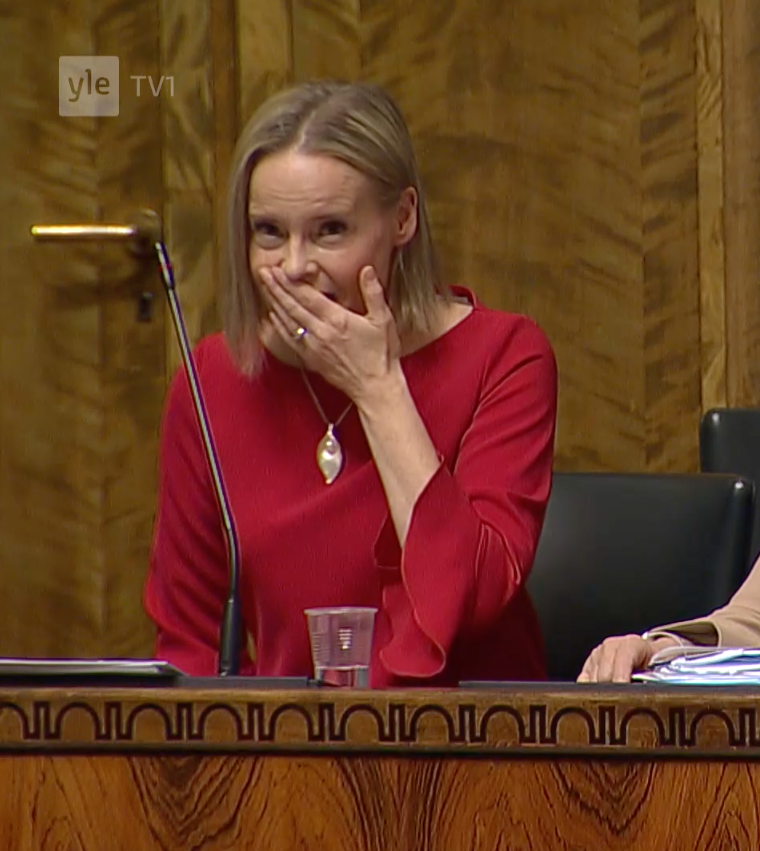
During Thursday’s question time between the government parties and opposition, Green League MP Atte Harjanne spoke highly of Sweden’s success story, which included immigration. The suggestion by Harjanne forced Perussuomalaiset (PS)* chairperson Riikka Purra to let out a demeaning gesture as if stating you cannot seriously claim that Sweden’s immigration policy is a success.
One of the biggest lies of the PS and a way to maintain and feed Finland’s xenophobic atmosphere is Sweden. We have mentioned before that the gang violence in Sweden is unique in Europe. One of the factors behind it is Sweden’s failure and abandonment of migrants and minorities.

See the Facebook posting here.
Another factor not mentioned is that, thanks to immigration, 600,000 Finns emigrated there after World War 2, Sweden is economically more robust than Finland. Finland is struggling with becoming a gerontocracy, while Sweden has other issues, like dealing with its exclusion of migrants and minorities.
The migrant policy of Prime Minister Petteri Orpo’s government, as well as those of other governments, is in denial and a slap in the face to Finland’s economic growth and well-being.
Thanks to immigration, Sweden’s economic growth is one of the fastest in the OECD and has one of the lowest debt levels. Moreover, there aren’t any issues about labor shortages like in Finland.
Surprisingly, a country that has seen over 1.2 million people emigrate between 1860 and 1999 is so resistant to acknowledging the benefits of migration.
Denial is destroying the country.

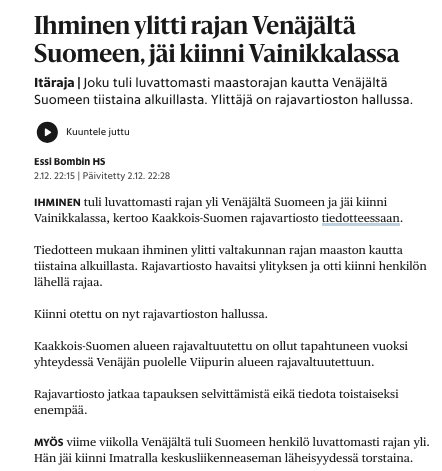
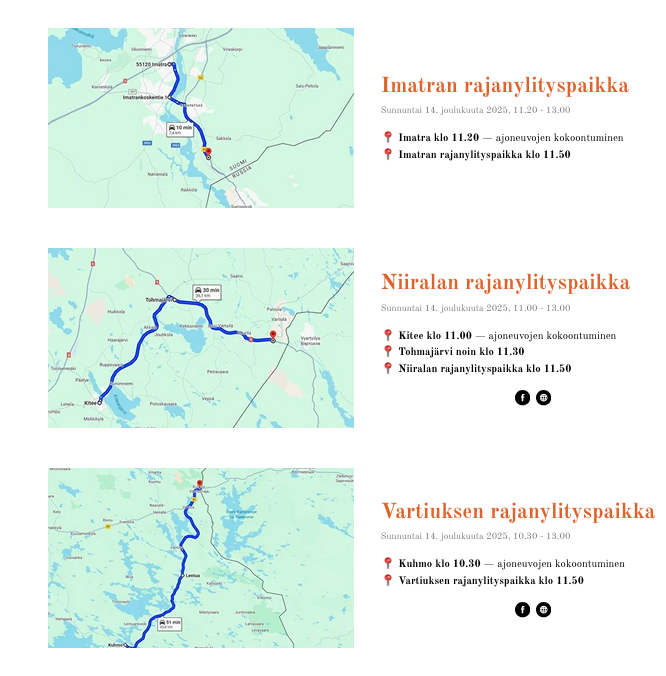
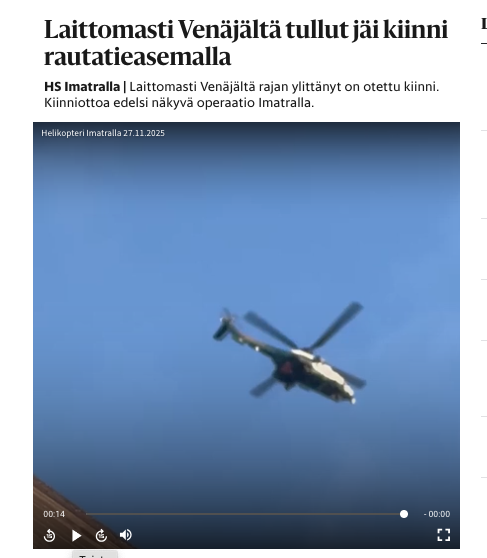
One person from Russia crossed the border today and triggered a manhunt for the person. The information given by the Finnish Border Guards quoted in the media talks about a lone person who crossed the border and was apprehended in downtown Imatra, a border city.
We have skimpy information and do not know if the person’s nationality and if the person is seeking asylum.
There is no information in the Finnish Border Guards website.

Source: Helsingin Sanomat
Imagine one person crosses the Finnish-Russian border like today, which has been closed since the end of 2023, causing a manhunt with helicopters and the like. On top of this he is labeled by the media as an “Illegal.” The term “illegal” is misleading because it connotes criminality.
And to top it off, we get no information who the person is and, importantly, if the person is an asylum seeker.
The treatment by the media and the Finnish Border Guards of the story shows that there is little transparency on such matters. It is more like a kangaroo court accusing someone without being convicted.
The rule of law in Finland has taken another blow thanks to the pushback law passed in July 2024 by parliament.
Conidering that the present government has a far-right party among its ranks, the Perussuomalaiset (PS)*, Finland’s xenophobic atmosphere will get much worse before it retreats somewhat. PS MP Wille Rydman has had a long history about making racist remarks like his defense and spreading of the far-right great replacement theory.
Here is a quote by the late Toni Morrison that I dedicate, free of charge, to Rydman and others in his shameful league:
“[but] when you take it [racism] away, I take your race away, the only thing you got is your little [1.68 meters] self, and what is that? What are you without racism? Are you any good? Are you still strong? Still smart? Do you still like yourself? [If] you can only be tall because someone is on their knees, then you have a serious problem”
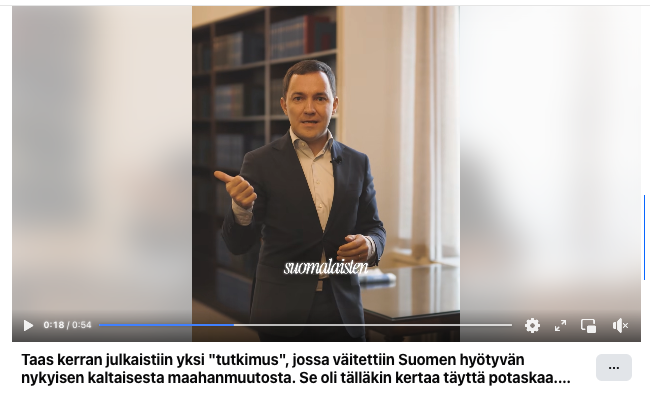
In a recent post, Rydman calls a study, which claims that Finland benefits from migrants in the country, as “bullshit.”
Bullshit?! Hmmm, what about taking a good long look in the mirror. Even your racist comments would blush in sham.

Politicians like Rydman can make and get away with racist statements because Parliament in general and his party in particular drip in racism. Most politicians are too scared to challenge such a social ill. Some even agree with characters like Rydman.
Even if Rydman is trying to feed us with an old stereotype that migrants live off welfare and don’t pay enough taxes, he – like the media and other politicians – forget to tell us that asylum seekers account for only 10% of all migrants.
Even so, Rydman and the lazy silence of the media generalize spreading his “PhD” knowledge on migrants and migration.

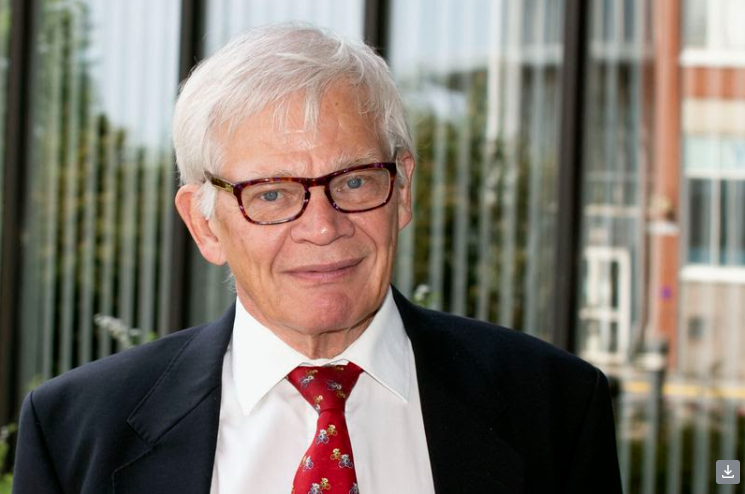
Entinen Tilastokeskuksen kehittämispäällikkö Pekka Myrskylä kertoo seuraavansa hämmentyneenä Suomen maahanmuuttokeskustelua. Hänen mukaansa faktapohjaisia tilastoja ei helposti hyväksytä, jos ne eivät tue poliittista ennakkokäsitystä.
“Kun julkaisin tilastoja maahanmuuttajien verokertymästä ja tulonsiirroista äskettäin Helsingin Sanomissa, palautetta tuli laidasta laitaan. Joillekin ei riittänyt, että luvut olivat virallisesta verotusaineistosta.”

Tutustuin Myrskyulan kirjoituksiin vuonna 2014, kun hän kumosi monia kaupunkilegendoja ulkomaalaisista, jotka elävät sosiaaliturvan varassa. Kuva: Tekniikka&Talous
Myrskylän mukaan maahanmuuton taloudellisia vaikutuksia voidaan arvioida rekisteripohjaisella tilastoinnilla täsmällisesti, mutta julkinen keskustelu kääntyy usein tunnekysymyksiksi.
Hän kertoo tehneensä laajan analyysin maahanmuuttajien työmarkkina-asemasta ja toteaa tulosten olleen yllättäviä myös hänelle: maahanmuuttajien joukossa on runsaasti korkean koulutustason ammattilaisia.
“Työllisistä maahanmuuttajista noin 50 000 on johtajia tai ylempiä toimihenkilöitä. Tämä ei näy julkisessa keskustelussa lainkaan.” Myrskylän mukaan esimerkiksi pääkaupunkiseudulla maahanmuuttajataustainen työvoima muodostaa monien palvelualojen ja terveydenhuollon selkärangan. “Laboratorioista busseihin ja terveyskeskuksiin – moni sektori ei toimisi ilman heitä.”
Continue reading “Pekka Myrskylä: “Tilastot kertovat toista kuin poliittinen keskustelu””Muistatko Tanja Poutiaisen, joka pukeutui väärennettyyn saamelaispukuun ja aiheutti melkoisen kohun? Jostain oudosta syystä Lapin alueen asukkaat pitävät hyväksyttävänä naamioitua saamelaiseksi.
Yksi näistä henkilöistä on Perussuomaisten kansanedustaja Sara Seppänen. Kysyin saamelaiselta, mitä hän ajatteli Seppäsen tempusta.

Lähde: Facebook
”Ehdottomasti ei saamelainen, ei edes lähelläkään. Hän cosplaytaa väärennettyä identiteettiä puhtaasti poliittisen opportunismin vuoksi.”
Media, pääasiassa tabloidit, ovat hiljaa ja tukevat hiljaisuudellaan halveksuntaa saamelaisia ja muita vähemmistöjä kohtaan.
HUOMAUTUS: PS kansanedustaja Sara Seppänen EI ole saamelainen, parhaimmillaan hän on feikki saamelainen.
Miksi kulttuurinen omiminen on loukkaava ja väärin?
“Kun tarkastelemme sortoa kokevaa kulttuuria, se on usein seurausta kolonialismista, jossa hallitseva ryhmä on ottanut omistukseensa maan ja sen kansan. Kun hallitseva ryhmä jatkaa ei-hallitsevan kulttuurin osien varastamista, se jatkaa kyseisen kulttuurin taloudellista sortoa ja epäedullista asemaa,” ReachOut mukaan.
Kulttuurinen omiminen on myös vallan käytöä.
Saara Seppänen, lakkaa teeskentelemästä olevasi saamelainen, kun et todellakaan ole sitä.


Lähde: Facebook
Why are home secretaries of minority ethnic backgrounds pushing the most racist and radical immigration policies? Home Secretary Shabana Mahmoud follows in the footsteps of other dubious home secretaries like Sajid Javid (2018-19), Pritte Partal (2019-22), Suela Braveman (2022-23), and James Cleverly (2023-24).
All of the above have something in common: they hate migrants, especially asylum seekers.
In some respects, these home secretaries represent the role of the Ukrainians at Nazi concentration camps who did the dirty work, like terrorizing victims and sending them to the gas chambers. In the same way, these home secretaries want to make the lives of asylum seekers are difficult and painful as possible.
Some may believe that since it is a brown person adopting such a draconian migration policy, it must be ok.
It’s not, but disgraceful.
If there is something we can learn from these ideological hard-right home secretaries masquerading as members of the Labor Party, ethnic background has little to do with your political views. The most important matter is your upbringing and what moral lessons forged you into a human being.
Mahmoud is a disgrace to her immigrant parents and their suffering.
Some see Denmark as an Islamophobic country on steroids. Mahmoud wants to adopt Denmark’s immigration policy in the UK.
Shameful.

Shabana Mahmoud

After three decades in uniform and the completion of a doctoral dissertation, former police superintendent Jari Taponen made the decision to leave the force. His departure, he says, followed a growing sense that policing and the society it serves were drifting apart.
“The police have become politicised, and no one wants to admit it,” Taponen said.

Jari Taponen
According to him, the organisation’s claims of political neutrality are at odds with its operational structures. “Performance targets come directly from the government programme. In that sense, the police carry out political will whether they want to or not.”
After his resignation, Taponen founded a company called Prevenza together with Susanna Makaroff. The company focuses on social safety, community resilience and evidence-based crime prevention.
A central source of frustration for Taponen was what he describes as the police organisation’s inability to adapt to societal change. “Preventive work gave me a broader perspective on issues like community strength, integration, and reducing polarization,” he says. “But the organisation did not evolve in that direction.”
The breaking point became even clearer during his doctoral research. As he examined the effects of police actions on crime and public safety, he realised that reliable research data was extremely scarce, despite strong assumptions in public debate.
“It is commonly assumed that police actions have clear and predictable effects. But research shows they are highly context-dependent — and sometimes neutral or even negative.”
For Taponen, this lack of research leaves room for interpretations based on assumptions. “There is little research, and official communication often relies more on impressions than on reality.”
While working in the Helsinki police, Taponen followed recurring claims of rising youth crime and talk of gangs involving young people with immigrant backgrounds. According to him, these narratives do not emerge spontaneously.
Kolmen vuosikymmenen virkauran ja väitöskirjan valmistumisen jälkeen entinen ylikomisario Jari Taponen päätti jättää poliisin tehävät. Päätöksen taustalla oli hänen mukaansa kasvava kokemus siitä, että poliisin toiminta ja yhteiskunta olivat ajautumassa erilleen.
”Poliisi on politisoitunut, eikä sitä haluta myöntää”, Taponen sanoo.

Jari Taponen
Hänen mukaansa organisaation väitteet poliittisesta neutraaliudesta ovat ristiriidassa sen toimintarakenteiden kanssa. ”Tulosohjaus tulee suoraan hallitusohjelmasta. Siinä mielessä poliisi toteuttaa poliittista tahtoa halusi tai ei.”
Eroamisensa jälkeen Taponen perusti yhdessä Susanna Makaroffin kanssa Prevenza-nimisen yrityksen, joka keskittyy sosiaaliseen turvallisuuteen, yhteisöjen resilienssiin ja tutkittuun tietoon perustuvaan rikosten ehkäisyyn.
Keskeinen turhautumisen lähde Taposelle oli hänen mukaansa poliisiorganisaation kyvyttömyys sopeutua yhteiskunnan muutokseen. ”Ennalta ehkäisevä työ antoi minulle laajemman näkymän asioihin kuten yhteisöjen vahvuuteen, integraatioon ja polarisaation vähentämiseen”, hän sanoo. ”Mutta organisaatio ei kehittynyt siihen suuntaan.”
Ero kävi entistä selvemmäksi hänen väitöstutkimuksensa aikana. Tutkiessaan poliisin toimien vaikutuksia rikollisuuteen ja turvallisuuteen hän huomasi, että luotettavaa tutkimustietoa oli hyvin vähän, vaikka julkisessa keskustelussa oletukset olivat vahvoja.
”Ajatellaan, että poliisin toimilla on selvät ja ennustettavat vaikutukset. Mutta tutkimus osoittaa, että vaikutukset ovat hyvin kontekstisidonnaisia — ja joskus neutraaleja tai jopa negatiivisia.”
Taposesta tämä tutkimustiedon puute jättää tilaa oletuksille perustuville tulkinnoille. ”Tutkimusta on vähän, ja viranomaisviestintä nojaa usein enemmän mielikuviin kuin todellisuuteen.”
Even if Finland reported on Monday a record rise in suspected hate crime cases in 2024, there has been little reaction by the government about the worrying trend. The silence and inaction, despite assurances by Prime Minister Petteri Orpo of the failed anti-racism program, speak volumes about the social ill.
The inaction and the hands-off approach of the government towards racism, despite assurances of the contrary, are at the heart of the problem. The government fuels racism by not doing anything.

Source: Police University College.
Like with the government’s economic policies and promises to end indebtedness and create jobs and growth, it has failed as well in making Finland a less racist country.
While the Finnish government has publicly emphasized the importance of tackling discrimination, civil society groups and anti-racism advocates say that some political decisions and public rhetoric over the past years have normalized racism. They point particularly to immigration reforms, political disputes surrounding equality initiatives, and several controversies involving ministers.
Researchers note that Finland has long struggled with underreported racism, and that rising figures can also reflect increased reporting and awareness. Still, the pace and scale of the latest spike have killed debate over whether current policies are alleviating—or aggravating—the problem.
Government officials have not yet commented directly on the hate-crime report. Still, authorities have previously said that combating hate crime remains a priority, even if the report shows the tip of the iceberg.
Migrant Tales correctly predicted in 2023 that hate crimes would soar to new records the following year. The trend, unfortunately, will continue. 2025 will be another record year for hate crimes in Finland.