Hannu Järvinen is a Perussuomalaiset (PS)* councilperson from the city of Espoo. One of his big pastimes is speaking badly of immigrants. Like many of his party, xenophobic and especially Islamophobic opinions are his pet topics.
His advice will scare away people from Finland than keep them here.
Järvinen’s solution for migrants: “When you move to live in Finland, you have to learn the language, respect our ways of life and values as well as work for the good of Finland. When you move to Finland, you have to become like a Finn.
While such requests appear outrageous because they have nothing to do with Finland’s official integration program, too many like Järvinen think like him.
In Finland, over 1.2 million people emigrated mainly to North America and Sweden before and after World War 2, respectively, during 1860-1999.
My tweet to Järvinen: “Your point of view shows me that you don’t know anything about immigration. Did you mean that we are supposed to throw away our culture? Tell that to the hundreds of thousands of Finns that have moved away from this country.
Here is a good video that shows what Järvinen means and how it is supposed to happen in real life. In the movie Pane e Cioccolata, an Italian migrant becomes Swiss by dying his hair and rooting for the team that is playing against Italy.
“Walking, walking, walking I go looking for freedom, hopefully I will find my way, so I can keep on walking.”
Victor Jara (1932-73), Caminando, caminando
September 11 marks the 50th anniversary of the bloody coup that overthrew Chile’s democratically elected President, Salvador Allende. Finland’s small but active Chilean community has organized a number of events this year to commemorate the day that awakens in many mixed memories.
Angel Barrientos, one of the 182 refugees who came to Finland from Chile in January 10, 1974, is the first friend I made of this group in the early 1980s. His sister, Silvana, who lives in Coquimbo, Chile, is on the front cover of the book, “Whistling under the snow,” published recently about the Chilean diaspora of Finland.
The Chilean community of Finland is remembering the 50th anniversary of the terrible coup that was made possibly by Henry Kissinger and the Nixon Administration. The book, “Whistling under the snow, edited by Adrián Soto, commemorates those difficult years. It is the first one published on the Chilean refugees in Finland.
How do 50 years change a person’s life in a new home country?
“Adapting to my new home country was a long process marked with different phases,” he said. “After all these years, I feel more at home in Finland than in Chile.”
Angel admits that when he visits Chile, he feels a bit out of place.
“I have difficulty understanding what young people are saying,” he continued. “The language changes rapidly and there are new slang words. I speak to youths, and they just look at me perplexed. trying to understand what I am saying.”
First years in Finland
Just like any person who has been torn violently from his home country, the first years of adaption are rarely easy. For example, Angel says that when he arrived in Finland, it was in winter with -15 °C compared with +26-27°C in Chile, where it was summer.
“Our countries are so different,” Angel said. “At first, the food was a shock and the language was difficult. Even so, I felt human warmth at demonstrations by young people where the Chilean flag waved. There was a lot of solidarity for our cause.”
While the following anecdote isn’t mentioned in the book, cultural misunderstandings could be comical. Finland is well known for its “Ykkösolut,” a low-alcohol beer. A group of Chileans at a bar thought it was the strongest because it had the number “one.”
“They drank and drank that beer, but there was no affect,” said Angel many years ago.
Angel Barrientos during younger days at the Turku Museum Center. Photos: Adolfo Vera.
“Finland gave me a lot. I was able to form a family, have four children, and study to become an interior architect. One of the most important things that this country gave me was peace and a safe space. In Chile, there is always that doubt that they would have probably even killed me like they did to so many. My father and sister were arrested by the authorities.”
Angel mentioned that in November 1973 he snuck into the Finnish embassy in Santiago, where there were 24 others seeking refuge. Tapani Brotherus , a hero for many Chileans, was Finnish ambassador to Chile (1971-76).
“Getting into the Finnish embassy grounds was difficult and easy,” Angel continued. “Some of the guards [Carabineros] at the embassy chose to look the other way while other guards were monsters.
He mentioned that those guards that looked the other way probably wanted to help them.
Homesickness
For many, dealing with homesickness forms part of the process of adapting to a new homeland. How hard homesickness hits one depends on the person.
“The first 10-15 years I thought about returning to Chile,” said Angel. “After ten years, such a move is difficult because you have established a family and children are anchors. I went back and stayed six months in Chile, but it was impossible.”
Finding work that paid enough to live off was one factor that shattered Angel’s hopes of living in Chile.
Even if the over 180 Chileans that fled the dictatorship were a heterogeneous group with different political ideologies, Angel admits that everyone attempted to live in harmony.
Kati Vera is one of Angel’s four children. Having lived the first years of her life in Finland, she later ended up in Canada where she studied to become a graphic artist.
“I am very proud of my father and all the Chileans that became refugees [due to the Augusto Pinochet dictatorship],” she said. “Being multicultural is a gift that permits you to see the world through different perspectives. For that, I am grateful to my father and mother.”
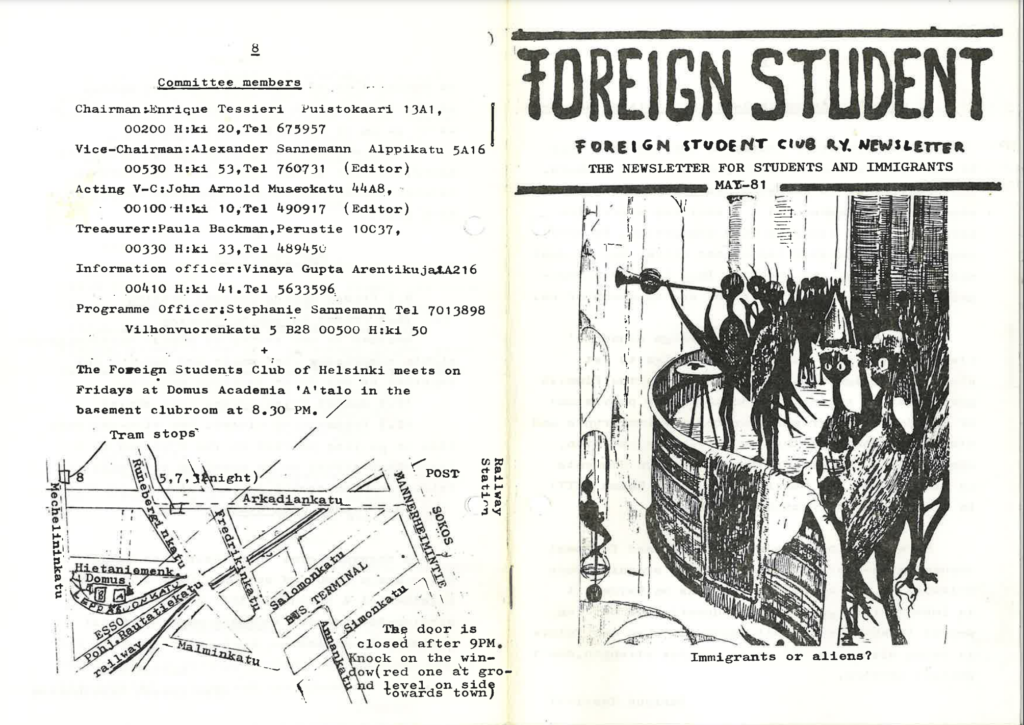
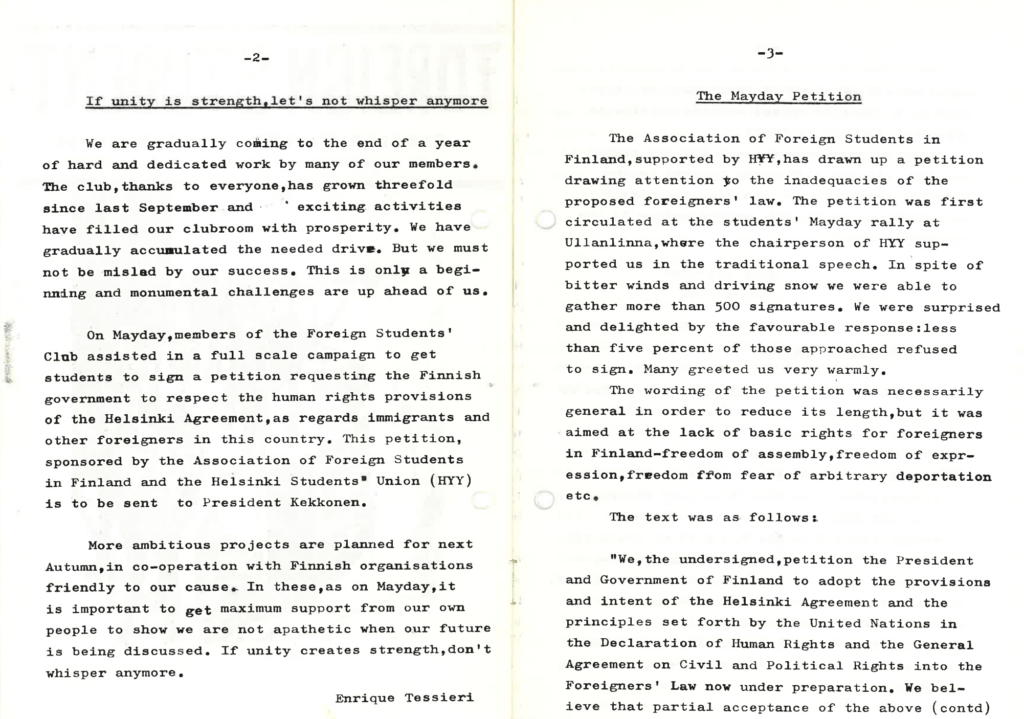
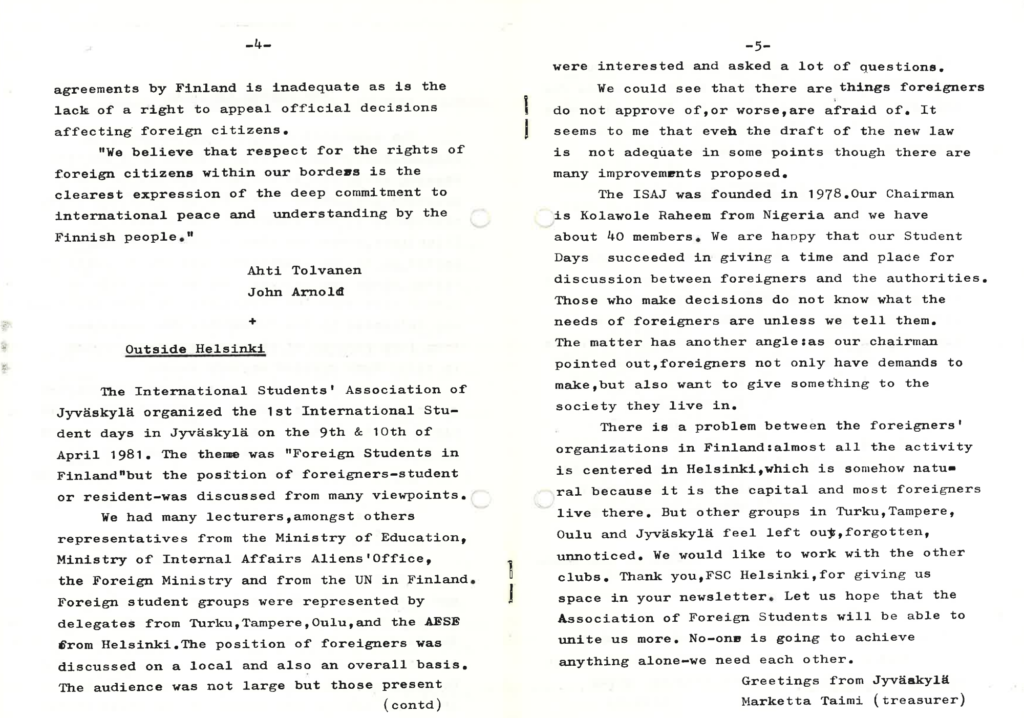
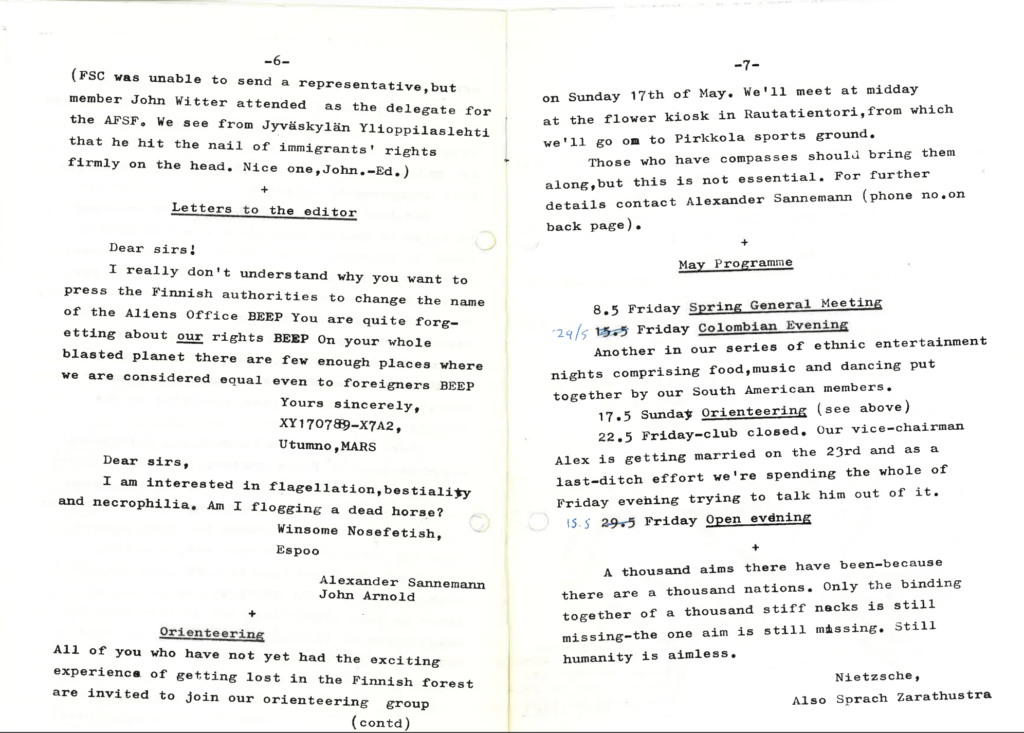
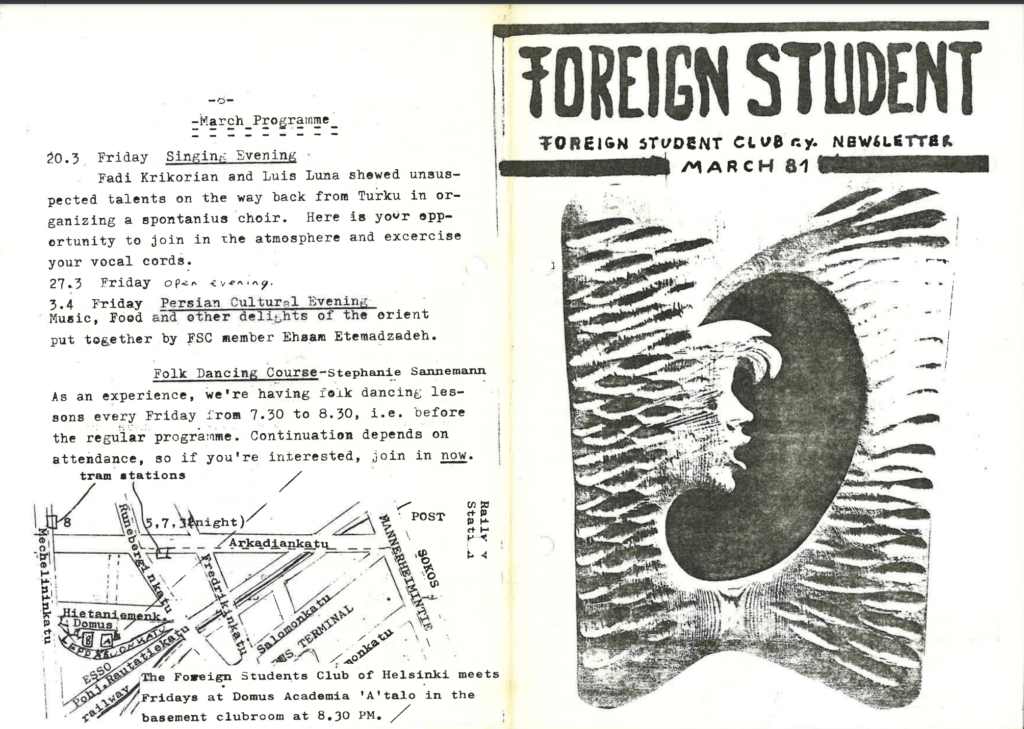
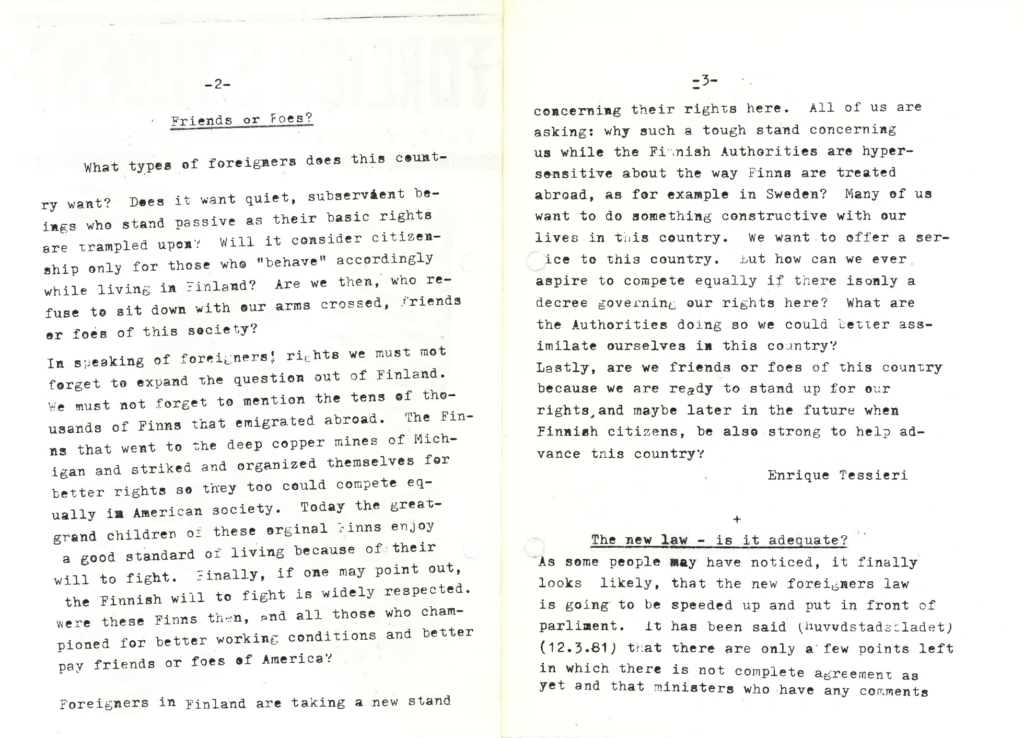
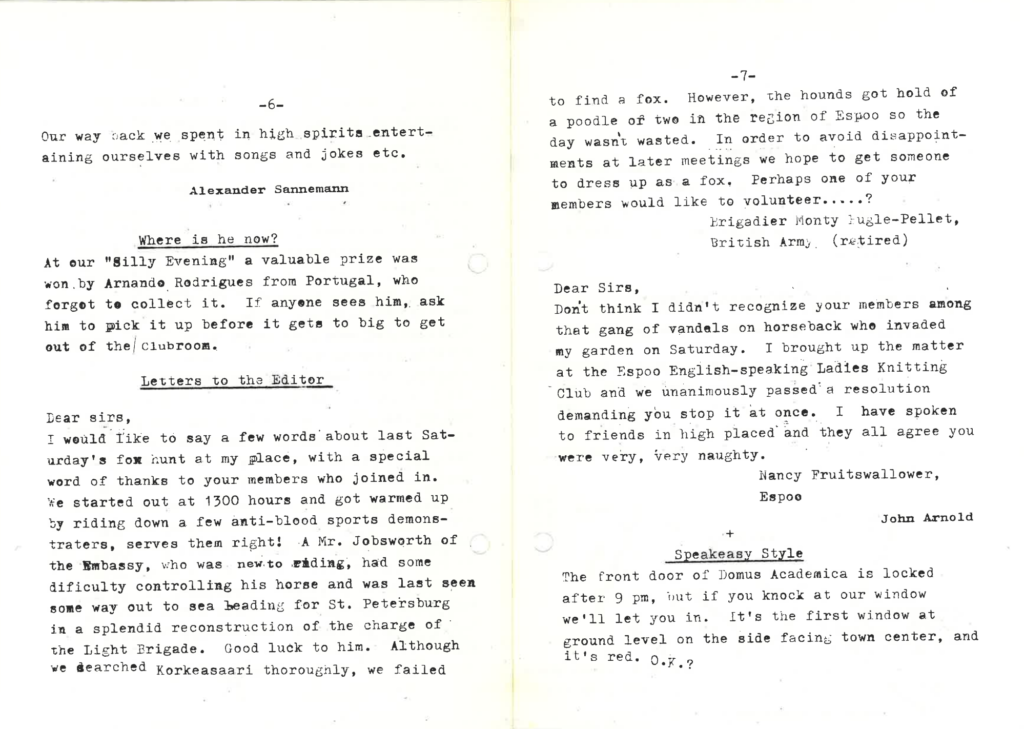
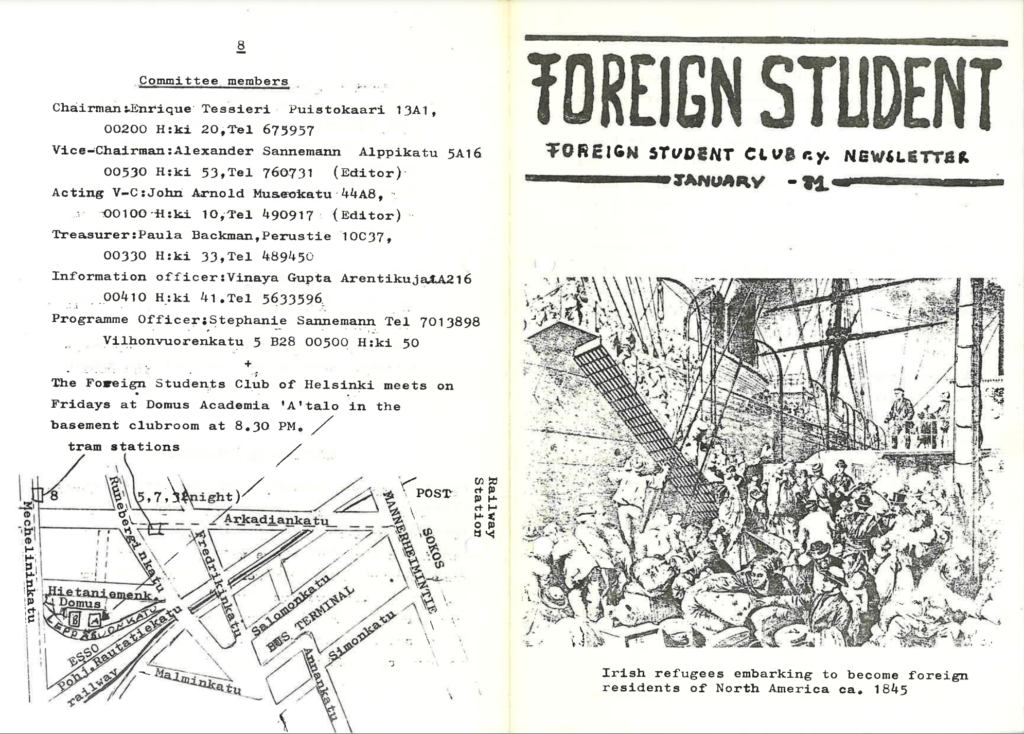
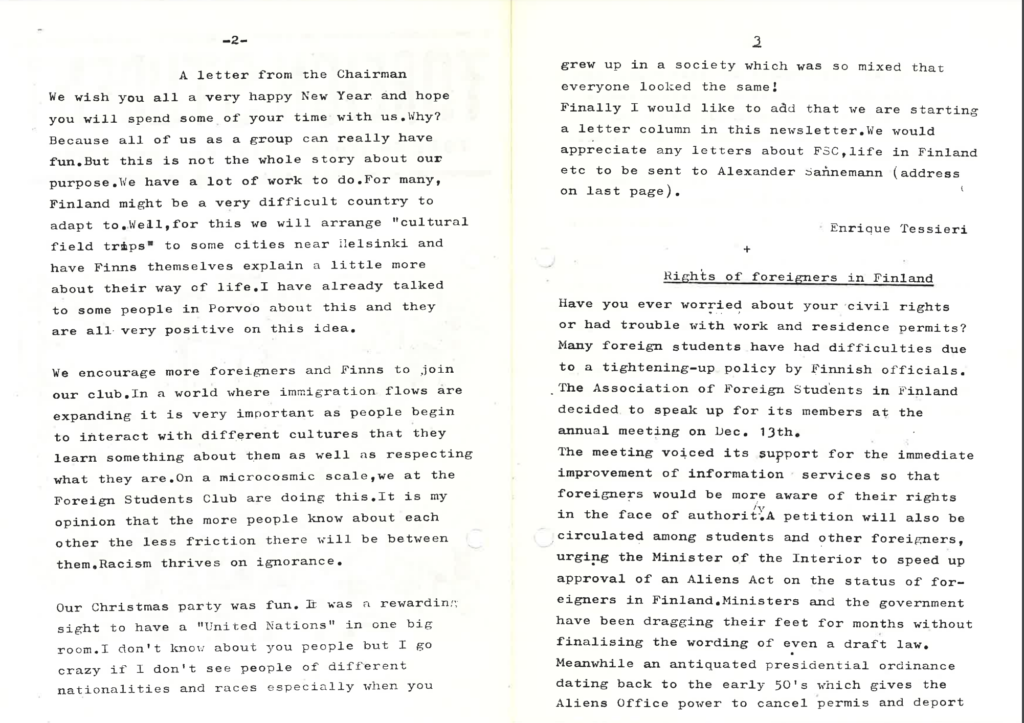
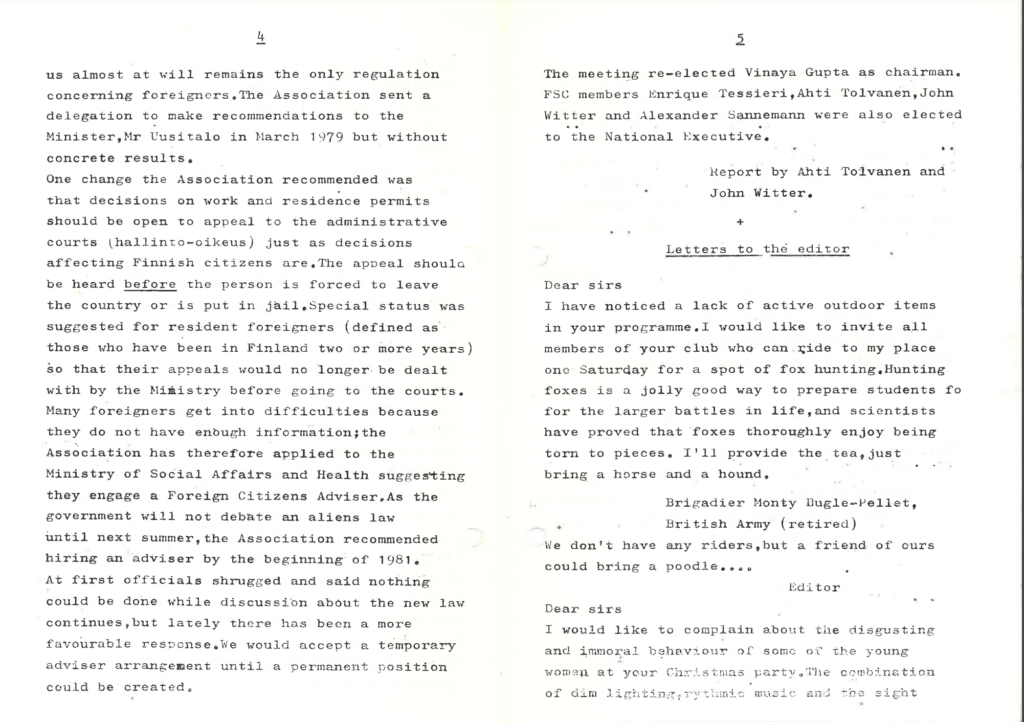
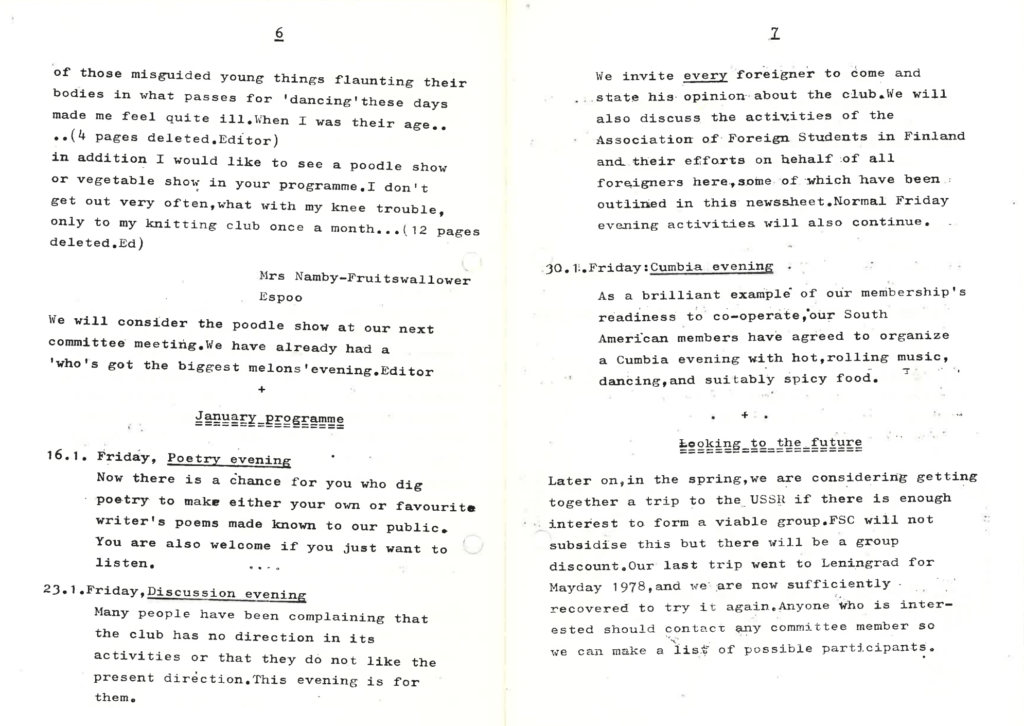
The Foreign Student experienced life across 11 editions, spanning from January 1981 to January 1982. The newsletter, which was put out by the Foreign Student Club ry of Helsinki, was outspoken on immigrant rights issues. The last issue of the newsletter below, got itself in trouble with the newly elected president of the club, Fadi Kriokorian, who wanted less controversial stories published.
In protest, Enrique Tessieri resigned as editor and that was the end of the newsletter.
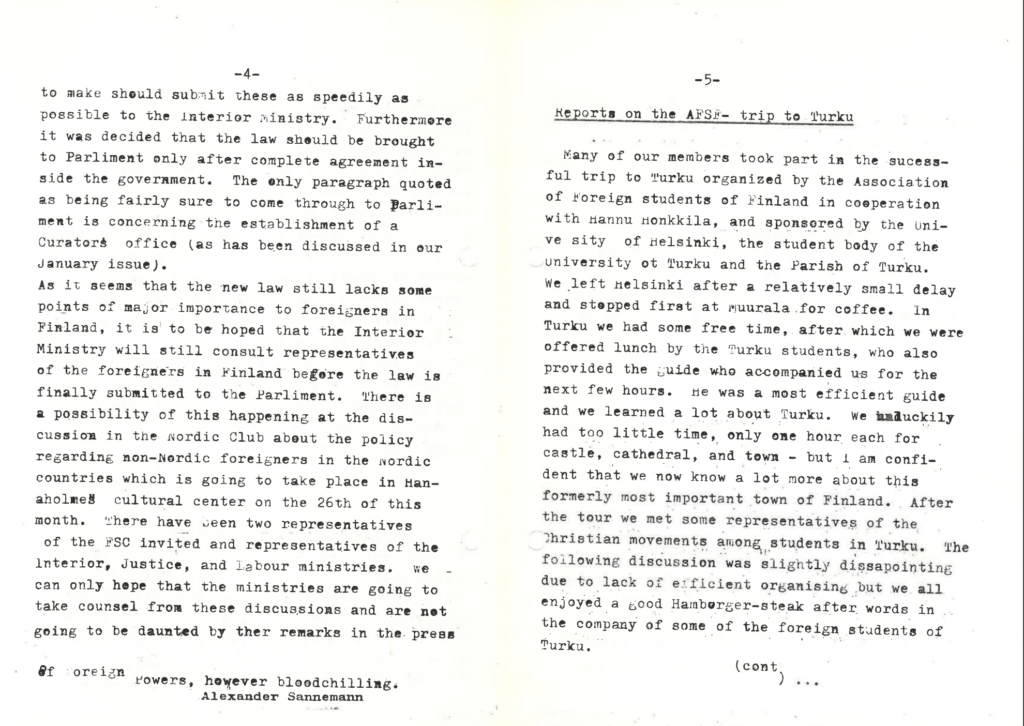
The women, who allegedly changed her story and forced an Algerian law student, Adda Lahkar, to be deported from Finland, had changed her story.
During those days, foreigners did not have appeal rights against the decisions of the Aliens Office.
The woman threatened to sue me and the Foreign Student if we did not publish a retraction that “had to be approved by her.”
I told her to go fly a kite and to go ahead and sue me.
The story was originally published on Migrant Tales on June 15, 2016.
Because migrants and minorities in Finland do not have power, we are taught to believe we are rootless and have no historicity. It is not true: migrant and anti-racism activism in Finland was already very alive in the 1980s.
The demonstration in October 1982 demanded basic rights for foreigners in Finland.
“Our dominant classes have made sure that the worker has no history, doesn’t have a doctrine, any heroes or any martyrs. Every struggle has to start from scratch, separated from previous struggles; the collective history is lost, their lessons are forgotten. History appears as if it were private property, whose owners are the owners of everything.” Rodolfo Walsh (1928-77)
The late Argentinean writer and social activist Rodolfo Walsh (1927-77) showed the power of investigative journalism in Argentina when he published Operation Massacre in 1957. The book exposed how supporters of president Juan Domingo Perón were captured and shot by the military junta’s secret firing squad, after Perón was deposed by a military coup. Walsh’s quote, that the worker has no history, offers a good description of the situation of migrants and minorities in Finland today. Even if we too aren’t supposed to have any history, the interesting question to ask is why we are taught to believe that we are rootless and living on the outer fringes of society.
Ilahduttavaksi yllätykseksemme Migrant Tlesin toimituskunnan jäsenen Ahti Tolvasen kuva oli sunnuntaina Helsingin Sanomien etusivulla. Hän oli yksi niistä yli 11 000-20 000 mielenosoittajasta, jotka sunnuntaina vastustivat pääministeri Petteri Orpon hallituksen rasismia.
Onnittelut Ahti! Olet kuuluisa!
”Suomen hallituksen tilanne on sama kuin Britanniassa korona-aikaan, kun pääministeri Boris Johnson järjesti juhlat rajoituksista välittämättä. Eivät ministerit voi tehdä mitä hyvänsä. Ulkoministeri Ilkka Kanerva joutui aikoinaan lähtemään tekstiviestiensä takia, mutta nyt Wille Rydman selviää sanomisistaan kuin koira veräjästä.”
”Täällä on yli 10 000 ihmistä. Puoli Helsinkiä sanoo, ettei ole mitään uskottavuutta hallituksella.”
In a powerful display of unity and determination, around 11,000 people gathered at Töölönlahti in Helsinki on a Sunday afternoon for the “Me emme vaikene” (We won’t keep silent) anti-racism demonstration. Organized by impassioned activists, this event sent a clear message to the Finnish government: it’s time to take concrete actions against racism.
Photo by Enrique Tessieri
A peaceful march for change:
The demonstration began at Senatintori, in the heart of Helsinki, where thousands of demonstrators came together. They marched peacefully to the Töölönlahti event park. It was a visually striking display of solidarity. Both the Helsinki police and the event organizers commended the peaceful nature of the protest.
Demanding more than words:
One of the most powerful aspects of this demonstration was the demand for action over mere rhetoric. Participants urged the government not only to denounce racism but also to implement anti-racist policies. This call for tangible change underscores the importance of addressing systemic issues at the policy level.
Expressing disappointment with government’s communication:
The organizers of the event were vocal about their disappointment with the government’s communication on anti-racism. They believe that the government’s efforts have so far fallen short. This sentiment reflects a growing frustration with the lack of progress in addressing racism at the highest levels of Finnish governance.
Addressing racist statements:
High-level politicians have come under scrutiny for statements that are seen as normalizing racism as experienced in throughout this summer marked by several Perussuomaliset* statements and a closet full of skeletons. The organizers of the demonstration expressed deep concern about this issue. They believe that such statements contribute to the perpetuation of racist attitudes and behaviors.
Photo by Enrique Tessieri
Pressures on media and research:
The demonstration also drew attention to concerns regarding freedom of the press, journalism, and academic research. Organizers highlighted the alarming fact; that some ministers (mainly from the Perussuomalaiset party) are exerting pressure or manipulation on these important pillars of society. This raises questions about the state of free expression and intellectual inquiry in Finland.
Can anyone really trust Mari Rantanen, the Interior Minister of Perussuoalaiset (PS)* of Finland? All it took to whitewash her far-right racist views was to take down such posts from her social media sites after the election and claim that she does not believe in conspiracy theories.
What a coward! She spreads all these far-right racist conspiracy theories and then does not have the guts to stand by them.
What does that show?
It reveals moral cowardice and bravado.
One of her many infamous quotes is: “We must not be so blue-eyed that soon we will not be blue-eyed.” “Blue-eyed in Finnish means naive.
She has also wished that asylum seekers drown in Greek waters, Europe will turn into an Africa, and that if steps are not taken to halt non-white migrants, Europe is threatened with civil war.
PS Interior Minister Mari Rantanen is proof that far-right racism rooted in conspiracy theories will take you far in politics. Source: X (formerly Twitter).
Looking at Minister Rantanen’s racist track record, it’s clear that she is bankrupt of all credibility. How can you trust a minister who is openly racist and too chicken to stand by her toxic views? How much of an opportunist is she, and how much harm has she inflicted on Finland? A generous amount, I believe.
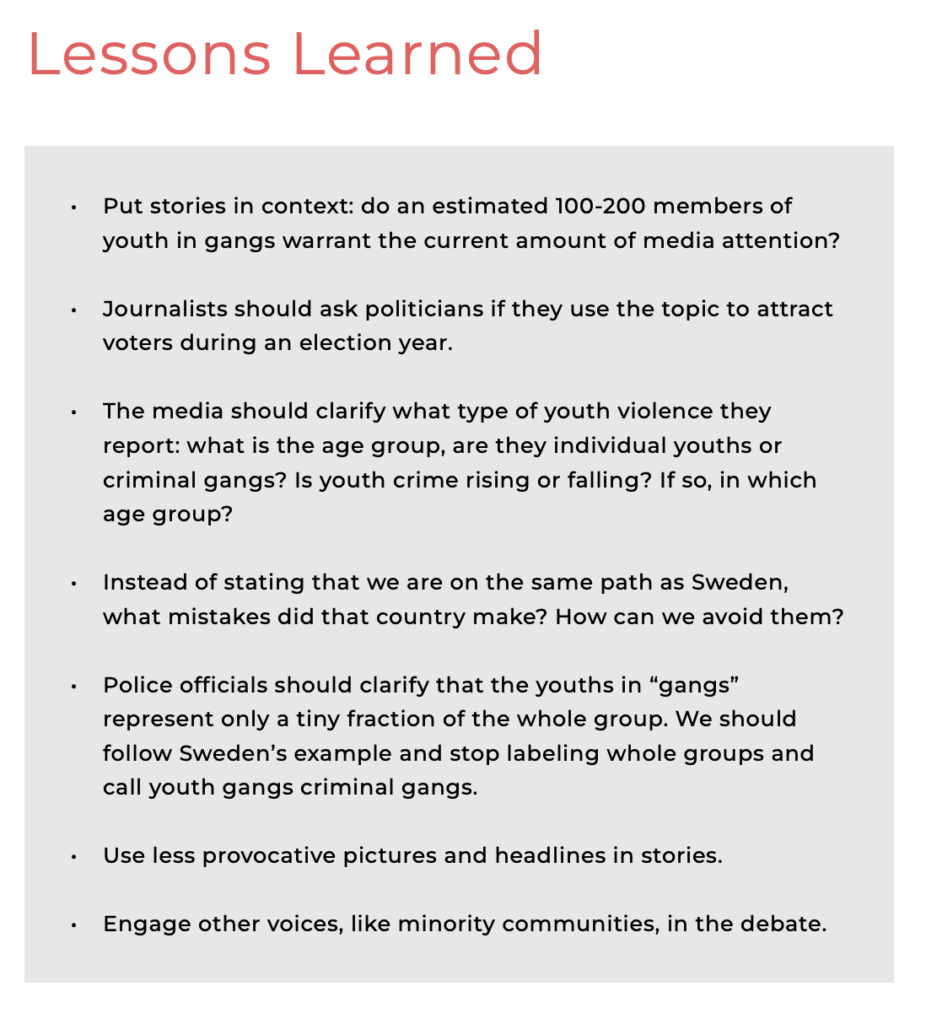
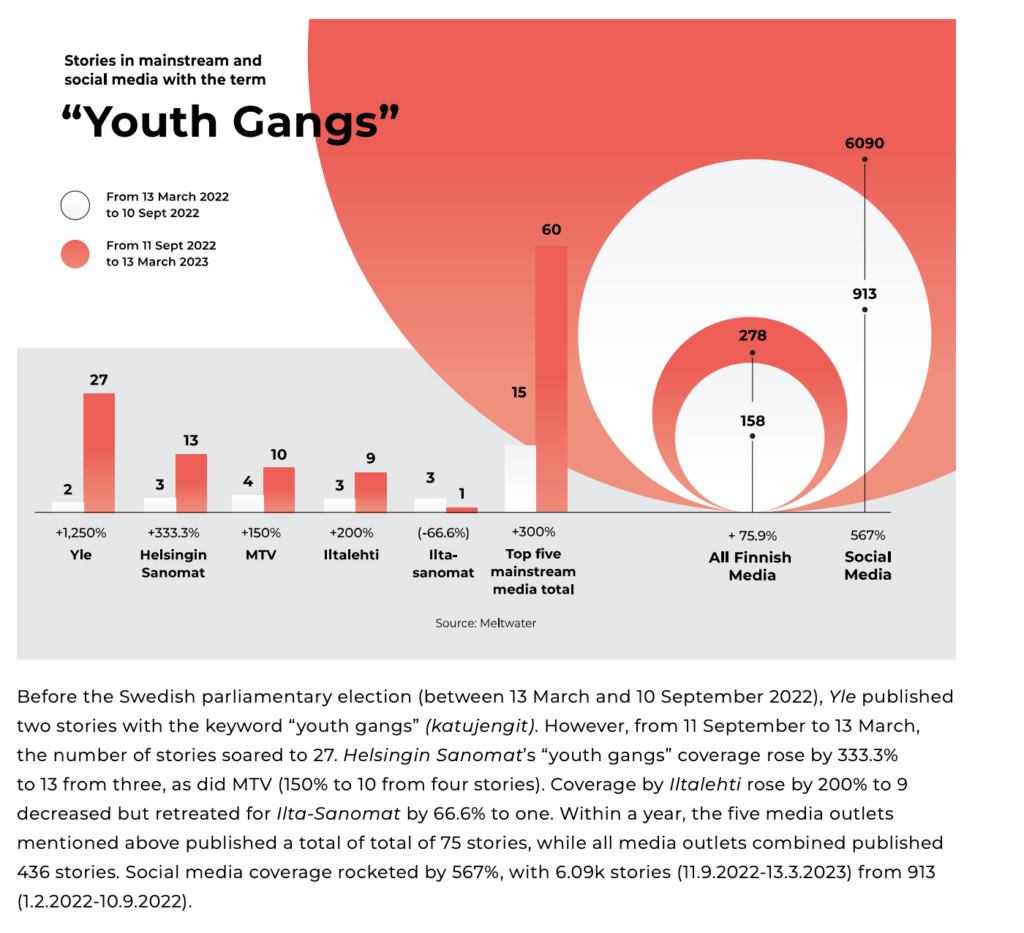
Her loathing of Muslims and other minorities is clearly evident. Take for example the so-called youth gang “problem,” which is a direct copy from Sweden’s election and helped boost the Sweden Democrats, a party with neo-Nazi roots, to victory.
One of the facts about the government’s anti-racism statement is that it has more to do with injecting trust in a government after it was hit by a string of racism and far-right scandals in the summer. At least for the time being, the statement succeeded at keeping the government from dissolving after the Swedish People’s Party gave it the thumbs up.
The statement also exposes the magic abilities and wishful thinking of the government: the Perussuomalaiset (PS)* isn’t a far-right party; politicians with problematic racist backgrounds are appointed ministers and with the wave of a wand, their racism instantly white-cleaned.
Read the full government anti-racism statement here.
While there was nothing new in the statement except for criminalizing Holocaust denial, Nazi and Communist flags, it was a rehashing of what the government is obliged to do to protect the rights of all people in Finland irrespective of their background.
The statement would have never been drafted if it weren’t for the scandals that the government underwent.
The statement highlights, however, the ongoing problem of racism in Finland: We acknowledge the social ill’s existence but are not willing to challenge it head on.
“The government must unequivocally distance itself from racism,” emphasizes Anna-Maja Henriksson, Swedish People’s Party chairperson and minister of education. National Coalition Party Prime Minister Petteri Orpo, declares, “As a government, we maintain a policy of zero tolerance for racism.”
Upon hearing the above-mentioned statements, one should not be surprised why some are in a state of doubt and shock, especially when people are told that they should forget and forgive the racist statements of some MPs who were appointed as ministers in June.
For example, Perussuomalaiset (PS)* MP Vilhelm Junnila resigned in disgrace after about 10 days as trade minister but was recently elected as the first vice chairperson of the PS parliamentary group.
Junnila’s successor, Wille Rydman, assumed the role of trade minister but faced a scandal due to his racist, anti-Semitic, and dehumanizing private messages, which were made public by Helsingin Sanomat. These messages also exposed Rydman’s disturbing Nazi views and ideologies. Surprisingly, the minister did not offer a public apology for the offensive messages.
The series of scandals involving the PS this summer prompts us to question whether these so-called self-proclaimed saviors of Finland understand the term “racism.” It’s important to note that Finland is bound by various international agreements aimed at addressing the social ill:
· Finland has ratified the International Convention on the Elimination of All Forms of Racial Discrimination, which places significant obligations on the government to dismantle racially discriminatory structures in society. Additionally, freedom from discrimination is enshrined in several UN treaties and the Universal Declaration of Human Rights.
· The Durban Declaration and Program of Action, adopted in the World Conference against Racism in 2001, commit states to anti-racist efforts and addressing the consequences of colonialism.