Listening to the anti-immigration rhetoric of Petteri Orpo’s government and especially of its Perussuomalaiset (PS)* interior minister, Mari Rantanen, on tightening citizenship requirements, two matters come to light: racism and hypocrisy.
The planned changes in the citizenship law include:
Raising residence requirements from five to eight years.
A person must make a certain amount (sill unspecified) of money and without Kela (Social Insurance Institution of Finland) funds to be eligible for citizenship.
A new citizenship test and more rigorous language exams will be introduced.
Certain (still unspecified) crimes may make you lose your citizenship.
Rantanen is not only a multiculturally challenged politician but does not practice what she hatefully preaches.
“Finnish citizenship will be a reward for successful integration,” she claimed at a press conference, adding that the changes in the law will “not be unreasonable, though”.
Rantanen’s views and actions against migrants reveal how far out of touch she is with our values.
With politicians like Rantanen and the hard-right shift in immigration policy in Finland, it shows the real rot that our Nordic values have hidden and protected. Thus with racist rhetoric we can win elections, get a ministerial seat, and claim with a poker face that we are not racists.
If you believe what Rantanen is telling you about why citizenship laws ust be tightened, then, I suspect, you will fall for anything.
Some of Rantanen’s most infamous quotes include her statement about blue eyes and a clear alusion to the great replacement conspiracy theory. “We mustn’t be so naive [naive in Finnish means being ‘blue-eyed’] that soon we won’t be blue-eyed.”
If there is one matter that one can agree with doomsday far-right anti-immigration politicians, it is that Europe and the developed world will be swamped in this century by people fleeing ever-worsening climate disasters, and civil strife.
What is hypocritical, even criminal, about the latter is that Europe and the developed world are responsible for placing people in such peril.
The EU’s answer to such a situation is the usual recipe of denial, building higher walls, more-effective surveillance, and violent pushbacks.
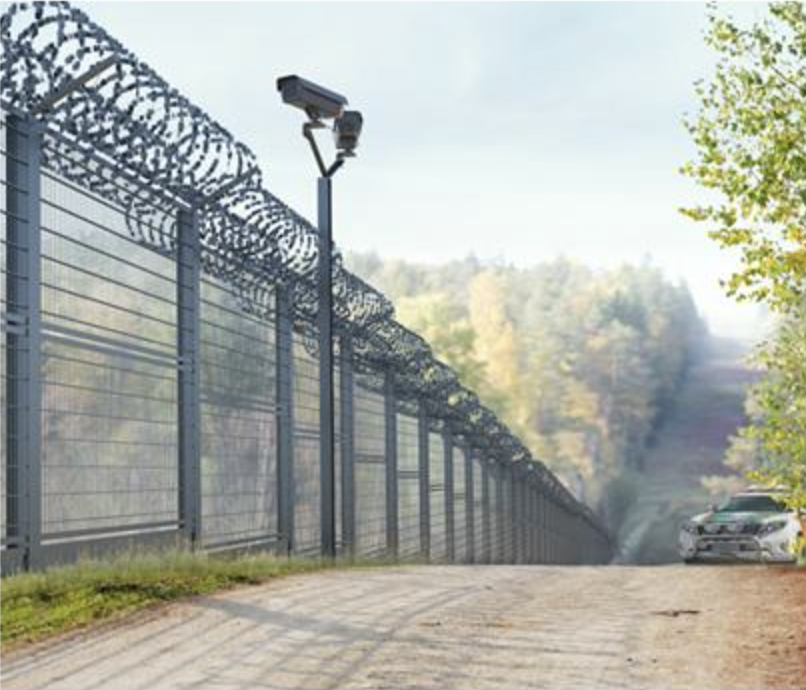
Finland’s answer, like that of Europe’s Frontex, to climate refugees is a fence, wishful thinking, and the populist rhetoric of politicians. Source: Kauppalehti.
With the rise of the far right in Europe and growing suspicion of outsiders gaining strength, it proves that Europe is in a state of flux. It has no answer to the migration crisis except building higher walls and toxic anti-immigration rhetoric. Europe will blame everything on migrants and asylum seekers.
Even so, the disasters suffered by people outside our borders were created for centuries by our greed and short-term answers, starting from our colonial aspirations and destructive wars. We destroy countries in regions like the Middle East and complain why people are fleeing the very homes we helped to destroy.
For those who luckily make it to Europe, are faced with walls of exclusion.
Europe is in a state of denial and our unpreparedness will cost us dearly.
Recent discussions by the Finnish government have raised concerns among human rights groups about the possibility of copying Denmark to carry out random spot checks on people in certain neighborhoods.
If such a measure were ever implemented, it could lead to France’s controversial Article 24 which restricts videoing the police with the intention of “threatening [their] physical or psychological integrity.”
Even if such changes in the law in Finland now seem far-fetched in a country where the police have a good reputation, it is essential to examine what is happening in other European countries where far-right governments have gained power. Some of these include Switzerland, where the Swiss People’s Party is the biggest party, the ruling Brothers of Italy and Lega Nord of Italy, Fidesz of Hungary, the United Right of Poland, Sweden Democrats, and the Perussuomalaiset (PS)* of Finland.
Also, in non-EU countries like Serbia (United Serbia) and North Macedonia (VMRO-DPMNE), there are far-right parties that target migrants and refugees.
Considering that the EU is a region that abides by the European Convention of Human Rights, it is concerning that such parties above target ethnic groups and minorities and want to weaken the civil rights of such people.
One consistent pattern seen in countries where far-right ideologies have gained power is the control and manipulation of narratives to instill fear, racist conspiracy theories, and the perception of dangerous threats by migrants to the native population.
At the core of these ideologies lie xenophobia and ethnic superiority. The far-right presents itself as the savior and protector of the native population, framing every outsider—immigrant, Roma, or anyone deemed different—as an ongoing threat and suspect.
Ethnic Profiling and Suspicion
A common tactic employed by far-right governments is ethnic profiling and the disproportionate targeting of ethnic, religious, and other minority groups by law enforcement agencies. This type of profiling often masquerades as “legitimate” when the police suspect someone of drug possession or gang affiliation.
“Legalized” ethnic profiling is used to justify the increased scrutiny and surveillance of certain communities and ethnic groups even if crime does not have a specific skin color or ethnicity. But when law enforcement focuses its attention on one particular ethnic group, they are more likely to uncover crime, not because of inherent criminality but due to increased scrutiny. It can lead to a vicious cycle, where arrests and convictions are used to justify further restrictions and targeting, perpetuating the belief that these communities are inherently dangerous.
Minister of Interior Mari Rantanen
In an interview with Joona Aaltonen of Helsingin Sanomat, Minister of Interior Mari Rantanen acknowledged concerns about the country’s “growing” youth and gang crime problem. She cited a statement by Jonne Rinne, the chairman of the Association of Police Organizations, who estimated that 95% of street gang members in Finland are of foreign origin on the basis of their names and ethnic backgrounds. Rinne did not care to elaborate if these youths were born in Finland, were Finnish citizens or had a Finnish parent.
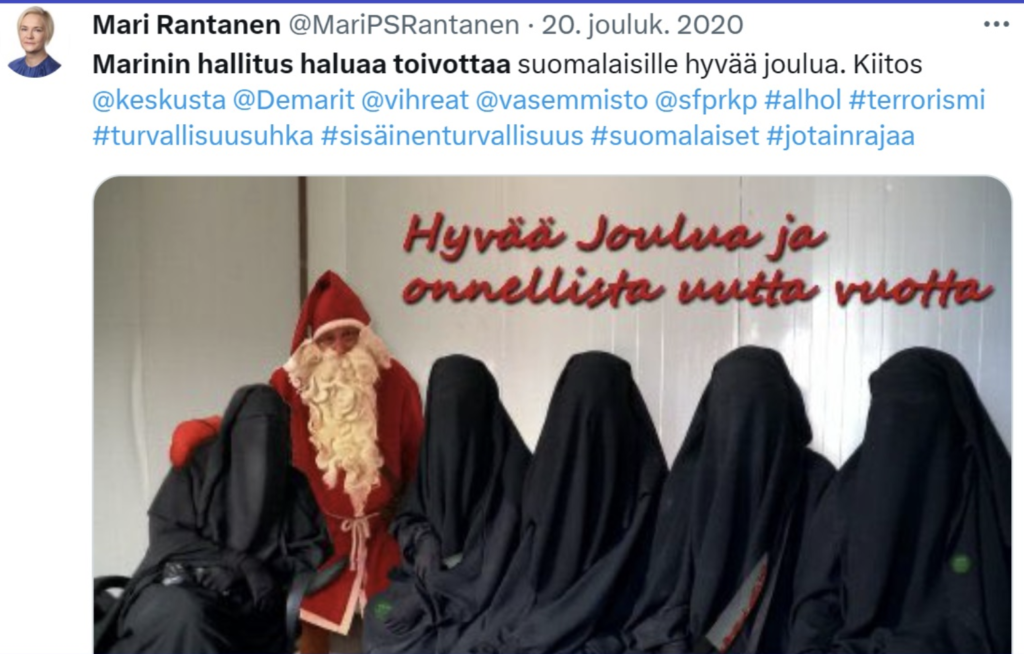
Before Rantanen was minister, she would send Islamophobic messages to then Prime Minister Sanna Marin. “Marin’s government wishes Finns a Merry Christmas,” she wrote. Source: X (formerly Twitter).
Migrant Talesin konteksti: Mahad Sheikh Musse on monikulttuurisen nuorisotyön ammattilainen, joka omaa vuosien kokemus viranomaisten ja eri yhteisöjen kanssa työskentelmisestä. Hän on kirjoittanut katujengejä koskevasta aiheesta Migrant Talesiin. Sen lisäksi, että meneillään olevassa keskustelussa ei kuulla rodullistettuja nuoria, herää kysymys, onko hallitus kiinnostuneempi leimaamisesta kuin hyvien ratkaisujen löytämisestä tähän ongelmaan. Musse kertoo näkemyksensä näistä asioista. #Maahanmuuttajuus, #nuoret ja #rikollisuus
Maahanmuuttajataustaiset lapset ja nuoret voivat kokea erilaisia haasteita sopeutuessaan uuteen ympäristöön ja kulttuuriin.
Sodan kokeminen voi vaikuttaa heidän elämäänsä monin tavoin. Esimerkiksi jos lapsi on kokenut sodan, hän voi kärsiä traumoista ja muista psyykkisistä ongelmista. Tämä voi vaikeuttaa sopeutumista uuteen ympäristöön ja vaikuttaa koulumenestykseen.
Lisäksi maahanmuuttajataustaiset lapset ja nuoret voivat kokea syrjintää ja rasismia, mikä voi johtaa henkisiin ongelmiin ja muihin haasteisiin. On tärkeää, että yhteiskunta tarjoaa tukea ja resursseja näille lapsille ja nuorille, jotta he voivat sopeutua uuteen ympäristöön ja menestyä elämässään.
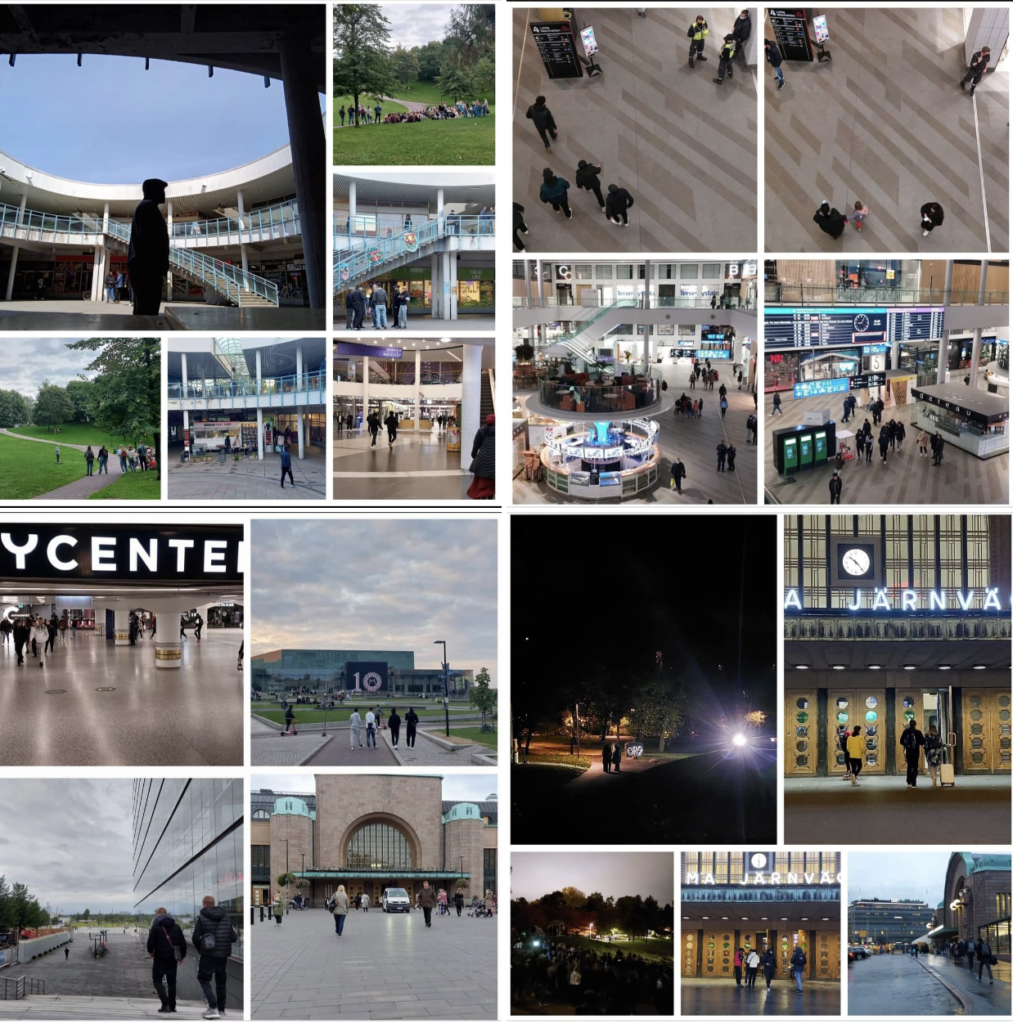
Kuvia Itä-Keskuksista Helsingin keskustaan. Kuvat Mahad Sheikh Musse
Sodan traumoista kärsivien ihmisten hoito voi olla monimutkaista ja vaatii erikoistunutta hoitoa. Hoidon tavoitteena on auttaa potilaita käsittelemään traumaattisia kokemuksiaan ja löytämään keinoja selviytyä niistä. Hoito voi sisältää terapiaa, lääkitystä, ryhmähoitoa ja muita hoitomuotoja. On tärkeää, että hoito alkaa mahdollisimman varhaisessa vaiheessa, jotta potilaat voivat saada tarvitsemansa avun ja tuen. Hoidottamatta jätetyt sotatraumat voivat johtaa vakaviin psyykkisiin ongelmiin, kuten PTSD:hen ja masennukseen, jotka voivat vaikuttaa elämänlaatuun ja jopa johtaa itsetuhoisiin ajatuksiin tai käyttäytymiseen.
Sodan traumoista kärsivät ihmiset voivat joutua kokemaan monia haasteita elämässään, kuten syrjäytymistä ja rikollisuutta. Traumat voivat vaikuttaa heidän kykyynsä sopeutua yhteiskuntaan ja kommunikoida muiden kanssa, mikä voi johtaa sosiaaliseen eristäytymiseen. Lisäksi traumojen hoitaminen voi olla kallista ja vaikeaa, mikä voi johtaa taloudellisiin vaikeuksiin ja rikollisuuteen. On tärkeää, että yhteiskunta tarjoaa tukea ja resursseja sodan traumoista kärsiville ihmisille, jotta he voivat saada tarvitsemansa avun ja tuen. Tämä voi auttaa vähentämään syrjäytymistä ja rikollisuutta ja auttaa heitä saavuttamaan paremman elämänlaadun.
On ymmärrettävää, että tuntee syyllisyyttä, jos on selvinnyt sodasta hengissä, kun muut ovat kärsineet tai menettäneet henkensä. Tämä on yleinen tunne selviytyjien keskuudessa, ja se voi olla erittäin vaikea käsitellä. On tärkeää muistaa, että tunteet ovat aina yksilöllisiä ja että on normaalia tuntea syyllisyyttä, vaikka ei olisi tehnyt mitään väärää. On tärkeää puhua näistä tunteista jonkun kanssa ja saada tarvittaessa ammattimaista apua. Lisäksi voit harkita vapaaehtoistyötä tai lahjoitusta sodan uhrien auttamiseksi, mikä voi auttaa lievittämään syyllisyyttä ja antaa tunteen siitä, että tekee jotain positiivista.
On erittäin vaikeaa elää turvallisesti, kun sukulaiset ovat sodan alueella. Tämä voi olla erittäin ahdistavaa ja pelottavaa, ja voi aiheuttaa monia erilaisia tunteita, kuten pelkoa, huolta ja ahdistusta. On tärkeää puhua näistä tunteista jonkun kanssa ja saada tarvittaessa ammattimaista apua. Voit myös harkita yhteydenottoa sukulaisiisi ja varmistaa, että he tietävät, että välität heistä ja olet valmis auttamaan heitä, jos tarvitsevat apua. On tärkeää muistaa, että vaikka et voi olla heidän kanssaan fyysisesti, voit silti olla heidän tukenaan ja auttaa heitä muilla tavoin, kuten lähettämällä rahaa tai muita resursseja, jos se on mahdollista.
As we mentioned in our report in March, Finland’s youth gang problem is a tool used by the Perussuomalaiset and National Coalition Party to tar-and feather migrants. It is an excellent topic to drive home Prime Minister Petteri Orpo’s migration policy that will disenfranchise such people.
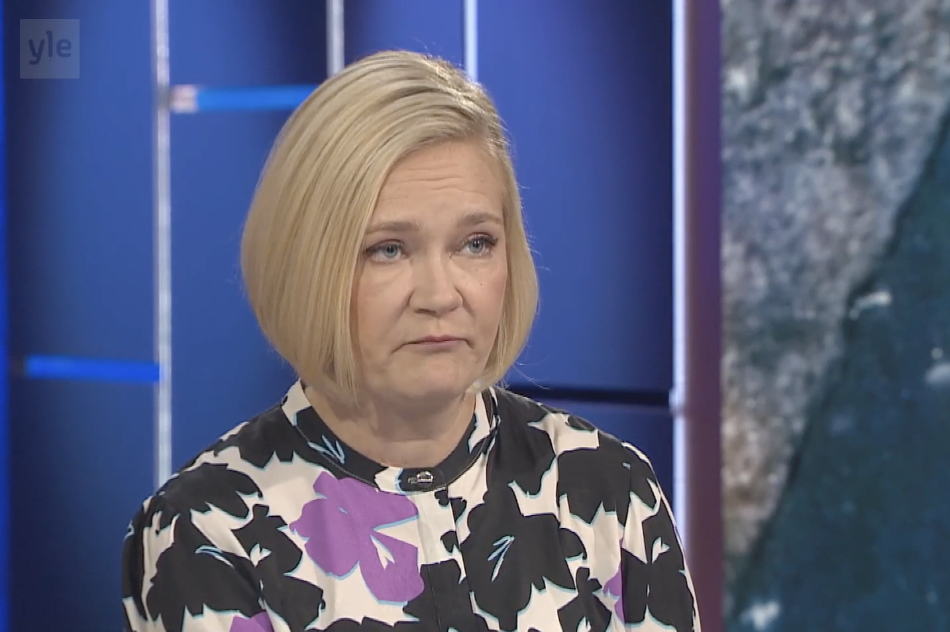
In an Ykkösaamu interview Saturday, apart from Interior Minister Mari Rantanen’s occasional awkward giggles, the interview left out one important question: the roots of Sweden’s gang violence problem.
If you ask Rantanen, she will blame the problem on immigration policy and the “wrong” type of migration. She will not mention a word about Sweden’s exclusive and class society and the lack of opportunities for racialized people.
Certainly government programs and making Finland a more inclusive society for everyone would be a difficult question for Rantanen to answer because the government is tightening immigration policy and slashing social welfare and services to migrants.
Her answer is a dog whistle: Blame it all on the wrong kind of migrants.
Some of the tightening of government migration policy include limited three-year use of paid interpreters, and linking your knowledge of Finnish language to getting social welfare, among others.
Rantanen called the latter “incentives” even if they are really ultimatums.
Finland’s Perussuomalaiset (PS)* Interior Minister Mari Rantanen is one of the government’s xenophobic “hotheads.” She, like PS Finance Minister Riikka Purra, will exploit and spread xenophobic soundbites to suit her party’s political agenda, which is nothing more than bashing brown and black migrants and refugees.
Even if she is supposed to watch out for our safety in Finland, she is near-constantly commenting about the situation in Sweden. In the tweet below she quotes Swedish Prime Minister Ulf Kristersson, who, like the National Coalition Party of Finland, decided to go to bed with a far-right party.
If only immigration “problems” could be as easy to solve as Rantanen makes us believe in the tweet below:
“Political naivety and ignorance led us to this point as well as irresponsible immigration policies and failed integration,” Rantanen quotes Swedish PM Kristersson. “Finland will avoid the Swedish way by tightening immigration and integration and increasing integration.”
Add to the latter a racist opinion piece by a tabloid Ilta-Sanomat and you have a one-two knock-out punch that blames migrants for the violence and most Sweden’s problems.
Matters will get worse on the migration front.
Even so, we must do everything possible to push back against racism in Finland and Europe.
The recent case of a “youth gang” terrorizing a predominantly white neighborhood in western Helsinki exposes the knee-jerk reaction about how the media and public see suspected crime by brown and black Finns.
During the last week of August, a group of youths with covered faces at the Lauttasaari metro station allegedly attempted to rob a primary school child, who escaped home, according to Helsingin Sanomat.
“The police are aware that in [the neighborhood of] Lauttasaari there have been cases of threatening behavior, following young people, and other forms of harassment. According to the police, a group of young people aged between 15 and 17 have been causing concern in the area,” reported the daily.
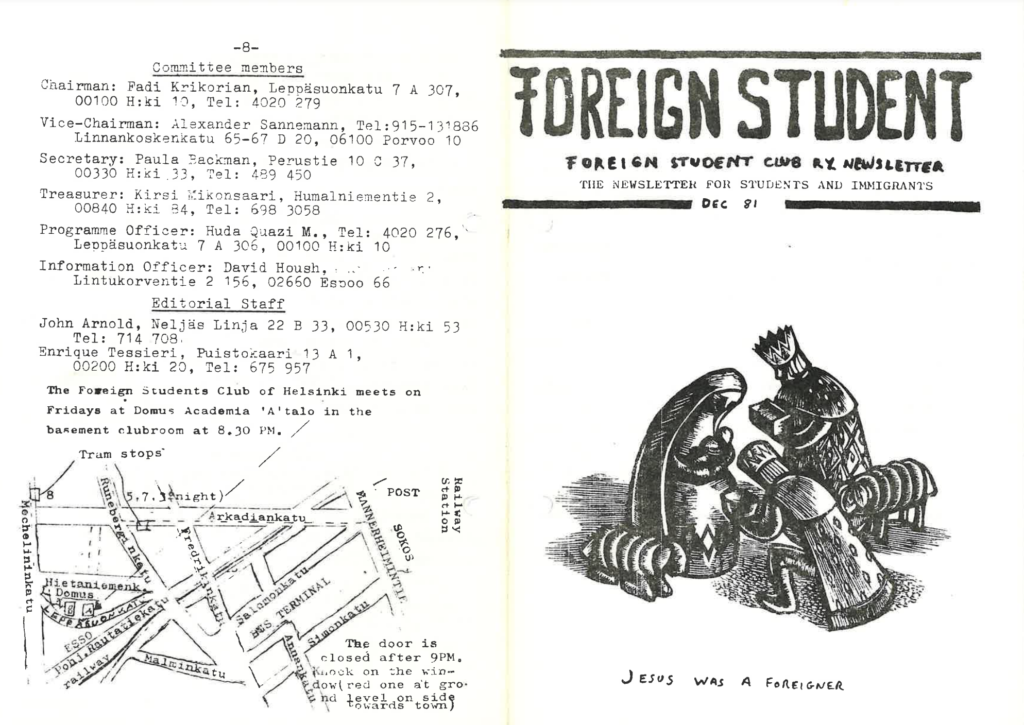
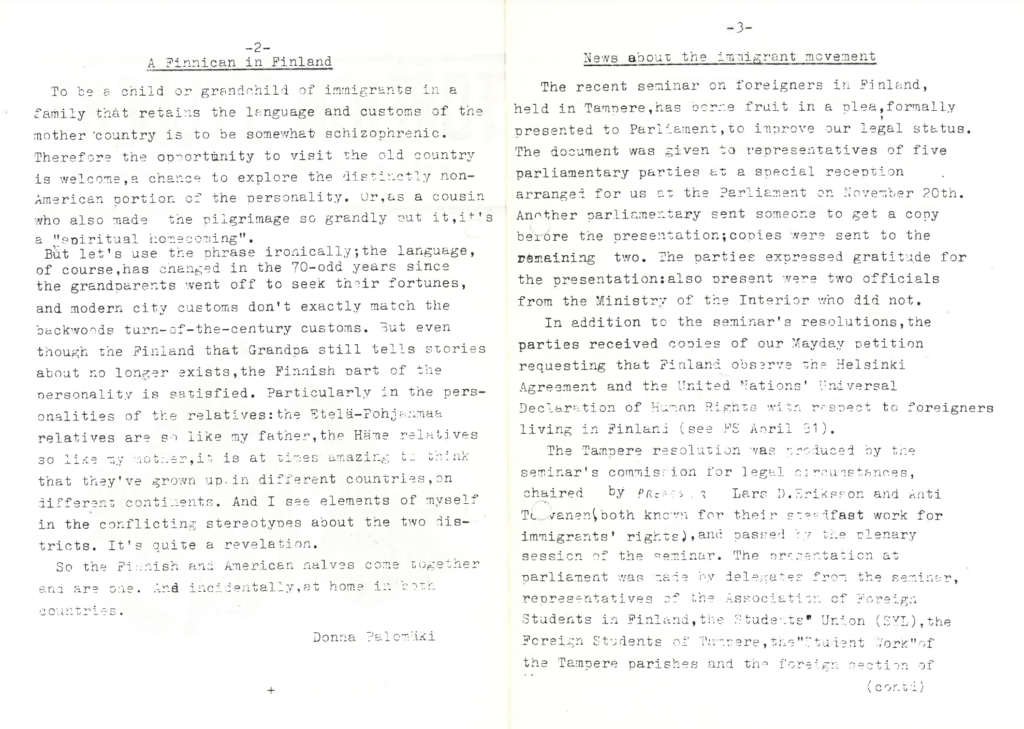
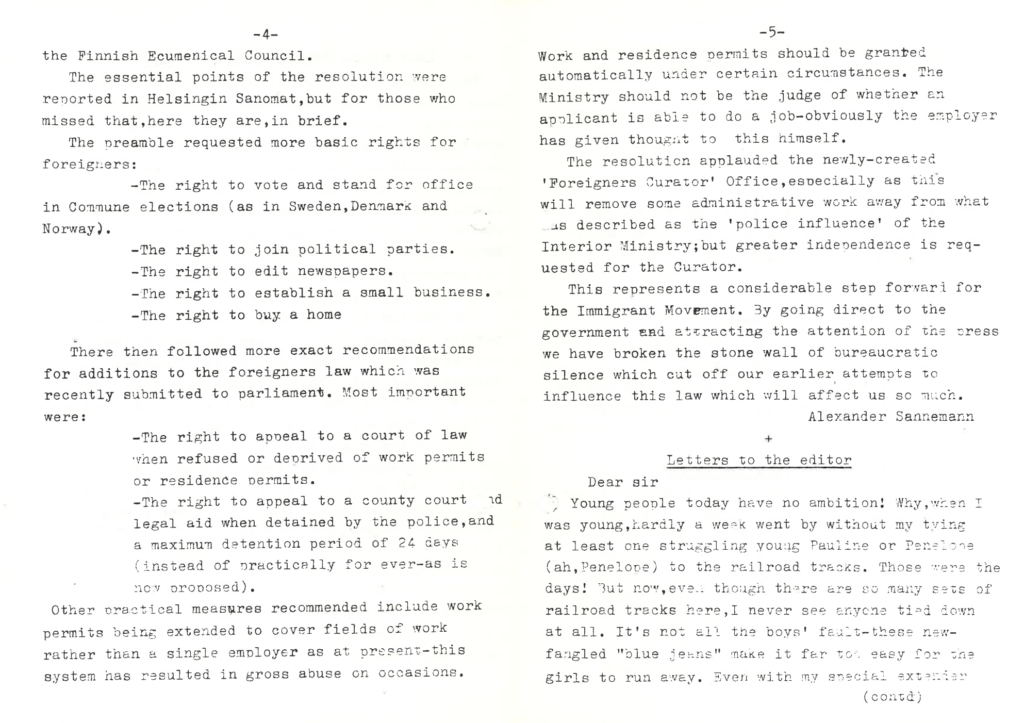
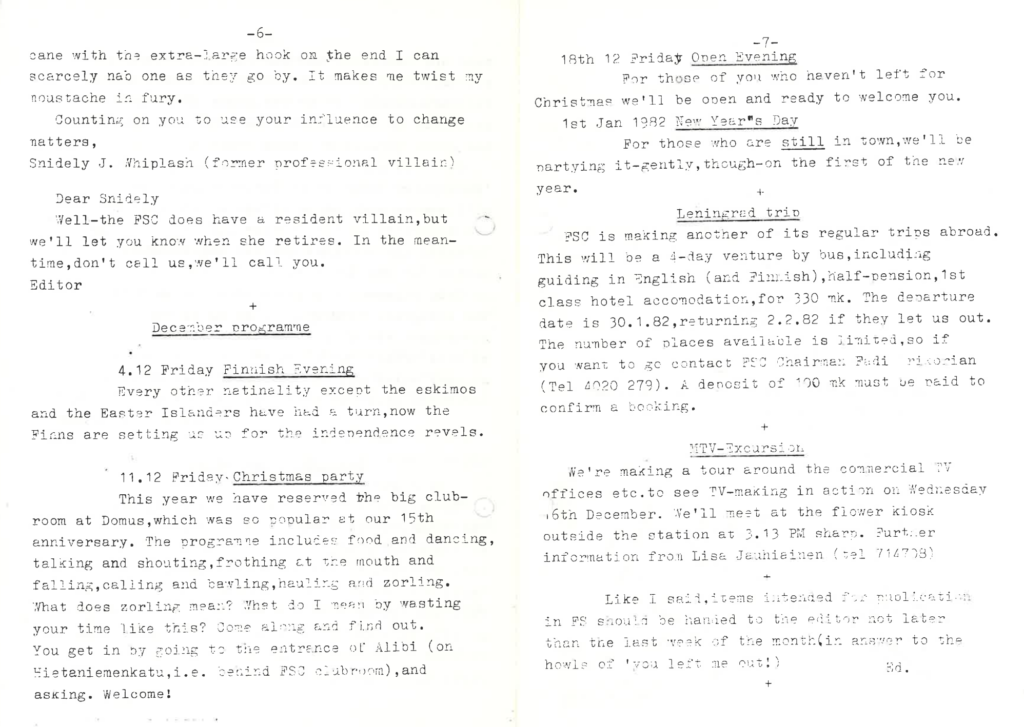
The December issue of the Foreign Student gave readers information about the ever-growing immigrant movement, which aims to improve foreigner rights in Finland. A seminar, which took place in Tampere, was attended by different political parties and officials of the interior ministry and religious groups.
“In addition to the seminar’s resolutions, the [political] parties received copies of our Mayday petition requesting that Finland observe the Helsinki Agreement and the United Nations’ Universal Declaration of Human Rights with respect to foreigners.”
Some demands made at the seminar in Tampere for greater foreigner rights included:
The right to join political parties.
The right to edit and own newspapers.
The right to establish a small business.
The right to buy a home [own property].
The right to appeal to a court of law when refused or deprived of work permits and residence permits.
The right to appeal to a county court and legal aid when detained by the police, and a maximum detention period of 24 days (instead of practically for ever as is now proposed).
Club members had the opportunity to read in the Foreign Student the Foreign Student Club’s newly elected Chairperson Fadi Krikorian’s views on the club’s direction. After thanking the previous board for their good work, Fadi said that the prospects of the club are good.
“…tradition programmes such as international evenings will continue, there will be trips inside and outside Finland, and there will be many opportunities to familiarise Finns with visitors in their country. And to the Finns I would add, come to our club and enjoy an exotic atmosphere right here in Finland,” wrote Fadi.
The new board of the club was: Fadi, chairperson; Alexander Sannemann, vice-chairperson, Paula Backman, treasurer (formerly secretary); Huda Quazi M., programme officer; David Haush, information officer, replaced Vinaya Gupta; John Arnold and Enrique Tessieri are the editorial staff of the Foreign Student.
Unfortunately, the new chairperson did not mention in his column anything about the activism of the club in securing better rights for foreigners in Finland.
Vice Chairperson Alexander Sannemann writes about how the Foreign Students Club is not a political association. The response was a comment by Chairperson Enrique Tessieri earlier who mentioned at a meeting that the club also has a political role.
The reaction of some members shows how sensitive some were concerning the type of activism and its political direction.
Writes Alexander: “This does not mean being politically active; if we identified our course with the aim of a single political party it could indeed, but this is exactly what we have not done. We have shown our willingness to co-operate with all movements to emphasize our strict neutrality.”