If there is a reminder on how bad Finland’s racism problem has got, take a look at the rise of the Perussuomalaiset (PS)* party since the 2011 parliamentary election and specifically its main motor, Jussi Halla-aho. Having him treated as “a normal” politician by the media and other politicians makes him look like a wretched politician in an intensive care ward.
His political life-saving support comes from his blog, Scripta, written in the 2000.
For many Finns, it is difficult to weigh how demeaning and racist his writings are and how they paint a capricious and greedy man who is a white supremacist desperately seeking recognition and approval. Halla-aho will never apologize for his racist writings because it would cut off his political life support.
Moreover, playing down and moving forward with a poker face concerning the damage he has caused on Finland and especially on minorities, would not be possible if he apologized for his racist writings.
There are many ways to skin the cat of an old racist who hides behind the cloak of democratic institutions. One of these methods is to reverse the roles of his victims in his writing to grasp how toxic the person is.
Example 1:
“I am thoroughly confused as to why muslims have such a great desire to inflict pain on those who are in a weaker position, such as animals, children and women. I think this pattern is pretty clear. Why do muslims jump around ululating with their dicks hard whenever heads get chopped off or someone gets whipped?
“I am thoroughly confused as to why muslims white Finnshave such a great desire to inflict pain on those who are in a weaker position, such as animals, children and women. I think this pattern is pretty clear. Why do muslimswhite Finns jump around ululatingdrunk with their dicks hard limp whenever a Russian’s head gets chopped off or someone gets whipped beaten to a pulp?
“It is hard for me to think about a lower reptile in the universe than a Scandinavian social democrat. The most slimy subscpecies of this reptile is the Swedish social democrat.”
“It is hard for me to think about a lower reptile in the universe than a Scandinavian social democrat a Finnish Perussuomalaiset. The most slimy subscpecies of this reptile is the Swedish social democratSweden Democrat.
If you’re not careful, the newspapers will have you hating the people who are oppressing and loving the people who are doing the oppressing.
Malcolm X
Juan is a seven-year-old boy who enjoys playing alone rather than with friends. He was known for his wild imagination. From a short distance he was playing in the sandbox with his toy cars he heard a faint voice asking for help. Going to the source of the voice he noticed a tiny stone.
“Oh thank you for taking that heavy stone off me,” the tiny stone said relieved. “Some naughty boys placed me under the larger stone.”
Surprised by what he was hearing, Juan picked up the tiny stone that would not stop thanking him.
“It’s hard being a tiny stone in a large city like Helsinki,” it continued. “It’s not like in the countryside where stones are left alone. In the city, it’s different. Not a day does y when you’re pushed around. Some can even throw you in the sea.”
Source: Open Source
The stone was so grateful to Juan that he granted him a wish.
“Do you mean that I can wish anything I want?”
Juan thought for a long silent pause and then said that all he’d want was to become white. He said that if his skin color changed from dark brown to white, his schoolmates would stop ridiculing him at school and want to play with him.
In an instant, Juan’s wish was granted His skin was now white, his eyes blue and his hair blonde.
Placing the mysterious stone in his pocket, Juan ran back home, where his parents were surprised to see him ethnically changed.
“My God, Juan!” the mother said. “What has happened to you?”
“I saved this tiny stone, and it granted me a wish. for my good deed I asked it to change the color of my skin to white.”
Juan’s father, who was from Colombia and had lived many yards in Finland, was first speechless and then totally confused by what had happened to his son.
“My friends won’t bully me anymore,” Juan continued. “Imagine, I am now the same color as them.”
Days went by and Juan’s initial happiness started to wean, even if some of his school friends were happy that he was white. But some were taken aback and seemed to like Juan more when he had dark skin.
The change in ethnicity ended up causing Juan a lot of unhappiness. By erasing his old self, Juan lost a part of himself. It was like getting used to using new clothes he wasn’t used to.
Juan ended up miserable. He pleaded with the stone to take him back to his old self. It wasn’t possible because he was granted only one wish by the magic stone.
A familiar voice was calling Juan to wake up for school. She noticed her son was in tears.
“What’s wrong, my love?”
“I don’t want to be white. I want to be my old self!”
To his surprise and relief, Juan noted that he had a nightmare.
The nightmare had taught him an important lesson: No matter what anyone thinks, your background is a sense of pride.
On telling his mother about the nightmare, Juan reasoned that changing your ethnicity would be a mistake.
“Let’s face it, elephants would be miserable if they changed into ants and ants would end up missing who they were if they changed into elephants.”
Not understanding the full meaning behind Juan’s words, his mother ordered him to rush out of bed and hurry to school.
A Päjät-Häme district court sentenced 31 October for the first time in Finland members of the far right with the intent of committing a terrorist act. Even if the case is considered the first in Finnish criminal history, it is long overdue and a stark reckoning that white Finns can commit terrorist crimes.
According to earlier news reports, the three convicted men follow neo-Nazi ideology linked to accelerationism, which claims that fundamental societal transformations can be achieved only by accelerating different processes in society.
The principal convict in the case was Viljam Lauri Antero Nyman, 29, who was sentenced to prison for three years and four months. A second convict born in 1996 was sentenced to a year and nine months in prison. A third member was convicted to 1 seven-month suspended prison sentence for aiding and abetting.
The two convicts were charged with aggravated firearms offenses committed with terrorist intent and training to commit a terrorist act.
Nyman used to be a member of the Perussuomalaiset (PS)* Youth and a candidate of the radical-right party.
The convict, Viljam Lauri Antero Nyman, was a municipal candidate for the radical-right PS in 2017 for the northern Finnish city of Rovaniemi.Source: Twitter.
The PS forms part of Prime Minister Petteri Orpo’s right-wing coalition government.
Even if Finland is waking up to its far-right terrorism threat, there is still a disconnect with the PS’ role in spreading far-right ideology.
In a video posted by MTV below, the members of the groups warned of an ensuing “race war.”
Watch the video and read the story (in Finnish) here. Source: MTV.
Migrant Tales has been covering several terrorist-related stories in Finland, like the one in 2021 in the Western Finnish town of Kankaanpää.
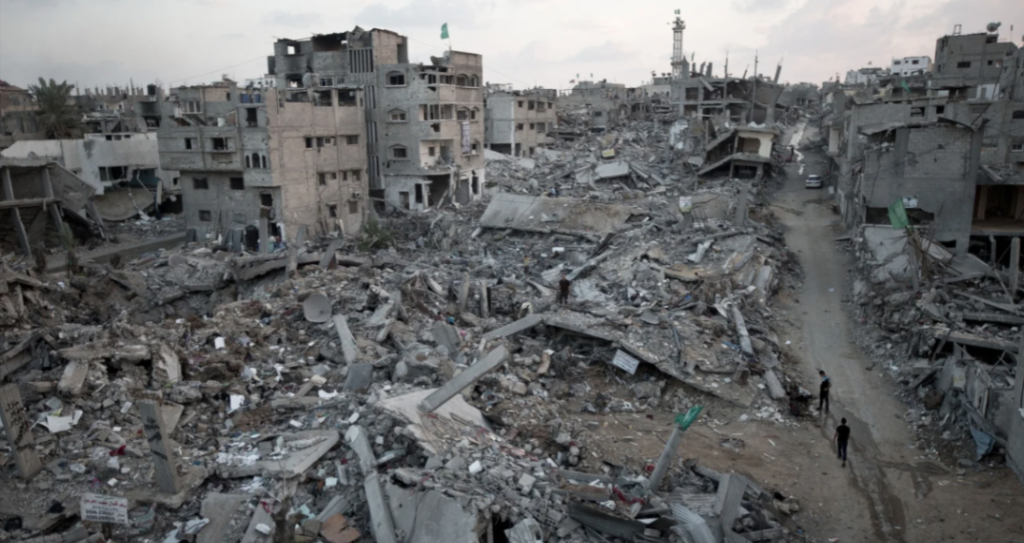
The quantity of explosives that have been dropped on Gaza has exceeded 12.000 tons, equivalent to the size of the nuclear bomb dropped on Hiroshima. Bear in mind that Gaza (45km²) is one-third the size of Nagasaki. More than 2.2 million Palestinians live in Gaza, an area about 40km long and 10km wide at its widest point!
The destruction of Gaza. Open Source.
The foreign minister of Israel who in the UN had all the audacity to say out loud “from now on there is no place for balanced positions” is not somehow questioned by any of the media in EU as if those words are okay, acceptable and encouraged. Which is the case adopted by the Media, the free world’s most prestigious tool and moral judge took a side and enabled the following:
Israeli politician Moshe Feiglin on channel 14 (Israeli tv), went even farther: “Do not leave a stone upon stone in Gaza. Gaza needs to turn to Dresden. Complete incineration. Annihilate Gaza now.!”
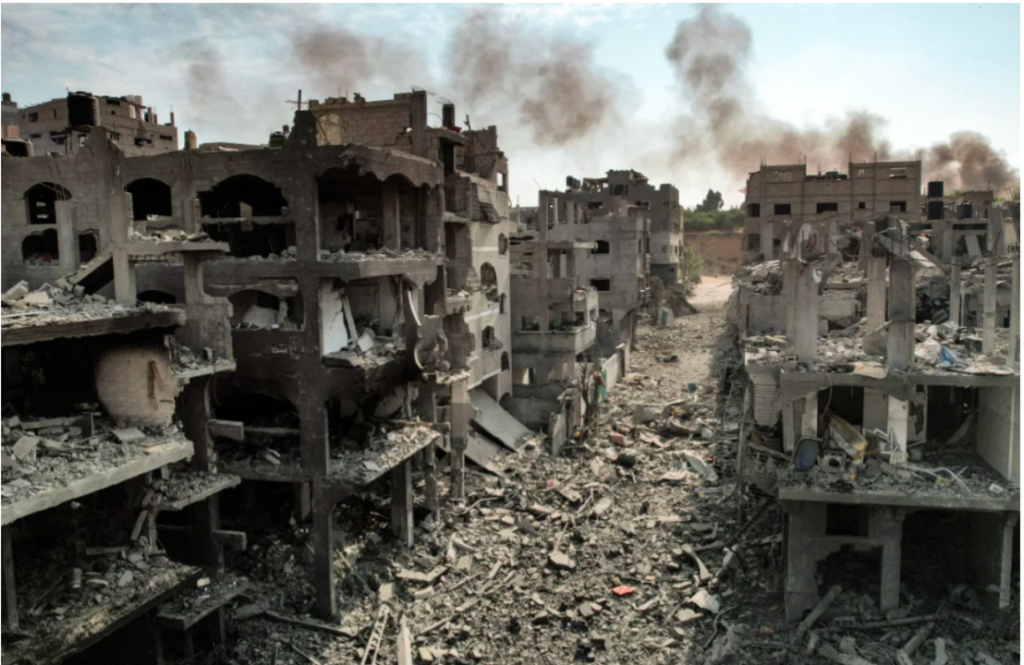
Daniel Hagari, IDF spokesman said on October 10th in Ha’aretz newspaper: “We are dropping hundreds of tons of bombs on Gaza. The focus is on destruction, not accuracy”
On the ground that is what is happening:
Destruction and not accuracy in Gaza. Open Source.
The dire humanitarian situation is indescribable:
53 UNRWA have been killed by the bombing in Gaza since October 7th.
15 hospitals out of 35 have shut their doors due to lack of fuel and medical supplies.
More than 18.967 injured people are currently in hospitals. The majority of injured suffers from fourth-degree burns. And there is no space left for more injured.
Cases of smallpox, scabies and diarrhea have been on the rise due to poor sanitary conditions and use of water from unsafe sources.
More than 1.5 million people have been internally displaced since 13th of October. They are distributed between families, UN schools, hospitals, churches and mosques. UN described this as “the fastest humanitarian crisis resulting in the largest displacement crisis”.
42% of the residential units were destroyed. More than 46.758 residential units are inhabitable. And more than 190.000 damaged housing units.
50.000 women are pregnant and are struggling to access minimum of health care.
7326 people were killed including 3038 children, 1726 women and 2562 men (over 70% of the victims are women, children and elderly), over 1700 are still under the rubbles including 940 children (27.10.2023).
825 entire family was massacred (all family member killed) 27.10.2023
Statistics from various sources such as UNRWA, UN, and the Palestinian Health Ministry
As the death toll mounts in Gaza, Biden says “I have no notion if Palestinians are telling the truth about how many people are killed”
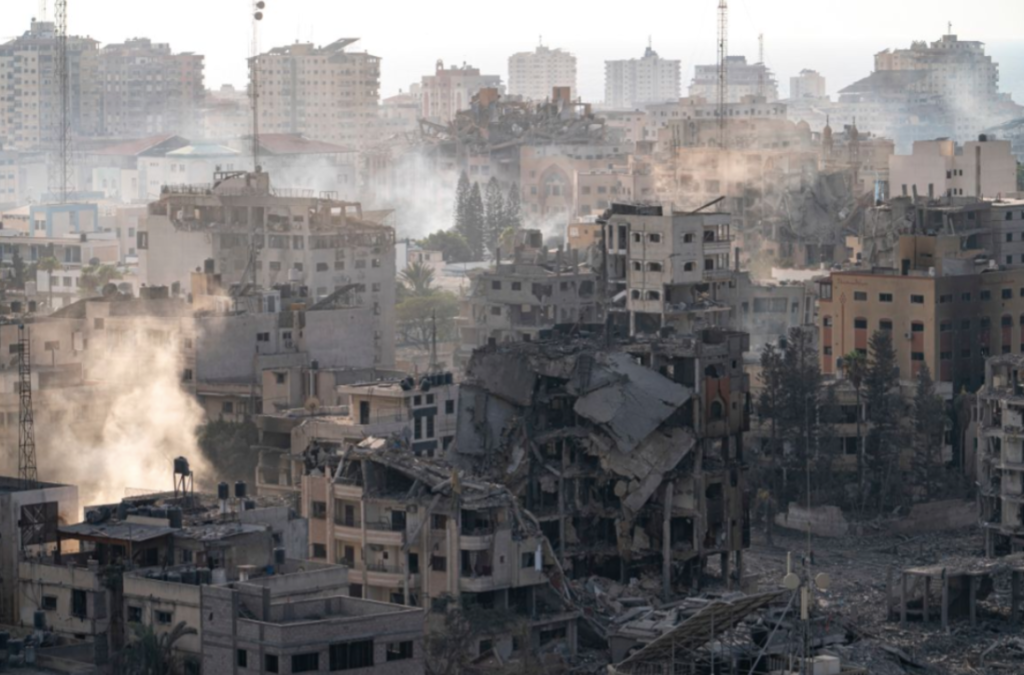
Constant bombing while being streamed live on one of the most densely populated areas in the entire world. Open Source.
Joe Biden’s position and side can be simply explained by the fact that the U.S. has used its veto power a total of 46 times to block UN Security Council resolutions that were critical of Israel. At least 34 times the US used its veto power on the matter of Palestine and Palestinians, to strike down resolutions about the situation in Palestine to protect Israel from facing censure or accountability for its violations of international law. The majority of these resolutions were drafted to provide a framework for peace in the decades-long Israel-Palestine conflict, including asking Israel to adhere to international laws, calling for self-determination for Palestine statehood, or condemning Israel for the displacement of Palestinians or settlement building in occupied Palestinian territories. A total of 46 times U.S. vetoed resolutions against Israel is all that is there to know on why Joe Biden does look the other way and deny even the suffering of Palestinians even in their death count or the way the media “should” look at it!
U.S. secretary of state, Toni Blinkin, asked the Qatari prime minister less than two weeks ago to tone down Al Jazeera’s rhetoric about the “war in Gaza”. Noting that Al Jazeera is the only news channel that reports live from Gaza, in Gaza not in a form of recorded “video tapes”, in the response of reporters and journalists say that they were shocked for the request of censorship and that they reported on both the strikes of rockets targeting Israel by Hamas and the damage and the stories, and the bombardment and air strikes on Gaza by Israel, that they show from the ground and on the spot what is happening.
A response to this “defiance” of censorship was shortly delivered:
On Channel 13 ‘journalist’ admits/alleged (depends on interpretation of course!) that Israel purposefully and premeditatedly murdered the family of Al Jazeera Gaza bureau chief Wael Dahdouh: “Generally we know the target. For example, today there was a target: the family of an Al Jazeera reporter. In general, we know.”
The target murder comes a day after Tony Blinkin demanded Qatar suppress Al Jazeera’s coverage on Gaza. It wouldn’t be small to add that his family was in the United Nations-recognized Nuseirat refugee camp in central Gaza, which was called a “safe area” by Israeli forces.
Mr. Dahdouh, 53, is well-known journalist who has covered armed conflicts in the area, was helping broadcast live images of the war in Gaza when he received the devastating news. His wife, his son (was in his final year of high school), daughter (7 years old) and grandson (18 months old).
At least 31 journalists were killed by Israel carpet-bombing on Gaza since it launched its military offensive on October 7th (up to October 27th 2023).
Isn’t this at the very least concerning when there is this tendency to deny and censor the events of a genocide happening right now?
“We didn’t know that there were concentration camps, we didn’t know they were killing the Jews”
Isn’t this what the Germans said and so many more at the time?
Isn’t history repeating itself with such a persistent irony?
“No news coverage, denial, censorship, banning manifestations and restrictions…” 2023: What about now? You didn’t know or you don’t want to?”
While this time the biggest game changer in the world view to the matter was social media which gave an easy access to information and live feed and media that never make it to the news rooms of national TVs, the biggest chocking concern that cannot be denied is this huge censorship and tunnel view filter in the media, with textbook characteristics that align with oppressive regimes that have engaged in extensive censorship and propaganda to maintain their power and control over information. Some historical regimes with similarities include:
Nazi Germany (1933-1945): The Nazi regime under Adolf Hitler tightly controlled the narrative, suppressed dissenting voices, and promoted a singular view of Aryan supremacy and the Nazi agenda. They used propaganda extensively to manipulate public perception and dehumanize those they considered enemies, particularly Jews.
Stalinist Soviet Union (1924-1953): Under Joseph Stalin’s leadership, the Soviet Union had a strict state-controlled media that only disseminated the official narrative. Questioning the state’s agenda or presenting alternative viewpoints could lead to severe consequences, often including imprisonment or execution.
North Korea (since 1948): The Democratic People’s Republic of Korea (North Korea) is notorious for its extreme control over information. The regime tightly manages the narrative, and any dissent or questioning of the state’s ideology is considered a grave offense, often leading to imprisonment or death.
Maoist China (1949-1976): During the rule of Mao Zedong, the Chinese Communist Party maintained a stranglehold on media and promoted a single narrative in line with Communist ideology. Alternative views were suppressed, and questioning the state’s agenda was dangerous.
Cultural Revolution in China (1966-1976): The Cultural Revolution was a particularly oppressive period within Maoist China. It saw widespread censorship, propaganda, and a cult of personality built around Mao. Dissent was brutally suppressed, and those who questioned the regime were persecuted.
These regimes share common traits of authoritarianism, media control, censorship, and suppression of dissent, leading to a singular, state-approved narrative. The consequences for questioning or presenting alternative views often included severe punishment, creating an environment where loyalty to the state was paramount. The regime here is the one side story and unconditional support and the state in question here is Israel, and the committed to the one view and one narrative are EU, UK and the US.
“Adagio per sortem, annales se iterum replicabant.”
Before ascension, from under the rubbles, Palestinian children with a bitter smile:
“In articulo mortis. Morituri te salutant (At the moment of death. Those who are about to die salute you).”
From the high seat of human rights and standards Europe replies:
“Mors ultima ratio (Death is the final accounting).”
Then EU continues in a chant-like rhythm and soft of cold brittle voice:
“Sanguis liberorum tuorum et populi tui dolor sit sacrificium pro peccatis meis factis”
(‘Let the blood of your children and the suffering of your people be the sacrifice for the sins of my doing’)
Comes Lady Justice the virtuous UN and whispers:
“Sanguis tuus in ara sancta, purus et absque dolo, sit sacrificium et redemption mea”
(‘May your guileless blood on the holy altar be my sacrifice and my redemption’)
And the freedom bearer and liberty server USA:
“If we do everything right, if we do it with absolute certainty, there’s still a 30% chance we’re going to get it wrong.”
(Joe Biden, speaking to members of the House Democratic caucus who were gathered in Williamsburg, Va., for their annual retreat.)
By Everyday, In Everyday, On Everyday
The title of my poem means “Slowly through fate, the annals repeated themselves.” This conveys the idea of a slow and ironic repetition of historical events influenced by the fate as we make it.
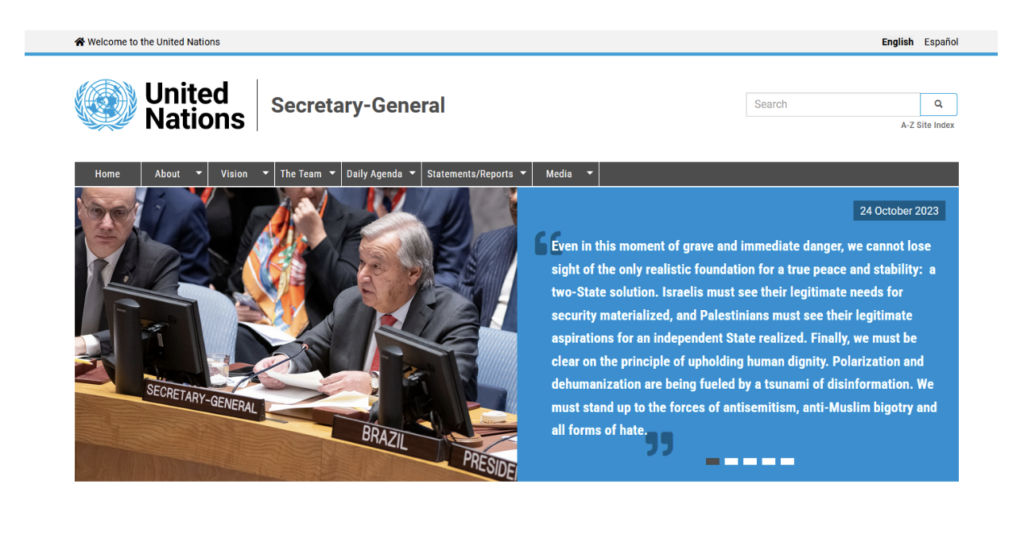
Secretary-General António Guterres’ remarks (24.10) to the Security Council on the Middle East.:
“It is important to also recognize the attacks by Hamas did not happen in a vacuum.
The Palestinian people have been subjected to 56 years of suffocating occupation.
They have seen their land steadily devoured by settlements and plagued by violence; their economy stifled; their people displaced and their homes demolished. Their hopes for a political solution to their plight have been vanishing.
Migrant Tales view: Like a furious one-two punch, thanks to two reports, Europe and especially Finland continue to see a rise of racism with near-silence and little outrage. Could we call it the Frontex syndrome? We are aware of the problem, but we turn a blind eye because we don’t really care or want to be bothered. Finland’s hostile government to immigrants, comprising the National Coalition Party, Perussuomalaiset*, Swedish People’s Party and Christian Democrats, is the least apt to tackle the social ill. Matters can only get worse from here.
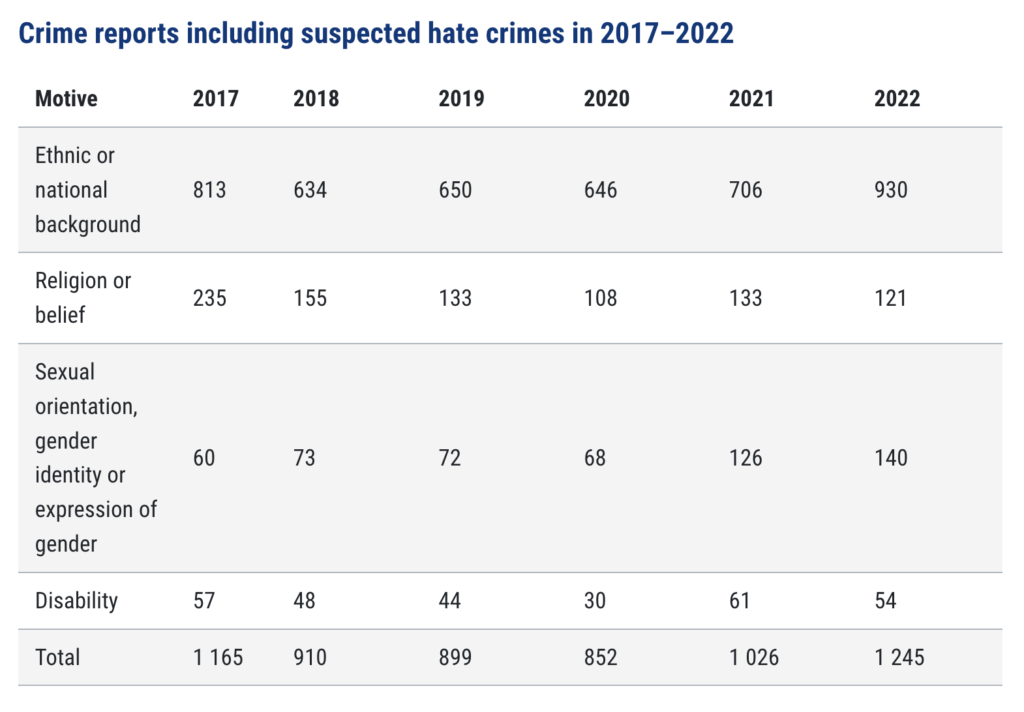
In the suspected hate crime report for 2022, the number of suspected hate crimes reported to the police in 2022 rose by 21.3% to 1,245 cases from 1,026 in the previous year. The lion’s share of hate crimes was due to ethnic and national background (74.7%), up by 31.7% to 930 from 706, and religion and belief (9.7%), down to 121 from 133.
Sexual orientation accounted for 8.7% of all suspected hate crimes, rising 11.1% to 140 with disability falling 11.5% to 54 cases.
The Police University College said that those with Russian citizenship experienced the highest frequency of crimes concerning national background. Even so, Somalis and Iraqis continue to rank high in suspected hate-crime statistics. Eleven percent of all offenses were directed at the Romany minority.
Concerning religion or belief, the most common victims, as in previous years, were Muslims.
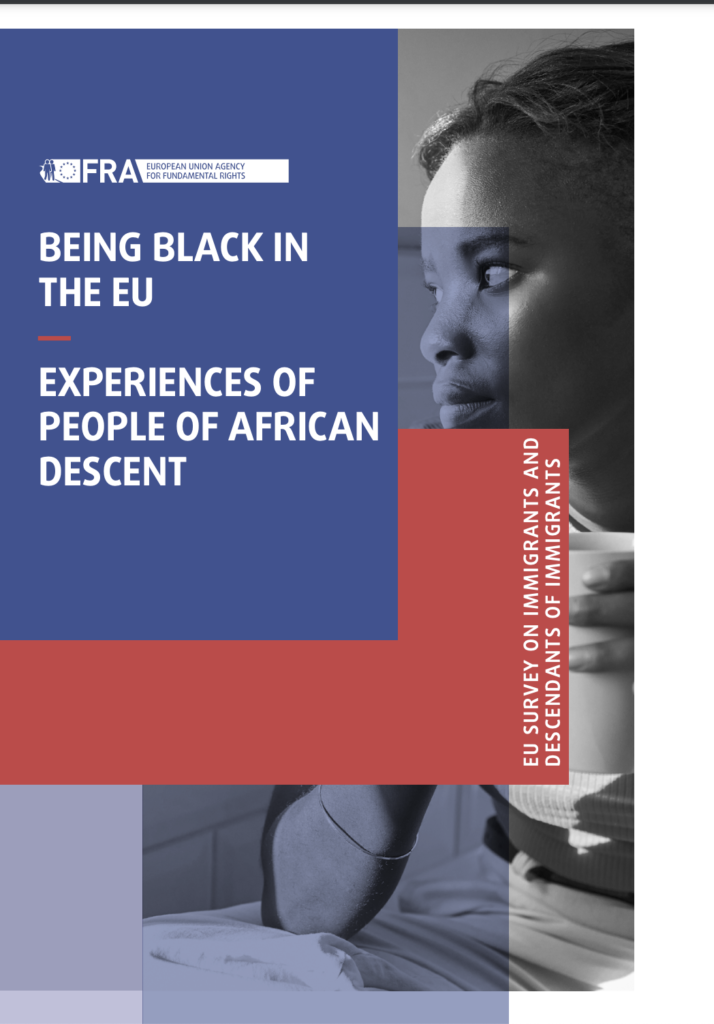
Being Black in the EU
Like the 2018 report, the latest FRA report continue to offer bad news for countries like Finland, Germany, and Austria, which reported the highest prevalence of racial harassment in the past 12 months by people of African descent (PAD).
At One People ASBL, our most cherished quote is: “Anti-racism is a team sport.”
Celebrating Black History Month is a diverse and inclusive event that highlights and promotes the rich culture and history of the Afro community. It caters to people of all backgrounds, including children, youths, entrepreneurs, and employees. The event includes a wide range of activities such as concerts, discussions, topics such as the role of technology like AI in combating discrimination, explorations of Afro-feminism and Pan-Africanism, and screenings of media and films that delve into the experiences and contributions of the Black community.
Migrant Tales had the opportunity to talk to One People ASBL Madeline Yougye, One People chairperon.
“I was born in Cameroon, moved to France at the age of 3, and have been living in Luxembourg for nearly a decade,” she said. “I was immediately drawn to the cultural diversity of Luxembourg, with 70% of the capital’s residents hailing from different parts of the world, such as Africa, Asia, and Europe.
Yougye said that upon moving to Luxembourg, she noticed the disparities in the treatment of expatriates. “This realization inspired me to become involved in the local community, particularly after the death of George Floyd,” she said. “In collaboration with like-minded individuals, I founded One People dedicated to fighting racism and promoting equality of opportunity.”
Black History Month is celebrated during the month of October and organized by One People ASBL of Luxembourg and aims to forster fosters a sense of belonging and unity among all communities while promoting a deeper understanding of the challenges and achievements of the Black community.
One People ASBL Chairperson Madeleine Yougye.
Yahya Rouissi: Can you tell us a little about your organization?
Madeline Yougye: One People is a not-for-profit association created in Luxembourg in 2021 that works to strengthen citizen and intercultural anti-racism, for real equal opportunities while respecting everyone’s fundamental rights.
Our aim is to raise awareness of the exclusion suffered by people who are discriminated against because they belong to an ethnic group.”
YR: Are there any role models or experiences that have shaped your activism and work?
MY: My father used to wait for Mohammed Alie’s fights all night long with jet lag, I didn’t understand why, it was only afterward that I became interested in this personality and understood his commitment.
My first real job was as an event organizer for the AIDS association in Paris. I had the opportunity to go to the French West Indies when I was 25, and it was the first time for me to see a book with a Black person on the cover. I realized that after a more or less successful schooling, after having read Molière, Zola and Orwell, I had never read an Afro-descendant writer. So I bought this book and several others: “Peau noir masque blanc” by Frantz Fanon. It was this book that helped me answer many of the questions I was asking myself at the time, and awakened my awareness of the profound nature of systemic racism and the biases it could introduce into my own vision of the world and the way others looked at me because of my skin. Then I start reading all books i could find written by people of color, like Cheik Anta Diop, Aimé Cesaire, Tony Morrison… “
YR: What are the key objectives of your association to fight against racism?
The Perussuomalaiset (PS)* speaker of parliament, Jussi Halla-aho, is trying his hardest to have his cake and eat it. The trial that led to ethnic agitation conviction and for breaching the sanctity of religion in 2012 rose him to prominence. The very racist, anti-Semitic, Islamophobic, and homophobic writings on his Scripta blog in the 2000s brought him a handsome political career.
I wonder what people would think that after not getting elected in 2007, he became speaker of parliament in 2023. His political rise does not only say a lot about him but also about Finland. Many Finns are conservative and racist.
Thanks to Halla-aho’s blogin 2008, it gave me a good reason to continue writing Migrant Tales.I was planning to abandon the blog but thanks to Scripta, and the hostility against my blog, I planned to stick it out. That was almost fifteen years ago.
Left to right: Even if Jussi Halla-aho hopes that people will forget his racist roots, behind the gavel he uses as speaker of parliament, he will always be an evil clown show. Accepting Halla-aho would be saying that all his racist, anti-Semitic, homophobic, and far-right views are ok and normal. It’s not, even if he is running for president, where he takes the cue from other PS politicians like Laura Huhtasaari who appear abnormally white thanks to makeup and hair dye. Sources: berkeleyside.org, Suomen Kuvalehti, and.PS.
Below is some of the racist filth found on Halla-aho’s blog:
National Coalition Party (NCP) Prime Minister Petteri Orpo’s coalition partner, the radical-right Perussuomalaiset (PS)*, is going all out to make life as miserable as possible for migrants, especially asylum seekers and undocumented migrants.
PS Interior Minister Mari Rantanen has threatened to take “a radical shift” in asylum policy and undocumented migrants. In her opinion, if an asylum seeker does not get a residence permit, that person must leave the country.
Their policies are based on racist hearsay and their policies are a direct stake to the heart of many migrants aiming to survive in an ever-difficult and hostile Finland.
The story of an Iraqi family who came in 2015 is a case in point.
After waiting for eight years for a residence permit, three of their children, who are now adults, appear to be “safe” since they have studied, graduated, speak Finnish and have employment.
The story is different for their teenage child, mother and father, who haven’t landed a job and speak a little Finnish. All three are in danger of being deported to Iraq.
When it comes to migration policy and treating asylum seekers, the EU has three solutions:
Sticking one’s head in the sand.
Sticking one’s head up the arse.
Build high deadly walls with nails of denial.
It is clear that with global warming and democracy under attack, more people will have to abandon their homes and come to regions like Europe. If I were them, I’d do the same.
But the most distressing fact is that Europe is in denial and believes that populism and xenophobia will help keep the people who are knocking at our doors out. No, populism or Frontex will not secure our borders.
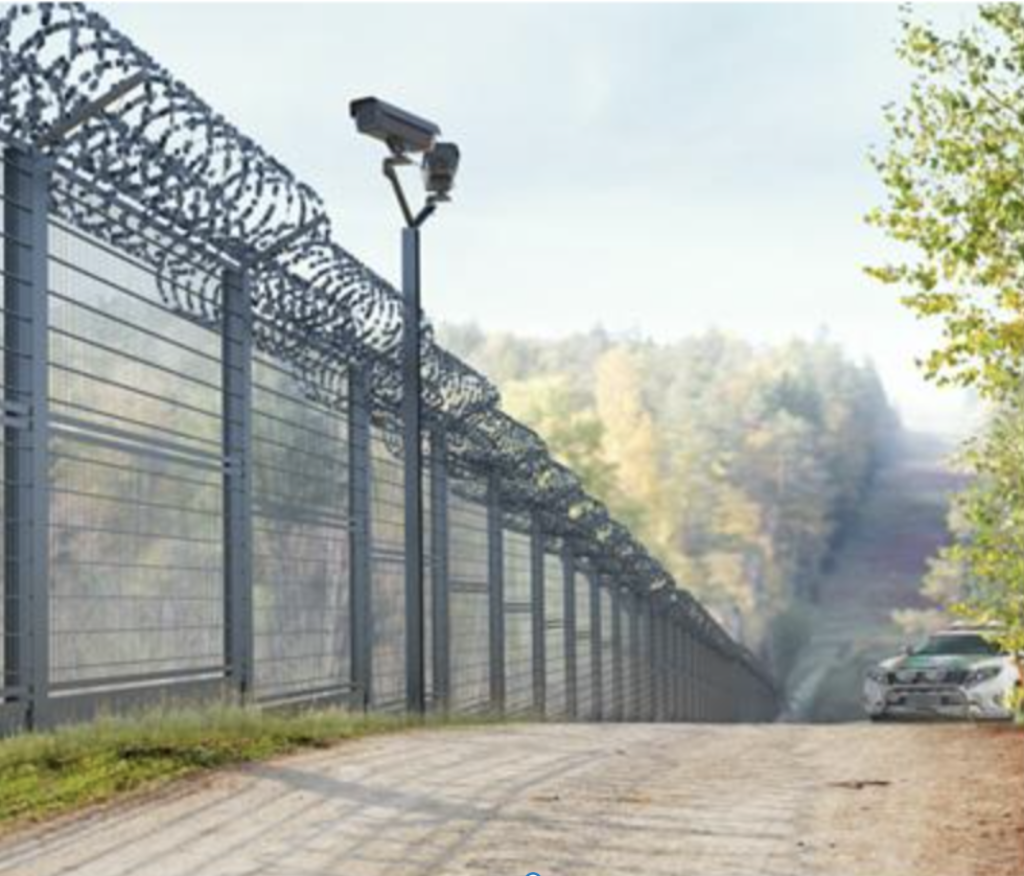
Finland’s answer, like that of Europe’s Frontex, to climate refugees is a fence, wishful thinking, and the populist rhetoric of politicians. Source: Kauppalehti.
Europe is walking into a disaster of its own making caused by its colonial legacy, contempt, and racism.