Migrant Tales insight: Remember 2015? It was the year when over 30,000 asylum seekers, mainly from Iraq and Afghanistan, came to Finland. Do you remember the reaction of some Finns who attacked fourteen asylum reception centers? Why weren’t these acts of violence classified as domestic terrorism?
This disgraceful story is dedicated to Perussuomalaiset (PS)* MP Ano Turtiainen, who is in the news for all the wrong reasons and, who, was convicted in 2018 of inciting violence against the Finnish Red Cross, which manages many asylum reception centers. The conviction has its roots in 2015 Facebook post that was liked by PS MEP Laura Huhtasaari.
_________________________________________________________________
Migrant Tales wrote in 2015:
The fact that fourteen asylum reception centers have been attacked in Finland since mid-September is scandalous. According to the police service of Kangasala, an asylum seeker was beaten by two or three men Saturday evening near the Kaivanto reception center, reports YLE News.
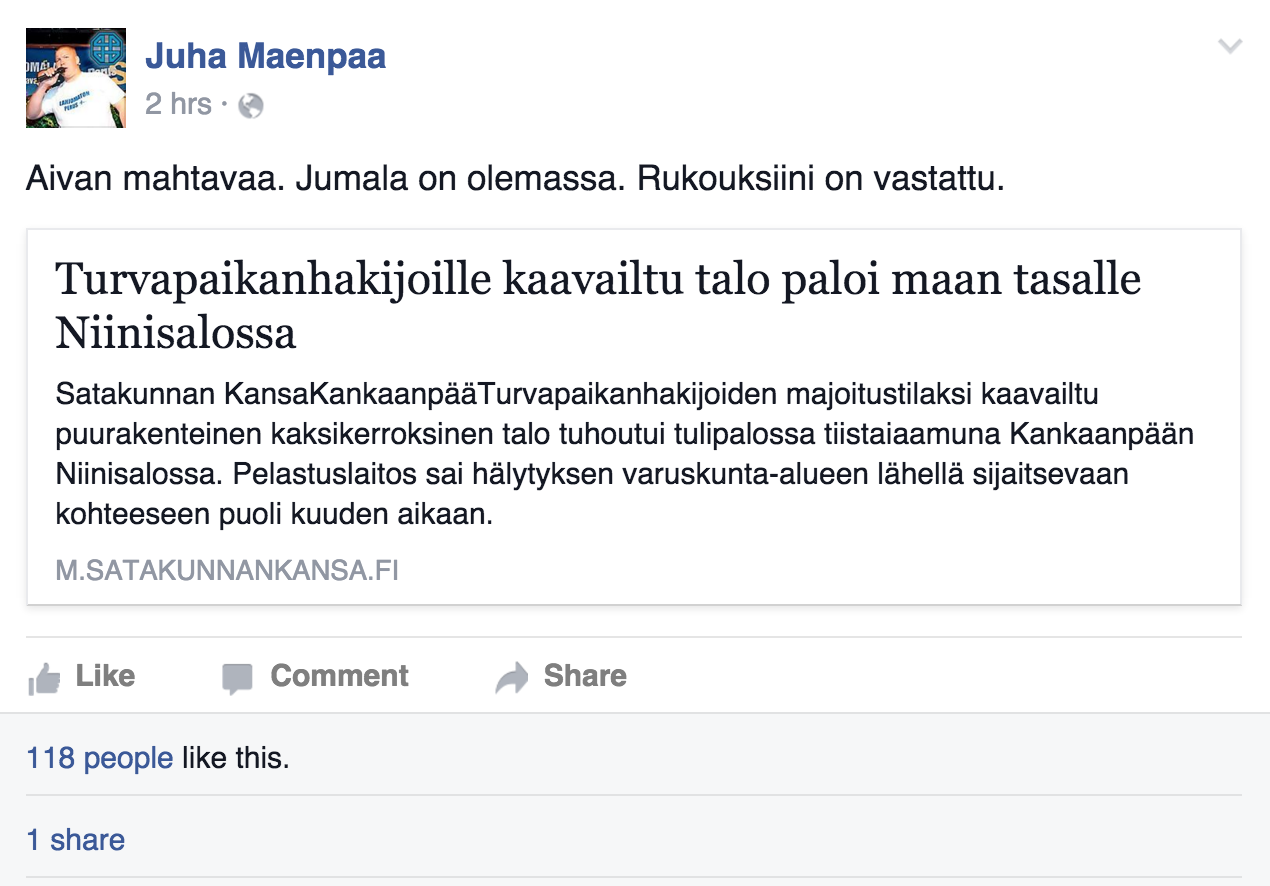
And the news doesn’t stop here: Neo-Nazi vigilante patrols, one Perussuomalaiset (PS)* substitute MP from Kankaanpää, Juha Maenpää, stated in December that god had answered his prayers after a reception center that was supposed to house asylum seekers was razed to the ground. If an asylum seeker commits a crime there is a social media lynch mob ready 24/7.
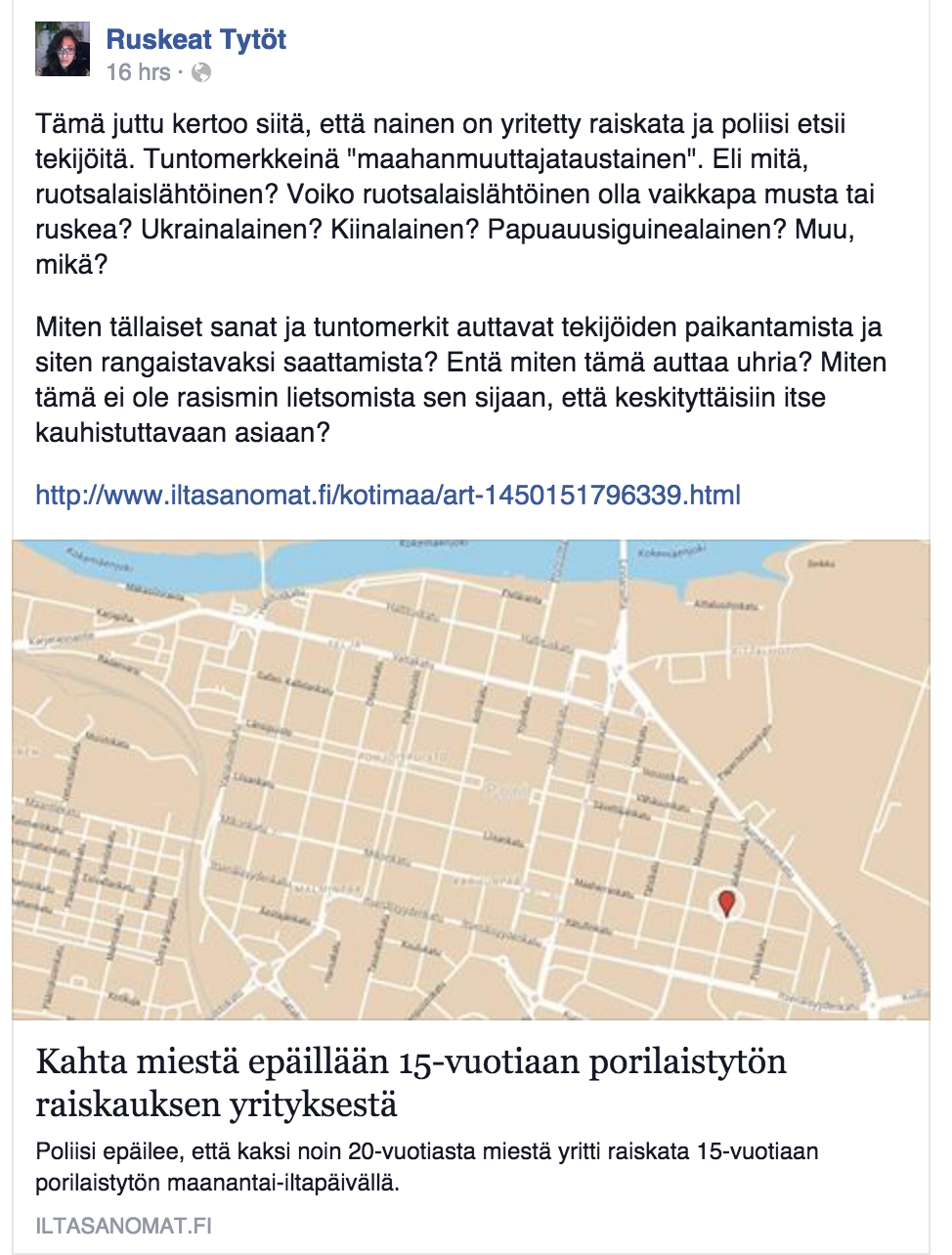
If it is a Finn that rapes a woman the public, politicians and the media don’t appear too interested.
Double-standards and xenophobia are rife in Finland today.
In the ever-worsening anti-immigration atmosphere, some politicians and the government are even showing some understanding to the hostility against asylum seekers, which has spread and affected all migrants and minorities living in this country. Interior Minister Petteri Orpo blamed asylum seekers on YLE for these attacks by stating that is would calm matters down by tightening immigration policy even more.
You may be asking why the National Coalition Party and Center Party aren’t even raising a finger against the PS’ obsession against immigrants and asylum seekers. These two parties need the support of the PS to streamline the welfare state. In return, the PS can tighten immigration policy and thereby appease their racist voters.
Like in all the attacks against the reception centers this fall and early winter, only one suspect was caught in Kouvola (24.9.2015), a middle-aged man was charged and given a one-year prison sentence.
How big will this disgraceful list grow below?
Attacks against asylum reception centers in Finland
December
Turku (25.12.2015): Unsuccessful arson attack.
Asikkala (12.12.2015): Unsuccessful arson attack.
Tampere (10.12.2015): Possible arson attack still under investigation.
Pori (6.12.2015): Windows of the reception center were broken.
Rauma (4.12.2015): Successful arson attack of a building that was supposed to house asylum seekers.

A building that was supposed to house asylum seekers in the western Finnish city of Rauma. Source: Helsingin Sanomat.
Continue reading “UPDATED: How long will reception centers and asylum seekers be under attack in Finland?”