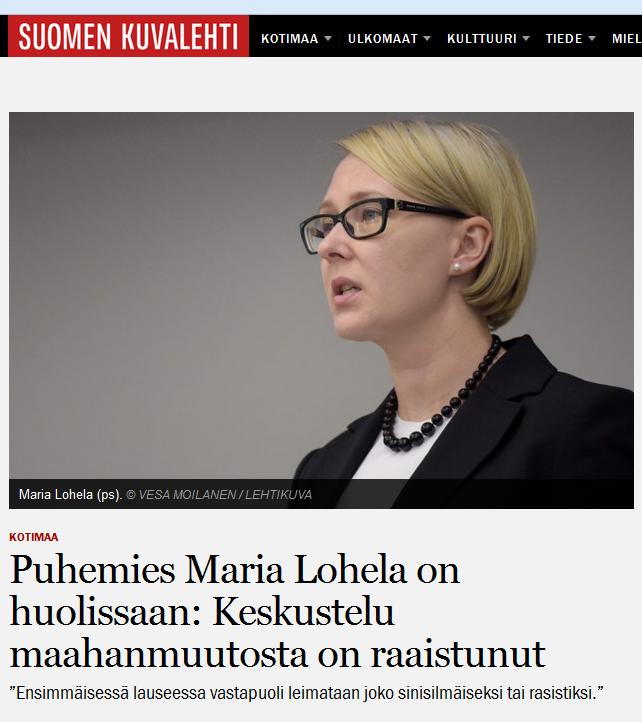
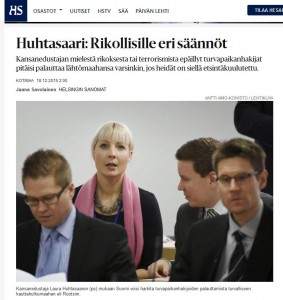
Kansanedustaja Laura Huhtasaari lausahti vastikään Helsingin Sanomille, että terroristit voivat käyttää hyväkseen ihmisoikeuksia. Niin hölmöltä kuin se kuulostaakin, niin totuushan on se, että Huhtasaari ja hänen vihatoverinsa tekevät juuri näin. He keräävät suosiota ja ääniä vaaleissa kertomalla meille, että valtaan päästyään ja vallassa pysyessään heillä on vakaa aikomus olla hyväksymättä yhtäläistä ihmisarvoa ja heikentää heille epämieluisien ihmisten oloja. He vaahtoavat naisten ja lasten oikeuksien puolesta, ja pyrkivät vähentämään pakolaisnaisten ja lasten saamaa apua sillä varjolla, että ”niillä on eri kulttuuri eikä naisilla ole ihmisarvoa” .
Rikokset ovat tällaisten kansanedustajien ehtymätön voiman ja inspiraation lähde. Laura Huhtasaaren – niin kuin niin monen rasistipoliitikon – sydäntä lähellä ovat erityisesti seksuaalirikokset. Niillä, silloin kun ne ovat maahanmuuttajan tekemiä, on niin helppo nostattaa omia ja muiden tunteita. Vaikka ne eivät olisi ihan tottakaan.
Huhtasaaren mielenmaisemaa kuvaa erityisen selvästi hänen lokakuinen avauksensa ja siitä käyty keskustelu. Teksti on hirveää, mutta koska kyseessä on hallituspuolueen kansanedustaja, jolla tällainen toiminta on yksi määräävä osa hänen julkista kanssakäymistään kannattajien kanssa, katson tarpeelliseksi esittää siitä roisimpiakin osia. Huhtasaaren sivuilla leviävät raa’at kuvat ja videot jätän sentään pois.
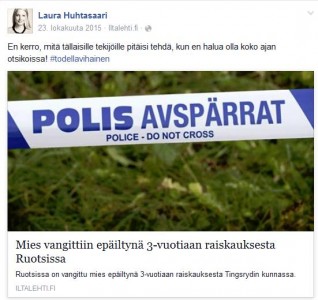
Avauksessaan 23.10.2015 klo 21:25 Huhtasaari viittaa uutiseen epäillystä 3-vuotiaan lapsen raiskauksesta Tingsrydissä Ruotsissa. Epäiltynä on – luonnollisesti Huhtasaaren tarttuessa tapaukseen – turvapaikanhakija. Maahanmuuttajavastaisten ketkupoliitikkojen tyypilliseen tapaan Huhtasaari ei itse kirjoita avaukseen mielessään olevia kauheuksia, vaan odottaa kannattajien tyydyttävän hänet. Ja hehän tekevät, mitä pyydetään:
Pentti Hotti: Hirtää munistaan.
Raimo Rapo: KYLMÄSTI PITÄISI TAPPAA HITAASTI VÄLITTÖMÄSTI!!!!
Jari Hokkanen: Meilläpäin on paljon soita…..ja koira ei perään hauku
Kello 22:30 Huhtasaarelle kerrotaan ensimmäisen kerran:
”Tekijä on vapautettu, eli se oli siinä.”
Tiedosta huolimatta meno Huhtasaaren sivulla jatkuu:
Marko Huusko: Köytettynä kusiais pesään( isoon sellaseen)……..
Auvinen Kimmo: Munat veks! Irakilaiset tekee sitä laillisesti prkl.saastat!
Jari Lintunen: Sano vaan,70% suomalaisista on samaa mieltä ja koko ajan tulee lisää..
Mauri Peltokangas: En osaa edes kommentoida näitä…. jotain ymmärrykseni yli menevää.. joskus toivoisin tapaavani tällaisen henkilön kahden kesken suljetussa tilassa… kertoisin hänelle sanomatta sanaakaan mitä mieltä olen hänen teoistaan….
Kello 22:50 Teppo Nygren linkkaa sivulle Iltalehden julkaiseman SVT:n uutisen, jossa kerrotaan, että epäilty on vapautettu ja todetaan:
”Syyttäjäviraston Sandra Rohdin mukaan ei ole syytä epäillä, että rikosta olisi tapahtunut.
– Meillä ei ole näyttöä, jonka mukaan väärinkäyttö olisi tapahtunut. Kaikki perustui todistajiin ja mitä joku on nähnyt.”
Lynkkaus ja kuohinta jatkuu, vaikka sitten edes seuraavan ”syyllisen”: Sami Martikainen: Tää pitäisi kastroida ja kuohita tää tyyppi!! Ei ole oikeutta mennä tuhoamaan lapsen elämää!!
Teppo Nygren: Se tyyppi on kyllä vapautettu raiskausepäilyistä, mutta kai se hyvä varmuuden vuoksi kuohia.
Sami Martikainen: Teppo Nygren jo on syyllinen silloin se pitää kuohia…tietenkään jos ei ole mitään tehnyt niin eri asia…ei paljoa naurata asian ympärillä vitsailut…mieti sitä lasta joka on raiskattu ..
Teppo Nygren: Näiden iltapäivälehtien uutisointi menee usein asioiden edelle ja tuokin henkilö on voitu vapauttaa epäilyistä jo ennekuin lehti on julkaissut uutisen, Jotkut uutiset myy Amerikassa keltainen lehdistö tuomitsi yhden näyttelijän raiskauksesta, vaikka poliisi oli todennut henkilön syyttömäksi ja kukaan filmiyhtiö ei palkannut enää sitä näyttelijää. Kyllä oikealle syylliselle minäkin ehdottaisin nippusidettä ja kuljettamista jonnekkin syrjäseudulle.
Mika A Raappana: pahasti sairas !
Teppo Nygren: Yhteiskunta on sairas. Tyyppi jota epäiltiin raiskauksesta on vapauttu epäilyistä.
Janne Räty: Kemiallinen kastraatio, ja lukkojen taakse loppuiäksi!
Kari Lilja: Minä voin sanoa, Karin sanomiset ei ylitä uutiskynnystä winkhymiö Kynsi irti kuun ensimmäisenä = 20 kk. Ei hoitoa. Kynnet kun loppuu, siirrytään hampaisiin jne. Tuon julmempaa tekoa ei ole. Tieto myös leviäisi. Näyttävät oikeudenkäynnit.
Ville Tuominen: Otsikon luku riitti…….. piip piip piiip piiip…….
Jukka Kyrö: niitä on ollu Ruotsia jo 1400 tänävuonna…
Seuraavana päivänä, 24.10.2015, herkutellaan edelleen väkivallalla:
Antero Turunen: minun tuomioni olisi aivan yksisellitteinen,,,Munat pois ja linnaan..
Petteri Perkkiö: Tylysällä sahalla 5mm paloiksi..uloke kerrallaan..
Annikki Paloniemi: Minä sanon suoraan kuula kalloon
Harri Junnonen: Huh huh, mihikä tämä maailma on menossa? Saunan taakse ja!!
Aki Parkkari: Burana 9mm
Ilari Kari: Kyseessä oli siis turvapaikanhakija vastaanottokeskuksessa. Poliisi päästi miehen vapaaksi, ilmeisesti ei löytynyt näyttöä tai sitten vaan hiljentääkseen median.
Kello 9:35 ilmestyy sivulle ainoa järjen ääni:
Raato Laaksonen: Tai sitten jälleen kerran säälittävää, valheellisten uutisten keksimistä ja levittämistä omia tarpeita silmällä pitäen. Ja kuten yllä olevista viesteistä ja avauksesta näkyy, täydestä menee. Jokusiin. Siellä Ruotsissa hääri ihan oikeasti muuan miekkamies, mutta roolit taisivat olla nurinpäin suurta pahennusta herättääkseen.
Laura Huhtasaari vastaa oitis:
Syyllinen sitten kun todetaan syylliseksi. Jos luit tarkasti, niin kirjoitin ”tällaisille tekijöille”, eli tekijöille, jotka ovat tehneet. Olen siis edelleen samaa mieltä. Muutama asia saa minun vereni kiehumaan, lapsiin kohdistuva väkivalta, naisten alistaminen ja naisiin kohdistuva väkivalta. Kattelin eilen Armania telkusta, oli Sudanissa. Hyvä kun nukkumaan pysty, miksi maailma on niin kova paikka naisille ja tyttölapsille?
Viimeistään tässä vaiheessa olisi luullut, että Huhtasaari poistaa kyseenalaisen avauksensa ja etenkin väkivaltaiset kommentit. Mutta niinhän hän ei toimi, koska hänen poliittinen uransa saa ravintonsa juuri tällaisista kommenteista. Hän yrittää myös päästä pälkähästä linkkaamalla uutiseen Suomessa tapahtuneesta lasten houkuttelusta seksiin saatteella:
”Raato, minäkö olen se paha, koska näitä jaan ja pidän näistä meteliä? Mitkä ne minun pahat tarkoitusperäni tässä sinusta ovat?”
Huhtasaari, lainsäätäjämme, ajattelee pahan saavan palkkansa ja rikosten vähenevän siten, että rikolliset rekisteröidään etnisyyden mukaan. Hänellä on myös selvästi sellainen ajatus, että erilaisten ”maahanmuuttojen” rikosvaikutukset ovat ennalta määriteltävissä ja ”rikosten lisääminen” vältettävissä ”rajoittamalla tänne pääsyä”.
Laura Huhtasaari: No oikeastihan tässä on se, että Raadolla on erilainen lähestyminen asiaan kuin minulla. Hänen ei jaa ajatusta esim. pedofiilien nettirekisteristä tai siitä, että julkisuus olisi oiva osa rangaistusta. Hän ei ihan myöskään halua, että rikolliset tilastoidaan esim. alkuperän mukaan. Minä taas ajan molempia. En pahuuttani, mitä Raato kyllä sen luulee olevan. Vaan siksi, että haluan pahan saavan palkkansa. Uskon sillä olevan myös pelotevaikutus ja se toimisi ennaltaehkäisynä. Lisäksi haluan vaikuttaa siihen esim. maahanmuuton osalta, että emme lisää rikollisuutta Suomessa, eli kun tiedämme millaiset vaikutukset on milläkin maahanmuutolla, voimme vaikuttaa esim. rajoittamalla tänne pääsyä. Automaattikarkotus ulkomaalaisille ja kantiksille kunnon tuomio. Korjaa toki Raato, jos olen tulkinnut väärin.
Raato Laaksonen: Ensinnäkin, minä vastasin aloittamaasi ketjuun ja linkkaamaasi juttuun, joka on todettu uutisankaksi. ”Todistajien” motiiveja sopii arvailla..
Sitten vähän yksilöiden analyysiasi. Kyllä, olen julkinenhäväistyskriittinen. Meillä oikeuslaitos jakaa ja toimeenpanee tuomiot. Se riittää. Mitään julkisia häpeäpaaluja ja pahiksien naamakirjaa en suosi. Te siellä taas säädätte lait ja niiden rangaistusasteikon.
Maahanmuuton saaminen hallintaan on varmaan kaikkien intresseissä, myös minun. Senkin oikeisiin mittasuhteisiin saattaminen on teidän hallituksenne tehtävä. Automaattikarkotuksessakin olen vähän toisilla linjoilla. Mikäli vakavan rikoksen tekijä tulee rakastamastasi muslimivaltiosta, hänen karkotuksensa sinne tuskin on mikään rangaistus. Taitaisi saada sankarin vastaanoton. Muuten olet tulkinnut ihan oikein.
PS. Anna nyt vastineeksi edes yhden lauseen tuomio tälle muukalaisvihamieliselle, natsihenkiselle miekkamiehelle.
Laaksosen taivuttelu ei johda mihinkään. Huhtasaaren kiihottamat mielet jatkavat purkautumistaan:
Ari Teperi: Siksi poliisin tiedoittaminen sensuroitiinkin, koska tapauksia alkoi tulla niin paljon että pelättiin kansan nousevan joukolla tätä älyttömyyttä vastaan.
Rainer Saunamäki: Just kulttuurii.
Päivi Mäkelä: Ja minäpäs kerron taas suoraan tapani mukaan! NISKALAUKAUS!!!
Sami Ilvonen: Eikös giljotiinit keksitty tuollaisia varten?
Peter Andreas Pyykkönen: lynkata
Heikki Pihlajamäki: Tiiliskivet vähintään ja sitten……….
Tommi Viljakainen: Kiinassa tekivät raiskaajalle oikein tässä vähän aikaa sitten. Ehdottaisin samaa menettelyä tuolle.
Juha Ikonen: Tehdä palvelusopimus vaikka Turkin kanssa että perustaisivat vankileirin jonne kaikki saastat vietäis tuomiota kärsii ja tatuointi naamaan että muut osaisi varoa tulevaisuudessa.
Jyrki Könönen: Mielestäni tuollaiseen syyllistyneet pitäisi laittaa vankilaan vaikkapa vain muutamaksi vuodeksi, ihan normaaliin porukkaan ilman erikoiskohtelua. Oletan että asia korjaantuu vankeusaikana kuin itsestään.
Kimmo Kemppainen: Koppihoito Siperiassa olisi parasta lääkettä näille.
Keijo Malkki: Kikkeli toimintakyvyttömäksi.
Kari Leppänen: Lapsen rakastaminen on ihmisoikeus, kuten homouskin ym. Normaali ihminen ei näin toimi!
Vielä 25.10. kansanedustaja saa mannaa kannattajiltaan:
Janne Hirvinen: kulkuset valtiolle ei muu auta
Liisa Vepsäläine:n Vapautus tuli, koska pieni lapsi ei osaa kertoa, mitä väärää hänelle tehtiin???
Kristiina Kikka Heinonen: Laura, parasta sinut tunteville on se, että me TIEDÄMME mitä sanoisit
Näin tuli sitten syytön turvapaikanhakija ja samalla moni hänen kanssakärsijöistään yhteistuumin moneen kertaan hirtettyä, kuohittua ja raiskattua. Kommentoijia oli paljon, jakajia ja lukijoita tietysti monin verroin. Ja taas levisi ”isämmaallinen” tarina: ”Maahanmuuttaja on paha, maahanmuuttaja tulee ja raiskaa lapsesi”.
Tulivatko perussuomalaiset tällaisella politiikalla vuoden mittaan onnellisemmiksi? Paraniko maan talous, ilmapiiri ja turvallisuus?