“If you’re not careful, the newspapers will have you hating the people who are being oppressed, and loving the people who are doing the oppressing.”
Malcolm X
Day in and day out I see nothing more these days than hostile and negative news about migrants, especially asylum seekers, who are wrongly called “illegal” migrants. These news stories appear a lot in Yle, the state-owned broadcaster.
Even positive news, like the call from church leaders of the Finnish evangelical Lthern Church, Catcholic Church, Orthodox Church and others called for a more humane migration policy.
The call was criticized by government representatives of the anti-immigration Perussuomalaiset (PS)* and National Coalition Party. One of these, Joakim Wigelius of the PS, accused the church leaders of “left-wing policies” and for being “naive.”
A question: When did Yle publish something positive about migrants and asylum seekers? In Finland, xenophobia has poisoned perceptions to the extent that we are ready to ditch our human rights and rule of law obligations to satisfy our racist and myopic world view.
Looking at how much xenophobia has overtaken Finland, it is easy to understand how this country went to bed with Nazi Germany in World War 2.
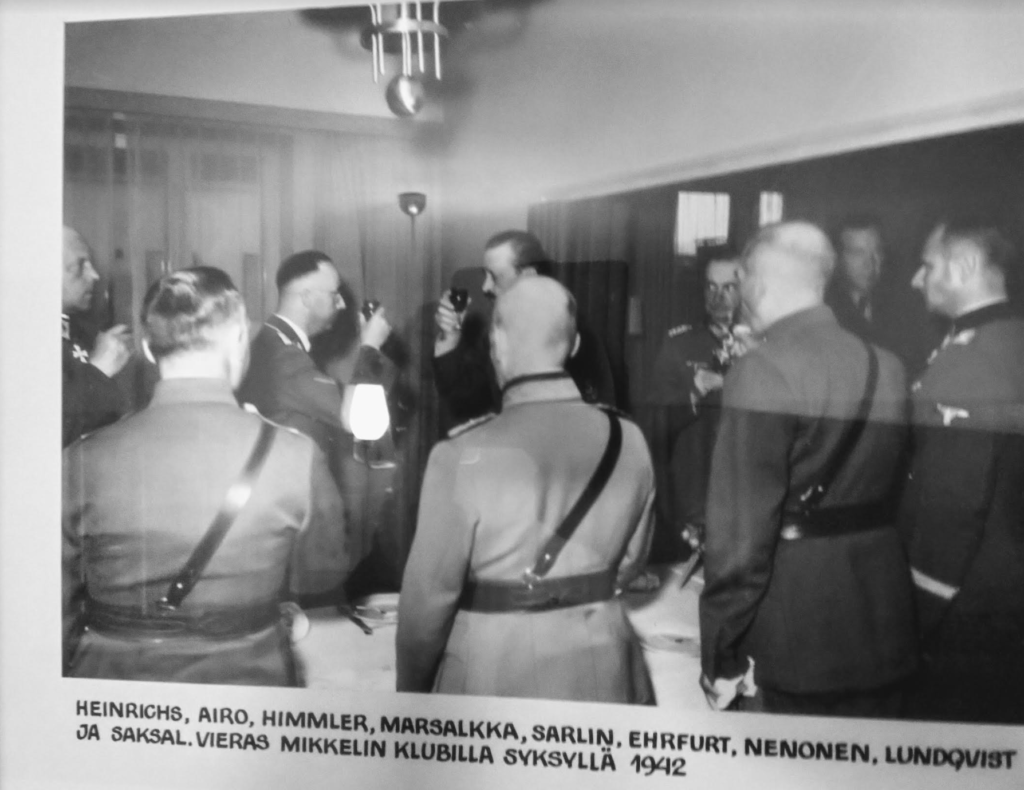
Today, at the Mikkelin Klubi of Mikkeli, you can still find a picture of Heinrich Himmler and Marshal Karl Mannerheim drinking a schnapps together.
While the picture may portray “history” for some, it does so without context and without reminding us of the crimes against humanity carried out by Himmler and the Nazi regime. Himmler is the very person that set up the death camps for the total annihilation of the Jews and other enemies.
Mannerheim and Himmler at the Mikkeli Klubi, which sees this picture as “history.”
The picture was one of the main reasons why I resigned my membership from the Mikkelin Klubi.
It is surprising that Finland’s national broadcaster, Yle, spreads xenophobia and suspicion of asylum seekers via its news reporting. Yle, never calls people attempting to enter Finland via the Finnish-Russian border asylum seekers but people who are attempting to enter the country illegally.
The narrative spread by Yle reporters is a toothless stenographic copy of the government’s harsh stance against such people. The arguments are the same ones as the government’s:
These people aren’t “real” asylum seekers because Russia is using them as pawns. This may be the case, but does it allow a country to deny a person’s human right right to asylum?
These people, who are also women and children, cannot be considered real asylum seekers because they live in a safe country like Russia.
They point to the violent pushbacks of Poland but forget to mention that the country was back then run by a xenophobic PiS government.
“From the region of Vyborg have come more seekers to the Finnish border.
The people seeking to enter Finland illegally are from Africa and the Middle East.”
Apart from practicing stenography journalism, Yle‘s reporting of the issue is one-sided and opinionated. Instead of hearing human rights organizations, Yle offers only a simple view where the main sources are – surprise, surpsie – the national boarder guard and the government.
The reporting by Yle is one-sided promoting hatred of brown asylum seekers.
If there is a reminder on how bad Finland’s racism problem has got, take a look at the rise of the Perussuomalaiset (PS)* party since the 2011 parliamentary election and specifically its main motor, Jussi Halla-aho. Having him treated as “a normal” politician by the media and other politicians makes him look like a wretched politician in an intensive care ward.
His political life-saving support comes from his blog, Scripta, written in the 2000.
For many Finns, it is difficult to weigh how demeaning and racist his writings are and how they paint a capricious and greedy man who is a white supremacist desperately seeking recognition and approval. Halla-aho will never apologize for his racist writings because it would cut off his political life support.
Moreover, playing down and moving forward with a poker face concerning the damage he has caused on Finland and especially on minorities, would not be possible if he apologized for his racist writings.
There are many ways to skin the cat of an old racist who hides behind the cloak of democratic institutions. One of these methods is to reverse the roles of his victims in his writing to grasp how toxic the person is.
Example 1:
“I am thoroughly confused as to why muslims have such a great desire to inflict pain on those who are in a weaker position, such as animals, children and women. I think this pattern is pretty clear. Why do muslims jump around ululating with their dicks hard whenever heads get chopped off or someone gets whipped?
“I am thoroughly confused as to why muslims white Finnshave such a great desire to inflict pain on those who are in a weaker position, such as animals, children and women. I think this pattern is pretty clear. Why do muslimswhite Finns jump around ululatingdrunk with their dicks hard limp whenever a Russian’s head gets chopped off or someone gets whipped beaten to a pulp?
“It is hard for me to think about a lower reptile in the universe than a Scandinavian social democrat. The most slimy subscpecies of this reptile is the Swedish social democrat.”
“It is hard for me to think about a lower reptile in the universe than a Scandinavian social democrat a Finnish Perussuomalaiset. The most slimy subscpecies of this reptile is the Swedish social democratSweden Democrat.
Migrant Talesin konteksti: Mahad Sheikh Musse on monikulttuurisen nuorisotyön ammattilainen, joka omaa vuosien kokemus viranomaisten ja eri yhteisöjen kanssa työskentelmisestä. Hän on kirjoittanut katujengejä koskevasta aiheesta Migrant Talesiin. Sen lisäksi, että meneillään olevassa keskustelussa ei kuulla rodullistettuja nuoria, herää kysymys, onko hallitus kiinnostuneempi leimaamisesta kuin hyvien ratkaisujen löytämisestä tähän ongelmaan. Musse kertoo näkemyksensä näistä asioista. #Maahanmuuttajuus, #nuoret ja #rikollisuus
Maahanmuuttajataustaiset lapset ja nuoret voivat kokea erilaisia haasteita sopeutuessaan uuteen ympäristöön ja kulttuuriin.
Sodan kokeminen voi vaikuttaa heidän elämäänsä monin tavoin. Esimerkiksi jos lapsi on kokenut sodan, hän voi kärsiä traumoista ja muista psyykkisistä ongelmista. Tämä voi vaikeuttaa sopeutumista uuteen ympäristöön ja vaikuttaa koulumenestykseen.
Lisäksi maahanmuuttajataustaiset lapset ja nuoret voivat kokea syrjintää ja rasismia, mikä voi johtaa henkisiin ongelmiin ja muihin haasteisiin. On tärkeää, että yhteiskunta tarjoaa tukea ja resursseja näille lapsille ja nuorille, jotta he voivat sopeutua uuteen ympäristöön ja menestyä elämässään.
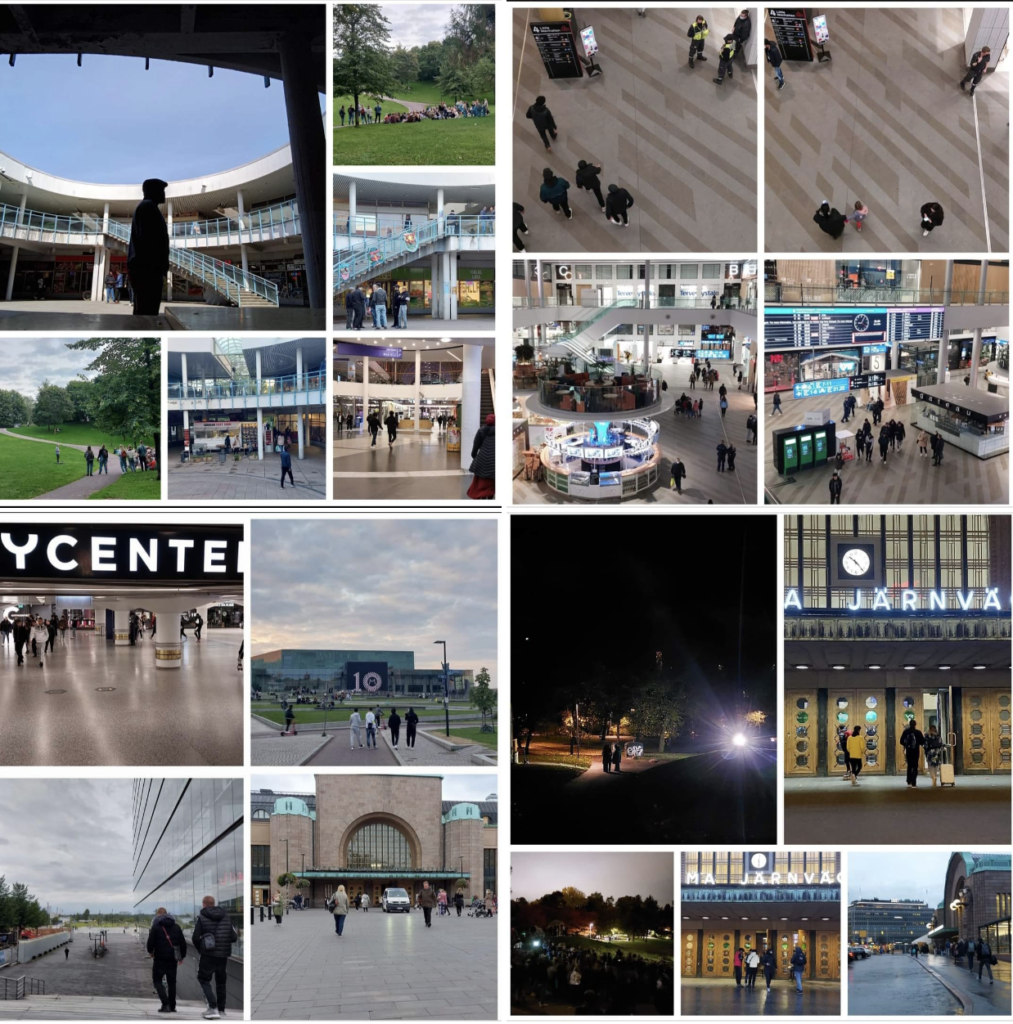
Kuvia Itä-Keskuksista Helsingin keskustaan. Kuvat Mahad Sheikh Musse
Sodan traumoista kärsivien ihmisten hoito voi olla monimutkaista ja vaatii erikoistunutta hoitoa. Hoidon tavoitteena on auttaa potilaita käsittelemään traumaattisia kokemuksiaan ja löytämään keinoja selviytyä niistä. Hoito voi sisältää terapiaa, lääkitystä, ryhmähoitoa ja muita hoitomuotoja. On tärkeää, että hoito alkaa mahdollisimman varhaisessa vaiheessa, jotta potilaat voivat saada tarvitsemansa avun ja tuen. Hoidottamatta jätetyt sotatraumat voivat johtaa vakaviin psyykkisiin ongelmiin, kuten PTSD:hen ja masennukseen, jotka voivat vaikuttaa elämänlaatuun ja jopa johtaa itsetuhoisiin ajatuksiin tai käyttäytymiseen.
Sodan traumoista kärsivät ihmiset voivat joutua kokemaan monia haasteita elämässään, kuten syrjäytymistä ja rikollisuutta. Traumat voivat vaikuttaa heidän kykyynsä sopeutua yhteiskuntaan ja kommunikoida muiden kanssa, mikä voi johtaa sosiaaliseen eristäytymiseen. Lisäksi traumojen hoitaminen voi olla kallista ja vaikeaa, mikä voi johtaa taloudellisiin vaikeuksiin ja rikollisuuteen. On tärkeää, että yhteiskunta tarjoaa tukea ja resursseja sodan traumoista kärsiville ihmisille, jotta he voivat saada tarvitsemansa avun ja tuen. Tämä voi auttaa vähentämään syrjäytymistä ja rikollisuutta ja auttaa heitä saavuttamaan paremman elämänlaadun.
On ymmärrettävää, että tuntee syyllisyyttä, jos on selvinnyt sodasta hengissä, kun muut ovat kärsineet tai menettäneet henkensä. Tämä on yleinen tunne selviytyjien keskuudessa, ja se voi olla erittäin vaikea käsitellä. On tärkeää muistaa, että tunteet ovat aina yksilöllisiä ja että on normaalia tuntea syyllisyyttä, vaikka ei olisi tehnyt mitään väärää. On tärkeää puhua näistä tunteista jonkun kanssa ja saada tarvittaessa ammattimaista apua. Lisäksi voit harkita vapaaehtoistyötä tai lahjoitusta sodan uhrien auttamiseksi, mikä voi auttaa lievittämään syyllisyyttä ja antaa tunteen siitä, että tekee jotain positiivista.
On erittäin vaikeaa elää turvallisesti, kun sukulaiset ovat sodan alueella. Tämä voi olla erittäin ahdistavaa ja pelottavaa, ja voi aiheuttaa monia erilaisia tunteita, kuten pelkoa, huolta ja ahdistusta. On tärkeää puhua näistä tunteista jonkun kanssa ja saada tarvittaessa ammattimaista apua. Voit myös harkita yhteydenottoa sukulaisiisi ja varmistaa, että he tietävät, että välität heistä ja olet valmis auttamaan heitä, jos tarvitsevat apua. On tärkeää muistaa, että vaikka et voi olla heidän kanssaan fyysisesti, voit silti olla heidän tukenaan ja auttaa heitä muilla tavoin, kuten lähettämällä rahaa tai muita resursseja, jos se on mahdollista.
It is concerning for migrants and minorities in Finland that we have a government that is openly hostile to them. As in Juha Sipilä’s (2015-2019) government, there was an agreement that migration policy would be handled by the Perussuomalaiset (PS)* party in exchange for the National Coalition Party (NCP) and Center Partry dictating economic policy.
It is the same situation now: The NCP remains silent on migration policy and the PS is silent on austerity measures in exchange for dictating migration policy.
Looking at the PS’ track record and its use of conspiracy theories to drive home its xenophobic message, one wonders if just erasing previous racist posts is enough to restore credibility in ministers like Mari Rantanen.
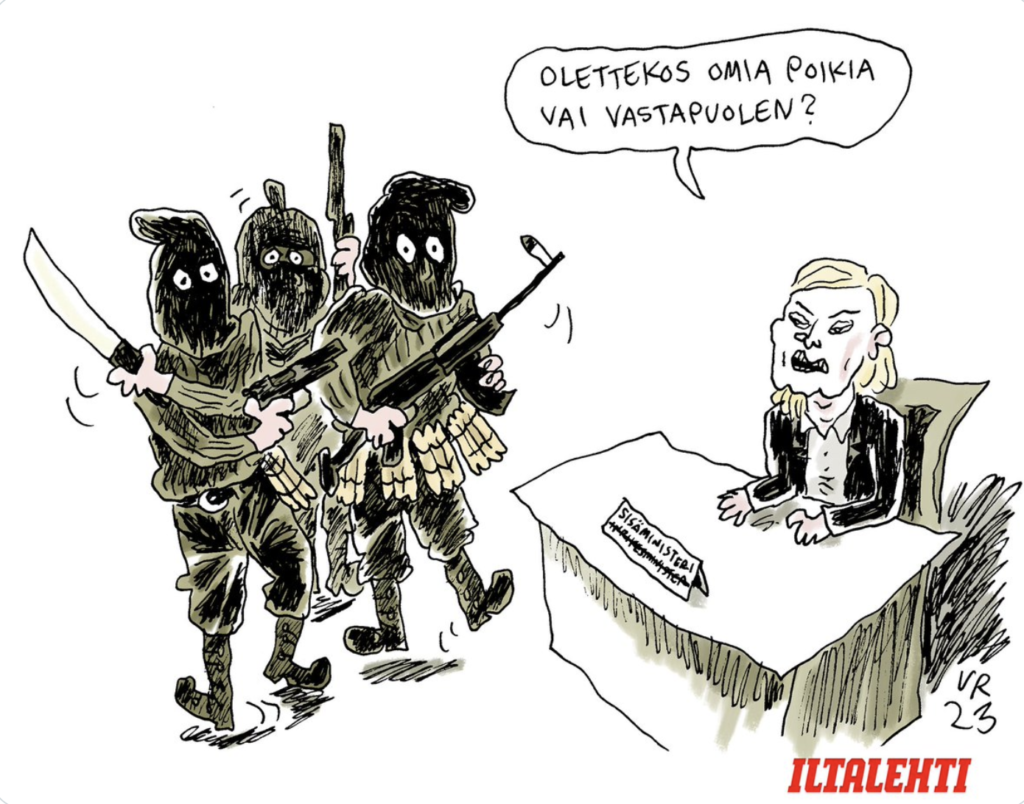
“Are you on our side or the other side’s,” asks PS Interior Minister Mari Rantanen. Source Ville Ranta, Iltalehti.
The question is not far-fetched. The PS is historically the first major contemporary Finnish party to have profited politically by promoting the polarization between different groups by claiming that Muslims, Africans, and other non-EU nationals, as less valuable.
Many of Rantanen’s social media posts before the 4 April election, which were deleted and whitewashed after the elections, were based on conspiracy theories, such as the great replacement. “We shouldn’t be so blue-eyed that soon we won’t be blue-eyed?” is one of his more unusual quotes.
In Finnish, being “blue-eyed” means being naive.
Moreover, even if these types of posts do not increase credulity, how can one even attempt to find a solution to the youth problem in society if Rantanen and her party blame social problems like pinning youth gang violence on ‘harmful migration?
Plans to pay migrants less social welfare planned by Prime Minister Petteri Orpo’s government are a wet dream that spans back to 2016, when then Social and Health Minister Hanna Mantylä aimed to pass legislation that would grant migrants less social welfare than native Finns. Fortunately, such a law did not see the light of day since it was unconstitutional.
The unconstitutionality of such a law rests on Section 6 of the Constitution: “Everyone is equal before the law. No one shall, without an acceptable reason, be treated differently from other persons on the ground of sex, age, origin, language, religion, conviction, opinion, health, disability or other reason that concerns his or her person.”
Thus, if you are going to pay less social welfare to a group, the measure must apply to everyone in order for it to be constitutional.
Efforts to get foreigners to get less social welfare than native Finns, was brought up again in 2018 by Finland’s Nobel Prize in economics, Bengt Holmström. He said that white Finns must not share power and privileges with migrants and their children. In other words, they should get lower salaries and social security benefits so that it does not irritate Finns.
According to Statistics Finland’s Working Paper series published in 2014, Finland is no land of opportunity for migrants, according to Pekka Myrskylä. He claims that the employment level of Estonians and Thai citizens matches that of white Finns. The majority of migrants, however, live in poverty in Finland because they make less money, according to him.
I have tweeted to Riikka Purra about her suggestion not to pay social welfare to foreigners. My question to her was: If social welfare is left to a minunum, does it mean that foreigners have to pay taxes?
Surprisngly, she did not respond to my tweet.
National Coalition Party MP Pia Kauma is another politician who has been hellbent that migrants should be paid less social welfare.
Alla oleva lyhyt kirjoitus lähetettiin Helsingin Sanomille viime viikolla, mutta lehti ei jostain syystä julkaissut sitä.Siksi julkaisemme sen Migrant Talesissa.
Olen asunut suurimman osan elämästäni Suomessa ja työskennellyt viimeiset kaksikymmentä vuotta nuorisotyöntekijänä pääkaupunginseudulla. Somalitaustaisena henkilönä voin kertoa teille, miten paljon vihamieliset sanat ja ilmapiiri voivat aiheuttaa vahinkoa ihmisille. Jos haluatte, voin näyttää niitä haavoja, jotka minä ja yhteisöni olemme kokeneet Suomessa vuosien varrella.
Mielestäni maassa, jossa poliitikot voivat kirjoittaa rasistisia kirjoituksia vähemmistöistä ilman kovempia seurauksia tai jopa palkitaan nimittämällä ministeriksi, se ei ole vain loukkaus meitä vähemmistöjä vastaan, vaan se uhkaa koko yhteiskuntaamme ja ihmisoikeuksiamme sekä demokratiaamme.
On tärkeää, että poliittiset puolueet ja poliitikot osoittavat johtajuutta vastustamalla kaikenlaista syrjintää ja rasismia, eli nollatoleranssi tälle yhteiskunnalliselle sairaudelle. Tämä pitäisi olla itsestään selvää kaikille, koska perustuslaki takaa yhdenvertaisuutta ja oikeudenmukaisuutta kaikille ihmisille riippumatta taustoista.
Mahad Sheikh Musse on monikulttuurisen nuorisotyön ammattilainen joka omaa vuosien kokemus viranomaisten ja eri yhteisöjen kanssa työskentelmisestä.
Riikka Purra is the chairperson of the radical right Perussuomalaiset (PS)* party, which has made its political career by bullying minorities like Muslims. Since most of their xenophobic arguments are based on lies and smears, it should not surprise anyone that they’d break their election promises rapidly.
One of the biggest promises that the PS made during before the election was that they would not accept any austerity measures that would affect the most vulnerable sectors of society like the unemployed, single mothers and others.
The original campaign promise and how Purra eventually ate her words: “The difference between parties like the National Coalition Party and us is that they want to cut [social] support for lower-income people. This is unacceptable for us.”
If you look at the new government’s program, the biggest cuts will be made in health care (1.3 billion) and social security (1.2 billion) to the tune of 2.5 billion euros. It’s clear that such cuts are going to bite hard at those people who depend on social welfare to make it through the month.
How Purra flip-flops on her promise: “We are happy with the [government] program and the PS has decided to form part of this government. There were no dissenting voices. The decision was unanimous.”
Dmitry Gurbanov Tweeted that Purra’s U-turn is a Finnish record!
Suosittelen, että jokainen katsoo tämän videon ja jakaa sen eteenpäin vaikka omille persu tutuille. Tämä on takinkäännön SM-ennätys. Saat mitä tilaa? pic.twitter.com/xaZm8EN0nh
Riikka Purra flip-flops on her original promise that she would not accept to form part of a government that will cut social security befits of the most vulnerable sectors of society. Her promises are just as big lies as her xenophobic rhetoric. Source: Twitter
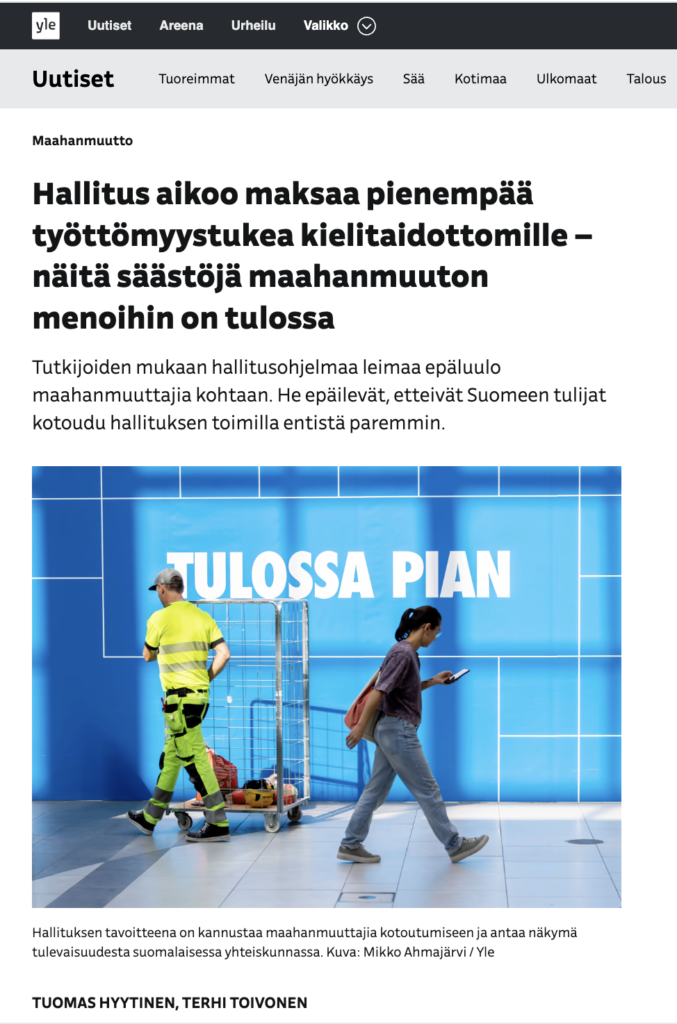
The new right-wing government of National Coalition Party (NCP) Prime Minister-designate, Petteri Orpo published its government program Saturday. With respect to migrant policy, it reinforces what many have feared: deep-rooted suspicion of migrants.
The new government, which is considered to be the most right-wing since the 1930s and the most anti-immigration in a long time, is made up of the NCP, radical-right Perussuomalaiset(PS)*, Swedish People’s Party, and Christian Democrats.
The tightening of immigration policy in the government program also reveals that, apart from keeping migrants on short leashes, such people are second-class members of society with fewer rights. Disenfranchisement and suspicion are good words to describe the new government’s policy.
By changing citizenship requirements from five to eight years is a prime example of disenfranchisement. If you cannot vote, for example, your oppressors can keep you marginalized.
Other draconian changes include making asylum temporary. It also has the same message: we don’t want you, we don’t like you – Finland will never become your new home.
In order to get a permanent residence, you need to live six years in the country. If you make, however, 40,000 euros a year, you can get a permanent residence in four years. But be careful! If you become unemployed, you will have to leave the country if you cannot find new employment in three months.
Under the threat of a fine, employers must inform the Finnish Immigration Service about the unemployed employee.
The further disenfranchisement of migrants will lead to greater abuse by employers and the Finnish system in general.
Also, when applying for a permanent residence, you will be given a Finnish- or Swedish-language test to prove that you have basic language skills.
The government program also shows that migrants are an economic commodity.