PS:n puheenjohtaja Riikka Purra ei näe mitään rasistista PS:n varapuheenjohtajan Teemu Keskisarjan purkauksessa A-studiossa. Miltä tilanne näyttäisi, jos korvaisimme sanan ”maahanmuuttaja” sanalla ”perussuomalainen”? Auttaisiko tämä Purraa ja hänen puoluettaan näkemään ongelman?
Alkuperänen sitaatti: “Väestönvaihto on ruma v-sana, mutta tosi. Yhden sukupolven saatossa yli kuusisataatuhatta ulkolaista Suomeen. Heitä on jo kaksi kertaa enemmän kuin suomenruotsalaisia.”
Päivitetty sitaatti: “Persunvaihto on ruma p-sana, mutta tosi. Yhden sukupolven saatossa yli kuusisataatuhatta perussuomalaisia Suomessa. Heitä on ja kaksi kertaa enemmän kun maahanmuuttajia.
Alkuperänen sitaatti: “Ja väestönvaihtajille yksi tärkeä huomautus. Pidot eivät parane väkeä vaihtamalla, pikemminkin päinvastoin. Siivot, suomalaiset pidot muuttuvat kehitysmaalaiseksi, sikalaksi ja verilöylyksi.”
Päivitetty sitaatti: “Ja persunvaihtajille yksi tärkeä huomautus. Pidot eivät parane väkeä vaihtamalla, pikemminkin päinvastoin. Siivot, pidot muuttuvat kehitysmaalaiseksi, sikalaksi ja verilöylyksi.”
Alkuperänen sitaatti: “Kutsui Suomeen tulevia maahanmuuttajia ‘heikkolaatuisiksi’.”
Alkuperänen sitaatti: “Onko joku meistä neljästä sitä mieltä, että esimerkiksi afrikkalaiset ja lähi-itäläiset ovat koulutuksellisesti, sivistyksellisesti, ammatillisesti samalla tasolla kuin suomalaiset?”
Päivitetty sitaatti: “Onko joku meistä neljästä sitä mieltä, että esimerkiksi perussuomalainen ja supisuomalainen ovat koulutuksellisesti, sivistyksellisesti, ammatillisesti samalla tasolla kuin monikultturisia suomalaisia?”
Alkuperäinen sitaatti: “Väestönvaihto on tilastollinen tosiseikka.” ja viitata “enimmäkseen heikkolaatuisiin tulokkaisiin”
Päivitetty sitaatti:“Persunvaihto on tilastollinen tosiseikka.” ja viitata “enimmäkseen heikkolaatuisiin tulokkaisiin”
While writing chapter on Finland for the European Islamophobia Report 2024, I interviewed an imam who offered a striking observation: our indifference to the war crimes and suffering in Gaza is mirrored in the way we tighten immigration policy and enforce austerity. Both, he argued, stem from the same root – a troubling social numbness and growing detachment from the suffering of others.
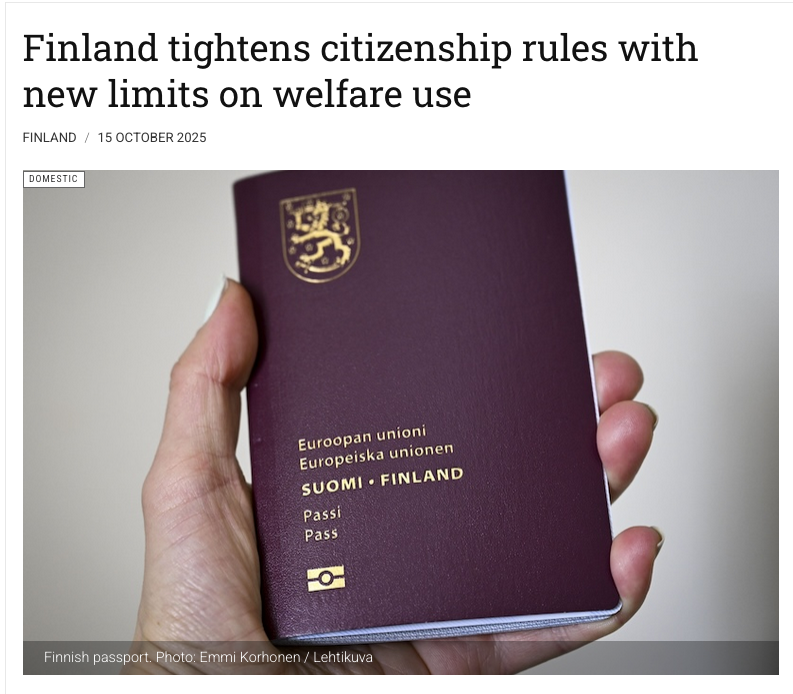
The hardening of immigration policy is creating insecurity for many migrants living in Finland. If the government’s stated goal is to make immigrants active citizens and full members of society, the measures chosen appear to move in the opposite direction. Many factors undermine integration and erode trust, such as the risk of deportation for the unemployed, the extension of the citizenship waiting period from five to eight years, and stricter requirements for permanent residency.
One of the most shameful decisions by Parliament was the passage and extension of the so-called Border Act, which disregards the human rights of asylum seekers and weakens the principles of the rule of law.
Welfare cuts, too, disproportionately affect migrants. More worryingly, they feed suspicion and reinforce the perception that immigrants cannot be trusted. This in turn makes harsher immigration policies appear acceptable, even though they deepen divisions and obstruct inclusion.
This indifference is reinforced by the media, political leaders, both government and opposition, and an almost complete silence from the public. Where are the editorials condemning structural racism? Where are the politicians’ genuine calls for a ceasefire, even as we continue arms trade with Israel?
How long must we endure empty slogans about Israel’s “right to defend itself”? Or Prime Minister Petteri Orpo’s claim that the government’s anti-racism program proves racism has no place in Finland – while the Finns Party openly repeats far-right tropes like the “great replacement” theory and speaks of minorities, such as non-ethnic Finns and Muslims, as if they do not belong here at all?
These phenomena feed each other. When we fail to feel empathy for suffering abroad, it becomes easier to ignore injustice at home. The will to care – especially for the most vulnerable, such as minorities and asylum seekers – is essential to any democratic society. Yet many have learned to shut down their emotions, letting injustice and cruelty wash over them like water off a duck’s back.
Ducks’ feathers repel water because they secrete oil and have a unique feather structure. In our society, this “oil” takes the form of denial, scapegoating, dehumanization, alienation, and the refusal to look suffering in the eye. Over time, our hearts risk becoming just as impermeable – shielded against empathy, justice, and humanity.
Martin Niemöller (1892–1984) warned us in his famous poem: “First they came for the communists, and I did not speak out… Then they came for me – and there was no one left to speak out for me.”
One of Finland’s most glaring injustices today is the way we treat asylum seekers and visible minorities, particularly Muslims. A recent episode of A-studio offered yet another example of how Muslims are portrayed in public. Finns Party vice-chair Teemu Keskisarja launched a harsh attack on Muslims and invoked the “great replacement” theory. According to him, referencing to a Finnish saying ‘pidot paranee‘: “You don’t improve the feast by replacing the guests. On the contrary – neat Finnish banquets turn into a developing-world pigsty and a bloodbath.”
At the start of her term, Interior Minister Mari Rantanen promised a “paradigm shift” in immigration policy. But if that shift is rooted in fear and mistrust – as it clearly is – what kind of society are we building? Instead of promoting inclusion, these laws entrench barriers to equality.
From the United States to many EU countries, we have seen how destructive polarizing politics can be. But we must not succumb to despair. That is precisely what those who profit from division and hatred hope for.
In my home country of Argentina, where military coups were a fact of life in my youth, we had a saying: Nada malo dura cien años – “No evil lasts a hundred years.”
Kirjoittaessani Suomen lukua European Islamophobia Report 2024 -raporttiin haastattelin imaamia, joka esitti pysäyttävän havainnon: välinpitämättömyytemme Gazan sotarikoksia ja kärsimystä kohtaan heijastuu siihen, miten kiristämme maahanmuuttopolitiikkaa ja toteutamme leikkauslinjaa. Hänen mukaansa molemmat ilmiöt kumpuavat samasta juuresta – huolestuttavasta sosiaalisesta turtumisesta ja kasvavasta vieraantumisesta toisten kärsimystä kohtaan.
Kiristyvä maahanmuuttopolitiikka tuo epävarmuutta monille Suomessa asuville maahanmuuttajille. Jos hallituksen tavoitteena on tehdä maahanmuuttajista aktiivisia kansalaisia ja yhteiskunnan täysivaltaisia jäseniä, mielestäni valitut keinot vievät kehitystä päinvastaiseen suuntaan. Esimerkiksi maasta poistamisen uhka työttömäksi joutuessa, kansalaisuuden saamisen ajan pidentäminen viidestä vuodesta kahdeksaan sekä pysyvän oleskeluluvan ehtojen kiristäminen ovat esimerkkejä tiukennuksista, jotka vaikeuttavat kotoutumista ja horjuttavat luottamusta.
Yksi eduskunnan häpeällisimmistä päätöksistä oli niin sanotun rajalain hyväksyminen ja jatkaminen. Laki sivuuttaa turvapaikanhakijoiden ihmisoikeudet ja heikentää oikeusvaltion periaatteita.
Sosiaaliturvaleikkaukset osuvat nekin monin tavoin maahanmuuttajiin. Vielä huolestuttavampaa on kuitenkin se, että ne ruokkivat epäluuloa ja vahvistavat mielikuvaa, ettei maahanmuuttajiin voi luottaa. Tällöin kiristyvä maahanmuuttopolitiikka näyttäytyy hyväksyttävänä, vaikka todellisuudessa se lisää jakolinjoja ja vaikeuttaa yhteiskuntaan kiinnittymistä.
Tätä välinpitämättömyyttä ruokkivat media, poliittinen johto, hallitus ja oppositio sekä lähes täydellinen yleisön hiljaisuus. Missä ovat pääkirjoitukset, jotka tuomitsevat rakenteellisen rasismin?Missä ovat poliitikkojen aidot vetoomukset tulitauon puolesta, kun samaan aikaan käymme asekauppaa Israelin kanssa?
Kuinka kauan joudumme kuuntelemaan tyhjää hokemaa Israelin oikeudesta puolustaa itseään? Tai pääministeri Petteri Orpon väitettä, että hallituksen antirasistinen ohjelma todistaa, ettei Suomessa ole sijaa rasismille – vaikka perussuomalaiset toistavat äärioikeistolaisia väitteitä, kuten “väestönvaihtoteoriaa”, ja puhuvat vähemmistöistä, kuten ei-kantasuomalaisista ja muslimeista, ikään kuin nämä eivät olisi tervetulleita Suomeen?
Nämä ilmiöt ruokkivat toisiaan. Kun emme tunne empatiaa ulkomailla tapahtuvaa kärsimystä kohtaan, on helpompi sulkea silmät myös kotimaan epäoikeudenmukaisuudelta. Halu välittää, erityisesti haavoittuvimmista – kuten vähemmistöistä ja turvapaikanhakijoista – on elintärkeää jokaiselle demokraattiselle yhteiskunnalle. Silti moni on oppinut sulkemaan tunteensa. Annamme epäoikeudenmukaisuuden ja julmuuden valua ohitsemme kuin veden hanhen selästä.
Hanhien höyhenet hylkivät vettä, koska ne erittävät rasvaa ja niiden sulkarakenne on ainutlaatuinen. Meidän yhteiskunnassamme tätä “rasvaa” ovat kieltäminen, syntipukkien etsiminen, epäinhimillistäminen, vieraantuminen ja haluttomuus katsoa kärsimystä silmiin. Ajan myötä sydämemme voivat muuttua yhtä vedenpitäviksi – suojautuen empatialta, oikeudenmukaisuudelta ja inhimillisyydeltä.
“Ensin ne tulivat hakemaan sosialistit, enkä puhunut mitään, koska en ollut sosialisti… [–] Sitten ne tulivat hakemaan minut, eikä ollut enää ketään, joka olisi puhunut puolestani.”
Yksi tämän päivän Suomen räikeimmistä epäoikeudenmukaisuuksista on se, miten kohtelemme turvapaikanhakijoita ja näkyviä vähemmistöjä, erityisesti muslimeja. Viime viikon A-studiossa nähtiin jälleen esimerkki siitä, miten muslimeja kohdellaan julkisuudessa. Perussuomalaisten varapuheenjohtaja Teemu Keskisarja kohdisti ohjelmassa kovaa kritiikkiä islaminuskoisiin ja viittasi puheenvuorossaan väestönvaihtoteoriaan. Keskisarjan mukaan ”pidot eivät parane väkeä vaihtamalla, pikemminkin päinvastoin – siivot suomalaiset pidot muuttuvat kehitysmaalaiseksi sikalaksi ja verilöylyksi”.
Sisäministeri Mari Rantanen lupasi hallituskautensa alussa “paradigman muutosta” maahanmuuttopolitiikkaan. Mutta jos tuo muutos perustuu pelkoon ja epäluottamukseen – kuten se selvästi tekee – millaista yhteiskuntaa olemme rakentamassa? Osallisuuden edistämisen sijaan nämä lait luovat esteitä yhdenvertaisuudelle.
Yhdysvalloista moniin EU-maihin olemme saaneet kokea, miten tuhoisaa polarisoiva politiikka voi olla, mutta meidän ei pidä vajota epätoivoon – juuri sitä toivovat ne, jotka hyötyvät jakolinjoista ja vihasta.
Kotimaassani Argentiinassa, jossa sotilasvallankaappaukset olivat arkipäivää nuoruudessani, meillä oli sanonta: Nada malo dura cien años – “Mikään paha ei kestä sataa vuotta”.
After the outburst by Perussuomalaiset (PS)* Vice President Teemu Keskisarja’s racist statements at the A-studio talk show, the strategy of the far-right party has been exposed for everyone to see.
One of the persons working in the shadows and orchestrating the xenophobic outpouring is none other than Matias Turkkila, who was named Finance Minister and party Chairperson Riikka Purra’s special advisor on 6.8.
A while back, and in the face of poor poll numbers, Purra said that the PS needs to get its message together. Well, here you have it: Great Replacement Theory, victimizing migrants, especially Muslims.
After Keskisara’s tirades, newspapers like the Helsingin Sanomat, Ilta-sanomat, and Iltalehti did some fact-checking. Are you surprised that they found that most of what he said was unsubstantiated, an outright lie?
PS ministers like Purra are obsessed with the Great Replacement Theory, stating and misleading the pubic into believing that Muslims will take over Finland. Even if Islam is the second-largest religion in Finland, with 140,000 adherents, it accounts for only 2.5% of the total population.
The claim that Finland’s ethnic makeup is changing is true but it is a natural outcome of migration. Racists believe that people do not change but they do and that is why it is important for Finland to be inclusive instead of exclusive to new Finns.
Said Keskisarja: “The feast will not improve by changing [replacing the ethnicity of] people,” he was quoted as saying in A-studio. “Rather, the opposite is true. Those who enable this replacement will turn [Finland] into a developing country of pig stys and bloodbaths. These are the reasons why the great replacement angers me and the Finns Party.”
Purra appeared Saturday on Yle‘s Ykkösaamu, where she defended Keskisarja’s rants. She said that the police charges for ethnic incitement would not go through, and his comments did not run against the government’s anti-racism program.
“This is not racism,” she said. “We must be able to talk about such matters in Finland without being constantly outraged.”
Even if reporters may express surprise at racist statements by politicians, they come poorly prepared to confront a politician like Keskisarja. The A-studio program aired on 30 April, but it took Ilta-Sanomat (28.8), Ilalehti (29.8), and Helsingin Sanomat (30.8) a few days to fact-check Keskisarja. This is unfortunate since politicians make outrageous statements, and fact-checking is too late since the “news” is already out there having reached the party’s followers.
Some other racist quotes for the week ending 31.8.2025:
Writes MEP Sebastian Tynkkynen on Facebook:Now it is clear to everyone how much bigger Finland’s problems would be if the Finns Party were not in government. If we were not present in Finnish politics at all, the situation would be completely hopeless. It never ceases to amaze me that the other parties are more concerned with their own image than with solving problems. It is up to the Finns Party to halt the decline of the Finnish economy and the demographic shift.
On Sunday, Perussuomalaiset MP Mauri Peltokangas called people immigrating to Finland from third countries as “vermin.” He then regretted what he posted on X. “I apologize for my inappropriate language. I deleted the message, he wrote, according to Iltalehti.
The great replacement [Islamization] spells the end of the welfare society, the end of Finnish society.
Riikka Purra, finance minister and chairperson of the Perussuomalaiset (PS)* party
Wednesday’s A-studio with PS Vice President Teemu Keskisarja, Pia Kauma of the National Coalition Party, and Sofia Virta of the Green League was an eye-opener, a stark reminder of the racist undercurrents flowing beneath Finnish society and how the media perpetuates the social ill.
Even if Keskisarja has received a dubious reputation for his vocal fear-mongering of Muslims, his hateful ideology is rooted deeply in PS and Finnish ideology.
“The feast will not improve by changing [replacing the ethnicity of] people,” he was quoted as saying in A-studio. “Rather, the opposite is true. Those who enable this replacement will turn [Finland] into a developing country of pig stys and bloodbaths. These are the reasons why the great replacement angers me and the Finns Party.”
And the icing on the cake, he said that migrants have already destoyerd the Finnish welfare state but have partly created a catastrophe.
PS Vice President Teemu Keskisarja.
While some blame the PS’s poor showing in recent elections and opinion polls, the truth is that what Keskisarja said is not only harmful to migrants trying to find work and a place in society, but the toothless pushback from Prime Minister Petteri Orpo’s government, which is set to take the country down a runious path to weaken labor laws and social security benefits.
Over and over again, the media overlooks the obvious about the Perussuomalaiset (PS)*: it’s anti-Muslim racism. Everything that the party does, its raison d’être, or reason for being, is anti-Muslim hatred. Certainly, not only are Muslims included in their attacks, but other minorities like blacks and people of color in general are.
Time and again, the media overlooks or sanitizes the party’s racism by overlooking the source of their hatred, which is xenophobia and Islamophobia.
The latest example was Prime Minister Petteri Orpo’s suggestion to bring some Palestinian children in Gaza to be treated at Finnish hospitals. The suggestion received a swift no from the PS.
“I wasn’t asked about it. And if I had been, I would have said I was against it [bringing Palestinian children],” Foreign Trade Minister Ville Tavio was quoted as saying in Helsingin Sanomat.
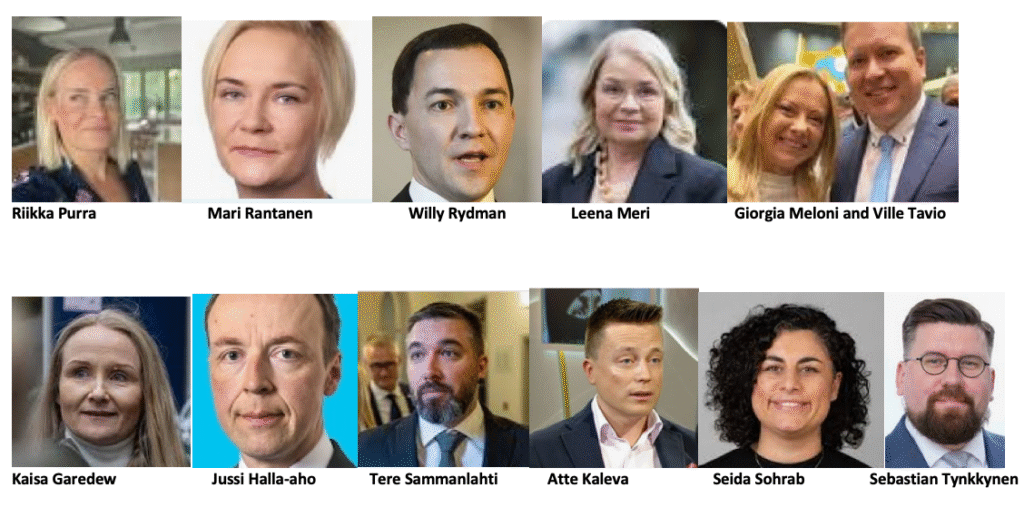
All of the elected 46 MPs (out of a total of 216) of the PS based their campaign on anti-Muslim and xenophobic themes. PS ministers like Finance Minister Riikka Purra, Interior Minister Mari Rantanen, former Economic Affairs Minister Wille Rydman, Justice Minister Leena Meri, Tavio, Speaker of Parliament Jussi Halla-aho, have all spread the great replacement theory with little to no consequences.
If their Islamophobia is a factor, and it is, why do most of the media and politicians turn a blind eye to such an offensive ideology?
If few will say it out loud, we at Migrant Tales will: The PS hates Muslims, and it shows.
I’m always amused and saddened at the same time when political bullies like Perussuomalaiset (PS)* Interior Minister Mari Rantanen talk tough against migrants and other vulnerable minorities. The only way to challenge bullies is by giving them a taste of their own medicine
A tough (but in reality a weak) Rantanen slaps us with an ultimatum:
Studying the possibility of prohibiting Muslim women from wearing veils. Live like the locals or leave.
In my opinion, this is chickenshit populism that we should not underestimate. In the United States, we are seeing how the Trump Administration is targeting brown and black people.
Who is to say that something similar would not happen in Finland if the PS had the chance?
It’s no secret that the PS is a party that quietly supports Trump and his authoritarian tactics.
Even the party’s chairperson and finance minister, Riikka Purra, had warm words of support for US Vice J.D. Vance speech last year at the Munich Security Conference, which many see as a turning point in EU-US relations. Vance downplayed the threat of Russia, claiming that Europe’s greatest security threat was unregulated migration and the exclusion of far-right political groups. Purra praised Vance’s words as a great speech. “Freedom, freedom of speech, democracy; threats from within, inability to fight illegal immigration,” she posted on X.
Here is a very simple question: if President Donald Trump had treated racism in the same way he treated antisemitism, would the United States have made real progress in eradicating this social ill—or at least delivered a serious blow against it?
This contrast is striking. While Trump signed executive orders pledging to combat antisemitism on college campuses, his administration presides over arbitrary ICE crackdowns on visible minorities and emboldened white supremacists. These contradictions raise serious questions about the sincerity and scope of his efforts.
One reason Trump’s stance on antisemitism rings hollow is that he himself has been repeatedly accused of antisemitic rhetoric. These accusations are not typically about open expressions of hatred, but about his recurring use of stereotypes: framing Jews as “disloyal,” obsessed with money, or more devoted to Israel than America.
In May 2025, Trump used the word “Shylock” in a speech—a slur rooted in Shakespeare’s caricature of a Jewish moneylender. Although he later claimed ignorance of its antisemitic meaning, groups such as the Anti-Defamation League warned that such language reinforces centuries-old prejudices.
Trump has also frequently suggested that Jewish Americans who vote for Democrats are “disloyal” or “ungrateful,” invoking the age-old dual-loyalty trope that questions Jews’ commitment to their country. In October 2024, he went even further, declaring that “Christians love Israel more than Jews,” a remark widely criticized by Jewish leaders as divisive and condescending.
But let’s be honest: Trump’s antisemitism is disingenuous and a travesty. If he’d invest so much time in cracking down on all kinds of racism, the US would take the first step towards becoming a more racially just country.
Trump and antisemitism pledges are nothing more than the warravaged landscape of Gaza.
We all know about the vicious racist attacks by the Perussuomalaiset (PS)* party. Their partner in government, the National Coalition Party, has been flirting with populist-style racism as well—yesterday, Social Security Minister Sanni Grahn-Laasonen, whose responsibilities include gender equality.
On Tuesday, she told Helsingin Sanomat that she would be in favor of Finland joining the likes of France in prohibiting the niqab and burka. She added that these types of attire should be prohibited at school.
As Finland’s government parties continue to see their ratings go down in opinion polls, they are pulling these types of stunts to claw back voters.
The saddest matter is the harm that a minister like Grahn-Laasonen does to children who are Muslims and may use the niqab or veil. I wonder how many children Grahn-Laasonen has seen in Finland wearing a niqab or burka? This is an example of cheap populism.
Or should the issue play out in her world, where Muslim children will run up to her and thank her for liberating them?
The truth is that Grahn-Laasonen would care less for such children because she doesn’t believe in religious freedom.
Perussuommslaiset (PS)* Finance Minister Riikka Purra’s announcement of 900-billion-euro cuts in next year’s budget is seen by some a political stunt with a strong anti-immigration PS stamp. On the same day as Purrra’s announcment, Matias Turkkila, the editor of the party’s newspaper and the main strategist of the PS’ xenophobic message, became Purra’s special advisor.
A coincidence? Not.
One Yle story described Turkkila as “a master of political provocation.”
And that is what he is. Turkkila is the perfect advisor to Purra because what he does well is to provoke and polarize.
It remains to be seen if Turkkila and breathing sronger life into the PS’ anti-immmigraion message will save it from itself.
Even so, I don’t believe Turkkila is very talented in his racist provocations. He knows, however, to exploit the racist undercurrent that flows in Finland.
Turkkila’s, Purra’s, and the PS’ victimization of minorities like Muslims is not only racist but affects, for example, innocent children at school. The most shameful matter is that the media and many politicians cannot muster up enough courage to denounce such racism, which explains why Turkkila is still kept in some regard by the mainstream media.