Migrant tales
Menu
  • #MakeRacismHistory “In Your Eyes”
  • About Migrant Tales
  • It’s all about Human Rights
  • Literary
  • Migrant Tales Media Monitoring
  • NoHateFinland.org
  • Tales from Europe
Menu

Month: September 2012

Finland’s Taliban – time to smell the coffee!

Posted on September 29, 2012 by Mark

I was thinking again this morning just how ironic it is that some people in Finland are buying into this ever-growing Islamaphobia and who imagine in decades to come, a nightmare Taliban-style government in Finland, complete with fully veiled women and public executions of homosexuals.

I am aware of this because it’s a recurring theme in the comments sections of this site, and a staple ingredient of the public, private and political discourses of Europe’s counter-Jihad, Far Right movements. It’s ironic because, out of fear of this imagined ‘Finnish Taliban’, we are in danger of letting into power the neo-Nazis.

I know the Far Right hate the Nazi jibe, but it is and always will be a fair point of comparison. Europe suffered far too much under national socialism to ever forget its history or legacy. In fairness to their pouting over the jibe, modern-day comparisons must go further than merely equating one ‘Far Right’ group with another, i.e. modern-day Far Right populists/nationalists vs. the Nazis. Indeed, we really should pay more attention to the detail behind this comparison.

Nazism is most often associated with totalitarian brutality, which deteriorated into its full cruelty under the arch of a world war, even though the Gestapo and concentration camps were set up as early as 1933 and political assassination and totalitarianism had become the norm in German politics long before the invasion of Poland. But Nazism is still best remembered for its excesses in World War II, which can act to hide its originally slow (pre-1933) and then very rapid (1933-1934) rise to totalitarian power and, significantly, its fundamental appeal as a political ideology. Comparing the modern Far Right movements therefore should not merely be seen as a direct comparison of anti-immigrationists vs. the Nazi death camps.

The key starting point in the comparison is that the national socialism of the Nazis put national identity at the heart of German politics, building on the romanticism and radical ethnocentricity of the völkisch movements and, in so doing, escalating and generating a swathe of ‘them and us’ tensions that became the justification for increasing segregation and isolation of minority groups and the entire psychological and sociological basis for the building of the Aryan project.

This led inevitably to scapegoating (see Erich Fromm for an excellent analysis of the fascist mentality in ‘the Anatomy of Human Destructiveness’) of minority groups, who were blamed for all of Germany’s social and political problems, from the so-called economic and cultural stranglehold of the ‘rich’ Jews, to the threat to the ‘pure Aryan bloodline’ from blacks and Gypsies. Nazism created a hierarchy of social groups, with Aryans at the top, as the Herrenvolk, and Jews, gypsies, blacks, gays, the mentally disabled, the physically disabled, prostitutes, beggars, and pacifists at the bottom. They justified this with Social Darwinism, implying that Aryans were ‘fitter’, that genetic and cultural traits in other ethnic groups showed these other groups to be degenerate and in some cases ‘savage’.

Nazism built on fear from outside threats (of its neighbours the Poles, Czechoslovak etc.), and sought to unite with neighbouring fascists (beginning with the ‘Anschluss’, the annexing of Austria). They used exaggeration, fear and propaganda to promulgate the values and tenets of Nazi ideology into German society. They targeted the corporate, political and intellectual elites with the aim of neutralising all opposition, bringing the corporates onside by threatening them with annihilation if they didn’t and promising a demolition of the Trade Union movement if they did. Nazism systematically sought to undermine the influence of anyone genuinely able to challenge them, in terms of power, ideas or influence.

We are still a long way from seeing the Far Right wield that kind of power or tactic in Finland or Europe, but some of the ideological rhetoric of old has already re-established itself, both within the political spectrum and in the public discourses.

Nazism grew out of a fundamental ideological schism going back to the French Revolution, the so-called ‘ideas of 1789’, which put the rights of man, democracy, liberalism, and individualism at the heart of national politics on the one hand, and on the other hand, a German alternative of the ‘ideas of 1914’, made popular by the intellectual Johann Plenge, which invoked the values of duty, discipline, organisation, military prowess, authority, law and order, and especially ethnic unity. This is one of the key parallels between Nazism and the modern day Far Right in their call to prepare for a war against Islam, Muslims and multiculturalism. It is exactly this schism that fed into the radical ideology of Anders Breivik, influenced as it was by the ideas of prominent PS members.

In a healthy political climate, ideas compete and the winners succeed at the ballot box and on the whole, politics and politicians ALL gain some respectability from the process. But under Nazism, those that opposed the political doctrine of national socialism were presented as betrayers of the national identity, dishonourable, and fundamental enemies of the State. They were presented as a threat to the security of the nation state. That all starts to sound familiar once again, in European (and US) politics, where the Right lurches further and further to the Far Right, bringing ever more highly polarised politics and debates.

And so back to the ‘Finnish’ Taliban.

Imagine for a moment that Finland had evolved in decades to come in such a way that a new ‘Finnish’ Taliban had arisen in Finland (ignoring for a moment that a staggeringly vast majority of the world’s Muslims do not support a Taliban-style society), and that Muslims had by then formed a small majority of the population, though the Taliban had not yet convinced all Muslims to follow their path. This demographic majority hadn’t yet achieved a political majority, but were at about 20% national support.

Its ideology was plain to see, including ‘encouraging’ women to stay at home to look after the kids, homosexuals to depart for the penal colonies on the Islands of Åland, the spheres of art, culture and language to be ‘rescued’ for the purposes of serving ‘religious identity’, people of other religious or ethnic persuasions to be ‘persuaded’ to leave, or to not to enter Finland, or to have reduced rights, on the basis that they have ‘criminal’ and ‘immoral’ traits etc. Moreover, any attack on this ideology of separation and division would be dismissed as an attack on the freedom of ‘religious expression’.

Imagine this Taliban to be gaining popularity and support in every election. Imagine that they were led by a ‘benign’ yet charismatic leader who was relaxed and looked nothing like a religious extremist, who had a way of jovial and disarming way of dealing with the ‘common people’ and yet still led a movement that framed the whole political debate in terms of a war, in terms of the survival of our religious identity, in terms of the moral superiority of religious identity over the inequity and moral laziness of the ‘infidels’.

We would be worried.

And yet this is exactly the situation that I see with Perussuomalaiset in the present day, except that it isn’t religious extremism that threatens to overtake the whole political landscape, but political and ideological extremism.

Many members of PS are strongly influenced in their ideology by the Nuiva Vaalimanifesti (some PS MPs actually helped to write it), and by Suomen Sisu and other extreme groups, which set out exactly those points mentioned above, including controling art, language, the family-bound role of women, the reduced position of homosexuals, an intense antipathy towards Muslims, Gypsies, Swedish speakers and anything remotely ‘multicultural’, and a defence against any criticism or even criminality on their part on the basis that their free speech is being violated. If you don’t believe me, have a look.

Today, members of this party and its supporters like to point to the fantasy-like threat of a ‘Finnish’ Taliban, with the express aim of diverting attention away from their own brand of extremism. Slowly but surely the pivot of Finnish and European politics is shifting. Little by little, the political discourse once again becomes one of collective identity politics that creates fear, stigmatisation, and an abuse and scapegoating of vulnerable or social minorities. Once again, a growing proportion of people are buying into the ‘Herrenvolk’ narrative, this time based on cultural superiority.

It really is time to wake up and smell the coffee.
Enrique Tessieri: Why I write about racism

Posted on September 28, 2012 by Migrant Tales

I write about racism and social exclusion in Finland because it affects me and those I care about. I should know because I used to live marginalized from this society for decades. 

I didn’t live marginalized because I was maladapted. I was marginalized because I was well-adapted.

Too many didn’t consider me a “real” Finn for a number of reasons. Was it because I wasn’t white enough or was it because the name I carried made me stick out ethnically like a sore thumb?

But what could I have done in 1978, when I moved back permanently to this country? There were so few immigrants never mind people of my ethnic background that you were culturally and ethnically unimportant and out of the loop.

It is a paradox, but the very matters that I loved and admired the most about this country back then were the very things that marginalized and excluded me from this society.

The prototype Finn is a case in point. This social construct of the so-called model Finn that was taught and reinforced in the last century is being challenged as our society becomes more culturally diverse.

Finnish society’s lack of inclusiveness was and still is the main obstacle to equal integration and acceptance.

If you want to find where racism grows its roots in this society, you will find it in the arguments that some white Finns use to exclude you from society. If you want to challenge Finnish racism, the best place to begin is to contest the arguments and actions that reinforce white Finnish exclusiveness.

I write a lot about racism and social exclusion on Migrant Tales.  I write about this topic because Finland is my home and because I want a better future for visible and invisible minorities.  In cultural diversity we will find strength.

I am grateful that I have found such a platform and opportunity to be a part of an ever-growing national debate and social movement that aims to make our society inclusive to all groups.


Julian Abagond: Why I write about racism

Posted on September 27, 2012 by Migrant Tales

By Julian Abagond

I write about racism in America because it affects my life and the lives of those I care about. Because it has shaped how I experience and see the world and myself, so by understanding racism I understand myself and the world better. It has little to do with trying to make whites look bad or making some kind of appeal to them.

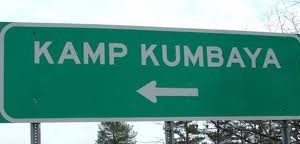
My mother brought me up to be colour-blind. She meant well but she was a kumbayah anti-racist. That sent me into a strange land without a map. And so I have had to learn the hard way what was on that map, piece by piece.

Some say, “You see racism in everything. You see what you expect.” Wrong: I was so unprepared I have been surprised over and over again at how deeply white racism ran.

At first I was surprised when they called me names. Then I was surprised at how different the black and white parts of New York were. Then I was surprised at the police, who were not merely bad but evil to the bone. Then I went across the country and was surprised at how the Sioux Indians were even worse off, at how they had many of the very same issues as blacks – even though they lived hundreds of miles away and came from a completely different history.

And on and on.

Then I started this blog and I was surprised yet again. Not that whites are racist – I already knew that – but how deep and twisted their racism ran. It was not merely a matter of them not knowing any better, of living in nice, lily-white suburbs and believing everything they saw on television. No, it was way worse than that – even among Otherwise Intelligent White People. And so I was surprised yet again.

Dr Beverly Tatum says there is a five-stage cycle to growing up black in America:

  1. pre-encounter – you know you are black (by age five) but it is no big deal.
  2. encounter – you experience racism in an unmistakable way, repeatedly.
  3. immersion/emersion – you learn everything you can about being black because it helps you to understand your experience.
  4. internalization – what you learned becomes part of your identity, who you are, which helps to undo the internalized racism you have unknowingly learned. You become less angry, more hopeful.
  5. internalization-commitment – now you can move beyond race.

Most blacks reach the last stage at about age 25 to 30 and then go back to the first stage to go round again at a higher level of understanding.

So for me New York provided the first encounter stage, this blog (and some other events in my life) the second. In the earlier posts on this blog you can see me still in my second pre-encounter stage, in utter innocence of what was about to hit.

So now I am in the immersion stage for the second time in my life and consumed once again with the subject.

Read original story here.

 This piece was reprinted by Migrant Tales with permission.

We will win the battle against hate speech and intolerance

Posted on September 27, 2012 by Migrant Tales

Much is at stake as Finland and Europe speeds into the depths of the new century. One of the greatest  threats to our way of life and society today is hate speech and far-right ideology. Our resolve to identify and challenge these menaces is crucial during these times.

Even if the media, politicians and public opinion have preferred to remain largely silent in the face of these threats, it is an encouraging sign that our reaction as a society to such hazards is an ever-growing reaction.

Source: P.a.p.-Blog. Human Rights Etc.

One is off track if he or she believes that hate speech and intolerance only have an impact on immigrants and minorities. It would be naive to believe that the rise of an anti-immigration party like the Perussuomalaiset (PS) hasn’t impacted our country.

The shadow of the PS is clearly evident in our country: in the government’s EU and immigration policy we well as in our attitudes.

A debate taking place on social media about male circumcision is a case in point. Who else but the anti-Islam hardliners of the PS would be behind a bill to criminalize circumcision of under-fifteen-year-old male minors.

Like most arguments by a party that is openly anti-Islam, they are nothing more than red herrings and slippery slopes towards more radical measures like prohibiting Muslim women from wearing Islamic veils.

Every time a party takes steps to undermine minority rights, cultural diversity and our right to make lifestyle choices, we are eroding our civil liberties.

It is one good reason why we should challenge hate speech and intolerance.


The Rautiainen scandal: The PS’ short and selective memory

Posted on September 26, 2012 by Migrant Tales

The Amon Rautiainen* scandal, the Perussuomalaiset (PS) municipal council candidate in Kotka who suggested on Facebook that Muslims should be boiled alive, reveals the Finnish anti-immigration party’s short and selective memory. 


Freddy Van Wanterghem, the PS chair of the local association in Kotka, is a good example of the party’s double talk, or first I will say something vague to the media and then erase it vaguely and offer you a snow job instead.

The PS city councilor is quoted as saying on YLE in English:

“He [Rautiainen] is a candidate, and voters can make up their minds who they want to vote for.”

He first hints in the quote above that it is sort of ok to write that kind of hate speech on Facebook, but then disassociates the party form Rautiainen’s controversial posts.

For those who might have forgotten, Van Wonterghem was sentenced for inciting ethnic hatred in March for suggesting that it was good matter that a Muslim woman would be killed because ”it would be one less Muslim giving birth.”

Sorry Van Wanterghem but you’ve been caught with your hand in the double-talk cookie jar.

*Does anyone know if Amon is Rautiainen’s original first name? 


EU Commissioner for Human Rights: Protection against discrimination should be strengthened in Finland

Posted on September 25, 2012 by Migrant Tales


This is a statement by the EU Commissioner for Human Rights:

Strasbourg, 25/9/2012 – “The Finnish Government has started a timely reform of the national equal treatment legislation. It is now crucial to ensure accessibility of the protection framework to all victims of discrimination and avoid unnecessary fragmentation of equality bodies” said today Nils Muižnieks, the Council of Europe Commissioner for Human Rights, releasing a report based on the findings of his visit to Finland carried out on 11-13 June.

The Commissioner welcomed the new National Action Plan on Fundamental and Human Rights, but pointed out that it lacked measures for human rights education. “The recently created independent Human Rights Centre and Human Rights Delegation should aim to fill in some of the gaps of the National Action Plan. It is important that these two bodies, which are going to constitute a National Human Rights Institution together with the Parliamentary Ombudsman, are provided with adequate resources and means to fulfil their extensive mandates.”

The Commissioner is concerned that a gender pay gap of 17.9% still remains, and that violence against women continues to be a serious problem. “The authorities should improve coordination in their responses to violence against women and extend the network of emergency shelters.”

Commissioner Muižnieks is particularly concerned about racist hate speech, also coming from certain politicians, and the extreme marginalisation of young Somali persons. “Further efforts are needed to address discrimination experienced by Roma, Russian-speakers and Somalis who face considerable obstacles in many fields of life, including employment.”

While welcoming the Finnish plan to deinstitutionalise persons with intellectual disabilities, the Commissioner recommends the prompt ratification of the UN Convention on the rights of persons with disabilities and the involvement of disabled people in its monitoring.

The Commissioner also urges Finland to recognise Sámi rights to land and to reindeer herding in the traditional manner, and to ratify the International Labour Organization Convention No. 169 concerning indigenous peoples. ”The close participation of Sámi representatives in the ratification process is essential.”

  • Read the report

Press contact in the Commissioner’s Office:
Stefano Montanari, +33 (0)6 61 14 70 37 ; [email protected]

Keep up to date with the Commissioner on Twitter


Perussuomalaiset candidate: Kill the prime minister, finance minister and boil Muslims alive

Posted on September 25, 2012 by Migrant Tales

What is more serious: encouraging people to kill the prime minister and finance minister of your country or suggesting that Muslims should be boiled alive? The police are presently investigating whether to launch an inquiry against Perussuomalaiset (PS) Kotka municipal election candidate Amon Rautiainen, reports YLE in English. 

Rautiainen has publicly apologized for what he wrote on Facebook.

”I wrote the posts with humor and in the heat of the moment,” he said.

Is “humor”encouraging readers to kill Prime Minister Jyrki Katainen and Finance Minister Jutta Urpilainen as well as suggest that Muslims should be boiled alive?

Like many racists and social media bullies, you will find cowardice and low self-esteem behind their ignorance and bravado.

What would happen if an immigrant, visible minority, never mind a Muslim, would have suggested the same fate for the PS and its leadership as Rautiainen did for members of the government and Muslims?

There would be a public outcry.

The fact that these types of characters appear almost constantly from the PS suggests the extent of the social illness that has inflicted Finland.

Their racist and ultra-nationalist ideology grow in PS greenhouses of hatred.

Sad but true.

But there is something positive to mention: Finland’s reaction to racism is an ever-growing a reaction.

PS of Pori: Nazi motto to kick off the municipal elections of October

Posted on September 24, 2012 by Migrant Tales

The Perussuomalaiset (PS) party of the western Finnish city of Pori have come up with a catch phrase to launch their municipal election campaign: “One city – one leader,” reports Uusi Pori. The motto of the Nazis regime (1933-35) was chillingly similar to what the PS in Pori are using: Ein Volk, ein Reich, ein Führer (One People, One Nation, One Leader). 

Janne Salonen, the head of the PS of Pori, doesn’t see anything wrong using catch phrases that are poor copies from Nazi Germany.

“Hitler used catch phrases when he spoke as a leader,” he said, “we’re speaking of the city of Pori. Every inhabitant of Pori knows the difference.”

Do they?

Does Salonen?

I doubt it.

Another example of how some members of the PS flirt with Nazism and fascism.

Meanwhile, the police are investigating whether or not to launch an inquiry into the Facebook posts of PS Kotka municipal election candidate Amon Rautiainen. The candidate wrote that it would be “patriotic” to kill Prime Minister Jyrki Katainen and Finance Minister Jutta Urpilainen.

Rautiainen wrote as well that Muslims should be boiled alive.

Read whole story (in English) here.


YLE in English: Three Afghani asylum seekers continue hunger strike

Posted on September 24, 2012 by Migrant Tales

Three Afghani asylum seekers been on hunger strike since September 10 after their applications for asylum were rejected by the authorities, writes YLE in English. The three asylum seekers have appealed  the Finnish Immigration Service decision to the administrative court. 

One of the asylum seekers, Abdullahi Gulamesdiq, said that he fears for his life in Afghanistan because he was active in politics in the war-torn country.

”If I have to go back, my life is in danger,” he was quoted as saying on YLE in English. ”We undertook a hunger strike because the decision by the Finnish Immigration Service is inhumane.”

Another Afghani asylum seeker on hunger strike said that Afghanistan isn’t a safe place to live.

“How could we live safely in Afghanistan if even the president of the country and his relatives are in constant danger?” said Golkhan.

The Free Movement Network (Vapaa liikkuvuus -verkosto) and the Federation of Iraqi Refugees organized on Friday a demonstration in support of the asylum seekers who are camped in front of parliament. Some 100 people took part in the march.

Europe and the West have to take a long and hard look at themselves. First we attack and wreak havoc in countries like Afghanistan and Iraq, then we oblige these people to stay put and live in these war-ravaged countries.

Thank you Sini Savolainen @xRebelGrrrlx  for bringing this story to Migrant Tales’ attention.  


Finnish Lutheran Church says family reunification from Africa is costly and dangerous

Posted on September 23, 2012 by Migrant Tales

Archbishop Kari Mäkinen said that family reunification of Africans with their families in Finland is not only costly but dangerous, reports YLE. Since Finland does not have an embassy in war-ravaged Somalia, Somalis are required to apply for residence permits in neighboring Ethiopia or Kenya. 

The Finnish Immigration Service has a backlog of about 10,000 family reunification applications. Most of them are from Somalia.

Family reunification is a normal part of immigration. Finns who emigrated to the North America from the 1860s not only encouraged their relatives to follow them but their neighbors and friends as well.

Migrant Tales has written about the expensive ordeal that Somalis have to endure when applying for a residence permit in Ethiopia or Kenya.

The first blog entry, The long and costly ordeal of family reunification from Somalia to Finland, revealed that a two-and-a-half year wait in the Ethiopian capital, Addis Ababa, can cost a family of  six between $9,000 and $12,000.

The second blog entry,  Feeding Somalis and poor immigrants to the loan sharks of Finland, showed how some immigrants in Finland have to turn to loan sharks in order to help their relatives finance their residence applications from the Finnish embassy in Nairobi, Kenya.

If the aim of Finnish immigration officials is to make family reunification as difficult as possible for some immigrants, then they are doing an effective job. It explains why the whole process takes so long, is expensive and even dangerous.


  • 1
  • 2
  • 3
  • 4
  • Next
Read more about documentary film
Read more

Recent Posts

  • Finland’s tabloids Iltalehti and Ilta-Sanomat are the pits
  • Riikka Purra’s Dr Jekyll and Mr Hyde mask
  • Double standards
  • Perussuomalaiset: Uusi logo, sama vanha juttu
  • Taco Trump

Recent Comments

  1. Absolutely Socking: Racist Finnish Facebook group against human rights gets flooded with socks on Musta Barbaari’s mother and sister charged by the police in “ethnic profiling” case
  2. Ilkka Nuotio on Pekka Myrskylä: “Tilastot kertovat toista kuin poliittinen keskustelu”
  3. Genrih Soinkara on The war in Ukraine and the Russian-Finnish border crisis are showing Finland’s ugly side
  4. Ahti Tolvanen on Comment by Ahti Tolvanen on the Helsinki +50 conference
  5. Angel Barrientos on Angel Barrientos is one of the kind beacons of Finland’s Chilean community

Archives

  • June 2026
  • May 2026
  • April 2026
  • March 2026
  • February 2026
  • January 2026
  • December 2025
  • November 2025
  • October 2025
  • September 2025
  • August 2025
  • July 2025
  • June 2025
  • May 2025
  • April 2025
  • March 2025
  • February 2025
  • January 2025
  • December 2024
  • November 2024
  • October 2024
  • September 2024
  • August 2024
  • July 2024
  • June 2024
  • May 2024
  • April 2024
  • March 2024
  • February 2024
  • January 2024
  • December 2023
  • November 2023
  • October 2023
  • September 2023
  • August 2023
  • July 2023
  • June 2023
  • May 2023
  • April 2023
  • March 2023
  • February 2023
  • January 2023
  • December 2022
  • November 2022
  • October 2022
  • September 2022
  • August 2022
  • July 2022
  • June 2022
  • May 2022
  • April 2022
  • March 2022
  • February 2022
  • January 2022
  • December 2021
  • November 2021
  • October 2021
  • September 2021
  • August 2021
  • July 2021
  • June 2021
  • May 2021
  • April 2021
  • March 2021
  • February 2021
  • January 2021
  • December 2020
  • November 2020
  • October 2020
  • September 2020
  • August 2020
  • July 2020
  • June 2020
  • May 2020
  • April 2020
  • March 2020
  • February 2020
  • January 2020
  • December 2019
  • November 2019
  • October 2019
  • September 2019
  • August 2019
  • July 2019
  • June 2019
  • May 2019
  • April 2019
  • March 2019
  • February 2019
  • January 2019
  • December 2018
  • November 2018
  • October 2018
  • September 2018
  • August 2018
  • July 2018
  • June 2018
  • May 2018
  • April 2018
  • March 2018
  • February 2018
  • January 2018
  • December 2017
  • November 2017
  • October 2017
  • September 2017
  • August 2017
  • July 2017
  • June 2017
  • May 2017
  • April 2017
  • March 2017
  • February 2017
  • January 2017
  • December 2016
  • November 2016
  • October 2016
  • September 2016
  • August 2016
  • July 2016
  • June 2016
  • May 2016
  • April 2016
  • March 2016
  • February 2016
  • January 2016
  • December 2015
  • November 2015
  • October 2015
  • September 2015
  • August 2015
  • July 2015
  • June 2015
  • May 2015
  • April 2015
  • March 2015
  • February 2015
  • January 2015
  • December 2014
  • November 2014
  • October 2014
  • September 2014
  • August 2014
  • July 2014
  • June 2014
  • May 2014
  • April 2014
  • March 2014
  • February 2014
  • January 2014
  • December 2013
  • November 2013
  • October 2013
  • September 2013
  • August 2013
  • July 2013
  • June 2013
  • May 2013
  • April 2013
  • March 2013
  • February 2013
  • January 2013
  • December 2012
  • November 2012
  • October 2012
  • September 2012
  • August 2012
  • July 2012
  • June 2012
  • May 2012
  • April 2012
  • March 2012
  • February 2012
  • January 2012
  • December 2011
  • November 2011
  • October 2011
  • September 2011
  • August 2011
  • July 2011
  • June 2011
  • May 2011
  • April 2011
  • March 2011
  • February 2011
  • January 2011
  • December 2010
  • November 2010
  • October 2010
  • September 2010
  • August 2010
  • July 2010
  • June 2010
  • May 2010
  • April 2010
  • March 2010
  • February 2010
  • January 2010
  • December 2009
  • November 2009
  • October 2009
  • September 2009
  • August 2009
  • July 2009
  • December 2008
  • November 2008
  • October 2008
  • September 2008
  • August 2008
  • July 2008
  • June 2008
  • May 2008
  • April 2008
  • March 2008
  • February 2008
  • January 2008
  • November 2007
  • October 2007
  • September 2007
  • August 2007
  • July 2007
  • June 2007
  • May 2007

Categories

  • ?? Gia L?c
  • ????? ?????? ????? ???????? ?? ??????
  • ???????
  • @HerraAhmed
  • @mondepasrond
  • @nohatefinland
  • @oula_silver
  • @Varathas
  • A Pakistani family
  • äärioikeisto
  • Abbas Bahmanpour
  • Abdi Muhis
  • Abdirahim Hussein Mohamed
  • Abdirahim Husu Hussein
  • Abdirisak Mahamed
  • About Migrant Tales
  • activism
  • Adam Al-Sawad
  • Adel Abidin
  • Afrofinland
  • Ahmed IJ
  • Ahti Tolvanen
  • Aino Pennanen
  • Aisha Maniar
  • Alan Ali
  • Alan Anstead
  • Alejandro Díaz Ortiz
  • Alekey Bulavsev
  • Aleksander Hemon
  • Aleksanterinliitto
  • Aleksanterinliitto ry
  • Aleksanterinliitto ry:n hallitus
  • Alex Alex
  • Alex Mckie
  • Alexander Nix
  • Alexandra Ayse Albayrak
  • Alexis Neuberg
  • Ali Asaad Hasan Alzuhairi
  • Ali Hossein Mir Ali
  • Ali Rashid
  • Ali Sagal Abdikarim
  • Alina Tsui
  • Aline Müller
  • All categories
  • Aman Heidari
  • Amiirah Salleh-Hoddin & Jana Turk
  • Amin A. Alem
  • Amir Zuhairi
  • Amkelwa Mbekeni
  • Ana María Gutiérrez Sorainen
  • Anachoma
  • Anders Adlecreutz
  • Angeliina Koskinen
  • Anna De Mutiis
  • Anna María Gutiérrez Sorainen
  • Anna-Kaisa Kuusisto ja Jaakko Tuominen
  • Annastiina Kallius
  • Anneli Juise Friman Lindeman
  • Announcement
  • Anonymous
  • Antero Leitzinger
  • anti-black racism
  • Anti-Hate Crime Organisation Finland
  • Anudari Boldbaatar
  • Arshiya Nasser
  • Aspergers Syndrome
  • Asylum Corner
  • Asylum seeker 406
  • Athena Griffin and Joe Feagin
  • Autism
  • Avaaz.org
  • Awale Olad
  • Ayan Said Mohamed
  • AYY
  • Barachiel
  • Bashy Quraishy
  • Beatrice Kabutakapua
  • Beri Jamal
  • Beri Jamal and Enrique Tessieri
  • Bertolt Brecht
  • Boiata
  • Boodi Kabbani
  • Bruno Gronow
  • Carmen Pekkarinen
  • Çelen Oben and Sheila Riikonen
  • Chiara Costa-Virtanen
  • Chiara Costa-Virtanen
  • Chiara Sorbello
  • Christian Thibault
  • Christopher Wylie
  • Clara Dublanc
  • Dana
  • Daniel Malpica
  • Danilo Canguçu
  • David Papineau
  • David Schneider
  • Dexter He
  • Don Flynn
  • Dr Masoud Kamali
  • Dr. Faith Mkwesha
  • Dr. Theodoros Fouskas
  • Edna Chun
  • Eeva Kilpi
  • Emanuela Susheela
  • En castellano
  • ENAR
  • Enrique
  • Enrique Tessieri
  • Enrique Tessieri & Raghad Mchawh
  • Enrique Tessieri & Yahya Rouissi
  • Enrique Tessieri and Muhammed Shire
  • Enrique Tessieri and Sira Moksi
  • Enrique Tessieri and Tom Vandenbosch
  • Enrique Tessieri and Wael Che
  • Enrique Tessieri and Yahya Rouissi
  • Enrique Tessieri and Zimema Mhone
  • Epäluottamusmies
  • EU
  • Europe
  • European Islamophobia Report
  • European Islamophobia Report 2019,
  • European Union
  • Eve Kyntäjä
  • Ezequiel Caldeiro
  • Facebook
  • Fadumo Dayib
  • Faisa Kahiye
  • Farhad Manjoo
  • Fasismi
  • Finland
  • Fizza Qureshi
  • Flyktingar och asyl
  • Foreign Student
  • Fozia Mir-Ali
  • Frances Webber
  • Frida Selim
  • Gareth Rice
  • Ghyslain Vedeaux
  • Global Art Point
  • Great Replacement
  • Habiba Ali
  • Hami Bahadori
  • Hami Bahdori
  • Hamid
  • Hamid Alsaameere
  • Hamid Bahdori
  • Handshake
  • Harmit Athwal
  • Hassan Abdi Ali
  • Hassan Muhumud
  • Heikki Huttunen
  • Heikki Wilenius
  • Helsingin Sanomat
  • Henning van der Hoeven
  • Henrika Mälmsröm
  • Hser Hser
  • Hser Hser ja Mustafa Isman
  • Husein Muhammed
  • Hussain Kazemian
  • Hussain Kazmenian
  • Ibrahim Khan
  • Ida
  • Ignacio Pérez Pérez
  • Iise Ali Hassan
  • Ilari Kaila & Tuomas Kaila
  • Imam Ka
  • inside-an-airport
  • Institute of Race Relations
  • Iraqi asylum seeker
  • IRR European News Team
  • IRR News Team
  • Islamic Society of Norhern FInland
  • Islamic Society of Northern Finland
  • Islamophobia
  • Jacobinmag.com
  • Jallow Momodou
  • Jan Holmberg
  • Jane Elliott
  • Jani Mäkelä
  • Jari Luoto
  • Jari Taponen
  • Jegor Nazarov
  • Jenni Stammeier
  • Jenny Bourne
  • Jessie Daniels
  • Joe Davidow
  • Johannes Koski
  • John D. Foster
  • John Grayson
  • John Marriott
  • Jon Burnett
  • Jorma Härkönen
  • Jos Schuurmans
  • José León Toro Mejías
  • Josue Tumayine
  • Jouni Karnasaari
  • Juan Camilo
  • Jukka Eräkare
  • Julian Abagond
  • Julie Pascoet
  • Jussi Halla-aho
  • Jussi Hallla-aho
  • Jussi Jalonen
  • JusticeDemon
  • Kadar Gelle
  • Kaksoiskansalaisuus
  • Kansainvälinen Mikkeli
  • Kansainvälinen Mikkeli ry
  • Katherine Tonkiss
  • Kati Lepistö
  • Kati van der Hoeven-Lepistö
  • Katie Bell
  • Kättely
  • Kerstin Ögård
  • Keshia Fredua-Mensah & Jamie Schearer
  • Khadidiatou Sylla
  • Khadra Abdirazak Sugulle
  • Kiihotus kansanryhmää vastaan
  • Kirsi Crowley
  • Koko Hubara
  • Kristiina Toivikko
  • Kubra Amini
  • KuRI
  • La Colectiva
  • La incitación al odio
  • Laura Huhtasaari
  • Lauri Finér
  • Leif Hagert
  • Léo Custódio
  • Leo Honka
  • Leontios Christodoulou
  • Lessie Branch
  • Lex Gaudius
  • Leyes de Finlandia
  • Liikkukaa!
  • Linda Hyökki
  • Liz Fekete
  • M. Blanc
  • Maarit Snellman
  • Mahad Sheikh Musse
  • Maija Vilkkumaa
  • Malmin Kebab Pizzeria Port Arthur
  • Marcell Lorincz
  • Mari Aaltola
  • María Paz López
  • Maria Rittis Ikola
  • Maria Tjader
  • Marja-Liisa Tolvanen
  • Mark
  • Markku Heikkinen
  • Marshall Niles
  • Martin Al-Laji
  • Maryan Siyad
  • Matt Carr
  • Mauricio Farah Gebara
  • Media Monitoring Group of Finland
  • Micah J. Christian
  • Michael McEachrane
  • Michele Levoy
  • Michelle Kaila
  • Migrant Tales
  • Migrant Tales Literary
  • Migrantes News
  • Migrants' Rights Network
  • MigriLeaks
  • Mikko Kapanen
  • Miriam Attias and Camila Haavisto
  • Mohamed Adan
  • Mohammad Javid
  • Mohammad M.
  • Monikulttuurisuus
  • Monisha Bhatia and Victoria Canning
  • Mor Ndiaye
  • Muh'ed
  • Muhamed Abdimajed Murshid
  • Muhammed Shire
  • Muhammed Shire and Enrique Tessieri
  • Muhis Azizi
  • Musimenta Dansila
  • Muslimiviha
  • Musulmanes
  • Namir al-Azzawi
  • Natsismi
  • Neurodiversity
  • New Women Connectors
  • Nils Muižnieks
  • No Labels No Walls
  • Noel Dandes
  • Nuor Dawood
  • Omar Khan
  • Otavanmedia
  • Oula Silvennoinen
  • Paco Diop
  • Pakistani family
  • Pentti Stranius
  • Perussuomalaiset
  • perustuslaki
  • Petra Laiti
  • Petri Cederlöf
  • Pia Grochowski
  • Podcast-lukija Bea Bergholm
  • Pohjois – Suomen Islamilainen Yhdyskunta
  • Pohjois Suomen Islamilainen Yhyskunta
  • Polina Kopylova
  • Race Files
  • racism
  • Racism Review
  • Raghad Mchawh
  • Ranska
  • Rashid H. and Migrant Tales
  • Rasismi
  • Raul Perez
  • Rebecka Holm
  • Reem Abu-Hayyeh
  • Refugees
  • Reija Härkönen
  • Remiel
  • Reza Nasri
  • Richard Gresswell
  • Riikka Purra
  • Risto Laakkonen
  • Rita Chahda
  • Ritva Kondi
  • Robito Ibrahim
  • Roble Bashir
  • Rockhaya Sylla
  • Rodolfo Walsh
  • Roger Casale
  • Rostam Atai
  • Roxana Crisólogo Correa
  • Ruth Grove-White
  • Ruth Waweru-Folabit
  • S-worldview
  • Sadio Ali Nuur
  • Sami Rusanen
  • Sandhu Bhamra
  • Sara de Jong
  • Sarah Crowther
  • Sari Alhariri
  • Sarkawt Khalil
  • Sasu
  • Scot Nakagawa
  • Shabana Ahmadzai
  • Shada Islam
  • Sharon Chang blogs
  • Shenita Ann McLean
  • Shirlene Green Newball
  • Sini Savolainen
  • Sira Moksi
  • Sonia K.
  • Sonia Maria Koo
  • Steverp
  • Stop Deportations
  • Suldaan Said Ahmed
  • Suomen mediaseurantakollektiivi
  • Suomen Muslimifoorumi ry
  • Suomen viharikosvastainen yhdistys
  • Suomen viharikosvastainen yhdistys ry
  • Suomi
  • Supermen
  • Susannah
  • Suva
  • Syrjintä
  • Talous
  • Tapio Tuomala
  • Taw Reh
  • Teivo Teivainen
  • The Daily Show
  • The Heino
  • The Supermen
  • Thomas Elfgren
  • Thulfiqar Abdulkarim
  • Tim McGettigan
  • Tino Singh
  • Tito Moustafa Sliem
  • Tobias Hübinette and L. Janelle Dance
  • Transport
  • Trica Danielle Keaton
  • Trilce Garcia
  • Trish Pääkkönen
  • Trish Pääkkönen and Enrique Tessieri
  • Tuulia Reponen
  • Uncategorized
  • UNITED
  • University of Eastern Finland
  • Uyi Osazee
  • Väkivalta
  • Vapaa Liikkuvuus
  • Venla-Sofia Saariaho
  • Vieraskynä
  • W. Che
  • W. Che an Enrique Tessieri
  • Wael Ch.
  • Wan Wei
  • Women for Refugee Women
  • Xaan Kaafi Maxamed Xalane
  • Xassan Kaafi Maxamed Xalane
  • Xassan-Kaafi Mohamed Halane & Enrique Tessieri
  • Yahya Rouissi
  • Yasmin Yusuf
  • Yassen Ghaleb
  • Yle Puhe
  • Yuliet Tresa
  • Yve Shepherd
  • Zahra Khavari
  • Zaker
  • Zalina Ametova
  • Zamzam Ahmed Ali
  • Zeinab Amini ja Soheila Khavari
  • Zimema Mahone and Enrique Tessieri
  • Zimema Mhone
  • Zoila Forss Crespo Moreyra
  • ZT
  • Zulma Sierra
  • Zuzeeko Tegha Abeng
© 2026 Migrant tales | Powered by Minimalist Blog WordPress Theme