Tarvitseeko tämä selitystä?
MAMUKRIIT-LOOKS



Tarvitseeko tämä selitystä?
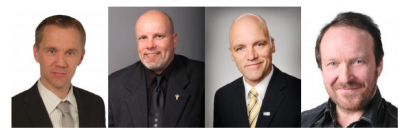
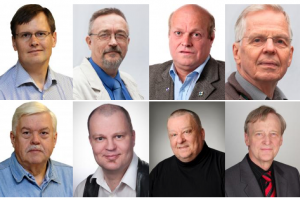
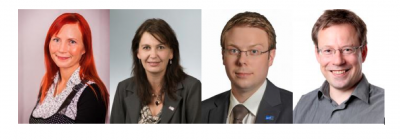
I’ve been reading with some interest the ongoing debate on social media about the Per-Looks blog that has outraged some Perussuomalaiset (PS) party members. The blog shows a number of PS candidates running for office in the October 28 municipal elections.

Just for the record, I don’t like to make fun of people due to their ethnic background, religion, culture or looks and dress as is the case with Pers-Looks.
While the pictures published on Per-Looks aim to give an image that the PS are a bunch of Finnish hillbillies, the blog does offers the anti-immigration and anti-Islam party a taste of its own medicine.
Possibly those who feel offended by Per-Looks now understand how it feels to be a visible immigrant attacked in the Finnish media by politicians of parties like the PS.
Blaming the social democrats for the prank, Matti Puukkonen of the PS said that Per-Looks was “a cowardly act made by losers who are in politics.”
Just like former Italian Prime Minister Silvio Berlusconi, who commonly blamed negative media coverage on communists, the PS like to criticize eco-socialists for the critical coverage they receive in the Finnish media.
The person who made Per-Looks was quoted as saying on Nelonen TV that the aim of the blog was not to ridicule the PS candidates.
“The [purpose of the] Per-Looks blog is not to make fun or to make a political statement with the pictures,” the person said in a statement sent by email. “The pictures on displayed are just as they are found on different web sites [of the PS].”

Since the publishing of Per-Looks, other ones have appeared such as one for the National Coalition Party (Kok-Looks), Pirate Party (Pir-Looks) and Greens (Vih-Looks).
The Perussuomalaiset (PS) party’s municipal election program recommends that municipalities should not accept refugees because the best way to help people fleeing strife is in refugee camps bordering these war-ravaged countries.
This stand by the PS is so extreme that many PS municipal candidates have not endorsed it except for Counterjihadists like PS MP James Hirvisaari (see question 3).
The fact that the PS recommends municipalities not to accept refugees is a clear example of how the party uses opportunistically and shamelessly the immigrant-refugee card to lure votes. Like its anti-EU line, its anti-immigration and anti-Islam stands attract votes.
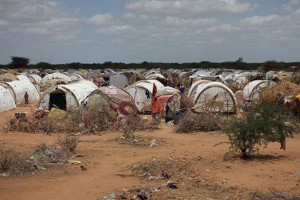
Dadaab in Kenya is the world’s biggest refugee camp that houses over 400,000 refugees.
Using PS populist election rhetoric about refugees, the question we should ask is if refugee camps are effective and humane places to help people.
Take a look at a video clip of the Dadaab camp to arrive at your own conclusions.
http://www.youtube.com/watch?v=ZlHWHLG_pds
Eritrean refugees in Sudan are another sad reminder of people who have lived in camps for 30-40 years.
Click here to see video clip on the forgotten Eritrean refugees of Sudan.
There’s an interesting news documentary this week on Ajankohtainen kakkonen about immigrant candidates taking part in the October 28 municipal elections. One matter that bothered me about the program was the use of the word mamu by the reporters when referring to the candidates.
Mamu is the shortened word for maahanmuuttajia, or immigrant. There are mixed opinions among immigrants about what the term implies.
Another matter that the program lacked was that we didn’t get any clear idea what these candidates stand for on major municipal issues like health care, pensioners, high unemployment and social exclusion of young people.
As immigrant candidates, I would have been interested in knowing what their stand was on the role of cultural diversity in Finland.
There was, however, one Romanian candidate of the Perussuomalaiset (PS) party, Cristian Tudose, who said he was running because Finns were too naive to protect their culture.
”Finns need foreigners to protect their culture because Finns are too naive and cannot say loudly enough that, ‘hey, now we do things our way here.’”
One of the matters that has always worried me about some immigrants who move to this country is how their own prejudices find a cosy home in Finland. Romania is far from being a model country for cultural diversity if we take into account the shameful plight of the Romany minority there.
In the last municipal elections, 96,373 immigrants were eligible to vote but only 19.6% did so. Today that number has grown by about 40,000 to 137,005. How many will vote is a good open question.
Linus Atarah, iCount campaign coordinator, said that the big problem concerning immigrant voters is that many do not know enough about the parties never mind for which candidate they should vote for.
Some 400 immigrants are running for office in the upcoming municipal elections.
Helen came to the UK 9 years ago after she was imprisoned in Ethiopia for her political activities. She claimed asylum but was refused, and looks after herself and her three children on £50 a week.

I’ve been in the UK since 2003. I have three children aged one, two and four. Things have got easier for me recently because my eldest goes to nursery just round the corner and he loves it. The past year has been very difficult because my daughter was born premature and suffers from reflux and was in hospital for eight months. My first child was also premature and also had reflux but as he get older he is able to keep much more food down, and is sick less, so I am hoping the same will be true of my daughter.
We live in North London and the hospital was two hours away, so I had a journey for four hours a day with my other two children on public transport. Sometimes my very dear friend would look after the other two so that I could go to the hospital on my own, but often I had to take them with me for the long daily journey. At the time I was living off £50 a week including travel so it was very difficult, but I felt it was very important to make sure the mother and baby have a strong bond and that my daughter should be with me every single day. There were some premature babies on the ward that didn’t have regular visitors and it was very sad to see them crying on their own without the comfort of a mother. I think the daily journey for eight months was really worth it because after all that my daughter is a happy baby who knows her brothers and me very well.
I had to leave Ethiopia in 2003 because I was in trouble with the government. I was young and had many ideals and protested against them. It is hard for me to remember the person I was that was brave enough to do that. I was imprisoned and many terrible things happened to me while I was in prison. My family was affected too and we still don’t know what has happened to my father. He has been missing for a long time.
My family paid a lot of money to get me out of Ethiopia because they thought that I would be killed if I stayed. I didn’t really know where I was going – just that it had been arranged that I should go somewhere safer. When I arrived in London the man who was accompanying me took me to a café and then he said he was going to the toilet and just disappeared. I was so frightened. I didn’t know where I was and had no money and didn’t know what to do. I felt completely lost and without anyone who cared about what happened to me.
I was taken to the Home Office in Croydon to tell them my story and a group of us had to sleep outside in a doorway waiting for it to open. When I finally got to speak to someone and she asked where I had stayed the night she didn’t believe that we had slept outside. From then on she didn’t believe much of what I said and my English wasn’t good enough at that point to be able to explain the situation I was escaping from.
I was taken to a place in Crystal Palace and then to Dover, but my case was refused. My friend let me sleep in her room and she wouldn’t let me walk by the window because I had no status and we were afraid that I would be seen and taken into detention and then sent back to Ethiopia. It was after that that I met my children’s father. He was the wrong man for me, I see that now, and we are not together any more. But many women make this mistake, and they are able to rebuild their lives after that. I am now trying to make what is called a fresh application for asylum. It is very hard to do this because to do so you must present fresh evidence, How do I prove what happened to me nearly ten years ago?
I think what is so difficult is the indecision. It really damages your confidence and I need to build a life. I want to work and contribute. I would like to be an independent person earning my own money. I am not allowed to work, but that is the dream that I strive and hope for.
I know that I have a very happy looking face, with a big smile and dimples which my kids have all inherited but inside I sometimes feel so afraid for my and the kids’ future. Some days I feel very depressed because I don’t want us to be stuck like this in limbo.
Helen’s name has been changed. She told her story to Sophie Radice.
Read original blog entry here or visit the website.
This piece was reprinted by Migrant Tales with permission.
Twenty-five years ago, when I worked briefly for the Buenos Aires Herald as a young reporter, I wrote a column about how Argentina’s past could come to haunt it in the future. The last military regime (1976-83) that ruled the country was one of the most ruthless that Latin America had seen during the last century. Tens of thousands of people disappeared in a civil war that was characterized by habeas corpus writs and the silence of cemeteries.
The same concern I wrote about in that column a long time ago has resurfaced in Europe today.
Could history be repeating itself again in Europe and Finland?
As our economic woes deepen in this part of the world, the louder we’re hearing the diatribes of far right and right-wing populist groups. We saw in Finland last year the rise of the Finns Party, which is anti-EU, anti-immigration and especially anti-Islam. The Finns Party, which only got 5 seats in 2007, won 39 seats in the last election!
The next hurdle for the Finns Party will be the municipal elections of October 28. A recent poll by YLE revealed that the Finns Party would be the biggest winner of the municipal election. If the party gets 15.8% of the votes as the poll suggests, it will be a big leap from 5.4% that the party got in the 2008 municipal elections. The poll sees that the National Coalition Party getting in October 22.7% compared with 23.5% in 2008. That would be followed by the Social Democrats with 18.7% (21.2%), and the Center Party with 16.6% (20.1%).
While all political parties in Finland are officially against all forms of racism and discrimination, it’s not clear what their real views are on the issue. How do they promote cultural diversity and how often do they speak out against racism? You will find in all Finnish parties members who are for or against immigrants and immigration. Even so, no other party has so many openly anti-immigration members like the Finns Party.
The Greens and Swedish People’s Party, and even the Left Wing Alliance with some reservations, appear to be the most open to immigration and cultural diversity, according to some polls.
“Intolerance is taking root throughout Europe and Finland. We witnessed with shock last year its ugliest side, when Anders Behring Breivik went on his murderous rampage killing 77 innocent victims. Europe witnessed this spring intolerance form a young Arab in Southern France who gunned down Jewish schoolchildren.
Contrary to North America, some claim that our view of ourselves as ethnic groups in Europe hinges too much on “race and blood.” The concept dates back to 1935, when a Jewish doctor in Germany was sent to a concentration camp for saving a patient’s life by donating his blood. This same idea, that blood and ethnicity are related, is how some Europeans see themselves ethnically today.
In order not to repeat the mistakes of the past, we have to look at our history. Finland, which was ravaged by internal and external wars during the first twenty-five years of its independence, built a model society based on respect, acceptance and social equality. The fruits of those efforts are everywhere today. In order to build the same type of society in this century, we must take great care not to exclude different ethnic groups.
We could look across the Atlantic as well for good cultural-diversity models. Even if racism is an issue in many parts of the Americas, countries like the United States, Canada, Brazil, Argentina and others understand that racism and discrimination are social ills that must be challenged.
The last paragraph of the Buenos Aires Herald column I wrote stated the following: “There are a lot of pending questions and, as long as Argentina does not accept the difficult challenge of answering them, the door of this country will remain closed, isolation will prevail, and despotism will one day flourish as it always has in the past. It will not come from abroad, however, as many would have us believe, but from our backyard.”
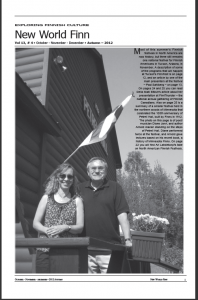
The column appeared in the autumn 2012 issue of New World Finn.
A record number of immigrants are candidates in Finland’s municipal elections of October 28, reports YLE. The highest number of immigrant candidates can be found in the Social Democratic Party (118) followed by the National Coalition Party (81), Left Wing Alliance (56), Green Party (55) and Center Party (around 50).
 Most of the immigrant candidates can be found in the Social Democratic Party.
In the list used by YLE, the fewest number of immigrant candidates can be found in the Perussuomalaiset Party (27).
Even if Timo Soini said that the PS has immigrant candidates, it is very small taking into account that the PS is Finland’s third-largest party.
The number of immigrant candidates isn’t too high in the other parties as well.
KHR writes: Percentages of immigrant candidates for the same parties (source).
SDP: 1,69%
National Coalition Party: 1,18%
Left Wing Alliance: 1,60%
Greens: 2,39%
Center Party: approx 0,6%
RKP: 3,04%
KD: 1,93%
PS: 0,61%
So it looks like PS and center party have the lowest proportions, and it is essentially the same for both of them. This seems to fit the observation that PS is largely invading the political space that was occupied by the center party for decades.
Conversely, RKP and the greens have the highest proportions of immigrant candidates; No surprises there.
Helsinki PS municipal candidate Belle Selene Xia didn’t consider her party racist or anti-immigration.
“They’re only people’s stereotypes against the Perussuomalaiset,” she said. “The Perussuomalaiset are strongly against racism. Moreover, the Persusuomalaiset are in favor of labor immigration.”
I was surprised to read the Perussuomalaiset (PS) party’s municipal election program on refugees. It states that municipalities should not accept refugees because the best way to help these people is in refugee camps bordering their country.
Finland holds municipal elections on October 28. The PS are expected to be one of the clear winners of the election, according to some polls.
Read the PS municipal election program here (in Finnish).
It isn’t surprising that an anti-immigration party like the PS believes that refugees would be “culturally closer at home” in such camps.
On top of this, PS chairman Timo Soini said today on YLE that he’s not against immigration but suggested that only super immigrants should move to Finland.
Soini said that his party wants to help Finland’s needy such as the poor, pensioners and marginalized people. For the PS, refugees do not belong in the latter group.
In his usual populist style, Soini said that Finns should not change their way of life because of immigrants.
I am aware of this because it’s a recurring theme in the comments sections of this site, and a staple ingredient of the public, private and political discourses of Europe’s counter-Jihad, Far Right movements. It’s ironic because, out of fear of this imagined ‘Finnish Taliban’, we are in danger of letting into power the neo-Nazis.
I know the Far Right hate the Nazi jibe, but it is and always will be a fair point of comparison. Europe suffered far too much under national socialism to ever forget its history or legacy. In fairness to their pouting over the jibe, modern-day comparisons must go further than merely equating one ‘Far Right’ group with another, i.e. modern-day Far Right populists/nationalists vs. the Nazis. Indeed, we really should pay more attention to the detail behind this comparison.
Nazism is most often associated with totalitarian brutality, which deteriorated into its full cruelty under the arch of a world war, even though the Gestapo and concentration camps were set up as early as 1933 and political assassination and totalitarianism had become the norm in German politics long before the invasion of Poland. But Nazism is still best remembered for its excesses in World War II, which can act to hide its originally slow (pre-1933) and then very rapid (1933-1934) rise to totalitarian power and, significantly, its fundamental appeal as a political ideology. Comparing the modern Far Right movements therefore should not merely be seen as a direct comparison of anti-immigrationists vs. the Nazi death camps.
The key starting point in the comparison is that the national socialism of the Nazis put national identity at the heart of German politics, building on the romanticism and radical ethnocentricity of the völkisch movements and, in so doing, escalating and generating a swathe of ‘them and us’ tensions that became the justification for increasing segregation and isolation of minority groups and the entire psychological and sociological basis for the building of the Aryan project.
This led inevitably to scapegoating (see Erich Fromm for an excellent analysis of the fascist mentality in ‘the Anatomy of Human Destructiveness’) of minority groups, who were blamed for all of Germany’s social and political problems, from the so-called economic and cultural stranglehold of the ‘rich’ Jews, to the threat to the ‘pure Aryan bloodline’ from blacks and Gypsies. Nazism created a hierarchy of social groups, with Aryans at the top, as the Herrenvolk, and Jews, gypsies, blacks, gays, the mentally disabled, the physically disabled, prostitutes, beggars, and pacifists at the bottom. They justified this with Social Darwinism, implying that Aryans were ‘fitter’, that genetic and cultural traits in other ethnic groups showed these other groups to be degenerate and in some cases ‘savage’.
Nazism built on fear from outside threats (of its neighbours the Poles, Czechoslovak etc.), and sought to unite with neighbouring fascists (beginning with the ‘Anschluss’, the annexing of Austria). They used exaggeration, fear and propaganda to promulgate the values and tenets of Nazi ideology into German society. They targeted the corporate, political and intellectual elites with the aim of neutralising all opposition, bringing the corporates onside by threatening them with annihilation if they didn’t and promising a demolition of the Trade Union movement if they did. Nazism systematically sought to undermine the influence of anyone genuinely able to challenge them, in terms of power, ideas or influence.
We are still a long way from seeing the Far Right wield that kind of power or tactic in Finland or Europe, but some of the ideological rhetoric of old has already re-established itself, both within the political spectrum and in the public discourses.
Nazism grew out of a fundamental ideological schism going back to the French Revolution, the so-called ‘ideas of 1789’, which put the rights of man, democracy, liberalism, and individualism at the heart of national politics on the one hand, and on the other hand, a German alternative of the ‘ideas of 1914’, made popular by the intellectual Johann Plenge, which invoked the values of duty, discipline, organisation, military prowess, authority, law and order, and especially ethnic unity. This is one of the key parallels between Nazism and the modern day Far Right in their call to prepare for a war against Islam, Muslims and multiculturalism. It is exactly this schism that fed into the radical ideology of Anders Breivik, influenced as it was by the ideas of prominent PS members.
In a healthy political climate, ideas compete and the winners succeed at the ballot box and on the whole, politics and politicians ALL gain some respectability from the process. But under Nazism, those that opposed the political doctrine of national socialism were presented as betrayers of the national identity, dishonourable, and fundamental enemies of the State. They were presented as a threat to the security of the nation state. That all starts to sound familiar once again, in European (and US) politics, where the Right lurches further and further to the Far Right, bringing ever more highly polarised politics and debates.
And so back to the ‘Finnish’ Taliban.
Imagine for a moment that Finland had evolved in decades to come in such a way that a new ‘Finnish’ Taliban had arisen in Finland (ignoring for a moment that a staggeringly vast majority of the world’s Muslims do not support a Taliban-style society), and that Muslims had by then formed a small majority of the population, though the Taliban had not yet convinced all Muslims to follow their path. This demographic majority hadn’t yet achieved a political majority, but were at about 20% national support.
Its ideology was plain to see, including ‘encouraging’ women to stay at home to look after the kids, homosexuals to depart for the penal colonies on the Islands of Åland, the spheres of art, culture and language to be ‘rescued’ for the purposes of serving ‘religious identity’, people of other religious or ethnic persuasions to be ‘persuaded’ to leave, or to not to enter Finland, or to have reduced rights, on the basis that they have ‘criminal’ and ‘immoral’ traits etc. Moreover, any attack on this ideology of separation and division would be dismissed as an attack on the freedom of ‘religious expression’.
Imagine this Taliban to be gaining popularity and support in every election. Imagine that they were led by a ‘benign’ yet charismatic leader who was relaxed and looked nothing like a religious extremist, who had a way of jovial and disarming way of dealing with the ‘common people’ and yet still led a movement that framed the whole political debate in terms of a war, in terms of the survival of our religious identity, in terms of the moral superiority of religious identity over the inequity and moral laziness of the ‘infidels’.
We would be worried.
And yet this is exactly the situation that I see with Perussuomalaiset in the present day, except that it isn’t religious extremism that threatens to overtake the whole political landscape, but political and ideological extremism.
Many members of PS are strongly influenced in their ideology by the Nuiva Vaalimanifesti (some PS MPs actually helped to write it), and by Suomen Sisu and other extreme groups, which set out exactly those points mentioned above, including controling art, language, the family-bound role of women, the reduced position of homosexuals, an intense antipathy towards Muslims, Gypsies, Swedish speakers and anything remotely ‘multicultural’, and a defence against any criticism or even criminality on their part on the basis that their free speech is being violated. If you don’t believe me, have a look.
Today, members of this party and its supporters like to point to the fantasy-like threat of a ‘Finnish’ Taliban, with the express aim of diverting attention away from their own brand of extremism. Slowly but surely the pivot of Finnish and European politics is shifting. Little by little, the political discourse once again becomes one of collective identity politics that creates fear, stigmatisation, and an abuse and scapegoating of vulnerable or social minorities. Once again, a growing proportion of people are buying into the ‘Herrenvolk’ narrative, this time based on cultural superiority.
It really is time to wake up and smell the coffee.
I write about racism and social exclusion in Finland because it affects me and those I care about. I should know because I used to live marginalized from this society for decades.
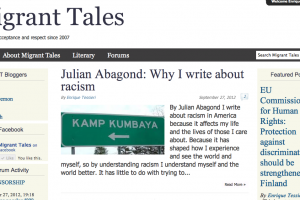
I didn’t live marginalized because I was maladapted. I was marginalized because I was well-adapted.
Too many didn’t consider me a “real” Finn for a number of reasons. Was it because I wasn’t white enough or was it because the name I carried made me stick out ethnically like a sore thumb?
But what could I have done in 1978, when I moved back permanently to this country? There were so few immigrants never mind people of my ethnic background that you were culturally and ethnically unimportant and out of the loop.
It is a paradox, but the very matters that I loved and admired the most about this country back then were the very things that marginalized and excluded me from this society.
The prototype Finn is a case in point. This social construct of the so-called model Finn that was taught and reinforced in the last century is being challenged as our society becomes more culturally diverse.
Finnish society’s lack of inclusiveness was and still is the main obstacle to equal integration and acceptance.
If you want to find where racism grows its roots in this society, you will find it in the arguments that some white Finns use to exclude you from society. If you want to challenge Finnish racism, the best place to begin is to contest the arguments and actions that reinforce white Finnish exclusiveness.
I write a lot about racism and social exclusion on Migrant Tales. I write about this topic because Finland is my home and because I want a better future for visible and invisible minorities. In cultural diversity we will find strength.
I am grateful that I have found such a platform and opportunity to be a part of an ever-growing national debate and social movement that aims to make our society inclusive to all groups.