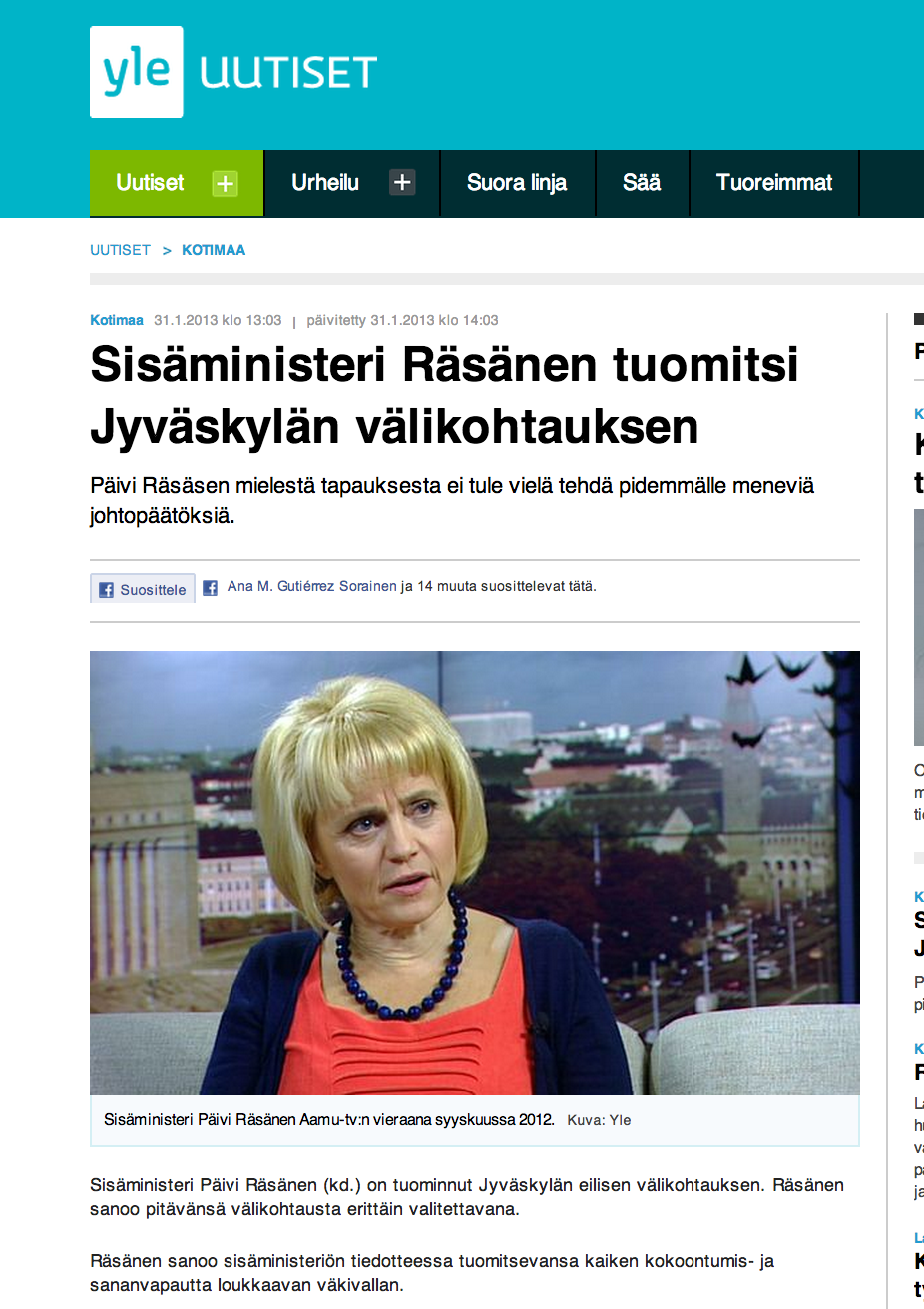
As expected, the Vaasa city leisure committee voted unanimously on Wednesday to prohibit the use of burkinis. The committee claims that the swimming outfit, consisting of a head scarf, tunic and trousers designed for Muslim women, is a dangerous to the swimmer and unhygienic.
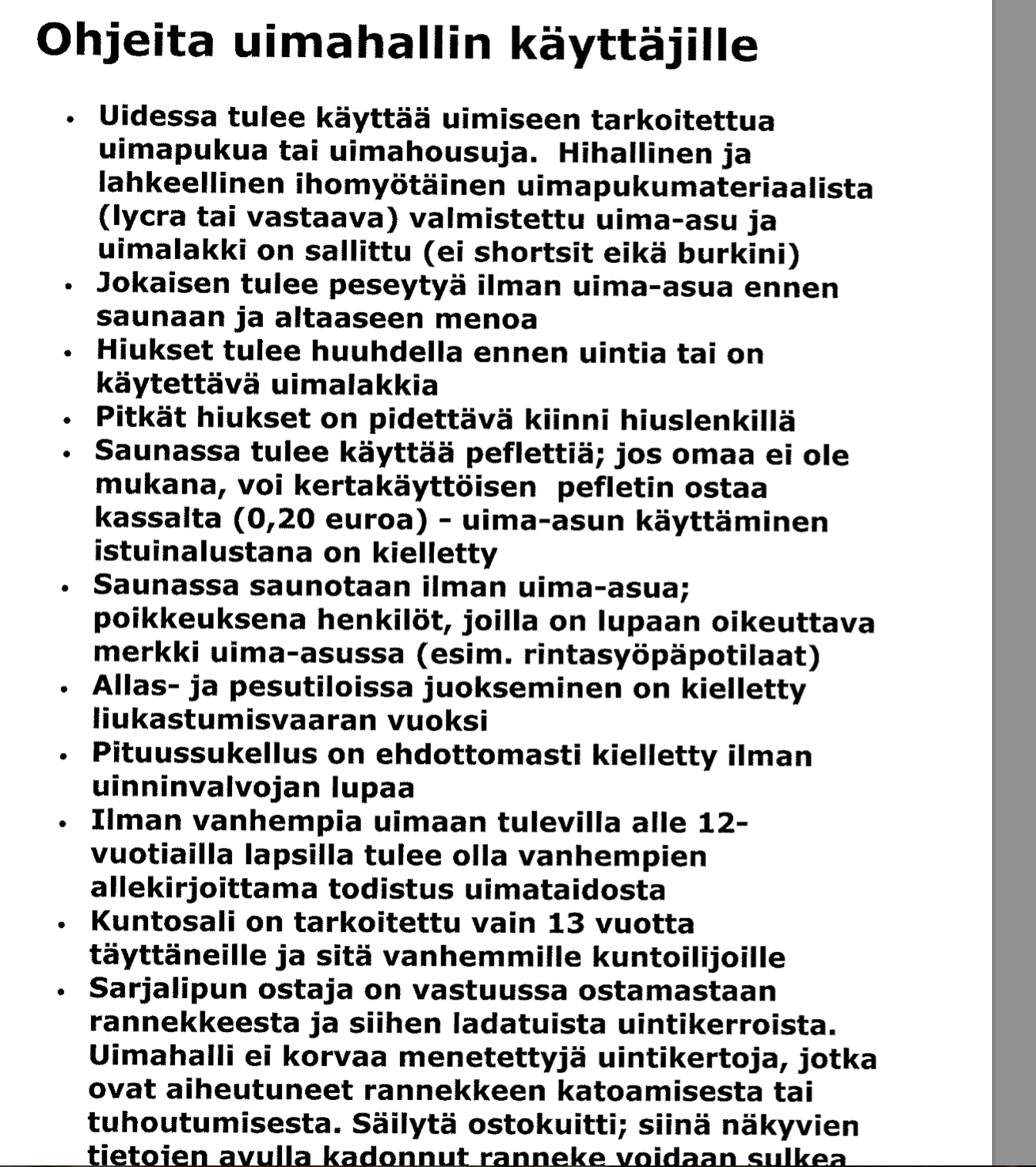
It’s unclear from the rules if Muslims are required to go to the sauna naked.
While the city may have a point, the prohibition goes much deeper: it’s another example of our hardened stance against Muslims and cultural diversity in general. It is a sure recipe for failure in integrating all parts of our ever-growing culturally diverse society. The following message rings out loud and clear: This is Finland and this is how we do things. Go back to where you came from if you don’t like it.

The cartoon depicts perfectly when the city of Vaasa prohibited the use of burquinis at their public pools.
Migrant Tales spoke last week to the City of Vaasa official who made the proposal to the leisure committee. I wasn’t impressed by the reasons for prohibiting the burquini, which revealed a red herring: We are not willing to compromise and work with you on this matter.
The quotes by the city official that reinforces the above were: “We have for as long as I can remember men from wearing shorts [at pools]. There are no exceptions,” and “99.9% of the swimmers are for the ban.”
The percentage figure, 99.9%, reveals that only a handful use burkinis.
If it is a single-digit figure couldn’t it have been resolved in a different way?
It is incredible as well that while some officials speak of getting immigrant women out of the home and integrate them into our society, the burkini ban does the opposite and will encourage them to stay home.
Another matter that raises serious questions is the Suomen Uimaopetus- ja Hengenpelastusliitto (SUH), the Finnish swimming instruction and lifesaver’s association, which is planning to recommend prohibiting this spring the burkini throughout Finland.
Who is the SUH? Is it one association or many different that should look into the matter and recommend policy?
The SUH official told Migrant Tales that he had got in touch with Suomen Somaliliitto, the Somali Association, and a Somali Helsinki city councillor. None of them had responded back about the burkini, according to the SUH official.
How should this affair been handled?
Why didn’t the City of Vaasa get in touch with the local imam(s) and spoke to them about this problem to find a solution? This would have been a more effective and sensible way to find a compromise.
In sum, the burkini prohibition in Vaasa reveals one of the biggest challenges and issues facing Finland as it becomes ever-culturally diverse: Taking into account other cultures and empowering them through the decision-making process.