Perussuomalaiset (PS)* Finnish Interior Minister Mari Rantanen not only loathes Muslims and other minorities, but her suspicion of migrants and minorities have made her paranoid. The panacea of all of Finland’s problems are groups like Muslims, according to her.
Without giving a shred of evidence of social security fraud, Rantanen wants to create Kela (The Social Insurance Institution) agents to uncover fraud and create a hotline to get people to snitch on others.
This is another frightening example of where fear can lead you on slippery slopes. Rantanen’s, the PS and the government’s unfair and racist treatment of migrants is strengthening suspicion, polarizing society and causing Finland great harm. Xenophobia is an chronic illness.
Yksi mediassa eniten rodullistetuista tarinoista on niin sanottu nuorten gans, jonka Perussuomalaiset kopioi Ruotsidemokraateilta.
On selvää, että PS liioitteli havaintojaan poliisin ja medianavulla nuorten jengeistä Suomessa, jossa on arviolta 100-200 jengiläistä. Ruotsissa niitä on tuhansia.
Ei ole vain häpeällistä, miten PS:n ja Kokoomuksen kaltaiset puolueet riistävät ja hyväksikäyttävät maahanmuuttajanuorten rikollisuutta, vaan myös media ja poliisi ovat mukana.
Alla olevassa jutussa Migrant Tales varoitti Yleä virheestä, jonka se teki siitä, kuka on maahanmuuttajataustainen henkilö. Ensimmäisessä otoksessa todettiin, että jos ainakin toinen lapsen vanhemmista on syntynyt ulkomailla, hän on silloin maahanmuuttajataustainen henkilö.
Väärin. Jos toinen vanhemmista on suomalainen, lapsi on sitten suomalaistaustainen.
Kiitoksia kuitenin siitä, että toimittaja korjasi virheen. Korjaus kesti viikon ennen kuin se oli julkinen.
Miksei poliisi sanonut mitään alkuperäisestä virheestä?
Toiminta voi olla haastavaa ja epäonnistua, jos toiminnassa esiintyy rasistisia uskomuksia maahanmuuttajista, erityisesti nuorista “ongelmanuorista”.
On valitettavan yleinen asetelma, jossa maahanmuuttajanuoret nähdään usein uhkana eikä uhattuina, vaikka he voivat itsekin olla haavoittuvassa asemassa ja alttiina erilaisille riskeille ja vaaroille. Tämä johtaa siihen, että heidän tarpeensa ja kokemuksensa jäävät vaille asianmukaista huomiota ja tukea.
Yhteiskunnalliset rakenteet ja asenteet voivat luoda tilanteen, jossa maahanmuuttajanuoret nähdään potentiaalisina uhkina esimerkiksi turvallisuudelle tai yhteiskunnalliselle vakaudelle.
Mediassa ja julkisessa keskustelussa näkyy se retoriikka, joka korostaa maahanmuuttaja-nuorten negatiivisia piirteitä ja käyttäytymistä, mikä voi vahvistaa heidän leimaamistaan uhkana.
Puutteellinen ymmärrys maahanmuuttaja-nuorten kokemuksista, taustoista ja tarpeista johtaa siihen, että heidän haavoittuvuutensa ja tarpeensa jäävät huomiotta.
Tämä asetelma korostaa tarvetta tiedon lisäämiselle, asenteiden muuttamiselle ja rakenteellisten epäkohtien korjaamiselle, jotta maahanmuuttajanuorten oikeudenmukainen kohtelu ja tuki voidaan varmistaa. On tärkeää nähdä maahanmuuttajanuoret yksilöinä ja tunnistaa heidän tarpeensa ja kokemuksensa, jotta voidaan tarjota asianmukaista tukea ja suojelua heidän haavoittuvassa asemassaan.
Apart from being the most right-wing government in a hundred years, Prime Minister Petteri Orpo’s government is doing everything possible to disenfranchise migrants and minorities. We can mention raising the citizenship requirements from five to eight years and excluding Russians from having dual citizenship as indicators of how xenophobia is driving Finnish politics.
One Russian dual national explained the situation in the following words:
“How can a presidential front-runner [like Alexander Stubb] even start to discuss the deprivation of basic human rights of a group of citizens [like the Russian-speaking community]? Stubb has no backbone. When Finland’s relations with Russia were good, he encouraged people to go there to make money, now he claims that Putin can use dual nationals and that we are a security threat, even though there is absolutely no evidence or justification for this: Totally irresponsible politics and a terrible person as a human being.”
The whole dual citizenship debate kicked off with President Sauli Niinistö in 2014. when he expressed the possibility of tightening dual citizenship laws.
One may ask what is the aim of such restrictions. One, I believe, is to exclude migrants and minorities from politics.
Häkkänen is well known for ihi Islamophobic views. During 2011-2013, he was president of the Youth League of the National Coalition Party, which idolizes US capitalism and the Republican Party. His
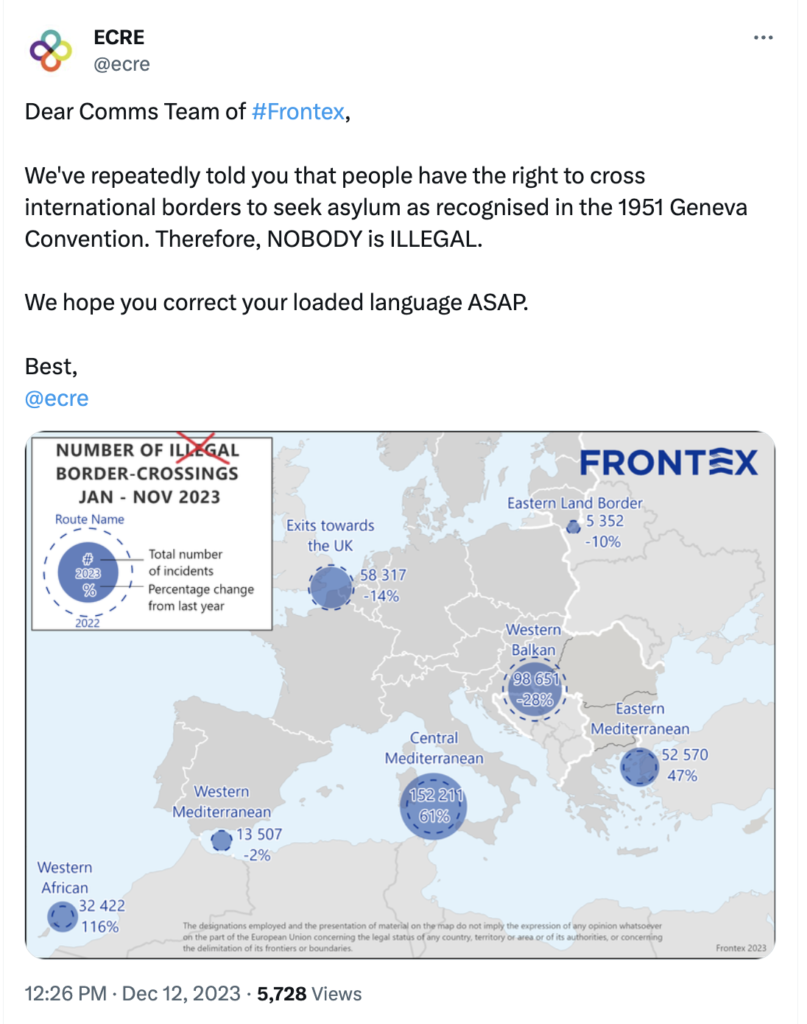
It is surprising that Finland’s national broadcaster, Yle, spreads xenophobia and suspicion of asylum seekers via its news reporting. Yle, never calls people attempting to enter Finland via the Finnish-Russian border asylum seekers but people who are attempting to enter the country illegally.
The narrative spread by Yle reporters is a toothless stenographic copy of the government’s harsh stance against such people. The arguments are the same ones as the government’s:
These people aren’t “real” asylum seekers because Russia is using them as pawns. This may be the case, but does it allow a country to deny a person’s human right right to asylum?
These people, who are also women and children, cannot be considered real asylum seekers because they live in a safe country like Russia.
They point to the violent pushbacks of Poland but forget to mention that the country was back then run by a xenophobic PiS government.
“From the region of Vyborg have come more seekers to the Finnish border.
The people seeking to enter Finland illegally are from Africa and the Middle East.”
Apart from practicing stenography journalism, Yle‘s reporting of the issue is one-sided and opinionated. Instead of hearing human rights organizations, Yle offers only a simple view where the main sources are – surprise, surpsie – the national boarder guard and the government.
The reporting by Yle is one-sided promoting hatred of brown asylum seekers.
At the end of December, an Iraqi family received news from the police that they’d be deported to Iraq in about two weeks. After many rejections for asylum by the Finnish Immigration Service (Migri) after living in Finland for eight years, it was the first time they had been hit with a deportation order.
Their case hangs in the balance. If the supreme court does not overturn the deportation ruling, it will radically change the lives of Amir’s family. Their three children, who came at a young age to Finland, will be sent to Iraq with their parents.
One of the architects of Finland’s tough migration policy is Interior Minister Mari Rantanen with the blessings of the National Coalition Party, Swedish People’s Party and Christian Democrats. Source: Twitter.
Two of their adult children, who work in Finland, can remain. This adds up to a terrible separation of the family.
Amir admits that he has no idea what kind of country he’d return to in Iraq if he were deported.
“The waiting and uncertainty [now] are terrible, and we cannot sleep well,” he continued. “The police can come at any moment [to our home]. We have our luggage packed ready if they came to take us to the airport.”
Fortunately, on the day of Amir family’s deportation, Finland’s supreme court decided to review their case.
“The deportation was stopped at the last minute,” he said,* who claimed that he was the first family to be deported to Iraq from Finland under the new government’s tightened immigration policy.
“What can we do except cooperate with the authorities,” he said. “I don’t want to go to jail with my family.”
Reading the news about how Prime Minister Petteri Orpo’s government plans to not comply with the right to seek asylum speaks volumes about Finland’s “R” problem. In many cases, the media, which acts more like a rubber stamp for the government on migration issues, is also part of the problem.
It is sad to see the treatment of the Russian community of Finland starting from President Sauli Niinistö, whose dislike of dual citizenship and asylum seekers is well documented.
Dual citizenship is a right guaranteed by Finnish law but it takes candidates, who should know better, to make incredulous nd demeaning statements that their dual citizenship should be revoked.
As a person who has lived in Finland for many decades, I am ashamed that we have politicians that want to score brownie points with xenophobia.
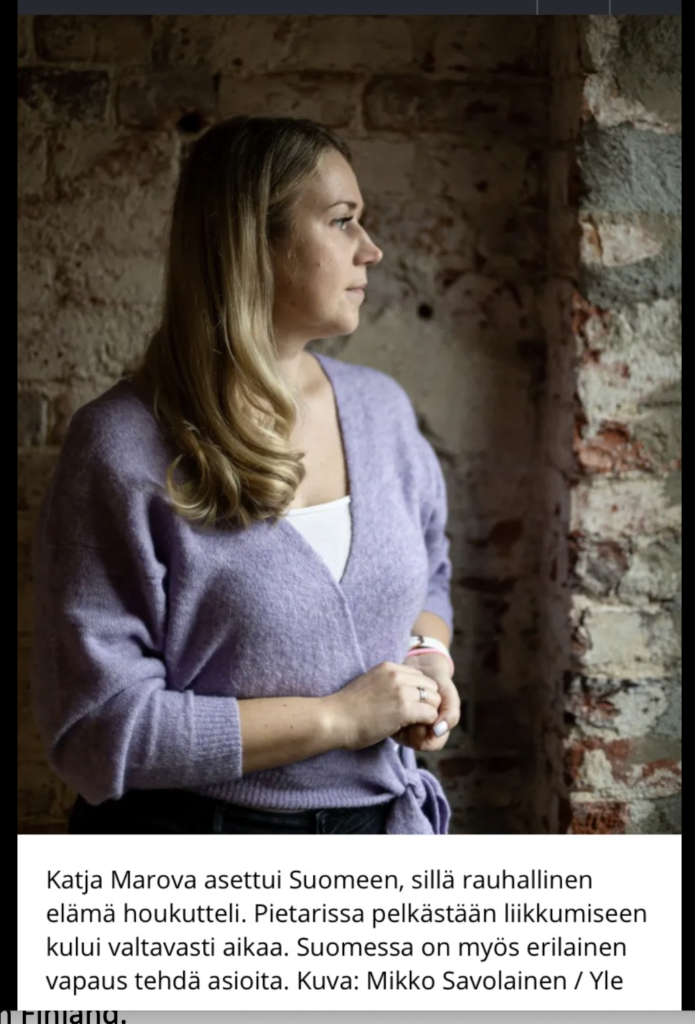
Katja Marova, a member of the 37,813-strong community (2022) who holds dual Russian and Finnish citizenship, admitted that her stress level rose thanks to recent statements by presidential candidates concerning banning dual citizenship for Russians.
“This is scary and has raised a lot of conern among Russian speakers in Finland,” said Morova.
Katja Marova was attracted to Finland by its peaceful life. You need a lot of time to move about St. Petersburg. There is also a different type of freedom in Finland to do things. Souce: Mikko Savolainen/Yle
Apart from a clear example of shameful xenophobia by politicians who should know better, the dual citizenship debate has popped up in the media a number of times. it has been mentioned by politicians like President Sauli Niinistö since 2014.
The reason why the “dual citizenship” issue has not gone anywhere despite opposition to it is because of our constitution and EU laws. You cannot single out or discriminate against a group. If Finland wants to do away with dual citizenship, then it would have to abolish it for all nationalities.
National Coalition Party (NCP) candidate Aleksander Stubb, who did not mind labeling all Russians in Finland as a potential threat, openly supports scrapping dual citizenship rights of Russians. He argued that “a debate is needed on the matter” because Vladimir Putin will go to any lengths to defend its citizens abroad.
“Then we need to find some kind of system to prevent this security threat from materializing,” he added.
Sure Stubb, we’ll have a productive discussion on the topic after you label and demonize Russian speakers in Finland for your own political aims.
Of the nine presidential candidates, only two (Jutta Urpilainen and Li Andersson) were against scrapping dual citizenship rights of Russian speakers in Finland. Even the favorite in the polls, Pekka Haavisto, together with Olli Rehn and Mika Altola didn’t go as far as Stubb, Jussi Halla-aho and Sari Essayah, but were ready to stop granting dual citizenship to Russians in the future.
Positive change
Marova, who is a city of Lappeenranta Left Alliance deputy chairperson, has organized two demonstrations protesting the closure of the Russian-Finnish border in her home city. She is also the new treasurer of the newly founded Aleksranterinliiton association, which aims to be a watchdog on Russian rights in Finland and promote dialogue.
“One of the mattters that has changed since we spoke about two years, is that Russian speakers [in Finland] are more outspoken,” she said. “They undertand that if they do not speak out for their rights, nobody will.”
Marova said that a group has founded Aleksanderiliitto association, a new association that aims to look after the legal rights of Russian speakers in Finland.
Finland is still far from regaining its former political composure after the April 2011 elections, which saw the right-wing populist Finns Party win a historic election victory by becoming the country’s third-largest political force in parliament after the National Coalition Party and the Social Democrats. Compared to the elections before 2011, the number of Finns Party MPs rose from five in 2007 to an astonishing 39.
Many political observers have wondered how an anti-EU, anti-immigration and especially anti-Islam party can become a major political force in Finland in only four years. My guess is the following: Our lack of cultural diversity. Finland’s foreign population totals today about 4% of the population. It is still too small to make a dent on national politics.
Certainly, there are other factors at play that helped the Finns Party to win the last parliamentary elections. There’s the euro crisis and the deep recession, which have helped far-right and right-wing populist parties to see unprecedented growth in today’s Europe. Even so, if Finland had larger ethnic and religious minorities, the result of the 2011 election would have been different.
Our large Finnish-American and Finnish-Canadian expatriate communities abroad are good examples how diversity has not only enriched Finnish culture but made it stronger.
One of the big debates going on in Finland is how our ever-growing immigrant population will change our country demographically and culturally. While we don’t have a precise answer to such questions because the future rarely reveals itself to us, the only matter we can say with some certainty is that our population will change in the next two decades.
As the xenophobic government of Prime Minister Petteri Orpo aims to open some border crossings on the Finnish-Russian border on 14 January, the big question will the government revert to illegal pushbacks?
Why is there concern?
Orpo has gone as far as to suggest earlier that asylum seekers should be sent directly back to Russia supposedly because it is a safe country.
Such a suggestion, denying people the right to asylum, has received strong criticism from international law professor Martti Koskenniemi.