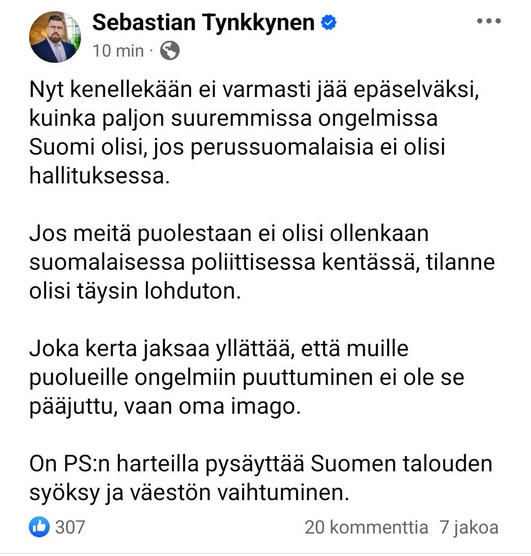
Nothing in Finland has been the same since the Perussuomalaiset (PS) achieved their historic breakthrough in the 2011 general election, increasing their parliamentary seats from 5 to 39. If there is one matter that unites the PS and their coalition partner, the National Coalition Party, it is the systematic erosion of our democratic institutions.
We have let in a Trojan horse, and there is no one to blame but our political class, the media, and the segments of the public who endorsed it. The fuel for this assault has been migration and the rhetoric of “security.”
Beyond introducing the harshest immigration restrictions in a century, one of the most damaging measures came in 2024, when Parliament approved the so-called pushback law—later extended to the end of 2026.
It is dangerously naive to believe that abandoning basic civil rights and the rule of law will have no wider consequences on our society. Some may argue: “It will only affect migrants.” Wrong. We are already sliding further down this slope, with calls to strip non-citizens of social security and to ban schoolgirls from wearing the veil.
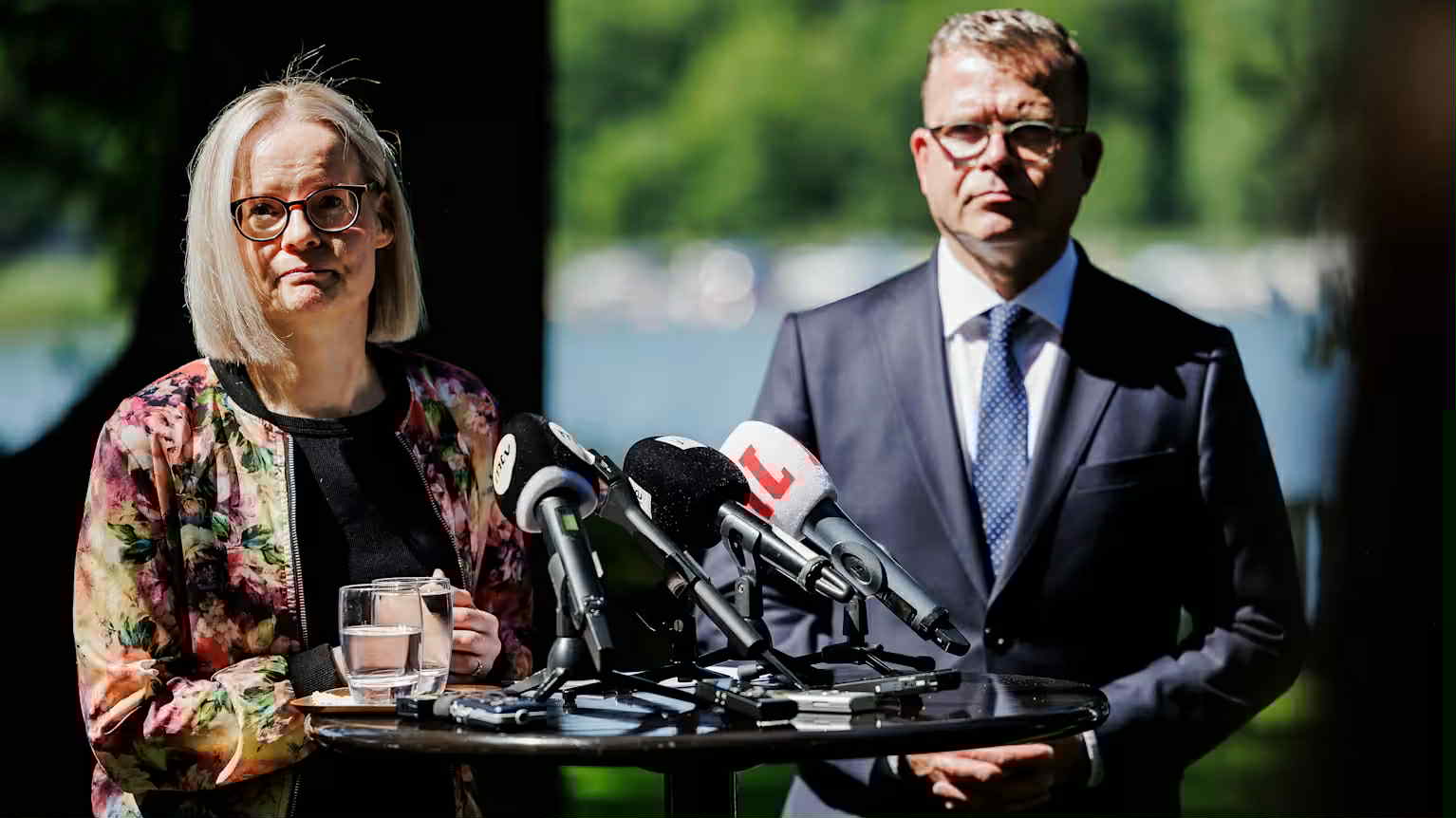
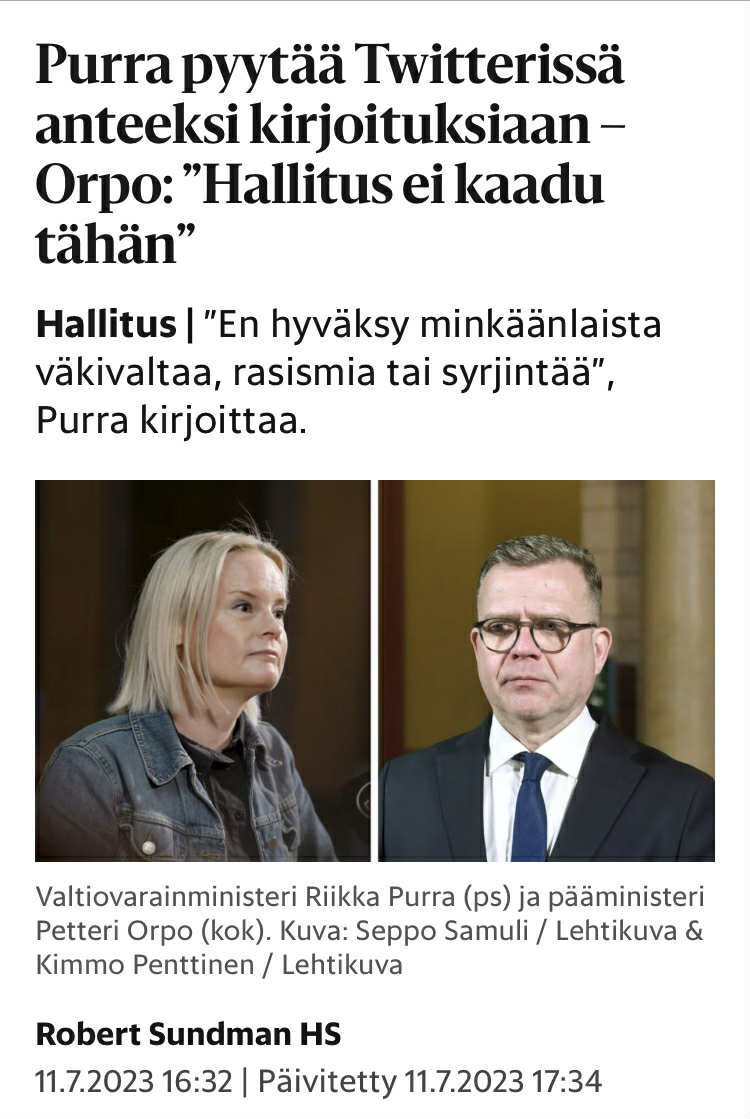
All of this racism spread by ministers like PS head and Finance Minister Riikka Purra are done with any consequences. The PS, which bases its support on Islamophobia, wants to have its cake and eat it by staying in government and spreading anti-Muslim hatred.
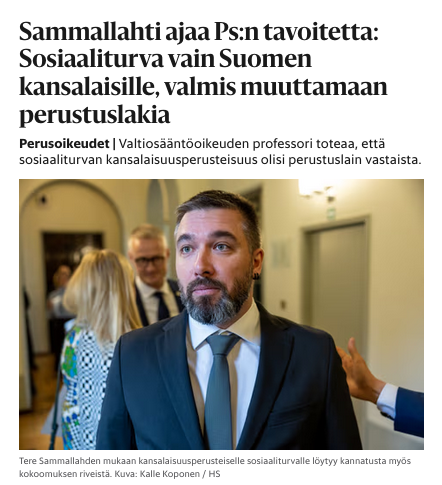
National Coalition Party (NCP) MPs like Tere Sammanlahti spread conspiracy theories about migrants. In his group are a number of politicians of the NCP. One of these is NCP Youth head Binga Tupamaki, who said that Finland is not a social welfare office for the world.
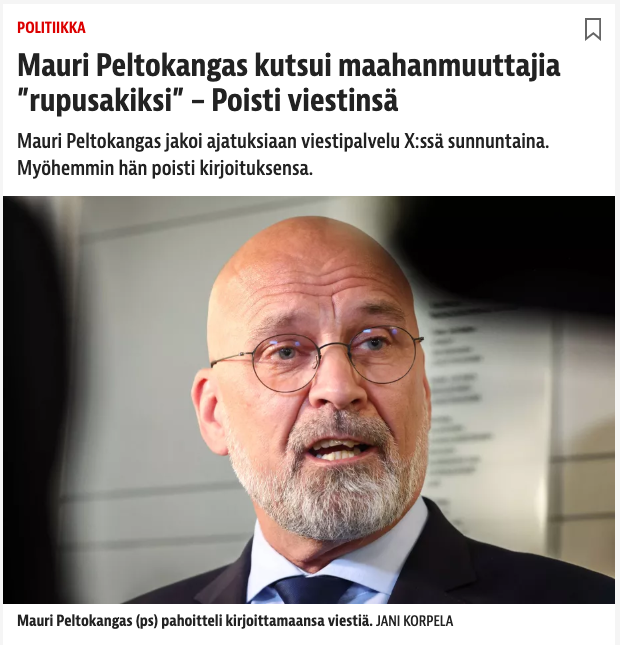
The politicians who are tearing down our democracy can mutate into mouthpieces of the far right. Some, as we recently saw with PS MP Mauri Peltokangas called migrants “vermin.” Even if he apologized, his use of the word is a copy from Hitler.
And let’s not forget PS MP Teemu Keskisarja, who denerated the human value of Muslims on A-studio. “Rather, the opposite is true,” he said. “Those who enable this [ethnic] replacement will turn [Finland] into a developing country of pig stys and bloodbaths. These are the reasons why the great replacement angers me and the Finns Party.”
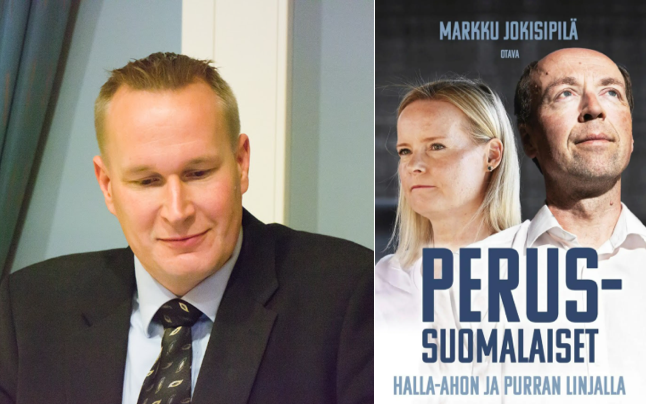
If there is someone who has normalized the Islamophobic PS, that person is Mrkku Jokisipilä. He speaks for white Finland and rarely does he understand what harm and oppression the PS have brought on minorities. Source: Google
Hold on to your hats: the project to remake Finland—reshaping its institutions to serve only white Finns—is already underway.
Unless we push back against this destructive force, in ten years we may no longer recognize our own country.