If we look at US President Donald Trump’s makeup and that used by Perussuomalaiset* MEP Laura Huhtasaari, we can conclude that their personas are different shades of white supremacy.
We all know about Trump’s white supremacist views and we know about Huhtasaari’s feelings on the matter. Her posts and hashtags (#proudtobeFinn and others) speak for themselves.
Even if both politicians are from different countries, they built their political careers on racism and white supremacy. Trump reached infamy by his birther claims that Barack Obama was not born in the US, while Huhtasaari went on the rampage against Muslims and the EU.
If we look at white supremacy in Finland, it does, as in the case of Huhtasaari, involve white-silver dyed hair, white clothing, lots of white makeup as well as white supremacist soundbites.
Source: TwitterDifferent shades of Huhtasaari’s dyed hair and white supremacist image. Source: Twitter Blonde hair and makeup do wonders for bringing out the white supremacist image. Source Google.
A guide to becoming a white supremacist politician:
Dye your hair blonde
Use a lot of whitening makeup
Spread racism by scapegoating vulnerable people like asylum seekers
Perussuomalaiset ja kokoomuksen laitaväki ovat nyt yhdeksän vuotta käytännössä esteittä edistäneet muukalaisvihaa, koulukiusaamista ja ulkomaisten työntekijöiden riistoa. Kun suosio välillä hiipuu, paukut kovenevat ja lähes jokainen persu-ulostulo on ilkeän vihamielinen, fasistinen tai natsistinen. Olisiko aika tehdä jotain?
Ei riitä se, että paljastetaan ja tyrmistellään persujen kamalia puheita. Niillä on oltava käytännön merkitys siihen, kuinka heihin suhtaudutaan eduskunnassa, kansanedustajien ja äänestäjien keskuudessa ja mediassa.
Jokaisen poliittisessa keskustelussa mukana olevan olisi aina nähtävä se vaiva, että tuo selkeästi, julkisesti ja päin naamaa esille vihapolitiikan synkeyden ja vahingollisuuden. Jokaiselle sellaisen politiikan harjoittajalle on osoitettava, että hänen toimintansa on häpeällistä. Jokainen lainvastainen puhe on tuomittava oikeudessa ja eettisesti ja moraalisesti kelvoton toimija on saatettava häpeään. Liiallisesta kohteliaisuudesta on luovuttava. Pelko pois! Rasisti saadaan kyllä oikeusvaltiossa tuomiolle hänen ihmisoikeuksiaan kunnioittaen, hänen halveksittavien tekojensa uhri harvoin saa oikeutta.
Kun puoluejohtaja julkeasti toistaa ministereiden törkeän nimittelyn, hänen pitäisi joutua vastuuseen.
Tolkun ihmisen velvollisuus on olla äänestämättä rasistipuolueita, rasistisia ehdokkaita tai poliitikkoja, jotka ovat ilmaisseet halunsa toimia yhteistyössä rasistisen puolueen kanssa, jos sillä keinoin päästään hallitukseen.
Kaikki nämä yhdeksän vuotta, jotka olen ollut mukana kommentoimassa poliittista siirtymää äärioikealle, olen saanut kuulla kymmeniä kertoja asian vähättelyä ja väitteitä, että ei ole mitään syytä verrata tätä aikaa natsi-Saksaan. Ja kuitenkin polku poliittisen elämän kovenemiseen, vihaan ja siitä johtuvaan pahoinvointiin ja lopulta jopa kansanmurhiin on aina sama: aletaan rummuttaa ylenkatsontaa ja vihaa yhtä kansanryhmää kohtaan ja tehdä julkeata propagandaa heitä ja heidän puolustajiaan vastaan.
Toistolla on voimaa. Kun ollaan tarpeeksi pitkälle edetty, ei ole enää kysymys siitä, että rasistien äänestäjien joukossa oltaisiin huolissaan omasta tai läheisten pärjäämisestä ja kateellisia siitä, että sotaa ja vainoa paennut saa asunnon ja avustuksia. Valta kiihottaa, politiikassa edenneistä sukulaisista tai tuttavista ollaan ylpeitä ja silmät ja korvat suljetaan kauheuksilta, joita he tekevät. Viha myös kiihottaa ja yhdistää, on voimaannuttavaa vihata porukalla sota-alueelta perheensä kanssa paennutta tummempi-ihoista lasta.
Propagandan ei edes tarvitse johtaa fyysiseen väkivaltaan ollakseen vahingollista. On riittävän pahaa se, että maahan muuttaneiden elämää kenties useassa sukupolvessa vaikeutetaan, heitä ja heidän lapsiaan pidetään kakkosluokan kansalaisina, kiusataan, orjuutetaan ja nöyryytetään. Maassa, joka pitää itseään sivistysmaana ja esimerkkinä muille.
Politiikan pitäisi luoda yhteistä hyvää ja yhdistää ihmisiä, ei jakaa heitä vihattaviin ja hyväksyttäviin. Kenenkään ei tule hyväksyä politiikkaa tai poliitikkoa, joka tähtää yhtäläisen, luovuttamattoman ihmisarvon riistoon ja omaan poliittiseen nousuun vihaa nostattamalla.
Keskustelu, vitsailu ja herjaaminen tunnustavan rasistin somesivulla johtaa vain naakkaparven kerääntymiseen ja sulkien lisääntymiseen moukan hatussa. Media, huomion toivossa tai omaa agendaa edistäen, asettuu yllättävän usein äärioikeiston puolelle tai ainakin kylmästi, joskus ehkä tiedostamattaan, välittää kansalle heidän sanomansa.
Ajatus, että jokaisessa on jotain hyvää ja kaikkien pitää saada sanoa sanottavansa ei toimi silloin, kun aikuinen, täysvaltainen ihminen valitaan kansanedustajaksi edistämään ihmisvastaista politiikkaa, rajojen sulkemista väärän värisiltä ja maassa olevien vierasmaalaisten elämän tekemistä mahdollisimman ikäväksi.
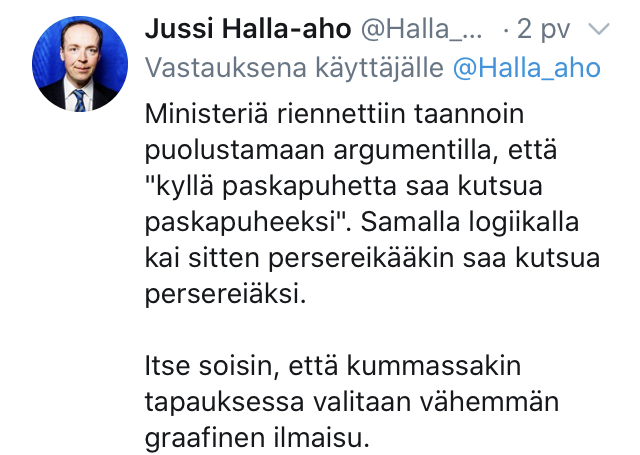
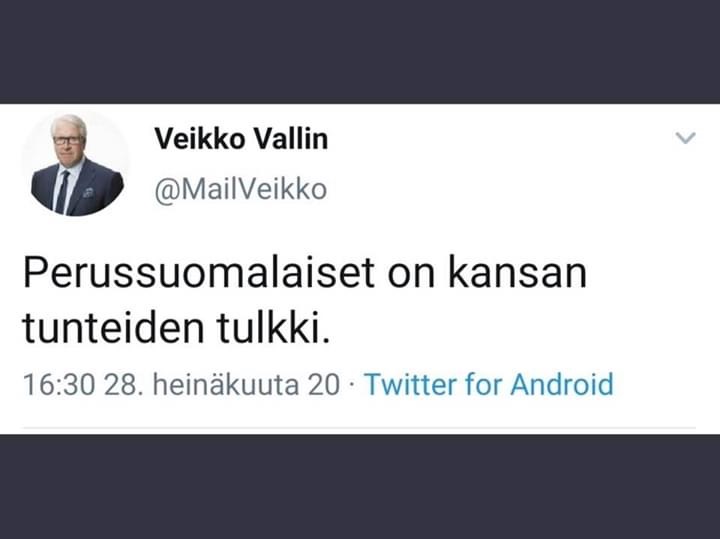
Kun häntä on tulessa, rasistit väittävät taas olevansa kansan tunteiden tulkkeja. Tämä on valhe, ei Suomen kansa ole rasistikansa.
“[Leon] Trotsky once said that if the anarchists did not exist they’d have to be invented because they have done a lot of good things for humanity with their incorruptible opposition. They demonstrated having a principal that they never abandoned.”.
Osvaldo Bayer (1927-2018)
As the late Argentinean historian points out, social movements like anarchism in Argentina played an important role in demanding, and sometimes obtaining, justice. During the so-called Tragic Week of 1919, the anarchists almost succeeded at toppling the government.
One of the many anarchist organizations that fought for social rights was FORA (Federación Obrera Regional Argentina). My grandfather Nemo, and my great grandfather Dante, were anarchists.
If we looked at Argentina’s history from the nineteenth century when immigration from Europe started to whitewash the population, the struggles between the working and middle-class versus Argentina’s ruling class have lasted to this date.
During this dark period, state terror instigated by the military junta was the supreme ruler. Imagined and real enemies of the de facto state were apprehended, tortured and murdered by the so-called “security” forces. Over 30,000 “disappeared” this way.
When I lived in Argentina during 1976-78, I suffered from depression and post-traumatic syndrome. Even if you could breathe normally during the military dictatorship, I commonly felt that I was suffocating and gasping for air. The hatred of the military, their lust for power, and objectionable violence sucked all the air around you.
Whatever type of victim you may be, the most important gesture that anyone can show you is their caring and empathy. One of these persons I met during those trying times was Liliana Belatti.
Liliana Belatti in the 1970s.
I heard and saw many things in Argentina that still shock me today. One of the scariest was listening to a friend walk into the office and started crying that armed men had kidnapped his son, or being whisked in a squad car to a nearby police station for not carrying my identification papers.
Ano, or Año Turtiainen, the former Perussuomalaiset MP who mocked George Floyd’s death at the hands of a Minneapolis policeman, boasts that he is “the best known Finnish powerlifter in the world.” CORRECTION: He is also known for being the most racist Finnish powerlifter in the world.
After Elitefts and the Canadian Powerlifting Union terminated last month their cooperation with Turtiainen, the International Powerlifting Federation (IPF) announced that it too is terminating its cooperation agreement with Turtiainen’s firm Metal Sports.
IPF announced that the termination of the agreement with Metal Sports was due to a “non fulfilling the agreement terms.”
Turtiainen’s tweet was even noticed by George Floyd’s family in the US.
“The message glorifies police violence and criminal behavior,” said Goerge Floyd’s family lawyer in Teller Report. “It seems that this, not the first time MP Turiainen has published racist messages on social media. We believe that Turtiainen’s colleagues in parliament should be held accountable.”
See ogirinal posting here.See original CPU statement here.
The outrage that Turtiainen has awoken from abroad and the consequences of his racist postings offer hope and some direction. For too many years, the MP from the small town of Juva (pop. 6,121) has made racist statements and shown off his “dark humor” with few if any consequences.
What does it say about Juva and our society as a whole?
Perussuomalaiset (PS)* MP Mauri Peltokangas, a far-right politician and member of the Nazi-spirited Suomen Sisu association, labeled government ministers “a**holes” for not expressing concern about the attack against the party’s campaign manager Pekka Kataja.
Those who have followed the Kataja incident will note that it is a pretty mixed up story. First, Kataja pins the blame on “Arab-looking” attackers, then changes it to far right even if he adheres to the same Islamophobic mindset.
The post on Peltokangas’ Facebook page was removed, which is yet proof that he is a loudmouth opportunist who takes racist, Islamophobic, and misogynist potshots at his rivals. Peltokangas can’t stand the heat so he is the first to exit the kitchen.
If you are surprised that the PS parliamentary group will not take any action against Peltokangas, this Islamophobe has a long history of rants and racist statements.
Writes Peltokangas: “Each of our ministers are sorrowful a**holes. Eveyone is silent even if the victim works for parliament.”
If a recent (22.2.2020) rant below, which lasts 2:36 minutes, Peltokangas utters around every 20 seconds the following swear words:
SAVON SANOMAT PÄIVYRI Adam Al-Sawad, Puheenjohtaja perustettavassa rasismin ja islamofobian vastaisessa yhdistyksessä, Kuva: Akseli Muraja
Nationalististen tahojen kerätessä suosiota Suomessa, kohtaa Suomen poliittinen kenttä yhä useammin skandaaleja perussuomalaisten poliitikkojen toimesta. Yhdessä skandaalissa kannatetaan “eliminointia” ja tuhopolttoja (Turtiainen, 2015) tai levitetään räikeästi väärää tietoa rasistisin tarkoitusperin (Purra, 2020), toisessa vitsaillaan murhattujen tummaihoisten kustannuksella (Turtiainen, 2020) tai väitetään vielä elossa olevien tekevän kouluista eläintarhoja (Halla-Aho, 2007). Puolueen sisältä paljastuu tasaisin väliajoin kytköksiä väkivaltaisiin radikaaleihin (PVL/SVL) ja heitä tukeviin tahoihin (Suomen Sisu, Perussuomalaiset nuoret, RK! ja niin edelleen). Viranomaisten puuttuessa näiden tahojen toimintaan, perustetaan vain uusia yhdistyksiä tilalle. Yleensä tätä kaikkea seuraa pieni nuhtelu ja sulka hattuun puolueen sisällä (Verkkouutiset, 2019), tai korkeintaan muutamassa tapauksessa skandaalin keskipisteen etäännyttäminen emopuolueesta, toki niin että samalla paukutellaan henkseleitä sillä, miten nykyään ei saa sanoa mitään ilman että haukutaan rasistiksi.
Kaikkea tätä pahentaa se, että nykyään näihin skandaaleihin puuttumista katsotaan pahalla. Maltilliset tahot niin oikealla kuin vasemmallakin lakaisevat Suomen häpeäpilkkuna toimivan puolueen maton alle sen nimissä, ettei heille saa antaa lisää huomiota mediassa, kun taas puolue itse kapitalisoi saamaansa kritiikkiä keksimällä uusia “derangement syndrome” -nimityksiä heitä kohtaan osoitettavalle kritiikille. Kriitikot myös saavat osakseen jatkuvaa uhkailua, vähättelyä ja kyseenalaistamista, ja kun läheisten ikkunoita on käyty kerran rikkomassa äänekkään kritiikin jälkeen, on monen aktivistinkin vaikea enää löytää samanlaista ääntä itselleen toistamiseen. Lopputuloksena puolueen nyrkkisäkkeinä toimivat vähemmistöt saavat vuodesta toiseen miettiä, miten sekulaarina sivistyneenä länsimaana markkinoitavassa Suomessa voidaan hyväksyä tällaista radikalismia. Missä menee sivistysvaltion raja?
Raja on kuitenkin vedettävä johonkin, ja minusta se pitää vetää jo viimeistään tähän. Puolueen ajatushautomona toimiva, opetus- ja kulttuuriministeriöltä rahoitusta saava Suomen Perusta julkaisi hiljattain Jukka Hankamäen kirjan “Totuus kiihottaa”, joka on ajatuspajan mukaan “Filosofinen tutkimus vasemmistopopulistisen valtamedian tieto- ja totuuskriisistä.” Teos on käytännössä äärimmäisen radikaali populistinen teos, jossa etnonationalismi ja rotupetturuuden käsitteellä flirttaileminen kohtaa avoimen rotuopin ja eugeniikan puolustamisen. Sivulla 261 siinä lukee muun muassa näin: ”Osa naisista on saattanut haluta kostaa joitakin kaunojaan suomalaiselle yhteiskunnalle pariutumalla ulkomaalaisen kanssa, ja asiaan liittyvä epäreiluus on saanut suomalaismiesten veren kiehumaan. Samalla naiset ovat käyttäneet myös väestöpoliittista valtaa, sillä rajat ylittävillä pariutumisillaan he ovat muokanneet kansamme geeniperintöä tavalla, joka on rikkonut biologisen rodun, etnisesti määriteltävissä olevan kansan, valtio-opillisesti jäsenneltävissä olevan kansakunnan, juridisen kansalaisuuden ja valtiofilosofisesti voimassa olevan kansallisvaltionvälisen ekvivalenssin sekä korrelatiivisen ja luottamuksellisen suhteen.”
Saatamme olla toden totta kriisin keskellä, mutta tämä kriisi ei ole mikään vasemmistopopulistien masinoima kriisi valtamediassa, vaan nationalismin nousun aiheuttama poliittinen kriisi, jossa törkeästä, radikaalista ja ihmisoikeuksien vastaisesta politiikasta on tulossa Suomessa hyväksyttävää ja normaalia. “Meistä tulee uusi normaali”, iloitsi perussuomalaisten Laura Huhtasaari jo vuonna 2018. Onko tämä kriisi toden totta se uusi normaali, jota pitää rakennuspalikkana tulevaisuuden Suomelle? Vai onko puhe rotupettureista ja n******ukoista jo tullut jäädäkseen hyväksyttävänä osana vaalit melkein voittaneen puolueen politiikkaa.
Two days and nine years had gone by when Norway and Europe witnessed the horrific events of 22/7 that left 77 people dead and many others with physical and psychological injuries for the rest of their lives.
One of the matters that we can learn from the far-right terrorist is that words can turn into bullets.
The far-right terrorist and “the end of an era of multiculturlaism.” Source: Springer
In his manifesto, “2083 a European Declaration of Independence,” he cites the Perussuomalaiset (PS)* and its chairperson Jussi Halla-aho as a credible (sic!) source on the takeover of Europe by Muslims.
The far-right was riding the crest of the wave in 2011. In Finland, the radical right Perussuomalaiset (PS)* party had scored their historic parliamentary victory. But then three months later, Anders Breivik appeared from nowhere and went on to murder 77 people to save – according to him – Europe from being overrun by Muslims.
On a day like this, the only thing we can and must do is not to forget.
Norwegian Prime Minister Erna Solberg, who is no friend of Muslims, said in her speech Wednesday that Norwegians must “fight every day for the values which were targeted by the terrorist.”
“July 22nd reminds us that life can be endangered when hate is allowed to stand unchallenged,” she said.
While no sensible person will deny the crimes by Breivik were horrific, we must acknowledge that he grew up in a country that armed him with such hate.
Until January, the Islamophobic Progressive Party (FrP) share power with Solberg’s conservative Høyre. The FrP ditched the government because of the repatriation of a Norwegian woman allegedly linked with Isis had her five-year-old child, who needed medical treatment.
I am certain that Breivik’s stain on Norway will never wipe off. And this is good because it is a reminder of what hatred and racism can do.
In August, Norway almost underwent another Breivik-style terrorist attack when a young man attacked theAl-Noor Islamic Center near Oslo. Fortunately, a 65-year-old man foiled the attack.
Perussuomalaiset (PS) chairperson Jussi Halla-aho is the Finnish version of Hungarian strongman Viktor Orbán. If he had his way, Finland would deport Muslims, deny asylum to people dependent on race, encourage dog-eat-dog economics, and scale down the welfare state.
Halla-aho’s alternate reality and that of his party sometimes cause a knee-jerk reaction: WTF.
We have ready about the brutal assault that PS councilperson Pekka Kataja suffered Friday. Wouldn’t you have it that Halla-aho and party secretary who is an ethnonationalist, Simo Grönroos, speculated right after the attack that it was not an isolated crime but politically motivated.
Taking into account how much Kataja has changed his interpretation of events, we are still in the dark about the motive of the assault.
We read about the brutal assault against a Perussuomalaiset (PS)* campaign manager Pekka Kataja. There was great interest in what happened when he mentioned that the suspect(s) were probably “Arab-looking.” Silence befell the PS after Kataja changed his story by claiming that the attackers were probably from the far-right.
One question that arises here is why is Kataja so keen on telling us what ethnic or political grouping they were?
In February 2018, a Pakistani was brutally assaulted in Vantaa by three white Finnish youths. Apart from being stabbed up to thirty times, suffering a fractured skull and other injuries, interest in the story ended after the police said four days after the assault that the attack was not a hate crime.
The assaulted Pakistani recovering in hospital in March 2018. Photo: Enrique Tessieri
The police announced Tuesday that charges against the suspects changed from attempted manslaughter to attempted murder after five days that the crime took place. With the case of the Pakistani victim, the police changed the charges weeks later in April toattempted murder from attempted manslaughter.
While both stories have race or ethnicity as underlying factors, in the beginning, this changed and this forced interest to die down. What emerged after that was hypocrisy.
PS chairperson Jussi Halla-aho and party secretary Simo Grönroos were quoted in Kainuun Sanomat as saying after the attack that it was politically motivated.
“Everything suggests that this was not an isolated crime, but specifically an attack against Kataja, the party’s political activities and an attempt at homicide,” Halla-aho and Grönroos were quoted as saying in Kainuun Sanomat.
One PS member, MEP Laura Huhtasaari’s aide, went as far as to suggest the conspiracy theory that the hit job against Kataja came from the EU elite and EU secret services.
“I wonder if the murder attempt against Pekka Kataja was an attempt and ordered by the EU elite or the EU intelligence services?” Olli Kotro is MEP Laura Huhtasaari’s aide. Source: Twitter
Attempting to picture Kataja as a political martyr, the speaker of parliament, Anu Vehviläinen, stated in the tweet below that those responsible for what happened must be brought before justice.
But let’s go back to the original question: What type of violence captures the interest of the media, social media, politicians, and the general public?
As mentioned, when Kataja stated that he suspected the far right of attacking him, the PS fell silent. The same matter happened in the case of the Pakistani: Interest by the media fell after the police mentioned that what happened was not a hate crime.
It appears that the Kataja incident, which is dreadful and we should strongly condemn, may surprise us yet again. The PS has an issue with far-right ideology, and it is no secret that Kataja has made Islamophobic statements in the past.
What far-right groups did he not get along becasue there are a lot of them in the PS. Is he talking about Suomen Sisu?
Kataja is also the aide of PS MP Jouni Kotiaho, who wrote in an OP-ED piece in Jyväskylä-based Keskisuomalainen that the radical right is “insignificant group” in Finland even if some have accused the PS, the second biggest party in parliament, of being radical right.
Moreover, Kataja’s boss claims in the Keskisuomalainen column that “[e]ven, if you can count the number of Nazi supporters with one’s fingers and racism does not happen in practice in Finland at all.”
As we are trying to figure out if Kataja’s story holds water or if what happened was something personal as some suspect. Let’s stop all this hypocrisy about how much we are against political violence and violence in general, which is targetted by the PS against Muslims and people of color.
But let’s agree on one matter: condemn all types of violence irrespective of the victim’s background. The ethnic background of the victim should not be a factor in how much media attention a victim gets.