I once had the opportunity to write a rebuttal in the Helsinki Times to Perussuomalaiset (PS)* parliamentary group leader Ville Tavio. In his usual far-right fiery language, he suggested outright that Finland must treat migrants as second-class members of society.
He suggested in an op-ed piece in Uusi Suomi that the Finnish Constitution should be amended to give Finns priority over foreigners.
Tavio has had many racist outbursts before. His most recent one was a parliamentary question asking why Muslim women should be allowed to use burkinis at public swimming halls. He now sounds the alarm that millions of asylum seekers will soon stream to Europe as a result of Turkey’s military action in Syria.
He tweets: “Turkey is threatening to spark a new immigration crisis. If the [mass] migration of people begins, is the Finnish army ready this time to stop foreign hordes at the border? What does defense minister @anttikaikkonen say? The fate of the nation rests on this question.”
Excuse me, Tavio, are you suggesting that we should start to deploy the army at our border because you are apparently hallucinating asylum seekers coming from the Middle East?
Ville Tavio’s Facebook wall: “Be a brave Finn.” Be brave and hate Muslims and asylum seekers is what he is really saying.
Tavio is a lawyer and he should supposedly know better and how to choose his words.
Believe it or not, he is a product of Finland’s world-class education system.
*A direct translation of Perussuomalaiset in English would be something like “basic” or “fundamental Finn.” Official translations of the Finnish name of the party, such as Finns Party or True Finns, promote in our opinion nativist nationalism and racism. We, therefore, at Migrant Tales prefer to use in our postings the Finnish name of the party once and after that the acronym PS.
Migrant Tales launches a new series called kotoutuminen, or integration. Readers are encouraged to send their personal experiences, comments on integration programs, and policies.
A suitable synonym for kotoutuminen is structural racism. In the process of integrating into Finnish society, newcomers are rarely taught the racism and discrimination they may face and, importantly, how to challenge such social ills.
Here is a good example of how stereotypes and prejudices of Finnish culture are taught to students at some integration classes. Yes, believe it or not, these types of silly cartoons are shown to newcomers to help them understand Finnish culture. Aren’t they learning to understand the cartoonist’s prejudices and stereotypes? The cartoonist is Karolina Korhonen.
In other words, kotoutuminen is another form of reinforcing structural racism and also Finnish exceptionalism. You are taught about how you are expected to adapt but never how to challenge those structures that may relegate you to second-class members of society.
The situation is further muddled that such classes or courses are usually taught by unqualified teachers who lack the tools to question their own prejudices and racism.
*Kotoutiminen is the Finnish term for integration.
The Finnish city of Kuopio tragically witnessed the death of a person and 10 others injured at the Savo Vocational College, The Guardian reported, citing the local media and police. Our heartfelt thoughts and condolences go to the victims of the incident.
The East Finland Police tweeted earlier today that the suspect is “a native-born Finnish citizen.” Is this the reason why there is silence from the Perussuomalaiset (PS)* party?
Checking the Facebook pages of Islamophobic PS politicians like Sebastian Tynkyynen, Mauri Peltokangas, Jussi Halla-aho, Riikka Purra, to only name a few, there is absolute silence.
PS MPs Sebastian Tynkkynen and Mauri Peltokangasare silent.The cat also got the tongue of PS chairperson Jussi Halla-aho and first vice-president Riikka Purra.
The fact that the PS does not even send condolences to the victims in Kuopio shows and exposes in the raw their hypocrisy.
If the suspect would have been a Muslim, it would be a different story. Using the same narrative of the Islamophobes, should we ask why Finns kill people and why aren’t Finns denouncing this form of violence collectively?
Shouldn’t we treat such a person as a suspected terrorist? Or do the PS see him as a lone wolf?
The PS’ language and rhetoric incite and legitimize violence against migrants, especially people of color. The usage of such violent language resembles a flat tire: You must pump it constantly with hate in order for the tire to have air.
* The far-right Perussuomalaiset (PS) party imploded on June 13, 2017, into two factions, the PS and New Alternative, which is now called Blue Reform. In the last parliamentary election, Blue Reform has wiped off the Finnish political map when they saw their numbers in parliament plummet from 18 MPs to none. A direct translation of Perussuomalaiset in English would be something like “basic” or “fundamental Finn.” Official translations of the Finnish name of the party, such as Finns Party or True Finns, promote in our opinion nativist nationalism and racism. We, therefore, at Migrant Tales prefer to use in our postings the Finnish name of the party once and after that the acronym PS.
In the rural region of North Karelia in eastern Finland, there is an island called n-word in Finnish. Yes, you heard right: n-word, according to Journalisti, a publication of the Union of Journalists of Finland.
But that’s not all.
In Finland, the n-word is inappropriate and racist. The island in North Karelia is not the only example of the n-word in Finnish geography.
The offensive word explains why the Union of Journalists North Karelia (PKJY), which owns the small island, applied to the Institute of Languages of Finland (Kotus) to change the name to Uutiseksi (News).
The proposal by PKJY, which approve the name change at a board meeting earlier this year, turned to Kotus but its request was turned down.
“Even if the n-word is used in a derogatory [and racist] manner today, the name cannot be changed because it makes some feel uncomfortable,” Kotus said in a statement.
Somebody should enlighten Kotus that the usage of the n-word today is racist and offensive, “not uncomfortable.”
The decision by Kotus is a good indication of how Finland deals with racism, or how it does nothing substantial to challenge it.
The island derives its name from lehtin-word, which was what some called journalists and people working for the media in the 1980s.
A tweet, which alleges Perussuomalaiset (PS) MP Jani Mäkelä, stating that “without SS troops, Finlan would have lost the Continuation War (1941-44), is from a fake account. If this is true, we apologize for the mix-up.
I wrote a comment to PS MP Mäkelä below after he asked me to “Stop spreading fake news and remove this post and related web article, before I need to take further action!”
Do you believe that PS MP Mäkelä will answer my question?
I’m not holding my breath.
What Mäkelä thinks about the SS and its role in the Continuation War (1941-44) would be of interest, considering that the PS is a far-right radical right party that has links with neo-Nazi and fascist groups like Suomen Sisu.
One of PS MP Mäkelä’s campaign platform was, like all of the candidates who got elected, anti-immigration. The tweet below and his reaction to it show what he thinks about Muslims and cultural diversity in Finland.
If it were for him, minorities like Muslims would be at the total mercy of the PS’ hostile Islamophobia.
Mäkelä did not like at all Police Chief Inspector Jari Taponen’s tweet: “Even in Islandic politics hate speech has become more common. The rhetoric follows the same European formula, where the targets of this rhetoric are arriving East European migrants and Muslims. Politicians insist on their hate speech banning Sharia Law, banning mosques and banning the Burka, among others.”
Irrespective of the fake tweet, we all know that the PS is an Islamophobic, xenophobic, homophobic, and far-right radical right party. We should not be surprised that their anti-immigration populist rhetoric has fueled the hostile environment most likely fueled hate speech against Finland’s small Jewish community.
Migrant Talesreported in 2017 how the Jewish community of Helsinki felt threatened by rising hate speech.
“I will not say that it is only the extreme right that is directing this [online] hate speech against the Jewish community,” said Yaron Nadbornik, the president of the Jewish Community of Helsinki. ”Let’s just say that they are people from different ideologies that write online thousands of hate comments against Jews.”
All those who defend the SS role in Finland are blind to the atrocities committed and such group’s complicity in the extermination of the Jews.
We have heard of the SS death squads, the Einsatzgruppen, who are responsible for murdering three million Jews.
If there is a good example of why anti-Semitism has flourished in Finland like other forms of racism, it is Mäkelä’s tweet above.
* The far-right Perussuomalaiset (PS) party imploded on June 13, 2017, into two factions, the PS and New Alternative, which is now called Blue Reform. In the last parliamentary election, Blue Reform has wiped off the Finnish political map when they saw their numbers in parliament plummet from 18 MPs to none. A direct translation of Perussuomalaiset in English would be something like “basic” or “fundamental Finn.” Official translations of the Finnish name of the party, such as Finns Party or True Finns, promote in our opinion nativist nationalism and racism. We, therefore, at Migrant Tales prefer to use in our postings the Finnish name of the party once and after that the acronym PS.
Brussels, 12 September 2019 – Institutional racism prevails in criminal justice systems across the EU and impacts how racist crimes are (not) recorded, investigated and prosecuted, according to a new report published by ENAR today.
“Twenty years after the Macpherson Report revealed that the
British police was institutionally racist, we now find that criminal
justice systems across the European Union fail to protect victims of
racist crimes – this despite the increase in violent racially motivated
crimes”, said Karen Taylor, Chair of the European Network Against Racism.
ENAR’s report, covering 24 EU Member States, provides data on racist
crimes between 2014 and 2018, and documents institutional practice
during the recording, investigation and prosecution of hate crimes with a
racial bias. It reveals how subtle forms of racism persistently appear
in the criminal justice system from the moment a victim reports a
racially motivated crime to the police, through to investigation and
prosecution. This leads to a ‘justice gap’: a significant number of hate
crime cases end up being dropped as a hate crime.
Data over the period 2014-2018 suggest that racially motivated crimes are on the rise in many EU Member States. In addition, major events such as terrorist acts – and the political rhetoric and responses to these attacks – can cause spikes in the numbers of recorded racist crimes.
The shadow reported one case of Finland on page 39.
Most EU Member States have hate crime laws, as well as policies and
guidance in place to respond to racist crime, but they are not enforced
because of a context of deeply rooted institutional racism within law
enforcement authorities.
The mishandling of racially motivated crimes by the authorities, and
in particular the police, starts with the recording of racist crimes.
Evidence suggests that the police do not take reports of racist crime
seriously or they do not believe victims of such crimes. This practice
appears to be especially true if certain groups, such as Roma and black
people, report these crimes. Racial stereotyping is pervasive in
policing at all levels.
In addition, the lack of institutional response and negative
experiences of victims with the police mean that civil society
organisations have to fill in the gap to ensure racially motivated
crimes are properly recorded.
The racial bias can ‘disappear’ in the course of the police recording
and investigating the crime. The police find it more straightforward to
investigate crimes, such as violation of public order or crimes against
property, than uncovering the evidence of the bias motivation.
There are also several factors that hinder the successful prosecution
and sentencing of a hate crime with a racial bias, including lack of
clear definitions of hate crimes with a racial bias; lack of training
and limited capacity; and under-use of the aggravated ‘hate’ clause.
“We need a significant change within the criminal justice system,
if racial justice is to prevail for victims of racist crime in Europe.
Governments and institutions can better respond to hate crimes if they
commit to review the practice, policies and procedures that disadvantage
certain groups,” said Karen Taylor. “People’s safety is at stake and justice must be served – for all members of society.”
1. ENAR’s 2014-18 Shadow Report on racist crime and institutional
racism is based on data and information from 24 EU Member States:
Austria, Bulgaria, Croatia, the Czech Republic, Cyprus, Denmark,
Estonia, Finland, France, Germany, Greece, Hungary, Ireland, Italy,
Latvia, Lithuania, Malta, the Netherlands, Poland, Portugal, Romania,
Slovakia, Spain and the United Kingdom.
2. The report and key findings are available here: https://www.enar-eu.org/Shadow-Reports-on-racism-in-Europe.
The report also includes case studies and testimonies highlighting the
experiences of victims of racially motivated crime, the lack of
protection and failure of measures for justice for these victims.
3. The Macpherson Report, ordered by the British government and
published in 1999, is the report of a public inquiry into the racist
murder of Stephen Lawrence, a black teenager, and the ensuing police
investigation. It concluded that the Metropolitan Police was
“institutionally racist” and made 70 recommendations for reform,
covering both policing and criminal law.
4. The European Network Against Racism (ENAR aisbl) stands against
racism and discrimination and advocates equality and solidarity for all
in Europe. We connect local and national anti-racist NGOs throughout
Europe and voice the concerns of ethnic and religious minorities in
European and national policy debates.
Selected case studies:
Lenient sentence for murderer of Nigerian refugee (Italy)
The main perpetrator of the racially motivated murder of a Nigerian man,
affiliated with a far-right group, was arrested on charges of
manslaughter, aggravated by racist motives. However, his lawyer,
together with part of the local and national media, pleaded legitimate
defence. The man later received a reduced sentence of four years in
house arrest.
Police fails victim of racist and homophobic attack (Netherlands)
“I have to be on watch 24/7 just because of who I am, it drains me. I’m just not important”.
Omair was harassed on grounds of his origin and sexual orientation on a
bus in Utrecht. The police officer did not want to document witnesses’
statements or check the bus camera images. Four months later, Omair
received a statement by the police that the case could not be pursued
due to lack of evidence. Omair requested a meeting at his police office
to discuss the statement with a member of the Pink in Blue Network, a
network of LGBTQI police officers. The officer acknowledged the case
should have been investigated as a hate crime and that the incident was
wrongly recorded.
Police mistreatment of Roma people (Slovakia)
More than 60 police officers physically attacked 30 Roma people,
including women and children, during a police raid. The police entered
the houses without permission and caused material damage. Several
complaints were submitted to the police inspection for investigation.
The police inspection found that the police had acted in accordance with
the law. The inspection was based only on investigating information
from police officers. No other witness was included in the inspection.
One victim filed a criminal complaint, but this was dismissed as
unfounded.
Why does the European Commission need a commissioner for the protection of “our” European values? Protection of what “European” values need protecting?
Are social exclusion and racism European values? What about the over 34,361 migrants who have died to May 2018 while crossing the Mediterranean Sea? What about Islamophobia? Fascism? Our unrepentant colonial past, among other dark spots?
What are our common values? Human rights? Respect for diversity and social equality? Are we hypocrites or do these laws only apply to white Europeans?
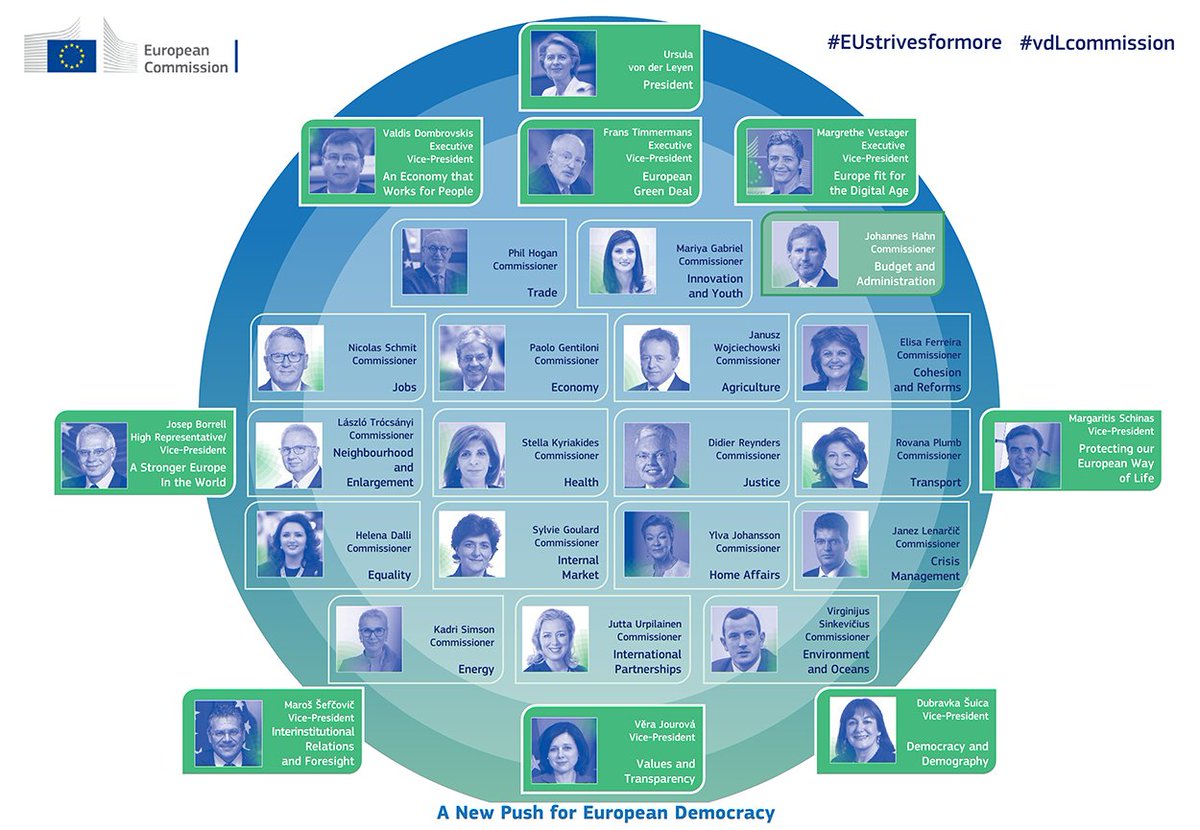
Apart from the 25 new commissioners being white, it’s clear that little will change concerning inequality and racism with EU President-elect Ursula von der Leyenwith.
The EU is such a hostile place for some minorities these days that even the mere suggestion of a little diversity causes a hostile knee-jerk reaction.
EU President-elect Ursula von der Leyen presented Tuesday her team and the new structure of the next European Commission. Apart from having no minorities on the commission, von der Leyen, raised a lot of eyebrows by nominating Margaritis Schinas of Greece as the new Commissioner for Protecting Our European Way of Life.
In a story in The Independent, states that the title suggests that immigration and cultural diversity are threats to Europe.
The fact that at this point EU President-elect von der Leyen seeks a Commission for Protecting our European Way of Life suggests that racism and social exclusion of minorities and people of color will continue to get the short end of the European stick.
Molly Scott Cato, a British Green MEP, was quoted as saying in The Independent: “This looks like the portfolio to fight back against the rise of the fascists, but only by adopting their divisive rhetoric around ‘strong borders.'”
The new nominees for commissioner are all white. Even Finland’s commissioner, Jutta Urpilainen, had a difficult time understanding almost ten years ago what cultural diversity means and who are people of color. Her (in)famous avice to immigrants: In Rome do as the Romans do. Urpilainen will be in charge of international partnerships and forging relations relations with Africa.
Dutch liberal MEP Sophie in ‘t Veld added: “The very point about the European way of life, is the freedom for individuals to chose their own way of life. We do not need a Commissioner for that, thank you very much.”
She adds: “The implication that Europeans need to be protected from external cultures is grotesque and this narrative should be rejected.”