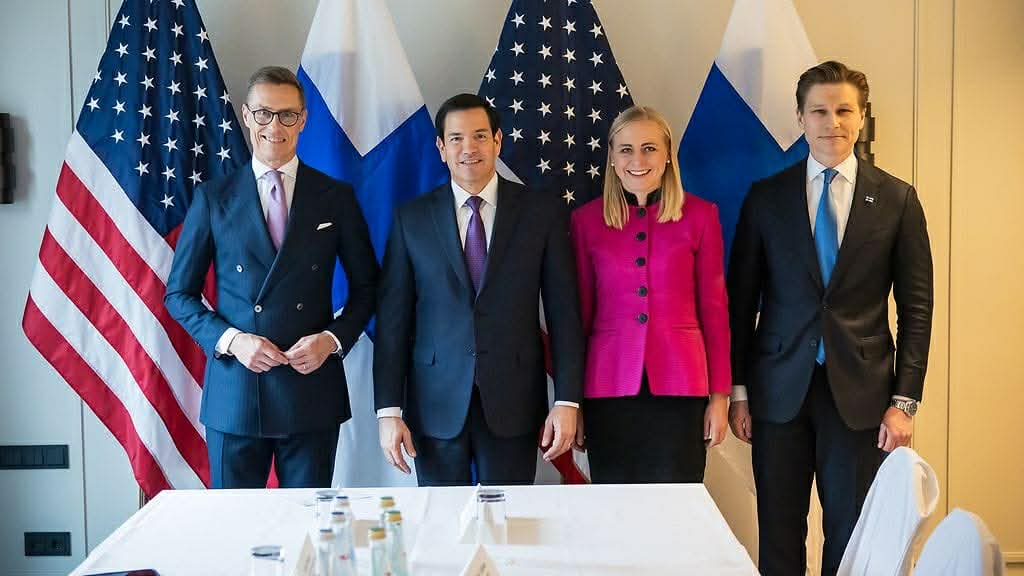
Alexander Stubb, Elina Valtonen ja Antti Häkkänen ovat Suomen valtion nimissä jatkaneet Yhdysvaltojen fasistihallinnon liehittelyä – vai stalinistiseksiko sitä pitäisi sanoa? Fasismilla ja stalinismilla ei ole juuri eroa. Selvää oli, että oppositiokin siihen puuttui, näin esim. SDP:n Tytti Tuppurainen Helsingin Sanomissa:
”Osa Yhdysvalloista kajahtaneista ja Münchenissä kuulluista viesteistä on Euroopalle hyvin outoja, osittain haitallisiakin. Näin arvioi kansanedustaja Tytti Tuppurainen (sd), kun häneltä kysytään ajatuksia ulkoministeri Marco Rubion puheesta. ”Hän kuvaili maahanmuuttoa sivilisaation rappion näkökulmasta uhkana, julisti ilmastodenialismia, fossiilipopulismia ja moitti meitä kunnianhimoisesta ilmastopolitiikastamme sekä päästöjen vähentämisestä. Tällaiset viestit ovat meille hyvin vieraita”
Marco Rubio sanoi tuossa puheessaan mm. näin:
”Haluamme liittolaisia, jotka voivat puolustaa itseään, jotka ovat ylpeitä kulttuuristaan ja perinnöstään ja jotka yhdessä meidän kanssamme ovat kyvykkäitä ja halukkaita puolustautumaan. Meillä ei ole kiinnostusta olla kohteliaita huolenpitäjiä. Me haluamme vahvan ja rohkean liittouman, joka ei pelkää ilmastonmuutosta eikä mitään muutakaan vaan muovaa omaa kohtaloaan.”
Maahanmuuttajien kulttuuri on siis kauhistus, pakolaisista ei tule pitää huolta, ilmastonmuutos on ihan huuhaa-juttu. Suomen fasistihallituksen ministeri Elina Valtonen oli ihastuksissaan: ”Ikoninen puhe”, ”kädenojennus Euroopalle”. ”hän sanoi, että yhdessä.”
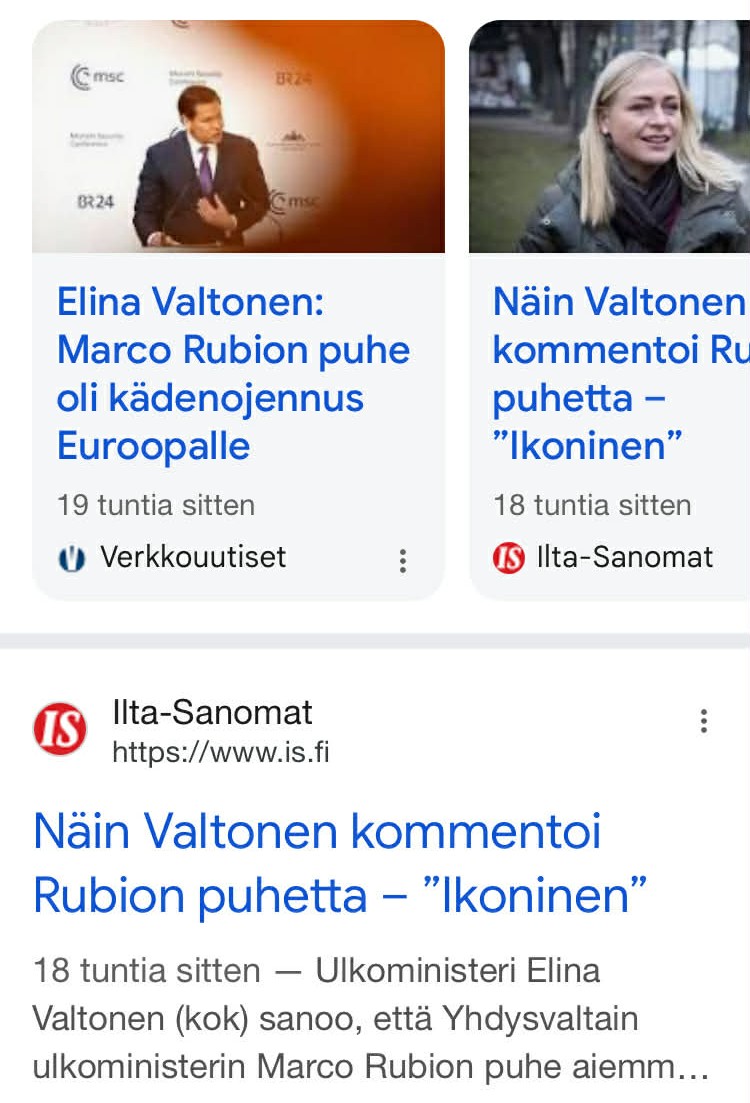
Huvittavalla tavalla tuossa tuli mukaan myös Petteri Orvon ”tehdään yhdessä” -mantra. Kaunis ajatushan se olisi, mutta Suomen muuttamiseen fasistivaltioksi ei ajatteleva ihminen halua osallistua, ei yhdessä eikä erikseen.
Ovatko kokoomuslaiset miettineet, kuinka uskollisuus Trumpille palkitaan, jos valta vaihtuu? Lasken mukaan kokoomuslaisiin myös presidentti Stubbin. Millaisen perinnön hän aikoo jättää seuraavalle, kenties ei-äärioikeistoon kuuluvalle presidentille? Onko tämä nyt sitä Suomen ulkopolitiikan pysyvää, koko eduskunnan hyväksymää linjaa?
Continue reading “Reija Härkönen: Miksi Suomen hallinto liehittelee fasistijohtajia?”