A news story on Green Party’s Vihreä Lanka asks if the wolf population of Finland has fallen to under 120 from an estimated 120-135 by Game and Fisheries Research. How many and what threat do they pose to people is part of an ongoing debate in Finland that is very similar to how some Finns see cultural diversity and immigration.
News stories about killing wolves that are a threat to inhabitants are quite common in Finland. Read whole story here.
The wolf is a protected species in the EU. Even so, poachers, like vigilanti mobs, are taking the law in their hands. One story by YLE this month suggests that one wolf pack in South Savo was probably poached by hunters.
Should we be surprised that Perussuomalaiset (PS) MP Pentti Oinonen, who staunchly opposes gay rights, wants to wipe wolves off the biodiversity map in Finland? He said that there were some 30,000 wolves ready to ”migrate” to Finland from Russia.
Comparing wild and dangerous animals to immigrants is nothing new. On a thread on Facebook with TU tennis, Ulla Pyysalo compared immigrants to animals and plants. ”Yes, transplanting animals or plants in a new environment has always ended in failure,” she wrote last year on Facebook.
Pyysalo said that immigrants are like racoon dogs. ”I heard just recently that hunters are encouraged to kill these raccoon dogs,” she writes. ”God dang it how racist and terrible [my comment is]. Eeek help! DDDD,”
Ever since the PS rose from political obscurity to become the third-largest party in parliament with 39 seats in 2011, the atmosphere for anything that strays from the perceived norm has worsened.
Any person who is against cultural diversity and gays like Oinonen must feel uncomfortable about biodiversity. Their prescription to the problem is biosameness like so-called monoculture (sic!) if we speak of society.
The adverse atmosphere against diversity and immigrants has sadly now targeted wolves.
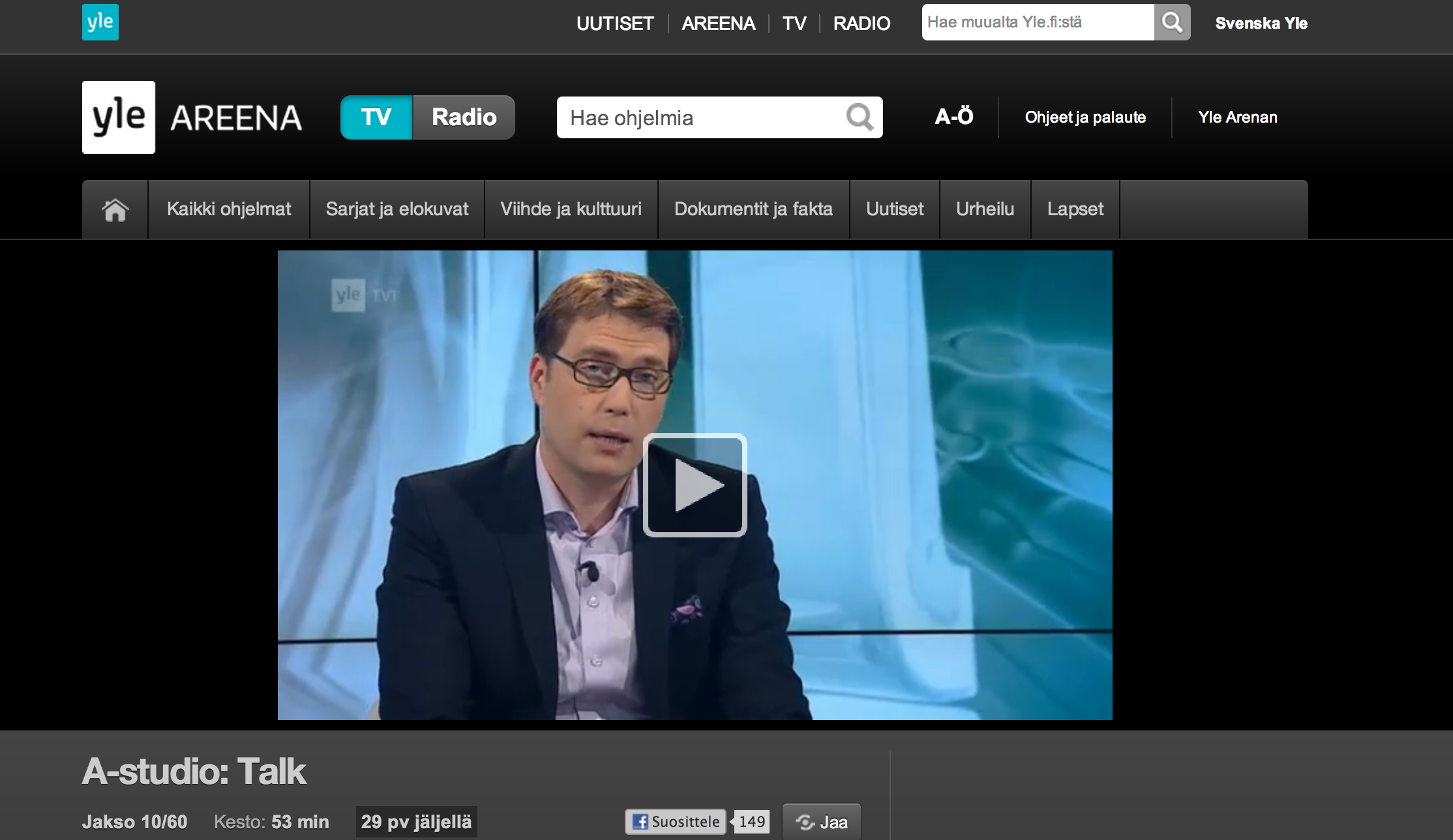
Even if Suomen Sisu president Olli Immonen and Jussi Halla-aho, both MPs of the Perussuomalaiset (PS) party, tried to assure television viewers Thursday on A-Talk that the association is neither racist nor far right, nothing could be further from the truth.
In order to keep immigrants and visible minorities disenfranchised, Suomen Sisu must come up with new arguments and sound bites to justify their intolerance.
One of the matters that Suomen Sisu does is spread stereotypes about certain immigrants. Tabloids like Ilta-Sanomat paved the way for such stereotypes in the early 1990s, when Finland’s immigrant population started to grow.
Claude M. Steele’s whistling vivaldi reveals how detrimental stereotypes can be.
The provost of Columbia University writes: “But this book offers an important qualification to this creed: that by imposing on us certain conditions of life, our social identities can strongly affect things as important as our performances in the classroom and on standardized tests, our memory capacity, our athletic performance, the pressure we feel to prove ourselves, even the comfort level we have with people of different groups – all things we typically think of as being determined by individual talents, motivations, and preferences.”
If what Steele claims holds any truth, the spreading of generalizations and stereotypes about certain ethnic groups in Finland can be devastating.
The A-Talk show made one matter clear: Suomen Sisu’s new synonym for racism is its loathing for cultural diversity. Instead of attacking all immigrants, they are now pointing their guns at Muslims and non-white people from outside the EU.
As Migrant Tales wrote on Friday, Immonen’s and Halla-aho’s opposition to cultural diversity and their support for assimilation (one-way integration) was near-constantly revealed on the program while denying at the same time that Suomen Sisu wasn’t a racist and far right association.
The new Suomen Sisu president couldn’t have put his opposition to cultural diversity clearer on A-Talk: “Is there anything wrong [that an association] says that different [ethnic] groups and cultures shouldn’t mix, which I interpret as a multicultural society and what we don’t want to have in Finland?”
Even if one natural symptom of denial is convenient memory loss, Immonen disagreed that Suomen Sisu was against people of different ethnicities marrying and having children. Just like the Ku Klux Klan and the U.S. American Party, Immonen, however, believes that it is only a question of time when Christian Europe and Muslims will be at war.
He was quoted as saying right after the April 2011 election on Iltalehti: “Due to the present trend of multiculturalism, I believe we will see in the future of Europe a number of terrorist strikes and civil war in which the other warring adversary will be notably the representatives of Islam.”
It’s pretty clear what will happen in Finland if the PS’ chairman, Timo Soini, ever becomes the prime minister of Finland. It will mean greater clout for Suomen Sisu to spread its far right ideology and policies, which will not only polarize society but even threaten to put in cold storage our noble Nordic democracy and values such as social equality. Racism, xenophobia and intolerance in general will become more normal as our society strays from our present democratic values.
Halla-aho said that Suomen Sisu, which was founded in 1998, has played a crucial role in fostering anti-immigration sentiment (he calls it critiquing immigration) in Finland through platforms like Hommaforum and the PS.
Even so, there is nothing Finnish about Suomen Sisu’s ideology, which is copied from other far right groups in Europe. The only difference is that it is put in a Finnish context.
How different is the neo-Nazi party of Greece, Golden Dawn, from Suomen Sisu? One of its MPs Illias Panagiotaros claims in the video below: “[Immigrants] having a very nice life with extra good food, heating, air-conditioned [living quarters] and at the same time Greeks, millions of Greeks, don’t have foot to eat. They don’t have a place to stay, they don’t have anything.”
As far as we know, immigrants in Greece live in overcrowded apartments and detention centers. Many fear walking in public for fear of being attacked by far right mobs and the police.
Considering that Greece’s population is about 11 million, Panagiotaros claim that “millions of Greeks” are without food while the immigrants live a plush life is a gross exaggeration to put it lighly. It is, however, a common argument used by far right groups. It is used by Suomen Sisu and politicians like PS MP James Hirvisaari, who claims without proof that immigrants get more social-welfare benefits than white Finns.
If Finland lost its nerve by making the PS the biggest party and giving Suomen Sisu more power, it would be a slippery slope that would lead us down a slippery slope called Hungary, gripped by the same xenophobia that Suomen Sisu spreads in Finland.
YLE A-Studio had an interesting debate with Perussuomalaisiet (PS) MPs Olli Immonen, Jussi Halla-aho, Left Alliance Helsinki city councilman Dan Koivulaakso and Swedish-language daily HBL journalist Marianne Lydén. Despite assurances by Immonen, Suomen Sisu’s new president, that the extremist anti-immigration association is against racism, they should their same colors by reinforcing over and over again their loathing for cultural diversity.
No matter how much Immonen wants to “renew” Suomen Sisu, it will always be an association that has its roots in racism, which they won’t admit, but in their strong opposition to cultural diversity, which he admitted a number of times on the show. In plain English this means demonizing immigrants and visible immigrants.
Far right researcher Jussi Jalonen was interviewed at the start of the program. He made it very clear that Suomen Sisu is an extremist association that is no different from other European extremist groups.
Such groups, like Suomen Sisu, point out that certain ethnic groups are incompatible with our culture and therefore should not be allowed to live in Western Europe. It is an old argument used over and over again by those who oppose immigration and cultural diversity.
While few believe that Suomen Sisu is going to champion for more social equality in Finland, their agenda and their new program will be based on undermining cultural diversity and especially limiting immigration from outside Europe. This reinforces the association’s stand on diversity. What they are saying is that few “dark” people should move to Finland. They are, however, willing to accept white European immigrants because they believe they can integrate faster into our society.
The way that Halla-aho and Immonen spoke about how cultures must not mix (multiculturalism) hinges on myths. People have always moved and mixed with people from other groups.
When I hear what people like Immonen and Halla-aho say about diversity, their deep hatred and disregard shows for who I am and how I identify with Finland. According to them, my father, an Argentinean, should have never married my mother. My Jewish ancestors should have stayed where they came from instead of come to Finland in 1799.
In their Nazi- or far right spirited world, we are the so-called Rheinland bastards.
Finland has tens of thousands of so-called multicultural Finns that Suomen Sisu would like to wipe off the map.
Suomen Sisu’s ideology in a Finnish context is very much like the Ku Klux Klan’s and that of the American Nazi Party. They have the same opinions about cultural diversity as the extremist association headed by Immonen. One of the people Suomen Sisu recommends reading is by by Nazi war criminal Alfred Rosenberg.
Immonen and Halla-aho believe that the Garden of Eden was actually in Finland. According to them, people evolved and never mixed with anyone outside their group.
In their minds there is no such thing as black Finns or Finns from other ethnic and cultural backgrounds.
A recent example of how racism and intolerance spread roots in Finland is Timo Soini’s comments on PS MP Olli Immonen’s election as chairman of Suomen Sisu.
Soini did no condemn (why would he?) Immonen’s election but compared the extremist anti-immigration association to a harmless hunting, farming or youth association.
Not only is the PS chairman and his followers responsible for fueling more intolerance in Finland by playing down or denying such a social ill completely, the silence of the big parties is equally worrying.
One researcher in the ENAR study, Mutuma Ruteere, exposes what is not only happening throughout Europe but in Finland. He said that the problem is not only the discourse coming from far right parties, “but in the fact that established mainstream parties do not reject such discourses and even often support them.”
If we look at the most recent polls, the National Coalition Party and the Social Democrats are paying a high political price, together with the Center Party, for flirting with an anti-EU, anti-immigration and especially anti-Islam party.
The silence of the largest parties, coupled with the opportunity to capitalize on anti-immigration and anti-EU sentiment in Finland by the PS, is what has gone terribly wrong with this country.
The more Finland denies collectively that it doesn’t have an issue with intolerance, the more it will continue to feed such a social ill.
We need the courage to challenge and ghostbust those myths that promote intolerance. There you will find the root of our prejudices and hatred.
One of these took place in the last century when Finland did everything possible to stop immigrants from moving to this country. As we lost hundreds of thousands of able workers to Sweden, we covered up for our mistakes with the help of ethnic myths about ourselves. In the process, we undermined diversity and fueled nationalism.
The ENAR study expresses concern over the rise of uninhibited forms of racism that have emerged throughout the EU. A good example is using freedom of expression or claiming how whites are victims of racism as justifications for promoting the status quo of intolerance.
Migrant Tales has written about this on many occasions. The aim of those who are against diversity is to point out how different a group is, which helps justify their racism and feelings of hostility for that group.
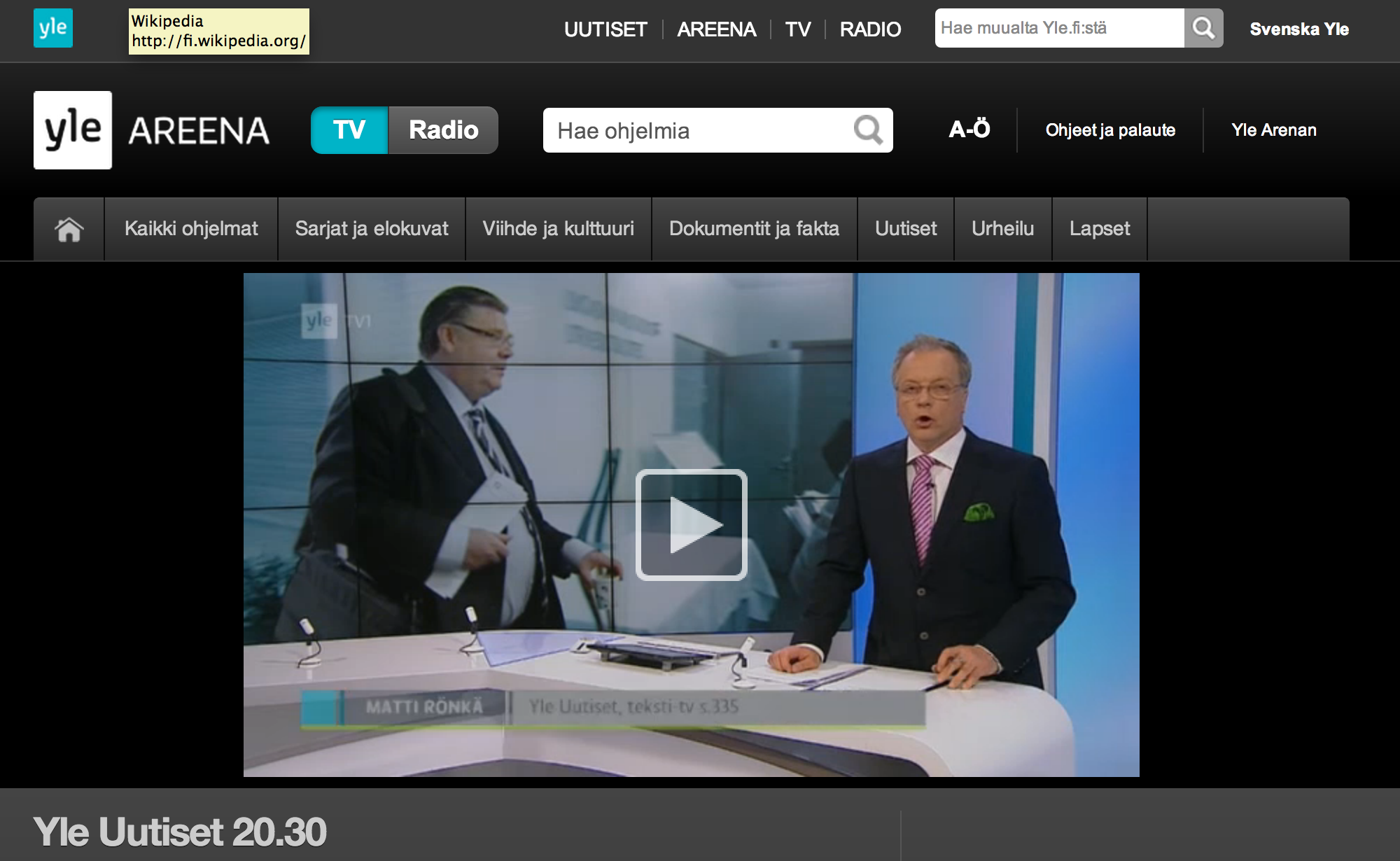
Perussuomalaiset (PS) chairman Timo Soini was asked Tuesday by YLE what he thought about PS MP Olli Immonen being elected as the new chairman of Suomen Sisu, an extremist anti-immigration association. Soini offered his usual cock-and-bull answer by comparing Suomen Sisu to a harmless hunting, farming or youth association.
It appears that YLE has learned a thing or two from BBC’s HARDtalk, when Soini was put on the hot seat about racism in his party. YLE understood the wider context of the story and correctly pointed out that Soini had no objection to one of his MPs being chairman of an extremist association.
Another PS MP, James Hirvisaari, said last month that he was pressured to resign from Suomen Sisu.
Suomen Sisu has been called a lot of things in the past, from Nazi-spirited to extremist by the Finnish Security Intelligence Service (Supo). The group still lives in the murky world of eugenics, a disgraced pseudo-science whose aim was to create a master white race by wiping out other ones.
Suomen Sisu openly supports “racial hygiene” and discourages white Finns from marrying foreigners.
Yle spoke to Immonen, who admitted last year never visiting the very neighborhoods that he claims are becoming ghettos in Eastern Helsinki.
“For example, we can see small examples of neighborhoods where certain national groups want to live and marginalize themselves from the rest of society,” he said. “This type of development must be stopped.”
Immonen’s comment about ghettos mirrors his negative views of cultural diversity, which is the main core of his anti-immigration stance. According to him, immigrants don’t have a right to live in the same neighborhood.
The PS MP, who is a security guard by profession, forgets that the most normal thing in the world for immigrants is to live together. That’s how many Finnish immigrants lived when they migrated to the Americas. Some even founded colonies in countries like Argentina and lived near-isolated from the outside world.
Let’s not expect anything but the usual denials from Soini concerning Immonen. Why? Because he’s leader of a party that has given a political voice to a record number of racists, Islamophobes, immigrantphobes, isolationists, anti-EU supporters, male chauvinists, homophobes, neo-Nazis and Holocaust deniers.
Asking Soini to condemn Immonen for being a member of a Nazi-spirited association is like asking two foxes starved for many days to behave inside a chicken coop.
Finland’s largest daily Helsingin Sanomat asked twenty-three racism researchers if they had been harassed and received death threats. Sixteen researchers answered the questionnaire of which 14 responded affirmatively that they had received hate mail.
The first time I received death threats (two in one day) was in surprisingly in Finland in the early 1990s, when I wrote about the treatment that Somalis received at a refugee center in Mikkeli.
The death threats and harassment haven’t stopped since then but neither have I been intimidated by them to stop writing.
Some of anonymous mail I have received is quite amusing. One older man gave me a lesson on Finnish history and claimed that he would end his subscription to Savon Sanomat, where my column appeared.
The headline of the column was Maahanmuutto ei ole uhka, or Immigration isn’t a threat.
The letter sent to me had no signature or return address.
If a person has such strong feelings about a topic like immigration, why doesn’t he defend them publicly with his name?
This blog entry is dedicated to the late Donald Fields, Helsinki correspondent of the BBC, The Guardian and Politiken to 1988.
I read with mixed thoughts about the death of Max Jakobson (1923-2013), a diplomat who shaped Finland’s policy of neutrality during the cold war. While I am certain that he was an able diplomat, he was no friend of dissension or anyone who dared to question Helsinki’s sacrosanct foreign policy with Moscow.
He didn’t hide his disdain for foreign correspondents as can be seen in the summer 1980 issue of Foreign Affairs: “…Finland is forever at the mercy of the itinerant columnist who after lunch and cocktails in Helsinki is ready to pronounce himself upon the fate of the Finnish people. A person visiting, say, London for the first time, who does not know English and has only a vague notion of the significance of Dunkirk or the role of Winston Churchill, would hardly be regarded as qualified to comment on the British scene today.”
Did cold war Finland have to treat the media with such contempt and overbearing censorship?
Future historians will shed light on that question.
Helsingin Sanomat writes about the death of Max Jakobson on Monday’s edition.
In the 1980s, people like Pekka Karhuvaara, Lasse Lehtinen, Matti Kohva, Ralf Friberg and others made sure that what you wrote about Helsinki-Moscow relations was to their liking and toed the official foreign policy line.
The foreign ministry together with Finnfacts did everything possible to brighten Finland’s name by inviting foreign journalists to the country. They would pay their trips, stay, wine and dine them to win them over. Many, I’m certain, became good friends of this country after such freebies.
My first attempt to interview Jakobson was in 1989 shortly after I started to work for the Financial Times in Helsinki. First he accepted the interview but later canceled it.
I suspect the reason why Jakobson canceled the interview was because he had learned about my stand against the Soviet Union, Finnish foreign policy and especially those Soviet asylum seekers who were deported back to the former U.S.S.R.
I got my second chance when Christian Tyler of the Financial Times came to Finland to do a special report on the eventual demise of the Soviet Union and its impact on Finland. Tyler had an appointment with Jakobson and I tagged along.
This is what we wrote in The last wall in Europe, published in January 1991:
“Even Max Jakobson, the distinguished former diplomat and most eloquent apologist for Finland’s extreme post-war neutrality, agrees that the government has been traditionally inhospitable to immigrants and slow to respond to the turmoil around its borders. “The period of stagnation was not bad for Finland,” he said but he added: “There is nothing wrong with stagnation if you can do it on a high income level as we did.” Finland had no obligation to Soviet citizens, but rather an opportunity. “Our obligation is to look after our own interests.”
The foreign ministry wasn’t naturally happy with what we wrote. Tyler told me that he published in a separate story an interview with Jakobson, which was more favarable.
While the cold war is still too close to us to study objectively, I suspect that future researchers and historians will look at this period with mixed feelings. Even if we were able to build a successful Nordic welfare state after the armistice with Moscow in 1944, we were near-isolated form the world. Even if we lost hundreds of thousands of able workers who migrated to Sweden after World War 2, we kept our borders effectively closed to immigrants and the outside world.
No matter how much you tried to accept the foreign ministry’s and Jakobson’s view of Finland’s neutrality, it always boiled down to censorship and even greater doses of self-censorship. Thanks to Finland’s near-isolation, foreign investment was almost negligible thanks to the Restricting Act of 1939 (law 219/1939) and it was not until 1983, 65 years after independence, that Finland got its first Aliens Act.
What is the legacy that Jakobson and Finland’s cold war foreign policy left on Finland?
While both kept Finland from becoming a Warsaw Pact member, it came with a high price. The cost can be seen today in our attitudes and suspicion of foreigners, especially of Russians.
If we still believe that we are at war with Russia, how can we be an open society that aims to integrate newcomers?
If there is anything holding us back, it is the cold war legacy.
Pia Growchoski asks an important question on her recent blog entry on Migrant Tales: Why is the national media so interested in far right groups and their resentful rhetoric? Why do we give space to Perussuomalaiset (PS) chairman Timo Soini’s blatant incompetence on our Facebook pages? Are we in denial about what these groups represent or just being entertained by them?
In many respects, far right politicians are like show wrestlers. We know about their antics but we don’t mind being fooled.
Soini is one politician who plays the show political game very well. He plays it so well that it took a year and ten months after the PS’ historic election victory of 2011 to be grilled on HARDtalk about racism in his party.
How many in Finland have done the same?
After some major adjustments and training, lots of far right politicians could make it as show wrestlers and even become as popular as Ric Flair. Source: Best of Ric Flair going nuts.
A good example of the public’s fascination with the far right in Finland is the media coverage that PS MP Olli Immonen got as the new president of the extremist Suomen Sisu association.
Some of the most outrageous matters that Immonen, who is a security guard by profession, has claimed is an inevitable so-called clash of cultures between “Christian” and “Muslim” Europe.
Sensible people understand that this is a lot of hogwash like 99.99% of what show wrestlers rant theatrically in front of television cameras.
Immonen writes on the Suomen Sisu website that it is a good matter that anti-immigration groups are not taking the law in their hands but organizing legally.
Then the show wrestler appears like from a jack-in-the-box bouncing from side to side: “I personally condemn racism and I don’t accept that any person is marginalized or favored in working life based of his ethnic background,” he continues. “Similarly, I condemn all forms of political violence be it from persons belonging to the left, center or right.”
Why would Immonen state such things?
If you want to see what people really think and represent, see what they deny.
Irrespective of the political theatrics, it would be a mistake to underestimate the influence and potential harm these types of groups can inflict on our society. That is why we must be vigilant and ready to confront and defeat them wherever they me be.
Today these far right groups are active in countries like Greece and Hungary.
“My friends, love is better than anger. Hope is better than fear. Optimism is better than despair. So let us be loving, hopeful and optimistic. And we’ll change the world.”
These were the final words written by the late Canadian leader of the opposition, Jack Layton, just hours before his untimely death of cancer. I reflect upon these words with a desire in my heart to challenge the current status quo in Finland. While the words were part of a message towards all Canadians to carry us through period of darkness with the untimely passing of one of our leaders; these words have enormous relevance.
I wish to question what appears to be, to me at least, too much coverage of the far right, racism, the perussuomalaiset. I question the tactics from many liberally minded people that discussions I have had always tend to fall down the path of concern for what the äärioikeus, or far right, said; many are rightfully shocked, disgusted, and concerned at the long-term implications of their dogma, their horrific ideas. Rather than despair in such statements, I feel we must look with optimism towards alternatives. To allow us to be channels wherein people with the capacity to change, with a vision for inclusion can get a voice. The more I read of äärioikeus, the more I realize how silly it all is. These individuals promote sensational ideas, which I believe will never be manifested, but can be framed in such a way that will shock and awe the public and sell newspapers. The more they are covered and discuss in the media, the more we are at risk of having them get the promotion we want. While criticizing their views, we must take care to provide a reasoned answer that defines out values and ideals with the means of seeing them through.
My plea in writing this is that we need to hear more visionary voices; we need to see more alternatives. Now is the time to act, now is the time to hope, and be optimistic. There are so many wonderful people in this country with great messages of diversity, great potential for change; why do we let a character like Soini win the walls of our facebook pages with his blatant incompetence, and subtle racism in a BBC interview. In the last presidential election an openly homosexual man, with a foreign partner came to the final round. This wouldn’t be possible without some desire of the people in this country accepting and supporting the very things the äärioikeus hopes to remove. I am becoming more inclined not let the äärioikeus use me as a channel for their voices, as I believe such spaces are better used by alternatives, reasoned voices that can offer real solutions rather than fear. I believe they have fed us with enough proof that they are no longer worth our time, our anger. I believe that we can deal with this problem; I believe that we can lead by example, we can provide ideas, we can solve problems, and we can do better.
Don’t get me wrong, covering racism is important, and some may, still, be unaware of the extent of it all; but we also need to reflect on giving more space to voices that have a vision for an inclusive, dynamic, progressive Finland. At times I worry that all these ideological extremes victimize immigrants. While focusing on all that frustrates us, all the problems, we also need to take time and focus on all that we can and will change. Love is better than anger.
The police have apprehended the suspect who violently attacked on Tuesday a black train cleaner working for state railways, VR, reports Kainuun Sanomat. The suspect, who is a foreigner, admitted to the police of attacking the VR worker, who has returned home after being operated twice in hospital.
Just because a person is a foreigner doesn’t mean he cannot commit a hate crime. See what is happening in countries like Hungary, Slovakia and Greece, where racism and xenophobia have scapegoated visible immigrants, the Roma and Jews.
Moreover, the mere thought that people act like “cultural zombies” reveals your ignorance and prejudices, which are kept alive thanks to generalizations made of other groups.
Is the police treating what happened in Kajani as a hate crime? We still don’t know but they should if the victim was attacked because of his ethnic background.
Some Finns, who clump all foreigners in one group, believe that immigrants cannot house racist thoughts about other groups. This assertion could not be further from the truth. The same type of intolerance we find in some sectors of white Finnish society can be uncovered among some foreigners, who see themselves as white but may loathe blacks.
Our message to these people should be the same: racism, prejudice and intolerance are unacceptable in our society. Cross the line and you will have to deal with the law.
When we address a social ill like intolerance, the message must go to everyone in our society. Our aim must be zero tolerance.

 DDDD,”