
Month: April 2023
Muistatko vuoden 2019 “anna hukkua lista?” Samat poliitikot, jotka toivoivat kuolemaan turvapaikanhakijalle Välimerellä ovat yhä politiikassa
TÄMÄ JUTTU ON PÄIVITETTY
Onkin vaikeaa kuvitella moraalia ilman empatiaa.
Alma Median EU vaalikone vuodelta 2019 on paljastunut, että perussuomalaisten ja kokoomuslaisten ehdokkaat ovat kaikista innokkaimpia hukuttamaan maahanmuuttajia Välimereen. Tähän vaalikonen kysymykseen neutraali vastaus on vähintään ongelmallinen. Tarkoittavatko, että olevat hiljaa ja katsovat sormien läpi kun ihmiset hukkuvat?
Vaalikonen 13/20 kysymys: “EU:n velvollisuus on pelastaa kaikki hukkumisriskillä Välimeren ylittävät Eurooppaan pyrkivät siirtolaiset.”
Keitä ovat nämä (85/234) EU ehdokkaat, jotka eivät välittää, jos ihminen hukkuu Välimereen?
Katso tästä mitä pienpuoluet ajattelevat?
Tässä on kirjoitus, joka kertoo tosi tarina ihmisestä, joka oli lähellä kuolemaa Välimerellä.


Lapsia hukkuu myös Välimerellä. Vasemmalla on Alan Kurdi ja oikealla pikku tyttö. Yheensä 2014-2019 aikana on kuolut yhteensä 18 328 ihmistä (2019 410, 2018 2 299, 2017 3 139, 2016 5 143, 2015 5 054, 2014 3 283) Välimerellä. Tässä linkki.

Lähde: Iltalehti
Tässä on Migrant Talesin “anna hukkua” häpeälista. Keitä ovat yhä politiikassa?
Perussuomalaiset
Täysin eri mieltä (anna hukkua vaan, se on heidän ongelma)

SIMO GRÖNROOS (entinen puoluesihteeri)
TEUVO HAKKARAINEN (euroedustaja)
ILPO HELTOMOINEN


LAURA HUHTASAARI (kansanedustaja)
ASSERI KINNUNEN
LAURA KORPINEN
OLLI KOTRO

MAURI PELTOKANGAS (kansanedustaja)
MIKA RAATIKAINEN
MIRA NIEMINEN
SAMULI SIBAKOFF

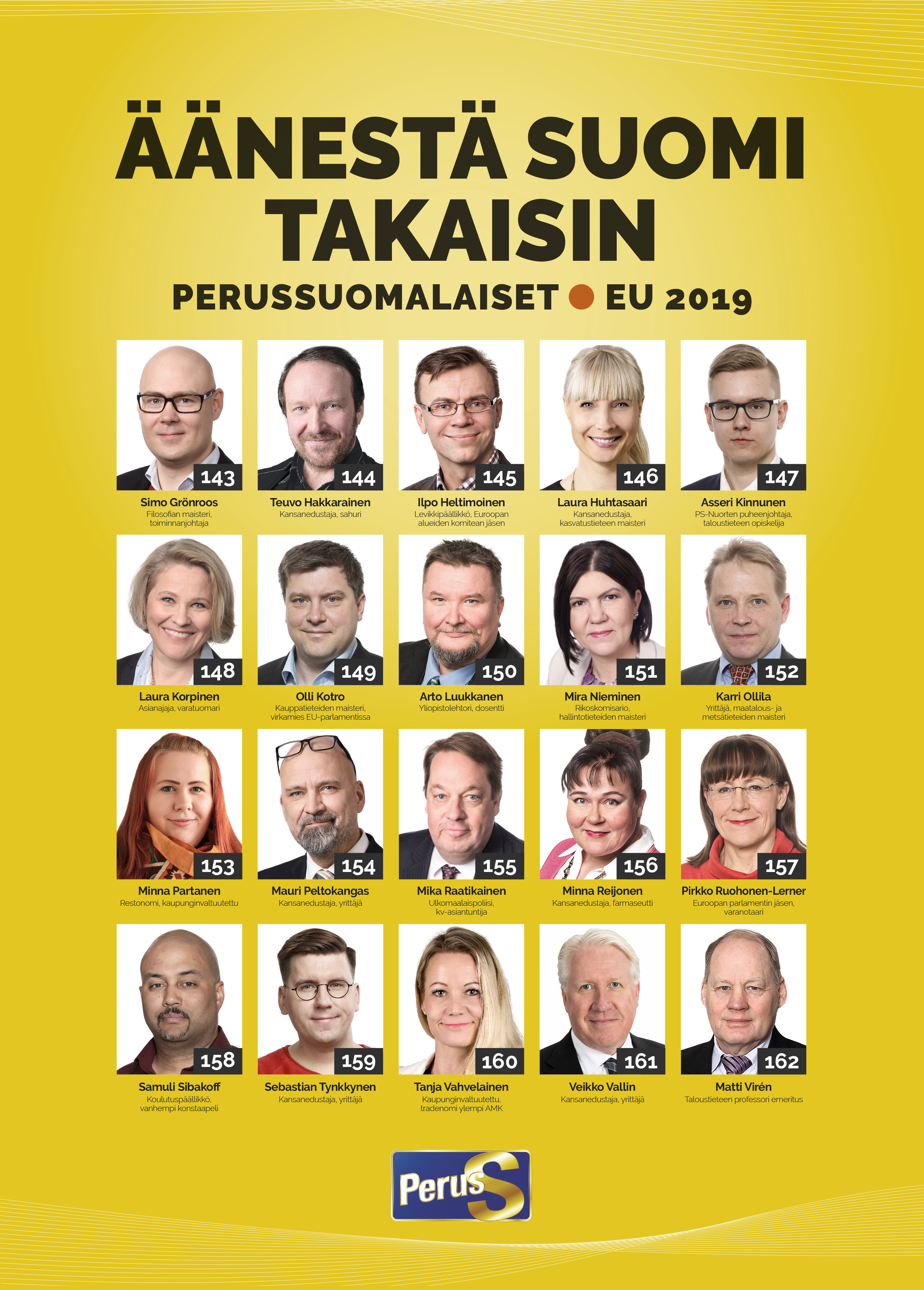
SEBASTIAN TYNKKYNEN (kansanedustaja)
TANJA VAHVELAINEN
MATTI VIREN
Continue reading “Muistatko vuoden 2019 “anna hukkua lista?” Samat poliitikot, jotka toivoivat kuolemaan turvapaikanhakijalle Välimerellä ovat yhä politiikassa”
Finland’s new government: No evil can last 100 years – but it can, possibly, last for four years
Finland’s next government will likely comprise of four parties: National Coalition Party (Kokoomus), Perussuomalaiset (PS)*, Swedish People’s Party, and Christian Democrats, according to Helsingin Sanomat. Even if the makeup of the government was pretty clear at the onset, many questions remain.
One is Finland’s chronic labor shortage and PS opposition to asylum seekers and labor migrants. Despite differences with the PS on labor migrants, Prime Minister-elect Petteri Orpo is more focused on having a right-wing government than sharing power with the Social Democrats.
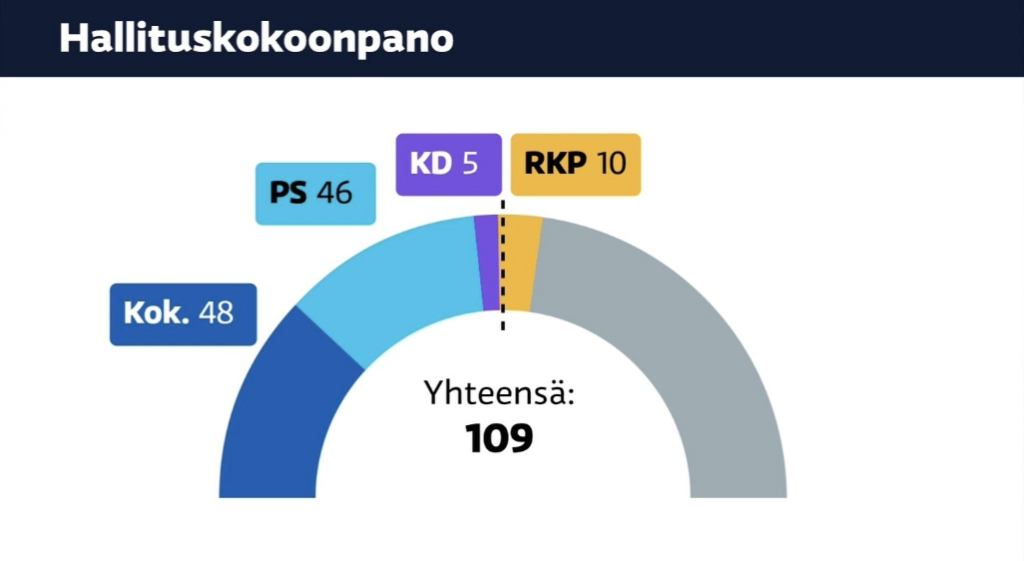
The new government will have a majority (109 seats) in the 200-seat parliament. Source: Yle.
While we can criticize Kokoomus for giving a political platform for the PS to spread its populist rhetoric, one shameful member of the new government is the Swedish People’s Party.
While it is fair to say that the Swedish People’s Party is divided about joining the new government with the PS, it’s clear that the new coalition will be highly flammable and unpredictable.
Those that stand to lose the most with the new government’s austerity policies are the most vulnerable sectors of society: the unemployed, low-wage workers, and minorities like people of color. Even so, the biggest losers will be asylum seekers from outside the EU knocking at our door for shelter.
Continue reading “Finland’s new government: No evil can last 100 years – but it can, possibly, last for four years”Suomen mediaseurantakollektiivi:* Lehdistön kiinnostus nuorisojengeihiin on lopahtanut vaalien jälkeen
LEHDISTÖTIEDOTE
Kuten oikein ennustimme, tiedotusvälineiden ja sosiaalisen median kiinnostus Suomen nuorisojengiongelmaa kohtaan on vähentynyt eduskuntavaalien jälkeen, Meltwaterin haun mukaan. Kaksikymmentäkolme päivää jälkeen ja ennen 2. huhtikuuta pidettyjä vaaleja, juttujen määrää laski 70,5 prosenttia 44 jutusta 13:een. Merkittävin pudotus nähtiin sosiaalisessa mediassa, jossa postausten määrä putosi 87,4 prosentilla, 2 560 postauksesta 314 postaukseen.

Nämä luvut paljastavat sen, mitä epäilimmekin: ”nuorisojengikysymys” on poliittinen juoni, jota käyttävät erityisesti perussuomalaisten (PS) kaltaiset puolueet ja jota poliisi ja media levittävät. Jokaisella näistä intresseistä on jotain hyötyä aiheesta. Media saa lisää lukijoita ja mainostajia, poliisi saa lisää varoja rikollisuuden torjuntaan ja poliitikot houkuttelevat äänestäjiä vaaleihiin.
Jokaisissa eduskuntavaaleissa vuodesta 2011 lähtien, erityisesti PS:n on hyödäntynyt maahanmuuttajarikollisuusteemaa houkutellakseen äänestäjiä. ”Nuorisojengit”-teema juontaa juurensa Ruotsin eduskuntavaaleihin, joissa ruotsidemokraatit ja moderaatit hyödynsivät teemaa menestyksekkäästi ja voittivat sosiaalidemokraatit vaalissa.
Yksi ”nuorisojengijutun” ongelmista on se, että poliisin mukaan nuorisojoukkioihin kuuluu Suomessa arviolta 100–200 nuorta. Suomen tilannetta ei voi verrata siihen, mitä tapahtuu Ruotsissa, jossa yli 60 ihmistä kuoli viime vuonna jengiväkivaltaan.
Toinen asia, jonka ongelmasta käytävä keskustelu paljastaa, on poliisin tai median kyseenalainen
tietämättömyys siitä, miten maahanmuuttovastaiset puolueet levittävät sanomaansa, mutta että ne ovat osa maan rasismiongelmaa.
Asmaa, suomalaissyntyinen värillinen henkilö, kertoi, miksi hän ei lue suomalaisia sanomalehtiä:. ”Koen, että ne kuormittavat erittäin paljon, kun niitä lukee. Jatkuvasti ihmisiä, jotka näyttävät minulta, mustamaalataan.”
Suomen mediamonitorointikollektiivi on valmis tekemään yhteistyötä kaikkien niiden kanssa, jotka haluavat rakentaa parempaa Suomea, johon kaikki taustoista riippumatta kuuluvat.
Lisää tieto antaa
Enrique Tessieri
+358 40 8400773
*Suomen mediaseurantakollektiivi (Smk) pyrkii edistämään suomalaisten tiedotusvälineiden tasapuolista ja täsmällistä raportointia aliedustetuista kulttuurisista, rodullisista, etnisistä ja uskonnollisista ryhmistä. Kulttuurisen monimuotoisuuden kasvaessa Suomessa media muokkaa yhä voimakkaammin yleistä mielipidettä ja asenteita vähemmistöjä kohtaan.
Lue meidän raportti katujengistä ja vartijaskandaalista tässä.
Elections are over in Finland – media and social media interest in “youth gangs” nosedives
As Migrant Tales correctly predicted, interest in the so-called “youth gang” problem has tanked in the media and social media after the parliamentary election. Twenty-three days after and before the April 2 election, news on the topic by five media outlets (Helsingin Sanomat, Yle, MTV, Iltalehti, and Ilta-Sanomat) plummeted by 54.5% to five stories from 11, according to a Meltwater search. The most significant drop was seen on social media, diving by 87.4% to 314 posts from 2.56k.
The fall was even more pronounced for all media, sinking by 70.5% to 13 stories from 44 stories.
What do these figures tell us about the fake and exaggerated “youth gang” topic spread by the Islamophobic Perussuomalaiset and its National Coalition Party ally? That was a political stunt to attract voters with the help of fear-mongering. The media (more traffic), the police (more funds to fight crime), and politicians (get voters) all profited from the topic.
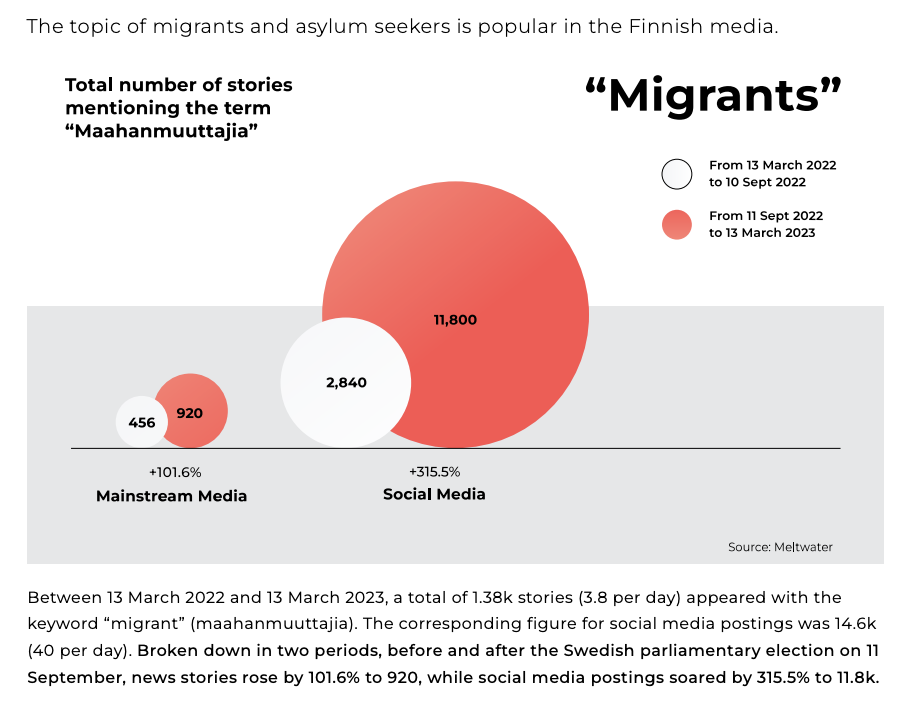
Source: Finnish Media Coverage of “Youth Gangs” and the Security Guards Scandal 2022-2023
Continue reading “Elections are over in Finland – media and social media interest in “youth gangs” nosedives”Nordic region’s lurch to the far right
The problem with xenophobic parties in the Nordic region is that all promote social exclusion and more social exclusion.
If the elections in Sweden weren’t a preview of the political path of the Nordic region, the April elections in Finland confirmed it. In both countries, parties that base their support on suspicion of minorities and migrants fared well.
Apart from such a recipe for election success in Sweden and Finland, the Sweden Democrats, a party with neo-Nazi roots, and the Perussuomalaiset (PS)* were helped and given political legitimacy by a mainstream conservative party: the Moderates and National Coalition Party (Kokoomus).
For me, the rise of parties whose message is maintaining white-Nordic privilege should not surprise anyone. The exceptionalist view that the Nordics are home of social equality and other noble values is a wise tale. The question a serious student should ask is who enjoys social equality.
If we were to look at how anti-immigration and anti-diversity views take root in the Nordic region, Denmark offers us a case in point.

National Coalition Party head Petteri Orpo and PS’ Riikka Purra in the background. Nordic mainstream parties like Kokoomus have enabled and normalized anti-immigration parties like the PS.
At the beginning of this century, we saw the rise of the staunchly Islamophobic Danish People’s Party (DPP), which influenced politics so that the country turned into one of the most hostile countries for Muslims in the EU.
The DDP, like the Sweden Democrats, could eat and have their racist cakes simultaneously through minority governments.
But in 2019, the Social Democrats, under the leadership of Mette Frederiksen scored a huge victory, with the DPP losing 21 seats. What was the lesson learned? If traditional parties use the same anti-immigration rhetoric as populist parties, they can win elections.
The Danish example suggests that if Sweden and Finland want to deflate the popularity of their Islamophobic parties, they should follow what the Social Democrats did in Denmark.
The other opinion, hoped by some, is to allow the PS to form a government and see how well they come through with their promises. It may mean a nosedive in support.
Polish human rights lawyer Eliza Ruynowski warned Finns in an interview with the Finnish League of Human Rights. “I would urge every Finn to question simple answers to difficult questions. Be wary of those who claim to solve the problem by blaming a group of people – whether it is a minority or those with different political ideas.”
Recently at an Islamophobia conference in Ankara, Turkey, I asked the crowd how a country that won for a sixth consecutive time the title of the happiest country on Earth may have such a big racist party.
Silence responded to my question.
The rise of hostile political parties and public discourse against minorities and migrants reveals how Nordic countries have failed to create social equality.

What does not kill you makes you stronger
Some may have noticed that Migrant Tales has been for almost two weeks due to a barrage of long and sustained hacking that corrupted the database. Fortunately, and thanks to Jarkko Hakanen’s expertise, Migrant Tales is now well-guarded against future attacks.
Hackers are like killers, who try to silence you.
They can’t and never will.

Those who have followed Migrant Tales know that we have had hacker problems for several years. However, none of them were as bad as the last one.
We will not go away and continue to publish and be that voice for those whose views and situation are understood poorly and heard faintly by the media, politicians, and the public.
Migrant Tales: down but not out
Migrant Tales is a target of hostile hackers who disagree with our views. The last attack was the worst, forcing the site to shut down for a week. We expect to have everything working normally this week.
While these attacks aim to shut us up, they only make us more determined and prove that our fight is right.

Finland’s next government will be…
Forming a coalition government will be a challenge for Petteri Orpo’s National Coalition Party (Kokoomus). Two options are in the race: Kokoomus (48 seats) + Perussuoalaiset (PS)* (46) + Christian Democrats (5) + Swedish People’s Party (10), with a total of 109 seats. The other option is Kokoomus + Social Democrats (43) + Christian Democrats + Swedish People’s Party, totaling 106 seats.
Considering how much the PS has insulted and burned bridges, it is a sweet irony that the fate of the radical-right party, whether it is in government or not, rests with the Swedish People’s Party.
The PS has attacked the Swedish People’s Party on any occasion. In 2015, the PS pushed them into the opposition, which they did not want as a partner. Throughout the last decade, the PS has tried to weaken the role of Swedish at schools and civil service jobs.
If we are fair, the PS is the antithesis of the Swedish People’s Party in almost everything: Finland’s role in the EU, labor migration, and climate change, to name a few.
Swedish People’s Party MP Eva Biaudet was especially critical of her party forming a government with the PS.
“They do not support the Paris Climate Agreement, development aid, international human rights treaties, the EU, or the strict rule of law that body. it would be pretty reckless if the Swedish People’s Party made it possible for Finland to go in that direction,” she was quoted as saying in Helsingin Sanomat.
What Biaudet said is true. If we don’t watch out, we will end up sacrificing. our democracy like the one in Viktor Orbán’s Hungary.
Better late than never.
The coming weeks will reveal what type of government will rule Finland during the next four years.

The PS even discriminates against the deceased
According to Helsingin Sanomat, the Helsinki city council voted to build a Ghusi facility for Muslims at the Malmi cemetery. In the same way, the Finns washed their dead in saunas before burial, and Muslims in Finland will have the same opportunity to show their respect for their deceased. Even if sensible people would have no qualms about such a matter, there was one person and party that did.
Yes, you guessed correctly. The party is the Perussuomalaiset (PS)*, and the politician, city councilor Laura Korpinen, an MEP candidate on the shameful “let them drown” list.
In 2019, an Alma Median EU election compass asked if it is “the obligation of the EU to save all those migrants who attempt to come to Europe and who are at risk of drowning in the Mediterranean?”
MEP candidates of the PS and National Coalition Party as the most eager to allow migrants to drown in the Mediterranean.
In an earlier tweet, Korpinen claimed that the PS and Christian Democrats voted against the additional facility at the Malmi cemetery. She corrected her Tweet by stating that only the PS voted against such a facility for Muslims. Source: Twitter
Korpinen Tweets: “The Helsinki city council approved a project at the Malmi cemetery to build an [additional] facility for the deceased, which will be pinned on tax-payers for ritual cleansing of Muslims.”
Even if the vote passed in the city council, it showed that the PS lives on a different planet when it comes to cultural diversity and respect for other cultures and religions.
City councilor Björn Månsson of the Swedish People’s Party hit it on the dot: “This is a record new low for the Perussuomalaiset. Now even the deceased are discriminated.”
Finland’s anti-immigration and far-right atmosphere tightened another notch.