Migrant tales
Menu
  • #MakeRacismHistory “In Your Eyes”
  • About Migrant Tales
  • It’s all about Human Rights
  • Literary
  • Migrant Tales Media Monitoring
  • NoHateFinland.org
  • Tales from Europe
Menu

Month: February 2014

David Papineau: Civil Society and why Adnan Januzaj should be Eligible for England (Though He Isn’t)

Posted on February 20, 2014 by Migrant Tales

David Papineau

Adnan Januzaj is what American sports journalists call a ‘phenom’. Barely eighteen when he was called into the Manchester United first team last August, he immediately proved a match-winner and has been exuding class all season. If he can stay fit and keep his form, he is destined to become one of the footballing greats.
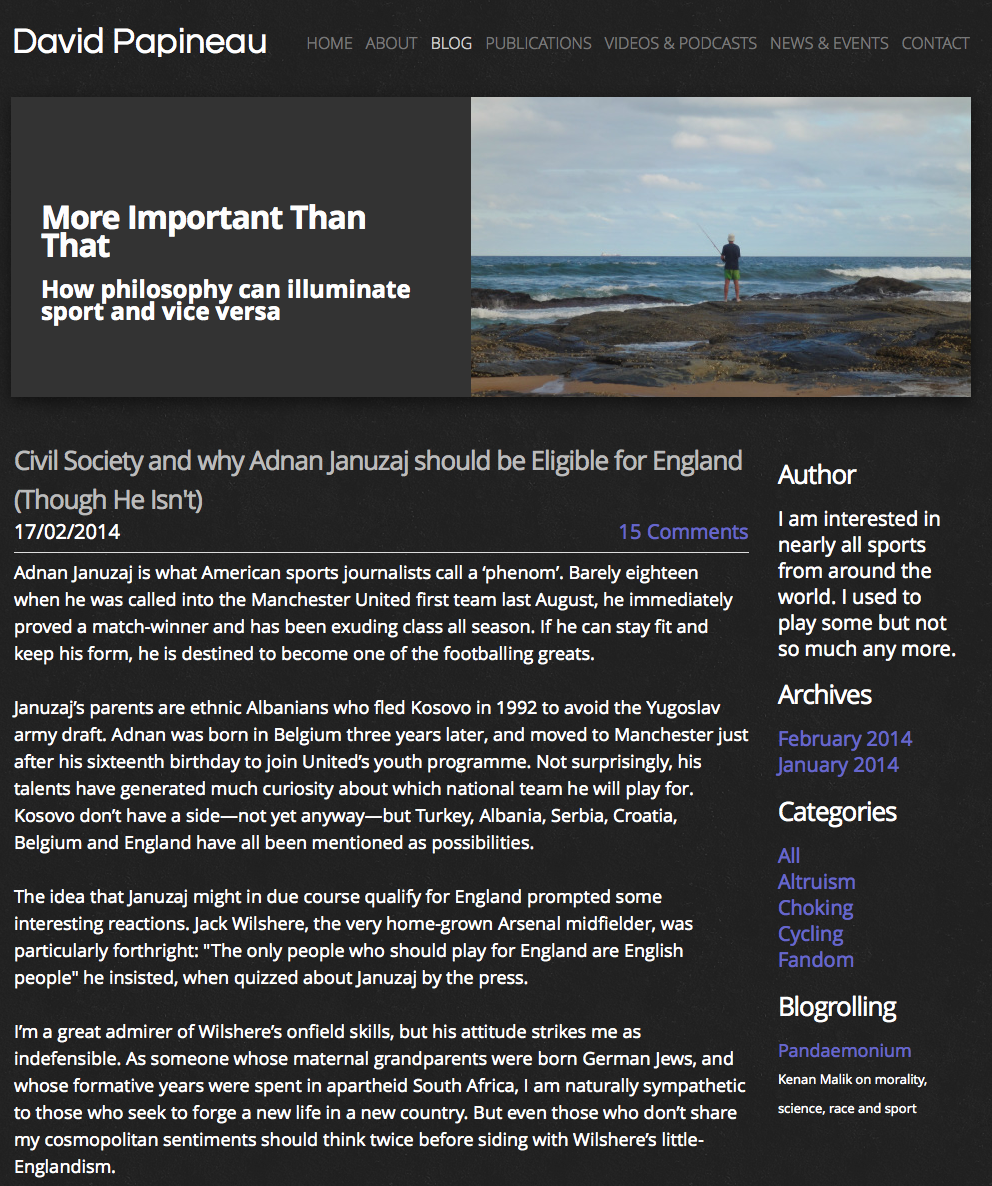
Kuvankaappaus 2014-2-20 kello 10.46.14Read original column here. 

Januzaj’s parents are ethnic Albanians who fled Kosovo in 1992 to avoid the Yugoslav army draft. Adnan was born in Belgium three years later, and moved to Manchester just after his sixteenth birthday to join United’s youth programme. Not surprisingly, his talents have generated much curiosity about which national team he will play for. Kosovo don’t have a side—not yet anyway—but Turkey, Albania, Serbia, Croatia, Belgium and England have all been mentioned as possibilities.

The idea that Januzaj might in due course qualify for England prompted some interesting reactions. Jack Wilshere, the very home-grown Arsenal midfielder, was particularly forthright: “The only people who should play for England are English people” he insisted, when quizzed about Januzaj by the press.

I’m a great admirer of Wilshere’s onfield skills, but his attitude strikes me as indefensible. As someone whose maternal grandparents were born German Jews, and whose formative years were spent in apartheid South Africa, I am naturally sympathetic to those who seek to forge a new life in a new country. But even those who don’t share my cosmopolitan sentiments should think twice before siding with Wilshere’s little-Englandism.

Let me explain. By and large, national sporting eligibility in the modern world depends on citizenship. And citizenship in turn depends on residence. Nearly all countries allow those who have been legally resident for some fixed period to become ‘naturalized’ citizens. In Britain the required period is five years, which means that in the natural course of events Junuzaj could become British in 2016.

 Somewhat less familiarly, most countries make residence necessary for citizenship, as well as sufficient. True, you can be a citizen of a country that you have never set foot in, courtesy of your parent’s citizenship. But this is basically a device to avoid mothers having to scurry back to their homeland to give birth, and you aren’t allowed to iterate it indefinitely. As things now stand in Britain, for example, citizenship by descent runs out after one generation, as the grandchildren of emigrants often discover to their cost.


It might seem surprising that residence counts for so much and ancestry for so little. After all, chauvinism is an easy vote-winner pretty much everywhere. Moreover, prejudice isn’t the only motivation for wanting to restrict citizenship to those with a shared background. You don’t have to be Enoch Powell to recognize that civil society depends on more than common geographical boundaries. A healthy community requires a mutual sense of acceptable public behaviour, of how to settle disputes, of your obligations to neighbours and acquaintances, and so on.

Still, there is a basic reason why most nations aim to preserve the foundations of civil society without tying citizenship to ethnic origin. Movement of people across national boundaries has long been inevitable. Political realignments, surreptitious immigration, and above all commerce lead inexorably to a build-up of non-citizens inside national regions. And the obvious problem is that, if these newcomers are left as non-citizens indefinitely, they are likely to start resenting it and stirring up trouble.

The smart solution is to incorporate them, to sign them up to the deal on which all modern democracies rest. We will make you full citizens with all accompanying rights, and in return you will respect our shared way of doing things.

Pessimists say it won’t work. How can a Ghanaian become Italian, or a Vietnamese Australian, or indeed a Kosovan English? But history is on the side of optimism. Maybe you can’t lose your ethnicity easily (though that in itself is an interesting question), but this is no barrier to gaining a nationality. My grandparents, who remained loyal to the orthodox synagogue all their lives, were obsessed with becoming English. (My mother was an encyclopedia on the niceties of English manners.) Or just think of modern America, where successive waves of ethnic immigrants embraced their new national identity with excitement and pride.

Of course, the deal works best when the welcome is sincere. You won’t get buy-in from the newcomers if they think they are still being treated as second class citizens. They need to feel that all institutions are open to them—including national sports teams. That’s why I find Wilshere’s attitude not only mean-spirited but destructive. Once people are living in your country, it does nobody any good to discriminate against them. Imagine what it would do to social relations in Sweden or Germany if Zlatan Ibrahimovic and Mesut Özil were kept out of the national teams because of their ethnic origin.

Sadly, though, it seems as though Adnan Januszaj won’t be eligible for England after all, at least not unless the rules are changed. The reason is that nowadays sporting eligibility doesn’t always follow nationality. A number of international sporting bodies have become uneasy about the readiness with which some countries hand out citizenship, and so have imposed a blanket residence requirement. In particular, FIFA, the football authority, got fed up with the number of Brazilians turning up in other countries’ sides, and so since 2008 have demanded that, in addition to citizenship, you must have lived in a country for five years before you can represent it on the football field.

Why is that a problem for Januzaj? If he becomes British on the basis of five years residence, won’t that automatically satisfy the extra FIFA requirement too? Ah, well that would work fine if there were a British football team—but there isn’t. So the so-called Home Nations have had to devise some extra rules to decide who can play for England, Scotland, Wales and Northern Ireland. And in their wisdom they have decreed that from 2009 you need to have been born in the relevant country, or to have a parent or grandparent born there, or to have been educated there for five years before the age of eighteen.

So even if Adnan becomes British, and lives here for the rest of his life, he will never be able to play for England. Nor, if you think about it, will anybody who moves here after they are thirteen. I’d say the Home Nations have got it badly wrong. They have put too much weight on descent, and left no room for newcomers to opt in.

Consider what their rules mean. If cricket had applied them in recent decades, carpetbaggers like Kevin Pietersen and Allan Lamb would have been fine, courtesy of their English parents, but Basil D’Oliveira would have been out. And in soccer the Canadian Owen Hargreaves would have been in, because of his English father, but Cyrille Regis MBE would never have been able to play for his country—as he didn’t move here from the Caribbean until he was fifteen.

Perhaps the Home Nations authorities didn’t fully appreciate the implications of their new policy. One would hope so. But in any case their regulations strike me as badly in need of reassessment. Perhaps this new controversy will serve to draw attention to their failings. Adnan Januzaj for England, I say.

Read original blog entry here.

This piece was reprinted by Migrant Tales with permission.
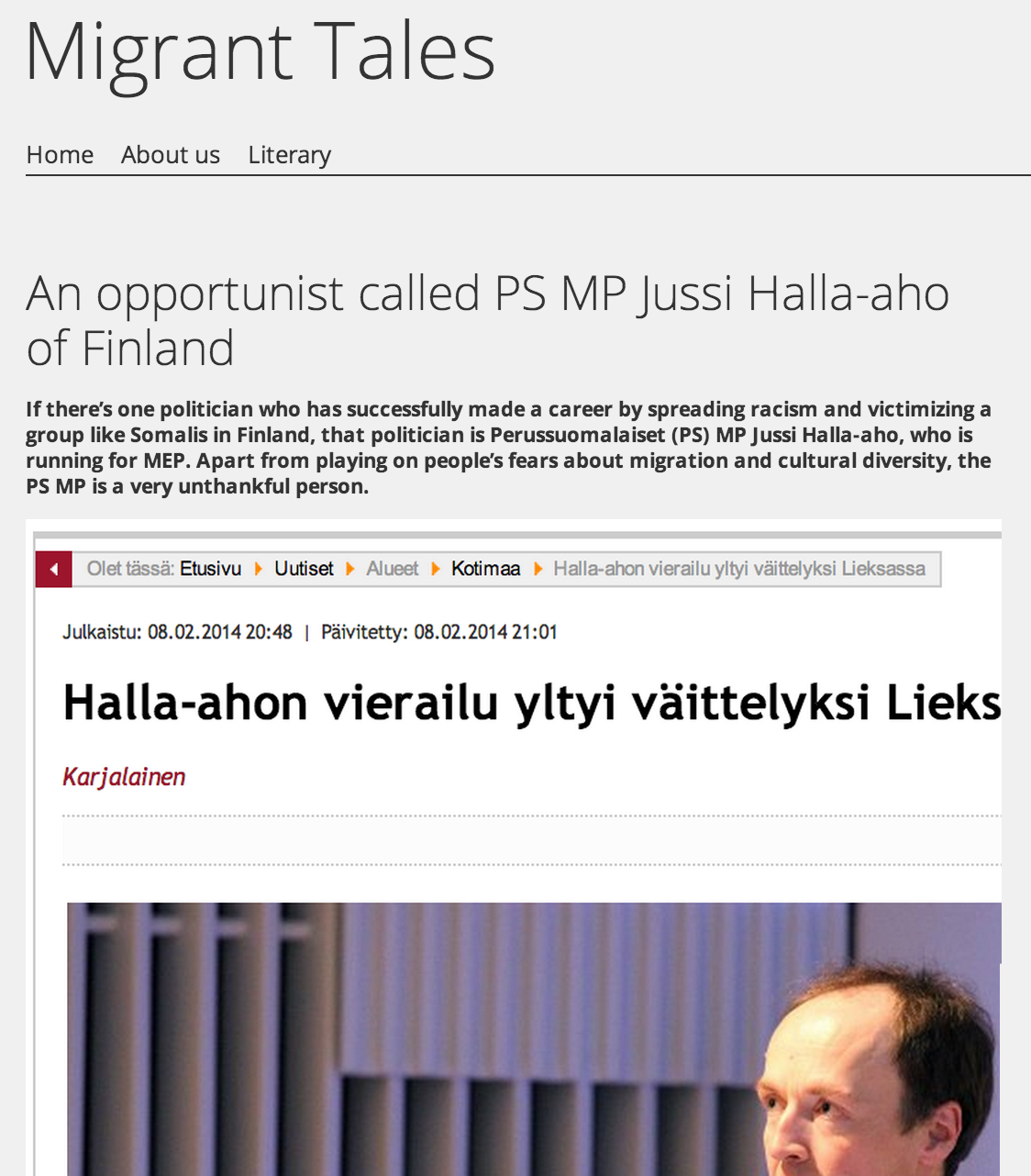
Burst the hate bubble of anti-immigration groups

Posted on February 19, 2014 by Migrant Tales

When you listen to anti-immigration politicians and groups, there’s one matter that exposes them to the tee: Constant whining without any solutions. They don’t give you the solution to the problem because they simply have none to offer.

Kuvankaappaus 2014-2-19 kello 7.37.58

Read full story here.

The Nazis were questionably pro-active on ethnic issues. As we saw from 1933, one matter led to another and a whole nation found itself on a slipper slope that led to places like Auschwitz.

Look at the matter this way. Anti-immigration politicians and groups are tirelessly inflating society with hate. Do they do this for our benefit or their opportunistic political goals? Are they preparing us for those slippery slopes that we’ve seen in Europe too many times before?

Demand an answer from them. By demanding solutions you effectively expose them and burst the hate bubble they live in.

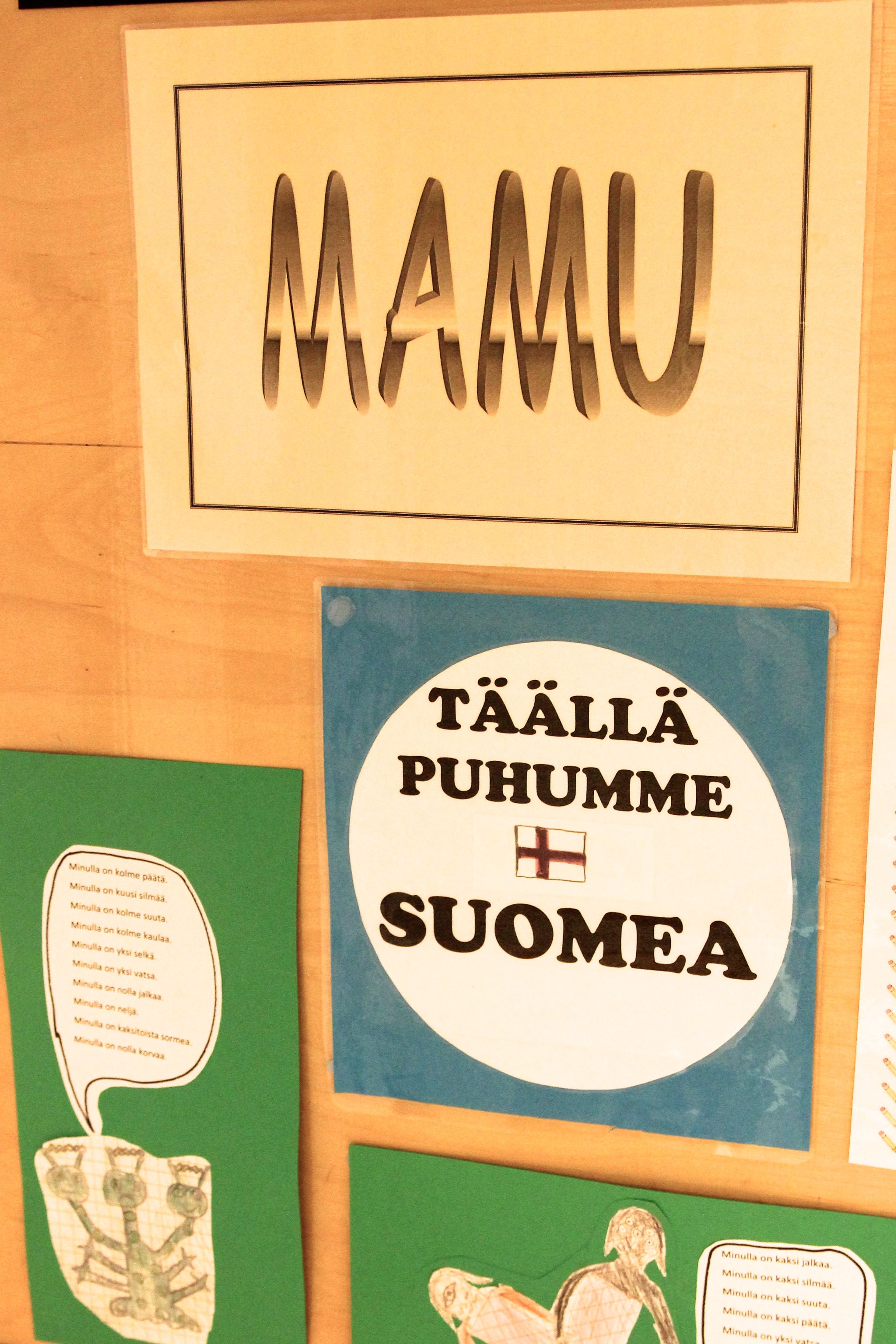
Children of immigrants: “Only Finnish spoken here and you’re a mamu”

Posted on February 17, 2014 by Migrant Tales

We claim that Finland has one of the best educational systems in the world. We claim that we teach our children social equality and that they have equal rights to advance in life. Why then are children of immigrants called at some schools mamus and why do we force them to speak only Finnish?

The term mamu derives from the Finnish word maahanmuuttaja, or immigrant.

Finnish schools basically do the same thing today that they did in the 1970s, when they punished Saami children for speaking their native language at schools.

If we forbid and make clear that children shouldn’t speak their mother or father tongue at school, isn’t this outright discrimination and a lack of respect for the child’s ethnic and cultural background?

IMG_3371-1

We only speak Finnish here reads a sign on the door of a Finnish elementary school.


Certainly if one or both of the child’s parents are migrants, it’s important that the child learns Finnish or Swedish. The better the child learns these languages, the better his or her chances of succeeding in this country. This is a good goal but it shouldn’t be done at the expense of the child’s native language and identity.

IMG_3370-1

You can’t speak any other language but Finnish and on top of that you’re labelled a mamu. Who labels you a mamu? The majority culture.

Why do some schools in Finland continue to call third-culture children, who have lived here most of their lives or were born here, mamus?

Why don’t we call them Finns who have a different cultural and ethnic background from white Finns?

Why is this still so difficult to understand?

Maahanmuuttajien lapsia: “Täällä puhumme suomea ja olet mamu!”

Posted on February 17, 2014 by Migrant Tales

Väitetään, että Suomessa on yksi parhaimmista koululaitoksista maailmassa. Väitetään, että lapset opetetaan tasa-arvoiseksi ja että heillä on yhdenvertaisia mahdollisuuksia edetä elämässä. Miksi sitten, jossain koulussa kutsutaan maahanmuuttaja lapsia mamu ja miksi painostetaan heitä puhumaan vain Suomea?

Suomalaiset koulut tekivät saman asia 1970-luvulle asti saamelaisten kanssa. Rangaistiin jos saamelainen lapsi puhui omaa äidinkieltä koulussa.

Jos kielletään tai painostetaan lasta olla puhumatta omaa äidin tai isän kieltä, eikö tämä ole syrjintää ja lapsen oman taustan halveksimista? 

IMG_3371-1

Täällä puhumme Suomea lukee suaomalaisen ala-asteen koulun ovessa.

Totta kai lapsen, jolla on toinen tai molemmat vanhemmista ulkomaalaisia, on opiskeltava suomen tai ruotsin kieltä täällä asuessaan. Mitä paremmin hän oppii näitä kieliä sitä paremmat mahdollisuudet hänellä on edetä elämässä aikuisena. Tämä on hyvä tavoite mutta sitä ei saa tehdä lapsen äidin kielen ja identiteetin kustannuksella.

IMG_3370-1

Et saa puhua muuta kun suomea ja olet kaupan päälle mamuksi. Kuka leimaa sinut mamuksi? Valtaväestö.

Miksi ei voi sanoa,  suomalaisia jolla on eri kulttuurinen tai etninen tausta

Kysymys: Miksi joissakin kouluissa suomessa kutsutaan maahanmuuttaja lapsia, jotka ovat asuneet Suomessa melkein koko elämänsä tai syntyneet täällä, mamuksi?

Miksi ei voi sanoa,  suomalaisia jolla on eri kulttuurinen tai etninen tausta.

Miksi tämä on yhä niin vaikea asia?

What’s really being discussed in the ongoing debate about immigration in Finland?

Posted on February 16, 2014 by Migrant Tales

After taking part actively in the ongoing debate about immigration and immigrants, some crucial points always expose themselves in the debate. I personally believe that there is one very important issue that few care to admit: accepting our cultural and ethnic diversity and how some white Finns accept the latter. 

I’m overjoyed that there are more people from different ethnic backgrounds taking part in the ongoing debate. We may or not agree with some of our points of view, but the most important point is that there are other voices out there today.

A good example of those “other” voices is Abdirahim Hussein Mohamed’s initiative to bring the anti-immigration and anti-Islam Perussuomalaiset (PS) to the same table as the Muslim congregation. The visit was widely commented on Facebook as well.

Kuvankaappaus 2014-2-16 kello 12.32.02

Hussein Mohamed said that he organized the event, which was successful according to him, because he was tired of the “us and them” debate.

Professor Jeremy Gould, who spoke to some students and staff members at Otava Folk High School last spring, said that it’s difficult to quantify racism in Finland since there are so few migrants living in the country. “The basic issue that we’re looking at in Finland today is the acceptance of people who are look, or sound different,” he said.

Professor Gould, who teaches Development Studies at Jyväskylä University, asked why we need to defend ‘multiculturalism.’

IMG_0887

Professor Jeremy Gould speaking to students at Otava Folk High School in spring.

“Culture is always diverse – people everywhere have different tastes, beliefs, habits, and values, Gould said. “This has been true of Finland for centuries. For me the so-called ‘debate about multiculturalism’ is a code word for racism in our society. Finland is already culturally diverse. The issue is that people of color don’t receive the respect and recognition they deserve as human beings.”

Matters were very different before the 2011 parliamentary elections, when the anti-immigration and especially anti-Islam Perussuomalaiset (PS) won 39 seats from 5 previously. The debate was basically controlled by anti-immigration groups and hate sites like Hommaforum.

Having been a journalist and foreign correspondent for 25 years with a background in anthropology, I was truly surprised by what was being written and debated over immigration and immigrants in Finland. The urban tales that were being published as “solid analysis” were nothing more than points of views that exposed the writer’s prejudices and intolerance.

I once gave a talk in 2010 to students about what the Finnish media was writing at the time about migrants and visible minorities. I grouped the stories in the following manner: Those opinion pieces and stories that made my blood boil and those that didn’t.

Here’s one editorial by Jyväskylä-based Keskisuomalainen written in 2010 that was in the “blood-boiling” category.  It reads:

…the most effective way of helping refugees is to earmark help to their home country (sic!). Accepting refugees in Finland is the last resort.

As one can see, the editorial carries all the arguments of the anti-immigration camp. One of the favorites to this date is the following:

Certain migrant or refugee groups will never adapt to our country and therefore we must do everything possible from allowing them to come here. My intolerant and racist views are justified.

Kuvankaappaus 2014-2-16 kello 13.50.47

Read full editorial (in Finnish) here.

The extremely one-sided debate before the 2011 elections bore a striking resemblance to the arguments used by  xenophobic parties like National Front in the UK during the 1970s and 1980s. Just like in the United Kingdom, the media in Finland was and still is part of the problem because it continues to give racists inflated respectability and importance.

Migrant Tales has written that we think carefully what we write because our grandchildren, great grandchildren and others will read and quote what we say today.

What do you think will be the fate of the writings of anti-immigration politicians like Halla-aho, James Hirvisaari, Olli Immonen and many others anti-immigration writers in the future? If some of their points of views sound ludicrous today, think of how they’ll read in the future.

The more we take part in the ongoing debate and reveal those urban tales, the shorter their lifespan will be.

Despite the fact that the debate on our ever-growing cultural diversity (I believe this is the big issue) has changed, the arguments are the same. There are basically two: Those who want to keep Finland “white” at any cost, and those who accept our cultural diversity.

Those in the former group are naturally against multiculturalism. They attack everything that promotes cultural diversity and try their hardest not to be labelled as racists. Some of the issues they attack are immigration policy and, most importantly, defending equal rights for migrants and visible minorities.

A good example of the keep-Finland-white camp is PS MP Olli Immonen’s written question to parliament in December that Finland should start classifying people according to ethnic background.

Personally, I consider it absurd to be against cultural diversity in Finland since over 1.2 million Finns emigrated from this country between 1860 and 1999 and that we have – and need – more migrants.


Migrant Tales (March 8, 2012): “I hope what I write isn’t true”

Posted on February 14, 2014 by Migrant Tales

After about five years of existence, 887 blog entries (including this one) and over 20,140 comments, I would like to make a confession: Deep inside I have always hoped that what I write isn’t true. Finland is a noble country and noble countries stay clear of racism and xenophobia, right? 

Still I do not know what is worse: The xenophobia, which has followed Finland like a shadow throughout its history, or the silence and indifference of too many politicians, academics, media and society in general. True, we are becoming familiar with this dark side of ourselves. Banishing our fears and prejudices will take a national effort and generations of hard work.

A fellow student from Kenya at Turku University in 1979 threw a cold bucket of reality on my face. John K. said that he was commonly harassed in public, complete strangers even threw stones at him. When I asked immigration researchers at the time why Finland had such a draconian attitude towards foreigners, his answer shocked me: “It’s to keep the trash out.”

At the time, there lived under 10,000 immigrants in the country.

The PS councilman Tommi Rautio scandal offered us yet another crude wake up. He, like many before him, forced us to see something unpleasant about us: the xenophobia and racism that has lurked out there in our society for a long time. It survives and continues to grows because of our lack of resolve.

How many Rautios are there in Finland? We could safely state that there are still too many.

I started Migrant Tales in 2007 and it didn’t take long for this blog to find its identity and place among a wide international group of bloggers.

Every day I write a blog entry I hope that what I say isn’t true. I tell myself, however, that that hope speaking back to me is nothing is nothing more than our denial.

The PS throw water into the steaming sauna stones of intolerance as MEP elections near

Posted on February 13, 2014 by Migrant Tales

The Perussuomalaiset (PS) are Finland’s anti-EU, anti-immigration and especially anti-Islam party. Some of their questionable political soul mates in Europe are the far-right Danish People’s Party, Sweden Democrats and Ukip of Britain. Even if they are all of the above, they make up shameful denials that they aren’t all of the above.

Why? Because Finnish voters are conservative and their tolerance for reckless populism has its limits. Moreover, Finland’s version of the U.S. Tea Party is only good at two things: whining and denying.

As mentioned, one of the main things that the PS does is spread racism and urban tales. They do so because that’s the way they get media attention. When they get media attention, they connect with their voters through code.

It shouldn’t surprise us that as the European Member of Parliament (MEP) elections near on May 25, the PS are feverishly connecting with their voters through their usual intolerance and racism.

In the city of Kouvola in southeast Finland, the PS are offering to potential voters licorice with a golliwog-looking mascot on a box that reads: PS – you get what you ordered.

This phrase could be interpreted in the following manner: “What you got” are blacks from Africa due to Finland’s immigration policy. The PS will set things right.

Kuvankaappaus 2014-2-12 kello 22.34.28


Thank you Marian Abdulkarim for the heads-up on Facebook.


So a PS councilman of Lieksa, Finland, wants a “Somali-free” room…

Posted on February 12, 2014 by Migrant Tales

Roble Bashir

We need a Somali-free meeting room today in the eastern Finnish town of Lieksa, according to a Perussuomalaiset (PS) councilman Esko Saastamoinen. Somali-free town tomorrow or Somali- free country after tomorrow?  Why do they hate us so much?

1903132_10152141362013971_795394869_n

Illustration by Sebastian L. Jackson for Migrant Tales.

Many times I wonder what is wrong with the PS? Why do they make near-constant ludicrous comments to the media about Somalis in Finland? It makes me sad to read what they say but it gives me power and awareness at the same time.

The PS has put a large sign over its head: We hate everything about you Somalis, your skin color and the fact that you live in this Finland.

Why do they hate us so much if we don’t hold any grudges against them? What’s wrong? Are we invaders to this land? Actually not, because some of us were not only born here but grew up in this country as well. Despite this fact, we’re treated like strangers, even as outcasts.

How can immigrants integrate into Finland if politicians create a climate of intolerance and hatred with their racist speeches to the public and sound bites to the media?

It’s a pretty normal day in Finland when you wake up in a morning, read a newspaper or start surfing the internet, when you eventually read about a politician saying something negative and hostile about immigrants. It’s extremely sad that an MP, who represents this country, uses his power for fear-mongering.

One of these MPs is Jussi Halla-aho of the PS, who visited the town of Lieksa over the weekend.  If he gets elected to the European Parliament in May, he will do everything possible to make our lives more difficult in Europe.

Even so, I’m certain he won’t succeed.


Savon Sanomat: Vieras uudistaa Suomea

Posted on February 11, 2014 by Migrant Tales

Kun kasvoin nuorena Yhdysvalloissa, maahanmuuttajien kulttuurinen ja etninen moninaisuus olivat tavallisia jokapäiväisiä asioita. Vaikka jotkut eivät toivoneet erilaisia etnisiä ryhmiä omalle asuinalueelle, harvoin kukaan katsoi maahanmuuttoa haitallisena ilmiönä.

Kuvankaappaus 2014-2-11 kello 20.18.11

Olen asunut suurimman osan aikuista elämääni Suomessa, mutta yksi asia yhä yllättää minut: joidenkin suomalaisten asenteet maahanmuuttoon ja kulttuuriseen moninaisuuteen.

Tässä kysymys: Jos maahanmuutto yleisesti luo taloudellista kasvua ja kehitystä, miksi joillakin on niin kielteisiä näkemyksiä asiasta?

Mistä meidän epäilevä suhtautuminen saattaa johtua? Onko se pelko siitä, että toiset käyttävät meidän etuoikeuksia ja hyvinvointia hyväkseen? Onko se pelkoa tuntemattomasta tai muutoksesta, että Suomen kanssa moninaistuu etnisesti ja kulttuurisesti?

Jos maahanmuutto luo kasvua ja kehitystä monissa maissa, miksi odotamme tarttua siihen kiinni erityisesti Itä-Suomessa? Väestörakenne pahenee entisestään, koska nuorten työikäisten osuus väestöstä vähenee Suomesta, puhumattakaan Itä-Suomesta, jossa alueemme väestö vanhenee Euroopan nopeinta vauhtia. On monia kuntia Itä-Suomessa, joissa yli 65-vuotiaiden osuus on jo yli 30 prosenttia väestöstä.

OECD:n mukaan maahanmuutto kasvatti vuonna 2011 Suomen julkisen sektorin tuloja summalla, joka vastaa 0,16 prosenttia bruttokansantuotteesta. Julkisen sektorin kasvu oli Suomessa pienempi kun OECD-maissa, joiden vastaava luku on 0,35 prosenttia bruttokansantuotteesta.


Yleisin fraasi, jota maahanmuuttovastaiset tahot ovat ylläpitäneet Suomessa, on mielikuva että maahanmuutto on haitallinen ja vaarallinen ilmiö.

Esimerkiksi julkinen kuva asiasta on vääristynyt niin pahasti, että jotkut luulevat, että suurin osa maahanmuuttajista Suomessa on pakolaisia, muslimeja ja/tai afrikkalaisia. Argumenttina on, etteivät he myöskään tee työtä, elävät sosiaaliturvasta ja ovat rikollisia.

Vaikka on tärkeää, että Suomi ottaa pakolaisia tulevaisuudessakin, nämä yllämainitut ryhmät edustavat vain murto-osaa maahanmuuttajista Suomessa. 1920-luvulla Suomessa oli jopa enemmän pakolaisia kun nyt.  Venäjän sisällissodan takia asui silloin noin 35?000 venäläistä pakolaista maassamme.

Jos verrataan muihin Euroopan maihin, Suomessa asuu vähän ulkomaalaisia. Vuoden 2012 lopulla maassa oli 285?471 ulkomailla syntynyttä henkilöä, josta eurooppalaisia 182 696 (64%) ja afrikkalaisia 25,895 (9,1%). Vastaavasti, muslimeja on Suomessa vain noin 60?000. Pakolaisina Suomeen haki viime vuonna 3?219 ihmistä turvapaikkaa, josta vain 1 601 saivat myönteisen päätöksen.


Toinen iso asia, joka mielestäni vahvistaa ennakkoluuloja eri maahanmuuttaja ryhmiä kohtaan, on rikostilastojen tulkitseminen.

TV1:n A-studio kertoi viime vuonna ”korkeasta” määrästä raiskaustuomioita, jotka maahanmuuttajat olivat saanet. Määrä oli kuitenkin vain 25 tuomiota viiden kuukauden ajan jaksona. Vaikka yksikin raiskaus on liikaa, ei voi silti leimata koko maahanmuuttajaryhmää näiden tuomioiden perusteella.

Oikeuspoliittisen tutkimuslaitoksen erikoissuunnittelija Hannu Niemi on samaa mieltä. Hän sanoo, että maahanmuuttajaväestöstä yksi tuhannesta tai kahdesta tuhannesta syyllistyy vuosittain raiskauksiin. Törkeisiin rikoksiin syyllistyminen on ylipäätään harvinaista.

Toinen ennakkoluulo, jota maahanmuuttovastaiset ovat levittäneet, on se, että ulkomaalaiset elävät sosiaaliturvan varassa ja saavat enemmän avustuksia kuin suomalaiset.

Eri tutkimukset Yhdysvalloissa sekä Norjassa ovat todistaneet, että maahanmuuttajat käyttävät vähemmän sosiaaliturvaa kuin kanta-asukkaat.


Vaikka Suomesta on lähtenyt yli 1,2 miljoona siirtolaista vuosina 1860–1999 etupäässä Pohjois-Amerikkaan ja Ruotsiin, olemme tehneet kaiken mahdollisen, ettei Suomeen tulisi maahanmuuttajia ja ulkomaalaisia yrityksiä.

Suomi sai ensimmäisen ulkomaalaislakinsa 1983, 65 vuotta itsenäistymisen jälkeen. Suomi myös rajoitti ulkomaalaissijoituksia vuoden 1939 ankaran lain avulla, joka kumottiin vasta vuonna 1995, kun Suomi tuli EU-jäseneksi.

Kanslianeuvos Risto Laakkonen, joka on ollut aktiivinen maahanmuuttoasioissa niin Pohjoismaissa kuin Euroopan neuvostossakin, puhui syksyllä Lahden kansanopiston 120-vuotisjuhlissa.  Hän ei vain kertonut, kuinka skotlantilainen James Finlayson perusti Tampereelle 1820-luvulla  tekstiiliteollisuuskoneita valmistavan yrityksen, vaan puhui myös norjalaisen Hans Gutzeitin, sveitsiläisen Karl Fazerin ja venäläisen Nikolai Sinebrychoffin tärkeästä roolista Suomen taloudellisessa kehityksessä.

–?Suomessa ei ole asunut mikään ylivertainen heimo, joka olisi pärjännyt omillaan, sanoo Laakkonen. –?Suomen kehitykseen ovat vahvasti vaikuttaneet monet maat ja maahanmuuttajat.


On merkillistä, että jotkut haaveilevat sellaisesta Suomesta, jota ei ole koskaan ollut olemassa tai jos se olisi ollut olemassa, se olisi ollut aika ankea.

Kuuluisa Fodorsin matkaopas naisille kertoi suomalaisesta yöelämästä 1950-luvulla: ”Jos olet matkustamassa Helsinkiin suoraan Pariisista, älä odota eläviä yökerhoja ja kapakoita… (Suomessa) ei ole yökerhoja, laki kieltää kapakat ja on vain [Helsingissä] yksi ravintola, jossa on tanssiesitys.”

Vanhempani kertoivat, että he menivät syömään kuuluisaan Savoy-ravintolaan 1960-luvun taitteessa. Heille tarjottiin silloin eksoottisia ravioleja, mutta tomaattiketsupin kanssa!

Suomessa ei tunnettu vielä 1970-luvulla laajasti nykyistä epävirallista kansallisruokamme pitsaa, ja kauppojen hyllyistä ei löytynyt jogurttia 1960-luvulla. Valikoimamme oli suppea.

Suomi on silti muuttunut hyvin paljon niistä ajoista. Ruokavaliomme ja ravintoloiden tarjonta on runsasta, monipuolista ja yleistä eurooppalaista tasoa.

Elintaso ei ole koskaan nousut niin paljon Suomen itsenäisyyden aikana kun nyt. Osa tästä kehityksestä on ollut mahdollista kansainvälisyyden ja vuorovaikutuksen ansiosta, jossa oma suomalainen identiteettimme elää ja voi hyvin.

Maahanmuuttajat, jotka ovat muuttaneet Suomeen, ovat olleet osa tätä kehitystä.

Alkuperäisen blogikirjoituksen voi lukea tästä.

Yes Swiss vote against “mass migration” will impact MEP elections in May

Posted on February 11, 2014 by Migrant Tales

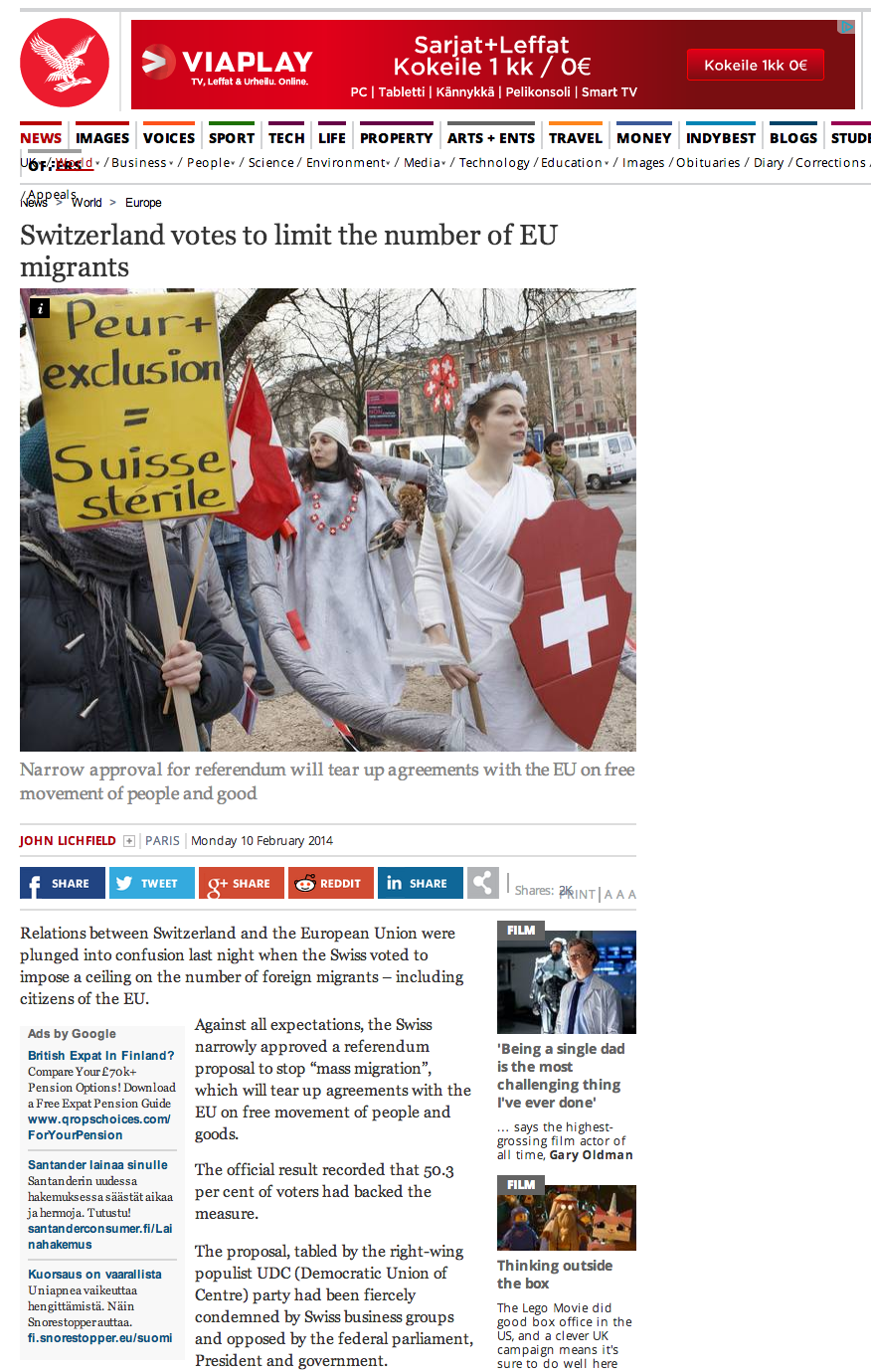
Switzerland voted on Sunday to narrowly approve a referendum proposal to stop “mass migration,” reports The Independent. The immediate impact of the referendum, which the “yes” camp won with a slim 50.3% majority, will mean an end to the free movement of people and goods between Switzerland and the EU.

Apart from having an immediate economic impact on Switzerland, the really bad news is that the referendum may boost anti-immigration sentiment, which is one of the campaign issues of right-wing populist and far-right political parties throughout Europe, in the May 25 MEP elections.  Kuvankaappaus 2014-2-11 kello 0.45.51

Read full story here.

In Finland, the anti-EU, anti-immigration and especially anti-Islam Perussuomalaiset (PS) must be jumping for joy about the Swiss referendum outcome since they see the vote as a boost to their negative stand on cultural diversity.

One of the most incredible claims of the Swiss right-wing populist Democratic Union of Center (UDC) during the campaign to stop “mass migration” was that housing, health, education and transport services would collapse under the pressure from the “foreign invasion.”

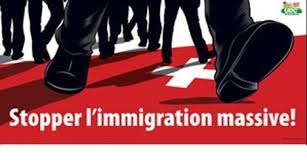
There are a lot of loaded words that are common in the anti-immigration vocabulary like “invasion” and “mass immigration” that were effectively used by the UDC. The “yes” campaign posters even showed black legs walking purposefully over a Swiss flag.

lataus (3)

A poster of the “yes” camp against so-called “mass migration.” Source: www.thelocal.ch

The most recent referendum in Switzerland is part of a worrying trend that is gripping Europe. While some may claim it has to do with the recession, the real reason behind the undercurrent of intolerance throughout the region is our own doing since because a part of our education teaches us national and ethnic superiority over other groups.

If we aren’t careful, we will fall victim to the horrors we saw in Nazi Germany from 1933 and in the former Yugoslavia in the 1990s to name a few conflicts that have gripped Europe.

  • Previous
  • 1
  • 2
  • 3
  • Next
Read more about documentary film
Read more

Recent Posts

  • Finland’s tabloids Iltalehti and Ilta-Sanomat are the pits
  • Riikka Purra’s Dr Jekyll and Mr Hyde mask
  • Double standards
  • Perussuomalaiset: Uusi logo, sama vanha juttu
  • Taco Trump

Recent Comments

  1. Absolutely Socking: Racist Finnish Facebook group against human rights gets flooded with socks on Musta Barbaari’s mother and sister charged by the police in “ethnic profiling” case
  2. Ilkka Nuotio on Pekka Myrskylä: “Tilastot kertovat toista kuin poliittinen keskustelu”
  3. Genrih Soinkara on The war in Ukraine and the Russian-Finnish border crisis are showing Finland’s ugly side
  4. Ahti Tolvanen on Comment by Ahti Tolvanen on the Helsinki +50 conference
  5. Angel Barrientos on Angel Barrientos is one of the kind beacons of Finland’s Chilean community

Archives

  • June 2026
  • May 2026
  • April 2026
  • March 2026
  • February 2026
  • January 2026
  • December 2025
  • November 2025
  • October 2025
  • September 2025
  • August 2025
  • July 2025
  • June 2025
  • May 2025
  • April 2025
  • March 2025
  • February 2025
  • January 2025
  • December 2024
  • November 2024
  • October 2024
  • September 2024
  • August 2024
  • July 2024
  • June 2024
  • May 2024
  • April 2024
  • March 2024
  • February 2024
  • January 2024
  • December 2023
  • November 2023
  • October 2023
  • September 2023
  • August 2023
  • July 2023
  • June 2023
  • May 2023
  • April 2023
  • March 2023
  • February 2023
  • January 2023
  • December 2022
  • November 2022
  • October 2022
  • September 2022
  • August 2022
  • July 2022
  • June 2022
  • May 2022
  • April 2022
  • March 2022
  • February 2022
  • January 2022
  • December 2021
  • November 2021
  • October 2021
  • September 2021
  • August 2021
  • July 2021
  • June 2021
  • May 2021
  • April 2021
  • March 2021
  • February 2021
  • January 2021
  • December 2020
  • November 2020
  • October 2020
  • September 2020
  • August 2020
  • July 2020
  • June 2020
  • May 2020
  • April 2020
  • March 2020
  • February 2020
  • January 2020
  • December 2019
  • November 2019
  • October 2019
  • September 2019
  • August 2019
  • July 2019
  • June 2019
  • May 2019
  • April 2019
  • March 2019
  • February 2019
  • January 2019
  • December 2018
  • November 2018
  • October 2018
  • September 2018
  • August 2018
  • July 2018
  • June 2018
  • May 2018
  • April 2018
  • March 2018
  • February 2018
  • January 2018
  • December 2017
  • November 2017
  • October 2017
  • September 2017
  • August 2017
  • July 2017
  • June 2017
  • May 2017
  • April 2017
  • March 2017
  • February 2017
  • January 2017
  • December 2016
  • November 2016
  • October 2016
  • September 2016
  • August 2016
  • July 2016
  • June 2016
  • May 2016
  • April 2016
  • March 2016
  • February 2016
  • January 2016
  • December 2015
  • November 2015
  • October 2015
  • September 2015
  • August 2015
  • July 2015
  • June 2015
  • May 2015
  • April 2015
  • March 2015
  • February 2015
  • January 2015
  • December 2014
  • November 2014
  • October 2014
  • September 2014
  • August 2014
  • July 2014
  • June 2014
  • May 2014
  • April 2014
  • March 2014
  • February 2014
  • January 2014
  • December 2013
  • November 2013
  • October 2013
  • September 2013
  • August 2013
  • July 2013
  • June 2013
  • May 2013
  • April 2013
  • March 2013
  • February 2013
  • January 2013
  • December 2012
  • November 2012
  • October 2012
  • September 2012
  • August 2012
  • July 2012
  • June 2012
  • May 2012
  • April 2012
  • March 2012
  • February 2012
  • January 2012
  • December 2011
  • November 2011
  • October 2011
  • September 2011
  • August 2011
  • July 2011
  • June 2011
  • May 2011
  • April 2011
  • March 2011
  • February 2011
  • January 2011
  • December 2010
  • November 2010
  • October 2010
  • September 2010
  • August 2010
  • July 2010
  • June 2010
  • May 2010
  • April 2010
  • March 2010
  • February 2010
  • January 2010
  • December 2009
  • November 2009
  • October 2009
  • September 2009
  • August 2009
  • July 2009
  • December 2008
  • November 2008
  • October 2008
  • September 2008
  • August 2008
  • July 2008
  • June 2008
  • May 2008
  • April 2008
  • March 2008
  • February 2008
  • January 2008
  • November 2007
  • October 2007
  • September 2007
  • August 2007
  • July 2007
  • June 2007
  • May 2007

Categories

  • ?? Gia L?c
  • ????? ?????? ????? ???????? ?? ??????
  • ???????
  • @HerraAhmed
  • @mondepasrond
  • @nohatefinland
  • @oula_silver
  • @Varathas
  • A Pakistani family
  • äärioikeisto
  • Abbas Bahmanpour
  • Abdi Muhis
  • Abdirahim Hussein Mohamed
  • Abdirahim Husu Hussein
  • Abdirisak Mahamed
  • About Migrant Tales
  • activism
  • Adam Al-Sawad
  • Adel Abidin
  • Afrofinland
  • Ahmed IJ
  • Ahti Tolvanen
  • Aino Pennanen
  • Aisha Maniar
  • Alan Ali
  • Alan Anstead
  • Alejandro Díaz Ortiz
  • Alekey Bulavsev
  • Aleksander Hemon
  • Aleksanterinliitto
  • Aleksanterinliitto ry
  • Aleksanterinliitto ry:n hallitus
  • Alex Alex
  • Alex Mckie
  • Alexander Nix
  • Alexandra Ayse Albayrak
  • Alexis Neuberg
  • Ali Asaad Hasan Alzuhairi
  • Ali Hossein Mir Ali
  • Ali Rashid
  • Ali Sagal Abdikarim
  • Alina Tsui
  • Aline Müller
  • All categories
  • Aman Heidari
  • Amiirah Salleh-Hoddin & Jana Turk
  • Amin A. Alem
  • Amir Zuhairi
  • Amkelwa Mbekeni
  • Ana María Gutiérrez Sorainen
  • Anachoma
  • Anders Adlecreutz
  • Angeliina Koskinen
  • Anna De Mutiis
  • Anna María Gutiérrez Sorainen
  • Anna-Kaisa Kuusisto ja Jaakko Tuominen
  • Annastiina Kallius
  • Anneli Juise Friman Lindeman
  • Announcement
  • Anonymous
  • Antero Leitzinger
  • anti-black racism
  • Anti-Hate Crime Organisation Finland
  • Anudari Boldbaatar
  • Arshiya Nasser
  • Aspergers Syndrome
  • Asylum Corner
  • Asylum seeker 406
  • Athena Griffin and Joe Feagin
  • Autism
  • Avaaz.org
  • Awale Olad
  • Ayan Said Mohamed
  • AYY
  • Barachiel
  • Bashy Quraishy
  • Beatrice Kabutakapua
  • Beri Jamal
  • Beri Jamal and Enrique Tessieri
  • Bertolt Brecht
  • Boiata
  • Boodi Kabbani
  • Bruno Gronow
  • Carmen Pekkarinen
  • Çelen Oben and Sheila Riikonen
  • Chiara Costa-Virtanen
  • Chiara Costa-Virtanen
  • Chiara Sorbello
  • Christian Thibault
  • Christopher Wylie
  • Clara Dublanc
  • Dana
  • Daniel Malpica
  • Danilo Canguçu
  • David Papineau
  • David Schneider
  • Dexter He
  • Don Flynn
  • Dr Masoud Kamali
  • Dr. Faith Mkwesha
  • Dr. Theodoros Fouskas
  • Edna Chun
  • Eeva Kilpi
  • Emanuela Susheela
  • En castellano
  • ENAR
  • Enrique
  • Enrique Tessieri
  • Enrique Tessieri & Raghad Mchawh
  • Enrique Tessieri & Yahya Rouissi
  • Enrique Tessieri and Muhammed Shire
  • Enrique Tessieri and Sira Moksi
  • Enrique Tessieri and Tom Vandenbosch
  • Enrique Tessieri and Wael Che
  • Enrique Tessieri and Yahya Rouissi
  • Enrique Tessieri and Zimema Mhone
  • Epäluottamusmies
  • EU
  • Europe
  • European Islamophobia Report
  • European Islamophobia Report 2019,
  • European Union
  • Eve Kyntäjä
  • Ezequiel Caldeiro
  • Facebook
  • Fadumo Dayib
  • Faisa Kahiye
  • Farhad Manjoo
  • Fasismi
  • Finland
  • Fizza Qureshi
  • Flyktingar och asyl
  • Foreign Student
  • Fozia Mir-Ali
  • Frances Webber
  • Frida Selim
  • Gareth Rice
  • Ghyslain Vedeaux
  • Global Art Point
  • Great Replacement
  • Habiba Ali
  • Hami Bahadori
  • Hami Bahdori
  • Hamid
  • Hamid Alsaameere
  • Hamid Bahdori
  • Handshake
  • Harmit Athwal
  • Hassan Abdi Ali
  • Hassan Muhumud
  • Heikki Huttunen
  • Heikki Wilenius
  • Helsingin Sanomat
  • Henning van der Hoeven
  • Henrika Mälmsröm
  • Hser Hser
  • Hser Hser ja Mustafa Isman
  • Husein Muhammed
  • Hussain Kazemian
  • Hussain Kazmenian
  • Ibrahim Khan
  • Ida
  • Ignacio Pérez Pérez
  • Iise Ali Hassan
  • Ilari Kaila & Tuomas Kaila
  • Imam Ka
  • inside-an-airport
  • Institute of Race Relations
  • Iraqi asylum seeker
  • IRR European News Team
  • IRR News Team
  • Islamic Society of Norhern FInland
  • Islamic Society of Northern Finland
  • Islamophobia
  • Jacobinmag.com
  • Jallow Momodou
  • Jan Holmberg
  • Jane Elliott
  • Jani Mäkelä
  • Jari Luoto
  • Jari Taponen
  • Jegor Nazarov
  • Jenni Stammeier
  • Jenny Bourne
  • Jessie Daniels
  • Joe Davidow
  • Johannes Koski
  • John D. Foster
  • John Grayson
  • John Marriott
  • Jon Burnett
  • Jorma Härkönen
  • Jos Schuurmans
  • José León Toro Mejías
  • Josue Tumayine
  • Jouni Karnasaari
  • Juan Camilo
  • Jukka Eräkare
  • Julian Abagond
  • Julie Pascoet
  • Jussi Halla-aho
  • Jussi Hallla-aho
  • Jussi Jalonen
  • JusticeDemon
  • Kadar Gelle
  • Kaksoiskansalaisuus
  • Kansainvälinen Mikkeli
  • Kansainvälinen Mikkeli ry
  • Katherine Tonkiss
  • Kati Lepistö
  • Kati van der Hoeven-Lepistö
  • Katie Bell
  • Kättely
  • Kerstin Ögård
  • Keshia Fredua-Mensah & Jamie Schearer
  • Khadidiatou Sylla
  • Khadra Abdirazak Sugulle
  • Kiihotus kansanryhmää vastaan
  • Kirsi Crowley
  • Koko Hubara
  • Kristiina Toivikko
  • Kubra Amini
  • KuRI
  • La Colectiva
  • La incitación al odio
  • Laura Huhtasaari
  • Lauri Finér
  • Leif Hagert
  • Léo Custódio
  • Leo Honka
  • Leontios Christodoulou
  • Lessie Branch
  • Lex Gaudius
  • Leyes de Finlandia
  • Liikkukaa!
  • Linda Hyökki
  • Liz Fekete
  • M. Blanc
  • Maarit Snellman
  • Mahad Sheikh Musse
  • Maija Vilkkumaa
  • Malmin Kebab Pizzeria Port Arthur
  • Marcell Lorincz
  • Mari Aaltola
  • María Paz López
  • Maria Rittis Ikola
  • Maria Tjader
  • Marja-Liisa Tolvanen
  • Mark
  • Markku Heikkinen
  • Marshall Niles
  • Martin Al-Laji
  • Maryan Siyad
  • Matt Carr
  • Mauricio Farah Gebara
  • Media Monitoring Group of Finland
  • Micah J. Christian
  • Michael McEachrane
  • Michele Levoy
  • Michelle Kaila
  • Migrant Tales
  • Migrant Tales Literary
  • Migrantes News
  • Migrants' Rights Network
  • MigriLeaks
  • Mikko Kapanen
  • Miriam Attias and Camila Haavisto
  • Mohamed Adan
  • Mohammad Javid
  • Mohammad M.
  • Monikulttuurisuus
  • Monisha Bhatia and Victoria Canning
  • Mor Ndiaye
  • Muh'ed
  • Muhamed Abdimajed Murshid
  • Muhammed Shire
  • Muhammed Shire and Enrique Tessieri
  • Muhis Azizi
  • Musimenta Dansila
  • Muslimiviha
  • Musulmanes
  • Namir al-Azzawi
  • Natsismi
  • Neurodiversity
  • New Women Connectors
  • Nils Muižnieks
  • No Labels No Walls
  • Noel Dandes
  • Nuor Dawood
  • Omar Khan
  • Otavanmedia
  • Oula Silvennoinen
  • Paco Diop
  • Pakistani family
  • Pentti Stranius
  • Perussuomalaiset
  • perustuslaki
  • Petra Laiti
  • Petri Cederlöf
  • Pia Grochowski
  • Podcast-lukija Bea Bergholm
  • Pohjois – Suomen Islamilainen Yhdyskunta
  • Pohjois Suomen Islamilainen Yhyskunta
  • Polina Kopylova
  • Race Files
  • racism
  • Racism Review
  • Raghad Mchawh
  • Ranska
  • Rashid H. and Migrant Tales
  • Rasismi
  • Raul Perez
  • Rebecka Holm
  • Reem Abu-Hayyeh
  • Refugees
  • Reija Härkönen
  • Remiel
  • Reza Nasri
  • Richard Gresswell
  • Riikka Purra
  • Risto Laakkonen
  • Rita Chahda
  • Ritva Kondi
  • Robito Ibrahim
  • Roble Bashir
  • Rockhaya Sylla
  • Rodolfo Walsh
  • Roger Casale
  • Rostam Atai
  • Roxana Crisólogo Correa
  • Ruth Grove-White
  • Ruth Waweru-Folabit
  • S-worldview
  • Sadio Ali Nuur
  • Sami Rusanen
  • Sandhu Bhamra
  • Sara de Jong
  • Sarah Crowther
  • Sari Alhariri
  • Sarkawt Khalil
  • Sasu
  • Scot Nakagawa
  • Shabana Ahmadzai
  • Shada Islam
  • Sharon Chang blogs
  • Shenita Ann McLean
  • Shirlene Green Newball
  • Sini Savolainen
  • Sira Moksi
  • Sonia K.
  • Sonia Maria Koo
  • Steverp
  • Stop Deportations
  • Suldaan Said Ahmed
  • Suomen mediaseurantakollektiivi
  • Suomen Muslimifoorumi ry
  • Suomen viharikosvastainen yhdistys
  • Suomen viharikosvastainen yhdistys ry
  • Suomi
  • Supermen
  • Susannah
  • Suva
  • Syrjintä
  • Talous
  • Tapio Tuomala
  • Taw Reh
  • Teivo Teivainen
  • The Daily Show
  • The Heino
  • The Supermen
  • Thomas Elfgren
  • Thulfiqar Abdulkarim
  • Tim McGettigan
  • Tino Singh
  • Tito Moustafa Sliem
  • Tobias Hübinette and L. Janelle Dance
  • Transport
  • Trica Danielle Keaton
  • Trilce Garcia
  • Trish Pääkkönen
  • Trish Pääkkönen and Enrique Tessieri
  • Tuulia Reponen
  • Uncategorized
  • UNITED
  • University of Eastern Finland
  • Uyi Osazee
  • Väkivalta
  • Vapaa Liikkuvuus
  • Venla-Sofia Saariaho
  • Vieraskynä
  • W. Che
  • W. Che an Enrique Tessieri
  • Wael Ch.
  • Wan Wei
  • Women for Refugee Women
  • Xaan Kaafi Maxamed Xalane
  • Xassan Kaafi Maxamed Xalane
  • Xassan-Kaafi Mohamed Halane & Enrique Tessieri
  • Yahya Rouissi
  • Yasmin Yusuf
  • Yassen Ghaleb
  • Yle Puhe
  • Yuliet Tresa
  • Yve Shepherd
  • Zahra Khavari
  • Zaker
  • Zalina Ametova
  • Zamzam Ahmed Ali
  • Zeinab Amini ja Soheila Khavari
  • Zimema Mahone and Enrique Tessieri
  • Zimema Mhone
  • Zoila Forss Crespo Moreyra
  • ZT
  • Zulma Sierra
  • Zuzeeko Tegha Abeng
© 2026 Migrant tales | Powered by Minimalist Blog WordPress Theme