Migrant tales
Menu
  • #MakeRacismHistory “In Your Eyes”
  • About Migrant Tales
  • It’s all about Human Rights
  • Literary
  • Migrant Tales Media Monitoring
  • NoHateFinland.org
  • Tales from Europe
Menu

Month: March 2013

Racism Review: Does Cultural Diversity Promote Economic Growth?

Posted on March 8, 2013 by Migrant Tales

By Racism Review

Diversity has sometimes been considered as an abstract principle, divorced from macro-economic trends and global realities. Research by Quamrul Ashraf and Oded Galor of Brown University, suggests otherwise. In a paper released by the National Bureau of Economic Research in 2011, Ashraf and Galor crystallize their findings on the interplay between cultural assimilation and cultural diffusion in relation to economic development. They theorize that pre-industrial societies in agricultural stages of development may have benefitted from geographical isolation, but the lack of cultural diversity had a negative impact on the adaption to a new technological paradigm and income per capita in the course of industrialization. This “Great Divergence” in the developmental paths of nations has occurred since the Industrial Revolution.

Ashraf and Galor indicate that cultural assimilation enhances the accumulation of society-specific human capital, reducing diversity through standardization of sociocultural traits. Cultural diffusion, by contrast, promotes greater cultural fluidity and flexibility that expands knowledge allowing greater adaption to new technological paradigms.

One of the prominent questions long debated by scholars is why China failed to industrialize at the time of the Industrial Revolution and suffered from “economic retardation,” a question raised by Joseph Chai in Chapter VI of his new book An Economic History of Modern China. In their paper, Ashraf and Galor outline the early benefits of China’s geographical isolation as the “Middle Kingdom” or the center of civilization as evidence of the benefits of cultural assimilation in the agricultural stage of development. They also refer to the state-imposed isolation throughout the Ming (1368-1644) and Ching eras (1644-1911) that caused China to remain impervious to external influences. Although Ashraf and Galor do not expand upon the further ramifications of their theory in this example, the absence of cultural diffusion was clearly a major factor in China’s late development in the sciences and technology.

What does all this mean for diversity practitioners in the United States today? Clearly, the important benefits of cultural diversity need to be understood in broader, global, and historic terms. As Alvin Evans and I argue in Bridging the Diversity Divide: Globalization and Reciprocal Empowerment in in Higher Education, globalization is a catalyst for diversity change, representing an urgent mandate that can no longer be ignored. With the erosion of barriers of time and place, rapid evolution of technological modes of communication, increasing diversity of the American population, rising demands from diverse consumers, and importance of talent as a differentiator in organizational performance, organizations now must focus upon creation of inclusive talent management practices. In our forthcoming book, The New Talent Frontier: Integrating HR and Diversity Strategy (Stylus, 2013), we examine this global imperative and the emergence of common themes in diversity transformation across all sectors including private corporations, not-for-profits, and institutions of higher education.

As Richard Florida, author of The Rise of the Creative Class, puts it in his blog that discusses Ashraf and Galor’s contributions:

It’s time for diversity’s skeptics and naysayers to get over their hang-ups. The evidence is mounting that geographical openness and cultural diversity and tolerance are not by-products but key drivers of economic progress. . . . Indeed, one might even go so far as to suggest that they provide the motive force of intellectual, technological, and artistic evolution.

Read original blog entry here.

This piece was reprinted by Migrant Tales with permission.

Migrant Tales (October 1, 2011): Multicultural Finns – “Accepting yourself is the first step”

Posted on March 7, 2013 by Migrant Tales

Darkness cannot drive out darkness; only light can do that. Hate cannot drive out hate; only love can do that. 
Martin Luther King, Jr.

A guest speaker gave on Friday her recipe on how young adolescents from different countries living in Finland could build a space for themselves in society. Two matters struck me from the twenty-one-year-old young woman’s talk: The first and foremost matter is acceptance of oneself and to reach out — if possible — to those who loathe you.

382245_4888595286585_544781931_n

Thank you Nura Farah for the heads-up.

The woman, whose father is a Black USAmerican and mother Finnish, kept the class mesmerized by these two key points.

She said that in Finland and the United States she was always seen as a foreigner. “In Finland people asked me where I was from and in the United States people thought I was from Finland,” she said. “One day it dawned on me that instead of looking for people’s acceptance, I had to first accept myself. It happened on a chat site when I read a comment by a black woman.”

Some may claim that being white in Finland is easier than being a visible minority. Since visible minorities cannot hide from the sometimes hostile stares of society, visible minorities can. Hiding, even denying, one’s identity can, however, have devastating impact on one’s self-esteem.

If one would want to write a shocking book about racism in Finland, all they’d have to do is find Russians who attended elementary and middle school during the 1990s. Apart from being ridiculed at school for having a Russian background by the classmates, this happened with the silent approval of the teachers.

Even if my mother is Finnish, I am happy that I did all my schooling in the United States from grade two. How much ridicule would I have had to take in the Finnish school system in the 1960s and 1970s? At least my otherness was acknowledged, even respected, in the United States.

How do Finnish schools treat cultural diversity?

Posted on March 7, 2013 by Migrant Tales

In theory, the answer is straightforward: Finnish schools should respect cultural diversity but a lot depends on the school and the principle.  If we compare how elementary and middle schools treated visible minority students in the 1990s, we hope that matters have improved since then.  But have they? 

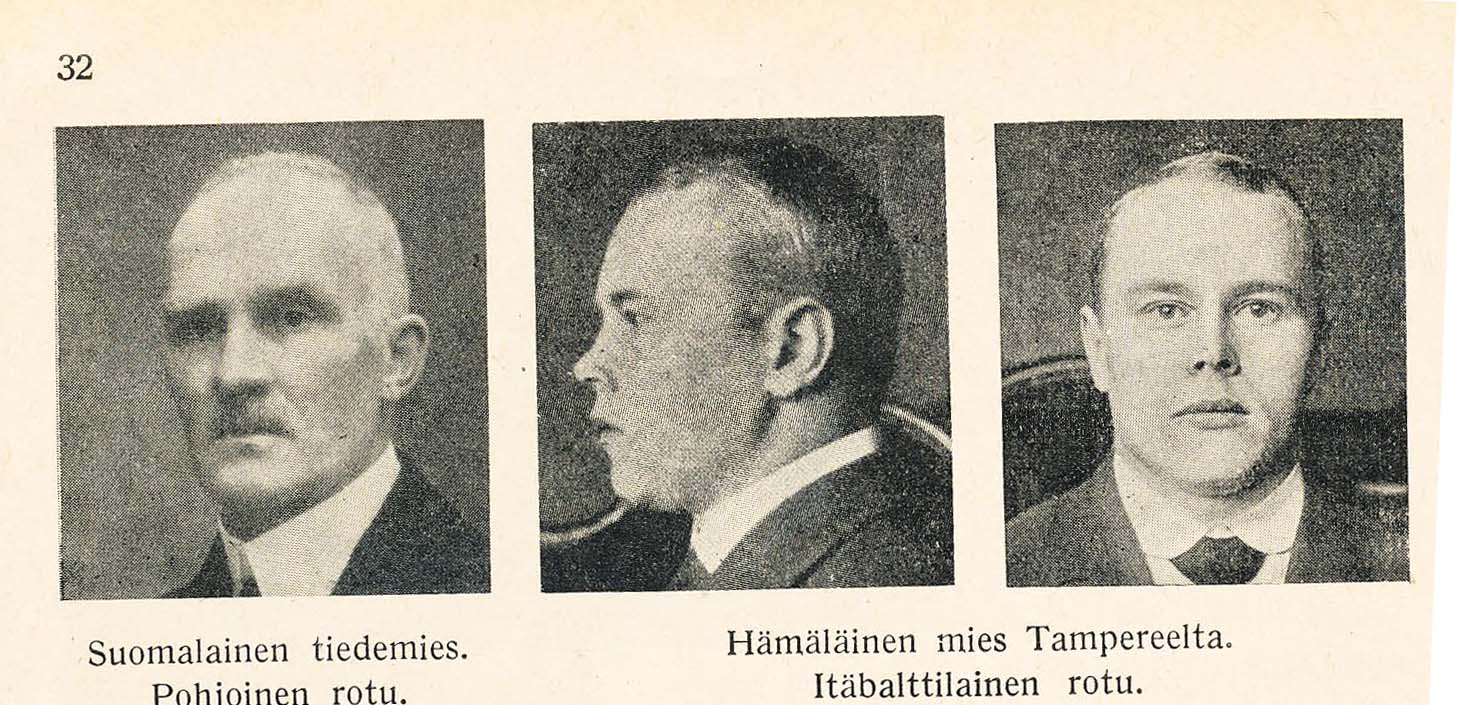
races of finland

Cultural diversity in Finland up to the 1970s divided Finns in some history books into the “Nordic and Eastern Baltic races.” This picture was taken from an elementary school book published in 1941.

If our expectations are on the right path and we have the right values as a society to make cultural diversity work, what then is the challenge? The answer is the following: If we don’t have yet as a society a big picture of what immigrants and their children are doing here, it means that we are still walking blindly towards the future with a seeing-eye dog called Chance.

Migrant Tales has documented numerous cases of racist harassment and bullying at Finnish schools from people like Ida, Micha and Abdulah.

Abdulah was seven when he moved from Somalia to Finland in the early 1990s and attended elementary school for the first time in Hyvinkää, a city located near Helsinki.

“I’ve been bullied, called names like the n-word, insulted, kicked and hit hard at school,” he said. “The only way to survive was to be quiet and roll with the punches. There was nothing else I could do because the teachers never believed me. They were always on the side of the white students.”

Not only is the hostile behavior they received from their classmates at school shameful, but more worrying has been the silence of some of the teachers.

I know of one student who, like a gay person coming out of the closet, proudly accepted as a young adult her Russian background. According to her, she was bullied so much at school because of her background, that her former classmates still harass her at her hometown of North Karelia. She has a better weapon against this type of hostility: She is today proud of her Russian and Finnish heritage.

If somebody would like to expose the ogre of racism in this country, I am certain you’d find it in the tales of those immigrant children who attended Finnish school  in the 1990s and even today.

It saddened me to hear that the mother of a black child from my hometown of Mikkeli, moved to Helsinki because of the racist bullying her child got at elementary school.

What did his classmates say? Every insult in the book to reinforce that he was different from his classmates and to destroy his self-esteem.

Part of the global fame that the Finnish educational system has enjoyed in recent years comes from the high scores achieved on the PISA exam, which focuses on young people’s ability to use their reading, mathematics and science skills.  How would Finnish schools fare if they had to resolve and adapt to diversity at school?

Would their scores be as impressive if they had to resolve and adapt to cultural diversity at school?

The Finnish National Board of Education’s core curriculum for primary and pre-primary education is a reflection of our noble values as a Nordic state. The existing curriculum, which was published in 2004, states the following: “The values and aims of the curriculum hinge on human rights, social equality, democracy, biodiversity, maintaining environmental sustainability as well as the acceptance of multiculturalism.“

It is incredible but pupils who aren’t your typical white Finn, even though they were born or have lived most of their lives in this country, are called at schools students with immigrant backgrounds, or maahanmuuttajataustainen.  The interesting question to ask is why this label, which in my opinion promotes social inequality, is used in the first place if many of these children are Finns with different ethnic backgrounds.

If Finland has the laws and the resources to build a successful culturally diverse society in this century, what are the challenges we face?

The biggest one are our prejudices and the tools we use to confront them.

How can we integrate people into our society if we are rejecting them with our prejudices?

Thus the laws and what happens on the ground at school reveal our expectations and reality concerning cultural diversity.

The fact that we still hear dear little about the racist bullying and harassment at Finnish schools reveals a wider problem we haven’t yet tackled as a society.

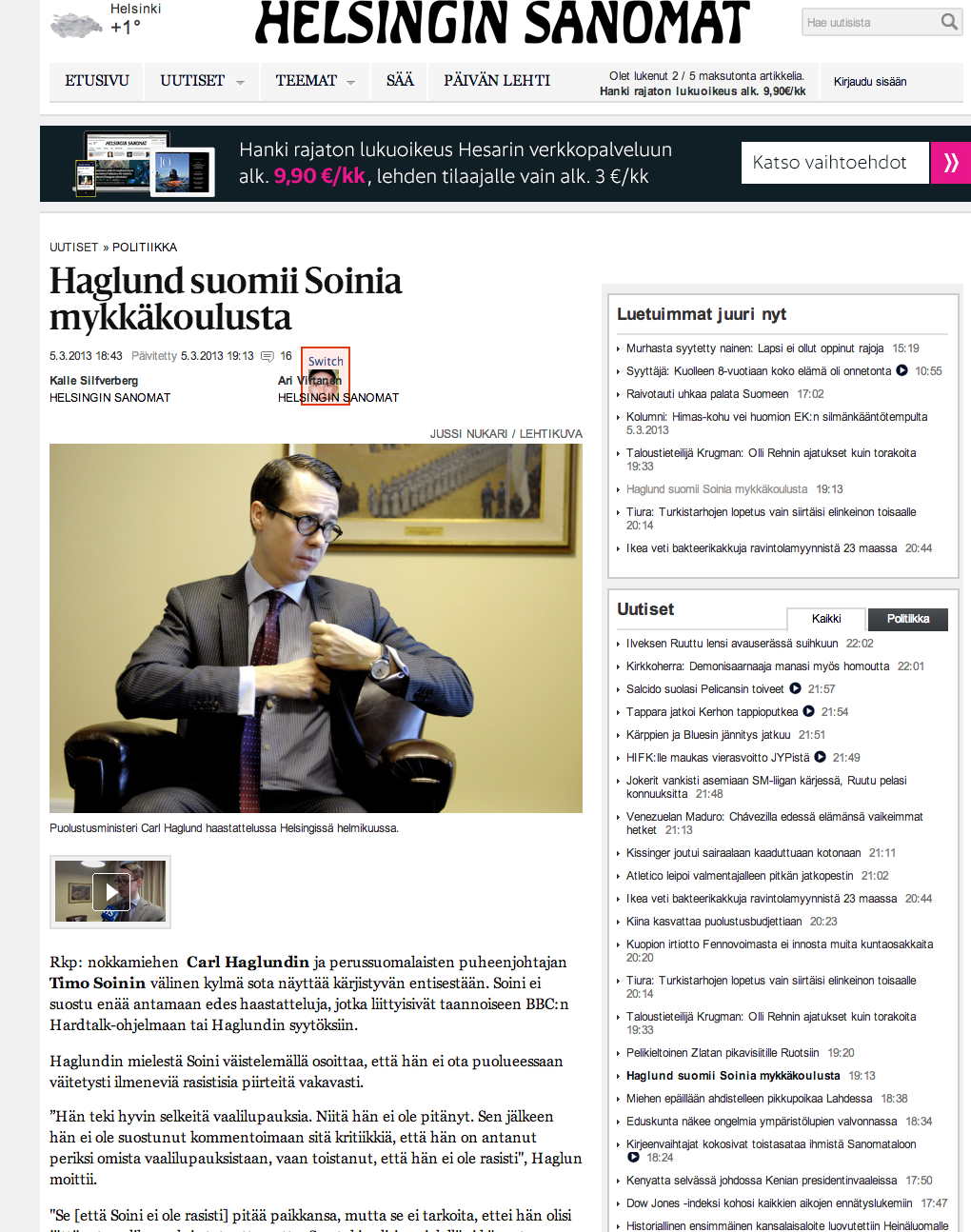
Haglund continues to challenge Soini on his broken campaign promises on racism

Posted on March 5, 2013 by Migrant Tales

The rift between Perussuomalaiset (PS) chairman Timo Soini and Carl Haglund, head of the Swedish People’s Party, reveals an ongoing David and Goliath duel where Soini is showing his true autocratic colors. Haglund challenged Soini last week to an open debate on racism after the PS leader was grilled on HARDtalk about this festering issue.   

Soini said in 2009 that he would sack any member from the party, especially an MP, if they were convicted for ethnic agitation.

Kuvankaappaus 2013-3-5 kello 23.05.46

As a result of Haglund’s challenge, Soini has refused to sit at the same table with him never mind have a debate about racism, according to Helsingin Sanomat. The PS leader even refuses to answer questions from journalists about the matter.

“He made a clear campaign promise, which he hasn’t kept,” Haglund was quoted as saying on Helsingin Sanomat. “After that he hasn’t accepted to comment about the criticism concerning his broken campaign promise but only repeated [in public] that he’s not a racist.”

Haglund, who is defense minister as well, said that the reason why the bigger parties haven’t challenged Soini on his broken campaign promise and racism  is because they fear the PS will continue to eat away at their support.

Migrant Tales asked the same question and gave roughly the same answer as Haglund on a March 3 blog entry.

We responded:  “The answer [why the big parties are so silent] is pretty obvious. There are two answers to this question: the biggest parties are too afraid to do so and/or silently agree with many of the populist policies of the PS.” The silence of the biggest parties has not undermined the PS’ popularity but helped it grow.

Thanks to the PS and its leader Soini, we have today given a political voice to a record number of racists, Islamophobes, immigrantphobes, isolationists, anti-EU supporters, male chauvinists, homophobes, neo-Nazis and Holocaust deniers. Certainly that’s something to be worried about if you are attempting to build a society based on acceptance and harmony.

Is this is the brand of “Christianity” that Soini wants to promote in Finland?   We certainly hope it isn’t but that’s what it looks like.

Migrant Tales raises its hat once again to Haglund for pressing Soini for some answers on his broken election promises.


Say no to stereotypes because they are the fuel that myths and prejudice feed on

Posted on March 5, 2013 by Migrant Tales

“Stereotypes have some truth to them” has some truth to it but not in the way people think. That truth is not about the stereotyped but the stereotyper.

Julian Abagond

The quote by Abagond not only exposes the stereotyper for what he or she is, but how racist myths and  views of other groups are maintained. In a country like Finland, which has had few immigrants in the past, it’s easy to understand why  stereotypes have flourished: nobody challenges them never mind the victim. 

STEREOTYPE3

In Finland I could say: “I’m Finnish, I don’t like sauna, I’m against going to the countryside and I hate stereotypes. Source: http://iesutebo2ing.blogspot.fi/2012/10/stereotypes.html

It’s a bit like if all of your workmates were men and your view of women was sexist, or based on stereotypes. Making jokes about women to reinforce your and the group’s chauvinism is possible as long as there aren’t any women sitting at the same table.

The same goes for gays who haven’t come out of the closet yet. People may make a homophobic comment or joke as long as the coast is clear.

The same applies to immigrants and other minorities. As long as there aren’t any of these people around, it may encourage some to make a racist joke or reinforce one’s myths with the help of  a stereotype.

I’ve been in too many situations where racist and homophobic jokes have been made. At first I didn’t laugh but now I speak out against them. I  say politely that such a comment is inappropriate or that you cannot generalize about people in such a way.

Whenever we generalize about a group with the help of stereotypes, we spoon-feed and help racism grow. Those who generalize, and thereby reveal their prejudice, may feel emboldened to do so because there aren’t any immigrants or minorities nearby.

Put one immigrant into the mix and the situation changes.

Thus the best way to rob racism of its precious air comprised of stereotypes and generalizations, is to deny its residence where you are.

I’ve been at meetings where people have generalized about other ethnic groups in a rude and denigrating fashion.

What to do?

Say politely but firmly: “You cannot generalize that way. People in the nineteenth century spoke that way about other groups.”

Result: You have denied a stereotype its space and its ability to survive another day.

Holocaust toll was much higher than believed – what will the deniers and Counterjihadists now say?

Posted on March 5, 2013 by Migrant Tales

Don’t look for intolerance in complex and distant places because it sits and hides right under our noses.

A story on the Huffington Post, reveals that researchers from the United States Holocaust Memorial Museum found over 40,000 Nazi death camps and ghettos that existed during Adolf Hitler’s reign of terror between 1933 and 1945. The total is much higher than previously believed, reports The New York Times.

Even if Counterjihadists claim to be pro-Israel, that is only lip service to hide their intolerance for diversity. If they ever got rid of the Muslims from Europe like their modern “final solution,” their next target would most likely be the Jews.

While the terror that the Nazi regime sowed is clear to most sensible people and the proof is out there in ever-greater quantities, there are some who are still in denial about the horrors of fascism and the Holocaust. Those who play down such atrocities committed against the Jews, Roma and other minorities in World War 2, can be found in parties like the Perussuomalaiset (PS) of Finland.

One of the matters that has always struck me about Counterjihadists, Holocaust deniers, populist right-wing radicals and anti-immigration politicians, is how they believe that history can be rewritten and forgotten to suit their opinionated ignorance and hatred.

Their denials are the brush that’s supposed to whitewash the truth.

Let’s look at a few of the many PS politicians what they think about fascism and the Holocaust so we don’t forget who they are.

A politician who made his questionable political career on spreading racism and hatred is PS MP Jussi Halla-aho.

What did he say?

  • “It’s quite justifiable to claim that the Nuremberg trials are a farce. Their guilt was decided beforehand and the convictions were carried out for absurd reasons.”
  • “Retroactively opposing the Holocaust is nicer and easier than getting involved in solving present-day problems. It is nice to accuse the Germans because it’s what everyone does. Armenians are irrelevant because Armenians don’t own Hollywood and the American media.”*

Halla-aho was convicted in June 2012 by the Supreme Court for ethnic agitation and breaching the sanctity of religion.

PS Kotka councilman Freddy Van Wonterghem, who claimed in May 2011 on Iltalehti that even though excesses happened during World War II, the Holocaust was an “exaggerated” fabrication by the former Soviet Union.

An appeals court upheld in February Van Wonterghem’s ethnic agitation conviction.

What did Van Wonterghem write? He said it was ok if Saudis kill a Muslim woman because that person would not give birth to anymore Muslims.

On a Migrant Tales blog entry on Uusi Suomi, Van Wonterghem had no regrets about what he wrote.

And then there’s a long list of others who are dazzled by far right ideology and who don’t hide their admiration for fascism.

PS MP Juho Eerola’s far-right and anti-immigration views are well-known. He once wrote in a blog entry that he liked Italian fascist Benito Mussolini’s economic system because there was full employment.

His aide, Ulla Pyysalo, applied for membership in the neo-Nazi Kansalinen Vastarinta.

Eerola didn’t want Pyysalo to resign. He said he’d be more worried if she’d apply for membership in a far-left group.

PS MP Jussi Niinstö, who chairs the defense committee, showed his political colors in the fall of 2011  when he quoted in parliament Nazi playwright Hans Johst’s Schlageter, “Wenn ich Kultur höre … entsichere ich meinen Browning” (“Whenever I hear of culture… I release the safety-catch of my Browning”).

Niinstö substituted the word “culture” in Johst’s play for parliamentarism.

Heidi Kuittinen is a PS politician from Kirkkonummi, located near Helsinki. She is another Holocaust denier: “Hitler’s mother’s father was apparently related to the Rothschilds. The six million dead have been proven to be a hoax anyway. The amount of Jews in Europe before and after the war just doesn’t match with the numbers of the supposed holocaust.”’*

Occasionally the PS shows its romanticism of Nazism as a group. The PS of the western Finnish city of Pori launched their municipal election campaign with a former Nazi catch phrase: “One city – one leader.”

The Nazi motto was: Ein Volk, ein Reich, ein Führer (One People, One Nation, One Leader).

Here’s what a former PS member, Atte Pulli, was quoted as saying recently: “SIEG HAIL! …Oops, I slipped. I’m drunk.”*

And another one by Amon Rautiainen, a Kotka city councilman: “People are too uptight with Nazism, if someone has a Totenkopf on a shirt or somebody questions the amount of people killed at concentration camps, you’re immediately branded with Hitler.”*

Rautiainen is being investigated  by the police for suggesting that Prime Minister Jyrki Katainen and Economy Minister Jutta Urpilainen should be killed and Muslims boiled alive, according to YLE in English.

In the face of playing down Nazism, fascism, the Holocaust and, of course, racism, it’s important that we the voters do not forget who these PS politicians are and what they really stand for behind their populist sound bites.

* Original source: truefinns.tumblr.com

Finnish police find list of hundreds of “enemies” at neo-Nazi’s home

Posted on March 4, 2013 by Migrant Tales

The Finnish police, who are investigating neo-Nazi Kansalinen Vastarinta (KV) activists for storming a book event on the far right in Jyväskylä in late-January, have found over 300 photos and personal information of “enemies” on one of the suspect’s memory stick, according to the police. 

Writes YLE in English: “The [memory] stick contained details about the religious and political convictions of people he regarded as political enemies. The information was kept under different categories, including ‘right-wing’, ‘left-wing’, ‘Jews’, ‘race traitors’ and ‘elite clubs.’”

The illegal list of people , which included Jews, was reported in the Israeli media, according to JTA.

The KV openly spreads anti-Semitism by glorifying National Socialism, the political ideology of Adolf Hitler’s Germany that reigned terror between 1933 and 1945.

JTA reports that Finnish Jews, which number about 2,000, have been told to exercise caution in disclosing  information about the events on Facebook and other social media sites.

Three men with bottles and knives barged in on January 30 a book presentation in the central Finnish city of Jyväskylä on far-right extremism. One of the three men who stormed the event is still at large, according to the police.

Meanwhile, a decision by the Etelä-Karjala police to cancel a similar book event in the southern city of Kotka has raised questions about freedom of speech and the right to assembly in Finland, reports Helsingin Sanomat. According to the organizers, the fire department wouldn’t give the green light to the event because the fire-rescue plan wasn’t turned in before the two-week deadline.

The organizers said that a fire-rescue plan was not necessary since it is only needed if  an event has more than 200 spectators.


Swedish People’s Party chairman challenges (without luck) PS head Soini on racism

Posted on March 3, 2013 by Migrant Tales

Migrant Tales raises its hat to Swedish People’s Party chairman, Carl Haglund, for challenging Perussuomalaiset (PS) Timo Soini on Helsingin Sanomat to an open debate about racism. Apart from immigrants and visible minorities, Finland’s Swedish-speaking population, which number about 291,000, has been under near-constant attack by the PS. 

Kuvankaappaus 2013-3-3 kello 22.33.09

It is unfortunate but understandable in today’s Finland that only a small party like Haglund’s is the only one openly challenging Soini on a crucial issue like racism. If the PS ever won an election that would make Soini the country’s next prime minister, the country’s Swedish-speaking population would, like immigrants and other minorities, have the most to lose.

The reaction of some PS MPs reinforces the latter.

PS MP Reijo Tossavainen, who suggested in May 2011 with Teuvo Hakkarainen that Finland should close its borders to asylum seekers, slammed Haglund’s attack on Soini  as “childish.”

Haglund recently asked on Helsingin Sanomat a timely question: Why is he the only one challenging Soini on racism? Why are the other parties so silent?

The answer is pretty obvious. There are two answers to this question: the biggest parties are too afraid to do so and/or silently agree with many of the populist policies of the PS.

Even if the PS can be called Finland’s Immigrantionphobe Party in the same way as The Independent called the Ukip, Soini’s followers are  ostensibly anti-EU and want to relegate Finland’s second official language, Swedish, to the dustbin of history.

Haglund correctly pointed out last month when Soini appeared on BBC’s HARDTalk that the PS leader shamed Finland because he treated, as he usually does, racism with kid gloves.

Soini has refused to comment on what Haglund said and has made it clear that he doesn’t want to be seen with him in public.

Whatever Soini may want to say, he got caught off guard by BBC’s HARDtalk journalist Stephen Sackur.

One of the these situations was when Soini attempted to defend PS MP Hakkarainen and his use of the n-word in Finland which is “completely unacceptable and racist.”

Soini: “I said [to Hakkarainen] don’t use that kind of [racist] language.”

Sackur: “Why didn’t you fire him?”

Soini: “Why should I?”

Saucker: “Because if people use that sort of completely derogatory word towards people of a different race it suggests that they are racist.”

Soini: “Yes, but he hasn’t said he’s a racist and I don’t believe he is a racist.”

ENAR announcement: Recycling hatred – racism(s) in Europe today

Posted on March 1, 2013 by Migrant Tales

The European Network Against Racism (ENAR) will organize a policy forum at the Institute for European Studies (IES),  Vrije Universiteit Brussel, on 7th March 2013 in order to launch the ENAR publication, entitled “Recylcing hatred: racism(s) in Europe today.”

For more information go to the following link.

Recyling hatred #1

Recyling hatred #2

Steverp`s blog: Where I need to be (hopefully with some help from some Finns!)

Posted on March 1, 2013 by Migrant Tales
Comment: I got a tweet from our friend in England who has published before on Migrant Tales. “He writes: @MigrantTales Any chance you can share this link to my blog so I can try to be closer to my son in #Finland? Thanks!”
Certainly Stephen. It will be an honor. 
______________________________
By steverp

So this weekend I had my son over to visit from Finland (well, Friday to Tuesday, in fact).

I met him & my ex at Heathrow at lunchtime on Friday & straight away he recognised me. I saw the smile on his face & my heart melted straight away – as it always does when I see him. Whilst his mum went outside for a cigarette we had a little chat & caught up. I use the term ‘chat’ loosely as it consisted of me talking to him & him saying random real & made-up words back to me, including “Diddle” which is his word for Daddy. He also used the time to show me his nose-picking skills that his Grandpa has taught him for some reason. His mum is constantly at odds with him trying to get him to stop, as was I over the weekend, but he just finds it hilarious & thinks it’s a big game.

The coach trip back down south was made quite easy by the fact I’d bought my iPad & Beats headphones & loaded Cars on to it (his current obsession). He sat quietly with me for a while & then went & sat next to his mum to flit between the film & random levels of Angry Birds – or ‘ankka’ to him which is Finnish for ‘duck’ & what he calls every bird he sees & shouts repeatedly when he wants to play on the iPad.

img0443nq

Despite seeing him 2-3 time a week on Skype, I was still so surprised at how much he’d grown & how his personality was now really starting to shine.

During the visit we stayed at my mum’s & our days were spent visiting friends & family, as well as visits to Poole Park, Gus Gorilla’s, Bournemouth Oceanarium & the local swings on the Monday when the last few days had finally caught up with him & he was too shattered to really do anything (as was I).

Unlike other visits here or on my visits to Finland, the ex & I arranged to go out for some dinner one night. I’m not sure we’ve actually sat down together properly & shared a proper meal/drink/conversation in nearly 3 years. Since the end of last year we’ve been getting on a lot better – having the odd chat & sharing a few jokes, stories etc when we’re on Skype & via GMail. So going out for dinner seemed like a good idea – it gave me a few hours break & meant she didn’t have to spend the evening eating alone at the hotel or somewhere in town. All in all, it was a great night. It was like the old days in Australia (where we’d originally met & lived together). We cleared the air, had some interesting & funny conversations & shared plenty of jokes. This was the woman I’d fallen in love with on that warm night at Durty Nelly’s in Perth all those years ago. & despite our problems over the years, I knew this side of her was still in there somewhere. It was great to catch up properly over a couple of Guinness’ after dinner. It felt like catching up with an old friend. I sincerely hope we can keep things like this between us as it’s a great place for us both to be in, & the benefits for Pessi are surely immeasurable.

Over those 5 days my bond with Pessi, & the understanding between us, increased more than I could have ever hoped. He constantly asked after me when I wasn’t in the room “DIDDLE! DIDDLE!”, & seemed to take in what I was saying to him & would respond accordingly. Kisses went from being scarce, to being an almost hourly thing in the end – including numerous world record challenges where he would come in for a kiss & stay there until I nearly passed out, which would include his cheeky tactic of grabbing my cheeks or ears so I couldn’t get away!

As it’s apparent from my previous blog posts (if you’ve been good enough to read them), my heart is most certainly in Finland. I’ve spent the last +2 years travelling too & from, as well as applying for tens if not hundreds of jobs every single week. All to no avail so far. My dream of moving there has never wained, but this weekend has just gone on to reinforce it even further – to the point where I’ve been sat here contemplating how I could possibly move there without a job & get by (something I always previously said I wouldn’t do).

I’m now starting to believe that I could sit here for the next 5 years & apply for every job going in Finland & I wouldn’t be successful – all the while missing out on precious time with Pessi – seeing him grow, develop & learn new things on a daily basis. So now begins the serious deliberations & planning to see if I could possibly get over there in the coming months without a job & with little money (as all my spare money at the moment goes on flights, hotels, visits etc). So if there is any good person out there (obviously in Helsinki or Espoo) that has a spare room, sofa, bathtub, rug on the floor, going, please get in touch. I’m not going to be in the position to fork out a deposit for somewhere formally myself, so I think I’m going to have to try & crash somewhere until I can find a job & have an income etc.

If there’s any one out there that can help (even if it’s just some words of wisdom or a potential lead), please do feel free to get in touch. You’d make at least these two people very, very happy!

Read original blog entry here.

This piece was reprinted by Migrant Tales with permission.
  • Previous
  • 1
  • 2
  • 3
  • 4
  • 5
Read more about documentary film
Read more

Recent Posts

  • Finland’s tabloids Iltalehti and Ilta-Sanomat are the pits
  • Riikka Purra’s Dr Jekyll and Mr Hyde mask
  • Double standards
  • Perussuomalaiset: Uusi logo, sama vanha juttu
  • Taco Trump

Recent Comments

  1. Absolutely Socking: Racist Finnish Facebook group against human rights gets flooded with socks on Musta Barbaari’s mother and sister charged by the police in “ethnic profiling” case
  2. Ilkka Nuotio on Pekka Myrskylä: “Tilastot kertovat toista kuin poliittinen keskustelu”
  3. Genrih Soinkara on The war in Ukraine and the Russian-Finnish border crisis are showing Finland’s ugly side
  4. Ahti Tolvanen on Comment by Ahti Tolvanen on the Helsinki +50 conference
  5. Angel Barrientos on Angel Barrientos is one of the kind beacons of Finland’s Chilean community

Archives

  • June 2026
  • May 2026
  • April 2026
  • March 2026
  • February 2026
  • January 2026
  • December 2025
  • November 2025
  • October 2025
  • September 2025
  • August 2025
  • July 2025
  • June 2025
  • May 2025
  • April 2025
  • March 2025
  • February 2025
  • January 2025
  • December 2024
  • November 2024
  • October 2024
  • September 2024
  • August 2024
  • July 2024
  • June 2024
  • May 2024
  • April 2024
  • March 2024
  • February 2024
  • January 2024
  • December 2023
  • November 2023
  • October 2023
  • September 2023
  • August 2023
  • July 2023
  • June 2023
  • May 2023
  • April 2023
  • March 2023
  • February 2023
  • January 2023
  • December 2022
  • November 2022
  • October 2022
  • September 2022
  • August 2022
  • July 2022
  • June 2022
  • May 2022
  • April 2022
  • March 2022
  • February 2022
  • January 2022
  • December 2021
  • November 2021
  • October 2021
  • September 2021
  • August 2021
  • July 2021
  • June 2021
  • May 2021
  • April 2021
  • March 2021
  • February 2021
  • January 2021
  • December 2020
  • November 2020
  • October 2020
  • September 2020
  • August 2020
  • July 2020
  • June 2020
  • May 2020
  • April 2020
  • March 2020
  • February 2020
  • January 2020
  • December 2019
  • November 2019
  • October 2019
  • September 2019
  • August 2019
  • July 2019
  • June 2019
  • May 2019
  • April 2019
  • March 2019
  • February 2019
  • January 2019
  • December 2018
  • November 2018
  • October 2018
  • September 2018
  • August 2018
  • July 2018
  • June 2018
  • May 2018
  • April 2018
  • March 2018
  • February 2018
  • January 2018
  • December 2017
  • November 2017
  • October 2017
  • September 2017
  • August 2017
  • July 2017
  • June 2017
  • May 2017
  • April 2017
  • March 2017
  • February 2017
  • January 2017
  • December 2016
  • November 2016
  • October 2016
  • September 2016
  • August 2016
  • July 2016
  • June 2016
  • May 2016
  • April 2016
  • March 2016
  • February 2016
  • January 2016
  • December 2015
  • November 2015
  • October 2015
  • September 2015
  • August 2015
  • July 2015
  • June 2015
  • May 2015
  • April 2015
  • March 2015
  • February 2015
  • January 2015
  • December 2014
  • November 2014
  • October 2014
  • September 2014
  • August 2014
  • July 2014
  • June 2014
  • May 2014
  • April 2014
  • March 2014
  • February 2014
  • January 2014
  • December 2013
  • November 2013
  • October 2013
  • September 2013
  • August 2013
  • July 2013
  • June 2013
  • May 2013
  • April 2013
  • March 2013
  • February 2013
  • January 2013
  • December 2012
  • November 2012
  • October 2012
  • September 2012
  • August 2012
  • July 2012
  • June 2012
  • May 2012
  • April 2012
  • March 2012
  • February 2012
  • January 2012
  • December 2011
  • November 2011
  • October 2011
  • September 2011
  • August 2011
  • July 2011
  • June 2011
  • May 2011
  • April 2011
  • March 2011
  • February 2011
  • January 2011
  • December 2010
  • November 2010
  • October 2010
  • September 2010
  • August 2010
  • July 2010
  • June 2010
  • May 2010
  • April 2010
  • March 2010
  • February 2010
  • January 2010
  • December 2009
  • November 2009
  • October 2009
  • September 2009
  • August 2009
  • July 2009
  • December 2008
  • November 2008
  • October 2008
  • September 2008
  • August 2008
  • July 2008
  • June 2008
  • May 2008
  • April 2008
  • March 2008
  • February 2008
  • January 2008
  • November 2007
  • October 2007
  • September 2007
  • August 2007
  • July 2007
  • June 2007
  • May 2007

Categories

  • ?? Gia L?c
  • ????? ?????? ????? ???????? ?? ??????
  • ???????
  • @HerraAhmed
  • @mondepasrond
  • @nohatefinland
  • @oula_silver
  • @Varathas
  • A Pakistani family
  • äärioikeisto
  • Abbas Bahmanpour
  • Abdi Muhis
  • Abdirahim Hussein Mohamed
  • Abdirahim Husu Hussein
  • Abdirisak Mahamed
  • About Migrant Tales
  • activism
  • Adam Al-Sawad
  • Adel Abidin
  • Afrofinland
  • Ahmed IJ
  • Ahti Tolvanen
  • Aino Pennanen
  • Aisha Maniar
  • Alan Ali
  • Alan Anstead
  • Alejandro Díaz Ortiz
  • Alekey Bulavsev
  • Aleksander Hemon
  • Aleksanterinliitto
  • Aleksanterinliitto ry
  • Aleksanterinliitto ry:n hallitus
  • Alex Alex
  • Alex Mckie
  • Alexander Nix
  • Alexandra Ayse Albayrak
  • Alexis Neuberg
  • Ali Asaad Hasan Alzuhairi
  • Ali Hossein Mir Ali
  • Ali Rashid
  • Ali Sagal Abdikarim
  • Alina Tsui
  • Aline Müller
  • All categories
  • Aman Heidari
  • Amiirah Salleh-Hoddin & Jana Turk
  • Amin A. Alem
  • Amir Zuhairi
  • Amkelwa Mbekeni
  • Ana María Gutiérrez Sorainen
  • Anachoma
  • Anders Adlecreutz
  • Angeliina Koskinen
  • Anna De Mutiis
  • Anna María Gutiérrez Sorainen
  • Anna-Kaisa Kuusisto ja Jaakko Tuominen
  • Annastiina Kallius
  • Anneli Juise Friman Lindeman
  • Announcement
  • Anonymous
  • Antero Leitzinger
  • anti-black racism
  • Anti-Hate Crime Organisation Finland
  • Anudari Boldbaatar
  • Arshiya Nasser
  • Aspergers Syndrome
  • Asylum Corner
  • Asylum seeker 406
  • Athena Griffin and Joe Feagin
  • Autism
  • Avaaz.org
  • Awale Olad
  • Ayan Said Mohamed
  • AYY
  • Barachiel
  • Bashy Quraishy
  • Beatrice Kabutakapua
  • Beri Jamal
  • Beri Jamal and Enrique Tessieri
  • Bertolt Brecht
  • Boiata
  • Boodi Kabbani
  • Bruno Gronow
  • Carmen Pekkarinen
  • Çelen Oben and Sheila Riikonen
  • Chiara Costa-Virtanen
  • Chiara Costa-Virtanen
  • Chiara Sorbello
  • Christian Thibault
  • Christopher Wylie
  • Clara Dublanc
  • Dana
  • Daniel Malpica
  • Danilo Canguçu
  • David Papineau
  • David Schneider
  • Dexter He
  • Don Flynn
  • Dr Masoud Kamali
  • Dr. Faith Mkwesha
  • Dr. Theodoros Fouskas
  • Edna Chun
  • Eeva Kilpi
  • Emanuela Susheela
  • En castellano
  • ENAR
  • Enrique
  • Enrique Tessieri
  • Enrique Tessieri & Raghad Mchawh
  • Enrique Tessieri & Yahya Rouissi
  • Enrique Tessieri and Muhammed Shire
  • Enrique Tessieri and Sira Moksi
  • Enrique Tessieri and Tom Vandenbosch
  • Enrique Tessieri and Wael Che
  • Enrique Tessieri and Yahya Rouissi
  • Enrique Tessieri and Zimema Mhone
  • Epäluottamusmies
  • EU
  • Europe
  • European Islamophobia Report
  • European Islamophobia Report 2019,
  • European Union
  • Eve Kyntäjä
  • Ezequiel Caldeiro
  • Facebook
  • Fadumo Dayib
  • Faisa Kahiye
  • Farhad Manjoo
  • Fasismi
  • Finland
  • Fizza Qureshi
  • Flyktingar och asyl
  • Foreign Student
  • Fozia Mir-Ali
  • Frances Webber
  • Frida Selim
  • Gareth Rice
  • Ghyslain Vedeaux
  • Global Art Point
  • Great Replacement
  • Habiba Ali
  • Hami Bahadori
  • Hami Bahdori
  • Hamid
  • Hamid Alsaameere
  • Hamid Bahdori
  • Handshake
  • Harmit Athwal
  • Hassan Abdi Ali
  • Hassan Muhumud
  • Heikki Huttunen
  • Heikki Wilenius
  • Helsingin Sanomat
  • Henning van der Hoeven
  • Henrika Mälmsröm
  • Hser Hser
  • Hser Hser ja Mustafa Isman
  • Husein Muhammed
  • Hussain Kazemian
  • Hussain Kazmenian
  • Ibrahim Khan
  • Ida
  • Ignacio Pérez Pérez
  • Iise Ali Hassan
  • Ilari Kaila & Tuomas Kaila
  • Imam Ka
  • inside-an-airport
  • Institute of Race Relations
  • Iraqi asylum seeker
  • IRR European News Team
  • IRR News Team
  • Islamic Society of Norhern FInland
  • Islamic Society of Northern Finland
  • Islamophobia
  • Jacobinmag.com
  • Jallow Momodou
  • Jan Holmberg
  • Jane Elliott
  • Jani Mäkelä
  • Jari Luoto
  • Jari Taponen
  • Jegor Nazarov
  • Jenni Stammeier
  • Jenny Bourne
  • Jessie Daniels
  • Joe Davidow
  • Johannes Koski
  • John D. Foster
  • John Grayson
  • John Marriott
  • Jon Burnett
  • Jorma Härkönen
  • Jos Schuurmans
  • José León Toro Mejías
  • Josue Tumayine
  • Jouni Karnasaari
  • Juan Camilo
  • Jukka Eräkare
  • Julian Abagond
  • Julie Pascoet
  • Jussi Halla-aho
  • Jussi Hallla-aho
  • Jussi Jalonen
  • JusticeDemon
  • Kadar Gelle
  • Kaksoiskansalaisuus
  • Kansainvälinen Mikkeli
  • Kansainvälinen Mikkeli ry
  • Katherine Tonkiss
  • Kati Lepistö
  • Kati van der Hoeven-Lepistö
  • Katie Bell
  • Kättely
  • Kerstin Ögård
  • Keshia Fredua-Mensah & Jamie Schearer
  • Khadidiatou Sylla
  • Khadra Abdirazak Sugulle
  • Kiihotus kansanryhmää vastaan
  • Kirsi Crowley
  • Koko Hubara
  • Kristiina Toivikko
  • Kubra Amini
  • KuRI
  • La Colectiva
  • La incitación al odio
  • Laura Huhtasaari
  • Lauri Finér
  • Leif Hagert
  • Léo Custódio
  • Leo Honka
  • Leontios Christodoulou
  • Lessie Branch
  • Lex Gaudius
  • Leyes de Finlandia
  • Liikkukaa!
  • Linda Hyökki
  • Liz Fekete
  • M. Blanc
  • Maarit Snellman
  • Mahad Sheikh Musse
  • Maija Vilkkumaa
  • Malmin Kebab Pizzeria Port Arthur
  • Marcell Lorincz
  • Mari Aaltola
  • María Paz López
  • Maria Rittis Ikola
  • Maria Tjader
  • Marja-Liisa Tolvanen
  • Mark
  • Markku Heikkinen
  • Marshall Niles
  • Martin Al-Laji
  • Maryan Siyad
  • Matt Carr
  • Mauricio Farah Gebara
  • Media Monitoring Group of Finland
  • Micah J. Christian
  • Michael McEachrane
  • Michele Levoy
  • Michelle Kaila
  • Migrant Tales
  • Migrant Tales Literary
  • Migrantes News
  • Migrants' Rights Network
  • MigriLeaks
  • Mikko Kapanen
  • Miriam Attias and Camila Haavisto
  • Mohamed Adan
  • Mohammad Javid
  • Mohammad M.
  • Monikulttuurisuus
  • Monisha Bhatia and Victoria Canning
  • Mor Ndiaye
  • Muh'ed
  • Muhamed Abdimajed Murshid
  • Muhammed Shire
  • Muhammed Shire and Enrique Tessieri
  • Muhis Azizi
  • Musimenta Dansila
  • Muslimiviha
  • Musulmanes
  • Namir al-Azzawi
  • Natsismi
  • Neurodiversity
  • New Women Connectors
  • Nils Muižnieks
  • No Labels No Walls
  • Noel Dandes
  • Nuor Dawood
  • Omar Khan
  • Otavanmedia
  • Oula Silvennoinen
  • Paco Diop
  • Pakistani family
  • Pentti Stranius
  • Perussuomalaiset
  • perustuslaki
  • Petra Laiti
  • Petri Cederlöf
  • Pia Grochowski
  • Podcast-lukija Bea Bergholm
  • Pohjois – Suomen Islamilainen Yhdyskunta
  • Pohjois Suomen Islamilainen Yhyskunta
  • Polina Kopylova
  • Race Files
  • racism
  • Racism Review
  • Raghad Mchawh
  • Ranska
  • Rashid H. and Migrant Tales
  • Rasismi
  • Raul Perez
  • Rebecka Holm
  • Reem Abu-Hayyeh
  • Refugees
  • Reija Härkönen
  • Remiel
  • Reza Nasri
  • Richard Gresswell
  • Riikka Purra
  • Risto Laakkonen
  • Rita Chahda
  • Ritva Kondi
  • Robito Ibrahim
  • Roble Bashir
  • Rockhaya Sylla
  • Rodolfo Walsh
  • Roger Casale
  • Rostam Atai
  • Roxana Crisólogo Correa
  • Ruth Grove-White
  • Ruth Waweru-Folabit
  • S-worldview
  • Sadio Ali Nuur
  • Sami Rusanen
  • Sandhu Bhamra
  • Sara de Jong
  • Sarah Crowther
  • Sari Alhariri
  • Sarkawt Khalil
  • Sasu
  • Scot Nakagawa
  • Shabana Ahmadzai
  • Shada Islam
  • Sharon Chang blogs
  • Shenita Ann McLean
  • Shirlene Green Newball
  • Sini Savolainen
  • Sira Moksi
  • Sonia K.
  • Sonia Maria Koo
  • Steverp
  • Stop Deportations
  • Suldaan Said Ahmed
  • Suomen mediaseurantakollektiivi
  • Suomen Muslimifoorumi ry
  • Suomen viharikosvastainen yhdistys
  • Suomen viharikosvastainen yhdistys ry
  • Suomi
  • Supermen
  • Susannah
  • Suva
  • Syrjintä
  • Talous
  • Tapio Tuomala
  • Taw Reh
  • Teivo Teivainen
  • The Daily Show
  • The Heino
  • The Supermen
  • Thomas Elfgren
  • Thulfiqar Abdulkarim
  • Tim McGettigan
  • Tino Singh
  • Tito Moustafa Sliem
  • Tobias Hübinette and L. Janelle Dance
  • Transport
  • Trica Danielle Keaton
  • Trilce Garcia
  • Trish Pääkkönen
  • Trish Pääkkönen and Enrique Tessieri
  • Tuulia Reponen
  • Uncategorized
  • UNITED
  • University of Eastern Finland
  • Uyi Osazee
  • Väkivalta
  • Vapaa Liikkuvuus
  • Venla-Sofia Saariaho
  • Vieraskynä
  • W. Che
  • W. Che an Enrique Tessieri
  • Wael Ch.
  • Wan Wei
  • Women for Refugee Women
  • Xaan Kaafi Maxamed Xalane
  • Xassan Kaafi Maxamed Xalane
  • Xassan-Kaafi Mohamed Halane & Enrique Tessieri
  • Yahya Rouissi
  • Yasmin Yusuf
  • Yassen Ghaleb
  • Yle Puhe
  • Yuliet Tresa
  • Yve Shepherd
  • Zahra Khavari
  • Zaker
  • Zalina Ametova
  • Zamzam Ahmed Ali
  • Zeinab Amini ja Soheila Khavari
  • Zimema Mahone and Enrique Tessieri
  • Zimema Mhone
  • Zoila Forss Crespo Moreyra
  • ZT
  • Zulma Sierra
  • Zuzeeko Tegha Abeng
© 2026 Migrant tales | Powered by Minimalist Blog WordPress Theme