Finland is still far from regaining its former political composure after the April 2011 elections, which saw the right-wing populist Finns Party win a historic election victory by becoming the country’s third-largest political force in parliament after the National Coalition Party and the Social Democrats. Compared to the elections before 2011, the number of Finns Party MPs rose from five in 2007 to an astonishing 39.
Many political observers have wondered how an anti-EU, anti-immigration and especially anti-Islam party can become a major political force in Finland in only four years. My guess is the following: Our lack of cultural diversity. Finland’s foreign population totals today about 4% of the population. It is still too small to make a dent on national politics.
Certainly, there are other factors at play that helped the Finns Party to win the last parliamentary elections. There’s the euro crisis and the deep recession, which have helped far-right and right-wing populist parties to see unprecedented growth in today’s Europe. Even so, if Finland had larger ethnic and religious minorities, the result of the 2011 election would have been different.
Our large Finnish-American and Finnish-Canadian expatriate communities abroad are good examples how diversity has not only enriched Finnish culture but made it stronger.
One of the big debates going on in Finland is how our ever-growing immigrant population will change our country demographically and culturally. While we don’t have a precise answer to such questions because the future rarely reveals itself to us, the only matter we can say with some certainty is that our population will change in the next two decades.
As the xenophobic government of Prime Minister Petteri Orpo aims to open some border crossings on the Finnish-Russian border on 14 January, the big question will the government revert to illegal pushbacks?
Why is there concern?
Orpo has gone as far as to suggest earlier that asylum seekers should be sent directly back to Russia supposedly because it is a safe country.
Such a suggestion, denying people the right to asylum, has received strong criticism from international law professor Martti Koskenniemi.
It is hard to make any sense out of the on-and-off Russian border closings.
Whether these will have any real effect in the long run on numbers of asylum seekers remains to be seen.
The way the war is going in Ukraine this winter almost guarantees an influx of hundreds or thousands more from that country, all of whom have so far been granted humanitarian protection. The impact of the Gaza conflict looks increasingly scary.
Ostensibly some of those who come from Ukraine have other destination options and as many might be diverted elsewhere as the number seen to be trickling across the Russian border when allowed. That way the objections about the social costs of accepting asylum seekers could be managed. A place in a refugee reception center has the same price, regardless of nationality.
But then there is this political contention that we should be helping Ukraine.
Now, the news just out from Russia is that the country is tightening up its laws regarding undocumented persons and that those who are not regularized will be fined or jailed- but given the option to fight in Ukraine after which they would be granted Russian residence.
It seems to me that if we really want to help Ukraine, we (meaning Finland) could grant many of those applying to Finland entry residence permits and deny the Russian army their services as reinforcements to destroy Ukraine. Accommodating, hundreds of such applicants from Russia would likely come much cheaper than the millions we are now spending to send weapons for Zelensky to fight a losing war. It would also likely be a policy appreciated by both Ukraine and our EU colleagues struggling to retain a credible refugee protection regime in the eyes of the world.
It would likely also be accepted by Russia as such a policy could also allow us to open the eastern border permitting persons of Russian extraction to be reunited over the holidays and winter months. Keeping the border open would also allow the continuation of container and automobile traffic transiting Russia, the loss of which is costing Finnish businesses millions.
This is the kind of “realpolitik” we could use as the birthrate in Finland has plummeted and those entering retirement are increasing apace. In an economy that is hardly growing, there is not much to attract the high-flying career movers that the Confederation of Finnish Businesses (EK) and Business Finland fantasize about, not even with fast-track residence permits.
On the other hand, knocking at the Eastern border among the “anonymous masses” are many highly educated and experienced professionals of working age. There is no really good reason not to allow them to enter. We just need to do the screening to identify them. This could to a large extent probably be done at Finnish consulates like Petroskoi. This would also take the pressure off the border crossings. Unfortunately, our government decided to close those as an empty gesture to Russia meant to show disapproval of the invasion of Ukraine.
The problem at the Eastern border is really a management one. In 2016, there was a similar issue of hundreds without documents entering from Russia. President Sauli Niinistö set up a meeting with Vladimir Putin and the whole problem was dealt with. Orpo, then the Finnish interior minister, went to Moscow and worked out the details behind the scenes. In short order persons without documents were stopped before getting to the border and the crisis was over. This was done with quiet diplomacy and no-one asked how this could happen under international or EU refugee protection laws.
I ran into former SUPO chief Seppo Tiitinen at an event where he was promoting his book at a community center in my neighbourhood. I asked him why Finland does not use the same formula to address the crises at the eastern border as in 2016.”We have to come off our high horse and talk to the Russians,” he said or words to that effect. “If we are able to,” He pointed out that the country had long used a “special” link to the top Russian leadership.
Orpo has announced that he has no interest in talking to Putin -or the Russians. So has Niinistö. Foreign Minister Elina Valtonen met Russia’s Foreign Minister Sergey Lavrov at the CSCE meeting in Skopje, a meeting convened to keep alive “The Helsinki Spirit” of all things. The words describe a high point of Finnish diplomacy, all about ending the cold war with peaceful diplomacy. Valtonen refused to shake Lavrov’s hand. Being new to the job, it seems Valtonen doesn’t understand what she is there for.
Finns are entitled to be represented by politicians who are willing to pragmatically manage relations with neighbouring countries- not build antagonisms.
Before starting their jobs, leaders-particularly in small countries neighboring huge ones, should be required to repeat Paasikivi’s famous quote a hundred times. They can find it engraved on the statue dedicated to him on Mannerheimintie Avenue.
“Peace comes from understanding the reality of things.
*Ahti Tolvanen is on the Migrant Tales’ editorial board.
Dr. Faith Mkwesha is a Zimbabwean who did her doctorate in South Africa and now lives in Finland. She has worked in higher education in Africa for many years. She is currently a lecturer and researcher at the University of Helsinki, the Swedish School of Social Sciences, and the Centre of Ethnic Relations and Nationalism (CEREN). She founded the Ubuntu Nordic Academy (UNA), where she offers Ubuntu-centered courses and expert workshops for institutions, businesses, and politics on health and well-being.
“I registered UNA after being encouraged by a friend who liked the meaning and practices of Ubuntu/Unhu African philosophy when he heard me give lectures on Ubuntu centered relations and partnerships. He even went on to buy some books on Ubuntu to show me that what I teach is more meaningful than some of these books. You know i was not thinking of making this a business that contributes in society here in Finland. You know Ubuntu teaches us to be kind even to strangers, give them food because we say a visitor does not empty the granary, and to respect each other. Ubuntu is very relevant in any society, i even teach about Ubuntu in university. This inspired me to start SahWira Africa International NGO an organization grounded in Ubuntu to advocate for women and children´s rights. “ – Dr. Faith Mkwesha
In a Western society, embracing the concept of Ubuntu has tremendous potential to foster unity, acceptance, and prosperity. Rooted in African philosophy, Ubuntu emphasizes the interconnectedness of humanity and the idea that our well-being is intertwined with the well-being of others. By embracing this principle, Western societies can move toward a more communal and inclusive mindset, breaking down barriers and fostering a sense of shared responsibility. In a world often characterized by individualism, Ubuntu promotes empathy, cooperation, and mutual support – essential elements for addressing societal challenges. This philosophy can pave the way for a more compassionate and understanding society where diverse perspectives are not only tolerated but celebrated. Ultimately, the integration of Ubuntu into Western cultures can help build a more harmonious and prosperous community where the collective success of all is prioritized over individual achievement.
Among other very important things, Dr. Faith Mkwesha in her lecture below, “Ubuntu Centered Diversity,” highlights the profound importance of the deeply rooted Sankofa bird which is a rich tapestry of Akan culture. Sankofa embodies a profound philosophy that transcends time, encourages a reflective journey, and reminds us that understanding our roots is essential to personal and collective growth. This timeless wisdom resonates and echoes throughout the African diaspora, serving as a powerful beacon of cultural identity.
Amid the rise of far-right ideologies, Ubuntu is emerging as a powerful tool for healing and building a stronger society. Ubuntu serves as a counterforce to divisive narratives by championing interconnectedness and shared humanity. It encourages dialogue over discord and promotes understanding in the face of ideological polarization. The philosophy’s emphasis on collective well-being by dismantling the exclusivity often associated with far-right politics, it paves the way for a more inclusive and harmonious society. Ubuntu challenges the us-versus-them mentality and offers a way to heal societal fractures and build a resilient foundation rooted in empathy, cooperation, and shared prosperity. In times of political polarization, embracing Ubuntu becomes not only a cultural imperative but a pragmatic strategy for forging a more united and resilient future.
I invite you to embark on a transformative intellectual journey by watching a riveting lecture by Dr. Faith Mkwesha, which delves into Ubuntu Centered Diversity. The video, accessible via Ubuntu Nordic Academy’s YouTube channel, showcases Dr. Faith Mkwesha’s expertise and promises to provide valuable insights that could reshape our understanding of our society and how much Ubuntu is needed.
Radical right Perussuoalaiset (PS)* chairperson, Riikka Purra, like Interior Minister Mari Rantanen, loathes Muslims and other minorities. Slamming and suggesting that Deputy Chancellor of Justice Mikko Puumalainen is a”liberal moron,” exposes her hatred and desperation.
Purra, the one who said she’d shoot migrant youths on a train in 2008, now takes out her crystal ball and claims to be a clairvoyant.
She writes that the people coming from Russia to the border “are not genuine asylum seekers,” adding that they “have nothing to worry about and are not fleeing [war].”
If Purra claims that these people aren’t real asylum seekers, we could say that her concern about “national security” due to a few hundred asylum seekers coming to the border is hogwash. In 2015, we had thousands of asylum seekers entering Finland from Iraq and Afghanistan and nobody raised serious outcries about national security. As we can see, it is all a political stunt by Purra and her party.
But here is the question: Why is Purra so eager about trashing our international agreements that are protected, according to her, by “liberal morons.”
In order to expose the lies of Prime Minister Petteri Orpo’s government, just look at the flagrant denials and outrageous claims. There are two that fit the far-right playbook to a tee: (1) We can shut the Finnish-Russian border and deny people the right to asylum; and (2) Vladimir Putin can get political asylum in Finland.
Both are false claims intended for public consumption.
When it comes to migrants, the far-right playbook works in the following manner:
Make an outrageous claim like we can shut the whole eastern border and deny asylum.
Even if the media will disprove your claim later, it does not matter because the news is already out there.
Your followers have received the fictitious claim.
The government is now offering two lies for the price of one. First lie: We can shut the whole Finnish-Russian border and tell asylum seekers to go fly a kite. Second lie: Vladimir Putin can get refuge in Finland by simply mentioning the magic word, “asylum,” at the border.
The first lie, that the government can shut the border to asylum seekers, is a campaign promise made by the National Coalition Party and PS, whose leader Riikka Purra falsely misled voters to believe that her party’s get-ough stance on migrants meant denying their rights to asylum.
The government has adopted far-right rhetoric. In this ad, the government claims that its measures at the border are to “stop illegal migration.” The claim is as absurd as labeling people as “illegal refugees.” Is there such a thing? The spread of misinformation is as full wing.
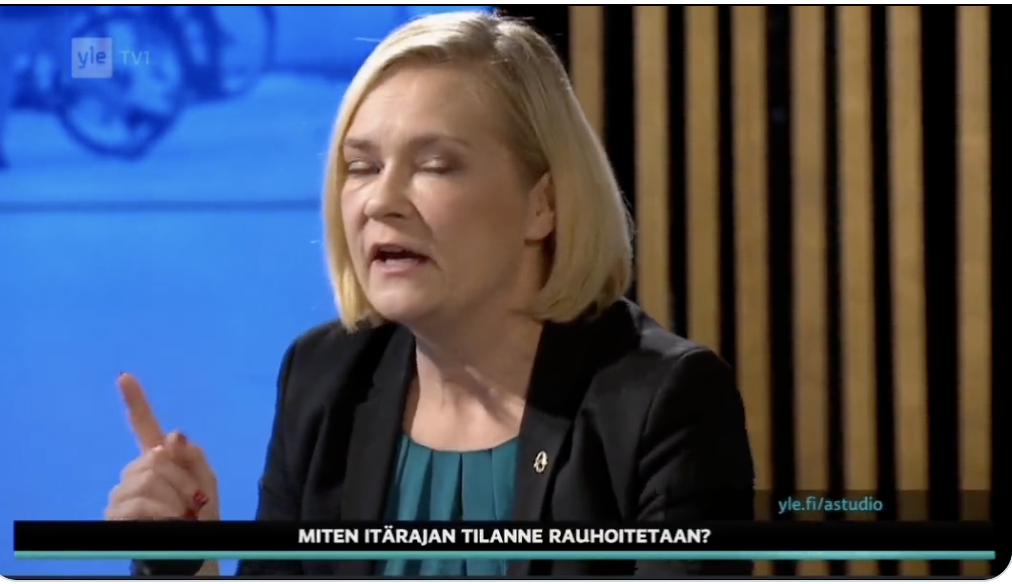
Thursday’s A-talk not only exposed Perussuoomalaiset (PS)* Interior Minister Mari Rantanen’s total disregard and desire to trash international refugee agreements, but her propensity to spread disinformation to her voter base.
The logic is the same that we’ve seen throughout history: I hate this group and this entitles me to spread lies about them at will.
Rantanen makes an off-the-cuff claim:
“It [present refugee system] means that if we continue on this path it means that anyone from anywhere, and it means [she shows excitement] if Vladimir Putin crosses the border and says, ‘asylum,’ he can stay indefinitely [in Finland] – it also means that,” said Rantanen. Left Alliance Chairperson Li Andersson laughs at Rantanen’s claim and stresses that it does not mean that. Putin would be arrested and sent to the International Cour of Justice at The Hague. Rantanen continues: “You can’t send [Putin] back to Russia because it isn’t a safe country.”
IRadical-right nterioir Minister Rantanen commonly spreads disinformation about asylum seekers and migrants. She is a hateful politician who has built her political career on xenophobia. Source: Yle
Politicians like Rantanen use an old trick to spread disinformation. It involves making an outrageous claim, like Putin cannot be returned to Russia if he applies for asylum. The news spreads like a wildfire to her voter base. Even if journalists refute her claim later, it does not matter because it is too late. The news is already out there.
How can you trust a party and government that builds its support on conspiracy theories about asylum seekers? You can if you are gullible.
Due to over 300 asylum seekers who came from countries with terrible human rights issues due to wars like Syria, Yemen, and Somalia, the Finnish government has decided to shut four border crossing points until 18 February 2024.
The coverage by the Finnish media of the issue and the statements given by government officials and the Finnish Border Guards resemble a taring-and-feathing event.
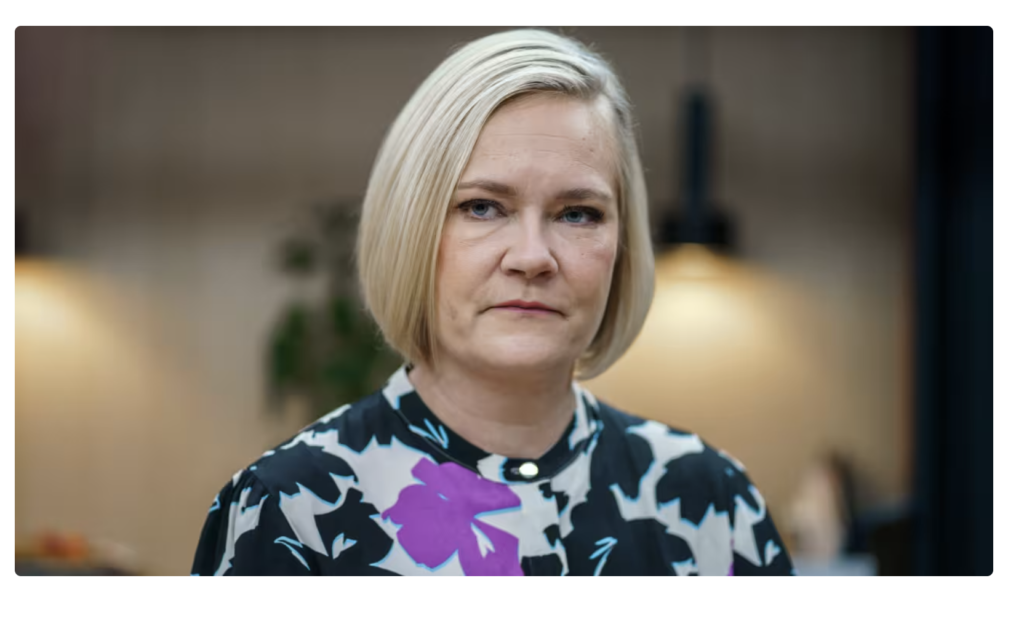
Perussuomalaiset Interior Minister Mari Rantanen is the ugly face of Finnish Islamophobia.. She has a long history of spreading conspiracy theories and anti-Muslim racism. Apart from tightening the screws on asylum seekers, her radical anti-immigration views are littered by hateful quotes, which have been deleted from her social media pages. Some of these are founded on the far-right great replacement theory. “Source: Yle.
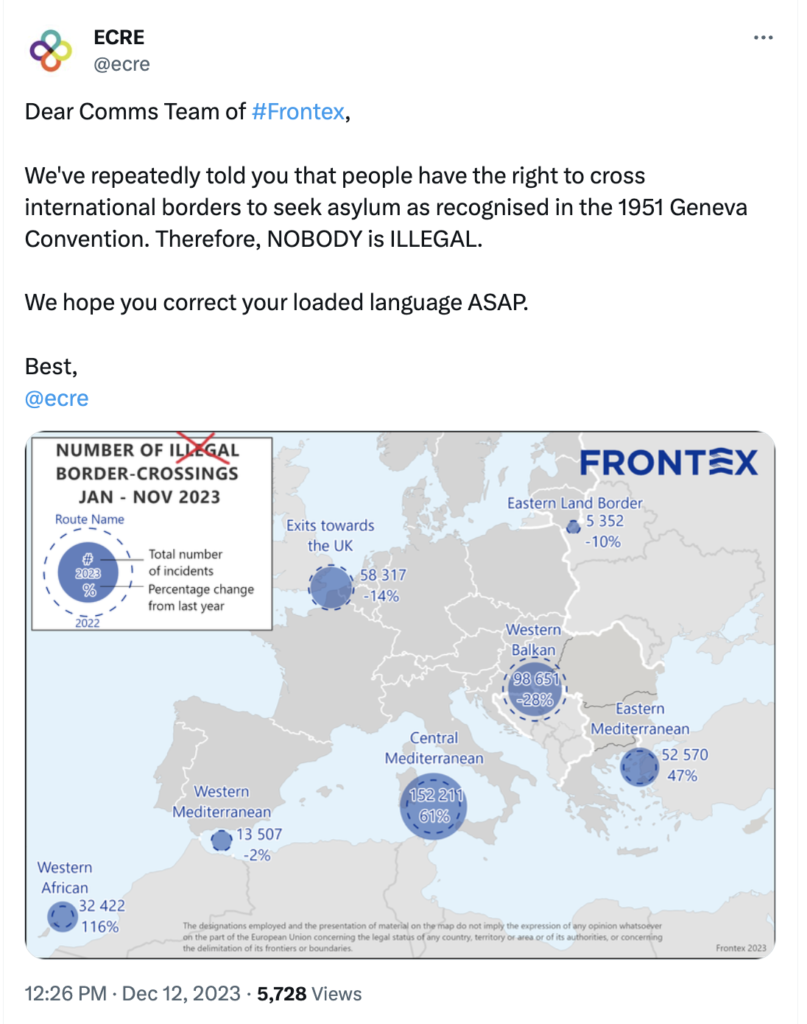
Even if the trickle of asylum seekers coming to Finland are from countries with serious human rights violations, officials and the media prefer to label them as “illegal” migrants. Even President Sauli Niiinistö, whose past statements against Muslims and asylum seekers reveal his disdain for such groups, he has unsurprisingly given his support to the government.
Even the council of state defends its decision to shut the Finnish-Russian border on stopping “illegal immigration.” The anti-Muslim and anti-immigration campaign by the government is at full swing. Source: valtioneuvosto.fi
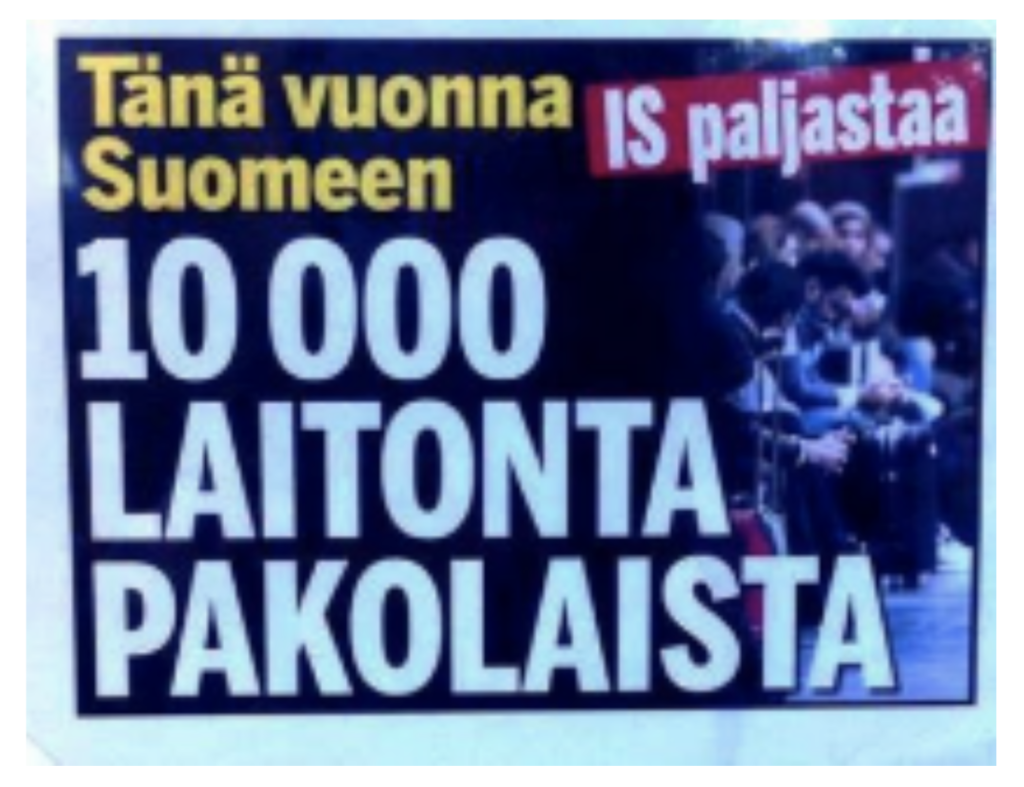
Some of the Finnish media continues to see refugees as “illegal” migrants. In this billboard, tabloid Ilta-Sanomat wants that “this year 10,000 illegal refugees” will arrive in Finland.
President Niinistö has stuck his foot in his mouth a number of times when he opens his mouth about asylum seekers. One of his most infamous comments is about an Iraqi asylum seeker, culture inside four walls.
If there is a reminder on how bad Finland’s racism problem has got, take a look at the rise of the Perussuomalaiset (PS)* party since the 2011 parliamentary election and specifically its main motor, Jussi Halla-aho. Having him treated as “a normal” politician by the media and other politicians makes him look like a wretched politician in an intensive care ward.
His political life-saving support comes from his blog, Scripta, written in the 2000.
For many Finns, it is difficult to weigh how demeaning and racist his writings are and how they paint a capricious and greedy man who is a white supremacist desperately seeking recognition and approval. Halla-aho will never apologize for his racist writings because it would cut off his political life support.
Moreover, playing down and moving forward with a poker face concerning the damage he has caused on Finland and especially on minorities, would not be possible if he apologized for his racist writings.
There are many ways to skin the cat of an old racist who hides behind the cloak of democratic institutions. One of these methods is to reverse the roles of his victims in his writing to grasp how toxic the person is.
Example 1:
“I am thoroughly confused as to why muslims have such a great desire to inflict pain on those who are in a weaker position, such as animals, children and women. I think this pattern is pretty clear. Why do muslims jump around ululating with their dicks hard whenever heads get chopped off or someone gets whipped?
“I am thoroughly confused as to why muslims white Finnshave such a great desire to inflict pain on those who are in a weaker position, such as animals, children and women. I think this pattern is pretty clear. Why do muslimswhite Finns jump around ululatingdrunk with their dicks hard limp whenever a Russian’s head gets chopped off or someone gets whipped beaten to a pulp?
“It is hard for me to think about a lower reptile in the universe than a Scandinavian social democrat. The most slimy subscpecies of this reptile is the Swedish social democrat.”
“It is hard for me to think about a lower reptile in the universe than a Scandinavian social democrat a Finnish Perussuomalaiset. The most slimy subscpecies of this reptile is the Swedish social democratSweden Democrat.
When it comes to migration policy and treating asylum seekers, the EU has three solutions:
Sticking one’s head in the sand.
Sticking one’s head up the arse.
Build high deadly walls with nails of denial.
It is clear that with global warming and democracy under attack, more people will have to abandon their homes and come to regions like Europe. If I were them, I’d do the same.
But the most distressing fact is that Europe is in denial and believes that populism and xenophobia will help keep the people who are knocking at our doors out. No, populism or Frontex will not secure our borders.
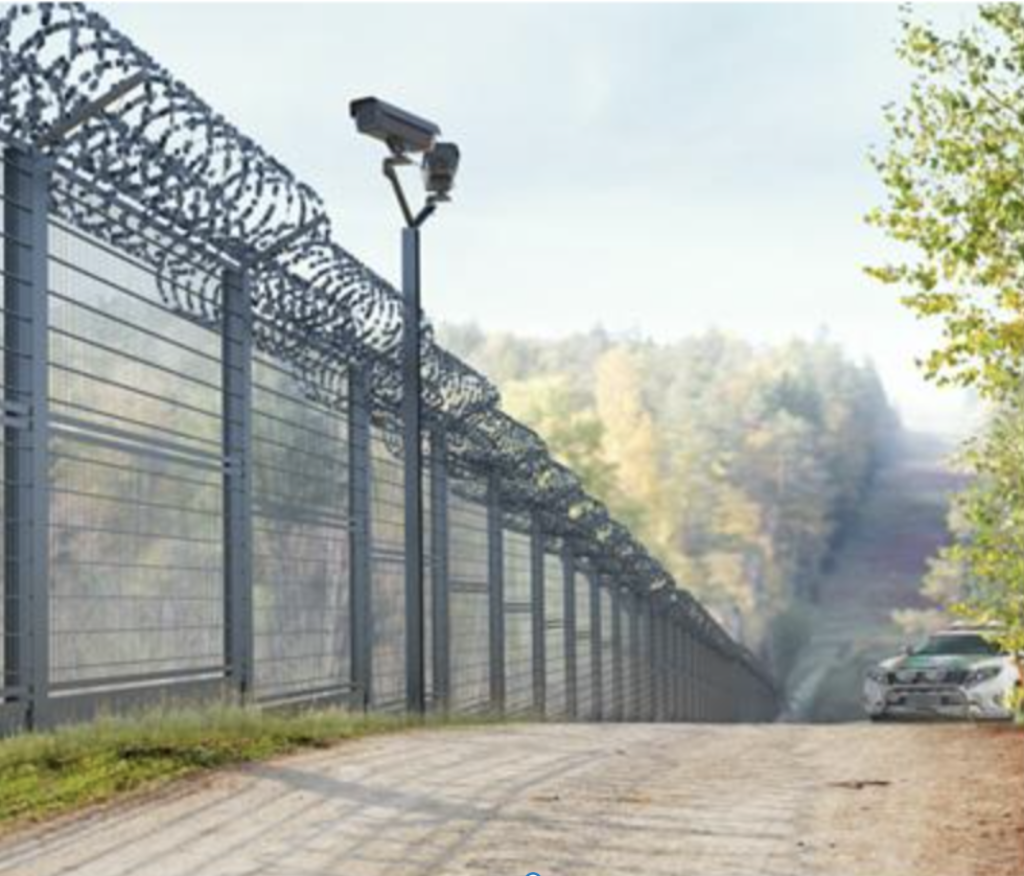
Finland’s answer, like that of Europe’s Frontex, to climate refugees is a fence, wishful thinking, and the populist rhetoric of politicians. Source: Kauppalehti.
Europe is walking into a disaster of its own making caused by its colonial legacy, contempt, and racism.