The Islamophobic and populist Perussuomalaiset (PS) is a party that attempts to revindicate far-right racists on the rampage and its leader, Jussi Halla-aho, is US President Donald Trump’s enthusiastic cheerleader.
Halla-aho, who has a conviction for ethnic agitation, breaching the sanctity of religion and being a racist smartass, stated his undying admiration for a president who is a chronic narcissist and defies science.
On June 4, 2019, Halla-aho tweets: “I dig. him. Trump is the best thing that has happened in a long time to the United States and to the Western world.”
As we all heard Thursday, President Trump suggested that a beam of light and a disinfectant like bleach, if injected in the body, could help kill the coronavirus.
Halla-aho’s and his party’s admiration of Trump reveals the kind of country they’d want Finland to be.
This blog entry is dedicated to the late Donald Fields, Helsinki correspondent of the BBC, The Guardian, and Politiken to 1988.
As a journalist writing from Finland for some of Europe’s biggest dailies in the 1980s like the Financial Times, there is one matter that stands out from those days: censorship.
The censorship that Finland imposed on its media was overpowering and near-complete. Even writing about topics like EU – then EEC – membership was out of the question. Foreign policy was the sacrosanct topic reserved for only a few “wise” men.
As one example out of many, in 1992 I wrote an editorial for Apu magazine about the scrapping of the treaty of Friendship, Cooperation, and Mutual Assistance (YYA) with the Soviet Union. At the last moment, my editorial was taken down.
The only matter that remained of my editorial on the page was a black-and-white picture of Soviet Foreign Minister Vyacheslav Molotov signing the YYA agreement in 1948.
The then editor of Apu, Matti Saari, warned me: “I’m the only one that writes about such topics in editorials.”
Whenever I wrote a story that was critical about Finnish-Soviet relations, I’d get a call from the Soviet Embassy. Even the foreign ministry warned me that I would be blacklisted if I wrote critically as I once did for Spain’s leading news magazine Cambio 16 about the contraband of Bibles to the USSR.
A Finnish diplomat whom I knew in Madrid told me how furious they had been about what I had written. She said outright that if I continued to write about such topics, then I would be blacklisted by the foreign ministry.
Mike Hofman published in 2014 his thesis on media censorship during the cold war.
Soviet Foreign Minister Vyacheslav Molotov signing in 1948 the treaty of Friendship, Cooperation, and Mutual Agreement. Source: Yle.
Some of these “wise” men who guided Finland’s sacrosanct foreign policy during the cold war was the late Max Jakobson (1923-2013). I found out many years after his death that we were distant relatives. Our great great great grandfather was Jacob Weikain, who moved to Hamina in 1799 and was the first Jew to get a residence permit.
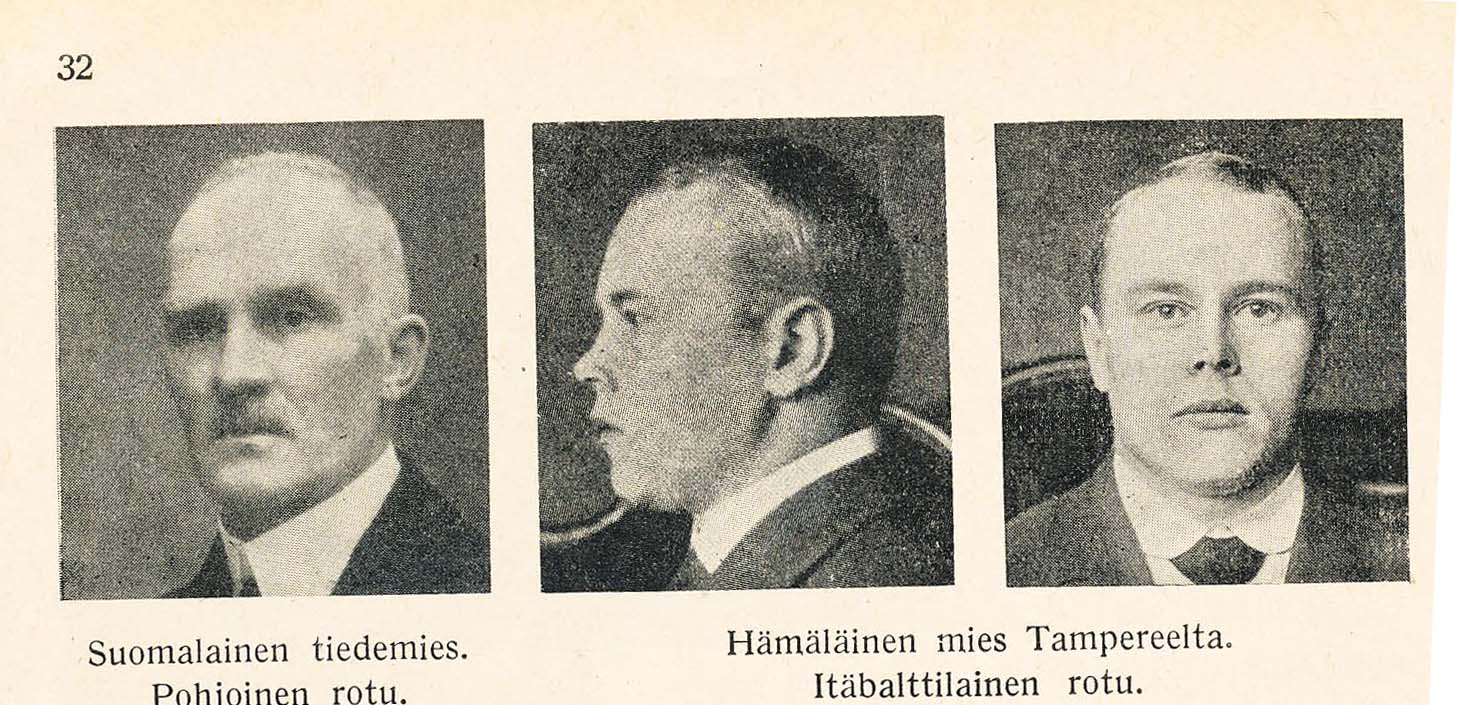
Believe it or not, history books in Finland to the 1970s still claimed that Finland was populated by two races, the Nordic and East Baltic. Eugenics was a big pseudoscience in Finland.Source: J.E. Aro, J.E. Rosberg, I Arvi F. Poijärvi, Koulun maantieto, WSOY, 1941. p.32.
Jakobson, like some of the hardliners of the foreign ministry, and associations like Finnfacts, whose job was to invite foreign journalists to Finland so they’d write positive things about the country, did not accept anyone diverging from the official interpretation of relations with Moscow.
In the minds of many foreign ministry officials, Finlandization, foreign policy dictated by the USSR, did not exist.
In the summer 1980 edition of Foreign Affairs, Jakobson wrote: “As a result, Finland is forever at the mercy of the itinerant columnist who after lunch and cocktails in Helsinki is ready to pronounce himself upon the fate of the Finnish people.”
The attitude that Finns never mind foreigners should see the country’s relations with the USSR from its perspective, reveals today Finnish exceptionalism. Foreign journalists and scholars should not give their opinion because they don’t understand our reality.
This exclusive attitude is highlighted by S. Muir and H. Worthen in “Finland’s Holocaust.” “Even when there was something written about Finland, the perspective of the foreign researcher was often criticized for hopeless objectivity and the blindness towards the specifically Finnish war-time historical context. In many cases, this has been more than justified (our emphasis).”[1]
How have the cold war years impacted Finland today? Is it evident in its immigration and asylum policy and the general suspicion of foreigners? Can we trace its impact to the rise of a racist party called the Perussuomalaiset (PS)?* What about the explosive increase of hate speech and racism?
As S. Muir and H Worthen as well as other scholars, it is clear that the roots of Finnish racism are rooted in its history.
They continue: “The myth of an ideologically unified Finland isolated from the attitudes and practices of its ally, the Third Reich, and generally unsullied by antisemitism has become an insupportable burden for contemporary Finnish historical and cultural studies, and indeed for contemporary Finnish society; the insensitivity toward these silenced histories provides a condition of continued racism and antisemitism. [2]
Cold War and Human Rights
My Finnish relatives are a source that helps me to understand the source of racism. It is right under my nose almost completely whitewashed by hostility and history.
Part of my grandfather’s family changed their surname in 1931 to Harvo from Handtwargh. Even if I never asked my grandfather why he changed his surname, I suspect it had to do with the rise of fascism and anti-foreign sentiment, which was fed by anti-Semitism.
While matters like my family’s Jewish background took decades to figure out, one of my greatest disappointments, when I moved permanently to Finland in December 1978, came when an Aliens’ Office official said that I wasn’t a Finn.
Citizenship in Finland is determined by the parents’ citizenship (jus sanguinis). Even so, I was not considered a Finn because my father wasn’t a Finn.
Even if people in this country are quick to point out that women where the first in Europe who won the right to vote in 1906, it was not until 1984 when they had the right to pass on Finnish citizenship to their children.
A year before women won such a right, the country had in force its first-ever Aliens Act. Before the act, foreigners were treated by the aliens’ authorities on a one-to-one basis. You had no rights and could be deported without the right to appeal.
The treatment of foreigners, especially Soviet refugees, was disgraceful during the cold war.
Migrant Tales has written onSoviet asylum-seekers in Finland in the past and how they were returned against their will to the USSR to suffer a gruesome fate in psychiatric wards and prisons. One of these that I met was Aleksandr Shatravka, who visited my home in 2011 with his wife Irina. Thanks to Aleksandr, whom I met thanks to Migrant Tales, I published in February 2010 in one of Finland’s first-ever extensive human- interest stories on a former asylum-seeker who was forcibly returned to the Soviet Union in 1976.
If Finland was hostile to refugees and suspicious of foreigners, the country was ruled until 1992 by the Restricting Act of 1939.
The Act prohibited foreigners from owning real estate and acquiring a majority stake in Finnish companies—limiting this to 20% normally and 40% under special permission. The Restricting Act stipulated that foreigners could not own shares in sectors like forestry, securities trading, transportation, mining, real estate, and shipping. Foreigners weren’t allowed to establish newspapers, never mind organize demonstrations, and be politically active.
If history shows us some of the roots of our racism and anti-Semitism today, it also sheds as well light on our restrictive asylum and immigration policy. It explains why the Finnish Immigration Service operates in the way it does and why it has been the object of much criticism.
One positive step in cutting the roots and sources of our racism was an independent investigation that confirmed in February that Finnish volunteers of the Waffen-SS Wiking Division engaged in violent acts against civilians and Jews in Russia.
Considering that the aim of the SS in Russia was a war of annihilation and genocide against Jews and other enemies of the Nazis, the conclusions of the investigation should not come as a surprise.
The big surprise, however, is that it has taken almost 85 years to connect the volunteers of the Waffen-SS dots to the genocide that took place in Russia during World War 2.
[1] Finland’s Holocaust: Silences of History, edited by S. Muir, H. Worthen, pp. 25-26.
According to Yaron Nadbornik, president of the 1,100-strong Jewish Community of Helsinki, the Finnish authorities acknowledge that there is anti-Semitism and it is a problem.
“The authorities have recognized during 2018-2019 that there is an anti-Semitism problem in Finland,” he said. “Before it was [for them] pretty unclear if such a matter existed.”
According to Nadbornik, the shift in attitude happened due to the activities of neo-Nazi and far-right groups in Finland.
The head of the Jewish Community of Helsinki said that hate speech continues to be the fertile ground for anti-Semitism and racism in Finland.
“More efforts [by the authorities] should be taken to address hate speech,” he continued, “because it is from there where terrible things happen.”
Nadbornik complained in an interview in 2017 that the government of Prime Minsiter Juha Sipilä was not doing enough to clamp down on online hate speech.
“Anti-Semitism has become more systematic and organized [since 2017],” he said, adding the groups use different online platforms to spread their hatred.
Nadbornik agreed that politicians should show more leadership against hate speech and social ills like anti-Semitism and racism.
“Politicians do speak out against hate speech but a lot more could be done,” he said. “President [Sauli] Niinistö’s speech denouncing anti-Semitism [and condemning neo-Nazi groups] was important because it reaffirmed that there is a problem [in Finland and steps must be taken to eradicate it].”
President Niinistö’s condemnation came after the Turku Synagogue was the target of vandals on Holocaust Remembrance Day in January.
Nadbornik said that the Synagogue of Helsinki was also vandalized several times in winter with paint and stickers.
“The coronavirus [pandemic] has fueled racism against the Chinese and Jews in Central Europe and the United States,” he concluded. “We haven’t seen this problem in Finland, and I hope I never will.”
If you had the opportunity ever to know Ali, one of the first things you’d know is his arduous journey from Finland to Iraq and hopefully back. During the roughly three years lived in Finland, the Finnish Immigration Service (Migri) to tell him that he isn’t wanted here.
This is his situation today: Ali left voluntarily in June 2018 to Iraq, got married to his sweetheartin Turkey in October of the same year, and applied for a visa to Finland on the grounds that he is married to a Finnish citizen.
After a long wait, their chance to live together in Finland was dashed last autumn by Migri, which claimed that their marriage is fake.
Both have appealed the decision to the administrative court.
“Sometimes I lose hope and it is really a stressful feeling,” said Ali’s wife. “I hope things will work out. We will find a way.”
Apart from doing everything legally, the couple sent a letter to Interior Minister Maria Ohisalo asking her to intervene in their case.
“I haven’t got any reply from her office,” said Ali’s wife. “Not even confirmation that they received our letter.”
There is always a question that arises from Ali: “How long before I can be by my beloved wife’s side?”
If there is one matter that characterizes Migri in Ali’s and his wife’s case it is the sheer cruelty and arbitrariness of how Migri treats asylum seekers from the Middle East, Ali’s case is one from a long list of other Middle Easterners married to a Finn.
Just like Finland’s inhumane family reunification policy, the human right to establish a family in Finland is denied by a country that claims to value social equality and justice.
In my book that is called hypocrisy.
A message* from Ali (12.4.2020):
Hi Enrique,
How are you, it’s been a long time since we chatted. I hope you are feeling well. I don’t know what’s happening to me. I’m not having good days as I once did a long time ago. I don’t know what to do, but I remember you. You’ve always lent a friendly ear, and thank you for helping us in our ordeal. There are many thoughts, some that appear when I’m working or when I’m resting. Matters become worse before I go to sleep. Every time I close my eyes, an image appears of a picture (see below) I took in a police cell I was detained.
This picture was taken by Ali while in detention in a police cell in Mikkeli.
My heart starts to beat faster when I remember the unfair treatment I received in Finland by the police. It generates a lot of anxiety and sadness. I sometimes watch movies before going to sleep to forget. But I cannot sleep as so many things are swimming around in my mind, like the nightmares, the nightmares I see every night. One of these is of the police running after me. I try to run, but there is nothing I can do. I cannot escape. The nightmares are so intense that I can’t stop them from appearing. I tried many times by not thinking of what happened. I tried everything even with the help of video calls with my wife every day and every night. But it’s to no avail. The nightmares appear. I wish I could do more and be stronger, but it’s so hard. I’m sorry for sharing this with you.
As xenophobic parties like the Perussuomalaiset (PS)* party blame visible minorities for growing coronavirus infections, the same is being spread by people by people who should know better.
The rise of a racist party like the PS during the 2010s, which reinforced many Finns’ xenophobic views, suggests that labeling and racializing will continue to pick up as do deaths caused by the coronavirus.
While exceptionalism and many other blindspots may keep us from seeing inequality in our health care system in Finland and other EU countries, the European Network Against Racism (ENAR) is spot on by stating, the #inequality doesn’t just make pandemics like #Covid_19 worse – it could cause them.
Despite such good insight by ENAR, PS MPs like Veikko Valin offer their own mumbo jumbo explanation as to why COVID-19 infections are higher among the Somali-speaking community.
He tweets: “Somali-speakers in Helsinki have nine times higher infections than white Finns. They claim it is because they have a poor command of the Finnish language. I suspect it has to do with eating with their fingers, having large families, bending over at mosques, and hanging out all day at shopping malls. Or it could be Trump’s fault.”
Disgraceful and racist. Ladies and gentlemen, an MP of the PS.
One of the matters that the coronavirus has exposed as well. is how populist anti-immigration parties like the Perussuomalaiset (PS)* assail migrants and minorities, especially Muslims.
Helsinki Mayor Jan Vapaavuori was quoted as saying in statementthat he is concerned by the rapid rise of coronavirus infections among the Somali speaking community.
“Close to 200 cases have been identified to date, which translates to 1.8 percent of the Somali community in the capital, compared with the 0.2 percent average among all of Helsinki’s residents,” the statement said. “In light of this recent worrying trend, the City of Helsinki and HUS hospitals have stepped up their efforts to prevent further contagion.”
While Migrant Tales alerted its readers about how minorities could be more susceptible to infection, the PS has criticized state-owned broadcaster Yle for offering information about coronavirus in the Somali, Kurdish, Farsi and Arabic languages.
One PS official that was highly critical of the broadcasts was party secretary Simo Grönroos. “On morning TV they suggested that broadcasts in [these people’s] mother tongue should be expanded. This is not the way to go. If they want to hear the news in Arabic they should move to an Arabic-speaking country.”
It was last summer that PS MP Ano Turtiainen thanked the ebola virus for doing its part in keeping population growth in Africa.
Back then, he had no idea that the white people like him in Europe would be the victims of a deadly killer called coronavirus.
While exceptionalism and many other blindspots may keep us from seeing inequality in our health care system in Finland and other EU countries, the European Network Against Racism is spot on by stating, the #inequality doesn’t just make pandemics like #Covid_19 worse – it could cause them.
Look out also for a racist blame game against minorities for higher coronavirus infections.
Social inequality is the culprit, not the minorities’ fault because his or her illtreatment, microaggressions, and social exclusion may have undermined his language and social skills.
After MTV broke a story about coronavirus infections at the Luona-managed Nihtisilta reception center in Espoo, Migrant Tales got confirmation Wednesday from the company that there are two infected asylum seekers with coronavirus.
We had reported Tuesday, citing a source at the reception center, that the possible number of infected asylum seekers could number 7-10.
Migrant Tales got in touch with Luona’s Business Director Suvi Salonen, who did not return our call or answer our email concerning the number of infected asylum seekers.
Some measures taken by the asylum reception center is that none of the residents eat together in the cafeteria. Contrary to the infected residents, whose food is brought to them, each person gets his food from the cafeteria and eats it in his room.
The Nihtisilta reception center is bursting with trash.
A Migrant Talesstory last week asked why the government has been issuing social distancing recommendations to avoid crowded environments, but these guidelines did not apply to reception centers. Why hadn’t they taken steps to make such camps less crowded?
Ahti Tolvanen wrote: “The problem has been noticed and measures taken in other countries but not in Finland. In Greece, two refugee reception centers were recently placed under special quarantine restrictions…Portugal has taken a more proactive measure by issuing temporary resident permits to all asylum seekers until the summer to allow them to try and find safe work and accommodations and to escape high-risk institutionalization.”
MTV published today the dire situation of refugees at the Luona-managed Nihtisilta reception center in Espoo. An anonymous Iraqi asylum seeker said there is no soap to wash there hands, and there is a lot of concern about coronavirus spreading.
Migrant Tales got in touch with an asylum reception center resident in Espoo who confirmed the concern and dire situation of some asylum seekers.
“We are Iraqi, Afghans, and Somali refugees [at the Nihtisilta asylum reception center] and have been living there for five years,” said a refugee. “There is not enough hygiene care [by Luona] since we cannot afford to buy sanitizers.”
The asylum seeker said that all the money they receive monthly is 90 euros. The reception center does not provide any soap, detergents, or towels.
On each floor of the reception center, there are two bathrooms, which houses about 100 people.
“On the third floor [of the reception center] there is coronavirus infected asylum seekers,” he continued. “They [asylum reception staff] don’t give us any information about those that were [allegedly] infected.”
The asylum seeker said that he and others are especially concerned about the situation.
“There are no staffers, management, social worker, a nurse at the reception center,” he concluded. “Only security guards and kitchen workers.”
A bit of history
News about the Nihtisilta reception center was published in Suomen Kuvalehti and Migrant Tales about the death of an Afghan asylum seeker, Jayyed Abbas Jaffari (1995-2016).
Luona denied that there was any negligence or inadequate treatment on their behalf surrounding Jaffari’s death.
In January 2016, there were a lot of stories coming out of reception centers that pointed to the ill and deficient treatment especially by Luona, a private company, of asylum seekers.
Here’s what Migrant Tales has heard after Jaffari’s death:
Employees at Luona have resigned due to the poor and humiliating treatment of asylum seekers as well as to the deficient medical attention they receive by the company;
Luona’s employees are informed not to call an ambulance without prior permission of the manager, who is difficult to reach and does not answer the phone;
One of the reasons why some patients, probably Jaffari, didn’t get to the hospital on time was because they had to get permission from the manager, who is speculated to be sleeping on Sunday morning and/or had his mobile phone switched off;
Jaffari visited the nurse at the Espoo reception center for three consecutive days. He was told to take Paracetamol and drink hot tea;
The manager who was on duty did not appear at work for two weeks after Jaffari’s death;
Many other medical treatment issues of asylum seekers are reported daily at Luona’s reception centers;
Employees and asylum seekers have complained to FIS about the situation;
FIS and the police have brought up Jaffari’s death and are said to be carrying out some sort of investigation to clear up the matter;
The Finnish parliament sent a questionnaire to Luona inquiring about how it runs its reception centers.
During 2016, Migrant Tales published score of stories about the poor treatment of asylum seekers at some Finnish asylum reception centers.
Stories published by Migrant Tales’s “Supermen”* on asylum reception centers during 2016.
* “The Supermen” are a group of concerned citizens who helped to expose the abuses and racism at some of Finland’s reception centers. Some of them want to be anonymous because it would impede their priceless work in exposing future injustices and abuses of asylum seekers, migrants, and minorities.
Separation or divorce from a partner can be an especially trying matter in Finland if you are a foreigner and a man. We have learned of a new case that was brought to our attention.
This is how it usually how events pan out: A foreigner gets married to a Finnish woman, they have a child and then divorce. The man does not get a residence permit. He is forced to leave the country or get deported.
Below is a decision in 2018 by the Finnish Immigration Service (Migri) to reject Abul’s* residence permit on family grounds.
Ardian* is a 24-year-old Albanian who moved to Finland a bit over three years ago. He came to Finland to find work. He met a Russian woman, got married, had a child, and separated.
“I have been waiting for three years to get my residence permit,” he said. “Even if I have a child in Finland, Migri, has turned down my requests.”
He said that he is appealing Migri’s decision in court and expects a decision soon, probably in April.
Ardian,* who lives in Vantaa, said that he has always worked (today in construction) in Finland, paid taxes and never asked for a cent of social welfare.
He said that he even moved to a construction site in Kittlä in Lapland and works today on top of a 39-meter tower. He said that if he refused to work in such high places, his boss would fire him.
Ardian claims that foreign construction workers do work that Finns would not normally do.
Since he does not have a residence permit, he can work legally but does not have any rights from Kela (Social Insurance Institution of Finland), even if given sick leave.
“I once fractured two fingers at work and the doctor gave me two-month sick leave,” he said. “I had to return back to work and could not stay at home because I wasn’t making any money. Kela refused to pay me any support.”
Apart from working with few rights, his daughter is one of the main reasons he wants to remain in Finland.
“It’s so unjust! If I could, I’d ask the Finnish authorities why I am being treated in this way,” Ardian continued. “I have a daughter, which I love very much but am not allowed to see. Don’t I have a right to stay in this country?”
Ardian cited “differences in lifestyle” for his divorce with his wife.
“My ex-wife wanted us to live off Kela but I refused to,” he said without providing any further explanation.
Ardian said that returning to Albania was not an option for him.
“That whole country is so corrupt and there is a lot of crime there,” he concluded. “I cannot also go back because my daughter is here. She loves me very much.”
* The name of the person was changed to protect his identity.
The closure of hundreds of schools, theaters, gymnasiums, and restaurants as well as the closing off of the Province of Uusimaa very much gives the appearance that the government is serious about doing everything it can to protect the country from the COVID-19 epidemic sweeping the world.
It seems to show a willingness to take hard decisions in the interests of public safety and go beyond political convenience. I chanced the other day to meet a friend from Afghanistan who I had me through volunteering at church and we got to speaking about his friend in a similar situation. I asked if they were still meeting up.
“No, he was moved further north to a reception center in Central Finland”.
I was surprised to hear this in light of current deteriorating epidemic when people are being encouraged to stay where they are currently living. It also led me to enquire further into the situation regarding Refugee Reception Centers in general. There are over 4 000 persons living in crowded circumstances in 50 such centers all over Finland.
I sent a message to Interior Minister Marja Ohisalo to ask if something was being done to keep these crowded facilities from becoming hotbeds to spread the epidemic which has already killed 40 people in Finland. There was no answer.
The problem has been noticed and measures taken in other countries but not in Finland. In Greece two refugee reception centers were recently placed under special quarantine restrictions. This was after COVID-19 cases had been diagnosed among residents. Portugal has taken a more proactive measure by issuing temporary resident permits to all asylum seekers until the summer to allow them to try and find safe work and accommodations and to escape high-risk institutionalization.
The government has been issuing all kinds of directions to keep people away from crowded environments. Why has it not closed refugee reception centers or at least taken steps to make them less crowded? It would seem to be quite easy to do this as the cost to keep a person in the reception center is on average 55 euros a day. There are certainly many landlords who would rent a room to someone for much less than 1650 euros a month, even in high rent locations such as Helsinki not to mention hostels and B n B’s. This would likely incur enough savings to arrange counselling and nursing services offsite.
These refugee centers have become identified with suicidal behaviour and other mental health problems and there is no need to allow things to get even worse by making them locations for spreading the epidemic as well. Improving the living situation of asylum seekers would not only benefit the residents but protect the society as a whole as well.
While we are on the subject of protecting people during the epidemic and particularly old people who are the group most at risk there have been other measures taken by the government involving non-citizens which put this into question. The ban on travel between Estonia and Finland comes to mind here. At the same time travel for work reasons between Sweden and Finland was allowed to continue. The latter mainly involves travel by Finns to work in Sweden.
The travel for work reasons between Finland and Estonia mainly involved Estonians coming to work in Finland. Many Estonians work in personal care services for seniors living alone at home as will as in homes providing care to the elderly. This situation has developed because it is hard to find workers in this field in Finland. Now many elderly persons are left without adequate care or have been placed in the hands of inexperienced Finnish substitutes. This situation could probably have been avoided by taking sensible precautionary measures such as testing the returning Estonians as there has continuously been unused testing capacity.
As the epidemic continues the whole idea of closing borders will seem more and more xenophobic. Persons who have recovered from the disease and developed immunity, as well as those tested as healthy, could be admitted as well as allowed to travel abroad to carry out important business to help the economy to recover.
We will need international cooperation more than ever after this epidemic to address the many-facted environmental crises facing everyone, of which this epidemic is only one manifestation.