Migrant tales
Menu
  • #MakeRacismHistory “In Your Eyes”
  • About Migrant Tales
  • It’s all about Human Rights
  • Literary
  • Migrant Tales Media Monitoring
  • NoHateFinland.org
  • Tales from Europe
Menu

Tag: Cultural diversity

Are we related as a society to vigilante groups, hate forums, xenophobic parties and publications?

Posted on March 18, 2016 by Migrant Tales

Should we be surprised that vigilante groups like the Soldiers of Odin, hate forums like Hommaforum and anti-immigration parties like the Perussuomalaiset (PS)*, racist online publications like MV-lehti have grown and captured our darkest imagination?

Another rude reminder of our links to such social ills fell on semi-deaf ears when YLE exposed how the leadership of the Soldiers of Odin pose with weapons and display Nazi symbols in a private Facebook group.

How is it possible that a vigilante group not only got registered as an association but continues to be one in light of what YLE exposed? Can registered associations in Finland teach their members how to use weapons against migrants?

Should we be surprised by such hostility, racism, and bigotry? Why are we scratching our heads in semi-disbelief by the fact that one out of every journalist received threats, according to a survey by the Union of Journalists in Finland?

How is this possible that a Nordic welfare state like ours, which has one of the highest standards of living and education systems in the world, appears incapable of challenging the rise of xenophobic parties, ever-growing racism, and bigotry?

If we looked in the mirror what would we see staring back at us?

Na?ytto?kuva 2016-3-18 kello 10.00.13

Read full story here.


The first blow came in 2011 when the PS, a populist anti-immigration party with links to the far right, won 39 seats in parliament. What happened during that year and the previous decade was a prelude of the things we see today.

Continue reading “Are we related as a society to vigilante groups, hate forums, xenophobic parties and publications?”

Does the Trump phenomenon in Europe reflect that white Europe is being challenged?

Posted on March 6, 2016 by Migrant Tales

If Donald Trump stands a good chance of being nominated as the Republican party’s presidential candidate this year, surely it says a lot about the moral state of USAmerica. Noam Chomsky, the renowned scholar, was quoted as saying in the Huffington Post that the Trump phenomenon revealed that white USAmerica is dying. 

Are there political Donald Trumps in Europe and do they reveal that white Europe is dying as well?

Taking into account Europe’s colonial legacy and history, white Europe is being challenged by minorities that are demanding their long-overdue rights of being treated with dignity and as equal members of society.

Unfortunately, the Trumps of Europe are springing like mushrooms. They too are using the same political mumbo jumbo with that toxic mix racism, bigotry, bullying, and belligerence.

Some of these European Trumps that come to mind are Marine Le Pen of France, Geert Wilders of Holland, Hungary’s Viktor Orbán, Pia Kjærsgaard of Denmark, Finland’s Timo Soini, Visegrad Four, an anti-EU alliance comprising of the Czech Republic, Hungary, Poland, and Slovakia, to name a few.

In Finland, about 18% of voters voted in the 2011 and 2015 parliamentary elections voted for a party that sees cultural diversity as a threat and that near-constantly exploits and maintains ethnic suspicion, especially against Muslims and blacks, for political gain.

Even if the track record of the Perussuomalaiset (PS)* party is shamefully linked with racism, bigotry and ties to far-right groups, some Finnish scholars like Heikki Hiilamo, a social policy professor at Helsinki University, believe that the PS has done “a great service to [Finnish] democracy” by letting off (racist?) steam of the “suppressed middle classes, especially working class men.”

Hiilamo continues: “The danger of radicalization is especially high today since support for the PS [in the polls] has plummeted and many still don’t know for which party they’d vote for.”

This argument that if support for the PS nosedives in the polls fuels radicalization was used in a so-called “study” by the Police University College, which cost taxpayers 200,000 euros. The report painted a bleak and threatening picture of Finland’s ever-growing culturally diverse society. In a nutshell, it claimed that migrants and minorities should be treated with suspicion since they are a threat to Finland.

If we look at these two cases and add YLE’s A2-ilta debate on Wednesday about how asylum seekers fuel uncertainty a pattern starts to evolve: white Finnish entitlement.

Certainly for Hiilamo, the authors of the Police University College report and the hosts of the A2-ilta debate have a difficult time seeing how their entitlement blinds them to their ethnocentrism and “diplomatic” bigotry.

Setting the tone of the A2-ilta debate, the first person that the hosts interviewed was Sari Hassinen of Kankaanpää, who has very strong nationalistic views about migrants, asylum seekers and cultural diversity.

Na?ytto?kuva 2016-2-25 kello 21.55.14

Sari Hassinen “likes” on Facebook the following pages: “Ban the burka and niqab,” “Finland first,” “Romany panhandlers out of Finland and close our borders,” “We Finns are against refugee quotas from the EU,” and “We’re against the interior ministry’s 2020 migration program.”

When asked why she’s collected signatures for a petition against asylum seekers in Kankaanpää, where a building that was going to become a refugee reception center was razed to the ground in December, she responded:  “They [asylum seekers] haven’t done anything yet, certainly there have been looks [by them], speaking in a language we don’t understand, laughs, but we still want to make sure that nothing [bad] happens [to us and our children].”

Continue reading “Does the Trump phenomenon in Europe reflect that white Europe is being challenged?”

What Finland lacks to become a successful culturally diverse country like Canada

Posted on January 27, 2016 by Migrant Tales

Anti-immigration populists and ultranationalist use the code term “immigration policy” to mean that they don’t want non-EU nationals especially Muslims from the Middle East and Africa to move to their country. Finland is no exception and some point to Canada as a good example we could copy when it comes to immigration policy.

Those that make such claims have no idea that Finland’s immigration policy is one of the strictest in Europe and they rarely if ever mention that Canada’s recipe for success is based on how Canadians perceive multiculturalism or cultural diversity.

Na?ytto?kuva 2016-1-27 kello 9.03.19

Read full story here.

Continue reading “What Finland lacks to become a successful culturally diverse country like Canada”

Finland must get off its whining horse and seek proactive solutions to the asylum seeker situation

Posted on January 16, 2016 by Migrant Tales

Like many anti-immigration politicians, even former National Police Commissioner Mikko Paatero believes that there is some magic number that we shouldn’t cross concerning the number of asylum seekers that arrive to our country. In 2015, a record 32,000 asylum seekers came to Finland.  How many arrive this year is an open question. 

“I don’t believe that Finland could take in as many [asylum seekers] as last year,” Paatero was quoted as saying in Uusi Suomi. “I’m worried if this year 30,000 asylum seekers [arrive in Finland] and [even if] half of them get residence permits.”

Everyone will agree that Finland is a more affluent and developed country today than it was in 1944 when some 420,000 Karelian refugees were resettled after the war in Finland.  Why didn’t such a large number of refugees destroy Finland back then?

The answer to the question is simple: If there is a will there is a way. Today there is no will for asylum seekers and, therefore, no way or solution except for near-continuous whining.

The impact of the Winter War (1939-40), Continuation War (1941-44) and Lapland War (1944-45), tens of thousands of Finnish deaths and the deep traumas left by war weren’t insurmountable obstacles in finding a solution to hundreds of thousands of Karelian refugees. Why are we then whining about a 32,000 asylum seekers today?

The question exposes the problem: We are an island in Europe where myths and fears like “the Russians are coming” have fed our mistaken nationalism for decades. Too many politicians and Finns don’t see it but our negative attitude towards everything that isn’t “Finnish” is hurting us as a society. We are paying a steep price for our xenophobia in the way of economic, social and political development. 

We don’t need to look too far to understand the latter. Since 2011 we have seen the rise of a populist anti-immigration party like the Perussuomalaiset (PS)* whose only attribute is whining about migration and scapegoating such people. Considering that we are an island in Europe, should we be surprised that such a party has caught our imagination and attention?

Considering that we are an island in Europe, should we be surprised that such a party has caught our imagination and attention?

Continue reading “Finland must get off its whining horse and seek proactive solutions to the asylum seeker situation”

Writer Nura Farah is one of the bright hopes of multicultural Finland

Posted on December 26, 2015September 30, 2025 by Migrant Tales

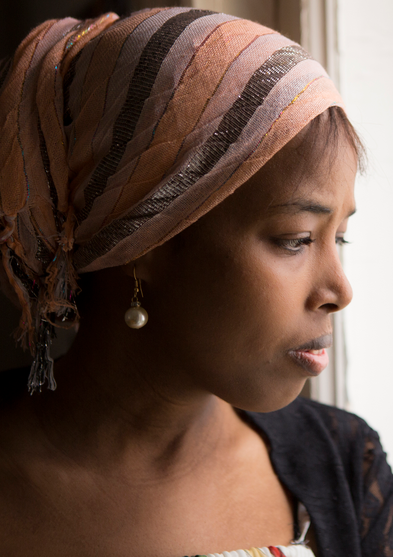
Nura Farah is Finland’s first published writer with Somali roots. She moved to Finland as a refugee in the early 1990s when she was 13 years old and when one of her countries became absorbed in a costly and painful civil war that continues to date.

Her first book, Aavikon tyttäret (Daughters of the desert), published by Otava last year, gives a glimpse of the lives of women in Somalia during that country’s struggle for independence in 1940-60.


Nura Farah. Kuva: Kustannusosakeyhtiö Otava.

Apart from being the first “Somali” writer to publish in the Finnish language, her latest milestone as a writer was winning in December the 2015 Suomi-palkkinnon award, which is given by the ministry of education to aspiring and established artists and writers.

This year’s prize was 24,700 euros.

“I’m not the only one who’s got the award there were others [like writer and film director Hassan Blasim and artist Abdel Abidin],” said Farah with a hint of humility. “This year’s [Suomi-palkinnon] awards reflect support by the ministry of education for multiculturalism.”

Farah said that there are many challenges as Finnish society becomes ever-culturally diverse. She believes that multiculturalism can work, but it’s important that migrants and minorities don’t isolate themselves from the rest of society.

“We live in difficult times these days,” she continued. “It’s even scary and I sometimes feel that we’ve returned back to the 1990s [when racism was more public].”

According to Farah, one of the problems that Finland should acknowledge today is that social exclusion is a problem we must challenge. She said that even if you were born in this country to non-Finnish parents you’re still not accepted as an equal member of society never mind as a “real” Finn.

Continue reading “Writer Nura Farah is one of the bright hopes of multicultural Finland”

Ongoing debate on asylum seekers in Finland: Lawmakers who play or are ignorant of our laws and basic human rights

Posted on December 11, 2015 by Migrant Tales

As I watched the A-studio: Talk debate about the record number of asylum seekers in Finland, I thought about Kadar Gelle, an anti-racism activist who watched Monday’s A-studio debate, where Perussuomalaiset (PS)* MP Tom Packalén, a former policeman who has built a political career on racist rhetoric, debates with Somali Finn Mukhtar Abib about the government’s plans to tighten immigration policy.  

Writes Kadar on his Facebook wall:

I turned on the A-studio program and saw Tom Packalen speaking about immigration. My blood started to boil from zero to one hundred until I understood that I can change television channels. It’s a waste of time to listen to a narcissistic and racist loudmouth [like Packalén] who suffers from a personality disorder. I turned off the television and my pulse went back in an instant to normal.

It’s interesting to note when watching Thursday’s A-studio debate on the record number of asylum seekers that have come to Finland how politicians capitalize on people’s fears.

Politicians like Eerola and many other act irresponsibly and recklessly especially during these times by spreading fear and xenophobia among an already frightened population. This shouldn’t surprise us since they have worked relentlessly to instill fear of migrants and asylum seekers. They have built lucrative political careers with the help of xenophobia and fear-mongering.

Juho Eerola is another PS MP who has built a political career on bigotry. The way he speaks about migrants is not only insulting but reveals his true political colors and what he wrote in 2010 about Benito Mussolini.

He wrote: “I myself am attracted to Benito Mussolini’s fascism, and in particular the economic policy [the country] pursued.”

Do you think that a person who sympathizes with Mussolini and who is a far right anti-immigration politician has anything constructive to say about how migrants should be integrated and become equal members of society?

Näyttökuva 2015-12-11 kello 6.04.25

PS MP Eerola’s pet topic is now one-way adaption or assimilation. Why? Because he wants to keep Finland white. See full TV program here.

One of the most crucial matters that these types of debate programs forget is Section 6 of our Constitution, which states:

Continue reading “Ongoing debate on asylum seekers in Finland: Lawmakers who play or are ignorant of our laws and basic human rights”

Susheela Daniel: On being a multicultural Finn

Posted on November 21, 2015 by Migrant Tales

I got to know Susheela Daniel through many of her insightful Facebook postings. She was one of the brave women who protested in front of parliament against the election of Perussuomalaiset (PS)* party MP Maria Lohela as speaker of parliament. One of her latest Facebook posts was on “integrated migrants” raised some good questions about Uncle Toms in the migrant and minority community.

An Uncle Tom, or Tuomo-setä or setä Tuomo in Finnish, is a term used in the United States for people who betray their race in order to get privileges. Urban Dictionary defines it in the following way: “A black man who will do anything to stay in good standing with ‘the white man’ including betray his own people.”

Susheela2

Susheela Daniel. Photo by Fateme Azizi.

In a multiethnic country like the United States, the Uncle Tom label plays an important role. One of the roles it plays is a bit similar to a deserter in times of war.

Taking a look at the violence and hostility that some minorities are facing in the United States, it’s clear that the Uncle Tom label aims to protect a community that is already embattled by racism, social exclusion and scarce opportunities.

How would one define an Uncle Tom in Finland?

Daniel admits that she’s never heard of the term Tuomo-setä in Finnish never mind in English but agrees that the phenomenon exists in Finland.

Continue reading “Susheela Daniel: On being a multicultural Finn”

Why are integration programs in Finland doomed to failure?

Posted on November 6, 2015October 24, 2025 by Migrant Tales

Here’s the billion-euro question: Why are integration programs in Finland usually doomed to failure? What can Finland and Europe learn from countries like Canada that have a more successful approach to integration? 

One matter is for certain: A big part of the problem resides in between our collective ears. Do we see migrants as a problem or an asset to our society? Certainly factors like human and financial resources play important roles in determining how successful our integration programs are.

You don’t have to search too far to understand the challenges we face in making people feel that Finland is their home and that they’ll be treated with respect and as equal members of society. Even if the answer to the problem sits under our noses the big question is if we want to do anything about it.

Like in any other country, social exclusion in Finland is not only costly to tax payers but for migrants, who are obliged to go through a slow rites of passage, or integration ritual, which doesn’t even assure them of a job after all of their efforts.

Brandy Yanchyk, a Canadian documentary film producer, recently showed her most recent documentary, Finding Edge Road, in Finland.

Näyttökuva 2015-11-6 kello 13.06.22

See Find Edge Road demo here.

Continue reading “Why are integration programs in Finland doomed to failure?”

Migration Pulse: What the refugee crisis says about race in Europe

Posted on November 3, 2015 by Migrant Tales

Omar Khan*

Näyttökuva 2015-11-3 kello 10.27.20


While many Europeans have felt growing humanitarian concern on being confronted with images of desperation among refugees seeking entry, across the continent a large minority have suggested any sympathy is misplaced.

Some arguments about the refugee crisis focus more on practical concerns – that encouraging people to come to Europe will lead to greater danger, or that we cannot afford to take more than a few hundred or thousand. These concerns don’t really respond to the horrible conditions and even poorer economies of Iraq, Jordan, Lebanon and Turkey where most refugees are currently living in camps, but they at least recognise shared humanity and European values.

Questioning their humanity

Some rejectionist responses, however, question the humanity of the refugees or our (Europe’s) obligation to do anything to help them. These rejections flirt to variously open degrees with two sorts of claims. First is the denial that all human beings have equal moral worth. In discussions of racial discrimination the focus is often on the labour market or criminal justice system, and on the socially unequal outcomes that Black and minority ethnic people experience across Europe. Such evidence should be more widely understood and directly combated, but the basic denial of our shared humanity is arguably the foundational harm of racism. Our continued inability to address historic violence and racism is so damaging not only because it leaves us ignorant of our own history, but also because it fails to recognise the deep pain and indignity suffered by millions of people, an indignity that apparently is still happily flouted by some of Europe’s leaders and publics.

A second claim is less overtly racist, but more widely affirmed, namely that there is (or should be) an ethno-religious account of who counts as ‘European’. Democracy, equality, liberty, fraternity, humanitarianism: all these are nice values, the thought goes, but what really counts is if you’re a white Christian. A more sophisticated version of this claim might be that Christian Europeans are uniquely suited to or committed to values of tolerance, humanitarianism and democracy, but proponents obviously don’t think undemocratic or intolerant white Christian people should be expelled from or denied citizenship by Europe’s different nation-states. However this sort of view is expressed, the key point for us is that Syrians or Eritreans could never become British or Hungarian even if they are the most committed democrats.

Vocal politicians

Central European politicians are most vocal and also publicly criticised for such views. But it’s not only the Hungarian Prime Minister who thinks that ethnicity and religion matter more than values. A significant proportion of Europeans now vote for far-right parties and so fail to affirm ‘European values’. This isn’t simply an ‘Eastern’ problem; when asked to imagine a prototypical Norwegian or Dane, it’s not only nationalists who will conjure up a blonde-haired blue-eyed individual. And despite the undoubted progress we’ve made in Britain, there’s a sense in which thugs from the English Defence League are more ‘English’ than a London-born Black person.

Continue reading “Migration Pulse: What the refugee crisis says about race in Europe”

Migrants’ Rights Network: Progressive thinktank sets out reasons why immigration is needed to create “the Good Society”

Posted on November 1, 2015 by Migrant Tales

Migrants’ Rights Network

Compass, a thinktank that describes itself as “building a Good Society; one that is much more equal, sustainable and democratic than the society we are living in now” has published a ‘thinkpiece’ which sets out arguments why a positive attitude to immigration has to be a part of this process.

Näyttökuva 2015-11-1 kello 10.59.34

Read full review here.

Written by Katherine Tonkiss, the author of Migration and Identity in a Post-National World, sets out an argument that asks how we can “conceive of a fair and more just migration policy which is more in tune with a world in which ‘people just move’ than with anti-immigration sentiment and xenophobia, specifically by considering what a Good Society….  means for immigration control.”

Continue reading “Migrants’ Rights Network: Progressive thinktank sets out reasons why immigration is needed to create “the Good Society””

  • Previous
  • 1
  • …
  • 6
  • 7
  • 8
  • 9
  • 10
  • 11
  • 12
  • …
  • 30
  • Next
Read more about documentary film
Read more

Recent Posts

  • Lahti is the latest city to prohibit the niqab and burka
  • Finland’s tabloids Iltalehti and Ilta-Sanomat are the pits
  • Riikka Purra’s Dr Jekyll and Mr Hyde mask
  • Double standards
  • Perussuomalaiset: Uusi logo, sama vanha juttu

Recent Comments

  1. Absolutely Socking: Racist Finnish Facebook group against human rights gets flooded with socks on Musta Barbaari’s mother and sister charged by the police in “ethnic profiling” case
  2. Ilkka Nuotio on Pekka Myrskylä: “Tilastot kertovat toista kuin poliittinen keskustelu”
  3. Genrih Soinkara on The war in Ukraine and the Russian-Finnish border crisis are showing Finland’s ugly side
  4. Ahti Tolvanen on Comment by Ahti Tolvanen on the Helsinki +50 conference
  5. Angel Barrientos on Angel Barrientos is one of the kind beacons of Finland’s Chilean community

Archives

  • June 2026
  • May 2026
  • April 2026
  • March 2026
  • February 2026
  • January 2026
  • December 2025
  • November 2025
  • October 2025
  • September 2025
  • August 2025
  • July 2025
  • June 2025
  • May 2025
  • April 2025
  • March 2025
  • February 2025
  • January 2025
  • December 2024
  • November 2024
  • October 2024
  • September 2024
  • August 2024
  • July 2024
  • June 2024
  • May 2024
  • April 2024
  • March 2024
  • February 2024
  • January 2024
  • December 2023
  • November 2023
  • October 2023
  • September 2023
  • August 2023
  • July 2023
  • June 2023
  • May 2023
  • April 2023
  • March 2023
  • February 2023
  • January 2023
  • December 2022
  • November 2022
  • October 2022
  • September 2022
  • August 2022
  • July 2022
  • June 2022
  • May 2022
  • April 2022
  • March 2022
  • February 2022
  • January 2022
  • December 2021
  • November 2021
  • October 2021
  • September 2021
  • August 2021
  • July 2021
  • June 2021
  • May 2021
  • April 2021
  • March 2021
  • February 2021
  • January 2021
  • December 2020
  • November 2020
  • October 2020
  • September 2020
  • August 2020
  • July 2020
  • June 2020
  • May 2020
  • April 2020
  • March 2020
  • February 2020
  • January 2020
  • December 2019
  • November 2019
  • October 2019
  • September 2019
  • August 2019
  • July 2019
  • June 2019
  • May 2019
  • April 2019
  • March 2019
  • February 2019
  • January 2019
  • December 2018
  • November 2018
  • October 2018
  • September 2018
  • August 2018
  • July 2018
  • June 2018
  • May 2018
  • April 2018
  • March 2018
  • February 2018
  • January 2018
  • December 2017
  • November 2017
  • October 2017
  • September 2017
  • August 2017
  • July 2017
  • June 2017
  • May 2017
  • April 2017
  • March 2017
  • February 2017
  • January 2017
  • December 2016
  • November 2016
  • October 2016
  • September 2016
  • August 2016
  • July 2016
  • June 2016
  • May 2016
  • April 2016
  • March 2016
  • February 2016
  • January 2016
  • December 2015
  • November 2015
  • October 2015
  • September 2015
  • August 2015
  • July 2015
  • June 2015
  • May 2015
  • April 2015
  • March 2015
  • February 2015
  • January 2015
  • December 2014
  • November 2014
  • October 2014
  • September 2014
  • August 2014
  • July 2014
  • June 2014
  • May 2014
  • April 2014
  • March 2014
  • February 2014
  • January 2014
  • December 2013
  • November 2013
  • October 2013
  • September 2013
  • August 2013
  • July 2013
  • June 2013
  • May 2013
  • April 2013
  • March 2013
  • February 2013
  • January 2013
  • December 2012
  • November 2012
  • October 2012
  • September 2012
  • August 2012
  • July 2012
  • June 2012
  • May 2012
  • April 2012
  • March 2012
  • February 2012
  • January 2012
  • December 2011
  • November 2011
  • October 2011
  • September 2011
  • August 2011
  • July 2011
  • June 2011
  • May 2011
  • April 2011
  • March 2011
  • February 2011
  • January 2011
  • December 2010
  • November 2010
  • October 2010
  • September 2010
  • August 2010
  • July 2010
  • June 2010
  • May 2010
  • April 2010
  • March 2010
  • February 2010
  • January 2010
  • December 2009
  • November 2009
  • October 2009
  • September 2009
  • August 2009
  • July 2009
  • December 2008
  • November 2008
  • October 2008
  • September 2008
  • August 2008
  • July 2008
  • June 2008
  • May 2008
  • April 2008
  • March 2008
  • February 2008
  • January 2008
  • November 2007
  • October 2007
  • September 2007
  • August 2007
  • July 2007
  • June 2007
  • May 2007

Categories

  • ?? Gia L?c
  • ????? ?????? ????? ???????? ?? ??????
  • ???????
  • @HerraAhmed
  • @mondepasrond
  • @nohatefinland
  • @oula_silver
  • @Varathas
  • A Pakistani family
  • äärioikeisto
  • Abbas Bahmanpour
  • Abdi Muhis
  • Abdirahim Hussein Mohamed
  • Abdirahim Husu Hussein
  • Abdirisak Mahamed
  • About Migrant Tales
  • activism
  • Adam Al-Sawad
  • Adel Abidin
  • Afrofinland
  • Ahmed IJ
  • Ahti Tolvanen
  • Aino Pennanen
  • Aisha Maniar
  • Alan Ali
  • Alan Anstead
  • Alejandro Díaz Ortiz
  • Alekey Bulavsev
  • Aleksander Hemon
  • Aleksanterinliitto
  • Aleksanterinliitto ry
  • Aleksanterinliitto ry:n hallitus
  • Alex Alex
  • Alex Mckie
  • Alexander Nix
  • Alexandra Ayse Albayrak
  • Alexis Neuberg
  • Ali Asaad Hasan Alzuhairi
  • Ali Hossein Mir Ali
  • Ali Rashid
  • Ali Sagal Abdikarim
  • Alina Tsui
  • Aline Müller
  • All categories
  • Aman Heidari
  • Amiirah Salleh-Hoddin & Jana Turk
  • Amin A. Alem
  • Amir Zuhairi
  • Amkelwa Mbekeni
  • Ana María Gutiérrez Sorainen
  • Anachoma
  • Anders Adlecreutz
  • Angeliina Koskinen
  • Anna De Mutiis
  • Anna María Gutiérrez Sorainen
  • Anna-Kaisa Kuusisto ja Jaakko Tuominen
  • Annastiina Kallius
  • Anneli Juise Friman Lindeman
  • Announcement
  • Anonymous
  • Antero Leitzinger
  • anti-black racism
  • Anti-Hate Crime Organisation Finland
  • Anudari Boldbaatar
  • Arshiya Nasser
  • Aspergers Syndrome
  • Asylum Corner
  • Asylum seeker 406
  • Athena Griffin and Joe Feagin
  • Autism
  • Avaaz.org
  • Awale Olad
  • Ayan Said Mohamed
  • AYY
  • Barachiel
  • Bashy Quraishy
  • Beatrice Kabutakapua
  • Beri Jamal
  • Beri Jamal and Enrique Tessieri
  • Bertolt Brecht
  • Boiata
  • Boodi Kabbani
  • Bruno Gronow
  • Carmen Pekkarinen
  • Çelen Oben and Sheila Riikonen
  • Chiara Costa-Virtanen
  • Chiara Costa-Virtanen
  • Chiara Sorbello
  • Christian Thibault
  • Christopher Wylie
  • Clara Dublanc
  • Dana
  • Daniel Malpica
  • Danilo Canguçu
  • David Papineau
  • David Schneider
  • Dexter He
  • Don Flynn
  • Dr Masoud Kamali
  • Dr. Faith Mkwesha
  • Dr. Theodoros Fouskas
  • Edna Chun
  • Eeva Kilpi
  • Emanuela Susheela
  • En castellano
  • ENAR
  • Enrique
  • Enrique Tessieri
  • Enrique Tessieri & Raghad Mchawh
  • Enrique Tessieri & Yahya Rouissi
  • Enrique Tessieri and Muhammed Shire
  • Enrique Tessieri and Sira Moksi
  • Enrique Tessieri and Tom Vandenbosch
  • Enrique Tessieri and Wael Che
  • Enrique Tessieri and Yahya Rouissi
  • Enrique Tessieri and Zimema Mhone
  • Epäluottamusmies
  • EU
  • Europe
  • European Islamophobia Report
  • European Islamophobia Report 2019,
  • European Union
  • Eve Kyntäjä
  • Ezequiel Caldeiro
  • Facebook
  • Fadumo Dayib
  • Faisa Kahiye
  • Farhad Manjoo
  • Fasismi
  • Finland
  • Fizza Qureshi
  • Flyktingar och asyl
  • Foreign Student
  • Fozia Mir-Ali
  • Frances Webber
  • Frida Selim
  • Gareth Rice
  • Ghyslain Vedeaux
  • Global Art Point
  • Great Replacement
  • Habiba Ali
  • Hami Bahadori
  • Hami Bahdori
  • Hamid
  • Hamid Alsaameere
  • Hamid Bahdori
  • Handshake
  • Harmit Athwal
  • Hassan Abdi Ali
  • Hassan Muhumud
  • Heikki Huttunen
  • Heikki Wilenius
  • Helsingin Sanomat
  • Henning van der Hoeven
  • Henrika Mälmsröm
  • Hser Hser
  • Hser Hser ja Mustafa Isman
  • Husein Muhammed
  • Hussain Kazemian
  • Hussain Kazmenian
  • Ibrahim Khan
  • Ida
  • Ignacio Pérez Pérez
  • Iise Ali Hassan
  • Ilari Kaila & Tuomas Kaila
  • Imam Ka
  • inside-an-airport
  • Institute of Race Relations
  • Iraqi asylum seeker
  • IRR European News Team
  • IRR News Team
  • Islamic Society of Norhern FInland
  • Islamic Society of Northern Finland
  • Islamophobia
  • Jacobinmag.com
  • Jallow Momodou
  • Jan Holmberg
  • Jane Elliott
  • Jani Mäkelä
  • Jari Luoto
  • Jari Taponen
  • Jegor Nazarov
  • Jenni Stammeier
  • Jenny Bourne
  • Jessie Daniels
  • Joe Davidow
  • Johannes Koski
  • John D. Foster
  • John Grayson
  • John Marriott
  • Jon Burnett
  • Jorma Härkönen
  • Jos Schuurmans
  • José León Toro Mejías
  • Josue Tumayine
  • Jouni Karnasaari
  • Juan Camilo
  • Jukka Eräkare
  • Julian Abagond
  • Julie Pascoet
  • Jussi Halla-aho
  • Jussi Hallla-aho
  • Jussi Jalonen
  • JusticeDemon
  • Kadar Gelle
  • Kaksoiskansalaisuus
  • Kansainvälinen Mikkeli
  • Kansainvälinen Mikkeli ry
  • Katherine Tonkiss
  • Kati Lepistö
  • Kati van der Hoeven-Lepistö
  • Katie Bell
  • Kättely
  • Kerstin Ögård
  • Keshia Fredua-Mensah & Jamie Schearer
  • Khadidiatou Sylla
  • Khadra Abdirazak Sugulle
  • Kiihotus kansanryhmää vastaan
  • Kirsi Crowley
  • Koko Hubara
  • Kristiina Toivikko
  • Kubra Amini
  • KuRI
  • La Colectiva
  • La incitación al odio
  • Laura Huhtasaari
  • Lauri Finér
  • Leif Hagert
  • Léo Custódio
  • Leo Honka
  • Leontios Christodoulou
  • Lessie Branch
  • Lex Gaudius
  • Leyes de Finlandia
  • Liikkukaa!
  • Linda Hyökki
  • Liz Fekete
  • M. Blanc
  • Maarit Snellman
  • Mahad Sheikh Musse
  • Maija Vilkkumaa
  • Malmin Kebab Pizzeria Port Arthur
  • Marcell Lorincz
  • Mari Aaltola
  • María Paz López
  • Maria Rittis Ikola
  • Maria Tjader
  • Marja-Liisa Tolvanen
  • Mark
  • Markku Heikkinen
  • Marshall Niles
  • Martin Al-Laji
  • Maryan Siyad
  • Matt Carr
  • Mauricio Farah Gebara
  • Media Monitoring Group of Finland
  • Micah J. Christian
  • Michael McEachrane
  • Michele Levoy
  • Michelle Kaila
  • Migrant Tales
  • Migrant Tales Literary
  • Migrantes News
  • Migrants' Rights Network
  • MigriLeaks
  • Mikko Kapanen
  • Miriam Attias and Camila Haavisto
  • Mohamed Adan
  • Mohammad Javid
  • Mohammad M.
  • Monikulttuurisuus
  • Monisha Bhatia and Victoria Canning
  • Mor Ndiaye
  • Muh'ed
  • Muhamed Abdimajed Murshid
  • Muhammed Shire
  • Muhammed Shire and Enrique Tessieri
  • Muhis Azizi
  • Musimenta Dansila
  • Muslimiviha
  • Musulmanes
  • Namir al-Azzawi
  • Natsismi
  • Neurodiversity
  • New Women Connectors
  • Nils Muižnieks
  • No Labels No Walls
  • Noel Dandes
  • Nuor Dawood
  • Omar Khan
  • Otavanmedia
  • Oula Silvennoinen
  • Paco Diop
  • Pakistani family
  • Pentti Stranius
  • Perussuomalaiset
  • perustuslaki
  • Petra Laiti
  • Petri Cederlöf
  • Pia Grochowski
  • Podcast-lukija Bea Bergholm
  • Pohjois – Suomen Islamilainen Yhdyskunta
  • Pohjois Suomen Islamilainen Yhyskunta
  • Polina Kopylova
  • Race Files
  • racism
  • Racism Review
  • Raghad Mchawh
  • Ranska
  • Rashid H. and Migrant Tales
  • Rasismi
  • Raul Perez
  • Rebecka Holm
  • Reem Abu-Hayyeh
  • Refugees
  • Reija Härkönen
  • Remiel
  • Reza Nasri
  • Richard Gresswell
  • Riikka Purra
  • Risto Laakkonen
  • Rita Chahda
  • Ritva Kondi
  • Robito Ibrahim
  • Roble Bashir
  • Rockhaya Sylla
  • Rodolfo Walsh
  • Roger Casale
  • Rostam Atai
  • Roxana Crisólogo Correa
  • Ruth Grove-White
  • Ruth Waweru-Folabit
  • S-worldview
  • Sadio Ali Nuur
  • Sami Rusanen
  • Sandhu Bhamra
  • Sara de Jong
  • Sarah Crowther
  • Sari Alhariri
  • Sarkawt Khalil
  • Sasu
  • Scot Nakagawa
  • Shabana Ahmadzai
  • Shada Islam
  • Sharon Chang blogs
  • Shenita Ann McLean
  • Shirlene Green Newball
  • Sini Savolainen
  • Sira Moksi
  • Sonia K.
  • Sonia Maria Koo
  • Steverp
  • Stop Deportations
  • Suldaan Said Ahmed
  • Suomen mediaseurantakollektiivi
  • Suomen Muslimifoorumi ry
  • Suomen viharikosvastainen yhdistys
  • Suomen viharikosvastainen yhdistys ry
  • Suomi
  • Supermen
  • Susannah
  • Suva
  • Syrjintä
  • Talous
  • Tapio Tuomala
  • Taw Reh
  • Teivo Teivainen
  • The Daily Show
  • The Heino
  • The Supermen
  • Thomas Elfgren
  • Thulfiqar Abdulkarim
  • Tim McGettigan
  • Tino Singh
  • Tito Moustafa Sliem
  • Tobias Hübinette and L. Janelle Dance
  • Transport
  • Trica Danielle Keaton
  • Trilce Garcia
  • Trish Pääkkönen
  • Trish Pääkkönen and Enrique Tessieri
  • Tuulia Reponen
  • Uncategorized
  • UNITED
  • University of Eastern Finland
  • Uyi Osazee
  • Väkivalta
  • Vapaa Liikkuvuus
  • Venla-Sofia Saariaho
  • Vieraskynä
  • W. Che
  • W. Che an Enrique Tessieri
  • Wael Ch.
  • Wan Wei
  • Women for Refugee Women
  • Xaan Kaafi Maxamed Xalane
  • Xassan Kaafi Maxamed Xalane
  • Xassan-Kaafi Mohamed Halane & Enrique Tessieri
  • Yahya Rouissi
  • Yasmin Yusuf
  • Yassen Ghaleb
  • Yle Puhe
  • Yuliet Tresa
  • Yve Shepherd
  • Zahra Khavari
  • Zaker
  • Zalina Ametova
  • Zamzam Ahmed Ali
  • Zeinab Amini ja Soheila Khavari
  • Zimema Mahone and Enrique Tessieri
  • Zimema Mhone
  • Zoila Forss Crespo Moreyra
  • ZT
  • Zulma Sierra
  • Zuzeeko Tegha Abeng
© 2026 Migrant tales | Powered by Minimalist Blog WordPress Theme