
As a writer and person with a multicultural background, I have been seeking to narrate a more inclusive and accurate history of Finland. Taking into account that over 1.2 million people emigrated from this country between 1860 and 1999 and our ever-growing immigrant population, aren’t both of these facts enough proof of our cultural diversity?
The question we should, therefore, ask is why have we denied our cultural diversity for so long? Why do some still deny it?
Since we have had our heads buried for too long in the sand thanks to social constructs like Finnish culture and ethnicity, their aims have been sinister: to exclude instead of include.
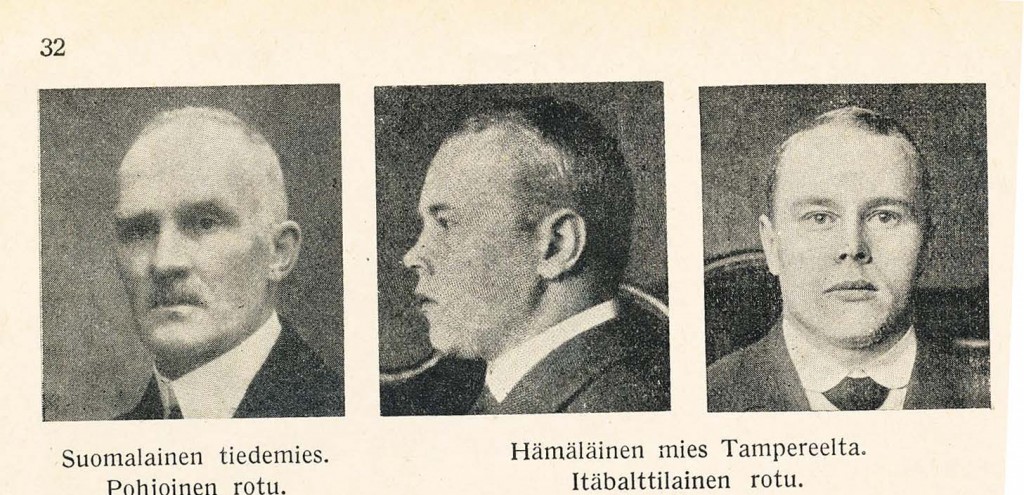 A middle school geography book published in 1941 claims that Finland had two predominant “races:” Nordic and Eastern Baltic.* These races were still mentioned in history books published in the 1970s.
Our narrow view of ourselves reveals many things about our society and the challenges we face today. It explains the rise of the Perussuomalaiset (PS) and Jussi Halla-aho, both of which are reactions to Finland’s ever-growing cultural diversity and internationalization.
Finns have paid a high price for being too alike for too long. Forging a monolithic national identity based on myths was a short-term solution to a complex issue. It explains why some of us don’t understand how racism is a threat and why the media and public were dazzled by the PS before the April election.
Blame all of this on the fact that we were taught and made to look too alike. It explains what is essentially wrong with us and why it has encouraged a strongly one-sided view of history, the role of “others” in our country, and permitted us to erase an important part of our cultural heritage.
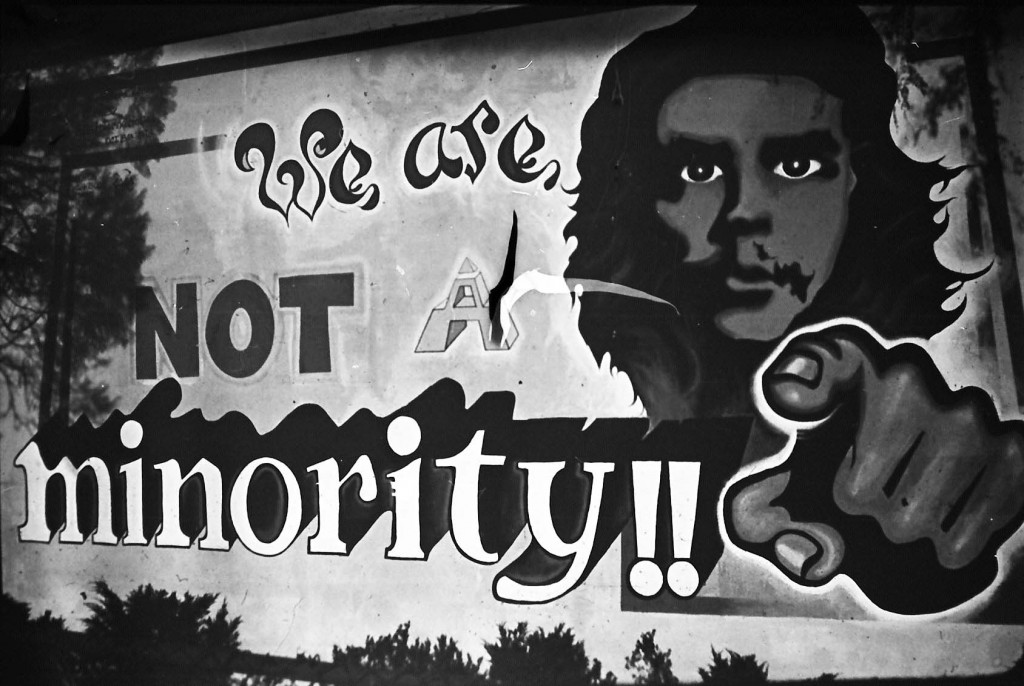 Are we a minority? This picture was originally taken in the early 1980s in Los Angeles, California.
I am confident that the Finland we are building today is and will be very different from the one we built in the last century. It will be more confident, stronger and lasting because it will be based on inclusion, social equality and acceptance of our cultural diversity. Our diverse make up as a nation offers us different experiences but we should never forget one crucial fact: We are not separate.
*J.E. Aro, J.E. Rosberg and L. Arvi P. Poijärvi: Koulun maantieto. Otava 1941. p. 32.
“social constructs like Finnish culture and ethnicity”
You shouldnt imply that those things dont matter. They do, like they do for all nations.
“Finns have paid a high price for being too alike for too long. Forging a monolithic national identity based on myths”
Based on myths? Can you explaing what “myths”?
Besides, studies prove that western and eastern finns are genetically different. Im not saying those are different races though. Finland has cultural diversity without “enriching” immigrants, for example Saami and fennoswedes. The “multiculturist” aim seems to be mixing the ethncities until its a homogenous mess. No ethnicities can be resurrected from that mess.
Im a nationalist, yet i dont deny anyone else to be proud of their heritage/loyal to their nation. Nationalities should be preserved instead of destroyed with multiculturism (this doesnt necessarily mean isolation or racism in any way).
Tissieri
What is this high price you are talking about?
–What is this high price you are talking about?
The high price could be seen as the economy of a country. If you have no competition, no diversity, everything becomes complacent. A right-winger would state that it makes company lazy. Our views on Migrant Tales are usually different from the mainstream media because we look at Finland from a different perspective than a white reporter writing about Somalis. Our diversity gives us an opportunity to see things differently and ask different questions.
What’s another high price?.. Our difficulty to accept cultural diversity/immigration in light of our aging population. Some people have very narrow views of the world because they live in very narrow environments.
My surname is spelled Tessieri.
That shouldn’t be an issue considering it’s quite common here to mispell Halla-aho intentionally several times per day.
Ricky
You can be flattered that tp1 thinks you are so important.
–You can be flattered that tp1 thinks you are so important.
🙂
Monikulttuurisuus ja etninen moninaisuus on kaksipäinen miekka. Jos sitä korostetaan liikaa, se johtaa yhteiskunnan hajoamiseen pienempiin osiin. Jos sitä on liian vähän, tilanne on kuin katsoisi omaa kuvaa peiliin. Yhteiskunta alkaa jämähtää.
Jos me lisäämme monikulttuurisuusta, kantaväestö voi tuntea itsensä uhattuna. Jos emme lisää monikulttuurisuutta, konfliktit kulttuurien välillä tulevat olemaan yleisempiä.
Minä itse en perusta yhtään monikulttuurisuudesta koska se on silkaa kliseetä. Panemme pari afrikkalaist ja aasialaista lavalle ja sitten olemme monikulttuurisia. Koko kouluaikana en huomannut mitään merkkejä, että Suomi olisi yhtään sen monikulttuurisempi kuin ennen. Monikulttuurisuus on enemmän sirkusta, jolla viihdytetään valkoisia liberaaleja, kuin todellinen ohjelma tuoda erilaisia kulttuureja samalle pöydälle.
Värilliset kulttuurit yrittävät enemmän ymmärtää Eurooppalaisia kulttuureita kuin eurooppalaiset värillisten kulttuureita. Tämä on yksisuuntainen monikulttuurisuusta ja näin ollen se ei ole mitään monikulttuurisuusta.
Minun puolesta monikulttuurisuuden voi heitää roskakoriin jos sen ei muutu. Tälläsenä se on vain eläinsirkusta niin, kuin vanhoina aikoina kun valkoiset pitivät ihmiseläintarhoja.
–Monikulttuurisuus ja etninen moninaisuus on kaksipäinen miekka. Jos sitä korostetaan liikaa, se johtaa yhteiskunnan hajoamiseen pienempiin osiin.
Olen eri mieltä kanssasi, Sasu. Kulttuurinen moniarvoisuus ja/tai moninaisuus toimi jos on seuraavat tärkeät periaatteet: molempien suuntaista hyväksyntä, kunnioitusta ja tasavertaisia mahdollisuuksia. Ymmärrän silti mitä tarkoitat kun kritisoit monikulttuurisuutemme. Puhut varmasti suomalaisten tapaa toteuttaa monikulttuurisuutta, eli korosta kuinka toiset ovat erilaisia, että emme tarvitsemme hyväksy heitä suomalaiseksi tai että olemme moninainen yhteiskunta.
Mielestäni yhteiskunta jossa elämme toimi periaatesää näin: meillä on mahdollisuuksia tehdä elämän valintoja jossa lait puolustavat ja jopa kannustavat yksilön tai ryhmän tasolla. Jos meillä on tämmöinen oikeus miksei toiselle, jotka tulevat toisista kulttuurista?
Tessiere
Perjaatteen ovat perjaatteita. Realimaailma ei pyöri perjaatteiden ympärillä. Historia on täynä monikulttuurisia yhteiskuntia joissa ei ole tasa-arvoa mutta tietyn asteinen suvaiksevaisuus. Jolloin suvaiksevaisuus on se mitä tarvitaan yhtenäiseen monikulttuuriseen yhteiskuntaa.
Monikulttuurinen yhteiskunta koostuu useista pienistä kulttuureista. Näiden korostaminen hajottaa yhteiskunnan kokonaista yhtenäisyystä. En väitä, että yhteiskunta hajoaisi, mutta sanon että sellainen yhteiskunnalla tulee olemaan hankaluuksia pysyä koossa. Esimerkiksi Syyria, Irak, Kiina, Venäjä
Yhtenäisyys tulee samanlaisuudesta ennemmin kuin eroavuudesta.
Jotta monikulttuurinen yhteiskeiskunta kykenisi pysyä koossa on sen sisällä oltava keskinäistä dialogia ongelmatilanteiden ratkomiseksi.
Toinen keino pitää maa koossa on hajota ja hallitse perjaate ja raaka voima.
–Esimerkiksi Syyria, Irak, Kiina, Venäjä.
These, Sasu, are extreme examples. Why not look at much better ones like Canada, Sweden, Australia…Desertgnu spoke highly of Kazakhstan. There is no such thing as a “perfect society.”
Civil rights, democracy, acceptance go hand in hand. In all those countries you mentioned have serious human rights issues. Minorities like gays are having a tough time or may even face the death penalty. It’s not an issue of having minorities but how the system treats them.
En sanoisi ehdottamien maiden olevan yhtään meitä parempia. Lukemani perusteella heilläkin on samoja ongelmia.
“Civil rights, democracy, acceptance go hand in hand. In all those countries you mentioned other minorities like gays are having a tough time. It’s not an issue of having minorities but how the system treats them.”
Ensimmäiseti en väittänyt että ehdottamista maissa tilanteet menisivät hyvin. NE olivat niitä maita jotka ovat monikulttuurisia ja sillä siisti. Sisäisesti mailla on ongelmia paljon enemmän kuin suomessa ja niiden ongelmien vakavuut ylittää suuresti suomen ongelmat. Suomalaiset valittavat parin somalin rötöstelystä samaan aikaan kun kiina yrittää pitää kapinoivat vähemistöt aisoiksa.
En mielestäni väitänyt toista, toisesti. Monikulttuuriset yhteiskunnat eivät pysy pystyksä jos siellä sorretaan etnisiä vähemmistöjä laajamittaisesti.
Olemme vähän menneet pois asiasta jos huomasit.
Suvaiksevaisuut on ainoa asia jota tarvitaan monikulttuurisessa yhteiskunnassa. Jos siis määritämme monikulttuurisen yhteiskunnan kulttuurien määrällä.
Toisaalta suvaiksevaisuus voidaan korva raa-alla voimalla mutta se ei liity suomen tilanteeseen. Se on muuttujat sellissa maissa joissa kulttuureita on paljon ja joksa elää itsenäisyys vaatimukset.
Pieni muistutus. Demokratia tarkoittaa vain kansanvaltaa. Tasa-arvo ja hyväksyntä ovat auttavia tekijöitä mutta ei vaadittavia. Kyllä sinun pitäisi tietää.
That’s a bit cynical, Sasu 🙂
The situation of migration is what it is. It’s nothing new, but in recent years, it has grown significantly. Migration is something that humans have done forever! Some do it to escape war, some seek a better life, some do it out of a desire to ‘see the world’.
The realities on the ground are that immigrants will often end up in vulnerable situations, in deprived areas of cities, alongside an unsympathetic native poor population, each struggling to feed of the few scraps that society throws in their direction. That’s a breeding ground for interacial tension. Add to that the fact that mainstream services had little clue how to deal with this new ‘diversity’, meaning they had insufficient language and cultural resources to know how best to integrate these new arrivals, and you have the ingredients for creating an excluded sub-class. Given the political importance of such a subgroup as a possible scapegoat, and you see where we are now today.
Multiculturalism is merely a recognition that people will perform the culture they know, while incorporating something too of the new. How much they incorporate depends on age, abilities, motivation and available resources. It starts with a simple acceptance of the way people are, and is skeptical of attempts to mould and shape people towards an ‘ideal’.
In that sense, while anti-immigrationists suggest they are ‘skeptical of immigration’, multiculturalists can likewise say they are ‘skeptical of monoculturalism’.
Both have a tendency to be fixed concepts, while human populations and culture are extremely dynamic and pluralist, for all that we think there are easy boxes to put people in. The whole notion of culture, nationality and religious identities are therefore often part of a self-delusion that we ‘know’ people who belong to these groups. It is much more honest to accept that people come in all shapes and sizes, regardless of the groups they belong to.
For example, I’ve known people who belong to ‘cult’ religions, viewed by outsiders as extremists, and yet their own views can be very moderate. Their membership of the group can be accidental, family related or merely partial but consistent. Just because someone subscribes to a belief or culture doesn’t mean they agree with all of it. It also doesn’t mean they are particularly keen to express their own views either, so you might never know how close to the ‘group ideal’ that person is.
Multiculturalism I think, therefore, starts from an acceptance that the world is complex, and doesn’t seek to create artificial boxes or place millions of demands on people that they behave ‘just like natives’, whatever that means!
Olen kyyninen persoona. Kaikki mitä sanon perustuu omiin havaintoihin. Aasialisena olen käynyt erittäin monessa monikulttuurisuus tilaisuudesta ja huomannu niiden olevan pelkkiä Show esityksiä.
Monikulttuurisuuden tärkein tunnus merkki on kulttuurien luontainen sulautuminen. EN ole väittänyt että kulttuuri olisivat taattisia vaikka kommentista voisi niin luulla
Neuvon sinua lukemaan koska se käsittelee sitä mistä kirjoitin. Se on mun kirjoituk.
http://www.migranttales.net/milloin-minusta-tulee-suomalainen/
It seems to be the community standard here to make “funny” names out of other people names, so I just try my best to be up to your community standards
There will always be competition even without multiculturalism. After all, there has always been competition before all this multicultural bullshit. Somehow you try make it look like the multiculturalism was/is the only way to make anything new.
Our difficult to accept diversity? Yeah, maybe if I had lived in muslim culture sphere, I might be more willing to acccept child marriages, forced marriages, female mutilisation, women forced to stay home, wear burghas and so on. Unfortunately I have lived in western culture sphere so accepting these things are challenging.
(http://www.youtube.com/watch?v=qBwzhDOFdfg)
Kannattaa vilaista ihan mielenkiinnosta.
Ei nyt suoranaisesti liity asiaan mutta ohitetaan hieman.
Tessieri
Ethnicity and culture aren’t social constructs and even if they were, is it really such a bad thing? Aren’t the monetary system, government and education all “artificial constructs” too? I’d like to see you go to Canada to a First Nations reserve and tell a local member of the Cree Nation that their culture and ethnicity are social constructs, irrelevant even. Or how about going to Japan and saying the same thing to Japanese people? I can assure you, how people would react to you wouldn’t be positive.
I’ve heard that people have threatened you personally and tried to shut down this blog. I am sorry and sad to hear it but it also doesn’t surprise me either, unfortunately. You are essentially seen as a non-native or foreigner in Finland. Let’s leave Finland out of this and imagine someone who moves to an established society and begins finding fault with that society and telling people they need to change to suit an agenda. Would people in that country react positively to such an individual? Of course not. Based on my experience the majority of people don’t like preachy individuals who try to impose their beliefs on others.
Trying to espose terms like acceptance, tolerance, etc are all positive when intentioned, but in practice there comes the matter of respect which is lacking on both sides of the debate. Racism has become something of a buzzword and the accusation of it has become something of a Freudian knee-jerk reflex. Many of your articles on here are biased and one-sided to put it lightly. If I had the time, I could comment on each article why I feel this way. Multiculturalism is not the means to an end, just as monoculturalism isn’t. A multicultural society is not often any better at providing security, stability and the pursuit of happiness for its members than a monocultural one. Sure, there are your UKs, Canadas, Australias, etc but are these countries really as shiny as they appear to be? Most countries in the Americas and the Caribbean are countries created by immigrants at the expense of the indigenous populations. Trinidad & Tobago, Guyana and Suriname are all multicultural countries but are they wealthy? No. Do people in these nations have a high standard of living? Some yes, others no. Meanwhile the indigenous populations in these countries have been nearly eradicated or made irrelevant on the national scale. This is a fear many in Europe worry will happen to them if they embrace multiculturalism and have open borders.
Canada is often cited as a shining beacon of the success of multiculturalism and what is often presented on the surface and what actually occurs are different matters. Canada is essentially a country created by immigrants at the expense of the indigenous population. As multicultural as it is, it is hardly encompassing. If you go to Vancouver or Toronto for example, you will find different peoples living in their different ethnic enclaves, socializing within their own enclaves in daily experience. Your Chinese-Canadians, Indo-Canadians, European Canadians etc often live different lives from each other. Wealthy businessmen from Hong Kong come and buy apartments in downtown Vancouver but don’t live in them, local business hurts. Richmond, BC was once used as a camping ground for indigenous peoples. Later settled by European immigrants it slowly became a more multicultural community as Chinese, Indians, etc started to move in when Canada relaxed its immigration policy in the 1970s under PM Trudeau. The Chinese quickly became the dominant ethnic group in the city and instead of interacting with the local Indian and European communities instead formed the city as their own ethnic enclave. Several decades later they even built the largest Asian-oriented shopping centre in North America, catering solely to East Asian products, customers and interests.
Richmond, BC in many ways represents the ultimate failure of multiculturalism in favour of monoculturalism. The inevitability of amalgamation or assimilation of different ethnic groups living side by side or the dominance of one group over the others. The US state of California is another example, originally indigenous, later European, it became one of the most multicultural states in the United States by the late 1980’s. Over time, however, the Hispanics (I use this as a general term, but predominantly Mexicans) became the dominant ethnocultural group in the state and the future of California looks set to be a dominantly Hispanic state, rather than a multicultural state.
If you’re not satisfied with my California and Richmond, BC examples, I can give you others, from India to Kazakhstan, even Mongolia.
JM
Please explain how culture is not a social construct.
Feel free to write at least 500 words.
Hello JusticeDemon,
Society is by definition, an aggregate of individuals. One can appreciate a different culture as an individual. A hermit living in isolated conditions would naturally adapt to their own conditions in a unique way (living, shelter, clothing, food, etc) depending on the surrounding environment. So an individual would be able to formulate their own personal, unique culture without the the alleviation of a mainstream society. Thus expunging the need for social constructs, by definition. Or in layman’s terms, culture as not being a purely social exercise.
Apologies for the redundant usage of “the” in my last post.
JM
Would die within a few hours of birth.
You apologised for repeating the definite article, but not for using the noun that it specifies. What on earth is “alleviation of a mainstream society”? To alleviate is to make something easier to endure, so you are saying that mainstream society makes the personal, unique culture easier to endure. Perhaps you meant something else. I hope so.
It occurs to me that an individual, in the required sense, would not be able to formulate anything at all. Formulation requires concepts and language. Your individual could not acquire these even in principle.
Who said anything about birth? If I was speaking of an individual being born that would mean a mother would have to be present, a collective would emphasize a society.
“It occurs to me that an individual, in the required sense, would not be able to formulate anything at all. Formulation requires concepts and language. Your individual could not acquire these even in principle.”
Well of course not by your assumption. However, that was not the premise .
JM
You asserted above that culture is not a social construct.
I asked you to explain this. In response you wrote about a hypothetical hermit:
If this was intended to show that culture can arise without social interaction, then your hermit must be born in this condition (I really thought that you would discuss feral children). Otherwise you will have to explain how your hermit manages to avoid enculturation through human social interaction before becoming as a hermit (a choice made in a social context) at some later stage.
If it is not possible to avoid enculturation, then the alleged adaptation is merely the response of an already enculturated individual to a change in conditions. This has been explored in various castaway episodes such that of Alexander Selkirk, but none of this supports the assertion that culture can arise in the first place without some social context.
Your basic assertion above was that culture is not a social construct. That seems to me to be so obviously and outrageously false that it poisons any further conclusions that you seek to draw. This is why I asked you to explain that assertion. So far you have failed to do so.
The commonsense view is that it is precisely enculturation that turns a pattern of behaviour into conduct and a human being into a person (understood as an individual with personality). This is an essentially and inalienably social process.
The argument of culture as a social construct can be made, it is part of the nature vs. nurture debate. Nevertheless, it is also a subjective statement that has been criticized for ignoring biological differences. There are whole fields where this debate is open such as behaviour genetics among others. I have no intention of going further into the debate here as it wasn’t even my point. If you wish to continue on your own part, that is your personal choice and you are obliged to continue.
I can understand how you would interpret societal constructs as my main point since it WAS in my first sentence but that was partly a mistake on my behalf. The rest of my original comment is not meant as an essay defending a thesis or proposition on society as a social construct, but rather as a collection of personal experiences and observations. It is more a collection of ramblings or a rant if you will than anything thematic.
I came across this site offhand, and a number of topics and articles presented here drew my interest. You will find a few of these scattered thoughts and reactions to some posts on here from me over the last few days. I’m not trying to enforce any agenda or my personal views on anybody. Being weary of such preachy individuals and rhetoric as most people are, it would be hypocritical of me to state otherwise. I’m not trying to attack (I’m not that type of individual, I would never use an ad hominem unless provoked) so there is no point in being on the defensive, I am merely here to share some points of view (hopefully marginally differentiating from the norm here so as to catalyze healthy discourse) and experience which I had the impression this place was for in the first place. If I had been mistaken or am not welcome here for whatever reason I will diligently take my business elsewhere.
I do make occasional spelling and grammar errors and some of my arguments may not be succinct all of the time but I am only human.
JM
Apology accepted.
Many of us suffer from BID, so pointless and tedious verbosity tends to get short shrift. Nobody is impressed.
Thank you.
Being wordy for the sake of being wordy tends to get tiresome after a few lines. There’s even a term for this, intellectual onanism. Perhaps you’ve heard of it?
JM, here’s a blog entry I enjoyed reading about the topic.
I prefer the Will Smith expression.
Heh, fair enough. I like the term intellectual onanism because it sounds intentionally snooty whilst being critical, but this is a good one too.
Point taken, Enrique. I only hope you did not dismiss my comment outright because of some excess wordiness. Especially considering that what was not even my point and my original comment was not overly wordy, just long.