Migrant tales
Menu
  • #MakeRacismHistory “In Your Eyes”
  • About Migrant Tales
  • It’s all about Human Rights
  • Literary
  • Migrant Tales Media Monitoring
  • NoHateFinland.org
  • Tales from Europe
Menu

Category: Enrique

Are Finns conservatives by nature?

Posted on September 7, 2013 by Migrant Tales

Perussuomalaiset (PS) chairman Timo Soini was interviewed on YLE Saturday morning. Commenting on a recent opinion poll commissioned by YLE, Soini claimed that the good showing of the PS and Center Party proved that Finns are by nature conservatives. 

The YLE poll, which was published Friday, showed big gains by the opposition Center Party (23.8%) and the PS (19.3%).  The ruling National Coalition Party’s popularity slipped to 18.3% and the Social Democratic Party to 15%.

Kuvankaappaus 2013-9-7 kello 12.08.54

Read full story (in Finnish) here.

It’s nothing surprising that a politician like Soini, who will do anything to snatch as much power as he can in order to form part of the next government after the 2015 parliamentary elections, sees Finns as “conservatives.”

What does being a conservative mean in Finland in 2013? In general terms, it suggests having conservative values when it comes to marriage, work ethic and suspicion of cultural diversity.

Are Finns conservatives by nature as Soini claims? I have my serious doubts.

The reason why the PS is so popular, at least in the polls, is due to the lack of diversity and consensus-driven politics during the cold war era.

The rise of an anti-EU, anti-immigration and especially anti-Islam party like the PS in the 2011 elections would have never happened if Finland’s population would have been more culturally diverse.

When Soini speaks of Finns being “conservatives” by nature, he means that they are potential PS voters and in line with the party’s nationalistic name, the Finns Party, or the Perussuomalaiset as we call the party on Migrant Tales.

Our best insurance against populism and ideologies that have little respect for human rights is cultural and political diversity. More diversity coupled with social equality will help conserve our Nordic democratic way of life rather than undermine it.

Being too alike ideologically, culturally and ethnically is hazardous to our society.


Immigrants in Finland feel like safe outsiders

Posted on September 5, 2013 by Migrant Tales

There’s an interesting news story on MTV3 that claims that immigrants in Finland feel physically secure in this country but see themselves as outsiders. This is the first story I’ve read in this country that addresses a big issue in Finland, which is common in other countries as well. 

One of the reason why some immigrants feel like outsiders in this society is because their communities are small, fragmented and struggling to survive.

Kuvankaappaus 2013-9-5 kello 21.05.31

Read full story (in Finnish) here.

The MTV3 story, which cited a poll, claimed that foreigners felt more like outsiders in Helsinki than immigrants in Turku, Stockholm, Tallinn and Riga.

If people feel that they are outsiders, the obvious question we should ask is why. As we try to find an answer to the question, we slowly begin to identify the issues and find effective tools to challenge them. The social ills are the usual culprits: social exclusion, prejudice, racism, and a wide gamut of others related to the latter.

If we shine more light on social exclusion, certainly we’ll find inequality and poverty fenced by culprits like intolerance and hatred.

As long as the immigrant population in Finland is small like now, comprising of only 3.4% of the population, there will be little outcry to social exclusion. According to the Population Register Center, our immigrant population numbers 195,511. It is still too small to be taken seriously by the majority population.

If there are some 50,000 people of the age of 15-29 that are marginalized from our society, the chance of being socially excluded is much higher if you are a person with an immigrant background.

When will immigrants, or Finland’s “Other” have a voice in this country? Probably when our immigrant and visible minority population grows and comes of age.

By 2030 our immigrant population will pass that half a million mark.

Will that be a large enough community to have a say in this country’s affairs remains to be seen.


Why we call the Finns Party the Perussuomalaiset

Posted on September 4, 2013 by Migrant Tales

Some may wonder why we don’t call on Migrant Tales the Perussuomalaiset (PS) by their official English name, the Finns Party. When I speak to people in English and mention the PS, they answer back by naming it the Perussuomalaiset.  

There was a lively discussion on Migrant Tales in 2010 on whether the correct translation of the PS was True, Basic or Elementary Finns.

When the PS decided to officially change its English name in August 2011 from True Finns to the Finns Party, that’s when I threw in the towel and had enough of the party’s populism. That’s why we call them the Perussuomalaiset on Migrant Tales.

And it is a good matter that we did not jump on their populist bandwagon.

images (2)

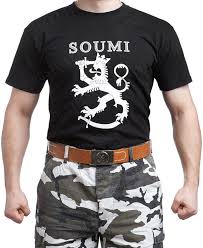
Far right attire? Read again: Suomi (Finland) is spelled Soumi. On the back of the shirt it reads: Winter War, 1939-1940, never forget. Source: www.varusteleka.fi

How many parties in Europe use names to exclude other ethnic groups?* One that comes immediately to mind is the far right British National Party and the Finns Party, which means the party of Finland’s ethnic majority, or white Finnish-speaking Finns.

The question I’d like to ask the National Coalition Party, Center Party, Social Democrats and others except the PS, is how they have permitted the PS to hijack a name like “the Finns Party” all for themselves?

If you are a white Finnish-speaking Finn, how can I be against a party that calls itself the Finns Party?

The same dangerous game has been played with success by other far right and populist groups, the PS included, which show off our national symbols and icons as if they were their personal property.


*For more reading on this topic, see Nationalism threatens racism, not war.


PALJASTETTU.: Miksi maahanmuuttokeskustelu Suomessa ei keskity oleelliseen?

Posted on September 3, 2013 by Migrant Tales

Enrique Tessieri

Tässä on tärkeä kysymys, joka on tehtävä kun keskustellaan julkisesti maahanmuutto ilmiönä: Jos pakolaiset koostuvat vain pieni osa kaikista maahanmuuttajista Suomessa, miksi maahanmuuttovastaiset tahot ja lehdistö kiinnittää heihin niin paljon huomiota? 

Vaikka jotkut meistä uskovat että Suomessa on erityisen paljon pakolaisia, totuus on aivan toinen.

Viime vuonna, Suomeen saapui 3 129 turvapaikkahakijaa, Maahanmuuttoviraston mukaan. Näistä noin puolet (1 601) saivat turvapaikan Suomesta. 

Kuten näemme näistä tilastoista, pakolaisten määrä on pieni ja vielä pienempi jos vertaamme Ruotsiin. Naapurimaassa saapui viime vuonna 43 900 turvapaikkahakijat, eli kymmenen kertaa enemmän kun meille. Suomi on myös luvannut ottaa 750 kiintiöpakolaisia joka vuosi. Viime kerta kun tämä pakolaiskiintiö täyttyi oli 2003.

Yksi syy miksi emme olemme pystyneet täyttämään vuosittaista pakolaiskiintiötä on ollut kuntien kova vastustus. Yksi perussuomalaisten kunnanvaalienohjelman tärkeä sanoma oli vastustaa kuntien pakolaisten ottamista.

Kysymys ei ole sittenkään liian paljon pakolaisista Suomessa vaan liian vähän.

Miksi sitten kun puhutaan maahanmuuttajista, harvoin keskeydymme oleellisen ja vääristämme oikeita tietoa? 

Mielestäni vastaus on yksinkertainen: he jotka vastustavat maahanmuuttoa ja maamme kasvava moninaisuuttamme, käyttävät kaikki mahdolliset keinot esittämällä mielipiteensä liioittelemalla ja kärjistämällä.

Lehdistö pelaa tärkeä roolia tässäkin, koska se antaa maahanmuuttovastustajille ja heidän argumentille arvostusta ja merkitystä. Harvoin siinä on maahanmuuttajia tai näkyvä vähemmistön edustaja kertomassa omaa mielipidettä asiasta.

Jos minä puhuisin suomalaisista samalla tavalla kun jotkut maahanmuuttovastustajat ja rasistit puhuvat meidän uusista asukkaista, varmasti väittäisin että kaikki suomalaiset ovat alkoholisteja ja pedofiileja, joka ei ole totta.

Olen kasvanut Yhdysvalloissa ja Argentiinassa. Molemmat maat ovat rakennettu maahanmuuttajien voimalla. Minä en pystyy ymmärtämään kuinka joku voi väittää, että maahanmuutto on rasite yhteiskunnalle.

OECD tutkimuksen mukaan, maahanmuutto auttoi vuonna 2011 Suomen taloutta kasvamaan 0,16%. Jos maahanmuutto luo taloudellista kasvua muualla se pysty luomaan samaa kasvua Suomeakin. He jotka epäilevät OECD:n luvut voisivat käydä Yhdysvalloissa, Kanadassa, Englannissa tai Saksassa ja ottaa selvä mistä osaa talouskasvua on peräisin.

On korkea aika Suomessa muuttaa keskustelun suuntaa maahanmuutosta, maahanmuuttajista ja kasvavasta moninaisuudesta.

Vain silloin voimme löytää oikeat ratkaisut haasteisiin ja keskittyä oleelliseen.

Alkuperäisen blogikirjoituksen voi lukea tästä.

Internal security secretariat head: Many racist crimes go unreported in Finland

Posted on September 1, 2013 by Migrant Tales

Some migrants may not report a racist crime in Finland because of mistrust of the police, poor Finnish-language skills and ignorance of one’s rights, according to Tarja Mankkinen, director of the ministry of the interior’s internal security secretariat. 

The Police College of Finland reported 918 suspected hate crimes in 2011, which is a 7% rise from 860 in the previous year.

For obvious reasons, Perussuomalaiset (PS) chairman Timo Soini is the only politician who has used these statistics to show that hate crime and intolerance aren’t a problem in Finland.

Kuvankaappaus 2013-9-1 kello 13.54.56

Read full story (in Finnish) here.

Without providing any sources to back her claim and that YLE doesn’t cite any migrant or visible minority in the story, Mankkinen states that relations between the police and migrant community are ”very good” when compared with other countries. She is, however,”pretty certain” that many racist crimes go unreported.

How can relations between the migrant community and the police be “very good” if the majority of racist crimes go unreported?

Some reasons why some migrants are inhibited from reporting racist crimes to the police is language, difficulty in filling out forms, and ignorance of one’s rights never mind knowing what a hate crime is.

So what’s the problem? Is it that the migrant community and police have little contact or is their mistrust on both sides?

We have a lot of reason to doubt that matters are ok on the tolerance front.

An internal investigation  revealed last month that judges of the Helsinki Court of Appeal use racist and sexist language and constant denials that the police do not ethnically profile anyone shed light on a much bigger problem that we’re not addressing.

It is a good matter that little by little such issues are brought to light. There are good examples of cooperation in cities like Joensuu, where the police, anti-racist organizations, municipalities and migrants work together, according to YLE.

We need more proactive solutions to move forward rather than the usual denials by officials.

Why is the immigration debate in Finland so distorted?

Posted on August 30, 2013 by Migrant Tales

Here’s a question that needs serious debating in Finland: If refugees account for a minority of all immigrants, why do they get so much attention in the media? Why do anti-immigration parties like the Perussuomalaiset (PS) constantly speak of them and give us the impression that all of Finland’s immigrants are mostly refugees and Muslims living off social welfare? 

In 2012, a total 3,129 asylum-seekers came to Finland compared with 3,089 in the previous year, according to the Finnish Immigration Service (FIS). Of these, about half (1,601) got accepted as refugees last year.

So why the distortion? It shows that those who oppose immigration, or cultural diversity, will distort, exaggerate and lie to drive home their point.

The strategy that anti-immigration groups use resembles me taking pedophile crime statistics and preposterously claiming that all Finns are pedophiles.

Kuvankaappaus 2013-8-30 kello 21.52.45

Read full 2012 annual report here. The majority (64%) of immigrants are from Europe, followed by Asians (20.5%) and Africans (9.1%).

The amount of refugees that we take in annually is tiny. In neighboring Sweden, there were a total of 43,900 asylum-seekers in 2012.

As a country, we should be ashamed of ourselves. Finland has committed itself to take in 750 quota refugees annually. The last time we filled that quota was in 2003, when we accepted 749 refugees.

Every year after 2003 we’ve missed the 750 quota target: 734 in 2012; 626 in 2011; 634 in 2010; 727 in 2009; 737 in 2008; 727 in 2007; 676 in 2006; 690 in 2005; and 679 in 2004, according to FIS.

One of the reasons why we haven’t been able to take 750 quota refugees annually is stiff opposition from municipalities. The PS, for example, campaigned in the municipal elections that municipalities should not accept refugees.

Having grown up in the United Sates, Argentina  and studied culturally diverse countries like England, Canada, Australia, Brazil and others, I do not understand how somebody can claim that immigration is a burden on society. If immigration fuels growth in these countries, it spurs growth in Finland as well.

An OECD study published in June claimed that immigration boosted economic growth in Finland in 2011 by 0.16%.

Those who disagree with the OECD’s claims can take a close look at countries like the United Sates, Canada and Britain, which have large immigrant populations, and ask why they have the most powerful economies in the world.


Supreme Court upholds PS city councilman’s conviction for ethnic agitation

Posted on August 29, 2013 by Migrant Tales

The Supreme Court announced Tuesday that it will not grant Perussuomalaiset (PS) Kotka City Councilman Freddy van Wonterghem the right to appeal a conviction for ethnic agitation in February by the Kouvola appeals court, reports YLE. The ruling is similar to a lower court ruling on PS MP James Hirvisaari’s hate speech conviction in June 2012. 

Van Wonterghem said he would appeal the decision to the European Court of Human Rights.

Kuvankaappaus 2013-8-29 kello 6.56.01

Read full story here.

The city councilman commented on a blog entry written by Migrant Tales that he had no regrets about what he wrote in the summer of 2011. He wrote back then that it was a good matter that a Muslim woman would die since it would be one less person giving birth to a member of that religious group. 

While it’s clear what van Wonterghem wrote is something he would most likely never say to a woman from his own national or ethnic group, his defiance and support from the PS is more than revealing. The excuses are an insult to any sensible person’s intelligence.

The PS of the region of Kymi played down the whole affair by stating that the councilman didn’t know how to express himself adequately in Finnish.

The Belgian-born naturalized Finn has lived in Finland for over 30 years.

Van Wonterghem knew exactly what he said and did it get national attention, which he succeeded.

The councilman, who is a Holocaust denier, played down the whole affair by stating that it was “only a sentence” and that he didn’t consider it offensive and/or racist, which it was.

A common excuse used by racists in Finland is that their comment was either taken out of context or that it was humor.

Van Wonterghem claims that his statement about killing a Muslim woman was “irony.”   

The whole case is another example of how PS chairman Timo Soini has been forced to eat his words and promises on racism.

He said that any PS candidate that was convicted for ethnic agitation would be kicked out of the party.

First Soini claimed there were no racists, later “one, two or three,” and now his totally silent.


Migrant Tales (May 26, 2011): Racist propaganda during Finland’s Winter War (1939-40)

Posted on August 28, 2013 by Migrant Tales

Consequently, racial prejudice and discrimination are nonexistent (in Finland).                                                                                                        Heikki Waris, An introduction to Finnish Society (1965), p. 2

Finland was also denying in the 1960s that racism did not exist because there weren’t any foreigners living in the country. Racism has, however, been part of our culture for a very long time: Kongoshoe polish, Neekeripusu (n-word kiss) chocolate,  the Fazer licorice Gollywog are some examples of how this social ill had implanted itself in the national culture.

If Waris and other researchers wanted to find out if racism existed in our culture, all they’d have to do was study Finns that emigrated to Africa, North and South America. I once asked a second-generation Finn in Argentina how many races there existed in the world. “There are three,” he said. “White, black and pitch-black.”

We can even see racism prevalent in a Suomen Kuvalehti Easter 1940 issue: “In the East Indies Islands there appears a strange form of sudden mental disorientation that is called ‘running amok,’ or being taken over by horror and then reacting in a mad fashion. Even while running away from battle with a dagger in hand, the inflicted person rushes here and there striking anyone dead (that gets in his way).”

And then on the next page of the story is a picture of two Finnish solider representing the “civilized” world who know how to keep calm in the face of shocking situations. “Can somebody imagine for example that these Finnish soldiers would “run amok?” the caption reads.

The gist of the story by PhD Jan Gästrin, headlined “Spiritual discipline,” is that blacks are uncivilized and Finns civilized. In battle Finnish soldiers don’t “run amok” but can withstand the most rigorous tests of war: rats, lice, poisoned air etc.

racist-winter-war

The first page of a Suomen Kuvalehti article published in 1940 that attempted to show how the European white man was superior to blacks.

Note: The author apologizes for the racist content of the Suomen Kuvalehti article and wants to make clear that he does not play down the valiant fight the Finns put up against the former Soviet Union in the Winter War.

This blog entry was originally published May 26, 2011.

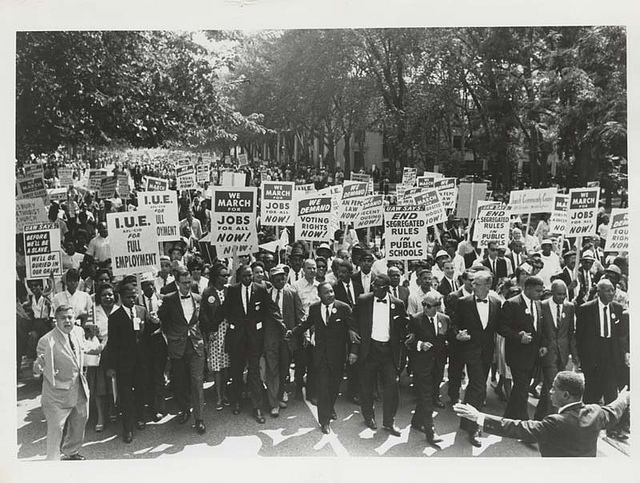
Fifty years from Martin Luther King’s “I have a dream” speech

Posted on August 27, 2013 by Migrant Tales

Today marks the 50th anniversary when Martin Luther King Jr.(1929-68) gave his historic “I have a dream” speech. When he gave the speech in Washington on August 28,1963, I was eight years old. Even if I knew nothing  about MLK at the time never mind anything about his famous speech, his words would have a profound effect on me throughout my life.

His historic speech was not only meant for black Americans, but applies to any minority struggling for equality and justice irrespective of the country.

Much of the Civil Rights Movement of the 1950s and 1960s starting from Rosa Parks and others before them like Frederick Douglass and nineteenth century abolitionists like William Lloyd Garrison and  John Brown, who paid with his life to end slavery.

There are also other ones who showed the way with their lives but never imagined we’d remember them today with so much affection and sadness: Treyvon Martin, George Stinney, and Emmet Till.

In many respects, the same message that MLK gave should be the strategy used by anti-racists groups in Finland and Europe. As he said: “Now is the time to lift our nation from the quicksands of racial injustice to the solid rock of brotherhood.”
6891546499_d4a6f32215_z

Today marks the 50th anniversary march on Washington and I have a dream speech. Source: Flickr.

The jury is still out if our Nordic way of life and values will help us to stand togethers on that solid rock of brotherhood.  Anders Breivik on 22/7, the rise of the Sweden Democrats and Perussuomalaiset in Finland suggest that attitudes have toughened in this region of Europe as well.

Europe not only has the burden of the legacy of slavery and colonialism hanging over it, it has appeared time and again to haunt us and ravage our continent with wars and mass devastation.

Ethnic discrimination is an aberration and one of the worst social ills that can inflict us. There is a cure according to MLK: “Darkness cannot drive out darkness; only light can do that. Hate cannot drive out hate; only love can do that.”  

Great speeches like the one MLK gave half a century ago and the gains made by the Civil Rights Movement in the 1960s are clear examples that the most oppressed minorities can have a dream of a better life and challenge intolerance.

There are many parts of his speech that move me. One passage in particular I especially like: “I have a dream that my four little children will one day live in a nation where they will not be judged by the color of their skin but by their character.”

Hear MLK’s full speech here.

______________

Martin Luther King’s “I Have a Dream” speech, August 28, 1963

I am happy to join with you today in what will go down in history as the greatest demonstration for freedom in the history of our nation.

Five score years ago, a great American, in whose symbolic shadow we stand today, signed the Emancipation Proclamation. This momentous decree came as a great beacon of hope to millions of slaves, who had been seared in the flames of withering injustice. It came as a joyous daybreak to end the long night of their captivity. But one hundred years later, the colored America is still not free. One hundred years later, the life of the colored American is still sadly crippled by the manacle of segregation and the chains of discrimination.

One hundred years later, the colored American lives on a lonely island of poverty in the midst of a vast ocean of material prosperity. One hundred years later, the colored American is still languishing in the corners of American society and finds himself an exile in his own land So we have come here today to dramatize a shameful condition.

In a sense we have come to our Nation’s Capital to cash a check. When the architects of our great republic wrote the magnificent words of the Constitution and the Declaration of Independence, they were signing a promissory note to which every American was to fall heir.

This note was a promise that all men, yes, black men as well as white men, would be guaranteed to the inalienable rights of life liberty and the pursuit of happiness.

It is obvious today that America has defaulted on this promissory note insofar as her citizens of color are concerned. Instead of honoring this sacred obligation, America has given its colored people a bad check, a check that has come back marked “insufficient funds.”

But we refuse to believe that the bank of justice is bankrupt. We refuse to believe that there are insufficient funds in the great vaults of opportunity of this nation. So we have come to cash this check, a check that will give us upon demand the riches of freedom and security of justice.

We have also come to his hallowed spot to remind America of the fierce urgency of Now. This is not time to engage in the luxury of cooling off or to take the tranquilizing drug of gradualism.

Now is the time to make real the promise of democracy.

Now it the time to rise from the dark and desolate valley of segregation to the sunlit path of racial justice.

Now it the time to lift our nation from the quicksands of racial injustice to the solid rock of brotherhood.

Now is the time to make justice a reality to all of God’s children.

It would be fatal for the nation to overlook the urgency of the moment and to underestimate the determination of its colored citizens. This sweltering summer of the colored people’s legitimate discontent will not pass until there is an invigorating autumn of freedom and equality. Nineteen sixty-three is not an end but a beginning. Those who hope that the colored Americans needed to blow off steam and will now be content will have a rude awakening if the nation returns to business as usual.

There will be neither rest nor tranquility in America until the colored citizen is granted his citizenship rights. The whirlwinds of revolt will continue to shake the foundations of our nation until the bright day of justice emerges.

We can never be satisfied as long as our bodies, heavy with the fatigue of travel, cannot gain lodging in the motels of the highways and the hotels of the cities.

We cannot be satisfied as long as the colored person’s basic mobility is from a smaller ghetto to a larger one.

We can never be satisfied as long as our children are stripped of their selfhood and robbed of their dignity by signs stating “for white only.”

We cannot be satisfied as long as a colored person in Mississippi cannot vote and a colored person in New York believes he has nothing for which to vote.

No, we are not satisfied and we will not be satisfied until justice rolls down like waters and righteousness like a mighty stream.

I am not unmindful that some of you have come here out of your trials and tribulations. Some of you have come from areas where your quest for freedom left you battered by storms of persecutions and staggered by the winds of police brutality.

You have been the veterans of creative suffering. Continue to work with the faith that unearned suffering is redemptive.

Go back to Mississippi, go back to Alabama, go back to South Carolina go back to Georgia, go back to Louisiana, go back to the slums and ghettos of our modern cities, knowing that somehow this situation can and will be changed.

Let us not wallow in the valley of despair. I say to you, my friends, we have the difficulties of today and tomorrow.

I still have a dream. It is a dream deeply rooted in the American dream.

I have a dream that one day this nation will rise up and live out the true meaning of its creed. We hold these truths to be self-evident that all men are created equal.

I have a dream that one day out in the red hills of Georgia the sons of former slaves and the sons of former slaveowners will be able to sit down together at the table of brotherhood.

I have a dream that one day even the state of Mississippi, a state sweltering with the heat of oppression, will be transformed into an oasis of freedom and justice.

I have a dream that my four little children will one day live in a nation where they will not be judged by the color of their skin but by their character.

I have a dream today.

I have a dream that one day down in Alabama, with its vicious racists, with its governor having his lips dripping with the words of interpostion and nullification; that one day right down in Alabama little black boys and black girls will be able to join hands with little white boys and white girls as sisters and brothers.

I have a dream today.

I have a dream that one day every valley shall be engulfed, every hill shall be exalted and every mountain shall be made low, the rough places will be made plains and the crooked places will be made straight and the glory of the Lord shall be revealed and all flesh shall see it together.

This is our hope. This is the faith that I will go back to the South with. With this faith we will be able to hew out of the mountain of despair a stone of hope.

With this faith we will be able to transform the jangling discords of our nation into a beautiful symphony of brotherhood.

With this faith we will be able to work together, to pray together, to struggle together, to go to jail together, to climb up for freedom together, knowing that we will be free one day.

This will be the day when all of God’s children will be able to sing with new meaning “My country ’tis of thee, sweet land of liberty, of thee I sing. Land where my father’s died, land of the Pilgrim’s pride, from every mountainside, let freedom ring!”

And if America is to be a great nation, this must become true. So let freedom ring from the hilltops of New Hampshire. Let freedom ring from the mighty mountains of New York.

Let freedom ring from the heightening Alleghenies of Pennsylvania.

Let freedom ring from the snow-capped Rockies of Colorado.

Let freedom ring from the curvaceous slopes of California.

But not only that, let freedom ring from Stone Mountain of Georgia.

Let freedom ring from every hill and molehill of Mississippi and every mountainside.

When we let freedom ring, when we let it ring from every tenement and every hamlet, from every state and every city, we will be able to speed up that day when all of God’s children, black men and white men, Jews and Gentiles, Protestants and Catholics, will be able to join hands and sing in the words of the old spiritual, “Free at last, free at last. Thank God Almighty, we are free at last.”

Prepared by Gerald Murphy (The Cleveland Free-Net – aa300) Distributed by the Cybercasting Services Division of the National Public Telecomputing Network (NPTN).

The Jews of Finland

Posted on August 27, 2013 by Migrant Tales

The Jewish side of our family was never discussed openly when I was young. If it was, the matter appeared as a fleeting question: Is it true that part of our family is Jewish?

Kuvankaappaus 2013-8-26 kello 22.18.49

Read full column here on page 14.

Silence always followed that question.

In retrospect, our silence and answer revealed a lot about how some Finns saw cultural diversity.

My grandfather never spoke about his Jewish background because many members of his generation, who were born in the early 1890s when Finland was a grand duchy of Russia, were busy erasing who they were to forge a new Finnish national identity. He did this with the help of nationalism, by joining the White Guards (Suojeluskunta) and changing his surname in 1931 to Harvo from Handtwargh.

Even if silence was the best answer we could rally about our past, it wasn’t until many decades later when I stumbled on a wealth of genealogical information on the Internet about my grandfather and family.

I discovered that my grandfather of my great grandfather was Jakob Weikaim (1785-1848), a tinsmith from Daugavpils, Latvia. My great great great grandfather became in 1832 the first Jew to be granted a permanent residence in Finland.

A 1782 law, when Finland was part of Sweden between ca. 1150 and 1809, forced Jews to settle in Stockholm, Gothenburg and Norrköping. Any Jew that wished to live outside these cities had to convert to the Christian faith.

The Jewish community of Finland has always been small. Today their numbers total about 1,500 versus 870 in the 1870 census. One third of the Jews that lived in Finland at the time were natives with the rest being from Poland, Lithuania, Latvia and the Ukraine.

Jews that settled Finland in the nineteenth century were the so-called poor Russians who were conscripted in the Russian army for up to 25 years.

The first synagogue build in Finland was in the 1830s on the island of Sveaborg, located outside Helsinki.

If Jakob Weikaim was our first Jewish relative to live in Finland and my grandfather the last, our Jewish heritage survived four generations in this country.

The Holocaust

Like other minorities in Finland, the Jews were victims of outright discrimination. Citizenship rights were not granted to them until 1918, and they could only work in a few professions like selling secondhand clothes.

Even if Finland was the first country in Europe to grant women the right to vote, it was the last together with Romania to grant Jews full citizenship rights.

The national media exacerbated people’s fears about the Jews. In an article published in 1883 by Uusi Suometar, the daily claimed that the Jewish population of Finland would reach half a million within a century due to high birth rates.

Dan Kantor, executive director of the Jewish Community of Helsinki, said that many of the fears and claims used by anti-immigration groups today were used against the Jews in the past.

Even if my grandfather had renounced Judaism and replaced it with Finnish nationalism, I’m certain he knew about the Holocaust long before its horrors became widely acknowledged by the outside world. My aunt, who was married to a US diplomat, asked her brothers and sisters to leave Finland. She feared that if the Nazis won the war, they’d be sent to extermination camps.

Fearing persecution, another aunt fled to Sweden shortly after the outbreak of the Continuation War in June 1941, when Finland was militarily allied with Nazi Germany.

Even if my grandfather never spoke about the Holocaust, I’m certain that the pictures of emaciated and dead humans at concentration camps would have horrified him. The mass murder committed by the Nazis would petrify anyone. The Holocaust will alwys live by us like an ugly reminder of our savagery, or in particular of a regime that based its existence on racism and ethnic purity.

If my grandfather lived today, I’d ask him about our alliance with Nazi Germany.

If he chose to answer my question candidly, I’m certain he’d tell me that hatred makes strange bedfellows. Even if Nazi Germany and Finland had a common enemy, the Soviet Union, what would have happened to  the Jews of Finland if the Germany would have won the war?

Finns claim proudly – followed by an obvious sign of relief – that even if we were an ally of Germany during World War 2, anti-Semitism never reached the same levels as in Hungary, Romania and other parts of Nazi-dominated Europe.

Even so, former Prime Minister Paavo Lipponen formally apologized in November 2000 to the Jewish community for the extradition of eight Jews to Germany in 1942. Only one of the eight survived after they were sent to Auschwitz.

In neighboring countries like Estonia, the fate of the Jews was far worse. An estimated half of the country’s Jewish population, which totaled 4,000, died in the Holocaust. Nothing, however, compares to the barbarity that the nazis committed in Poland and other parts of Europe, where an estimated 6 million Jews perished.

The anti-Semitism that we still see in Europe today is in many respects linked to the intolerance we are seeing against immigrants and visible minorities. Factors like the economic recession and rising unemployment play important roles in fueling racism, xenophobia and far right ideologies.

The history of the Jews of Finland, as that of other minorities like the Finnish Tatars, Roma and Saami, should serve as a constant reminder of the importance of teaching and reinforcing tolerance.

Disenfranchising and denying people their right to their identity should never be encouraged but condemned by society.

I have a strong hunch that my late relatives would agree.

Source: Sarah Beizer and Meliza Amity: Migration Patterns among Jews – Finland. Originally downloaded from www.amitys.com. 

The column was originally published in Finland Bridge 4/2013.

  • Previous
  • 1
  • …
  • 7
  • 8
  • 9
  • 10
  • 11
  • 12
  • 13
  • …
  • 152
  • Next
Read more about documentary film
Read more

Recent Posts

  • Finland’s tabloids Iltalehti and Ilta-Sanomat are the pits
  • Riikka Purra’s Dr Jekyll and Mr Hyde mask
  • Double standards
  • Perussuomalaiset: Uusi logo, sama vanha juttu
  • Taco Trump

Recent Comments

  1. Absolutely Socking: Racist Finnish Facebook group against human rights gets flooded with socks on Musta Barbaari’s mother and sister charged by the police in “ethnic profiling” case
  2. Ilkka Nuotio on Pekka Myrskylä: “Tilastot kertovat toista kuin poliittinen keskustelu”
  3. Genrih Soinkara on The war in Ukraine and the Russian-Finnish border crisis are showing Finland’s ugly side
  4. Ahti Tolvanen on Comment by Ahti Tolvanen on the Helsinki +50 conference
  5. Angel Barrientos on Angel Barrientos is one of the kind beacons of Finland’s Chilean community

Archives

  • June 2026
  • May 2026
  • April 2026
  • March 2026
  • February 2026
  • January 2026
  • December 2025
  • November 2025
  • October 2025
  • September 2025
  • August 2025
  • July 2025
  • June 2025
  • May 2025
  • April 2025
  • March 2025
  • February 2025
  • January 2025
  • December 2024
  • November 2024
  • October 2024
  • September 2024
  • August 2024
  • July 2024
  • June 2024
  • May 2024
  • April 2024
  • March 2024
  • February 2024
  • January 2024
  • December 2023
  • November 2023
  • October 2023
  • September 2023
  • August 2023
  • July 2023
  • June 2023
  • May 2023
  • April 2023
  • March 2023
  • February 2023
  • January 2023
  • December 2022
  • November 2022
  • October 2022
  • September 2022
  • August 2022
  • July 2022
  • June 2022
  • May 2022
  • April 2022
  • March 2022
  • February 2022
  • January 2022
  • December 2021
  • November 2021
  • October 2021
  • September 2021
  • August 2021
  • July 2021
  • June 2021
  • May 2021
  • April 2021
  • March 2021
  • February 2021
  • January 2021
  • December 2020
  • November 2020
  • October 2020
  • September 2020
  • August 2020
  • July 2020
  • June 2020
  • May 2020
  • April 2020
  • March 2020
  • February 2020
  • January 2020
  • December 2019
  • November 2019
  • October 2019
  • September 2019
  • August 2019
  • July 2019
  • June 2019
  • May 2019
  • April 2019
  • March 2019
  • February 2019
  • January 2019
  • December 2018
  • November 2018
  • October 2018
  • September 2018
  • August 2018
  • July 2018
  • June 2018
  • May 2018
  • April 2018
  • March 2018
  • February 2018
  • January 2018
  • December 2017
  • November 2017
  • October 2017
  • September 2017
  • August 2017
  • July 2017
  • June 2017
  • May 2017
  • April 2017
  • March 2017
  • February 2017
  • January 2017
  • December 2016
  • November 2016
  • October 2016
  • September 2016
  • August 2016
  • July 2016
  • June 2016
  • May 2016
  • April 2016
  • March 2016
  • February 2016
  • January 2016
  • December 2015
  • November 2015
  • October 2015
  • September 2015
  • August 2015
  • July 2015
  • June 2015
  • May 2015
  • April 2015
  • March 2015
  • February 2015
  • January 2015
  • December 2014
  • November 2014
  • October 2014
  • September 2014
  • August 2014
  • July 2014
  • June 2014
  • May 2014
  • April 2014
  • March 2014
  • February 2014
  • January 2014
  • December 2013
  • November 2013
  • October 2013
  • September 2013
  • August 2013
  • July 2013
  • June 2013
  • May 2013
  • April 2013
  • March 2013
  • February 2013
  • January 2013
  • December 2012
  • November 2012
  • October 2012
  • September 2012
  • August 2012
  • July 2012
  • June 2012
  • May 2012
  • April 2012
  • March 2012
  • February 2012
  • January 2012
  • December 2011
  • November 2011
  • October 2011
  • September 2011
  • August 2011
  • July 2011
  • June 2011
  • May 2011
  • April 2011
  • March 2011
  • February 2011
  • January 2011
  • December 2010
  • November 2010
  • October 2010
  • September 2010
  • August 2010
  • July 2010
  • June 2010
  • May 2010
  • April 2010
  • March 2010
  • February 2010
  • January 2010
  • December 2009
  • November 2009
  • October 2009
  • September 2009
  • August 2009
  • July 2009
  • December 2008
  • November 2008
  • October 2008
  • September 2008
  • August 2008
  • July 2008
  • June 2008
  • May 2008
  • April 2008
  • March 2008
  • February 2008
  • January 2008
  • November 2007
  • October 2007
  • September 2007
  • August 2007
  • July 2007
  • June 2007
  • May 2007

Categories

  • ?? Gia L?c
  • ????? ?????? ????? ???????? ?? ??????
  • ???????
  • @HerraAhmed
  • @mondepasrond
  • @nohatefinland
  • @oula_silver
  • @Varathas
  • A Pakistani family
  • äärioikeisto
  • Abbas Bahmanpour
  • Abdi Muhis
  • Abdirahim Hussein Mohamed
  • Abdirahim Husu Hussein
  • Abdirisak Mahamed
  • About Migrant Tales
  • activism
  • Adam Al-Sawad
  • Adel Abidin
  • Afrofinland
  • Ahmed IJ
  • Ahti Tolvanen
  • Aino Pennanen
  • Aisha Maniar
  • Alan Ali
  • Alan Anstead
  • Alejandro Díaz Ortiz
  • Alekey Bulavsev
  • Aleksander Hemon
  • Aleksanterinliitto
  • Aleksanterinliitto ry
  • Aleksanterinliitto ry:n hallitus
  • Alex Alex
  • Alex Mckie
  • Alexander Nix
  • Alexandra Ayse Albayrak
  • Alexis Neuberg
  • Ali Asaad Hasan Alzuhairi
  • Ali Hossein Mir Ali
  • Ali Rashid
  • Ali Sagal Abdikarim
  • Alina Tsui
  • Aline Müller
  • All categories
  • Aman Heidari
  • Amiirah Salleh-Hoddin & Jana Turk
  • Amin A. Alem
  • Amir Zuhairi
  • Amkelwa Mbekeni
  • Ana María Gutiérrez Sorainen
  • Anachoma
  • Anders Adlecreutz
  • Angeliina Koskinen
  • Anna De Mutiis
  • Anna María Gutiérrez Sorainen
  • Anna-Kaisa Kuusisto ja Jaakko Tuominen
  • Annastiina Kallius
  • Anneli Juise Friman Lindeman
  • Announcement
  • Anonymous
  • Antero Leitzinger
  • anti-black racism
  • Anti-Hate Crime Organisation Finland
  • Anudari Boldbaatar
  • Arshiya Nasser
  • Aspergers Syndrome
  • Asylum Corner
  • Asylum seeker 406
  • Athena Griffin and Joe Feagin
  • Autism
  • Avaaz.org
  • Awale Olad
  • Ayan Said Mohamed
  • AYY
  • Barachiel
  • Bashy Quraishy
  • Beatrice Kabutakapua
  • Beri Jamal
  • Beri Jamal and Enrique Tessieri
  • Bertolt Brecht
  • Boiata
  • Boodi Kabbani
  • Bruno Gronow
  • Carmen Pekkarinen
  • Çelen Oben and Sheila Riikonen
  • Chiara Costa-Virtanen
  • Chiara Costa-Virtanen
  • Chiara Sorbello
  • Christian Thibault
  • Christopher Wylie
  • Clara Dublanc
  • Dana
  • Daniel Malpica
  • Danilo Canguçu
  • David Papineau
  • David Schneider
  • Dexter He
  • Don Flynn
  • Dr Masoud Kamali
  • Dr. Faith Mkwesha
  • Dr. Theodoros Fouskas
  • Edna Chun
  • Eeva Kilpi
  • Emanuela Susheela
  • En castellano
  • ENAR
  • Enrique
  • Enrique Tessieri
  • Enrique Tessieri & Raghad Mchawh
  • Enrique Tessieri & Yahya Rouissi
  • Enrique Tessieri and Muhammed Shire
  • Enrique Tessieri and Sira Moksi
  • Enrique Tessieri and Tom Vandenbosch
  • Enrique Tessieri and Wael Che
  • Enrique Tessieri and Yahya Rouissi
  • Enrique Tessieri and Zimema Mhone
  • Epäluottamusmies
  • EU
  • Europe
  • European Islamophobia Report
  • European Islamophobia Report 2019,
  • European Union
  • Eve Kyntäjä
  • Ezequiel Caldeiro
  • Facebook
  • Fadumo Dayib
  • Faisa Kahiye
  • Farhad Manjoo
  • Fasismi
  • Finland
  • Fizza Qureshi
  • Flyktingar och asyl
  • Foreign Student
  • Fozia Mir-Ali
  • Frances Webber
  • Frida Selim
  • Gareth Rice
  • Ghyslain Vedeaux
  • Global Art Point
  • Great Replacement
  • Habiba Ali
  • Hami Bahadori
  • Hami Bahdori
  • Hamid
  • Hamid Alsaameere
  • Hamid Bahdori
  • Handshake
  • Harmit Athwal
  • Hassan Abdi Ali
  • Hassan Muhumud
  • Heikki Huttunen
  • Heikki Wilenius
  • Helsingin Sanomat
  • Henning van der Hoeven
  • Henrika Mälmsröm
  • Hser Hser
  • Hser Hser ja Mustafa Isman
  • Husein Muhammed
  • Hussain Kazemian
  • Hussain Kazmenian
  • Ibrahim Khan
  • Ida
  • Ignacio Pérez Pérez
  • Iise Ali Hassan
  • Ilari Kaila & Tuomas Kaila
  • Imam Ka
  • inside-an-airport
  • Institute of Race Relations
  • Iraqi asylum seeker
  • IRR European News Team
  • IRR News Team
  • Islamic Society of Norhern FInland
  • Islamic Society of Northern Finland
  • Islamophobia
  • Jacobinmag.com
  • Jallow Momodou
  • Jan Holmberg
  • Jane Elliott
  • Jani Mäkelä
  • Jari Luoto
  • Jari Taponen
  • Jegor Nazarov
  • Jenni Stammeier
  • Jenny Bourne
  • Jessie Daniels
  • Joe Davidow
  • Johannes Koski
  • John D. Foster
  • John Grayson
  • John Marriott
  • Jon Burnett
  • Jorma Härkönen
  • Jos Schuurmans
  • José León Toro Mejías
  • Josue Tumayine
  • Jouni Karnasaari
  • Juan Camilo
  • Jukka Eräkare
  • Julian Abagond
  • Julie Pascoet
  • Jussi Halla-aho
  • Jussi Hallla-aho
  • Jussi Jalonen
  • JusticeDemon
  • Kadar Gelle
  • Kaksoiskansalaisuus
  • Kansainvälinen Mikkeli
  • Kansainvälinen Mikkeli ry
  • Katherine Tonkiss
  • Kati Lepistö
  • Kati van der Hoeven-Lepistö
  • Katie Bell
  • Kättely
  • Kerstin Ögård
  • Keshia Fredua-Mensah & Jamie Schearer
  • Khadidiatou Sylla
  • Khadra Abdirazak Sugulle
  • Kiihotus kansanryhmää vastaan
  • Kirsi Crowley
  • Koko Hubara
  • Kristiina Toivikko
  • Kubra Amini
  • KuRI
  • La Colectiva
  • La incitación al odio
  • Laura Huhtasaari
  • Lauri Finér
  • Leif Hagert
  • Léo Custódio
  • Leo Honka
  • Leontios Christodoulou
  • Lessie Branch
  • Lex Gaudius
  • Leyes de Finlandia
  • Liikkukaa!
  • Linda Hyökki
  • Liz Fekete
  • M. Blanc
  • Maarit Snellman
  • Mahad Sheikh Musse
  • Maija Vilkkumaa
  • Malmin Kebab Pizzeria Port Arthur
  • Marcell Lorincz
  • Mari Aaltola
  • María Paz López
  • Maria Rittis Ikola
  • Maria Tjader
  • Marja-Liisa Tolvanen
  • Mark
  • Markku Heikkinen
  • Marshall Niles
  • Martin Al-Laji
  • Maryan Siyad
  • Matt Carr
  • Mauricio Farah Gebara
  • Media Monitoring Group of Finland
  • Micah J. Christian
  • Michael McEachrane
  • Michele Levoy
  • Michelle Kaila
  • Migrant Tales
  • Migrant Tales Literary
  • Migrantes News
  • Migrants' Rights Network
  • MigriLeaks
  • Mikko Kapanen
  • Miriam Attias and Camila Haavisto
  • Mohamed Adan
  • Mohammad Javid
  • Mohammad M.
  • Monikulttuurisuus
  • Monisha Bhatia and Victoria Canning
  • Mor Ndiaye
  • Muh'ed
  • Muhamed Abdimajed Murshid
  • Muhammed Shire
  • Muhammed Shire and Enrique Tessieri
  • Muhis Azizi
  • Musimenta Dansila
  • Muslimiviha
  • Musulmanes
  • Namir al-Azzawi
  • Natsismi
  • Neurodiversity
  • New Women Connectors
  • Nils Muižnieks
  • No Labels No Walls
  • Noel Dandes
  • Nuor Dawood
  • Omar Khan
  • Otavanmedia
  • Oula Silvennoinen
  • Paco Diop
  • Pakistani family
  • Pentti Stranius
  • Perussuomalaiset
  • perustuslaki
  • Petra Laiti
  • Petri Cederlöf
  • Pia Grochowski
  • Podcast-lukija Bea Bergholm
  • Pohjois – Suomen Islamilainen Yhdyskunta
  • Pohjois Suomen Islamilainen Yhyskunta
  • Polina Kopylova
  • Race Files
  • racism
  • Racism Review
  • Raghad Mchawh
  • Ranska
  • Rashid H. and Migrant Tales
  • Rasismi
  • Raul Perez
  • Rebecka Holm
  • Reem Abu-Hayyeh
  • Refugees
  • Reija Härkönen
  • Remiel
  • Reza Nasri
  • Richard Gresswell
  • Riikka Purra
  • Risto Laakkonen
  • Rita Chahda
  • Ritva Kondi
  • Robito Ibrahim
  • Roble Bashir
  • Rockhaya Sylla
  • Rodolfo Walsh
  • Roger Casale
  • Rostam Atai
  • Roxana Crisólogo Correa
  • Ruth Grove-White
  • Ruth Waweru-Folabit
  • S-worldview
  • Sadio Ali Nuur
  • Sami Rusanen
  • Sandhu Bhamra
  • Sara de Jong
  • Sarah Crowther
  • Sari Alhariri
  • Sarkawt Khalil
  • Sasu
  • Scot Nakagawa
  • Shabana Ahmadzai
  • Shada Islam
  • Sharon Chang blogs
  • Shenita Ann McLean
  • Shirlene Green Newball
  • Sini Savolainen
  • Sira Moksi
  • Sonia K.
  • Sonia Maria Koo
  • Steverp
  • Stop Deportations
  • Suldaan Said Ahmed
  • Suomen mediaseurantakollektiivi
  • Suomen Muslimifoorumi ry
  • Suomen viharikosvastainen yhdistys
  • Suomen viharikosvastainen yhdistys ry
  • Suomi
  • Supermen
  • Susannah
  • Suva
  • Syrjintä
  • Talous
  • Tapio Tuomala
  • Taw Reh
  • Teivo Teivainen
  • The Daily Show
  • The Heino
  • The Supermen
  • Thomas Elfgren
  • Thulfiqar Abdulkarim
  • Tim McGettigan
  • Tino Singh
  • Tito Moustafa Sliem
  • Tobias Hübinette and L. Janelle Dance
  • Transport
  • Trica Danielle Keaton
  • Trilce Garcia
  • Trish Pääkkönen
  • Trish Pääkkönen and Enrique Tessieri
  • Tuulia Reponen
  • Uncategorized
  • UNITED
  • University of Eastern Finland
  • Uyi Osazee
  • Väkivalta
  • Vapaa Liikkuvuus
  • Venla-Sofia Saariaho
  • Vieraskynä
  • W. Che
  • W. Che an Enrique Tessieri
  • Wael Ch.
  • Wan Wei
  • Women for Refugee Women
  • Xaan Kaafi Maxamed Xalane
  • Xassan Kaafi Maxamed Xalane
  • Xassan-Kaafi Mohamed Halane & Enrique Tessieri
  • Yahya Rouissi
  • Yasmin Yusuf
  • Yassen Ghaleb
  • Yle Puhe
  • Yuliet Tresa
  • Yve Shepherd
  • Zahra Khavari
  • Zaker
  • Zalina Ametova
  • Zamzam Ahmed Ali
  • Zeinab Amini ja Soheila Khavari
  • Zimema Mahone and Enrique Tessieri
  • Zimema Mhone
  • Zoila Forss Crespo Moreyra
  • ZT
  • Zulma Sierra
  • Zuzeeko Tegha Abeng
© 2026 Migrant tales | Powered by Minimalist Blog WordPress Theme