Migrant tales
Menu
  • #MakeRacismHistory “In Your Eyes”
  • About Migrant Tales
  • It’s all about Human Rights
  • Literary
  • Migrant Tales Media Monitoring
  • NoHateFinland.org
  • Tales from Europe
Menu

Category: Migrant Tales

What kind of a year was 2014 for our ever-growing culturally diverse society?

Posted on December 30, 2014 by Migrant Tales

For Finland’s ever-growing culturally and ethnically diverse community, 2014 will be remembered for many good and bad things. At the top of the good things, there’s the Olen suomalainen video but the list of toxic news far outweighs the latter like Tom Packalén’s “racist youth mobs with migrant backgrounds” and Pia Kauma’s “baby carriages.” 

IMG_3052

Migrant Tales wishes its readers a wonderful New Year.


The year brought us some disturbing stories about migrant children, who lag two years in Pisa tests when compared with white Finns. Children with migrant parents were also more prone to face bullying, physical and sexual harassment at schools.

One of the best myth-busting stories written in the year was by Pekka Myrksylä, who claimed in a blog entry  that the majority of migrants in Finland live in poverty.

There were many, many more stories in 2014 about our cultural diversity that will be published more in detail in Finland & cultural diversity 2014  in the beginning of January.

Migrant Tales is a blog community. We therefore seek your opinions and input about what you considered the biggest story or challenges facing our culturally diverse community this year in Finland and Europe.

We’d love to hear from you on our Facebook page, email ([email protected]) or Twitter @MigrantTales.

Thank you!

Jussi Halla-aho: “Do not tolerate the intolerant one”

Posted on June 9, 2014 by Migrant Tales


Migrant Tales insight: We get a lot of email and tip-offs from our readers. The latest one we got is of three blog entry translations in English of Perussuomalaiset (PS)* MEP Jussi Halla-aho, who was convicted for ethnic agitation. This last one, Do not tolerate the intolerant one, was published in Scripta on December 20, 2007. 

Apart from understanding how racism in Finland thrives and which arguments are used to spread hatred of other groups, one matter is clear from all three writings: They are repulsive and we apologize if anyone is offended by them. The writings have nothing to do with a PhD’s critical thinking; they are simply urban tales and prejudices that have been piled high and deep. 

Another important aspect that we must acknowledge about these writings is that they are hostile towards migrants and intended for gullible Finns. They are hateful writings that fuel prejudice, which in turn fuels social exclusion. 

Acceptance of these two anti-immigration parties this week in the ECR with “MEPs with criminal records,” proves that shoplifting is a worse offense for a politician today than being sentenced for ethnic agitation. It sadly exposes as well why racism has grown in Europe and why mainstream politicians and the media have helped fuel such intolerance. 

Our only motive for publishing these blog entries is so that other Europeans who don’t speak Finnish can read what kind of politician Halla-aho is. 

For more insight into the PS, take a look Far-right and anti-immigration quotes in English by the PS.

* The Finnish name for the Finns Party is the Perussuomalaiset (PS). The names adopted by the PS, like True Finns or Finns Party, promote in our opinion nativist nationalism and xenophobia. We therefore prefer to use the Finnish name of the party on our postings. 

_____________________

Quotes within the text taken from the summaries of EU legislation, “Framework decision on combating racism and xenophobia.”

Through the Gates of Vienna- blog I came across a proposition made in the EU concerning legal actions in the combat against racism and xenophobia. The EU has never interested me very much. Maybe it should.

“The purpose of this framework decision is to ensure that racism and xenophobia are punishable by effective, proportionate and dissuasive criminal penalties in the European Union (EU).”

The beginning is already a promising one. Because racism, being a perception of the existence of different races, perhaps of their differences and of their relative value hierarchy, is an opinion and xenophobia an emotional state, I can’t quite figure out what the case might be here, other than attempting to legislate one’s thoughts.

Nonetheless, all depends on the definitions of “racism” and “xenophobia”:

“Public incitement to violence or hatred directed against a group of persons or a member of such a group defined on the basis of race, colour, descent, religion or belief, or national or ethnic origin.”

Is it, therefore, intended to criminalize the feelings of repugnance?

“Certain forms of conduct as outlined below, which are committed for a racist or xenophobic purpose, are punishable as criminal offences:

    – public incitement to violence or hatred directed against a group of persons or a member of such a group defined on the basis of race, colour, descent, religion or belief, or national or ethnic origin;

    – public dissemination or distribution of tracts, pictures or other material containing expressions of racism and xenophobia;

    – public condoning, denying or grossly trivialising crimes of genocide, crimes against humanity and war crimes as defined in the Statute of the International Criminal Court (Articles 6, 7 and 8) and crimes defined in Article 6 of the Charter of the International Military Tribunal, when the conduct is carried out in a manner likely to incite violence or hatred against such a group or a member of such a group.

Instigating, aiding or abetting in the commission of the above offences is also punishable.”

Crimes matching the descriptions above surely take place in Europe. For example, the leftists in Sweden have publicly incited to assault skinheads (conviction), Muslims have on separate occasions incited to kill infidels (conviction) and Jews (religion and ethnicity), and have either denied the holocaust and the Turkish genocide of the Armenians, or in turn glorified them. Audio materials have been handed out in the mosques of Britain and Germany, in which all these deeds are being perpetrated.

But perhaps these aren’t the sort of crimes that the EU signifies.

Speaking seriously, the first two types of crimes are interesting. Incitement to violence or intimidation is easy to define. For instance, if I were to urge the killing of Muslims or threatened to do so myself, I would be the perpetrator of these acts. But what is public incitement to hatred or a public insult? Is the insult defined by one’s false and negative argument towards another, or rather by a true one that – although true – happens to violate the target?

Muslims are offended if Islam is called a violent, pedophile religion that oppresses women. Are these claims insulting, in the sense that the EU means them to be? With the mouths of the most highly learned, Islam calls to a holy war and to conquest the world. A significant proportion of Muslims are either ready for religious violence or silently condone it. Those highest learned ones in Islam refer to women as creatures lower to man, who are to be struck unless they otherwise obey, and to be raped unless they are dressed modestly. In almost all Islamic countries little girls are married off to older men, and there are no influential schools of thought to call these practices into question. Even the founder of the religion was a pedophile in the current sense of the word.

Since all criticism made towards Muslims or Islam violates the Muslim people, taking their offense into account and making it a yardstick of some sort only leads to a situation where the Muslim people and Islam, unlike any other, are not to be criticized. Surely a situation such as this can not be tolerable.

I understand that there are also deliberate violations of Islam. For example, rolling the Koran around in pig’s shit and uploading it to YouTube as performance art would obviously be a deliberate insult. But would the purpose of prohibiting such an act be equal treatment for all, or would it be intended to protect only the Muslim people?

In October [2007], Swedish neo-Nazis in Lund destroyed works of art in the History of Sex- exhibition using axes and iron pipes. They were motivated by the desire to prevent presentation of “perverted art”. One of the pieces was called “Piss Christ”, a statue of Jesus on the cross submerged in a container of the artist Anders Serrano’s urine.

The museum’s director considered this to be an attack on democracy and freedom of expression. Maybe it was, but I think it’s pretty obvious that Piss Christ had no other function than to offend Christians. The art crowds themselves would probably call it deconstruction, de-dramatization and so forth, but is the EU going to allow the analogous de-dramatization and deconstruction of Islam as well? When the Swedish Democrats Party published Danish cartoons on its website, security forces in accordance with instructions handed from a ministerial level, and in violation of the law, closed the site.

I do not remember the art crowds being all that concerned on an attack on democracy and freedom of expression. Although these cartoons, after all, contained a political message that was both clear and topical, as opposed to (at least in my opinion) Piss Christ.

Let it be noted that when an organization called Suomen Sisu published the same drawings on their website, the Foreign Minister Erkki Tuomioja condemned the act and Prime Minister Matti Vanhanen called for forgiveness from the Muslims burning the world. Finally the case ended up with the state prosecutor. And even here, I do not recall anyone to have been very concerned about democracy and freedom of speech.

Therefore, in the EU of the future, does the framework only concern those who have the intelligence to be offended? Does it also conclude the de-dramatization of Christianity?

What is meant by incitement to hatred? For I can not decide what kind of sensations some of my writings, for instance on the delinquency of immigrants, evoke in the reader. I admit, of course, that my intention is to stir up anti-immigration attitudes. This results from the fact that immigration is, in its current form, fatal to those things which I consider important, and there isn’t going to be a shift in the immigration policy unless people’s (=voters) attitudes change. I can not criticize immigration without criticizing the doings and beings of immigrants. Criticizing them, needless to say, is likely to increase the negative feelings towards the more relevant groups of immigrants. This is inevitable.

If, therefore, I were to argue that the Somali immigration and their emigration are a disaster for Finland, would it be considered hate-mongering towards the Somalis? In a way, yes, but mostly not. For I am not judging them by their color, what God they believe in or what kind of food they eat, but rather by what their presence means to Finland. If their actions and the way they carry themselves are due to the fact that they are Somalis, I can not help it.

The anti-immigrant and anti-immigration attitudes stem from the fact that certain groups of immigrants are living like pigs in a field. It is natural that knowledge of what these groups are doing is only adding to the negative attitudes, even hatred, towards said groups. By EU’s definition, therefore, knowledge alone can be incitement to hatred that is punishable. But can facts – and presenting them – be criminalized? Well, they can of course, but is that what they want to do?

It is interesting that the one of the subjects under protection includes “belief”, a.k.a. opinion. However, the definition of the crime will ultimately lead into being permitted to have only one and the same view of immigrants and immigration. Any criticism of Islam or the immigrants could be interpreted as offensive or hate-mongering. What sort of “beliefs” are this legislation meant to protect? Is hate-mongering against anti-immigrants or nationalists a punishable crime?

And what about the penalties? Proposals include such strong echoes from the Soviet Union, that it creeps the back of my spine:

* For public incitement to “racial hatred”, terms of imprisonment for a minimum amount no shorter than two years

* Alternative penalty of community service or participation in training

* Confiscation of all material used in the crime

* Denial of public assistance for legal entities

The latter mentioned might contain the possibility to withhold political party subsidies from organizations that criticize immigration.

The EU is busy imprisoning and organizing re-educative camps to those who express the wrong opinion. Perhaps the day when the mail delivers bad news or the door bell rings at night is not as far away as I thought. I’ve always laughed at the paranoia that is so common amongst the nationalist circles, but then again two internet writers have just been summoned to Districts for incitement. In addition, we know that the ex-Commissioner on National Minorities Mikko Puumalainen, before moving on to other tasks, frantically produced requests for investigating hate-mongers, so who’s to know what more is to come from consultation?

With these sentiments, I would like to say something to all my fellow-writers who are concerned about their future: You shouldn’t take your own life too seriously. On behalf of your convictions, you should go to jail or get shot. Everything we can accomplish by crawling or repenting vanishes, when our time is up. Rather soon, that is. Instead the consequences of our choices live on. We remember Andrej Sakharov and Aleksandr Solzhenitsyn because they did not give up for their personal good, but we do not remember the millions of Ivan Ivanovs, who apologized for what they said and carried out thorough self-criticism. If they had not given up, the end of the Soviet Union might have become a little more swiftly.

Totalitarianism is to be forced to control by violence, as it will reveal itself. If it manages to rule simply by fear, silencing wrong-thinkers one at a time, people think they are living in freedom and the cancer menacing our society grows undisturbed.


 

Jussi Halla-aho: France the football giant

Posted on June 8, 2014 by Migrant Tales


Migrant Tales insight: We get a lot of email and tip-offs from our readers. The latest one we got is of three blog entry translations in English of Perussuomalaiset (PS)* MEP Jussi Halla-aho, who was convicted for ethnic agitation. This second one, France the football giant, was published in Scripta on July 2, 2006.

Apart from understanding how racism in Finland thrives and which arguments are used to spread hatred of other groups, one matter is clear from all three writings: They are repulsive and we apologize if anyone is offended by them. The writings have nothing to do with a PhD’s critical thinking; they are simply urban tales and prejudices that have been piled high and deep. 

Another important aspect that we must acknowledge about these writings is that they are hostile towards migrants and intended for gullible Finns. They are hateful writings that fuel prejudice, which in turn fuels social exclusion. 

Acceptance of these two anti-immigration parties this week in the ECR with “MEPs with criminal records,” proves that shoplifting is a worse offense for a politician today than being sentenced for ethnic agitation. It sadly exposes as well why racism has grown in Europe and why mainstream politicians and the media have helped fuel such intolerance. 

Our only motive for publishing these blog entries is so that other Europeans who don’t speak Finnish can read what kind of politician Halla-aho is. 

For more insight into the PS, take a look Far-right and anti-immigration quotes in English by the PS.

Migrant Tales will publish Monday the last of the three blog entries, Do not tolerate the intolerant one (2007).

* The Finnish name for the Finns Party is the Perussuomalaiset (PS). The names adopted by the PS, like True Finns or Finns Party, promote in our opinion nativist nationalism and xenophobia. We therefore prefer to use the Finnish name of the party on our postings. 

_____________________________

The headline includes an obvious allusion to my earlier article Bahrain the Sports Giant, and those who know me already sense what is eating me this time…

…and those who are ignorant of soccer, let me introduce the French team, victorious at least as yet, those dashing descendants of Asterix, Charlemagne, Louis the 14th, Montesquieu, de Gaulle, and Sartre:

Fabien Barthes

Jean-Alain Boumsong

Eric Abidal


Patrick Vieira

William Gallas

Claude Makelele


Florent Malouda

Vikash Dhorasoo

Sidney Govou


Zinedine Zidane

Sylvain Wiltord

Thierry Henry


Mikael Silvestre

Louis Saha

Lilian Thuram


Gael Givet

Alou Diarra

Willy Sagnol


David Trezeguet

Pascal Chimbonda

Frank Ribery

That’s fine, as far as it’s about sports, it’s probably all the same who is kicking the ball, as far as he is kicking it with skill and emotion. However, the fact that it’s the team representing France, of all countries, raises questions about comparability, representativity and role casting.

What does it mean for a team to be the national team? When the line-up listed above wins a tournament, does it mean that France is the winner? Does this team represent France in the way, say, the Spanish team represents Spain? In one word, are the Spanish and French national teams national in the same sense, and are their exploits comparable in the sense of national team sports? (I am thinking of the philosophical side, not of juridical technicalities.)

Somebody could say that this team obviously represents French and Frenchmen, because Frenchness isn’t what it was half a century ago. Still, there are problems here.

The first problem: The fact that there are black players in the United States national soccer team feels, still philosophically speaking, natural, as their presence in North America is as old as the United States as a country. Black people are thus an integral part of the American nation just like White people, whatever our idea of their contribution to the success of the nation. French, on the other side, has existed in a Celto-Romano-Germanic continuum as a state and a nation for more than one thousand years. Blacks and Arabs have abruptly entered the country after World War II. The players of the national team are either first-generation or second-generation immigrants, and in my opinion it is justified to ask whether they represent France at all, except in the sense of the above-mentioned juridical technicalities.

The second problem: Even if we forget about historical continuities, it is questionable, whether the above- mentioned line-up even represents today’s happily multicultural Frenchness. Even at the present stage about 80 per cent of the inhabitants of France are Frenchmen according to my own narrow definition. A little more than 10 per cent are Muslims, and less than 5 per cent are Blacks.

Of course it is impossible to introduce ethnical quotas for national teams, but in my opinion a team of 21 players, where 13 players are Black, two are Arabs, one is from the Indian subcontinent and one is some strange kind of Tahitian is essentially a different lot than the nation it is supposed to represent. I might have not remembered or noted to emphasize this in my article about Bahrain, but the point is that I am not disturbed by the presence of Blacks in the French team. Some French (in today’s sense of the word) are Blacks after all.

What does disturb me is that France, predominantly White, has a national team where 60 per cent of the players are Black. In my opinion it would be just fine if Finland was represented by a Romani or a Sami, because Romanis and Samis are historically part of Finnishness. On the other side I’d find it peculiar if the national team of Finland (in any sports event) would suddenly be manned exclusively by Nepalis living in Finland.

…as a matter of principle, this ethnical disproportion between representative and represented makes me think that the Western hidalgo, in all his multicultural tolerance, has outsourced physical stress and endurance to the Negro.  Why dontcha go runnin’ after that ball for massa, boooy…  [English in the original.] (Let me add here that the multiculturally tolerant lot is also enthusiastically outsourcing the wiping of their arses and the mopping of their floors to the Negro. “Who will work our menial jobs if we don’t increase immigration?”) Even in athletics, France has had a pitch-black national team for years. When white French and English spectators are sitting and watching TV, supporting their own Africans, I can’t help thinking of Roman gladiator school owners threatening each other that “my Nubian Negro is going to kick your Nubian Negro’s ass”.

[Followup discussion in Halla-aho’s blog]

Name: Kumma

What I am doing: Starting a discussion

Message: How come a Negro couldn’t be French? There have always been people coming to France from God knows where.  Now that better traffic connections and tolerance have brought Negros there, hey presto! – the new arrivals shouldn’t be French any more!

July 2, 2006

Answer: I understand that there are lots of people who don’t want to read my stuff, but I do find it difficult to grasp why anyone not reading it still should comment upon it. In my opinion the problem is one of representativity. Whether we accept the Negro as a Frenchman or not, the team does not represent France as she is today.

Moreover, I find it justified to ask whether the Negro is French in the sense Jean-Pierre is, if the Negro has entered the country just thirty years ago, and if his only real role in society (in addition to ghetto rioting) is doing sports for France.


Jussi Halla-aho: Of human value

Posted on June 7, 2014 by Migrant Tales

Migrant Tales insight: We get a lot of email and tip-offs from our readers. The latest one we got is of three blog entry translations in English of Perussuomalaiset (PS)* MEP Jussi Halla-aho, who was convicted for ethnic agitation. This first one, Of human value, was published in Scripta on April 13, 2005.

Apart from understanding how racism in Finland thrives and which arguments are used to spread hatred of other groups, one matter is clear from all three writings: They are repulsive and we apologize if anyone is offended by them. The writings have nothing to do with a PhD’s critical thinking; they are simply urban tales and prejudices that have been piled high and deep. 

Another important aspect that we must acknowledge about these writings is that they are hostile towards migrants and intended for gullible Finns. They are hateful writings that fuel prejudice, which in turn fuels social exclusion. 

Acceptance of these two anti-immigration parties this week in the ECR with “MEPs with criminal records,” proves that shoplifting is a worse offense for a politician today than being sentenced for ethnic agitation. It sadly exposes as well why racism has grown in Europe and why mainstream politicians and the media have helped fuel such intolerance. 

Our only motive for publishing these blog entries is so that other Europeans who don’t speak Finnish can read what kind of a politician Halla-aho is. 

For more insight into the PS, take a look Far-right and anti-immigration quotes in English by the PS.

Migrant Tales will publish Sunday France the football giant (2006) and on Monday, Do not tolerate the intolerant one (2007).

* The Finnish name for the Finns Party is the Perussuomalaiset (PS). The names adopted by the PS, like True Finns or Finns Party, promote in our opinion nativist nationalism and xenophobia. We therefore prefer to use the Finnish name of the party on our postings. 

__________________

An axiom is a claim that is so obviously true that it doesn’t need to be backed up. It’s probably axiomatical (pun intended), that when granting a claim the status of an axiom, we should be especially careful. The claim should preferably be such, that it can be proven to be and have been true everywhere and always.

One of our modern axioms is that all people share a human value, and said human value is of equal size for every person. Even the worst racists and anti-egalitarians try to fit the human value axiom into their own theoretical formulas. Denial of the axiom is altogether politically incorrect.

If we claim that everyone is of equal worth, we also claim that we know the value of a human being and that it can be measured. If it cannot be measured, we cannot prove how much each individual has it. Human value can’t be anything that comes from outside us (from Heaven), or at least it can’t be proven as such, because it’s not written in the stars, waters or rocks. Actually, nothing points to equal human value (or human value in general) being anything else but a convention and a statement typical for our age, like past axioms: ”The Sun revolves around the Earth” ”The Pope is infallible”, ”A woman has no soul”, or ”Masturbation leads to near-sightedness”. They used to be believed in as blindly as human equality is believed in now. There’s been as much measurable evidence to support them as there is for human equality. Because they couldn’t be proven, they were declared axioms that didn’t have to be proven.

The only human value that can be measured and therefore exists beyond all doubt is the instrumental value of an individual. Individuals can be set to a hierarchy based how much the community would weaken were their abilities and functions removed. A farmer, a breeder of edible animals and a construction engineer are more valuable than others, because without them the community would die of starvation and cold. On the other hand, they would survive even if everyone else were removed. An individual using a weapon is the next most valuable member of society, because he protects the food supply and houses from beasts and enemies and keeps community members from responding to their primitive urges and annihilating each other.

An artesan (and his modern variations) is valuable in the sense that his products and inventions make life easier for everyone hierarchically above and below him. Natural scientists (especially physicists and chemists) are valuable, because they produce knowledge, which both the artesan, soldier, construction engineer and food producer put into practice. It’s possible to survive without basic research, but it’s uncomfortable. A doctor is valuable, because he makes our lives last longer and increases our quality of life. Necessary he of course isn’t, because the large majority of people would survive to breeding age without him. Breeding is the primary function of all species that everything else leads to.

The people listed above pretty much materially produce the society in which we live. These professions make free time and the existential thoughts that follow it possible, which includes most of astronomical and even more so all humanistic sciences. They separate us from monkeys, but are in no way necessary. Although it has to be said, that behavioral sciences have perhaps made us less likely to kill each other. Then again, wartime increases cohesion within groups and almost always leads to technological breakthroughs.

Artists, priests and politicians are basically worthless. Any community would perform its functions well enough without them, and everything that they do is possible only because of the actions of others. Artists especially are plagued by bitterness towards science, but no painting would be painted without the chemical industry, which is natural science in effect. The meaninglessness of these professions to the rest of the community is manifested by them surviving on alms and handouts alone (which are called state grants).

Intelligence, when it is not used for something necessary, is of subjective value, but a few will deny that reading a good book or listening to someone talking sense stimulates the intellect and puts you in a good mood. I consider it absolutely bizarre and insulting to think that Esko Valtaoja wouldn’t be more valuable than Juha Valjakkala, Helena Lindgren or an immigrant leaning on a wall at the Helsinki railway station.

Based on what I’ve said above and until someone explains me proper how come everyone is of equal worth, I am of the opinion that difference means difference of worth and everyone is of unequal value. However, unlike egalitarians imagine, unequal value doesn’t lead to gassing of those of lesser worth, unless there is no other valid reason for said gassing. I consider myself more valuable than a mouse carcass lying on a forest path, but I won’t tear the carcass to pieces because of that. I enjoy the world more with art and linguistic studies in it (I’m not all that certain about religions and the Parliament). But if the boat starts leaking, I consider it clear that the less valuable cargo goes overboard first, in this case artists and linguists.

Egalitarian nonsense is brought about by having too many people with enormous energy but nothing sensible to do. Karmela Liebkind, Rosa Meriläinen and Mikko Puumalainen as Finnish examples. Like people from any era, we are also blind to ourselves and our thoughts being just a momentary flash, soon to disappear in the endless tide of time. Upcoming generations will spit on our graves and guffaw and fart at what we consider meaningful. There is no reason to believe that ”equality”, ”tolerance”, and other things important to us will end up in the long list of nonsense from a bygone world. Alongside the Sun revolving around the Earth, infallibility of the Pope, the soullessness of a woman and near-sightedness as a result of masturbation.


Migrant Tales turns 7 years today

Posted on May 30, 2014 by Migrant Tales

I’m very proud of the work that Migrant Tales has done to be a voice of those whose views and situation are understood poorly and heard faintly by the media, politicians and public.

We strongly believe that words can move mountains and taking into account the intolerance and xenophobia that has lifted its head in Finland during the last years, we need as many voices as we can to move those mountains. We believe in a culturally diverse Finland that encourages mutual acceptance, respect and equal opportunities. 

Please “like” us on www.facebook.com/likemigrant and follow us on @MigrantTales

Thank you for your support and your voices.

Enrique Tessieri, Mark, JusticeDemon, Mikko Kapanen, Ahti Tolvanen, Zuzeeko Tegha Abeng, Susannah and Fadumo Dayib.

525663_411312835567030_1843530629_n


You, Migrant Tales and 2014

Posted on December 31, 2013 by Migrant Tales

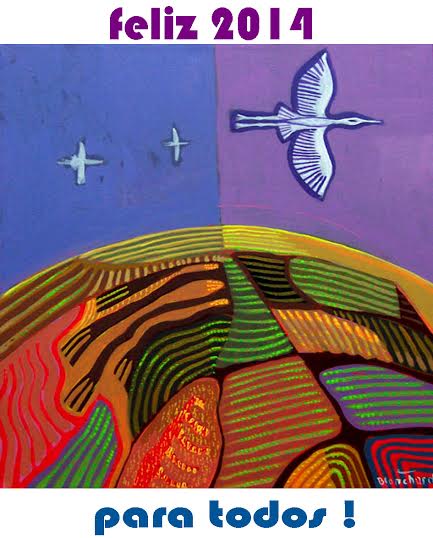
The Migrant Tales team wants to take the opportunity to thank all of our readers and supporters. 

unnamed

This beautiful drawing was by Luis Blanchard in Argentina.

We look forward to another good year in our struggle to promote in Finland a culturally diverse society that is united by mutual acceptance, respect and equal opportunities.

Migrant Tales team


Migrant Tales’ Christmas wish list

Posted on December 24, 2013 by Migrant Tales

Today, on Christmas Day, Migrant Tales wishes the following:

  • A Finland with no racism
  • A Finland where intolerance is shameful
  • A Finland with no hate
  • A Finland that encourages mutual acceptance
  • …mutual respect
  • and equal opportunities for all
  • A Finland that is inclusive
  • A Finland that finds its strength through solidarity, not fear
  • Peace

Merry Christmas Languages


Source: www.losmonitos.com

Sincerely yours,

Migrant Tales

Press Statement: Malicious prank against Migrant Tales

Posted on December 16, 2013 by Migrant Tales

MIGRANT TALES STATEMENT

December 16, 2013

The Migrant Tales blog was the victim of a malicious prank over the weekend by a group of users from Hommaforum, an anti-immigration forum notorious in Finland for its promotion of anti-immigration sentiment.

A story sent to us anonymously was in fact a bogus story intended to cast doubt over the integrity of Migrant Tales and the reality of racism in Finland. Such an exercise in deception will achieve neither aim.

However, it is NOT the intention of Migrant Tales to publish stories that are untrue, and it is very rare that we will publish a story that has not already had some verification via media sources, or for which we have direct contacts with the people involved or close to those involved. To an extent, as part of the new breed of citizen’s journalists commonly operating on the internet, we take stories on good faith. We are not the first to be deceived in this way and we will not be the last.

We will take care in the future to be mindful of the fact that some people are willing to go to extensive lengths to invent a story of racism simply to deceive the public in some way, but that perhaps unsurprisingly, those people were not actually immigrants in this case, but native Finns looking to use deception as a means to undermine the very real and serious understanding of racism in Finland.

There is nothing to be learned from such stunts except to say that we of course stand by the blog and we know and trust our own intentions to give a voice to REAL immigrants in Finland.

We will however be more careful with those very rare stories that come to us completely anonymously and with no other media verification. Rest assured, we do take the integrity of this site very seriously for the simple fact that those that suffer any kind of discrimination deserve to be protected from this kind of malicious manipulation of public media.

For further information contact:

[email protected]
www.facebook.com/likemigrant

Aspergers and Ableism Part 1: Introductions

Posted on June 16, 2013 by Barachiel

brain

The following is part of a personal statement I originally wrote to apply for the International Student Exchange Program (ISEP) last year, before I came to study in Finland and eventually settle in the Nordic countries. I plan to discuss the culture and challenges of the Autism/Asperger’s community, and how I believe the issue of the disabled is treated in the Nordics, over the course of the summer here on Migrant Tales. This will be the first part of a series, dealing with social issues related to neurodevelopmental disabilities and eventually introducing the concept of neurodiversity to a Finnish audience.

I am a third-year history student at Virginia Commonwealth University. I am applying for a Benjamin A. Gilman International Scholarship to fund my study-abroad to Germany this fall. I hope that this funding will aid me in my exploration of a culture that is totally apart from my own. I have developed a desire to walk on strange soil, meet with new people, and live in a country with an interesting history to be learned. I believe that the Gilman scholarship will offer me some financial security as I set out to do this—and will not take opportunity for granted should I be accepted.

My future plans, following my graduation in [Finland/Sweden], include starting parallel careers in scriptwriting for films and speechwriting for politics. I feel that my education in history, gained during my time both at VCU and at the two community colleges I attended beforehand, would serve me well in both professions. Historical knowledge could help me create scripts serving as allegories surrounding a person, an event, or an issue. Historical knowledge could also help me navigate cultural attitudes surrounding a particular topic, and engineer an effective political campaign.

I consider myself as coming from a diverse background—not because of a difference in race or nationality, but in mind. I have Asperger’s Syndrome, a high-functioning form of autism which affects how I neurologically register the emotions of myself and others. Several awkward encounters involving my disorder remind me of awkward encounters that happen between people of differing cultural backgrounds all the time. But despite my social mishaps, I have learned how to act around new people and handle myself in new environments; I feel that I could reasonably get along well at an international site.

I have experience interacting with foreign people, namely exchange students who have come to VCU either through ISEP or inter-collegiate partnerships. For the 2010-2011 academic year, I participated in VCU’s “buddy” program and was paired with a British biology student. This year, I have been paired with a German student studying urban planning. I guided them through American culture in several interactive ways, and my efforts were met with great appreciation by both the exchange students and the faculty members running VCU’s international office.

My immediate goal for integrating into my host country is to acquaint myself with its history and culture. I have read travel books, have taken history courses, and have gleaned information from news outlets in the host countries I am considering; by doing this, I aim to know which topics I can discuss with members of the host culture, which topics to avoid, and which topics related to America that might interest them. Another goal is to learn the dominant language(s) of the host country, which I am currently practicing for by taking classes in German at VCU.

I feel that my experience with Asperger’s Syndrome and with the exchange students at VCU has trained me for daily life in an unfamiliar place. My empathy and my patience with others have been made more resolute by my experiences, and I feel more mature for it. Once I am abroad, I plan on gaining the best knowledge from my experience in the most resolute posture possible. I am also going out of my way to learn about where I’m going and not come across as another “ignorant American” wherever I end up. I hope I am given a chance to prove that with the financial help I may receive through the Gilman scholarship.

Migrant Tales literary: How high must a wall be to contain hope?

Posted on January 27, 2013 by Migrant Tales
Dedicated to the EU and Donald Trump

By Leo Honka

No wall can contain hope.

It’s a fact but go and build your high wall

To hide the destruction you’ve reaped:

pillaging riches, pillaging hope

leaving people and whole nations

devastated, without future.

12.jpg (1024Ã?683)

Source: Westmonster.

Now we’re knocking on your door

With a sentence in the form of a key:

Let us in!

No matter how high the walls you build

so you can’t see us

you always will.

Don’t fool yourself

high walls can never contain hope – and our despair.

  • Previous
  • 1
  • …
  • 8
  • 9
  • 10
  • 11
  • 12
  • Next
Read more about documentary film
Read more

Recent Posts

  • Finland’s tabloids Iltalehti and Ilta-Sanomat are the pits
  • Riikka Purra’s Dr Jekyll and Mr Hyde mask
  • Double standards
  • Perussuomalaiset: Uusi logo, sama vanha juttu
  • Taco Trump

Recent Comments

  1. Absolutely Socking: Racist Finnish Facebook group against human rights gets flooded with socks on Musta Barbaari’s mother and sister charged by the police in “ethnic profiling” case
  2. Ilkka Nuotio on Pekka Myrskylä: “Tilastot kertovat toista kuin poliittinen keskustelu”
  3. Genrih Soinkara on The war in Ukraine and the Russian-Finnish border crisis are showing Finland’s ugly side
  4. Ahti Tolvanen on Comment by Ahti Tolvanen on the Helsinki +50 conference
  5. Angel Barrientos on Angel Barrientos is one of the kind beacons of Finland’s Chilean community

Archives

  • June 2026
  • May 2026
  • April 2026
  • March 2026
  • February 2026
  • January 2026
  • December 2025
  • November 2025
  • October 2025
  • September 2025
  • August 2025
  • July 2025
  • June 2025
  • May 2025
  • April 2025
  • March 2025
  • February 2025
  • January 2025
  • December 2024
  • November 2024
  • October 2024
  • September 2024
  • August 2024
  • July 2024
  • June 2024
  • May 2024
  • April 2024
  • March 2024
  • February 2024
  • January 2024
  • December 2023
  • November 2023
  • October 2023
  • September 2023
  • August 2023
  • July 2023
  • June 2023
  • May 2023
  • April 2023
  • March 2023
  • February 2023
  • January 2023
  • December 2022
  • November 2022
  • October 2022
  • September 2022
  • August 2022
  • July 2022
  • June 2022
  • May 2022
  • April 2022
  • March 2022
  • February 2022
  • January 2022
  • December 2021
  • November 2021
  • October 2021
  • September 2021
  • August 2021
  • July 2021
  • June 2021
  • May 2021
  • April 2021
  • March 2021
  • February 2021
  • January 2021
  • December 2020
  • November 2020
  • October 2020
  • September 2020
  • August 2020
  • July 2020
  • June 2020
  • May 2020
  • April 2020
  • March 2020
  • February 2020
  • January 2020
  • December 2019
  • November 2019
  • October 2019
  • September 2019
  • August 2019
  • July 2019
  • June 2019
  • May 2019
  • April 2019
  • March 2019
  • February 2019
  • January 2019
  • December 2018
  • November 2018
  • October 2018
  • September 2018
  • August 2018
  • July 2018
  • June 2018
  • May 2018
  • April 2018
  • March 2018
  • February 2018
  • January 2018
  • December 2017
  • November 2017
  • October 2017
  • September 2017
  • August 2017
  • July 2017
  • June 2017
  • May 2017
  • April 2017
  • March 2017
  • February 2017
  • January 2017
  • December 2016
  • November 2016
  • October 2016
  • September 2016
  • August 2016
  • July 2016
  • June 2016
  • May 2016
  • April 2016
  • March 2016
  • February 2016
  • January 2016
  • December 2015
  • November 2015
  • October 2015
  • September 2015
  • August 2015
  • July 2015
  • June 2015
  • May 2015
  • April 2015
  • March 2015
  • February 2015
  • January 2015
  • December 2014
  • November 2014
  • October 2014
  • September 2014
  • August 2014
  • July 2014
  • June 2014
  • May 2014
  • April 2014
  • March 2014
  • February 2014
  • January 2014
  • December 2013
  • November 2013
  • October 2013
  • September 2013
  • August 2013
  • July 2013
  • June 2013
  • May 2013
  • April 2013
  • March 2013
  • February 2013
  • January 2013
  • December 2012
  • November 2012
  • October 2012
  • September 2012
  • August 2012
  • July 2012
  • June 2012
  • May 2012
  • April 2012
  • March 2012
  • February 2012
  • January 2012
  • December 2011
  • November 2011
  • October 2011
  • September 2011
  • August 2011
  • July 2011
  • June 2011
  • May 2011
  • April 2011
  • March 2011
  • February 2011
  • January 2011
  • December 2010
  • November 2010
  • October 2010
  • September 2010
  • August 2010
  • July 2010
  • June 2010
  • May 2010
  • April 2010
  • March 2010
  • February 2010
  • January 2010
  • December 2009
  • November 2009
  • October 2009
  • September 2009
  • August 2009
  • July 2009
  • December 2008
  • November 2008
  • October 2008
  • September 2008
  • August 2008
  • July 2008
  • June 2008
  • May 2008
  • April 2008
  • March 2008
  • February 2008
  • January 2008
  • November 2007
  • October 2007
  • September 2007
  • August 2007
  • July 2007
  • June 2007
  • May 2007

Categories

  • ?? Gia L?c
  • ????? ?????? ????? ???????? ?? ??????
  • ???????
  • @HerraAhmed
  • @mondepasrond
  • @nohatefinland
  • @oula_silver
  • @Varathas
  • A Pakistani family
  • äärioikeisto
  • Abbas Bahmanpour
  • Abdi Muhis
  • Abdirahim Hussein Mohamed
  • Abdirahim Husu Hussein
  • Abdirisak Mahamed
  • About Migrant Tales
  • activism
  • Adam Al-Sawad
  • Adel Abidin
  • Afrofinland
  • Ahmed IJ
  • Ahti Tolvanen
  • Aino Pennanen
  • Aisha Maniar
  • Alan Ali
  • Alan Anstead
  • Alejandro Díaz Ortiz
  • Alekey Bulavsev
  • Aleksander Hemon
  • Aleksanterinliitto
  • Aleksanterinliitto ry
  • Aleksanterinliitto ry:n hallitus
  • Alex Alex
  • Alex Mckie
  • Alexander Nix
  • Alexandra Ayse Albayrak
  • Alexis Neuberg
  • Ali Asaad Hasan Alzuhairi
  • Ali Hossein Mir Ali
  • Ali Rashid
  • Ali Sagal Abdikarim
  • Alina Tsui
  • Aline Müller
  • All categories
  • Aman Heidari
  • Amiirah Salleh-Hoddin & Jana Turk
  • Amin A. Alem
  • Amir Zuhairi
  • Amkelwa Mbekeni
  • Ana María Gutiérrez Sorainen
  • Anachoma
  • Anders Adlecreutz
  • Angeliina Koskinen
  • Anna De Mutiis
  • Anna María Gutiérrez Sorainen
  • Anna-Kaisa Kuusisto ja Jaakko Tuominen
  • Annastiina Kallius
  • Anneli Juise Friman Lindeman
  • Announcement
  • Anonymous
  • Antero Leitzinger
  • anti-black racism
  • Anti-Hate Crime Organisation Finland
  • Anudari Boldbaatar
  • Arshiya Nasser
  • Aspergers Syndrome
  • Asylum Corner
  • Asylum seeker 406
  • Athena Griffin and Joe Feagin
  • Autism
  • Avaaz.org
  • Awale Olad
  • Ayan Said Mohamed
  • AYY
  • Barachiel
  • Bashy Quraishy
  • Beatrice Kabutakapua
  • Beri Jamal
  • Beri Jamal and Enrique Tessieri
  • Bertolt Brecht
  • Boiata
  • Boodi Kabbani
  • Bruno Gronow
  • Carmen Pekkarinen
  • Çelen Oben and Sheila Riikonen
  • Chiara Costa-Virtanen
  • Chiara Costa-Virtanen
  • Chiara Sorbello
  • Christian Thibault
  • Christopher Wylie
  • Clara Dublanc
  • Dana
  • Daniel Malpica
  • Danilo Canguçu
  • David Papineau
  • David Schneider
  • Dexter He
  • Don Flynn
  • Dr Masoud Kamali
  • Dr. Faith Mkwesha
  • Dr. Theodoros Fouskas
  • Edna Chun
  • Eeva Kilpi
  • Emanuela Susheela
  • En castellano
  • ENAR
  • Enrique
  • Enrique Tessieri
  • Enrique Tessieri & Raghad Mchawh
  • Enrique Tessieri & Yahya Rouissi
  • Enrique Tessieri and Muhammed Shire
  • Enrique Tessieri and Sira Moksi
  • Enrique Tessieri and Tom Vandenbosch
  • Enrique Tessieri and Wael Che
  • Enrique Tessieri and Yahya Rouissi
  • Enrique Tessieri and Zimema Mhone
  • Epäluottamusmies
  • EU
  • Europe
  • European Islamophobia Report
  • European Islamophobia Report 2019,
  • European Union
  • Eve Kyntäjä
  • Ezequiel Caldeiro
  • Facebook
  • Fadumo Dayib
  • Faisa Kahiye
  • Farhad Manjoo
  • Fasismi
  • Finland
  • Fizza Qureshi
  • Flyktingar och asyl
  • Foreign Student
  • Fozia Mir-Ali
  • Frances Webber
  • Frida Selim
  • Gareth Rice
  • Ghyslain Vedeaux
  • Global Art Point
  • Great Replacement
  • Habiba Ali
  • Hami Bahadori
  • Hami Bahdori
  • Hamid
  • Hamid Alsaameere
  • Hamid Bahdori
  • Handshake
  • Harmit Athwal
  • Hassan Abdi Ali
  • Hassan Muhumud
  • Heikki Huttunen
  • Heikki Wilenius
  • Helsingin Sanomat
  • Henning van der Hoeven
  • Henrika Mälmsröm
  • Hser Hser
  • Hser Hser ja Mustafa Isman
  • Husein Muhammed
  • Hussain Kazemian
  • Hussain Kazmenian
  • Ibrahim Khan
  • Ida
  • Ignacio Pérez Pérez
  • Iise Ali Hassan
  • Ilari Kaila & Tuomas Kaila
  • Imam Ka
  • inside-an-airport
  • Institute of Race Relations
  • Iraqi asylum seeker
  • IRR European News Team
  • IRR News Team
  • Islamic Society of Norhern FInland
  • Islamic Society of Northern Finland
  • Islamophobia
  • Jacobinmag.com
  • Jallow Momodou
  • Jan Holmberg
  • Jane Elliott
  • Jani Mäkelä
  • Jari Luoto
  • Jari Taponen
  • Jegor Nazarov
  • Jenni Stammeier
  • Jenny Bourne
  • Jessie Daniels
  • Joe Davidow
  • Johannes Koski
  • John D. Foster
  • John Grayson
  • John Marriott
  • Jon Burnett
  • Jorma Härkönen
  • Jos Schuurmans
  • José León Toro Mejías
  • Josue Tumayine
  • Jouni Karnasaari
  • Juan Camilo
  • Jukka Eräkare
  • Julian Abagond
  • Julie Pascoet
  • Jussi Halla-aho
  • Jussi Hallla-aho
  • Jussi Jalonen
  • JusticeDemon
  • Kadar Gelle
  • Kaksoiskansalaisuus
  • Kansainvälinen Mikkeli
  • Kansainvälinen Mikkeli ry
  • Katherine Tonkiss
  • Kati Lepistö
  • Kati van der Hoeven-Lepistö
  • Katie Bell
  • Kättely
  • Kerstin Ögård
  • Keshia Fredua-Mensah & Jamie Schearer
  • Khadidiatou Sylla
  • Khadra Abdirazak Sugulle
  • Kiihotus kansanryhmää vastaan
  • Kirsi Crowley
  • Koko Hubara
  • Kristiina Toivikko
  • Kubra Amini
  • KuRI
  • La Colectiva
  • La incitación al odio
  • Laura Huhtasaari
  • Lauri Finér
  • Leif Hagert
  • Léo Custódio
  • Leo Honka
  • Leontios Christodoulou
  • Lessie Branch
  • Lex Gaudius
  • Leyes de Finlandia
  • Liikkukaa!
  • Linda Hyökki
  • Liz Fekete
  • M. Blanc
  • Maarit Snellman
  • Mahad Sheikh Musse
  • Maija Vilkkumaa
  • Malmin Kebab Pizzeria Port Arthur
  • Marcell Lorincz
  • Mari Aaltola
  • María Paz López
  • Maria Rittis Ikola
  • Maria Tjader
  • Marja-Liisa Tolvanen
  • Mark
  • Markku Heikkinen
  • Marshall Niles
  • Martin Al-Laji
  • Maryan Siyad
  • Matt Carr
  • Mauricio Farah Gebara
  • Media Monitoring Group of Finland
  • Micah J. Christian
  • Michael McEachrane
  • Michele Levoy
  • Michelle Kaila
  • Migrant Tales
  • Migrant Tales Literary
  • Migrantes News
  • Migrants' Rights Network
  • MigriLeaks
  • Mikko Kapanen
  • Miriam Attias and Camila Haavisto
  • Mohamed Adan
  • Mohammad Javid
  • Mohammad M.
  • Monikulttuurisuus
  • Monisha Bhatia and Victoria Canning
  • Mor Ndiaye
  • Muh'ed
  • Muhamed Abdimajed Murshid
  • Muhammed Shire
  • Muhammed Shire and Enrique Tessieri
  • Muhis Azizi
  • Musimenta Dansila
  • Muslimiviha
  • Musulmanes
  • Namir al-Azzawi
  • Natsismi
  • Neurodiversity
  • New Women Connectors
  • Nils Muižnieks
  • No Labels No Walls
  • Noel Dandes
  • Nuor Dawood
  • Omar Khan
  • Otavanmedia
  • Oula Silvennoinen
  • Paco Diop
  • Pakistani family
  • Pentti Stranius
  • Perussuomalaiset
  • perustuslaki
  • Petra Laiti
  • Petri Cederlöf
  • Pia Grochowski
  • Podcast-lukija Bea Bergholm
  • Pohjois – Suomen Islamilainen Yhdyskunta
  • Pohjois Suomen Islamilainen Yhyskunta
  • Polina Kopylova
  • Race Files
  • racism
  • Racism Review
  • Raghad Mchawh
  • Ranska
  • Rashid H. and Migrant Tales
  • Rasismi
  • Raul Perez
  • Rebecka Holm
  • Reem Abu-Hayyeh
  • Refugees
  • Reija Härkönen
  • Remiel
  • Reza Nasri
  • Richard Gresswell
  • Riikka Purra
  • Risto Laakkonen
  • Rita Chahda
  • Ritva Kondi
  • Robito Ibrahim
  • Roble Bashir
  • Rockhaya Sylla
  • Rodolfo Walsh
  • Roger Casale
  • Rostam Atai
  • Roxana Crisólogo Correa
  • Ruth Grove-White
  • Ruth Waweru-Folabit
  • S-worldview
  • Sadio Ali Nuur
  • Sami Rusanen
  • Sandhu Bhamra
  • Sara de Jong
  • Sarah Crowther
  • Sari Alhariri
  • Sarkawt Khalil
  • Sasu
  • Scot Nakagawa
  • Shabana Ahmadzai
  • Shada Islam
  • Sharon Chang blogs
  • Shenita Ann McLean
  • Shirlene Green Newball
  • Sini Savolainen
  • Sira Moksi
  • Sonia K.
  • Sonia Maria Koo
  • Steverp
  • Stop Deportations
  • Suldaan Said Ahmed
  • Suomen mediaseurantakollektiivi
  • Suomen Muslimifoorumi ry
  • Suomen viharikosvastainen yhdistys
  • Suomen viharikosvastainen yhdistys ry
  • Suomi
  • Supermen
  • Susannah
  • Suva
  • Syrjintä
  • Talous
  • Tapio Tuomala
  • Taw Reh
  • Teivo Teivainen
  • The Daily Show
  • The Heino
  • The Supermen
  • Thomas Elfgren
  • Thulfiqar Abdulkarim
  • Tim McGettigan
  • Tino Singh
  • Tito Moustafa Sliem
  • Tobias Hübinette and L. Janelle Dance
  • Transport
  • Trica Danielle Keaton
  • Trilce Garcia
  • Trish Pääkkönen
  • Trish Pääkkönen and Enrique Tessieri
  • Tuulia Reponen
  • Uncategorized
  • UNITED
  • University of Eastern Finland
  • Uyi Osazee
  • Väkivalta
  • Vapaa Liikkuvuus
  • Venla-Sofia Saariaho
  • Vieraskynä
  • W. Che
  • W. Che an Enrique Tessieri
  • Wael Ch.
  • Wan Wei
  • Women for Refugee Women
  • Xaan Kaafi Maxamed Xalane
  • Xassan Kaafi Maxamed Xalane
  • Xassan-Kaafi Mohamed Halane & Enrique Tessieri
  • Yahya Rouissi
  • Yasmin Yusuf
  • Yassen Ghaleb
  • Yle Puhe
  • Yuliet Tresa
  • Yve Shepherd
  • Zahra Khavari
  • Zaker
  • Zalina Ametova
  • Zamzam Ahmed Ali
  • Zeinab Amini ja Soheila Khavari
  • Zimema Mahone and Enrique Tessieri
  • Zimema Mhone
  • Zoila Forss Crespo Moreyra
  • ZT
  • Zulma Sierra
  • Zuzeeko Tegha Abeng
© 2026 Migrant tales | Powered by Minimalist Blog WordPress Theme