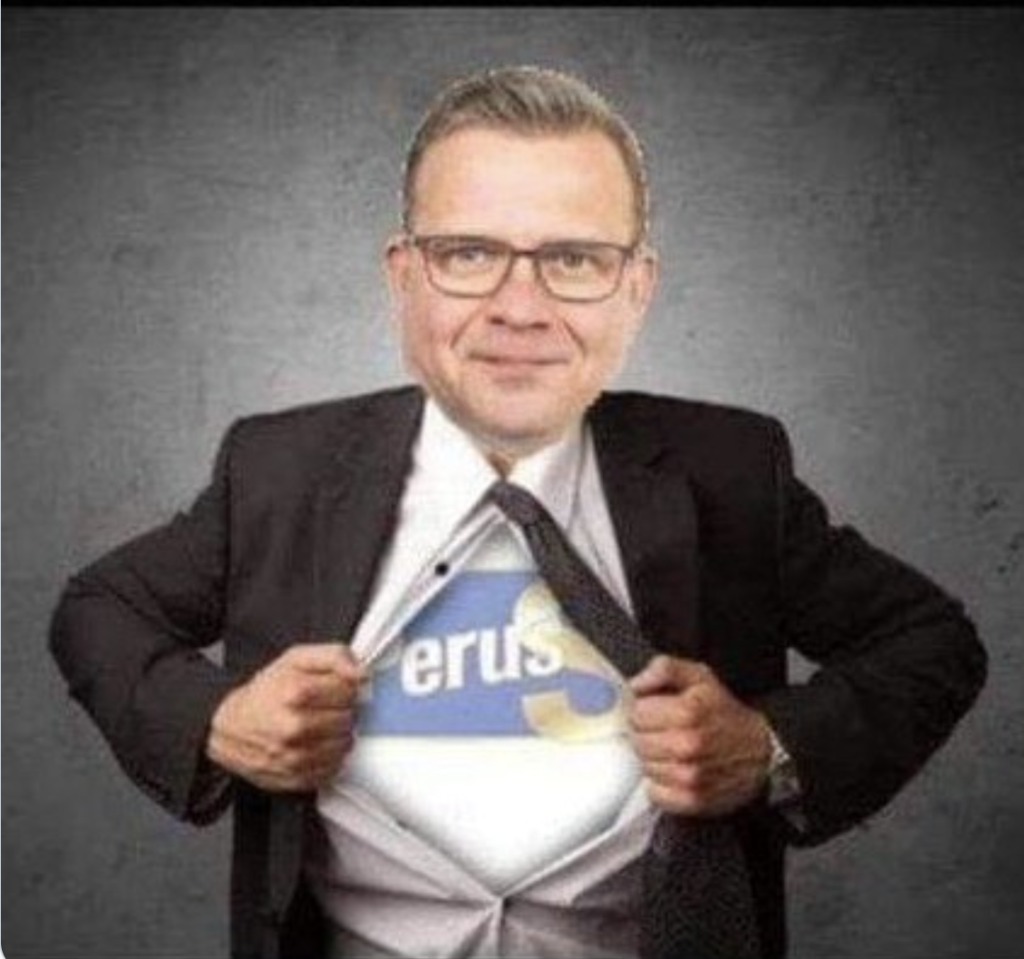
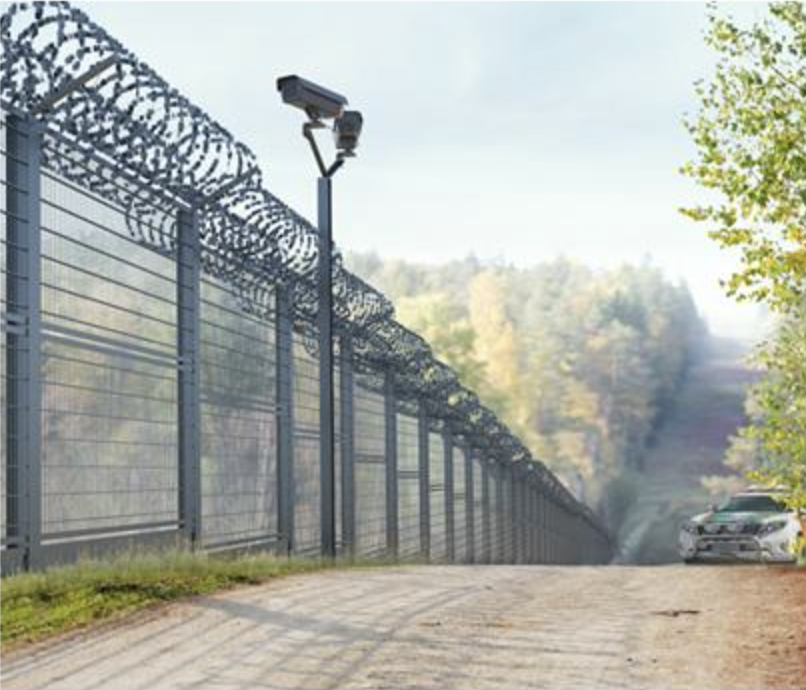
Since the 2011 parliamentary election, when the Perussuomalaiset(PS)* won 39 seats from five in the previous election, the PS has consolidated its power – with the help of other mainstream parties like the National Coalition Party (NCP) – by spreading fear and lies about migrants.
Any sensible person understands that migration is a very powerful force that can offer a lot of benefits to the host country. In Finland, it has been the opposite: migration is not good unless you are a “super migrant.”
The Foreign Student started to write about Finland’s unfair immigration policy in 1981-82. Back then, some saw the ideal foreigner as the front cover of a soap commercial.
Wrote Migrant Tales in 2012: “These [xenophobic] politicians sound like they are reading to you the Sleeping Beauty fairy tale when Prince Charming wakes the beautiful princess with a kiss from her deep sleep. Anti-immigration politicians and parties don’t speak of Sleeping Beauty per se, but about super immigrants.”
It is incredible how much harm the PS has done to Finland by spreading fake news about migrants. Probably the most incredulous thing is how little has been written about the PS lie.
People had a saying in Argentina when de facto régimes called the shots by ousting democratically elected governments: No hay mal que dure cien años, the longest day must have its end. One matter that the new military rulers made you feel was weak and vulnerable.
The saying would apply well to National Coalition Party Prime Minister Petteri Orpo’s government and Perussuomalaiset* Interior Minister Mari Rantanen’s xenophobic policies. Even if Orpo and Rantanen and her ilk believe they are invisible, their stay in power will have an end.
Finland’s xenophobic policies and legalizing pushbacks are the trademarks of Prime Minister Petteri Orpo’s government. No matter how much the government attempts to sugarcoat its ant-migrant policies, the harder it will be to cover the stench.
Human rights ranked low in Finland during the Cold War (1944-1991). Perussuomalaiset (PS)* Interior Minister Mari Rantanen, a well-known xenophobe, is drafting legislation that would take Finlnad back to the Cold War, when Russians and other migrants were denied the right to asylum.
In criticizing government plans to pushback asylum seekers at the Finnish-Russian border, International law professor Martti Koskenniemi accused in January Prime Minister Pettri Orpo of excuses for breaching international agreements.
Interior Minister Mari Rantanen is the face of Finland’s anti-immigration policy and disdain for human rights.
Rantanen, whose past posts show her disdain for migrants, especially Muslims and people from other developed countries, is at it again – let’s shun human rights and not allow Muslims and other non-whites to enter Finland.
Adding salt to injury and showing how low Finland’political class has stooped, an opinion poll given to MPs revealed that the majority of lawmakers (Kokoomus and PS) were in favor of pushbacks. The Social Democrats said they were cautiously in favor [what does that mean] of such an illegal measure. The only parties that opposed pushbacks were the Greens and Left Alliance. The Christian Dermocrats and Swedish People’s Party did not respond to the poll.
The interesting question is not only what kinds of loopholes the government will find to breach international law and our constitution, but what next is in the pipeline to deny asylum seekers and migrants their rights.
If I were you, I’d be apprehensive about what this government has planned up its sinister sleeve.
Very rarely does the Finnish media approach a member of the Russian community to ask their views about news that impacts them. A good example is during the presidential debates when asked if the candidates would be ready to take away Finnish citizenship from Russians retroactively.
Katja Marova is a dual citizen of Russia and Finland who has lived in this country for fourteen years. Like some Russian speakers, she believes that some in her community saw the presidential election of Aleksander Stubb negatively.
Katja Marova, who lives in Lappeenranta, is worried about the civil rights of Russians.
Apart from Finnish and Swedish, the Russian-speaking community is the third biggest in Finland.
“The measure [to exclude Russians from getting Finnish citizenship] is clear discrimination and very concerning, coming from our president,” said Marova, a city of Lappeenranta deputy councilperson for the Left Alliance.
It is surprising that in the media there was no column or editorial written against taking away the right of dual citizenship from Russians. If Finland ever went through such a plan, it would be an eternal black spot in our history, a modern version of the Nuremberg Laws that excluded Jews from German society.
“Russians don’t only face the wrath of a despotic regime, but racism and hatred in Finland by politicians, the media, and society in general. We have a good government program,” says the government.
While parties like National Coalition Party (Kokoomus) and xenophobic Perussuomalaiset (PS)* try to score brownie points with their hateful messages, the closing of the border offers such parties an opportunity.
Perussuomalaiset (PS)* Finnish Interior Minister Mari Rantanen not only loathes Muslims and other minorities, but her suspicion of migrants and minorities have made her paranoid. The panacea of all of Finland’s problems are groups like Muslims, according to her.
Without giving a shred of evidence of social security fraud, Rantanen wants to create Kela (The Social Insurance Institution) agents to uncover fraud and create a hotline to get people to snitch on others.
This is another frightening example of where fear can lead you on slippery slopes. Rantanen’s, the PS and the government’s unfair and racist treatment of migrants is strengthening suspicion, polarizing society and causing Finland great harm. Xenophobia is an chronic illness.
Yksi mediassa eniten rodullistetuista tarinoista on niin sanottu nuorten gans, jonka Perussuomalaiset kopioi Ruotsidemokraateilta.
On selvää, että PS liioitteli havaintojaan poliisin ja medianavulla nuorten jengeistä Suomessa, jossa on arviolta 100-200 jengiläistä. Ruotsissa niitä on tuhansia.
Ei ole vain häpeällistä, miten PS:n ja Kokoomuksen kaltaiset puolueet riistävät ja hyväksikäyttävät maahanmuuttajanuorten rikollisuutta, vaan myös media ja poliisi ovat mukana.
Alla olevassa jutussa Migrant Tales varoitti Yleä virheestä, jonka se teki siitä, kuka on maahanmuuttajataustainen henkilö. Ensimmäisessä otoksessa todettiin, että jos ainakin toinen lapsen vanhemmista on syntynyt ulkomailla, hän on silloin maahanmuuttajataustainen henkilö.
Väärin. Jos toinen vanhemmista on suomalainen, lapsi on sitten suomalaistaustainen.
Kiitoksia kuitenin siitä, että toimittaja korjasi virheen. Korjaus kesti viikon ennen kuin se oli julkinen.
Miksei poliisi sanonut mitään alkuperäisestä virheestä?
Apart from being the most right-wing government in a hundred years, Prime Minister Petteri Orpo’s government is doing everything possible to disenfranchise migrants and minorities. We can mention raising the citizenship requirements from five to eight years and excluding Russians from having dual citizenship as indicators of how xenophobia is driving Finnish politics.
One Russian dual national explained the situation in the following words:
“How can a presidential front-runner [like Alexander Stubb] even start to discuss the deprivation of basic human rights of a group of citizens [like the Russian-speaking community]? Stubb has no backbone. When Finland’s relations with Russia were good, he encouraged people to go there to make money, now he claims that Putin can use dual nationals and that we are a security threat, even though there is absolutely no evidence or justification for this: Totally irresponsible politics and a terrible person as a human being.”
The whole dual citizenship debate kicked off with President Sauli Niinistö in 2014. when he expressed the possibility of tightening dual citizenship laws.
One may ask what is the aim of such restrictions. One, I believe, is to exclude migrants and minorities from politics.
Häkkänen is well known for ihi Islamophobic views. During 2011-2013, he was president of the Youth League of the National Coalition Party, which idolizes US capitalism and the Republican Party. His
At the end of December, an Iraqi family received news from the police that they’d be deported to Iraq in about two weeks. After many rejections for asylum by the Finnish Immigration Service (Migri) after living in Finland for eight years, it was the first time they had been hit with a deportation order.
Their case hangs in the balance. If the supreme court does not overturn the deportation ruling, it will radically change the lives of Amir’s family. Their three children, who came at a young age to Finland, will be sent to Iraq with their parents.
One of the architects of Finland’s tough migration policy is Interior Minister Mari Rantanen with the blessings of the National Coalition Party, Swedish People’s Party and Christian Democrats. Source: Twitter.
Two of their adult children, who work in Finland, can remain. This adds up to a terrible separation of the family.
Amir admits that he has no idea what kind of country he’d return to in Iraq if he were deported.
“The waiting and uncertainty [now] are terrible, and we cannot sleep well,” he continued. “The police can come at any moment [to our home]. We have our luggage packed ready if they came to take us to the airport.”
Fortunately, on the day of Amir family’s deportation, Finland’s supreme court decided to review their case.
“The deportation was stopped at the last minute,” he said,* who claimed that he was the first family to be deported to Iraq from Finland under the new government’s tightened immigration policy.
“What can we do except cooperate with the authorities,” he said. “I don’t want to go to jail with my family.”
Reading the news about how Prime Minister Petteri Orpo’s government plans to not comply with the right to seek asylum speaks volumes about Finland’s “R” problem. In many cases, the media, which acts more like a rubber stamp for the government on migration issues, is also part of the problem.
It is sad to see the treatment of the Russian community of Finland starting from President Sauli Niinistö, whose dislike of dual citizenship and asylum seekers is well documented.
Dual citizenship is a right guaranteed by Finnish law but it takes candidates, who should know better, to make incredulous nd demeaning statements that their dual citizenship should be revoked.
As a person who has lived in Finland for many decades, I am ashamed that we have politicians that want to score brownie points with xenophobia.
Katja Marova, a member of the 37,813-strong community (2022) who holds dual Russian and Finnish citizenship, admitted that her stress level rose thanks to recent statements by presidential candidates concerning banning dual citizenship for Russians.
“This is scary and has raised a lot of conern among Russian speakers in Finland,” said Morova.
Katja Marova was attracted to Finland by its peaceful life. You need a lot of time to move about St. Petersburg. There is also a different type of freedom in Finland to do things. Souce: Mikko Savolainen/Yle
Apart from a clear example of shameful xenophobia by politicians who should know better, the dual citizenship debate has popped up in the media a number of times. it has been mentioned by politicians like President Sauli Niinistö since 2014.
The reason why the “dual citizenship” issue has not gone anywhere despite opposition to it is because of our constitution and EU laws. You cannot single out or discriminate against a group. If Finland wants to do away with dual citizenship, then it would have to abolish it for all nationalities.
National Coalition Party (NCP) candidate Aleksander Stubb, who did not mind labeling all Russians in Finland as a potential threat, openly supports scrapping dual citizenship rights of Russians. He argued that “a debate is needed on the matter” because Vladimir Putin will go to any lengths to defend its citizens abroad.
“Then we need to find some kind of system to prevent this security threat from materializing,” he added.
Sure Stubb, we’ll have a productive discussion on the topic after you label and demonize Russian speakers in Finland for your own political aims.
Of the nine presidential candidates, only two (Jutta Urpilainen and Li Andersson) were against scrapping dual citizenship rights of Russian speakers in Finland. Even the favorite in the polls, Pekka Haavisto, together with Olli Rehn and Mika Altola didn’t go as far as Stubb, Jussi Halla-aho and Sari Essayah, but were ready to stop granting dual citizenship to Russians in the future.
Positive change
Marova, who is a city of Lappeenranta Left Alliance deputy chairperson, has organized two demonstrations protesting the closure of the Russian-Finnish border in her home city. She is also the new treasurer of the newly founded Aleksranterinliiton association, which aims to be a watchdog on Russian rights in Finland and promote dialogue.
“One of the mattters that has changed since we spoke about two years, is that Russian speakers [in Finland] are more outspoken,” she said. “They undertand that if they do not speak out for their rights, nobody will.”
Marova said that a group has founded Aleksanderiliitto association, a new association that aims to look after the legal rights of Russian speakers in Finland.