Migrant tales
Menu
  • #MakeRacismHistory “In Your Eyes”
  • About Migrant Tales
  • It’s all about Human Rights
  • Literary
  • Migrant Tales Media Monitoring
  • NoHateFinland.org
  • Tales from Europe
Menu

Category: Don Flynn

Migrants’ Rights Network: #MigrantsContribute! promises an active campaign to advance positive arguments for migrants

Posted on June 16, 2014 by Migrant Tales

Migrant Tales insight: Another excellent posting by Migrants’ Rights Network on how immigrant communities challenge politicians who spread lies and reinforce prejudices about migrants. We need such a campaign in Finland. 

Writes Don Flynn:

#MigrantsContribute! is a social media-style name for a campaign that aims to bust into the mainstream with its core message that, far from being the unwelcome border crossers looking for a free ride so often presented by unscrupulous politicians and headline writers, migrants come to the UK full of hope and expectation that they will have the opportunity to contribute fully as fully rounded people in British society, and not merely exist as dehumanised factors of economic production.

___________________

Don Flynn*

Don_web_0

We have now entered the final twelve months of the longest general election campaign in British history. That so, it is good to hear that migrant community groups are working together to get messages across to the population about the positive case for migration.


The report from our friends and colleagues at Migrant Voice about the representation of the viewpoint of migrants in the mainstream media makes shocking reading.  We are supposed to be right in the middle of a ‘grown-up’ conversation about immigration and its impacts on life in Britain and yet in 77% of the coverage of this issue the people most directly involved in the business of migration do not even get a look in.

With these facts as a backdrop, the news that the initiative is being seized by a group of people from migrant communities with a project aimed at elbowing their way to a more prominent position in the public discussion is very welcome.

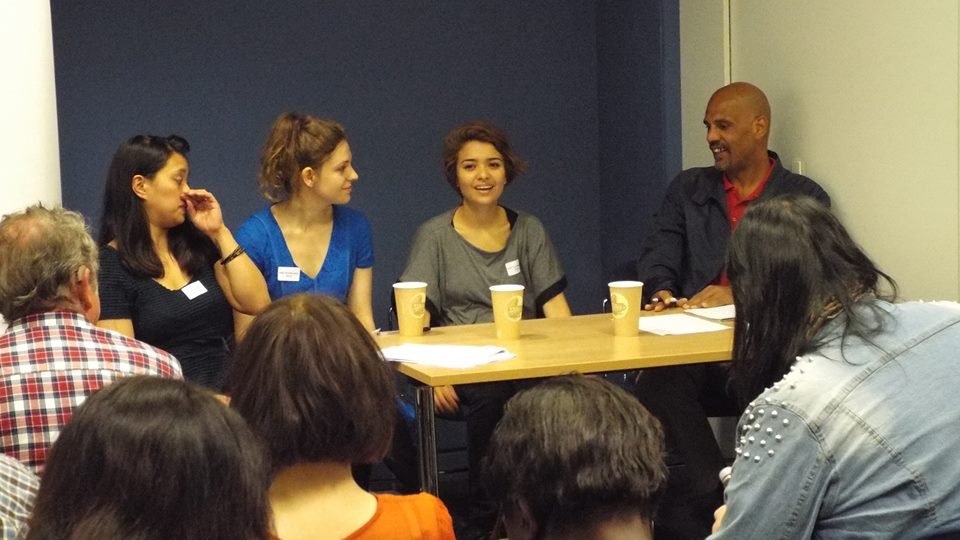
at_UAF_conference


#MigrantsContribute! is a social media-style name for a campaign that aims to bust into the mainstream with its core message that, far from being the unwelcome border crossers looking for a free ride so often presented by unscrupulous politicians and headline writers, migrants come to the UK full of hope and expectation that they will have the opportunity to contribute fully as fully rounded people in British society, and not merely exist as dehumanised factors of economic production.

The first public presentation of plans for #MIgrantsContribute! was made by Tatiana Garavito at the national conference Stand Up To Racism held in London last Saturday. Tatiana is the director of the Latin American Women’s Rights Service and the current holder of the Young Woman of the Year Award, given each year by Women on the Move.

Her arguments in support of #MIgrantsContribute! are set out in the blog featured in MRN Migrant Pulse.  She explains how people from migrant communities are “upset” when they hear how political parties are “prepared to use lies and distortions about migrants, which are far from the truth, to gain votes and encourage a hostile response to migrants.”

The campaign will be making use of an array of messages aimed at countering these negative images of migrants, setting out facts about all the things that they bring within them, aside from their desire to work and get on in life.

Supporters of #MigrantsContribute! have moved quickly to set up a Facebook fan page and a Twitter account. In the next few days it will be launching the #MigrantsContribute Manifesto. People who want to sign up to the campaign will be invited to submit ‘selfies’ showing their support for the initiative.

Watch this space to follow developments with #MigrantsContribute!

drum_solo


suitcase

languages


Read original story here.

This piece was reprinted by Migrant Tales with permission.

*Don Flynn, the MRN Director, leads the organisation’s strategic development and coordinates MRN’s policy and project work. He is a regular and sought-after speaker at conferences, seminars and lectures on behalf of MRN.

Migrants’ Rights Network: UKIP’s strong showing challenges supporters of migrants’ rights to do better

Posted on May 29, 2014 by Migrant Tales


By Don Flynn*
Don_web_0
There’s no point hiding the fact that the right wing party made effective use of public anxieties about immigration to build its position. But all the evidence on how the argument is running shows that it can still be turned round. But we’ll need a new upsurge of activism in support of social justice to do that.

It has been no surprise to find that immigration has played a big part in deciding the outcome of the European Parliamentary elections last week, and also influenced the vote for local elections in England.

As far as the European poll is concerned the outcome can be easily summarised:  UKIP won a 27% share of the vote to secure the biggest share of MEPs, with 24 celebrating victory. The evidence from opinion polls is pretty unequivocal: the party’s success was in large part down to it being able to make immigration – specifically the immigration of European Union nationals – a symbol for everything that a large segment of the population believes has gone wrong in recent years.

Näyttökuva 2014-5-30 kello 0.19.50


There can be no argument that things have been going wrong for a lot of people for many years. Decent paid jobs are becoming ever scarcer, good housing a dream for anyone outside high paid income brackets, and schools and GP services are considered to be in decline by many families. Meanwhile Polish shops open on the high street and there seems to be a great deal more Spanish spoken on our buses than ever there was in the past. The way seems to be open for any enterprising politician to put two and two together on behalf of the electorate, and suggest that the total equals somewhere in the region of five.

Voting factors

In the aftermath of the voting a cottage industry of poll analysts has swung into action to try and find the deeper meaning of what is being described in the media as a political earthquake. Based on viewpoints expressed at a well-informed breakfast gathering at the British Future think tank this morning, at this early stage the following points seem most salient.

Firstly, UKIP relies for its impact on the results it achieves in voting areas with a particular conglomeration of factors. The exemplar of these are the communities which exist in what is often presented as the ‘left behind’ medium size towns in the coastal areas of eastern England.  Declining port and fishing industries and surrounded by a wide hinterland of rural regions that offer little in the way of secure job opportunities have created the take-off point for a party that needs protest to kick-start its operation. Some variants on these conditions are also to be found in towns far away from the coast, with Rotherham and Leeds showing strongly for UKIP on this occasion.

Secondly, the party attracted two types of voters at voters at this poll, both in approximately equal proportions. One type thought that immigration is the main issue facing the country; the other that the state of the economy gives most cause for concern.  The evidence suggests that the 50% who are concerned with immigration are most likely to stick with the party at the 2015 general election, while the economically worried will go back to their primary allegiance with the Conservative Party.

Thirdly, age and gender factors are relevant. Only 14% of 18-35 year olds voted UKIP, as opposed to 40% of people in the 55 plus category.  Men favoured the right wing party more than women, showing up a difference rate of 26% to 20%.

Fourthly, educational and skill levels have proven to be good indicators of who votes are cast for. UKIP polls strongest amongst sections of the local communities who have not experienced higher education or picked up much in the way of vocational skills.

Fifthly, a ‘halo’ effect suggests that UKIP support is most likely to show up in communities which have relatively low ethnic minority presence yet are close enough to more diverse towns to experience multiculturalism at one stage removed. Their judgement that it is undesirable is seldom shared with such vehemence by the people who actually live in the midst of the urban melting pots.

Implications for migrant rights

What is all this likely to mean for those of us who expect to be talking and campaigning on immigration issues over the next twelve months as we head to a general election?

What needs to be said loudest and clearest is that this is most decidedly not the time to go quiet on a subject which is clearly vexing a large section of the public.  On the contrary, it will be more crucial than ever to push ahead with efforts to keep a balanced conversation going about why the UK economy is exerting a strong pull factor for new migrants and what this has really meant for local and regional communities across the country.

We should also be looking for opportunities to get this conversation going in the cities and towns outside of London. The capital city is proving itself to be something of a fortress for the younger and better informed groups who are least likely to be attracted to UKIP’s gloomy viewpoint. But as long as it remains a phenomenon that can be easily dismissed as ‘merely London’ then we will see the deep pessimism of the right wing party gaining ground.

On the face of it there is no reason why a narrative of successful engagement with the potential of diversity should not also be present in cities like Bristol, Cardiff, and the entirety of the Midlands, North West, and Yorkshire and the North East.  What is needed are new centres of activism around issues of inclusion and social justice which will drive this process forward.

A word of warning, echoing the message that came from British Future colleagues at this morning’s de-brief session: pushing forward the national and regional conversation on migration is not the same thing as ‘turning up the volume’ on the issue.  Some in the mainstream parties will be tempted to do this with a loudly proclaimed message along the lines that ‘we share your pain’ in having to deal with all the messiness that comes from Polish retail outlets and polyglot public transport and are determined to deal with it. This has already begun to be heard by some in both the Conservative and Labour parties who think the threat from the further right will be contained by getting even tougher on immigration.

It won’t. Our appeal is for a mainstreaming of the discussion about immigration and what it means to modern Britain, joining up advocacy for better and fairer policies with a progressive programme for greater fairness and social justice across the whole of society, which will show itself up in decent jobs for all and a full and flourishing role for the public sector in providing high quality services.  There is every reason to believe that this is a message, particularly when conveyed by messengers that ordinary citizens are likely to trust, that will win the day and contain the dangerous threat that the hard right wing anti-immigrant represents to us all.

Read original story here.

This piece was reprinted by Migrant Tales with permission.

*Don Flynn, the MRN Director, leads the organisation’s strategic development and coordinates MRN’s policy and project work. He is a regular and sought-after speaker at conferences, seminars and lectures on behalf of MRN.


Migrants’ Rights Network: Public moods on free movement: Should we just follow the herd?

Posted on May 15, 2014 by Migrant Tales

Don Flynn*

Don_web_0


The new report on free movement in the EU from IPPR argues that pro-migration groups have to triangulate their advocacy with the antagonistic moods that currently hold sway. But do they need to go quite so stridently in the direction of arguing that they dictate the need for a ‘new course’ reigning in on some EU migrant rights?

Na?ytto?kuva 2014-5-15 kello 7.53.01

Read full blog entry here.

Immigration is not currently very popular with the voting public in the UK and indeed the citizens of most of the countries of the developed industrial world. The evidence of countless opinion polls scream out this headline fact and it is incumbent on even the greatest enthusiast of the benefits that come from the cross border movement of people to acknowledge the fact.

“Europe, free movement and the UK: Charting a new course”

In its latest report on immigration policy, IPPR argues that the apparent strength of public opposition to immigration “has to be treated with respect”. Even more than this, it says that it is sufficient ground for proclaiming a “new course” with regard to one aspect of control policy; the free movement of people under the terms of the treaties of the European Union.

IPPR has taken on itself the task of thinking about the types of social democratic policies that might have a chance of becoming popular with a plurality of politically active citizens and this seems to require that we have to take the views they have on the world as they come and steer a course around with this uppermost in mind. It is an approach which largely discounts the possibility that mass public opinion might change rapidly over short periods of time; such shifts as might occur happen only at glacial pace. In the meantime, we just have to live with them.

This being the case the report tells us that a dissection of public opinion is needed in order to identify the things that people are asking for from their politicians and then see how much of this can be offered up within a decent social democratic framework. According to IPPR what they want is not much more than an assurance that immigration is not undermining the conditions of life which the settled population has secured for itself and that the public services that attend to welfare and well-being distribute their goods on principles that most people would recognise as being fair. In addition they want to know that the authorities are equipped with the power to act against people who fall into the category of being ‘bad’ and undesirable immigrants by deporting them from the country.

If this is the case, the report has a suite of policies to offer the general public, ranging from the Swedish-style contracts for agency workers, strengthening the work of the Gangmasters Licensing Authority (GLA), a localised system registration of all residents, English language classes for all who need them, making sending states responsible for social security of their citizens for longer periods after they migrate, and EU funding to cover the cost of returning migrants whose attempts to establish themselves in another state has not worked out.

There is a lot that is very sensible in this list and an outfit like MRN, being concerned primarily with the rights of migrants, would want to pitch in with support for anything that improves the lot of workers on temporary and agency contracts, access to affordable language courses, and something that places a duty of local and regional authorities to collect better data on the economic and social profiles of their resident populations.

What does the public want?

But how much of what is being revealed about opposition to immigration in public opinion polls is really answered by a set of policies of this sort? The people who do the most through and rigorous job of interpreting their meaning tell us that they consistently underscore two basic facts, which are that, firstly, people quite simply don’t like immigrants very much irrespective of whether they can be fitted into the category of the good, contribution-positive sort which immigration control policy is supposed to privilege, or they really are ‘bad ‘uns’.

Yet, and this is the second finding that the psephologists proclaim from their research, it seems that the majority of people at least do not hold these feelings of dislike for immigrants very deeply. They are quick to tell us that they would rather not bother having to deal with the complexities that come from living cheek by jowl with foreigners, but the numbers who appear to really want to make a big issue out of it is actually rather small. Moan and groan they might; but in a very British way, the great majority will keep calm and carry on.

There are both opportunities and dangers in dealing with the issue of public opinion in the way IPPR suggests. The opportunities come from being able to set out the list of broadly progressive social measures that do stand a chance of allaying at least some of the fears and anxieties which immigration seems to raise for some people. But the danger is that the proposal will be interpreted as evidence that an important though minority strand of thinking on the issue, that of pro-immigration progressives, are conceding to at least some elements of the argument that the free movement of people is not working out as a social and economic policy and needs to be brought to an end.

keep_calm_BLUE

Successful policy

The report itself goes to some length to explain that free movement is one of the most successful of the EU’s measures and will need to be preserved if Europe is to remain a prosperous region in the world. Is there really any need at this moment in time to concede any aspect of this positive case to political forces that are trying to catch and apparently rising tide of nationalistic and even xenophobic moods?

Perhaps we should not allow ourselves to make the mistake of thinking that public moods and attitudes change only slowly. Over time spans of a decade or two they in fact can show enormous scope for complete turnaround, with views on issues like the equality of women and the rights of gay people being overturned in the space of a generation.

Advocates for liberal approaches to immigration should not close themselves to the possibility that this might also prove to be the case in the issue that they care about. Somewhere out there, nurtured perhaps amongst a group of people now planning their post university careers and the places they will be taken to, is the view that immigration is a part of reality and, as the campaigners for gay rights grew adept at explaining to us, we should all just get used to it. It would be a shame if, just at the point when this view of the world might be winning some purchase, the centre left has funked the argument and has got round to thinking pessimism about migration is perfectly understandable, and that is the reality we had just better get used to.

Read original story here.

This piece was reprinted by Migrant Tales with permission.

* Don Flynn, the MRN director, leads the ogranization’s strategic development and coordinates MRN’s policy and project work. He is a regular and sought-after speaker at conferences, seminars and lectures on behalf of MRN.


Migrants’ Rights Network: Refusal to face the realities of migration opens the door to racism

Posted on April 23, 2014 by Migrant Tales

Migrant Tales insight: This excellent piece by Don Flynn sounds very familar to what the anti-immigration Perussuomalaiset (PS) are doing in Finland to get people to vote for them in the MEP elections on May 25. PS chairman Timo Soini has spoken at Ukip gatherings on a number of occasions and are in many respects political and ideological soul mates.

__________

Don Flynn*

Don_web_0

To understand migration we have to get beyond the numbers and look at the political and economic realities which are driving it. A failure to give an adequate account of this bigger context will open the door to the new forms of racism peddled by the anti-immigration parties.

Two morning news items give a good idea of the way in which immigration continues to trawl across both the realities and mythologies of the British nation.

The first of these is the comment, from the Polish ambassador, Mr Witold Sobkow, on the news that the migration of citizens from his country to the UK is down from its peak of 88,000 in 2007 to 29,000 in 2012.

The second is the opening shot in UKIP’s election campaign for the European Parliament, which features a poster with the legend “There are 26 million people in Europe looking for work. And whose jobs are they after?” The answer seems to be a finger putting directly back at the reader.

Bl0QVu_IgAA_S47.png_largeNa?ytto?kuva 2014-4-23 kello 7.28.49

In stirring up these troubled waters we should say at the onset that numbers, big or small, have seldom served to clarify what is really going on as far as immigration is concerned. If an apparently large number of people arrive into the country in one particular year it is not because “they” have suddenly decided to come after “your” jobs.

We are making a big mistake if we are to assume that immigration is a prime factor in deciding the political and economic trends of the day. Levels of immigration, rather than leading, ought to be seen as following a consequence of the political and economic balance of forces shaping up our future.

Back in 2004 the eight states which had once been a part of what was called the “Soviet bloc” found themselves inducted into a club where the rules and terms of membership were tilted in favour of the long-established insiders.

One of the ways open to them to adjust to these new realities was through the free movement of their citizens. The initial impact of joining the single market had been a drastic reduction in the size of the public sector and the loss of large numbers of jobs as their economies had to adapt to the new realities of a single market. From the standpoint of Europe as a whole, the new right of Polish, Slovak, and other nationalities of the ‘EU8’ functioned as a safety valve which reduced some of the pressure and tension which existed during this period of adjustment.

The figures cited by the Polish ambassador should be read as evidence that the balances of power are shifting in Europe as the economy of his country at least has emerged as a fully functioning free market economy. Migration to the UK has fallen by two-thirds not because of any reduction of the predatory desire of Poles to come after our jobs, but because opportunities are so much better at home.

As far as the UKIP poster campaign is concerned, the big question seems to be whether it can be considered racist. Racism is usually taken to mean an ideology which ascribes certain attitudes or attributes, such as greed, laziness or stupidity to the innate qualities of a racial group, transmitted either by its genetic inheritance or its cultural milieux.

My view is that UKIP is fanning the flames of racism with this poster campaign by using an iconography, embedded in the visual impact of its text and the threatening, pointed finger, which associates ingrained selfishness with the ‘they’ who are after ‘your’ job.

No doubt the party leadership will feel that it has equipped itself with any number of get-out clauses which will allow it to claim that this is not the message truly embedded in the imagery of its campaign, but few will be fooled by this evasion.

The deliberate disconnection between the economic context of joblessness in Europe and its presentation as a matter of ‘you’ versus ‘them’ reaches out not towards rational appraisal, but the visceral sense of alien threat which nurtures deep-seated racist anxieties.

On the evidence of today’s news, political and economic reality goes in one direction, and the trumpeting of anti-immigrant ideologues goes in another. We will have to wait and see if the ordinary citizens who will be called upon to vote in the elections for the European Parliament next month decide to base their understanding of the world they live in on the one or the other. Whatever the outcome, a big part of our collective future rides on their collective decision.

Read original story here.

This piece was reprinted by Migrant Tales with permission.

* Don Flynn, the MRN Director, leads the organization’s strategic development and coordinates MRN’s policy and project work. he is a regular and sought-after speaker at conferences, seminars and lectures on behalf of MRN. 

Migrants’ Rights Network: Why we need a new anti-racist movement if we are to secure the rights of migrants

Posted on March 31, 2014 by Migrant Tales
Don Flynn*
Don_web_0
Anti-racism and the battle for the rights of migrant seem to have moved some distance apart in recent years. It is time to reverse that, and re-forge a unity between the two that will be able to take on the challenges that come from growing xenophobic moods.

The coalition of groups supporting the call to mark UN Anti-Racism Day on March 22nd achieved a notable success in bringing out 10,000 people to the parade and gather in Trafalgar Square on that day.

It is clear that the strong anti-racists strands of public opinion that have been established in the UK over the past several decades are looking for leadership in the current political climate which does not seem to be provided by the mainstream parties.

10155390_503727629739077_421717313_n

There is a powerful sense that a catastrophe is not far away, with the examples of a resurgent xenophobic vote gathering momentum in a number of European countries.  The advances made by the Front Nationale in local and regional elections over the last weekend in France are the latest in a salutary list of reminders of the knife-edge we might well be balanced on.

It has become common for current affairs commentators to offer up the view that race has ceased to be a salient issue in British political life and the anxieties which are pushing segments of the population to consider voting for parties with explicitly anti-foreigner messages are innocent of the sort overtones which were present in earlier times.

Racism still an issue

This is a dangerously superficial view of the situation.  Whilst it is true that the determined battles against race discrimination which newly-arrived immigrants were obliged to take on back in the 1960s and 70s have recorded significant successes in changing the language and some of the attitudes which sustained racism in the past, we ought not to be fooled into thinking that the demon has been permanently exorcised.

Racism has shown itself to have some distinctly modular features, capable of being detached from the conditions which supported its original creation, and made available to other social and political movements aiming for the exclusion of the latest groups of victims.  In Britain the anti-Semitism which was directed against the generation of Jews who arrived in the country in the decades around the turn of the 19th and 20th centuries moved on to embrace Chinese and Asian communities that established themselves in the seaport towns before the second world war, and then the larger group of Caribbean and Indian subcontinental nationalities who arrived thereafter.

It is true that the advances of scientific insight into what is known about what it is to be human have reduced the force of the old biological arguments which asserted spurious arguments about the superiority/inferiority on the peoples of the world.  But the space left by their eclipse has been filled by ‘social’ claims about clashes of values and alleged inherent difficulties of people communicating with one another across cultures.

Shifted onto this ground the new forms of racism are capable of attaching themselves to new groups of victims, but added to rather than replacing the older species which emphasised the significance of colour.  The net result is a sleight of hand in which, because other groups of Europeans are added to the list of people against whom aversion is held to be a reasonable reaction, then racism is no longer seen as the heart of the matter.

Election year challenges

MRN, as its name makes explicit, is an indisputable part of a movement for the rights of migrants, wherever they come from and whatever their ethnic group.  But we regard our even deeper origins to be a part of the anti-racist movement that brought together the Commonwealth immigrant generations of the decades after the second world war and forged them into a movement that brought about change,

As we move into a year of election campaigning, which will undoubtedly feature claims by politicians across the spectrum that migrants are to blame for our present predicament, then it ought to be clear that we need as a matter of urgency a revival of the anti-racism of past decades.  Just as that movement made progress by pushing back against the forms of discrimination that afflicted employment, education and the major public services, so the new anti-racism will lead arguments about the need for equality of treatment in relation to all the structures of society which underpin well-being and social security.

The groups who brought us altogether for the Anti-Racist Day on March 22nd are planning a conference to continue the momentum towards the re-founding of a broad-based, campaigning movement fit for the challenges of the period ahead of us.  It will be taking place on 14th June. Put the date in your diary and plan to be there.

Read original story here.

This piece was reprinted by Migrant Tales with permission.

*Don Flynn, the MRN Director, leads the organisation’s strategic development and coordinates MRN’s policy and project work. He is a regular and sought-after speaker at conferences, seminars and lectures on behalf of MRN.

Migrants’ Rights Network: Living in an Age of Migration

Posted on March 21, 2014 by Migrant Tales

Don Flynn*

Don_web_0


Immigration studies has emerged as an important discipline in colleges and universities across the world, with scores of research centres being established in the UK alone over the last decade or so. Contributions have come from sociologists, anthropologists, geographers, political scientist, economists and philosophers over this time, giving anyone who is moved to make a systematic review of the literature quite a job in terms of catching up on what is being said and thought about the subject.

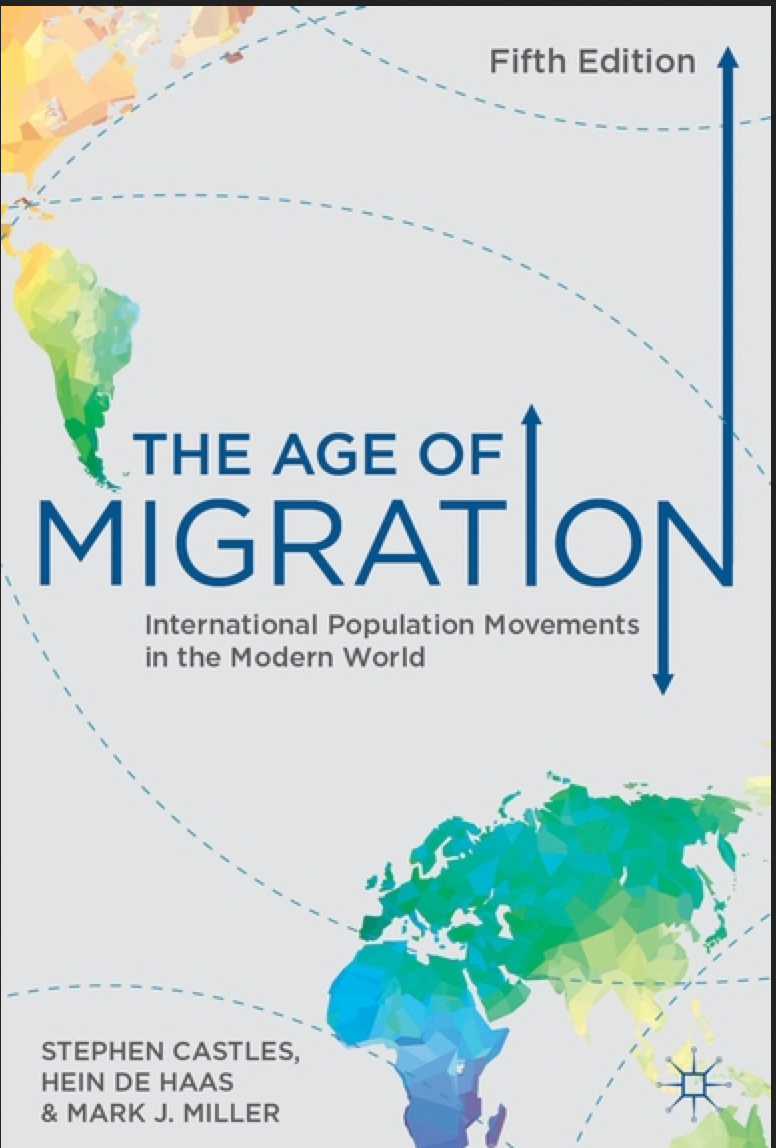
That is a good enough reason to welcome the 5th edition of Age of Migration and what has probably become the 101 introductory text to the study of population movements in the modern world.  Enough has happened since the publication of the 4th edition in 2009 to justify a considerable revision of the book, and the long-standing authors, Stephen Castles and Mark J. Miller have been joined by Hein de Haas of the International Migration Institute in Oxford.

Näyttökuva 2014-3-21 kello 8.22.51

The book puts as its central proposition the fact that we are once again living in the midst of an age of migration. Some would say that doesn’t mean that much, since migration has been a major activity for human beings since they first moved out of Africa around 500,000 years ago. But if migration can be said to have happened in each and every age of humanity it is of critical importance to note that what drives people to move at any one time is related in large part to the distinct features of the age under consideration.

Global markets

For the Age of Migration considered by Castles and his colleagues, it is the age of global markets. More precisely, global markets that themselves evolve over time as the terms of trade and commerce are shaped by the rise of nation states and their out-flowing into colonialism, the dominance of particular economic and political super-powers, changes to the structures of firms, the proliferation of manufacturing and service-providing sectors, the integration of economic regions, and the new technologies of management and communication.

All of these things provide the factors which allow migration across periods of decades to ebb and flow, at some points allowing politicians to believe that it is no longer an important feature of the systems they govern, but at others revealing hitherto unacknowledged demand which brings millions back into the business of crossing borders.

These layers of complexity mean that no one theory of migration suffices to tell the whole story. The two main branches – functionalist accounts of ‘push-pull’ factors, and historical-structural theories – are further subdivided and contribute insights based on what their approaches have encouraged them to focus on. Dependency and world systems theory looks at the power relations between ‘core’ capitalist states and the nations of the ‘periphery’, showing how migration chains are built up from movements between villages and urban areas in developing areas and transformed into international migration through relationships of dominance and subordination between the developed and developing regions of the world.

Theorists stressing the significance of globalisation stress the importance of the economic component of these relations between the nationals powerful enough to structure markets and the terms of trade, and consequently the importance this had in increasing the movement of people seeking opportunities for wage labour.  Economists constructing models of segmented labour markets give us a way of understanding how the demand for migration can persist even when the overall economy is mired in recession.  And in the background looms the grimmer story of forced migration, where the movement of people is induced by political instability and terror.

Unstoppable movement

Age of Migration implies that the balance of all theories on the movement of people tends to agreement that it is so closely entwined with the spirit of our times as to be unamenable to serious reduction in the either the short or medium terms.   It certainly provides no example of any contributor to high-level discussion who would support the viewpoint common amongst so many mainstream politicians that, with just one more push, we could reverse the trends of a half century or more and get the system under the firm management of the state authorities.

If migration is determined at its broadest extent by the imbalances between the rich and the poor worlds, then the authors consider whether the volume of people movement would be reduced by the developing regions catching up and become ‘more like us’.  The review the literature that  has considered this possibility and conclude that the opposite effect is more likely for the foreseeable future, with incremental improvements to the living standards of modest households bringing more people to the point where the investment in at least one of their members becoming mobile across frontier seems to be worthwhile.

If the arguments stack up around the viewpoint that every which way leads to the continuation of migration the authors suggest that gloom and despondency is not the appropriate response.  Despite all the furore the economic and social forces that prevail over the lives of humans still favour most of us – at present around 97% – remaining in our home territories.  If no more than 3% have attained the footloose and fancy free status of migrant the increase in the global population of the world to its current 7 billion (5 billion in 1987) means that there are more people in this fragment, and most still look for opportunities in the relatively small number of highly developed nations.

But cheer up:  this is a pretty smart bunch of people, with higher proportions having had experience of tertiary education that exists in national populations.  They are young and ambitious, and having grown up as a part of the global digital generation, they are generally well-informed about they need to do to make a success of their migration projects.

There is another story to be told however, and Age of Migration traces this out in chapters which look at the literature on migrant experiences in the labour force, and the continuing tendency of western societies to generate racisms and other forms of exclusion which turn newcomers into marginalised ethnic minorities over time.  All of this suggests, and the authors do more than hint that this is the case, that the real substance of an immigration policy agenda ought to be less about stopping people from coming, and more to do with tackling exploitation and chronic disadvantage.

Age of Migration has a website which aims to supplement the text with more case studies and updates on developments in migration studies.  You can view it by CLICKING HERE

Read original story here.

This piece was reprinted by Migrant Tales with permission.

*Don Flynn, the MRN Director, leads the organisation’s strategic development and coordinates MRN’s policy and project work. He is a regular and sought-after speaker at conferences, seminars and lectures on behalf of MRN.

Migrants’ Rights Network: Brokenshire vs. Cable – Is immigration good or bad for the economy?

Posted on March 10, 2014 by Migrant Tales

Don Flynn*

Don_web_0

Is immigration just an accident, prompted by the selfish behaviour of the metropolitan elite, or a vital component in the functioning of a globalised economy? That was the issue at the heart of the spat between two government ministers last week. Decision on who is right will decide the future direction of immigration policy. 

The divisions which have been long known to divide the parties in the coalition came into spectacular view last week when two government ministers clashed in their interpretation of immigration facts in speeches given on separate public platforms.

To make the contest even more vivid a context was provided by the publication of a report setting out the analysis of the impact of immigration on employment undertaken by experts working at the Department for Business, Innovation and Skills (BIS) and the Home office.

The issue that the two minister, Business Secretary and senior figure in the Liberal Democrats, Vince Cable, and the newly appointed Conservative Minister for Immigration and Security, James Brokenshire, seems simple enough: has the level of immigration coming into the UK over the last fifteen years or so been bad for the British economy, or good?

For a long time the consensus amongst the economists has been that immigration has an overall positive effect which comes from increased labour market flexibility which allows businesses and services to make use of new technologies and innovations in the management of workforces. There is less agreement on just how large or significant this net benefit is, but even the biggest curmudgeons have conceded that it is on the positive side of the balance.

But agreement on this point has not moved the political side of the argument on very far. In a world of great complexity, news which is overall good across the board can obscure the fact that there have been some who have lost out. Knowing more about this is vitally important in order that decisions be taken as to what needs to be done to mitigate any harm that has arisen.

This, essentially, is the importance of understanding the evidence reviewed in the BIS/Home Office report. The authors helpfully summarised their views into three succinct points, paraphrased thus:

  • Overall there is relatively little evidence that migration has caused higher levels of unemployment amongst UK natives from the labour market in periods when the economy has been strong. However there is evidence for some labour market displacement in recent years when the economy was in recession.
  • During a recession, and when net migration volumes are high as in recent years, it appears that the labour market adjusts at a slower rate and some short-term impacts are observed.
  • Where there has been a displacement effect from a particular cohort of migrants, this dissipates over time – that is, any displacement impacts from one set of new arrivals gradually decline as the labour market adjusts, as predicted by economic theory.

If politicians were honest enough to address the implications of this summary of the evidence they would conclude that it really says little more than “get the economy out of recession and whatever negative effects have emerged from the impact of immigration will vanish.”

This is essentially the lesson that Mr Cable has taken from the report and it was the position he argued for in his Mansion House speech last week. Though it was just one fairly brief section of a talk on the wider state of the UK economy the Lib Dem minister set out the unequivocal view that immigration happens as normal consequence of a market economy that is required to function in conditions where trade and commerce have been globalised. As he put it, “Bear down on immigrants, and you lose some of the most dynamic, innovative and imaginative workers in your economy.”

The contrast with James Brokenshire’s speech could not be sharper. Whereas Cable sees the demand for migration arising from the circumstances of the globalisation of the economy, the immigration attributes it to the fecklessness of a slither of British society motivated by a selfish desire to protect their own comfort. The blame he loaded on a ‘metropolitan elite’ wanting cheap tradesman and nannies has got him into trouble with government and parliamentary colleagues who are taking advantage of the perks that come from labour market conditions which are flush with people willing to provide these services, but the bigger truth is that the creature comforts provided to the wealthy professional classes accounts for no more than a tiny fraction of the demand for migrants.

Across sectors like food processing and production, nowadays the biggest branch of manufacturing in the UK, the demand for migrants is effectively driven by the great body of ordinary consumers, whose modest wage levels have made the relatively low prices on offer at supermarket chains a critical part of their monthly budgets. The fillip that migrants gave to the flexibility of supply chains, from the farm fields, the packhouses and processing plants, with the possibility of just-in-time gang labour operating on zero hours contracts, has been a big part of the reason why the cost of living remained relatively stable throughout most of the noughties.

Similarly, though Daily Mail columnists and many MPs sneer at households that are on the lookout for plumbers and central heating engineers whose prices they can afford, or the services of carers for children or infirm adults, the fact is these people are not any sort of elite worth talking about, but ordinary women and men struggling very hard to make ends meet. For this group the appearance of Polish builders and Filipino nannies has been a godsend which has allowed heads to remain just above the water.

From this perspective there is a defence of immigration to be mounted from the standpoint of the ‘squeezed middle’, otherwise and more accurately described as the hard-pressed wage earners who have been battered from pillar to post by the impact, not of migration, but the global economic crisis that has ripped through the economy since 2008.

And now we have heard representatives of the Lib Dems and the Conservatives offer their different views on this issue, and it is becoming much clearer what issues are at stake in this discussion. It is nothing less than whether migrants, and indeed people who employ migrants, or purchase the goods and services provided by migrant labour, are to blame for the many things that are wrong in Britain today; or is it the wider failings of the this model of free market capitalism which have caused the economy to switch so rapidly from growth to deep and enduring recession?

The coalition government is deeply split on these issues, and on this point of fundamental importance, the Labour opposition has been largely silent. As we get deeper into election territory the business of sorting out our current, messy and often ill-informed public discussion on migration might well come down to whether Labour comes down on the Conservative side of the argument, or builds and refines the perspective offered by Vince Cable and co.

Read original story here.

This piece was reprinted by Migrant Tales with permission.

*Don Flynn, the MRN Director, leads the organisation’s strategic development and coordinates MRN’s policy and project work. He is a regular and sought-after speaker at conferences, seminars and lectures on behalf of MRN.

Migrants’ Rights Network: When single markets and the inequalities of global trade provide the basis of a ‘right to migrate’ (Part 3)

Posted on February 3, 2014 by Migrant Tales

Don Flynn*

Don_web_0


This is the final blog in a three part series which sets the reasons why we need a clearer and more precise idea of the rights which migrants need if they are to prosper in the modern world. Here we argue that the assertion of a ‘right to migrate’ is the touchstone for all the other types of security and protection which migrants should be able to rely on. 

we_are_here

The Oxford University economist, Martin Ruhs, has drawn attention to the dilemma faced by groups and networks supporting migrants, arguing that, the more rights that are claimed for people who move the less national governments appeared to be prepared to admit them into their jurisdictions in the first place. Ruhs regrets this fact, on the grounds that it undermines the role that migration plays in the global economy in promoting welfare and redistributing wealth. Because he would like to see more welfare and higher levels of wealth redistribution he calls on migrants to be less fussy in asking for rights and accept the fact that the opportunity on almost any terms to live and work for a period in jobs in the developed economies is too good to give up.

More or less the same proposition of a trade off between rights and the opportunity to migrate is accepted by others participating in this discussion, most recently another Oxford academic, Paul Collier. Colier calls for stronger rights for those migrants who have managed to establish themselves abroad, on the basis that this will have the effect of reducing the volume of migration which host countries are prepared to tolerate. Collier thinks there’s too much migration going on in the modern world and an insistence it be permitted only on the grounds that full equality of treatment with citizens was granted would be a good way to choke it off.

In practice both of these approaches, if they were ever to be applied in their pure form, would give rise to a vicious spiral that would likely result in highly levels of irregular migration and the diminution of the rights of those who had achieved a legal status. Ruhs’s proposal, which is applied  in a number of rich but labour-scarce countries, imposes high costs but limits the returns that come from decent wages for migrants using the permitted short-term labour schemes and thereby forces many towards rule-breaking activity in order to re-coup their losses. The national authorities of the host country invariably counter this by increasing their surveillance of all migrant communities and restricting the social space in which rights can be exercised to an even greater degree.

Collier’s stance is ignorant of the fact that the rights which are of most importance to migrants are those which increase their capacity to act transnationally, engaging both with matters concerning the welfare of family and compatriots in regions of origin as well as the ability to leverage an optimum earning capacity in the host country.  As anyone who works closely with migrant communities knows, what internationally mobile people want and is security in their of residence status and, at the same time, the assurance that they can respond to changing needs within their personal support networks by either travelling abroad themselves or sponsoring the admission of others.  The right that would be of most use is one which, ironically, most citizens of the charmed circle of high income countries think they already have, which is the firm assurance that their travel across borders will be subject to the very minimum of personal inconvenience.  For brevities sake, let’s call it a right to migrate.

EU free movement as a ‘right to migrate’

Could an officially acknowledged right to migrate be made to operate on a wider basis?  The important example of free movement within the EU to gives us some ideas on the principles that would be involved.

The right to migrate, which is effectively what free movement is all about, has emerged in Europe as a consequence of the efforts to create a single market covering goods, services, capital and labour.  Its unique feature, being a project undertaken during a time when recovery from the cataclysmic events of the first half of the 20th century, lay in the fact that it was fundamentally driven by the political objective of resolving the tensions which had driven the continent to devastating war twice within the space of fifty years.

The emergence of single markets gives us good idea when the time might be right to accede to a right to migrate.  There are certainly many who would criticise the NAFTA agreement, which created a single market for goods and capital between Canada, the US and Mexico in 1994.  The flood of investment into the northern region of Mexico that came about under the agreement combined with the ruinous effect on large sectors of agriculture in that country caused by the dumping of cheap US products, forced a huge wave of movement on the population of the central American country, some of which was absorbed into the low-cost manufacturing maquiladora programmes which operated close to the US border, and a large part of the rest continuing their movement as irregular, undocumented migrants in the US. A properly instituted free movement of people chapter in NAFTA would have averted what has turned into two decades of often anarchic and violent labour trafficking.

But the fact is the need for clearer and more definite rights to migrate is prompted even before fully fledged single markets come into existence.  The evidence of more mundane interpenetration of commerce between countries is often sufficient to trigger the practical need for freer movement, particular when uneven economic development leads to inequalities in trading outcomes.  As long as the much-desired ‘level playing field’ is unreached then the terms of trade favour the interests of already dominant parties, making the task of catching up much more difficult  for the less developed.

This is the reason why, unlike the case of the formation of the European single market, the issue of the free movement of labour is seldom addressed when free trade agreements are drafted at the global level.  Preventing workers from moving to places where they could get the best terms for the sale of their labour is one of the ways in which rich countries can gain even more of an advantage, by bottling up the down-side of free markets in territories where they don’t have to address its social and economic problems.

The refusal of the policy makers of the Global North to consider the implications of their commercial systems  – the wiping out of trade sectors of trade and industry, the drift of the under-employed into the urban centres which are attracting foreign direct investment, the turbulence and insecurity of the new labour markets that come into existence, the sharper polarisation of populations into the new rich and the new poor – all this sets out the moral basis for a right to migrate.

Old rallying cry

In the 1960s and 70s Commonwealth migrants arriving in the UK challenged the racism they confronted with by proclaiming “We are here because you were there.”  We are here because your country entered ours and radically altered ways of life, enriching some but also plunging others in new forms of poverty, and putting an unsustainable strain of the social structures which had provided for the security and well-being of local populations in the past.

“We are here because you were there”, applies with equal force for the people of any country which has been brought into the mainstream of market globalisation, whether they are the post-colonial nations of Africa, Asia and the Caribbean region, of the post-Soviet societies of Eastern and Central Europe.  Supporting the moral right to “be here” is the basic reason why the migrants’ rights movement is bound to support, not just equal treatment and non-discrimination for those who have managed to fit in with the rules proscribed by official migration management, but also to test and stretch these systems by pushing harder to widen and extend the channels through which people migrate.  For many this earns them the status of being ‘illegal’ migrants, but the opprobrium attached to that title carries ought to be regarded as on a par with the term ‘runaway slaves’ in the years before abolition. In both cases the breaking of the law takes place as a consequence of a class struggle between labour and capital at a global level, with labour struggling to obtain better terms for itself by changing the ways in which markets operate.

When a right to migrate is in place the ability of migrants to obtain the other rights due to them and spelt out in international conventions will be hugely enhanced.  Without the fear of arrest and deportation, migrants will have the confidence to press for better terms and conditions of employment.  As the rights gap between themselves and other tax-payers is diminished they will be able to claim a proper stake in the benefits and public services which exist to promote the welfare and security of the community.

Finally, the ultimate genius of proclaiming a right to migrate lies in the fact that it does not depend, in its early stages at least, on the action of any government to bring it into being.  The eminent historian of human rights, Lynn Hunt, has described how the struggle for change is not initiated by government authority, but ordinary people who feel a lack of something important in their lives: “You know the meaning of human rights”, she argues, “because you feel distressed when they are violated.”  It is the action which arises from this feeling of distress, the determination to obtain redress and push against all the forces that deny relief, that drives our societies towards reform.

The distress that is acute for many people across the world today comes from the fact that, whilst they are obliged to live in the world create and ordered by the rise of the global economy, the right to make at least a part of that world work better in their interests is denied to them.  The assertion of a right to migrate through the direction action of migrants, combined with solidarity action on the part of others who recognise the legitimacy of the claim for that right, is the core logic of what we mean today by “migrants’ rights”.  So, how we organise ourselves for the campaigns that will be needed to make this right a reality?

Read original story here.

This piece was reprinted by Migrant Tales with permission.

*Don Flynn, the MRN Director, leads the organisation’s strategic development and coordinates MRN’s policy and project work. He is a regular and sought-after speaker at conferences, seminars and lectures on behalf of MRN.

Migrants’ Rights Network: Wanted: Truth and clarity about migration to the UK today

Posted on January 14, 2014 by Migrant Tales

MT comment: Is it a coincidence that the same issues but in a different context are taking place in Finland and elsewhere in Europe? Even if elections are supposed to be a time when we celebrate our democratic rights, for some, like migrants and minorities, it has come to represent a day of uncertainty, even fear.   

___________________ 

Don Flynn* 

Don_web_0

The opening weeks of 2014 have been marred by inept contributions to the conversation about immigration made by politicians from all parts of the mainstream parties. Given the febrile moods of the public on this issue, and the fact that elections are looming across the next 18 months, this is an irresponsible way to discuss these matters. Here are the reasons why we need to agree some basic truths about immigration today. 

Just two weeks into the New Year and it is already clear that the public conversation about immigration policy is picking up exactly where it left off before the holidays.

There seems to be an agreement that the Bulgarian and Romanian people who, we were assured by the tabloids, would be sweeping into the UK like a veritable tsunami have been a bit of a disappointment to date.  Those who arrived on the famous flights into Luton airport were the ones who had been living and working in the UK for some years and who had merely nipped back home for a week or so over the Christmas break.  Never mind – there are still over 340 days left in the year for them to come into the country in their tens of thousands, so may be the scaremongers will get the raw numbers they claim.

Misleading on benefits

Disappointed might not be the right word, since it implies that you once hoped for better, but the fact that the politicians have returned so quickly to worry the bone of migrants being drawn by generous benefits is something we could be doing without.  Migration Watch UK seems to have at least conceded the evidence that out of work benefits –Job Seekers Allowance, etc  – are not the principal draw, but they have switched to an argument about the pulling power of in-work benefits,  like tax credit, housing benefit, council tax benefit, and the like.  It appears they think EU migrants will be drawn in unfeasibly large numbers because of the expectation that these will be available on tap.

It is true that the average family in the UK takes home a bigger share in benefits which essentially top up low earnings than those in any comparable country in the EU. Workers in top of the league Denmark have a gross monthly wage of €4800, lower-down Germany €3400 and mid-range Austria and France around €2800.  Us Brits, in contrast, facing similar costs of living, have to bump along on the equivalent of €2200.*

That is why in-work benefits are so much higher in the UK.  But in terms of a straightforward labour market deal, isn’t it obvious that the bigger draw will be towards countries that offer higher wages rather than towards those who expect their workers to go through all the rigmarole of form filling and income assessment before they obtain a living income?

MRN takes the view that we simply don’t know who many Bulgarians or Romanians will be coming to the UK this year – or Spaniards or Italians for that matter.  What we are confident of is that they will be net contributors to the UK economy, and this fact should be more centrally acknowledged in the public policy discussion.

For this reason it is particularly disappointing that the Labour oppositions seems to be so incoherent at a time where clarity and principles are so obviously needed.  Business spokesperson Chuka Umunna gave a floundering performance on this point during the BBC television Question Time last week when he appeared to be suggesting that consideration ought to be given to preventing EU citizens coming to the UK to work unless they had a definite job offer in the skill range they operated in.

This is an idea that needs to be scotched immediately.  It amounts to nothing less than a call for a visa system to be reintroduced which would require EU citizens to submit evidence of an appropriate job offer before arriving here.  Even worse, compulsory visa systems for workers skew the whole immigration system towards a need for visas for other reasons, such as to study or to joining family settled here. Unless Labour is seriously considering a radical, full reversal of the entire system of free movement then its senior spokespeople should be told to steer well clear of such inept speculation.

End migrant scapegoating

We expect that one of the things that will emerge over the next six months is the fact that our benefits system is not a significant draw factor for EU migrants and it is high time to make the evidence on this the central part of the policy discussion. Unless politicians are clear on the point it will serve to poison the tone of policy discussion not just about immigration, but the whole programme of welfare reform itself.  Our system of supporting hard pressed wage earners has become overly dependent on state subsidies of the tax credit and housing benefit variety no doubt, but the solution is not to pull the rug out from under the feet of those people who need this extra income to afford a basic standard of life, but to mend the labour market and the way it comes up with the sums that it is prepared to allocate to remuneration.

Migrants are not to blame for the fact that average wages have stagnated since 2008, and for so many this has meant being worse off than they had previously been.  The election campaign that will be kicking off in the next few weeks, firstly for the European Parliament and local government in May of this year, and the then the general election in May 2015, will see many politicians seeking to capitalise on the insecurity and anxiety that ordinary people now feel about their lives.

They must be answered with the bold and clear proclamation that migrants are not to blame for the predicament we are now in.  Further, if we are ever to find a way of our this hole, it will because we have risen to the task of building solidarity between citizens and migrants across Europe, and have moved public policy onto a bold and radical agenda which aims to secure social justice for all.

Read original story here.

This piece was reprinted by Migrant Tales with permission.

*Don Flynn, the MRN Director, leads the organisation’s strategic development and coordinates MRN’s policy and project work. He is a regular and sought-after speaker at conferences, seminars and lectures on behalf of MRN.
Migrants’ Rights Network: An atlas of migration that tells the story of globalisation and barriers to freedom

Posted on December 2, 2013 by Migrant Tales

Don Flynn*

Don_web_0


David Cameron’s intervention during the EU leaders’ summit meeting in the Lithuanian capital Vilnius last week has made it clear enough that the issues of immigration and Europe are going to be heavily intertwined during the political debates of the coming period.

Kuvankaappaus 2013-12-2 kello 22.36.16

Read full story here.

Cameron’s claims that the UK is especially attractive to the movements of other Europeans because of the claimed generosity of its welfare state have been met with the same very reasonable question on numerous occasions in the recent past: where’s your evidence?

The UK government has steadfastly refused to offer up a smidgeon of data in support of its unbalanced accusations against migrants to the UK, so the job of setting the record straight, so far as it is known, has fallen to the much-maligned European Commission.

Back in October the Commission published a 270-page report  which showed that mobile EU nationals are amongst the most productive of all people in the region’s single market, with 67% being engaged in economic activity. Other studies have shown that EU nationals are around 60% less likely to be in receipt of welfare benefits than their non-migrant counterparts.

Facts like these will play an essential role in helping to combat the avalanche of misinformation and outright duplicity that seems to be come from a large segment of the political establishment right now. As we move into the period of election campaigns for the European Parliament, due to be held in May next year, we can expect to have to revert to them to refute the worst of the anti-immigrant propaganda we seem to be on course for.

Of course discussions about immigration in the European context go beyond people exercising free movement rights to cover the movement of people from third countries.  Immigration more generally has become a competence of the EU and has imposed an obligation on the part of national leaders to adopt policies which fit into the framework of common approaches which the governments have agreed represent what is needed to avoid a dogfight which makes things worse for everyone.

Third country migration

Those of us looking for facts and figures about Europe and immigration covering these bigger themes will welcome the publication of the new atlas of migration by Migreurop and New Internationalist magazine.

The atlas shows just what can be done within the style of  infographics to get across complex information which is best understood when visualised over time-lines or geographical space.

The claim that migration has been both globalised as a phenomenon but impeded as the practical exercise as a right could be sustained with an essay setting out a dense array of figures, or demonstrated by images and table which appear to ‘let the facts speak for themselves’.  The growth of precariousness in labour markets for example, the subject of much present-day concerns about ‘modern-day slavery’, is related to immigration in the food production and agricultural sectors.

The atlas explains that ‘Increasing competition between international production areas forces agricultural firms to mobilise specific resources: large amounts of capital, natural resources (land, water, sun) and cheap labour.” The accompanying map provides a visualisation which shows how regions of intensive agricultural production give rise to ‘wheels of circulation’ which are driven by flows of commodities, workers and capital.  In short, it is a picture of the way in which we are nowadays fed and nourished by migrant workers at the most basic level.

Yet even as the running of the economy requires migration, the politics of fear and anxiety throw up walls and barriers.  A border security economy comes into existence in which the names of countries can be replaced by the private sector companies – TTI Norte S.L., Indra, Thales, BAE Systems, EADS, Siemens, and others – which operate businesses which are supposed to have ‘securities’ our frontiers.

The task of immigration enforcement is mapped out with images that show where the EU’s gulag of camps and detention centres stretches across the continent, the range of countries drawn into the maw of having to administer readmission policies, and how the business of returning people abroad is a long way from being voluntary.

This is the third issue of the Atlas but the first time it has been published in English. For such a lavishly illustrated book its cover price of £20 is reasonable enough to ensure that copies go into schools and colleges to help teachers and students comprehend these issues, and also into the libraries of migrants’ rights and race equality groups who will find themselves needing many of these facts at their fingertips in coming weeks.

Read original story here.

This piece was reprinted by Migrant Tales with permission.

*Don Flynn, the MRN Director, leads the organisation’s strategic development and coordinates MRN’s policy and project work. He is a regular and sought-after speaker at conferences, seminars and lectures on behalf of MRN.

  • Previous
  • 1
  • 2
  • 3
  • 4
  • Next
Read more about documentary film
Read more

Recent Posts

  • Finland’s tabloids Iltalehti and Ilta-Sanomat are the pits
  • Riikka Purra’s Dr Jekyll and Mr Hyde mask
  • Double standards
  • Perussuomalaiset: Uusi logo, sama vanha juttu
  • Taco Trump

Recent Comments

  1. Absolutely Socking: Racist Finnish Facebook group against human rights gets flooded with socks on Musta Barbaari’s mother and sister charged by the police in “ethnic profiling” case
  2. Ilkka Nuotio on Pekka Myrskylä: “Tilastot kertovat toista kuin poliittinen keskustelu”
  3. Genrih Soinkara on The war in Ukraine and the Russian-Finnish border crisis are showing Finland’s ugly side
  4. Ahti Tolvanen on Comment by Ahti Tolvanen on the Helsinki +50 conference
  5. Angel Barrientos on Angel Barrientos is one of the kind beacons of Finland’s Chilean community

Archives

  • June 2026
  • May 2026
  • April 2026
  • March 2026
  • February 2026
  • January 2026
  • December 2025
  • November 2025
  • October 2025
  • September 2025
  • August 2025
  • July 2025
  • June 2025
  • May 2025
  • April 2025
  • March 2025
  • February 2025
  • January 2025
  • December 2024
  • November 2024
  • October 2024
  • September 2024
  • August 2024
  • July 2024
  • June 2024
  • May 2024
  • April 2024
  • March 2024
  • February 2024
  • January 2024
  • December 2023
  • November 2023
  • October 2023
  • September 2023
  • August 2023
  • July 2023
  • June 2023
  • May 2023
  • April 2023
  • March 2023
  • February 2023
  • January 2023
  • December 2022
  • November 2022
  • October 2022
  • September 2022
  • August 2022
  • July 2022
  • June 2022
  • May 2022
  • April 2022
  • March 2022
  • February 2022
  • January 2022
  • December 2021
  • November 2021
  • October 2021
  • September 2021
  • August 2021
  • July 2021
  • June 2021
  • May 2021
  • April 2021
  • March 2021
  • February 2021
  • January 2021
  • December 2020
  • November 2020
  • October 2020
  • September 2020
  • August 2020
  • July 2020
  • June 2020
  • May 2020
  • April 2020
  • March 2020
  • February 2020
  • January 2020
  • December 2019
  • November 2019
  • October 2019
  • September 2019
  • August 2019
  • July 2019
  • June 2019
  • May 2019
  • April 2019
  • March 2019
  • February 2019
  • January 2019
  • December 2018
  • November 2018
  • October 2018
  • September 2018
  • August 2018
  • July 2018
  • June 2018
  • May 2018
  • April 2018
  • March 2018
  • February 2018
  • January 2018
  • December 2017
  • November 2017
  • October 2017
  • September 2017
  • August 2017
  • July 2017
  • June 2017
  • May 2017
  • April 2017
  • March 2017
  • February 2017
  • January 2017
  • December 2016
  • November 2016
  • October 2016
  • September 2016
  • August 2016
  • July 2016
  • June 2016
  • May 2016
  • April 2016
  • March 2016
  • February 2016
  • January 2016
  • December 2015
  • November 2015
  • October 2015
  • September 2015
  • August 2015
  • July 2015
  • June 2015
  • May 2015
  • April 2015
  • March 2015
  • February 2015
  • January 2015
  • December 2014
  • November 2014
  • October 2014
  • September 2014
  • August 2014
  • July 2014
  • June 2014
  • May 2014
  • April 2014
  • March 2014
  • February 2014
  • January 2014
  • December 2013
  • November 2013
  • October 2013
  • September 2013
  • August 2013
  • July 2013
  • June 2013
  • May 2013
  • April 2013
  • March 2013
  • February 2013
  • January 2013
  • December 2012
  • November 2012
  • October 2012
  • September 2012
  • August 2012
  • July 2012
  • June 2012
  • May 2012
  • April 2012
  • March 2012
  • February 2012
  • January 2012
  • December 2011
  • November 2011
  • October 2011
  • September 2011
  • August 2011
  • July 2011
  • June 2011
  • May 2011
  • April 2011
  • March 2011
  • February 2011
  • January 2011
  • December 2010
  • November 2010
  • October 2010
  • September 2010
  • August 2010
  • July 2010
  • June 2010
  • May 2010
  • April 2010
  • March 2010
  • February 2010
  • January 2010
  • December 2009
  • November 2009
  • October 2009
  • September 2009
  • August 2009
  • July 2009
  • December 2008
  • November 2008
  • October 2008
  • September 2008
  • August 2008
  • July 2008
  • June 2008
  • May 2008
  • April 2008
  • March 2008
  • February 2008
  • January 2008
  • November 2007
  • October 2007
  • September 2007
  • August 2007
  • July 2007
  • June 2007
  • May 2007

Categories

  • ?? Gia L?c
  • ????? ?????? ????? ???????? ?? ??????
  • ???????
  • @HerraAhmed
  • @mondepasrond
  • @nohatefinland
  • @oula_silver
  • @Varathas
  • A Pakistani family
  • äärioikeisto
  • Abbas Bahmanpour
  • Abdi Muhis
  • Abdirahim Hussein Mohamed
  • Abdirahim Husu Hussein
  • Abdirisak Mahamed
  • About Migrant Tales
  • activism
  • Adam Al-Sawad
  • Adel Abidin
  • Afrofinland
  • Ahmed IJ
  • Ahti Tolvanen
  • Aino Pennanen
  • Aisha Maniar
  • Alan Ali
  • Alan Anstead
  • Alejandro Díaz Ortiz
  • Alekey Bulavsev
  • Aleksander Hemon
  • Aleksanterinliitto
  • Aleksanterinliitto ry
  • Aleksanterinliitto ry:n hallitus
  • Alex Alex
  • Alex Mckie
  • Alexander Nix
  • Alexandra Ayse Albayrak
  • Alexis Neuberg
  • Ali Asaad Hasan Alzuhairi
  • Ali Hossein Mir Ali
  • Ali Rashid
  • Ali Sagal Abdikarim
  • Alina Tsui
  • Aline Müller
  • All categories
  • Aman Heidari
  • Amiirah Salleh-Hoddin & Jana Turk
  • Amin A. Alem
  • Amir Zuhairi
  • Amkelwa Mbekeni
  • Ana María Gutiérrez Sorainen
  • Anachoma
  • Anders Adlecreutz
  • Angeliina Koskinen
  • Anna De Mutiis
  • Anna María Gutiérrez Sorainen
  • Anna-Kaisa Kuusisto ja Jaakko Tuominen
  • Annastiina Kallius
  • Anneli Juise Friman Lindeman
  • Announcement
  • Anonymous
  • Antero Leitzinger
  • anti-black racism
  • Anti-Hate Crime Organisation Finland
  • Anudari Boldbaatar
  • Arshiya Nasser
  • Aspergers Syndrome
  • Asylum Corner
  • Asylum seeker 406
  • Athena Griffin and Joe Feagin
  • Autism
  • Avaaz.org
  • Awale Olad
  • Ayan Said Mohamed
  • AYY
  • Barachiel
  • Bashy Quraishy
  • Beatrice Kabutakapua
  • Beri Jamal
  • Beri Jamal and Enrique Tessieri
  • Bertolt Brecht
  • Boiata
  • Boodi Kabbani
  • Bruno Gronow
  • Carmen Pekkarinen
  • Çelen Oben and Sheila Riikonen
  • Chiara Costa-Virtanen
  • Chiara Costa-Virtanen
  • Chiara Sorbello
  • Christian Thibault
  • Christopher Wylie
  • Clara Dublanc
  • Dana
  • Daniel Malpica
  • Danilo Canguçu
  • David Papineau
  • David Schneider
  • Dexter He
  • Don Flynn
  • Dr Masoud Kamali
  • Dr. Faith Mkwesha
  • Dr. Theodoros Fouskas
  • Edna Chun
  • Eeva Kilpi
  • Emanuela Susheela
  • En castellano
  • ENAR
  • Enrique
  • Enrique Tessieri
  • Enrique Tessieri & Raghad Mchawh
  • Enrique Tessieri & Yahya Rouissi
  • Enrique Tessieri and Muhammed Shire
  • Enrique Tessieri and Sira Moksi
  • Enrique Tessieri and Tom Vandenbosch
  • Enrique Tessieri and Wael Che
  • Enrique Tessieri and Yahya Rouissi
  • Enrique Tessieri and Zimema Mhone
  • Epäluottamusmies
  • EU
  • Europe
  • European Islamophobia Report
  • European Islamophobia Report 2019,
  • European Union
  • Eve Kyntäjä
  • Ezequiel Caldeiro
  • Facebook
  • Fadumo Dayib
  • Faisa Kahiye
  • Farhad Manjoo
  • Fasismi
  • Finland
  • Fizza Qureshi
  • Flyktingar och asyl
  • Foreign Student
  • Fozia Mir-Ali
  • Frances Webber
  • Frida Selim
  • Gareth Rice
  • Ghyslain Vedeaux
  • Global Art Point
  • Great Replacement
  • Habiba Ali
  • Hami Bahadori
  • Hami Bahdori
  • Hamid
  • Hamid Alsaameere
  • Hamid Bahdori
  • Handshake
  • Harmit Athwal
  • Hassan Abdi Ali
  • Hassan Muhumud
  • Heikki Huttunen
  • Heikki Wilenius
  • Helsingin Sanomat
  • Henning van der Hoeven
  • Henrika Mälmsröm
  • Hser Hser
  • Hser Hser ja Mustafa Isman
  • Husein Muhammed
  • Hussain Kazemian
  • Hussain Kazmenian
  • Ibrahim Khan
  • Ida
  • Ignacio Pérez Pérez
  • Iise Ali Hassan
  • Ilari Kaila & Tuomas Kaila
  • Imam Ka
  • inside-an-airport
  • Institute of Race Relations
  • Iraqi asylum seeker
  • IRR European News Team
  • IRR News Team
  • Islamic Society of Norhern FInland
  • Islamic Society of Northern Finland
  • Islamophobia
  • Jacobinmag.com
  • Jallow Momodou
  • Jan Holmberg
  • Jane Elliott
  • Jani Mäkelä
  • Jari Luoto
  • Jari Taponen
  • Jegor Nazarov
  • Jenni Stammeier
  • Jenny Bourne
  • Jessie Daniels
  • Joe Davidow
  • Johannes Koski
  • John D. Foster
  • John Grayson
  • John Marriott
  • Jon Burnett
  • Jorma Härkönen
  • Jos Schuurmans
  • José León Toro Mejías
  • Josue Tumayine
  • Jouni Karnasaari
  • Juan Camilo
  • Jukka Eräkare
  • Julian Abagond
  • Julie Pascoet
  • Jussi Halla-aho
  • Jussi Hallla-aho
  • Jussi Jalonen
  • JusticeDemon
  • Kadar Gelle
  • Kaksoiskansalaisuus
  • Kansainvälinen Mikkeli
  • Kansainvälinen Mikkeli ry
  • Katherine Tonkiss
  • Kati Lepistö
  • Kati van der Hoeven-Lepistö
  • Katie Bell
  • Kättely
  • Kerstin Ögård
  • Keshia Fredua-Mensah & Jamie Schearer
  • Khadidiatou Sylla
  • Khadra Abdirazak Sugulle
  • Kiihotus kansanryhmää vastaan
  • Kirsi Crowley
  • Koko Hubara
  • Kristiina Toivikko
  • Kubra Amini
  • KuRI
  • La Colectiva
  • La incitación al odio
  • Laura Huhtasaari
  • Lauri Finér
  • Leif Hagert
  • Léo Custódio
  • Leo Honka
  • Leontios Christodoulou
  • Lessie Branch
  • Lex Gaudius
  • Leyes de Finlandia
  • Liikkukaa!
  • Linda Hyökki
  • Liz Fekete
  • M. Blanc
  • Maarit Snellman
  • Mahad Sheikh Musse
  • Maija Vilkkumaa
  • Malmin Kebab Pizzeria Port Arthur
  • Marcell Lorincz
  • Mari Aaltola
  • María Paz López
  • Maria Rittis Ikola
  • Maria Tjader
  • Marja-Liisa Tolvanen
  • Mark
  • Markku Heikkinen
  • Marshall Niles
  • Martin Al-Laji
  • Maryan Siyad
  • Matt Carr
  • Mauricio Farah Gebara
  • Media Monitoring Group of Finland
  • Micah J. Christian
  • Michael McEachrane
  • Michele Levoy
  • Michelle Kaila
  • Migrant Tales
  • Migrant Tales Literary
  • Migrantes News
  • Migrants' Rights Network
  • MigriLeaks
  • Mikko Kapanen
  • Miriam Attias and Camila Haavisto
  • Mohamed Adan
  • Mohammad Javid
  • Mohammad M.
  • Monikulttuurisuus
  • Monisha Bhatia and Victoria Canning
  • Mor Ndiaye
  • Muh'ed
  • Muhamed Abdimajed Murshid
  • Muhammed Shire
  • Muhammed Shire and Enrique Tessieri
  • Muhis Azizi
  • Musimenta Dansila
  • Muslimiviha
  • Musulmanes
  • Namir al-Azzawi
  • Natsismi
  • Neurodiversity
  • New Women Connectors
  • Nils Muižnieks
  • No Labels No Walls
  • Noel Dandes
  • Nuor Dawood
  • Omar Khan
  • Otavanmedia
  • Oula Silvennoinen
  • Paco Diop
  • Pakistani family
  • Pentti Stranius
  • Perussuomalaiset
  • perustuslaki
  • Petra Laiti
  • Petri Cederlöf
  • Pia Grochowski
  • Podcast-lukija Bea Bergholm
  • Pohjois – Suomen Islamilainen Yhdyskunta
  • Pohjois Suomen Islamilainen Yhyskunta
  • Polina Kopylova
  • Race Files
  • racism
  • Racism Review
  • Raghad Mchawh
  • Ranska
  • Rashid H. and Migrant Tales
  • Rasismi
  • Raul Perez
  • Rebecka Holm
  • Reem Abu-Hayyeh
  • Refugees
  • Reija Härkönen
  • Remiel
  • Reza Nasri
  • Richard Gresswell
  • Riikka Purra
  • Risto Laakkonen
  • Rita Chahda
  • Ritva Kondi
  • Robito Ibrahim
  • Roble Bashir
  • Rockhaya Sylla
  • Rodolfo Walsh
  • Roger Casale
  • Rostam Atai
  • Roxana Crisólogo Correa
  • Ruth Grove-White
  • Ruth Waweru-Folabit
  • S-worldview
  • Sadio Ali Nuur
  • Sami Rusanen
  • Sandhu Bhamra
  • Sara de Jong
  • Sarah Crowther
  • Sari Alhariri
  • Sarkawt Khalil
  • Sasu
  • Scot Nakagawa
  • Shabana Ahmadzai
  • Shada Islam
  • Sharon Chang blogs
  • Shenita Ann McLean
  • Shirlene Green Newball
  • Sini Savolainen
  • Sira Moksi
  • Sonia K.
  • Sonia Maria Koo
  • Steverp
  • Stop Deportations
  • Suldaan Said Ahmed
  • Suomen mediaseurantakollektiivi
  • Suomen Muslimifoorumi ry
  • Suomen viharikosvastainen yhdistys
  • Suomen viharikosvastainen yhdistys ry
  • Suomi
  • Supermen
  • Susannah
  • Suva
  • Syrjintä
  • Talous
  • Tapio Tuomala
  • Taw Reh
  • Teivo Teivainen
  • The Daily Show
  • The Heino
  • The Supermen
  • Thomas Elfgren
  • Thulfiqar Abdulkarim
  • Tim McGettigan
  • Tino Singh
  • Tito Moustafa Sliem
  • Tobias Hübinette and L. Janelle Dance
  • Transport
  • Trica Danielle Keaton
  • Trilce Garcia
  • Trish Pääkkönen
  • Trish Pääkkönen and Enrique Tessieri
  • Tuulia Reponen
  • Uncategorized
  • UNITED
  • University of Eastern Finland
  • Uyi Osazee
  • Väkivalta
  • Vapaa Liikkuvuus
  • Venla-Sofia Saariaho
  • Vieraskynä
  • W. Che
  • W. Che an Enrique Tessieri
  • Wael Ch.
  • Wan Wei
  • Women for Refugee Women
  • Xaan Kaafi Maxamed Xalane
  • Xassan Kaafi Maxamed Xalane
  • Xassan-Kaafi Mohamed Halane & Enrique Tessieri
  • Yahya Rouissi
  • Yasmin Yusuf
  • Yassen Ghaleb
  • Yle Puhe
  • Yuliet Tresa
  • Yve Shepherd
  • Zahra Khavari
  • Zaker
  • Zalina Ametova
  • Zamzam Ahmed Ali
  • Zeinab Amini ja Soheila Khavari
  • Zimema Mahone and Enrique Tessieri
  • Zimema Mhone
  • Zoila Forss Crespo Moreyra
  • ZT
  • Zulma Sierra
  • Zuzeeko Tegha Abeng
© 2026 Migrant tales | Powered by Minimalist Blog WordPress Theme