Is it a coincidence that Perussuomalaiset (PS)* Interior Minister Mari Rantanen’s letter Tuesday to the EU Commission on scraping asylum rights temporarily is an accidental coincidence? News of Rantanen’s letter, which has received harsh criticism from Professor of International Law Matti Koskenniemi, was published after a story byThe Guardian claiming global inaction on human rights could fuel “mass atrocities” and over 1,000 unmarked graves were discovered on EU migration routes.
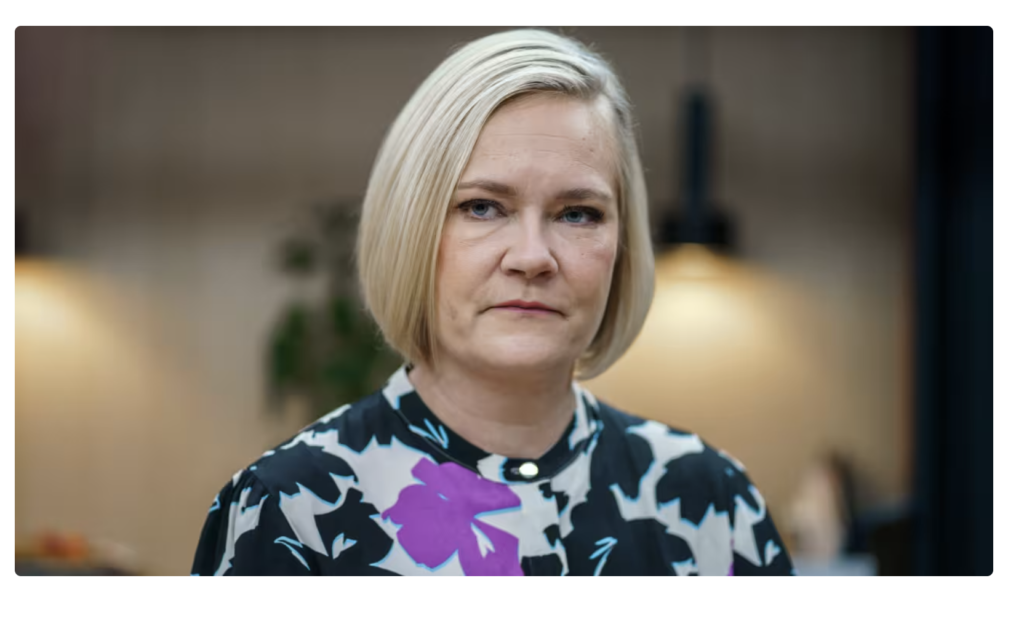
Interioir Minister Mari Rantanen is the dark face of Finland’s immigration policy who wants to put on ice human rights for asylum seekers. Some consider her an incompetent minister driven by Islamophobia and xenophobia. Source: Yle
While Professor Koksenniemi slammed Rantanen’s letter to the EU Commission as “unbelievable and incomprehensible,” not one minister, never mind Prime Minister Petteri Orpo, has questioned or commented on Rantanen’s letter to overhaul the asylum system.
Even President Sauli Niinistö, whose job is to oversee Finland’s foreign policy, has not uttered a word.
Rantanen’s letter to the EU Commission is another black stain on how the present government is undermining systematically human and civil rights in Finland.
“The whole purpose of this [refugee] system is to protect people in need,” Koskenniemi was quoted as saying in Demokraatti. “And the minister wants to attack this system without saying anything about what the purpose of this system is.”
Rantanen does not mention the word “refugee” once in the letter to the EU Commission.
Dr. Faith Mkwesha is a Zimbabwean who did her doctorate in South Africa and now lives in Finland. She has worked in higher education in Africa for many years. She is currently a lecturer and researcher at the University of Helsinki, the Swedish School of Social Sciences, and the Centre of Ethnic Relations and Nationalism (CEREN). She founded the Ubuntu Nordic Academy (UNA), where she offers Ubuntu-centered courses and expert workshops for institutions, businesses, and politics on health and well-being.
“I registered UNA after being encouraged by a friend who liked the meaning and practices of Ubuntu/Unhu African philosophy when he heard me give lectures on Ubuntu centered relations and partnerships. He even went on to buy some books on Ubuntu to show me that what I teach is more meaningful than some of these books. You know i was not thinking of making this a business that contributes in society here in Finland. You know Ubuntu teaches us to be kind even to strangers, give them food because we say a visitor does not empty the granary, and to respect each other. Ubuntu is very relevant in any society, i even teach about Ubuntu in university. This inspired me to start SahWira Africa International NGO an organization grounded in Ubuntu to advocate for women and children´s rights. “ – Dr. Faith Mkwesha
In a Western society, embracing the concept of Ubuntu has tremendous potential to foster unity, acceptance, and prosperity. Rooted in African philosophy, Ubuntu emphasizes the interconnectedness of humanity and the idea that our well-being is intertwined with the well-being of others. By embracing this principle, Western societies can move toward a more communal and inclusive mindset, breaking down barriers and fostering a sense of shared responsibility. In a world often characterized by individualism, Ubuntu promotes empathy, cooperation, and mutual support – essential elements for addressing societal challenges. This philosophy can pave the way for a more compassionate and understanding society where diverse perspectives are not only tolerated but celebrated. Ultimately, the integration of Ubuntu into Western cultures can help build a more harmonious and prosperous community where the collective success of all is prioritized over individual achievement.
Among other very important things, Dr. Faith Mkwesha in her lecture below, “Ubuntu Centered Diversity,” highlights the profound importance of the deeply rooted Sankofa bird which is a rich tapestry of Akan culture. Sankofa embodies a profound philosophy that transcends time, encourages a reflective journey, and reminds us that understanding our roots is essential to personal and collective growth. This timeless wisdom resonates and echoes throughout the African diaspora, serving as a powerful beacon of cultural identity.
Amid the rise of far-right ideologies, Ubuntu is emerging as a powerful tool for healing and building a stronger society. Ubuntu serves as a counterforce to divisive narratives by championing interconnectedness and shared humanity. It encourages dialogue over discord and promotes understanding in the face of ideological polarization. The philosophy’s emphasis on collective well-being by dismantling the exclusivity often associated with far-right politics, it paves the way for a more inclusive and harmonious society. Ubuntu challenges the us-versus-them mentality and offers a way to heal societal fractures and build a resilient foundation rooted in empathy, cooperation, and shared prosperity. In times of political polarization, embracing Ubuntu becomes not only a cultural imperative but a pragmatic strategy for forging a more united and resilient future.
I invite you to embark on a transformative intellectual journey by watching a riveting lecture by Dr. Faith Mkwesha, which delves into Ubuntu Centered Diversity. The video, accessible via Ubuntu Nordic Academy’s YouTube channel, showcases Dr. Faith Mkwesha’s expertise and promises to provide valuable insights that could reshape our understanding of our society and how much Ubuntu is needed.
Much of Finland’s hostility towards asylum seekers and visible minorities lies on President Sauli Niinistö, who hosts today his last Independence Day gala. For some, like me, this is good news. Hopefully, Finland’s next president will have a greater understanding of migrants, cultural diversity and peace-building.
Ahti Tolvanen, who is a member of the Migrant Tales board, believes that President Niinistö failed in his job number one.
“One of the areas that President Niinist failed was maintaining Finland as a peacekeeping nation,” he said. “He just walked away from decades of a tradition in The Helsinki Spirit.”
The Helsinki Spirit was the basis of Finland’s foreign policy grounded on détente and non-involvement and not taking sides in conflicts.
President Niinistö dancing with his wife Jenni Haukio at the Independence Day gala.
During the past eight years of his mandate, President Niinistö has shown his hostility towards asylum seekers, especially Muslims, and other people of color. He was never a friend of such communities.
President Niinistö’s prejudices and apparent ignorance about racism are one source that feeds Finland’s hostile environment against migrants and minorities. Some of his comments and stances (see below) leave some scratching their heads.
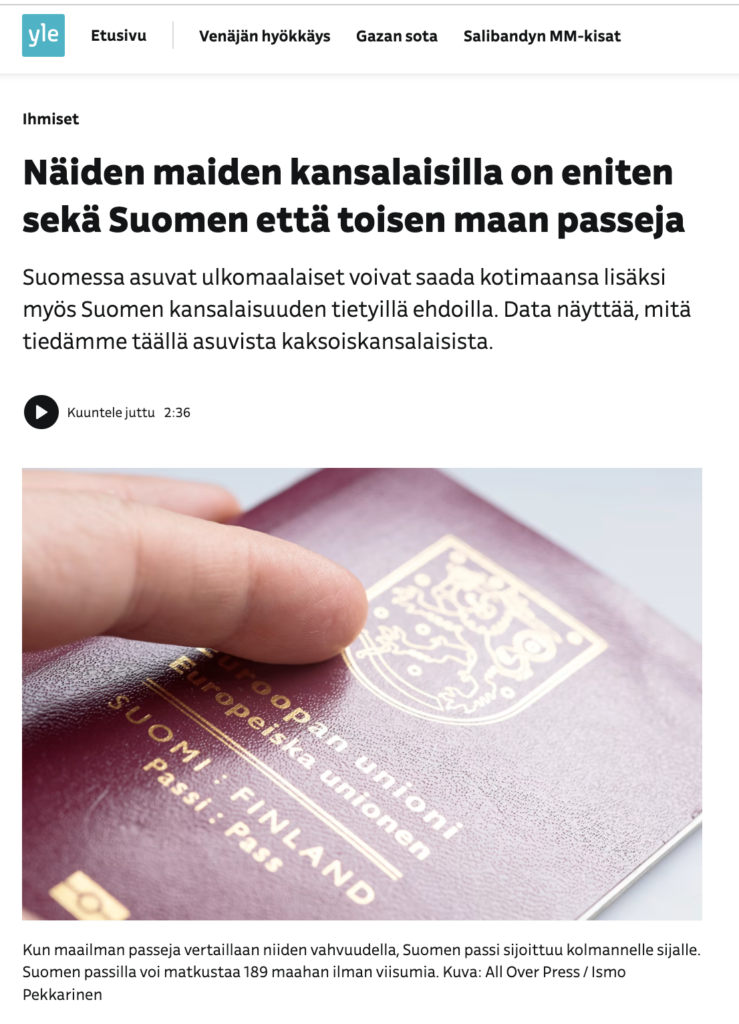
Why is the dual citizenship issue being raised again by Yle? According to a survey of MPs, 34 would block dual Finnish-Russian citizenship, while 36 said they would not. Twenty-six had no opinion.
Is it surprising that the majority of MPs who want to restrict dual citizenship are members of the Perussuomalaiset (PS)* and National Coalition Party?
The whole issue of dual citizenship should be seen as another step in the road of insularity and xenophobia. It’s concerning because if the government succeeds at excluding Russians from enjoying dual citizenship, other nationalities will follow. What else could you expect from the present government?
The government of Prime Minister Petteri Orpo plans to tighten citizenship laws. Some of the measures include raising the residence requirement for citizenship to eight from five years. Are there plans to do away with dual citizenship rights as well?
After the Cold War and joining the EU in 1995, Finland passed a number of laws that aimed to make the country more inclusive. With the tightening of immigration laws and the hostile view of outsiders by the present government, some believe that Finland wants to return to the days when the country did everything possible to exclude and make life difficult for foreigners.
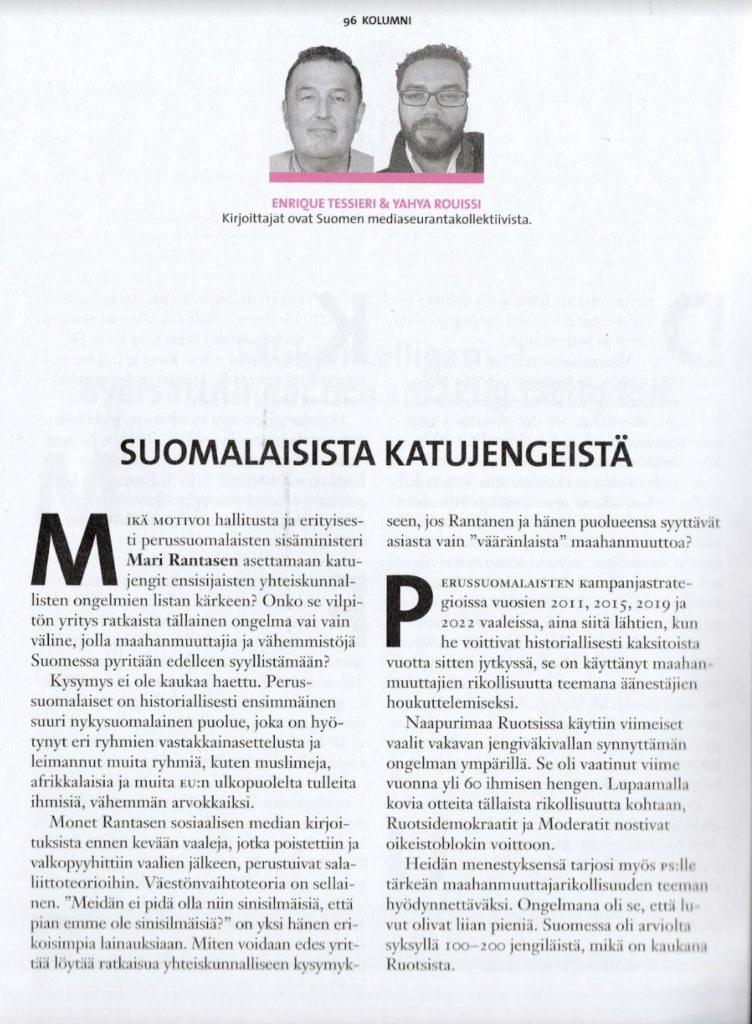
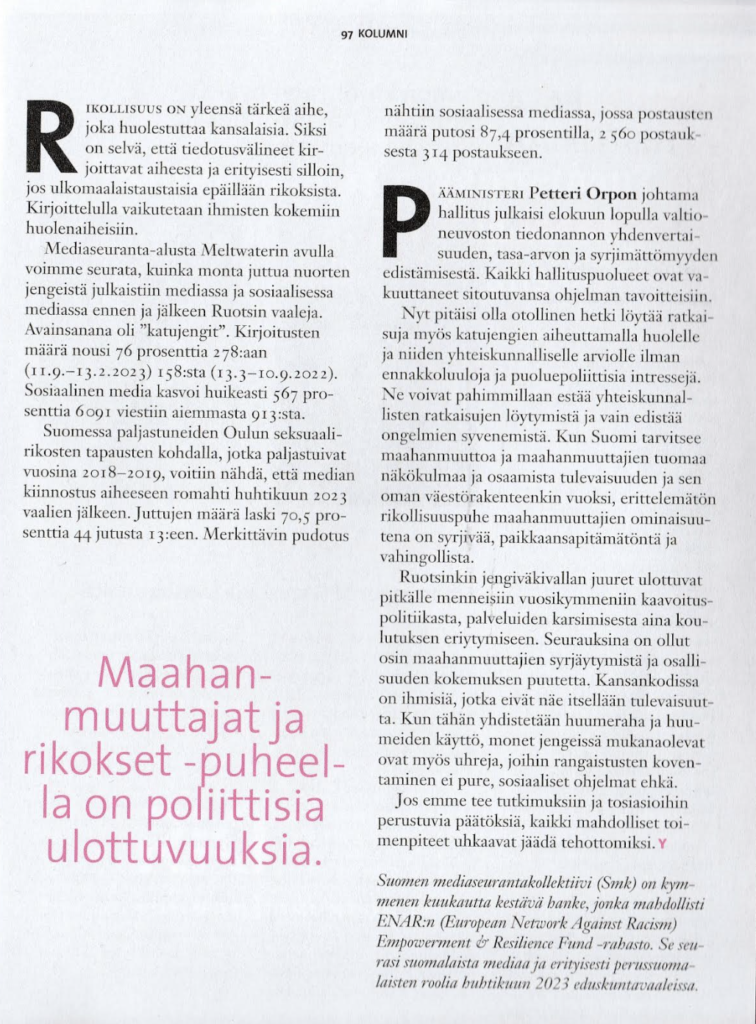
Since 2011, Finland has found a powerful political force in racism. If the country heads down the path of Hungary, it will do so with fearmongering about migrantsand how such people abuse and use social welfare at the cost of white Finns.
Even if the Perussuomalaiset (PS)* don’t hide their disdain for migrants and admiration of authoritarian regimes like the one in Hungary, parties like the National Coalition Party are helping to turn the country on its autocratic side.
Human Rights and the present rule of law guaranteed in our constitution are being targeted.
The following red lights are flashing loudly. Prime Minister Orpo can only utter “that the government has a good program.”
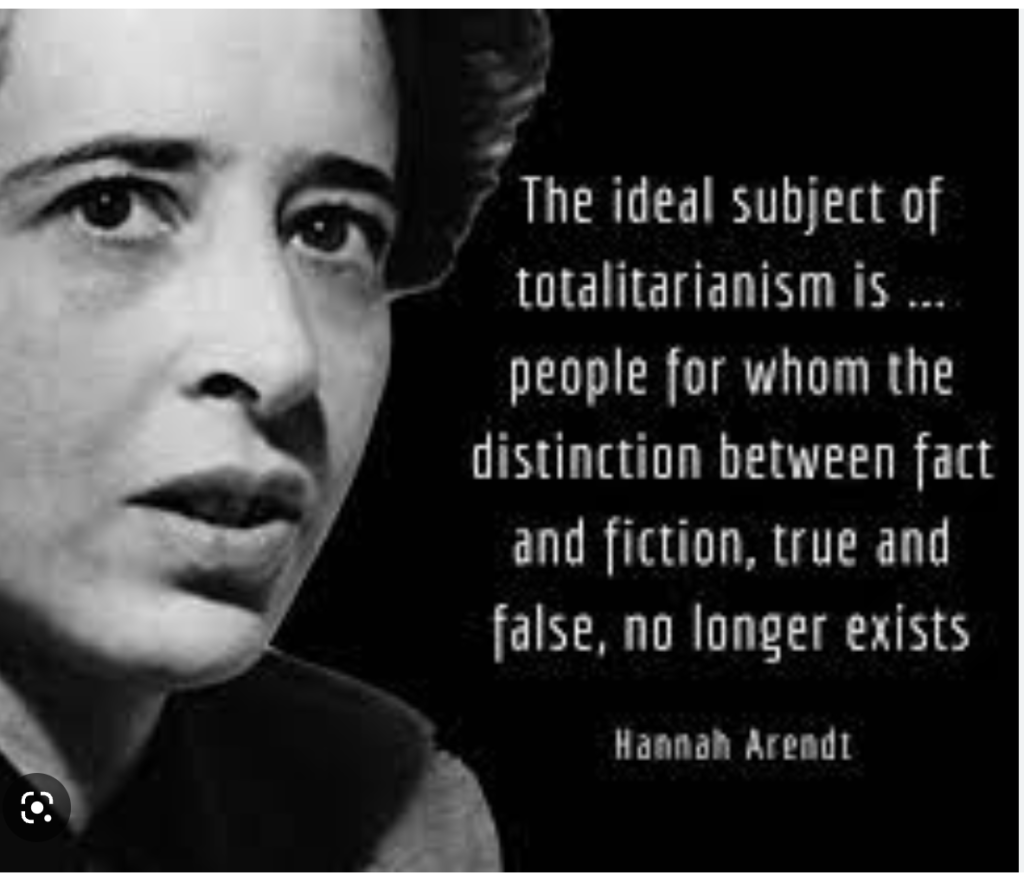
Media, high pillar of civilization, pride of the developed world, crown jewel of any democracy, far (rightly) from being biased, “fair”, “free” and “ethical”… The title is addressing you.
You can cut all the flowers, but you cannot keep spring from coming.
Pablo Neruda
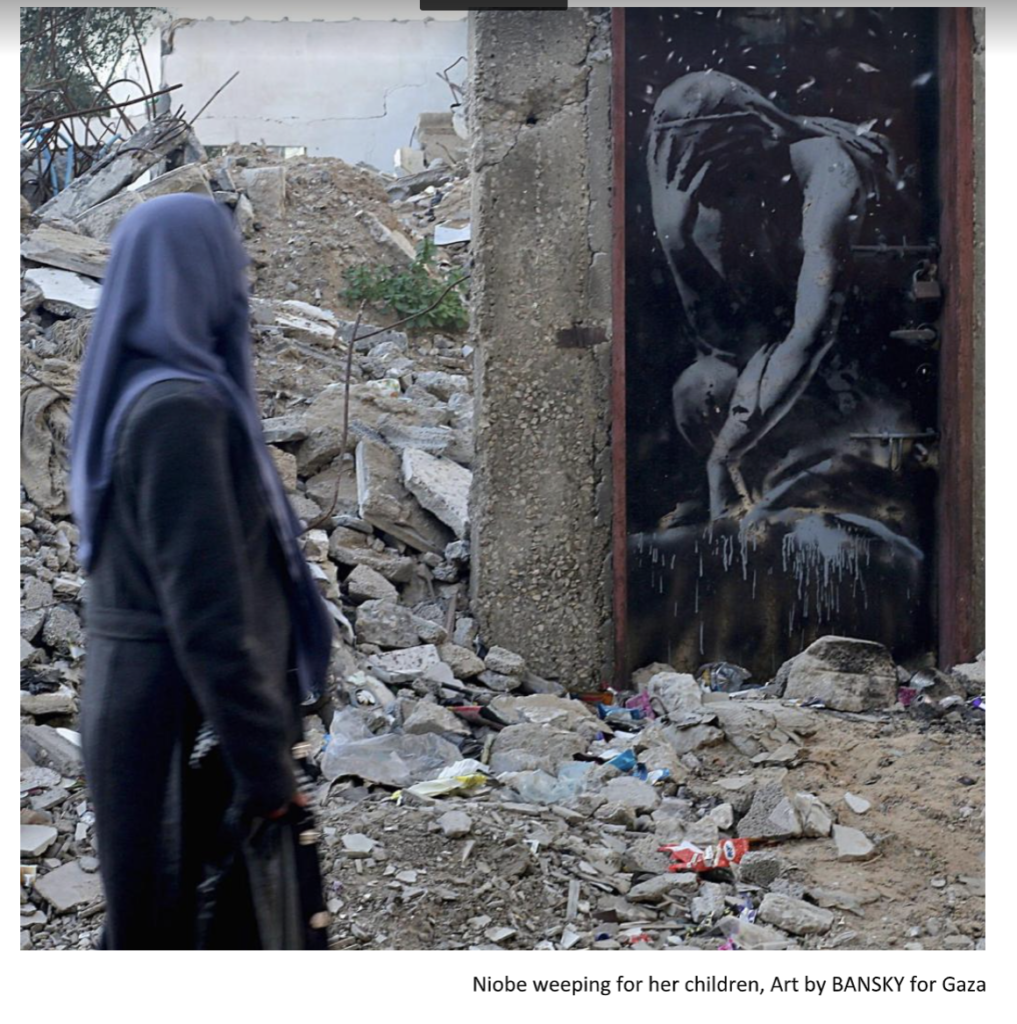
As we navigate daily “a” distorted gallery, the glaring contrast between the spotlight cast on some and the shadows shrouding others becomes an uncomfortable tableau. The dichotomy echoes the oppressive silence enforced by the Western media that “beautify and nose-powder”, confining information and strangely by selectively applying censorship. In this unsettling narrative, objectivity is the art of selective disclosure that taints a casualty and information. As we traverse (ironically) the landscape of double standards, let’s pick some of the information and look it up from the mainstream.
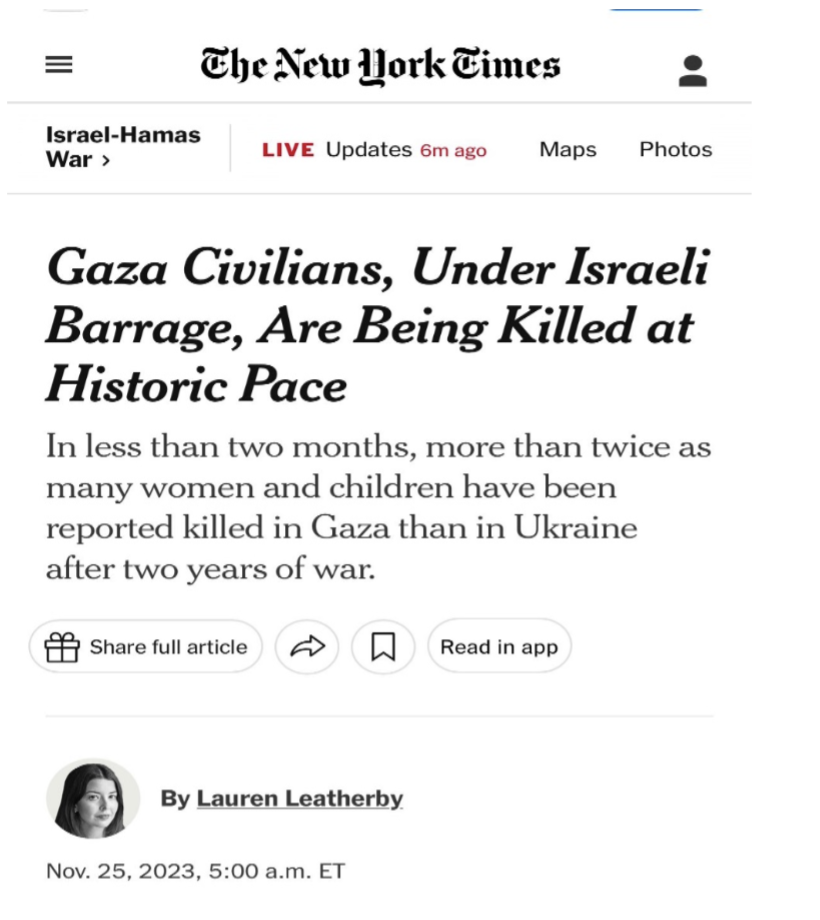
While it only took 49 days of genocide and 8,000 children killed to get an article like the one below from the New York Times, and a change of heart in some other outlets, the media in Europe is a far cry from the noble Western values for human rights, at least the same way it glowed when it was about Ukraine. It’s worth reminding that Germany, for example, charged Russia with war crimes for ONE indiscriminate missile attack that killed 22 people. Israel has done this approximately 1,000 times.
The full article of the New York Times here: https://www.nytimes.com/2023/11/25/world/middleeast/israel-gaza-death-toll.html
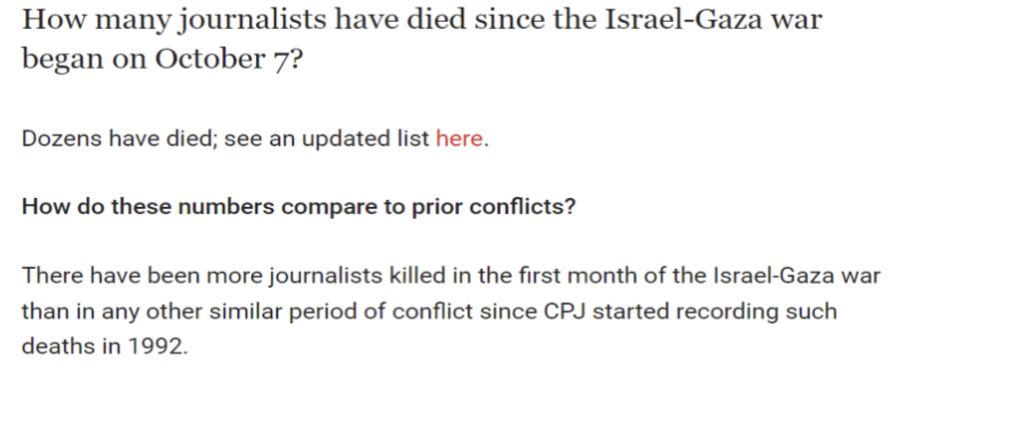
There are a few many things that don’t comply with the proclaimed Western values when it comes to this matter: Journalists from there aren’t that much valued, supported, or protected by their “colleagues” in Europe. The number of journalists that have been killed (67) is practically a record that has never been recorded before, and the silence about it is no less significant.