Migrant tales
Menu
  • #MakeRacismHistory “In Your Eyes”
  • About Migrant Tales
  • It’s all about Human Rights
  • Literary
  • Migrant Tales Media Monitoring
  • NoHateFinland.org
  • Tales from Europe
Menu

Month: December 2014

What kind of a year was 2014 for our ever-growing culturally diverse society?

Posted on December 30, 2014 by Migrant Tales

For Finland’s ever-growing culturally and ethnically diverse community, 2014 will be remembered for many good and bad things. At the top of the good things, there’s the Olen suomalainen video but the list of toxic news far outweighs the latter like Tom Packalén’s “racist youth mobs with migrant backgrounds” and Pia Kauma’s “baby carriages.” 

IMG_3052

Migrant Tales wishes its readers a wonderful New Year.


The year brought us some disturbing stories about migrant children, who lag two years in Pisa tests when compared with white Finns. Children with migrant parents were also more prone to face bullying, physical and sexual harassment at schools.

One of the best myth-busting stories written in the year was by Pekka Myrksylä, who claimed in a blog entry  that the majority of migrants in Finland live in poverty.

There were many, many more stories in 2014 about our cultural diversity that will be published more in detail in Finland & cultural diversity 2014  in the beginning of January.

Migrant Tales is a blog community. We therefore seek your opinions and input about what you considered the biggest story or challenges facing our culturally diverse community this year in Finland and Europe.

We’d love to hear from you on our Facebook page, email ([email protected]) or Twitter @MigrantTales.

Thank you!

Finland’s PS see its support plummet to all-time low since 2011

Posted on December 30, 2014 by Migrant Tales

A latest poll commissioned by YLE showed that if elections were held today, the Perussuomalaiset (PS)* would receive only 13.3% of the votes, which is the lowest drop ever after it won the 2011 elections with 19.1% of the vote, writes Yle in English. The PS  saw its support slip by 1% from the previous month.

Writes YLE in English:

Since autumn the party’s fortunes in the polls have been trending downwards and it has lost roughly one percentage point in support every month since it scored an approval rating of 17.1 percent back in August.

As in past polls, the Center Party retained its status as the most popular party with 26.8% followed by the National Coalition Party (17.1%) and Social Democrats (15.3%).

Näyttökuva 2015-12-30 kello 18.58.12


See full story here.


One of the explanations for the sharp drop in PS support is that the nationalist party has failed to attract women supporters with an ever-growing number of males leaving the party.

* The Finnish name of the Finns Party is the Perussuomalaiset (PS). The names adopted by the PS, like True Finns or Finns Party, promote in our opinion nativist nationalism and xenophobia. We therefore prefer to use the Finnish name of the party on our postings.

What do Jim Crow, Nuremberg Laws and Finland’s Restricting Act of 1939 have in common?

Posted on December 28, 2014 by Migrant Tales

All forms of intolerance have one factor in common: They are violent ways to disenfranchise and control groups through social exclusion. Jim Crow laws in the United States sought to ensure that blacks remain marginalized in the same way as the Nuremberg Laws of Nazi Germany took away all power from the Jews. In Finland, foreigners were controlled by the Restricting Act of 1939 (law 219/1939) and the lack of any laws that ensured them basic human rights. 

While in different historical contexts, all three laws had the same aim: Dominate and control groups perceived to be a threat. Whites in the United States feared that blacks would become their masters. The same argument was used in the Final Solution of the Jews.

Rudolf Hoess, Auschwitz camp commandant 1940-43 and 1944-45, justified the extermination of about 2.5 million Jews [1] with the following twisted logic.

Hoess: “I had my personal orders from [Heinrich] Himmler [to exterminate Jews].”

Question: “Did you ever protest?”

Hoess: “I couldn’t do that. The reasons Himmler gave me I had to accept.”

Question: “In other words, you think it was justified to kill 2.5 million men, women, and children?”

Hoess: “Not justified – but Himmler told me that if the Jews were not exterminated at that time, then the German people would be exterminated for all time by the Jews.”

Certainly myths must be created in order to depict “us” as the good guys and “them” as the bad guys as we exclude other groups. This can be done to justify mass murder or through an oppressive system like Jim Crow, which permitted mass murder through mob violence and the lynching of blacks.

The reason why intolerance continues to dominate our societies these days is because we still believe that certain groups are a threat. The massive number of black and Hispanic USAmericans that are incarcerated reveal a New Jim Crow, while anti-Semitism is on the rise in Europe under many masks like Islamophobia.

All three laws – Jim Crow, Nuremberg Laws and the Restricting Act of 1939 – had the same aim: To take away rights from other groups in order to neutralize and control them. In Finland it was not only done with the 1939 law but with no law that ensured foreigners had no civil rights in this country.

It was only 66 years after independence that Finland enacted its first Aliens Act in 1983.


Näyttökuva 2014-12-28 kello 8.37.46

While the targeted group was different in the Nuremberg Laws and during Jim Crow (Mississippi), both laws are similar because their aim and arguments are the same even if they are in different national and historical contexts.


Just like the Nuremberg Laws prohibited Jews marrying white Germans, Jim Crow prohibited blacks from marrying whites. Schools and public spaces were segregated for Jews in Germany and blacks in the United States, especially in the South.

In Finland too white Finns were discouraged from marrying foreigners. Some white Finnish immigrant women in Sweden married Asian and African men. Those that did usually lost their Finnish citizenship until a new law in 1968 permitted them to regain it.

Even if Finland was the first European country to give women the right to vote, it didn’t trust women with foreigners. Until 1984, only Finnish males could pass Finnish citizenship to their children.

The Restricting Act of 1939 prohibited foreigners from owning real estate and acquiring a majority stake in Finnish companies – limiting this to 20% normally and 40% under special permission. The Act stipulated that foreigners could not own shares in sectors such as forestry, securities trading, transportation, mining, real estate and shipping.

The Restricting Act of 1939, which was passed during the Great Depression, became redundant in 1992.

If the Restricting Act wasn’t enough to ensure that you couldn’t publish newspapers, organize demonstrations, be a chairman of a Finnish association or own land, the lack of any law that protected immigrants in this country meant that the authorities didn’t have to respect your human rights and could imprison and deport you and ask questions later.

Like Jim Crow and the Nuremberg Laws, the Restricting Act had the same aim: to wipe out and keep the foreign population to a minimum. Finland almost succeeded at making the country “foreigner free.” From a high of 29,685 immigrants in 1929, the foreign community had plummeted in the following 41 years to a mere 5,483 in 1970, according to Antero Leitzinger.

If we take into account that a large number of these “foreigners” were native Finns who were naturalized Swedes, the amount of non-Finns living in the country was even smaller.

Is it a coincidence that intolerance and xenophobia raised its rude head in such a forceful way in the 2011 parliamentary elections, when the Perussuomalaiset (PS)* saw its support rise from 5MPs in 2007 to 39MPs?

Should we be surprised why there is still so much suspicion, intolerance and nativist nationalism in Finland? All we have to do is look at our past laws and history to find the answers.

Blinding  our view, however, are those myths about ourselves and excuses that keep us in our national comfort zone.

[1] Leo Goldensohn: Nuremberg Interviews. Vintage Books. New York 2004. p. 296.

* The Finnish name of the Finns Party is the Perussuomalaiset (PS). The English -language names adopted by the PS, like True Finns or Finns Party, promote in our opinion nativist nationalism and xenophobia. We therefore prefer to use the Finnish name of the party on our postings.


Sweden calls off snap elections in March 2015 after reaching agreement with the opposition

Posted on December 27, 2014 by Migrant Tales

The minority government of Prime Minister Stefan Löfven has abandoned plans to hold snap elections in March 2015 after reaching an agreement with the Alliance, comprising of opposition parties like the Moderates, Center Party, Liberal Party and Christian Democrats, according to The Local. The far right Sweden Democrats, which caused a political crisis this month, blasted the so-called December agreement.

Mattias Karlsson, the acting chairman of the anti-immigration Sweden Democrats, said that his party is now the main opposition party as a result of the agreement.

“He (Löfven) doesn’t deserve to govern Sweden,” Karlsson was quoted as saying on The Local, which cited TT news agency.

Näyttökuva 2014-12-27 kello 15.52.47

Read full story here. 


Löfven said at a press conference that the agreement with the Alliance will permit the minority government to govern during 2015-2022.“With the agreement the government will not be making any decision about an extra election, it is simply not the immediate interest,” the prime minister said.

The biggest loser of the December agreement isn’t only the Sweden Democrats but the Perussuomalaiset (PS)* of Finland, which were hoping to capitalize on the snap elections in Sweden. Finland holds parliamentary elections in April 2015.

Statements over a week ago by the party’s secretary Björn Söder, that the Saami, Jews and Kurds couldn’t be considered “true” Swedes unless they assimilate into white Swedish culture, and the arson attack on Christmas Day in Eskilstuna against a mosque, must have boosted the resolve of the minority government and the Alliance to reach an agreement in order to keep the Sweden Democrats in the cold.

The Sweden Democrats saw their support rise in the September elections to 12.9% (up 29MPs to 49MPs) from 5.7% (20MPs) in 2010.

All Swedish parties have boycotted the Sweden Democrats since it is a far right party that is demanding a drastic cut in immigration.

* The Finnish name of the Finns Party is the Perussuomalaiset (PS). The names adopted by the PS, like True Finns or Finns Party, promote in our opinion nativist nationalism and xenophobia. We therefore prefer to use the Finnish name of the party on our postings.

Arson attack against mosque in Sweden is another red light flashing in the roaring silence

Posted on December 26, 2014 by Migrant Tales

 A mosque in Sweden that was hit by arson on Christmas Day is the latest warning that we cannot stand idly to the ever-rising tide of Islamophobia and far-right violence griping Europe these days. Words are not regular bullets that kill instantly but are time bombs that can explode anywhere and anytime. 

The attack against the mosque that injured five in Eskilstuna, a city with a large immigrant population located west of the capital Stockholm, came after Sweden Democrat party secretary Björn Söder claimed over a week ago that Jews, Kurds and the Saami cannot be considered “true” Sweden unless they assimilate into Swedish society.

Anti-immigration parties support assimilation, or one-way integration of migrants and minorities, while in theory at least the adaption process should be a two-way street (integration).

Näyttökuva 2014-12-26 kello 1.30.41

Read full story here.


Söder’s statement doesn’t only expose his issues with racism but a whole mindset of hostility towards cultural diversity.

In other words, the Sweden Democrats, which brought down on December 3 the minority government of Prime Minister Stefan Löfven, since the far-right party holds the balance of power in the country, believe that migrants and minorities must become white Swedes like him in order to be accepted as “true” Swedes.

What is a true Swede anyway? All Swedes migrated many generations ago to this part of Europe. The Garden of Eden never existed and is only a myth used in nativist ultra-nationalistic discourse.

In such logic we find as well the seeds of hatred and the failed assimilation policies of anti-immigration parties.

Is it only a question of time when such parties – if they ever get enough power – will start drafting modern Nuremberg Laws to stamp out cultural diversity? Can we afford to wait passively to see if this will happen?

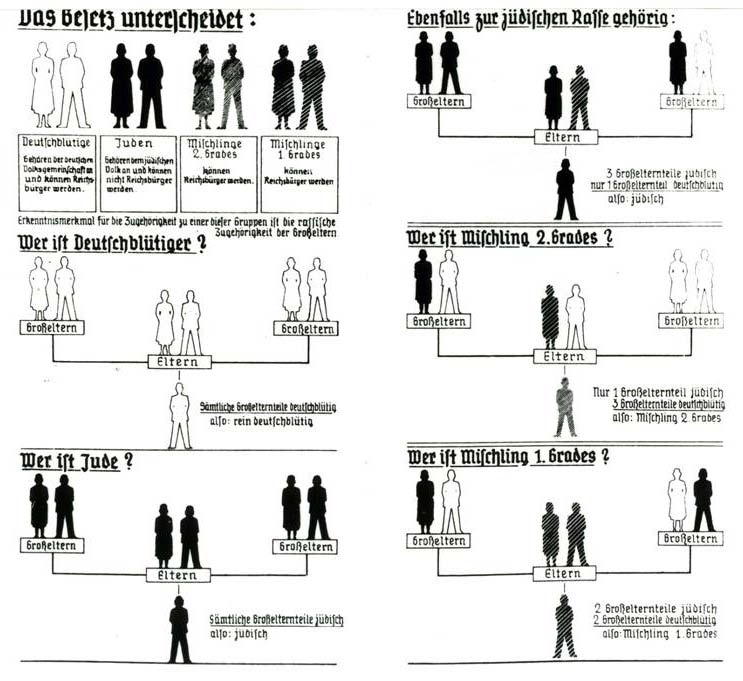
Any sensible person can tell that the classification of who is a “true” Swede, or “true” European, is more than problematic. Nazi Germany found this out when it enacted the Nuremberg Laws and Reich Citizenship Law of 1935 to classify partial Jews, or Mischlinge.

nzakony2

Here’s how Nazi Germany classified Jews: full Jews and Jewish Mischling first or second degree. What these types of classifications revealed was anti-Semitism than anything else. Source: www.neztratitviru.net 


What does a European anti-immigration party mean when it classifies itself as ethnically pure and the rest who are not like it as a threat? What do the Perussuomalaiset (PS)* and far-right Muutos 2011 of Finland mean when they claim that Muslims won’t integrate, Muslims are destroying our way of life, and Muslims are violent? What code does the National Front of France signal to its followers when it makes an anti-kebab statement, or when Jobbik of Hungary, Golden Dawn of Greece and Ukip openly target Jews and immigrants?

Rob Owen Bell wrote on a recent opinion piece claims that Islamophobia in the UK (and in Europe) is code for race-hate and religious bigotry:

While it is only right that we feel pity for the rare victims of this bizarre condition, we cheapen their suffering by continuing to tolerate the use of the term as code for race-hate and religious bigotry. How much longer are we going to give a platform to thugs in suits struggling to keep a straight face for the cameras as they state they’re “not racist, just against radical Islam”, while their mates swill Stella and chuck Nazi salutes in the background?

One matter is for certain: Things will get worse as long as politicians continue to accept such intolerance by remaining silent and treat racism with bandaids. We need more radical steps are needed to challenge the threat to Europe imposed by fascist, crypto-fascist anti-immigration parties.

Change will not take place as long as migrants and minorities are kept out of the decision-making process.

Why does a country like Finland, which has so few migrants when compared with other European countries, voted in 2011 for an anti-immigration party like the PS that become the third-largest bloc in parliament?

In my opinion it shows that most politicians in Finland, as well as our institutions and society, are still very much in the dark about the threat of fascism and nativist nationalism.

Finland’s xenophobia has its roots in the difficult relationship it had with the former Soviet Union in the last century. Everything was acceptable back then, even becoming an ally of Nazi Germany in the Continuation War (1941-44), as long as your reasoning was hatred of the USSR and communism.

We cannot effectively challenge intolerance in Finland as long as we continue to teach at our schools and homes that immigration and cultural diversity are illnesses. We should be teaching the opposite: inclusion and respect for difference and cultural diversity. Acknowledging that over 1.2 million Finns emigrated between 1860 and 1999 is a good starting point.

If Finland has many unanswered questions about how it went to bed with Nazi Germany during the Continuation War, Europe too has a serious issue with its colonial past and which still continues to bolster racism in all forms and shapes. 

Europe needs today a totally new discourse on our identity in the new century and strong anti-discrimination laws that have teeth. As long as we teach the same myths and social constructs of the past, we are only delaying such a crucial debate just like the US delayed and continues to delay black and minority rights.

By delaying that important debate we permit ourselves to be chained by our intolerance.

Racism has always been Europe’s greatest threat.

It’s high time we understand this unless we want to commit the same disastrous mistakes of the past.

* The Finnish name for the Finns Party is the Perussuomalaiset (PS). The English names of the party adopted by the PS, like True Finns or Finns Party, promote in our opinion nativist nationalism and xenophobia. We therefore prefer to use the Finnish name of the party on our postings.

PS MP Vesa-Matti Saarakkala’s anti-immigration message + shoddy journalism = piling hatred high and deep

Posted on December 23, 2014 by Migrant Tales

Populism is an ugly political force because it’s based on hearsay and on the victimization of migrants and minorities. Perussuomalaiset (PS)* MP Vesa-Matti Saarakkala claimed Friday on Ilkka that schools are censoring traditional Christian festivities to appease migrants and atheists. Saarakkala felt so strongly about the matter that he sent a written question to the government. 

This story published by the Seinjäjoki-based daily is a good example of sloppy journalism and how the media becomes the mouthpiece of groups that spread intolerance and racism in this country.

We’ve seen this type of careless journalism in Finland too many times. Why do we continue to see it? Because the national media, which wields power, is owned and run by white Finns.

Migrant Tales got in touch with Ilkka and they agreed that the journalist who wrote the story should have asked the critical question.

By forgetting to ask the crucial question, the journalist became – as we’ve seen so many times before – the mouthpiece of the anti-immigration politician.

One matter reveals itself after being a journalist for about 25 years and reading stories on the national media for years about the anti-immigration message: It’s mostly conjured and grossly exaggerated.

Näyttökuva 2014-12-23 kello 9.19.42
This email was sent to PS MP Vesa-Matti Saarakkala on December 21. It reads: You were interviewed by Ilkka where you claimed that “schools have censored their festivals during Christmas and spring mainly to please migrants and atheists.” Could you elaborate how many schools and day care centers [in Finland] are doing what you claim. Thank you for your response.


Migrant Tales asked the PS MP the question that the Ilkka journalist should have asked in the first place. We have yet to get a response from MP Saarakkala.

In this case a no response is as good of a response as any.

* The Finnish name of the Finns Party is the Perussuomalaiset (PS). The names adopted by the PS, like True Finns or Finns Party, promote in our opinion nativist nationalism and xenophobia. We therefore prefer to use the Finnish name of the party on our postings.

Migrants’ Rights Network: Out with the old, in with the new: 2014 ends as it began

Posted on December 23, 2014 by Migrant Tales

Awale Olad*

Awale_web


It seems that 2014 will end with yet more news on immigration. This time it involves the Home Secretary, Theresa May, and her push to change the immigration rules in order to require that all international students graduating at UK universities leave the country on completion of their course.

Näyttökuva 2014-12-23 kello 8.52.02

Read full story here.

MRN closed the year a full 12 months ago with an account of a ‘rag, tag and bobtail’ Parliamentary debate on immigration which took place in Westminster Hall.

At that time it involved the MP for Amber Valley, Nigel Mills making a last minute attempt to stop the lifting of the transitional controls which had prevented Bulgarians and Romanians accessing jobs in the mainstream labour market for the previous seven years. He lost the vote and the Immigration Bill accelerated towards the becoming law.

It seems that 2014 will end with yet more news of jostling and elbowing within the ranks of the government parties on immigration. This time it involves the Home Secretary, Theresa May, and her push to change the immigration rules in order to require that all international students graduating at UK universities leave the country on completion of their course. At the moment they are permitted to remain in the country to apply for jobs under the terms of Tier 2, or setup a business in Tier 1, extend their PHD in Tier 4, or gain work experience in Tier 5, of the Points-Based Scheme (PBS).

Mrs May thinks that by ending these routes to an extension of residence permits will address a problem she says exists which involves international students staying on without permission and thereby adding to the numbers of irregular migrants in the country.

It is hard to credit the sense of this idea.  The students who are permitted to remain under the terms of the PBS are not adding to the numbers of people breaking the immigration rules for the simple reason that they have been told by her government department that they can remain in compliance with those rules. The actual numbers affected here would be around 6,000 students, a mere 3 percent of the overall 176,000 that came to the UK in 2014.

Plenty of critical voices have spoken up to protest against the daftness of an idea that hits at the interests of one of Britain’s most successful service industries – namely higher education – which has a poll position to maintain in the highly competitive global race to attract fee-paying students to its universities and colleges. Her partners in the coalition government, the Lib Dems, have rushed to brand it as a ‘silly’ idea.

One suspects that there will be others as equally alarmed. International students have provided a rich flow of talent to many British businesses looking for employers who will help prise open access for their goods and services in overseas markets. If recovery from the deepest recession in a century is to continue it will be because these companies have the skills in their staff teams which can access business opportunities aboard and do the sort of deals that allow small and medium sized enterprises to grow stronger and win more orders.

There is also the sense that this proposal is purely a cynical political attack on foreign students as part of the cat and mouse game between key players jostling for the leadership of the Conservative Party with the Prime Minister and as a result Theresa May is deliberately undermining David Cameron on the issue of student migration. The Prime Minister has been part of a search party sent to India on many occasions to calm anxieties about Theresa May’s student rhetoric, which is hurting UK universities, and this latest announcement will certainly be viewed as a clear shot at Downing Street in response to the cull of special advisors linked to May, who are currently seeking safe Conservative parliamentary seats.

Major problems arise from this verbal jousting:

  1. It only caters to the mainstream media who like to stir up the Westminster bubble. Politicians will look silly, public trust will continue to plummet, and students, universities, and SMEs are the only real victims.
  2. This latest announcement will do more damage to the current declining popularity of UK universities. It will give succour to Australia, the UK’s main competition, which is currently attracting higher levels of Indian students that would have at one time scrambled for the UK. The closure of the previous Tier 1 post-study work visa has done much damage to the UK’s attractiveness abroad.

The Tory backbench revolt on the issue of Bulgarians and Romanians failed at the end of last year, and, even with 50,000 people from these countries registering in the UK labour force, the evidence is clearly on the side that they slotted into the jobs market and have been doing their bit to help the country grow out of the doldrums.

This time the insurgency has come not from the Conservative backbenches, but one of its most prominent ministers in government. We have to hope that Mrs May’s colleagues will see that it is, like her previous attempts to introduce the visa bonds and go home vans, a non-starter for SMEs and the UK’s ability to be a global competitor.

Read original story here.

This piece was reprinted by Migrant Tales with permission.

*Awale Olad is the Public & Parliamentary Affairs Officer at MRN, coordinating the work of the All-Party Parliamentary Group on Migration, supporting parliamentarians and policy makers on establishing a cross-party consensus on immigration policy.

You can live in Finland as long as you are culturally invisible (and conform to our stereotypes)

Posted on December 21, 2014 by Migrant Tales

Perussuomalaiset (PS)* MP Vesa-Matti Saarakkala’s statement on Seinjäjoki-based daily Ilkka is another clear example of how some politicians, and even the National Board of Education, continue to deny our ever-growing cultural diversity. There is a lot of talk about “multiculturalism” and little action. This leaves us with a hostile message lingering above us: We, white Finns, will decide what cultural traditions will be kept in our schools. We call the cultural shots in this country and don’t ever forget it. 

In theory at least, Finland is a secular country. In practice it’s far from it.

The debate that took place this spring concerning the suvivirsi, or Summer Hymn, is a case in point. In a show of power and a clear message that Finland isn’t ready yet to talk about the role of cultural diversity too seriously, the National Board of Education didn’t consider the suvivirsi compromised its guidelines for religious freedom, equality and neutrality.

Some would strongly agree with the conclusions of the National Board of Education.

How could a near all-white National Board of Education have decided differently?

Näyttökuva 2014-12-21 kello 10.47.19


Read full story (in Finnish) here.


The actions and opinions of PS MP Saarakkala, among many others in the populist anti-immigration party, couldn’t be further from the truth about schools are not performing traditional Christian events like Christmas because of migrants.

The attempt by Saarakkala to shift attention on the real issue, which is how secular should our schools be, and pinning the issue on migrants and atheists is nothing more than another cheap shot by the PS.

Saarakkala belongs to that group of Finns who see cultural diversity as a threat and illness spreading in Finland. In his world, migrants would never become equal citizens but be relegated to second- and third-class members of society as the eternal hapless mamu or “person with migrant background.”

It’s clear that the prejudices of politicians like Saarakkala, and policy statements of the National Board of Education to rule in favor of one religion over others, have their days counted. Why? Because they are untenable.

The question is a simple one:

Is our educational system secular? If not, how much space should be given to different religions?

Is our society open and tolerant of cultural and ethnic diversity? If not, which groups will be excluded with our traditions?

* The Finnish name of the Finns Party is the Perussuomalaiset (PS). The names adopted by the PS, like True Finns or Finns Party, promote in our opinion nativist nationalism and xenophobia. We therefore prefer to use the Finnish name of the party on our postings. 


Populist parties of Finland are a direct threat to our prosperity

Posted on December 20, 2014 by Migrant Tales

A recent poll commissioned by Helsingin Sanomat reveals an important trend: How the National Coalition Party and the Perussuomalaiset (PS)* are in a semi-tailspin mode. The Center Party continues to strengthen its position as the most popular party among voters with the Social Democrats slowly but surely overpassing the National Coalition Party. 

Certainly this is an opinion poll but what does it say about the April 2015 parliamentary elections?

For one it predicts a disastrous election for the PS and a clear disappointment for the National Coalition Party.

As Migrant Tales has stated earlier, the PS is in a totally different ball park than before the 2011 elections, when it scored its historic election victory. Back then they were the only anti-EU and openly hostile option to immigration.

This is why some PS members like MEP Jussi Halla-aho, who was sentenced for ethnic agitation, and Simon Elo are for stepping up more anti-immigration rhetoric to attract voters.

Näyttökuva 2014-12-19 kello 18.58.59


The Center Party (Kesk) is clearly in the lead with the National Coalition Party (Kok), Social Democrats (SDP) and PS trailing.


What can you say about a populist party like the PS that bases its popularity on spreading hatred and feeding the suspicion of likeminded voters? What does the PS reveal about Finland and intolerance? It shows a country that has lost its way and which still doesn’t grasp that intolerance and racism are toxic social ills what will end up impoverishing this country.

Skilled workers and foreign investment will be discouraged from coming to Finland at a time when we need these two matters the most today.

The PS experiment will not only rob Finland time but be exceptionally expensive costing billions of euros in losses in the way of new jobs, innovation and entrepreneurship.

Populist nativist nationalism is Finland’s greatest threat.


* The Finnish name for the Finns Party is the Perussuomalaiset (PS). The names adopted by the PS, like True Finns or Finns Party, promote in our opinion nativist nationalism and xenophobia. We therefore prefer to use the Finnish name of the party on our postings.

Michael McEachrane: Seeing Sweden’s race problem for what it is

Posted on December 17, 2014 by Migrant Tales

Michael McEachrane*

Two things seem abundantly clear regarding the rise of ultranationalism in Europe today. First, it is symptomatic of a broader form of nationalism which all European states are steeped in. Second, it is this broader nationalism that ultimately needs to be confronted if equality is ever to become a reality in Europe.

Näyttökuva 2014-12-17 kello 21.13.43

Read full story here.


Even in a country like Sweden, an ultranationalist party with roots in neo-Nazism is now the country’s third largest party. Recently, the Sweden Democrats Party demonstrated its power by voting down the government budget. As a result, early national electionswill be held in March 2015. The party has declared that it aims to bring down any government that refuses to drastically reduce immigration.

Sweden is a poignant example of the problem of nationalism in Europe today. It seems fair to say that in Sweden nationalism is not deemed a mainstream problem. Rather, it is seen as something that either belongs to the past or is an expression of extremism. The Sweden Democrats may have 13 percent of the electorate, but all other parties in parliament treat them as a national anomaly, isolated and kept at a safe distance.

It also seems fair to say that neither race nor even racism is seen as a mainstream problem in Sweden. As longtime Swedish Prime Minister Olof Palme summed it up in a Christmas speech in 1965: “Democracy is firmly rooted in this country. We respect the fundamental freedoms and rights. Murky racial theories have never found a foothold here. We like to see ourselves as open-minded and tolerant.”

Race is seen as a misguided belief, which is why it is not to be found in the country’s anti-discrimination legislation. And racism is a strong word reserved for extreme cases of prejudice and hostility. The majority, though, with good conscience can chant “No racists in our streets!”, a popular slogan in recent demonstrations against the Sweden Democrats and neo-Nazism.

The result is a compounded problem of denying the prevalence of nationalism and racism and the urgent need for political measures to eliminate them. Beyond its anti-discrimination legislation – which merely has led to a trickle of convictions – Sweden has few political measures in place against racism. Instead, the political focus tends to be on the “integration” of immigrants in the form of education, job training programmes, access to citizenship and so on.

Marginalisation and exclusion

The pressure is now increasing to heed to the politics of the Sweden Democrats and focus more on integration. What this does is ignore the social significance of a national “us” versus a foreign “them”. Like other European countries, Sweden is a nation-state with a long tradition of understanding nationhood in terms of ethnicity, race and culture. Like other ultranationalist parties across Europe, the Sweden Democrats capitalise on a growing sense of fear that this nation is under threat.

On the whole, judging from the patterns of discrimination and exclusion in European societies, it is all too clear that at the bottom of European divisions between a national “us” and a foreign “them” is race. In Sweden, traditional national minorities such as the Saami, Roma and Jews have a long history of being excluded from the Swedish nation. Today especially Saami and Roma are still highly marginalised. But like elsewhere in Europe, it is especially people of colour (the “visible minorities”, including Roma) that are most evidently discriminated against in every major area of society such as the housing and job markets.

The urban areas of Sweden are today spatially segregated along racial lines with people of colour concentrated to low-income housing projects. The country has the highest differences in employment in the West between native and foreign-born citizens and these differences are the most dramatic between ethnic Swedes and non-western born residents. People of African descent have a particularly hard time finding jobs, have the lowest educational payback in the country and are exposed to the most number of hate crimes.

To create a more inclusive society, counter such patterns and curb the rise of the Sweden Democrats, the traditional definition of the nation in terms of race and ethnicity needs to go. In addition, political measures against racism, and a consistent anti-discrimination perspective that includes race need to become mainstream.

Like the rest of Europe, Sweden prides itself in its constitutional tradition based on a “respect for the equal worth of all and the liberty and dignity of the individual”, as its constitution says.

But as the UN Working Group of Experts on People of African Descent concluded on its visit to Sweden the same week that the Sweden Democrats forced the country into early elections:

“It is our view that the Swedish philosophy of equality and its public and self-image as a country with non-discrimination and liberal democracy, blinds it to the racism faced by Afro-Swedes and Africans in its midst. No country is free of racism and Sweden is not an exception.”

Read original posting here.

This piece was reprinted by Migrant Tales with permission.

*Michael McEachrane is a member of the Swedish NGO and anti-racist collective Fight Racism Now (FRN) and the editor of Afro-Nordic Landscapes: Equality and Race in Northern Europe.

  • 1
  • 2
  • 3
  • Next
Read more about documentary film
Read more

Recent Posts

  • Finland’s tabloids Iltalehti and Ilta-Sanomat are the pits
  • Riikka Purra’s Dr Jekyll and Mr Hyde mask
  • Double standards
  • Perussuomalaiset: Uusi logo, sama vanha juttu
  • Taco Trump

Recent Comments

  1. Absolutely Socking: Racist Finnish Facebook group against human rights gets flooded with socks on Musta Barbaari’s mother and sister charged by the police in “ethnic profiling” case
  2. Ilkka Nuotio on Pekka Myrskylä: “Tilastot kertovat toista kuin poliittinen keskustelu”
  3. Genrih Soinkara on The war in Ukraine and the Russian-Finnish border crisis are showing Finland’s ugly side
  4. Ahti Tolvanen on Comment by Ahti Tolvanen on the Helsinki +50 conference
  5. Angel Barrientos on Angel Barrientos is one of the kind beacons of Finland’s Chilean community

Archives

  • June 2026
  • May 2026
  • April 2026
  • March 2026
  • February 2026
  • January 2026
  • December 2025
  • November 2025
  • October 2025
  • September 2025
  • August 2025
  • July 2025
  • June 2025
  • May 2025
  • April 2025
  • March 2025
  • February 2025
  • January 2025
  • December 2024
  • November 2024
  • October 2024
  • September 2024
  • August 2024
  • July 2024
  • June 2024
  • May 2024
  • April 2024
  • March 2024
  • February 2024
  • January 2024
  • December 2023
  • November 2023
  • October 2023
  • September 2023
  • August 2023
  • July 2023
  • June 2023
  • May 2023
  • April 2023
  • March 2023
  • February 2023
  • January 2023
  • December 2022
  • November 2022
  • October 2022
  • September 2022
  • August 2022
  • July 2022
  • June 2022
  • May 2022
  • April 2022
  • March 2022
  • February 2022
  • January 2022
  • December 2021
  • November 2021
  • October 2021
  • September 2021
  • August 2021
  • July 2021
  • June 2021
  • May 2021
  • April 2021
  • March 2021
  • February 2021
  • January 2021
  • December 2020
  • November 2020
  • October 2020
  • September 2020
  • August 2020
  • July 2020
  • June 2020
  • May 2020
  • April 2020
  • March 2020
  • February 2020
  • January 2020
  • December 2019
  • November 2019
  • October 2019
  • September 2019
  • August 2019
  • July 2019
  • June 2019
  • May 2019
  • April 2019
  • March 2019
  • February 2019
  • January 2019
  • December 2018
  • November 2018
  • October 2018
  • September 2018
  • August 2018
  • July 2018
  • June 2018
  • May 2018
  • April 2018
  • March 2018
  • February 2018
  • January 2018
  • December 2017
  • November 2017
  • October 2017
  • September 2017
  • August 2017
  • July 2017
  • June 2017
  • May 2017
  • April 2017
  • March 2017
  • February 2017
  • January 2017
  • December 2016
  • November 2016
  • October 2016
  • September 2016
  • August 2016
  • July 2016
  • June 2016
  • May 2016
  • April 2016
  • March 2016
  • February 2016
  • January 2016
  • December 2015
  • November 2015
  • October 2015
  • September 2015
  • August 2015
  • July 2015
  • June 2015
  • May 2015
  • April 2015
  • March 2015
  • February 2015
  • January 2015
  • December 2014
  • November 2014
  • October 2014
  • September 2014
  • August 2014
  • July 2014
  • June 2014
  • May 2014
  • April 2014
  • March 2014
  • February 2014
  • January 2014
  • December 2013
  • November 2013
  • October 2013
  • September 2013
  • August 2013
  • July 2013
  • June 2013
  • May 2013
  • April 2013
  • March 2013
  • February 2013
  • January 2013
  • December 2012
  • November 2012
  • October 2012
  • September 2012
  • August 2012
  • July 2012
  • June 2012
  • May 2012
  • April 2012
  • March 2012
  • February 2012
  • January 2012
  • December 2011
  • November 2011
  • October 2011
  • September 2011
  • August 2011
  • July 2011
  • June 2011
  • May 2011
  • April 2011
  • March 2011
  • February 2011
  • January 2011
  • December 2010
  • November 2010
  • October 2010
  • September 2010
  • August 2010
  • July 2010
  • June 2010
  • May 2010
  • April 2010
  • March 2010
  • February 2010
  • January 2010
  • December 2009
  • November 2009
  • October 2009
  • September 2009
  • August 2009
  • July 2009
  • December 2008
  • November 2008
  • October 2008
  • September 2008
  • August 2008
  • July 2008
  • June 2008
  • May 2008
  • April 2008
  • March 2008
  • February 2008
  • January 2008
  • November 2007
  • October 2007
  • September 2007
  • August 2007
  • July 2007
  • June 2007
  • May 2007

Categories

  • ?? Gia L?c
  • ????? ?????? ????? ???????? ?? ??????
  • ???????
  • @HerraAhmed
  • @mondepasrond
  • @nohatefinland
  • @oula_silver
  • @Varathas
  • A Pakistani family
  • äärioikeisto
  • Abbas Bahmanpour
  • Abdi Muhis
  • Abdirahim Hussein Mohamed
  • Abdirahim Husu Hussein
  • Abdirisak Mahamed
  • About Migrant Tales
  • activism
  • Adam Al-Sawad
  • Adel Abidin
  • Afrofinland
  • Ahmed IJ
  • Ahti Tolvanen
  • Aino Pennanen
  • Aisha Maniar
  • Alan Ali
  • Alan Anstead
  • Alejandro Díaz Ortiz
  • Alekey Bulavsev
  • Aleksander Hemon
  • Aleksanterinliitto
  • Aleksanterinliitto ry
  • Aleksanterinliitto ry:n hallitus
  • Alex Alex
  • Alex Mckie
  • Alexander Nix
  • Alexandra Ayse Albayrak
  • Alexis Neuberg
  • Ali Asaad Hasan Alzuhairi
  • Ali Hossein Mir Ali
  • Ali Rashid
  • Ali Sagal Abdikarim
  • Alina Tsui
  • Aline Müller
  • All categories
  • Aman Heidari
  • Amiirah Salleh-Hoddin & Jana Turk
  • Amin A. Alem
  • Amir Zuhairi
  • Amkelwa Mbekeni
  • Ana María Gutiérrez Sorainen
  • Anachoma
  • Anders Adlecreutz
  • Angeliina Koskinen
  • Anna De Mutiis
  • Anna María Gutiérrez Sorainen
  • Anna-Kaisa Kuusisto ja Jaakko Tuominen
  • Annastiina Kallius
  • Anneli Juise Friman Lindeman
  • Announcement
  • Anonymous
  • Antero Leitzinger
  • anti-black racism
  • Anti-Hate Crime Organisation Finland
  • Anudari Boldbaatar
  • Arshiya Nasser
  • Aspergers Syndrome
  • Asylum Corner
  • Asylum seeker 406
  • Athena Griffin and Joe Feagin
  • Autism
  • Avaaz.org
  • Awale Olad
  • Ayan Said Mohamed
  • AYY
  • Barachiel
  • Bashy Quraishy
  • Beatrice Kabutakapua
  • Beri Jamal
  • Beri Jamal and Enrique Tessieri
  • Bertolt Brecht
  • Boiata
  • Boodi Kabbani
  • Bruno Gronow
  • Carmen Pekkarinen
  • Çelen Oben and Sheila Riikonen
  • Chiara Costa-Virtanen
  • Chiara Costa-Virtanen
  • Chiara Sorbello
  • Christian Thibault
  • Christopher Wylie
  • Clara Dublanc
  • Dana
  • Daniel Malpica
  • Danilo Canguçu
  • David Papineau
  • David Schneider
  • Dexter He
  • Don Flynn
  • Dr Masoud Kamali
  • Dr. Faith Mkwesha
  • Dr. Theodoros Fouskas
  • Edna Chun
  • Eeva Kilpi
  • Emanuela Susheela
  • En castellano
  • ENAR
  • Enrique
  • Enrique Tessieri
  • Enrique Tessieri & Raghad Mchawh
  • Enrique Tessieri & Yahya Rouissi
  • Enrique Tessieri and Muhammed Shire
  • Enrique Tessieri and Sira Moksi
  • Enrique Tessieri and Tom Vandenbosch
  • Enrique Tessieri and Wael Che
  • Enrique Tessieri and Yahya Rouissi
  • Enrique Tessieri and Zimema Mhone
  • Epäluottamusmies
  • EU
  • Europe
  • European Islamophobia Report
  • European Islamophobia Report 2019,
  • European Union
  • Eve Kyntäjä
  • Ezequiel Caldeiro
  • Facebook
  • Fadumo Dayib
  • Faisa Kahiye
  • Farhad Manjoo
  • Fasismi
  • Finland
  • Fizza Qureshi
  • Flyktingar och asyl
  • Foreign Student
  • Fozia Mir-Ali
  • Frances Webber
  • Frida Selim
  • Gareth Rice
  • Ghyslain Vedeaux
  • Global Art Point
  • Great Replacement
  • Habiba Ali
  • Hami Bahadori
  • Hami Bahdori
  • Hamid
  • Hamid Alsaameere
  • Hamid Bahdori
  • Handshake
  • Harmit Athwal
  • Hassan Abdi Ali
  • Hassan Muhumud
  • Heikki Huttunen
  • Heikki Wilenius
  • Helsingin Sanomat
  • Henning van der Hoeven
  • Henrika Mälmsröm
  • Hser Hser
  • Hser Hser ja Mustafa Isman
  • Husein Muhammed
  • Hussain Kazemian
  • Hussain Kazmenian
  • Ibrahim Khan
  • Ida
  • Ignacio Pérez Pérez
  • Iise Ali Hassan
  • Ilari Kaila & Tuomas Kaila
  • Imam Ka
  • inside-an-airport
  • Institute of Race Relations
  • Iraqi asylum seeker
  • IRR European News Team
  • IRR News Team
  • Islamic Society of Norhern FInland
  • Islamic Society of Northern Finland
  • Islamophobia
  • Jacobinmag.com
  • Jallow Momodou
  • Jan Holmberg
  • Jane Elliott
  • Jani Mäkelä
  • Jari Luoto
  • Jari Taponen
  • Jegor Nazarov
  • Jenni Stammeier
  • Jenny Bourne
  • Jessie Daniels
  • Joe Davidow
  • Johannes Koski
  • John D. Foster
  • John Grayson
  • John Marriott
  • Jon Burnett
  • Jorma Härkönen
  • Jos Schuurmans
  • José León Toro Mejías
  • Josue Tumayine
  • Jouni Karnasaari
  • Juan Camilo
  • Jukka Eräkare
  • Julian Abagond
  • Julie Pascoet
  • Jussi Halla-aho
  • Jussi Hallla-aho
  • Jussi Jalonen
  • JusticeDemon
  • Kadar Gelle
  • Kaksoiskansalaisuus
  • Kansainvälinen Mikkeli
  • Kansainvälinen Mikkeli ry
  • Katherine Tonkiss
  • Kati Lepistö
  • Kati van der Hoeven-Lepistö
  • Katie Bell
  • Kättely
  • Kerstin Ögård
  • Keshia Fredua-Mensah & Jamie Schearer
  • Khadidiatou Sylla
  • Khadra Abdirazak Sugulle
  • Kiihotus kansanryhmää vastaan
  • Kirsi Crowley
  • Koko Hubara
  • Kristiina Toivikko
  • Kubra Amini
  • KuRI
  • La Colectiva
  • La incitación al odio
  • Laura Huhtasaari
  • Lauri Finér
  • Leif Hagert
  • Léo Custódio
  • Leo Honka
  • Leontios Christodoulou
  • Lessie Branch
  • Lex Gaudius
  • Leyes de Finlandia
  • Liikkukaa!
  • Linda Hyökki
  • Liz Fekete
  • M. Blanc
  • Maarit Snellman
  • Mahad Sheikh Musse
  • Maija Vilkkumaa
  • Malmin Kebab Pizzeria Port Arthur
  • Marcell Lorincz
  • Mari Aaltola
  • María Paz López
  • Maria Rittis Ikola
  • Maria Tjader
  • Marja-Liisa Tolvanen
  • Mark
  • Markku Heikkinen
  • Marshall Niles
  • Martin Al-Laji
  • Maryan Siyad
  • Matt Carr
  • Mauricio Farah Gebara
  • Media Monitoring Group of Finland
  • Micah J. Christian
  • Michael McEachrane
  • Michele Levoy
  • Michelle Kaila
  • Migrant Tales
  • Migrant Tales Literary
  • Migrantes News
  • Migrants' Rights Network
  • MigriLeaks
  • Mikko Kapanen
  • Miriam Attias and Camila Haavisto
  • Mohamed Adan
  • Mohammad Javid
  • Mohammad M.
  • Monikulttuurisuus
  • Monisha Bhatia and Victoria Canning
  • Mor Ndiaye
  • Muh'ed
  • Muhamed Abdimajed Murshid
  • Muhammed Shire
  • Muhammed Shire and Enrique Tessieri
  • Muhis Azizi
  • Musimenta Dansila
  • Muslimiviha
  • Musulmanes
  • Namir al-Azzawi
  • Natsismi
  • Neurodiversity
  • New Women Connectors
  • Nils Muižnieks
  • No Labels No Walls
  • Noel Dandes
  • Nuor Dawood
  • Omar Khan
  • Otavanmedia
  • Oula Silvennoinen
  • Paco Diop
  • Pakistani family
  • Pentti Stranius
  • Perussuomalaiset
  • perustuslaki
  • Petra Laiti
  • Petri Cederlöf
  • Pia Grochowski
  • Podcast-lukija Bea Bergholm
  • Pohjois – Suomen Islamilainen Yhdyskunta
  • Pohjois Suomen Islamilainen Yhyskunta
  • Polina Kopylova
  • Race Files
  • racism
  • Racism Review
  • Raghad Mchawh
  • Ranska
  • Rashid H. and Migrant Tales
  • Rasismi
  • Raul Perez
  • Rebecka Holm
  • Reem Abu-Hayyeh
  • Refugees
  • Reija Härkönen
  • Remiel
  • Reza Nasri
  • Richard Gresswell
  • Riikka Purra
  • Risto Laakkonen
  • Rita Chahda
  • Ritva Kondi
  • Robito Ibrahim
  • Roble Bashir
  • Rockhaya Sylla
  • Rodolfo Walsh
  • Roger Casale
  • Rostam Atai
  • Roxana Crisólogo Correa
  • Ruth Grove-White
  • Ruth Waweru-Folabit
  • S-worldview
  • Sadio Ali Nuur
  • Sami Rusanen
  • Sandhu Bhamra
  • Sara de Jong
  • Sarah Crowther
  • Sari Alhariri
  • Sarkawt Khalil
  • Sasu
  • Scot Nakagawa
  • Shabana Ahmadzai
  • Shada Islam
  • Sharon Chang blogs
  • Shenita Ann McLean
  • Shirlene Green Newball
  • Sini Savolainen
  • Sira Moksi
  • Sonia K.
  • Sonia Maria Koo
  • Steverp
  • Stop Deportations
  • Suldaan Said Ahmed
  • Suomen mediaseurantakollektiivi
  • Suomen Muslimifoorumi ry
  • Suomen viharikosvastainen yhdistys
  • Suomen viharikosvastainen yhdistys ry
  • Suomi
  • Supermen
  • Susannah
  • Suva
  • Syrjintä
  • Talous
  • Tapio Tuomala
  • Taw Reh
  • Teivo Teivainen
  • The Daily Show
  • The Heino
  • The Supermen
  • Thomas Elfgren
  • Thulfiqar Abdulkarim
  • Tim McGettigan
  • Tino Singh
  • Tito Moustafa Sliem
  • Tobias Hübinette and L. Janelle Dance
  • Transport
  • Trica Danielle Keaton
  • Trilce Garcia
  • Trish Pääkkönen
  • Trish Pääkkönen and Enrique Tessieri
  • Tuulia Reponen
  • Uncategorized
  • UNITED
  • University of Eastern Finland
  • Uyi Osazee
  • Väkivalta
  • Vapaa Liikkuvuus
  • Venla-Sofia Saariaho
  • Vieraskynä
  • W. Che
  • W. Che an Enrique Tessieri
  • Wael Ch.
  • Wan Wei
  • Women for Refugee Women
  • Xaan Kaafi Maxamed Xalane
  • Xassan Kaafi Maxamed Xalane
  • Xassan-Kaafi Mohamed Halane & Enrique Tessieri
  • Yahya Rouissi
  • Yasmin Yusuf
  • Yassen Ghaleb
  • Yle Puhe
  • Yuliet Tresa
  • Yve Shepherd
  • Zahra Khavari
  • Zaker
  • Zalina Ametova
  • Zamzam Ahmed Ali
  • Zeinab Amini ja Soheila Khavari
  • Zimema Mahone and Enrique Tessieri
  • Zimema Mhone
  • Zoila Forss Crespo Moreyra
  • ZT
  • Zulma Sierra
  • Zuzeeko Tegha Abeng
© 2026 Migrant tales | Powered by Minimalist Blog WordPress Theme