
Migrant tales
Menu
  • #MakeRacismHistory “In Your Eyes”
  • About Migrant Tales
  • It’s all about Human Rights
  • Literary
  • Migrant Tales Media Monitoring
  • NoHateFinland.org
  • Tales from Europe
Menu

Tag: The United States

Race Files: Why “Racist” Is Such a Powerful Word

Posted on October 23, 2012 by Migrant Tales

By Scot Nakagawa 

There’s been a lot of talk in recent years about the term “racist.” Cognitive psychologists, political pollsters, and communications consultants have weighed in about how to talk about racism and advance an equity agenda while not alienating white people by labeling them racists.  Many advise never using the term to describe people, instead suggesting we only criticize actions. Some have gone so far as to argue against using terms like racism and racist at all, calling it a losing strategy and directing us to focus on actions and outcomes that result in unintentional inequities instead.

All of that is fine to a point. I tend to think it’s a good idea to focus on actions and assume the best of people. It’s the right thing to do if for no other reason than that it exercises and strengthens our generosity. Without generosity, coalitions and alliances don’t work, and authentic solidarity across racial differences is impossible.

But even as we try to embrace the best in each of us, we ought not forget that racist actions are attached to racist attitudes. Those attitudes may be so integrated into the common sense of our society that those who harbor them aren’t doing so consciously, but that doesn’t mean those attitudes don’t exist, nor that they aren’t damaging.

We need to call those attitudes out and make what’s common exotic. Unless we do, the logic of racism will continue to dictate the pace of progress toward justice, and that disparages the rights and humanity of those who are racism’s victims. It’s an approach that allows whites sensitivity to being labeled racists to dictate that racism with continue to reign.

Whites are about 78% of the American public. According to Gallup, about 19% of whites were opposed to interracial marriage in 2007. That’s a pretty small minority of whites, but in total number, that’s something like 49 million people. There are only 69 million or so non-white people living in the U.S. That means that the number of whites who oppose interracial marriage is greater than all of any one U.S. racial minority group. Why are they so afraid?

I believe what whites have to fear is white people.

When white supremacy was challenged by the racial justice movements of the 1950s and ’60s, white elites pivoted from overt racism and co-opted the language and symbols, but not the substance, of  racial justice. By doing so, they were able to position themselves as champions of a new colorblind code of civility that reduces structural racial injustice to an attitudinal problem. This enabled them to block attempts to reorganize unjust power relations while deflecting responsibility for continuing injustice on overt racists who were cast as ignorant, immoral, and backward.

This move caused whiteness to fracture. The dominant faction of elites adopted a strategy of coded messaging and avoidance of obvious racial conflict, while using overt racists as a foil against which to position themselves as racial egalitarians. When whites are exposed as racists, their anger is in part a reaction to the fear that they will be cast out of the dominant faction of whites and marginalized along with old fashioned racists like the KKK.

If you buy that, what we are up against, at least in part, is a factional fight among whites over how best to maintain supremacy. And for people of color to concede to that by avoiding direct attacks on racism is like cutting off our noses to spite our faces.

Read original blog entry here.

This piece was reprinted by Migrant Tales with permission.
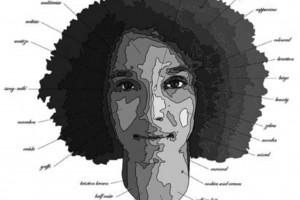
Julian Abagond: Of mixed-race identities

Posted on October 17, 2012 by Migrant Tales

COMMENT: Some Finns have resolved the “mixed-ethnicity” question by stating that there is only one kind in Finland. Such an affirmation, that there is only one type of “real” Finn, is as ludicrous as stating that racism doesn’t exist in this country.

What does a white Finn say when he asks about your “other mixed” side? Is that person asking you why you aren’t white? 

Finns with “other” backgrounds are an ever-growing group in this country. We should remember, however, that being an “other” Finn is not only inclusive to ethnicity.

_________

By Julian Abagond

Some misunderstand my position on mixed-race identities.

In the post on internalized racism I said:

God made you to look a certain way and gave you certain gifts to use in the course of your life. There is absolutely nothing wrong with any of it. Nothing. It is only narrow-minded, brainwashed people who want you to believe otherwise. … Who think there is something wrong with you for just being you.

One commenter remarked:

What kind of people think there is something wrong with you for being you?

{Ping! silent, little explosion goes off in cerebral cortex…)
Yet the writer of this post believes it is a character flaw if a multi-racial brown- or black-skinned person of multi-racial parents says what they are!

She gathered that from a post I wrote about Tiger Woods where I point out that Nas thought it was a character flaw that Tiger Woods defended and excused white racists.

What Nas said in a King magazine interview:

Tiger Woods standing up for this white lady who said something about him being lynched is a coon move to me. God bless the brother. I like to see him doing his thing, but that’s a flaw to his character.

I point out two other examples of the same behaviour by Tiger Woods in the post.

The issue is not mixed-race identity in and of itself. It is trying to kiss up to whites, especially while distancing yourself from people of colour. It is hard for me to respect that. And, in most cases, this behaviour comes from internalized racism, from self-hatred. That is not a healthy thing.

Racial identity in America is not simple, certainly not as simple as applying a set of rules. It is something everyone has to work out for themselves. But not all courses of action are equal, not all are harmless and innocent. It is a moral, political and psychological decision that carries a cost of one sort or other.

Tiger Woods is hardly the only mixed-race person I have written about. For example:

  • Danzy Senna, who can pass for white, sees herself as mixed race but has never distanced herself from being black.
  • Anatole Broyard, who passed for white to become a literary critic, all but disowning his mother and sisters.
  • Peola of “Imitation of Life”, who passed for white and turned her back on her black mother to be accepted by whites.

I have no issue with Danzy Senna, but the other two did the very thing I am talking about. This is not about me imposing the One Drop Rule on mixed-race people, as some think, this is about them being low lifes.

Selling out to whiteness, of course, is hardly limited to mixed-race people. Nearly all White Americans do it. And even some people of colour who are not mixed-race – like Michelle Malkin. Or Rented Negroes. It is what “The Boondocks” makes fun of in Uncle Ruckus.


Julian Abagond: Why I write about racism

Posted on September 27, 2012 by Migrant Tales

By Julian Abagond

I write about racism in America because it affects my life and the lives of those I care about. Because it has shaped how I experience and see the world and myself, so by understanding racism I understand myself and the world better. It has little to do with trying to make whites look bad or making some kind of appeal to them.

My mother brought me up to be colour-blind. She meant well but she was a kumbayah anti-racist. That sent me into a strange land without a map. And so I have had to learn the hard way what was on that map, piece by piece.

Some say, “You see racism in everything. You see what you expect.” Wrong: I was so unprepared I have been surprised over and over again at how deeply white racism ran.

At first I was surprised when they called me names. Then I was surprised at how different the black and white parts of New York were. Then I was surprised at the police, who were not merely bad but evil to the bone. Then I went across the country and was surprised at how the Sioux Indians were even worse off, at how they had many of the very same issues as blacks – even though they lived hundreds of miles away and came from a completely different history.

And on and on.

Then I started this blog and I was surprised yet again. Not that whites are racist – I already knew that – but how deep and twisted their racism ran. It was not merely a matter of them not knowing any better, of living in nice, lily-white suburbs and believing everything they saw on television. No, it was way worse than that – even among Otherwise Intelligent White People. And so I was surprised yet again.

Dr Beverly Tatum says there is a five-stage cycle to growing up black in America:

  1. pre-encounter – you know you are black (by age five) but it is no big deal.
  2. encounter – you experience racism in an unmistakable way, repeatedly.
  3. immersion/emersion – you learn everything you can about being black because it helps you to understand your experience.
  4. internalization – what you learned becomes part of your identity, who you are, which helps to undo the internalized racism you have unknowingly learned. You become less angry, more hopeful.
  5. internalization-commitment – now you can move beyond race.

Most blacks reach the last stage at about age 25 to 30 and then go back to the first stage to go round again at a higher level of understanding.

So for me New York provided the first encounter stage, this blog (and some other events in my life) the second. In the earlier posts on this blog you can see me still in my second pre-encounter stage, in utter innocence of what was about to hit.

So now I am in the immersion stage for the second time in my life and consumed once again with the subject.

Read original story here.

 This piece was reprinted by Migrant Tales with permission.

Teach me that we are more alike than different…

Posted on September 9, 2012 by Migrant Tales

 …teach me not to hate. Teach me the lie and shame of racism [because] it hurts all people. Teach me to learn from you and to learn about me… 

Inspirational words from the Center for the Healing of Racism that should be the guiding light enshrined in our national curriculum for schools (opetussuunnitelma) concerning cultural diversity.

What is our aim when we speak of integration of elementary school students?

Is the goal of the teacher to convert these students into ”white Finns” or to socially exclude them by pointing out how different they are? Is the aim between these two extremes?

Identity is a personal matter. Who you are depends on who you think you are. If some have a problem with this, it should be viewed as their problem, not yours.

Social exclusion is like a toxic poison. If  you take away a child’s identity at an early age by seeing no worth in his ethnicity and background, you’ll end up undermining his or her self-esteem. People with low self-esteem do poorly at school.

Low self-esteem is a factor behind prejudice as well, according to a study published by Psychological Science.

In the same way as racism is costly to society, it can impair children’s learning abilities, according to a study by Essex University.

Even if Finland has become more culturally diverse from the 1990s, the biggest mistake we can make – in my opinion – is forgetting the importance of diversity and values such as mutual acceptance and respect.

Thus Finnish schools should teach their students that we are more alike than different..the lie and shame of racism because it hurts all people.

It should teach student the value of their culture and the culture of others.


Racism Review: Racism in the Digital Era

Posted on September 5, 2012 by Migrant Tales

Comment: A new term I learned from the video below was cloaked site. 

The video says at the end that “we have to get smarter about how racism works in the digital age.”

————-

By Jessie

This is a short video (5:27) I created, explaining how racism operates in the digital era.  The danger may not be what you think it is.

To see video click here.

Read original blog entry here.

This piece was reprinted by Migrant Tales with permission.

Du Bois and Finland: “Your country”

Posted on September 1, 2012 by Migrant Tales

I read an interesting blog entry on Racism Review about what W.E.B. Du Bois (1868-1963), sociologist, historian and civil rights activist, wrote* about blacks in the United States. His words still ring out today in light of the hostility we see today towards immigrants and visible minorities in many parts of Europe and the United States.

Even if the number of immigrants and visible minorities has been small in countries like Finland, these people form today an integral part of our society and history.

That history is being made right now and at this moment. Every day that passes we shed more roots in this country. Our home in Finland begins to sound like Woody Guthrie’s famous song, This land is your land.

Take a look at what Du Bois wrote over a century ago and try to picture Finland and our every-growing cultural diversity. Board a time machine and travel 30 years in the future and imagine Du Bois’ words in a Finnish context today:

Your country? How came its yours? Before the Pilgrims landed we were here. Here we have brought our three gifts and mingled them with yours: a gift of story and song—soft, stirring melody in an ill-harmonized and unmelodious land; the gift of sweat and brawn to beat back the wilderness, conquer the soil, and lay the foundations of this vast economic empire two hundred years earlier than your weak hands could have done it; the third, a gift of the Spirit.

Around us the history of the land has centered for thrice a hundred years; out of the nation’s heart we have called all that was best to throttle and subdue all that was worst; fire and blood, prayer and sacrifice, have billowed over this people, and they have found peace only in the altars of the God of Right.

Nor has our gift of the Spirit been merely passive. Actively we have woven ourselves with the very warp and woof of this nation,—we fought their battles, shared their sorrow, mingled our blood with theirs, and generation after generation have pleaded with a headstrong, careless people to despise not Justice, Mercy, and Truth, lest the nation be smitten with a curse. Our song, our toil, our cheer, and warning have been given to this nation in blood-brotherhood. Are not these gifts worth the giving? Is not this work and striving?

Would America have been America without her Negro people? Even so is the hope that sang in the songs of my fathers well sung. If somewhere in this whirl and chaos of things there dwells Eternal Good, pitiful yet masterful, than anon in His good time America shall rend the Veil and the prisoned shall go free. Free, free as the sunshine trickling down the morning into these high windows of mine, free as yonder fresh young voices welling up to me from the caverns of brick and mortar below—swelling with song, instinct with life, tremulous treble and darkening bass. My children, my little children, are singing to the sunshine, and thus they sing: Let us cheer the weary traveller, Cheer the weary traveller, Let us cheer the weary traveller Along the heavenly way. And the traveler girds himself, and sets his face toward the Morning, and goes his way.

*Reference: W. E. B. Du Bois, The Souls of Black Folk (pp. 125-126). Public Domain Books. Kindle. (Free version here)

Exceptional Finns with immigrant backgrounds

Posted on August 11, 2012 by Migrant Tales

Some Exceptional Finns with so-called immigrant backgrounds are Husein Muhammed, Nasima Razmyar, Arman Alizad, Tino Singh, Abdirahim Husu Hussein and Ali Jahangiri. All of them have one thing in common: They are exceptions to the stereotype but have immigrant backgrounds.  

But how can you call a person who has lived most of his or her life in Finland “a person with immigrant background” if he speaks Finnish or Swedish as his main language or is near-perfectly bilingual? For how long must that person carry that extra label, immigrant background, before he or she is accepted?

You know that there is something fishy about the whole term, Exceptional Finns, since anti-immigration parties like the Perussuomalaiset, speak in favor of these types of immigrants and Finns.

Exceptional minorities permit racists to be racists. You are an exception and therefore you can get your shoes shined. Only exceptional people count from your ethnic group. Let’s not dwell on the problem: Why are people shining shoes and living in poverty in the first place? Answer: They are not exceptions.  Source: Flickr.

The fact that these exceptional people are not considered full-fledged Finns (because they have that drop of immigrant background) not only reveals a lot about our racism but our views of cultural diversity.

Cultural diversity is not a social illness. It not colorblind as well. It is a lifestyle-identity choice that we make personally and which society should protect and encourage. Whether we want to hyphenated our identity or not is a personal choice. It is our choice.

The existence of the Exceptional Finn with immigrant background reveals how some want to eat their racist cake and have it at the same time. It permits them to feel like they are not racist even if they are. This line of thinking in a white Finnish world would work in the following way: Those who do not succeed at becoming exceptions are failures.

In many respects, and in a Finnish context, all these cases represent what Julian Abagond calls in the United States Exceptional Negroes.

“Exceptional Negroes are those who are ‘no like other blacks.’ They do not fit the stereotypes. Sometimes they achieve great things, rise to the top of their field,” writes Abagond. “They become sports heroes, film stars, tokens, black best friends, beloved servants and so on. Some even have white fans, lovers or admirers.”

Language plays an important role in Finland and is an important factor fueling discrimination.  Finland’s large white Russian community is a case in point.


Racism Review: Gabrielle Douglas – Accenting Black Women’s Talent, Agency, Femininity

Posted on August 4, 2012 by Migrant Tales

By Joe

Anna Holmes has an excellent post on the great achievement of Gabrielle Douglas, the first African American to win the women’s all-around gymnastics gold medal in the Olympics. (And to win the two particular gold medals she got in this one Olympics.) What an achievement for any 16-year-old, but especially for one who has faced the barriers she has faced.

Holmes demonstrates the extraordinarily naïveté and role in systemic gendered racism of key white commentators, in this case the famous Bob Costas. Costas interviewed Douglas and asserted this:

“You know, it’s a happy measure of how far we’ve come that it doesn’t seem all that remarkable, but still it’s noteworthy, Gabby Douglas is, as it happens, the first African-American to win the women’s all-around in gymnastics. The barriers have long since been down, but sometimes there can be an imaginary barrier, based on how one might see oneself.”

As you might expect, this type of white racial framing, in its colorblind Pollyanna-ism, was Holmes’s
main target:

In a political and cultural environment in which the patriotism—the very Americanness—of people of color (including the current president…) is often called into question, Costas’s scripted deep thought .. . was at worst dishonest . . .. What leveled barriers … was Mr. Costas referring to? Who, excepting the most Pollyanna-ish or cloistered … would believe the assertion that Gabby Douglas’ challenges were primarily psychic, a statement that can be contradicted by … the undeniable whiteness of being that is high-level American gymnastics?

Other writers echoed this same white racial framing, reverberating Costas’s colorblindism.

Holmes then picks up on the Costas point that our view of ourselves does makes a difference. But, she adds, structural situations often create that problem for people of color:

Douglas’ triumph seems extremely remarkable, both because of the commonality of her situation—the big dreams, the economic hardships, the one-parent household—and its unusualness: A minority in a historically “white” sport. . . . a 2007 diversity study commissioned by USA Gymnastics, the national governing body for the sport in the U.S., said that just 6.61% of the participants in American gymnastics programs were black.

Numerous members of USA Gymnastics, the mostly white coaches and other leaders in the field, often had a negative reaction to this honest report. Many whites there and elsewhere have tended, as they often do, to blame everything but white agents and white decisionmakers for this systemic-racism condition.

Holmes concludes by accenting how powerful the Douglas achievement was, especially for girls and young women around the globe, most of whom are girls and women of color. It will be interesting to see how the mainstream media treat Douglas, and the general white (and other) public too, when this great gymnast and her fine team return to the United States. Holmes concludes with this fine sharp point:

The 16-year-old’s triumph—not to mention her poise, her maturity, her focus, her elegance—will help recalibrate what young females of color believe is within their reach, while also influencing Western ideas and concepts of black womanhood, strength, agency and femininity—which has been historically objectified, sexualized and, it should be noted, feared.

It is way past time for these negative images of black women in the common white racial frame to be attacked for the mythological and racist framing they have always been–and indeed attacked constantly in the mainstream media until they are eliminated in the heads of way too many white (and some other) Americans.

Read original blog entry here.

This piece was reprinted by Migrant Tales with permission.

Words have consequences: Deciphering code words of hate in Finland

Posted on July 29, 2012 by Migrant Tales
…hate groups have used conflicts over immigration to advance                                                                                         their White Supremacy, their hate, their stereotypes…                                                                                                            Anti-Defamation League

The Anti-Defamation League (ADL) in the United States was founded in 1913 to address anti-Semitism and ”to secure justice and fair treatment of all.” ADL’s Stacy Burdett reveals in an interview below the code words of hate used in the U.S. to dehumanize and victimize immigrants and visible minorities. The same speech is rampant today in Finland and Europe. 

Below are four ways to recognize the code words of hate:

  • Immigrants are an army of invaders
  • Dehumanization
  • Immigrants bring crime and disease
  • Conspiracy theory

While Hispanics are singled out as a danger to the United States, anti-immigration groups in Europe point their finger at Muslims.

Let’s look at Burdett’s points and see if they apply to Europe and Finland.

Immigrants are an army of invaders. With this claim, anti-immigration groups drive home the point that immigrants, or Muslims in the case of Europe, are an ”army” or “horde” invading our values and way of life.

There are many examples of people and groups using this argument. One of them is Aalto University senior lecturer Kyösti Tarvainen, who claimed, using a pocket calculator, that Muslims would outnumber Finns this century due to their high birthrates.

Pet adjectives used by these groups to describe immigration are “uncontrolled” and/or “mass.”

Dehumanization. Immigrants are talked about as swarms, hordes or in worse terms.  Burdett says: “…when you teach children at school to think a person is animal-like, less than human, you teach them that this group is less-deserving of their basic civil rights.”

Former Interior Minister Kari Rajamäki (Social Democrat) once labelled refugees as “welfare shoppers” that come in groups to this country to live off our generous social welfare system. The claim implies that since they come here as “welfare shoppers,” they should be treated as second-class members of our community.

The Nuiva Manifesto, an immigration policy endorsed by the anti-immigration Perussuomalaiset (PS) party, points out what basic civil rights should be taken away from immigrants.

Immigrants bring crime and disease. This is a common  argument used by anti-immigration groups with the help of inaccurate statistics.

PS MPs like James Hirvisaari have used rape statistics and social welfare payments to single out and attack certain immigrant groups and minorities in Finland. One of his most incredible claims was that Norwegian mass killer, Anders Breivik, carried out his massacre because of “uncontrolled immigration” and because 100% of all rapes committed in the country were by foreigners.

Conspiracy theory. In the United States, anti-immigration groups claim that Mexicans that come to the U.S. do so to reconquer the Southwest and take back land that once belonged to Mexico.

In the same way, these groups in Finland and Europe claim that ”multiculturalism” is a conspiracy to permit Muslims and blacks to take over Europe ethnically and culturally.

Concludes Burdett: “When people all over the country are trained to think of immigrants as invading our way of life, trying to rip apart our civilization and undermining our values, when we are trained to think that they are a little less than, less-deserving of rights, less human, animal-like, almost…good people will be inculcated to hate.”

…”words have consequences. There is a direct connection between the policies we have in our societies, the words of leaders, daily lives of minority communities and immigrants and unfortunately we have seen hate crimes against Latinos, Asians and other immigrants on the rise.”

Sounds eerily familiar, even if Burdett is speaking about the United States.

Thanks to Daily Community Village Activist for the heads-up. 


PBS documentary: U.S. Border Patrol, an example we should avoid

Posted on July 28, 2012 by Migrant Tales

When I grew up in Southern California, the object of racist insults weren’t only blacks but especially Mexicans. Even if there were no Mexicans never mind blacks at our elementary school in Hollywood, some students – if not all – had very strong prejudices against them. 

An investigative documentary by PBS shows that not only is the treatment of Mexicans and other Latin Americans a widespread problem in the United States, it has risen to endemic proportions if we look at the actions of the U.S. Border Patrol.

Here is a link to the PBS website to the investigative report titled, Crossing the line. Here’s Part I.

Writes PBS: “In the rush to stem the tide of undocumented immigrants, has Border Patrol committed widespread abuse on [US]American soil? A former Border Patrol agent blows the whistle on unacceptable conditions in detention centers, including massive over-crowding and detainees who claim they were deprived of food and water.”

One part of the PBS documentary caught my eye with respect to Finland. It claimed that in 2010, there were only three complaints by detainees and 21 over treatment in general by Border Patrol officials.

If so few complaints have been filed against the U.S. Border Patrol against thousands of complaints by former Mexican detainees that suggest abuse, torture and even sexual harassment, the single- and double-digit figures above are highly revealing.

In Finland, there were questions raised by the Ombudsman for Minorities concerning ethnic profiling by the police. The police responded that there weren’t any such cases.

Such a claim in April, which was backed Christian Democrat (KD) Interior Minister Päivi Räsänen,  shows in my opinion that ethic profiling by the police is an issue just like the mistreatment of undocumented immigrants is by the U.S. Border Patrol.

Take a look at the PBS documentary. It will shock you.

When any institution like the U.S. Border Patrol is out of control and not accountable for its actions, the biggest loser are the very values that these agents claim to defend and uphold. It is indeed a slippery slope.

Who are the real enemies threatening the United States: undocumented immigrants or a U.S. Border Patrol that appears to be out of control and acts with impunity?

Thanks go to Community Village Daily Activist for the heads-up. 

  • Previous
  • 1
  • 2
  • 3
  • 4
  • 5
  • 6
  • Next
Read more about documentary film
Read more

Recent Posts

  • Lahti is the latest city to prohibit the niqab and burka
  • Finland’s tabloids Iltalehti and Ilta-Sanomat are the pits
  • Riikka Purra’s Dr Jekyll and Mr Hyde mask
  • Double standards
  • Perussuomalaiset: Uusi logo, sama vanha juttu

Recent Comments

  1. Absolutely Socking: Racist Finnish Facebook group against human rights gets flooded with socks on Musta Barbaari’s mother and sister charged by the police in “ethnic profiling” case
  2. Ilkka Nuotio on Pekka Myrskylä: “Tilastot kertovat toista kuin poliittinen keskustelu”
  3. Genrih Soinkara on The war in Ukraine and the Russian-Finnish border crisis are showing Finland’s ugly side
  4. Ahti Tolvanen on Comment by Ahti Tolvanen on the Helsinki +50 conference
  5. Angel Barrientos on Angel Barrientos is one of the kind beacons of Finland’s Chilean community

Archives

  • June 2026
  • May 2026
  • April 2026
  • March 2026
  • February 2026
  • January 2026
  • December 2025
  • November 2025
  • October 2025
  • September 2025
  • August 2025
  • July 2025
  • June 2025
  • May 2025
  • April 2025
  • March 2025
  • February 2025
  • January 2025
  • December 2024
  • November 2024
  • October 2024
  • September 2024
  • August 2024
  • July 2024
  • June 2024
  • May 2024
  • April 2024
  • March 2024
  • February 2024
  • January 2024
  • December 2023
  • November 2023
  • October 2023
  • September 2023
  • August 2023
  • July 2023
  • June 2023
  • May 2023
  • April 2023
  • March 2023
  • February 2023
  • January 2023
  • December 2022
  • November 2022
  • October 2022
  • September 2022
  • August 2022
  • July 2022
  • June 2022
  • May 2022
  • April 2022
  • March 2022
  • February 2022
  • January 2022
  • December 2021
  • November 2021
  • October 2021
  • September 2021
  • August 2021
  • July 2021
  • June 2021
  • May 2021
  • April 2021
  • March 2021
  • February 2021
  • January 2021
  • December 2020
  • November 2020
  • October 2020
  • September 2020
  • August 2020
  • July 2020
  • June 2020
  • May 2020
  • April 2020
  • March 2020
  • February 2020
  • January 2020
  • December 2019
  • November 2019
  • October 2019
  • September 2019
  • August 2019
  • July 2019
  • June 2019
  • May 2019
  • April 2019
  • March 2019
  • February 2019
  • January 2019
  • December 2018
  • November 2018
  • October 2018
  • September 2018
  • August 2018
  • July 2018
  • June 2018
  • May 2018
  • April 2018
  • March 2018
  • February 2018
  • January 2018
  • December 2017
  • November 2017
  • October 2017
  • September 2017
  • August 2017
  • July 2017
  • June 2017
  • May 2017
  • April 2017
  • March 2017
  • February 2017
  • January 2017
  • December 2016
  • November 2016
  • October 2016
  • September 2016
  • August 2016
  • July 2016
  • June 2016
  • May 2016
  • April 2016
  • March 2016
  • February 2016
  • January 2016
  • December 2015
  • November 2015
  • October 2015
  • September 2015
  • August 2015
  • July 2015
  • June 2015
  • May 2015
  • April 2015
  • March 2015
  • February 2015
  • January 2015
  • December 2014
  • November 2014
  • October 2014
  • September 2014
  • August 2014
  • July 2014
  • June 2014
  • May 2014
  • April 2014
  • March 2014
  • February 2014
  • January 2014
  • December 2013
  • November 2013
  • October 2013
  • September 2013
  • August 2013
  • July 2013
  • June 2013
  • May 2013
  • April 2013
  • March 2013
  • February 2013
  • January 2013
  • December 2012
  • November 2012
  • October 2012
  • September 2012
  • August 2012
  • July 2012
  • June 2012
  • May 2012
  • April 2012
  • March 2012
  • February 2012
  • January 2012
  • December 2011
  • November 2011
  • October 2011
  • September 2011
  • August 2011
  • July 2011
  • June 2011
  • May 2011
  • April 2011
  • March 2011
  • February 2011
  • January 2011
  • December 2010
  • November 2010
  • October 2010
  • September 2010
  • August 2010
  • July 2010
  • June 2010
  • May 2010
  • April 2010
  • March 2010
  • February 2010
  • January 2010
  • December 2009
  • November 2009
  • October 2009
  • September 2009
  • August 2009
  • July 2009
  • December 2008
  • November 2008
  • October 2008
  • September 2008
  • August 2008
  • July 2008
  • June 2008
  • May 2008
  • April 2008
  • March 2008
  • February 2008
  • January 2008
  • November 2007
  • October 2007
  • September 2007
  • August 2007
  • July 2007
  • June 2007
  • May 2007

Categories

  • ?? Gia L?c
  • ????? ?????? ????? ???????? ?? ??????
  • ???????
  • @HerraAhmed
  • @mondepasrond
  • @nohatefinland
  • @oula_silver
  • @Varathas
  • A Pakistani family
  • äärioikeisto
  • Abbas Bahmanpour
  • Abdi Muhis
  • Abdirahim Hussein Mohamed
  • Abdirahim Husu Hussein
  • Abdirisak Mahamed
  • About Migrant Tales
  • activism
  • Adam Al-Sawad
  • Adel Abidin
  • Afrofinland
  • Ahmed IJ
  • Ahti Tolvanen
  • Aino Pennanen
  • Aisha Maniar
  • Alan Ali
  • Alan Anstead
  • Alejandro Díaz Ortiz
  • Alekey Bulavsev
  • Aleksander Hemon
  • Aleksanterinliitto
  • Aleksanterinliitto ry
  • Aleksanterinliitto ry:n hallitus
  • Alex Alex
  • Alex Mckie
  • Alexander Nix
  • Alexandra Ayse Albayrak
  • Alexis Neuberg
  • Ali Asaad Hasan Alzuhairi
  • Ali Hossein Mir Ali
  • Ali Rashid
  • Ali Sagal Abdikarim
  • Alina Tsui
  • Aline Müller
  • All categories
  • Aman Heidari
  • Amiirah Salleh-Hoddin & Jana Turk
  • Amin A. Alem
  • Amir Zuhairi
  • Amkelwa Mbekeni
  • Ana María Gutiérrez Sorainen
  • Anachoma
  • Anders Adlecreutz
  • Angeliina Koskinen
  • Anna De Mutiis
  • Anna María Gutiérrez Sorainen
  • Anna-Kaisa Kuusisto ja Jaakko Tuominen
  • Annastiina Kallius
  • Anneli Juise Friman Lindeman
  • Announcement
  • Anonymous
  • Antero Leitzinger
  • anti-black racism
  • Anti-Hate Crime Organisation Finland
  • Anudari Boldbaatar
  • Arshiya Nasser
  • Aspergers Syndrome
  • Asylum Corner
  • Asylum seeker 406
  • Athena Griffin and Joe Feagin
  • Autism
  • Avaaz.org
  • Awale Olad
  • Ayan Said Mohamed
  • AYY
  • Barachiel
  • Bashy Quraishy
  • Beatrice Kabutakapua
  • Beri Jamal
  • Beri Jamal and Enrique Tessieri
  • Bertolt Brecht
  • Boiata
  • Boodi Kabbani
  • Bruno Gronow
  • Carmen Pekkarinen
  • Çelen Oben and Sheila Riikonen
  • Chiara Costa-Virtanen
  • Chiara Costa-Virtanen
  • Chiara Sorbello
  • Christian Thibault
  • Christopher Wylie
  • Clara Dublanc
  • Dana
  • Daniel Malpica
  • Danilo Canguçu
  • David Papineau
  • David Schneider
  • Dexter He
  • Don Flynn
  • Dr Masoud Kamali
  • Dr. Faith Mkwesha
  • Dr. Theodoros Fouskas
  • Edna Chun
  • Eeva Kilpi
  • Emanuela Susheela
  • En castellano
  • ENAR
  • Enrique
  • Enrique Tessieri
  • Enrique Tessieri & Raghad Mchawh
  • Enrique Tessieri & Yahya Rouissi
  • Enrique Tessieri and Muhammed Shire
  • Enrique Tessieri and Sira Moksi
  • Enrique Tessieri and Tom Vandenbosch
  • Enrique Tessieri and Wael Che
  • Enrique Tessieri and Yahya Rouissi
  • Enrique Tessieri and Zimema Mhone
  • Epäluottamusmies
  • EU
  • Europe
  • European Islamophobia Report
  • European Islamophobia Report 2019,
  • European Union
  • Eve Kyntäjä
  • Ezequiel Caldeiro
  • Facebook
  • Fadumo Dayib
  • Faisa Kahiye
  • Farhad Manjoo
  • Fasismi
  • Finland
  • Fizza Qureshi
  • Flyktingar och asyl
  • Foreign Student
  • Fozia Mir-Ali
  • Frances Webber
  • Frida Selim
  • Gareth Rice
  • Ghyslain Vedeaux
  • Global Art Point
  • Great Replacement
  • Habiba Ali
  • Hami Bahadori
  • Hami Bahdori
  • Hamid
  • Hamid Alsaameere
  • Hamid Bahdori
  • Handshake
  • Harmit Athwal
  • Hassan Abdi Ali
  • Hassan Muhumud
  • Heikki Huttunen
  • Heikki Wilenius
  • Helsingin Sanomat
  • Henning van der Hoeven
  • Henrika Mälmsröm
  • Hser Hser
  • Hser Hser ja Mustafa Isman
  • Husein Muhammed
  • Hussain Kazemian
  • Hussain Kazmenian
  • Ibrahim Khan
  • Ida
  • Ignacio Pérez Pérez
  • Iise Ali Hassan
  • Ilari Kaila & Tuomas Kaila
  • Imam Ka
  • inside-an-airport
  • Institute of Race Relations
  • Iraqi asylum seeker
  • IRR European News Team
  • IRR News Team
  • Islamic Society of Norhern FInland
  • Islamic Society of Northern Finland
  • Islamophobia
  • Jacobinmag.com
  • Jallow Momodou
  • Jan Holmberg
  • Jane Elliott
  • Jani Mäkelä
  • Jari Luoto
  • Jari Taponen
  • Jegor Nazarov
  • Jenni Stammeier
  • Jenny Bourne
  • Jessie Daniels
  • Joe Davidow
  • Johannes Koski
  • John D. Foster
  • John Grayson
  • John Marriott
  • Jon Burnett
  • Jorma Härkönen
  • Jos Schuurmans
  • José León Toro Mejías
  • Josue Tumayine
  • Jouni Karnasaari
  • Juan Camilo
  • Jukka Eräkare
  • Julian Abagond
  • Julie Pascoet
  • Jussi Halla-aho
  • Jussi Hallla-aho
  • Jussi Jalonen
  • JusticeDemon
  • Kadar Gelle
  • Kaksoiskansalaisuus
  • Kansainvälinen Mikkeli
  • Kansainvälinen Mikkeli ry
  • Katherine Tonkiss
  • Kati Lepistö
  • Kati van der Hoeven-Lepistö
  • Katie Bell
  • Kättely
  • Kerstin Ögård
  • Keshia Fredua-Mensah & Jamie Schearer
  • Khadidiatou Sylla
  • Khadra Abdirazak Sugulle
  • Kiihotus kansanryhmää vastaan
  • Kirsi Crowley
  • Koko Hubara
  • Kristiina Toivikko
  • Kubra Amini
  • KuRI
  • La Colectiva
  • La incitación al odio
  • Laura Huhtasaari
  • Lauri Finér
  • Leif Hagert
  • Léo Custódio
  • Leo Honka
  • Leontios Christodoulou
  • Lessie Branch
  • Lex Gaudius
  • Leyes de Finlandia
  • Liikkukaa!
  • Linda Hyökki
  • Liz Fekete
  • M. Blanc
  • Maarit Snellman
  • Mahad Sheikh Musse
  • Maija Vilkkumaa
  • Malmin Kebab Pizzeria Port Arthur
  • Marcell Lorincz
  • Mari Aaltola
  • María Paz López
  • Maria Rittis Ikola
  • Maria Tjader
  • Marja-Liisa Tolvanen
  • Mark
  • Markku Heikkinen
  • Marshall Niles
  • Martin Al-Laji
  • Maryan Siyad
  • Matt Carr
  • Mauricio Farah Gebara
  • Media Monitoring Group of Finland
  • Micah J. Christian
  • Michael McEachrane
  • Michele Levoy
  • Michelle Kaila
  • Migrant Tales
  • Migrant Tales Literary
  • Migrantes News
  • Migrants' Rights Network
  • MigriLeaks
  • Mikko Kapanen
  • Miriam Attias and Camila Haavisto
  • Mohamed Adan
  • Mohammad Javid
  • Mohammad M.
  • Monikulttuurisuus
  • Monisha Bhatia and Victoria Canning
  • Mor Ndiaye
  • Muh'ed
  • Muhamed Abdimajed Murshid
  • Muhammed Shire
  • Muhammed Shire and Enrique Tessieri
  • Muhis Azizi
  • Musimenta Dansila
  • Muslimiviha
  • Musulmanes
  • Namir al-Azzawi
  • Natsismi
  • Neurodiversity
  • New Women Connectors
  • Nils Muižnieks
  • No Labels No Walls
  • Noel Dandes
  • Nuor Dawood
  • Omar Khan
  • Otavanmedia
  • Oula Silvennoinen
  • Paco Diop
  • Pakistani family
  • Pentti Stranius
  • Perussuomalaiset
  • perustuslaki
  • Petra Laiti
  • Petri Cederlöf
  • Pia Grochowski
  • Podcast-lukija Bea Bergholm
  • Pohjois – Suomen Islamilainen Yhdyskunta
  • Pohjois Suomen Islamilainen Yhyskunta
  • Polina Kopylova
  • Race Files
  • racism
  • Racism Review
  • Raghad Mchawh
  • Ranska
  • Rashid H. and Migrant Tales
  • Rasismi
  • Raul Perez
  • Rebecka Holm
  • Reem Abu-Hayyeh
  • Refugees
  • Reija Härkönen
  • Remiel
  • Reza Nasri
  • Richard Gresswell
  • Riikka Purra
  • Risto Laakkonen
  • Rita Chahda
  • Ritva Kondi
  • Robito Ibrahim
  • Roble Bashir
  • Rockhaya Sylla
  • Rodolfo Walsh
  • Roger Casale
  • Rostam Atai
  • Roxana Crisólogo Correa
  • Ruth Grove-White
  • Ruth Waweru-Folabit
  • S-worldview
  • Sadio Ali Nuur
  • Sami Rusanen
  • Sandhu Bhamra
  • Sara de Jong
  • Sarah Crowther
  • Sari Alhariri
  • Sarkawt Khalil
  • Sasu
  • Scot Nakagawa
  • Shabana Ahmadzai
  • Shada Islam
  • Sharon Chang blogs
  • Shenita Ann McLean
  • Shirlene Green Newball
  • Sini Savolainen
  • Sira Moksi
  • Sonia K.
  • Sonia Maria Koo
  • Steverp
  • Stop Deportations
  • Suldaan Said Ahmed
  • Suomen mediaseurantakollektiivi
  • Suomen Muslimifoorumi ry
  • Suomen viharikosvastainen yhdistys
  • Suomen viharikosvastainen yhdistys ry
  • Suomi
  • Supermen
  • Susannah
  • Suva
  • Syrjintä
  • Talous
  • Tapio Tuomala
  • Taw Reh
  • Teivo Teivainen
  • The Daily Show
  • The Heino
  • The Supermen
  • Thomas Elfgren
  • Thulfiqar Abdulkarim
  • Tim McGettigan
  • Tino Singh
  • Tito Moustafa Sliem
  • Tobias Hübinette and L. Janelle Dance
  • Transport
  • Trica Danielle Keaton
  • Trilce Garcia
  • Trish Pääkkönen
  • Trish Pääkkönen and Enrique Tessieri
  • Tuulia Reponen
  • Uncategorized
  • UNITED
  • University of Eastern Finland
  • Uyi Osazee
  • Väkivalta
  • Vapaa Liikkuvuus
  • Venla-Sofia Saariaho
  • Vieraskynä
  • W. Che
  • W. Che an Enrique Tessieri
  • Wael Ch.
  • Wan Wei
  • Women for Refugee Women
  • Xaan Kaafi Maxamed Xalane
  • Xassan Kaafi Maxamed Xalane
  • Xassan-Kaafi Mohamed Halane & Enrique Tessieri
  • Yahya Rouissi
  • Yasmin Yusuf
  • Yassen Ghaleb
  • Yle Puhe
  • Yuliet Tresa
  • Yve Shepherd
  • Zahra Khavari
  • Zaker
  • Zalina Ametova
  • Zamzam Ahmed Ali
  • Zeinab Amini ja Soheila Khavari
  • Zimema Mahone and Enrique Tessieri
  • Zimema Mhone
  • Zoila Forss Crespo Moreyra
  • ZT
  • Zulma Sierra
  • Zuzeeko Tegha Abeng
© 2026 Migrant tales | Powered by Minimalist Blog WordPress Theme