Migrant tales
Menu
  • #MakeRacismHistory “In Your Eyes”
  • About Migrant Tales
  • It’s all about Human Rights
  • Literary
  • Migrant Tales Media Monitoring
  • NoHateFinland.org
  • Tales from Europe
Menu

Tag: Greece

YouGov poll not only shows how critical Finns are of Greece and Greeks but of the outside world

Posted on July 11, 2015 by Migrant Tales

A YouGov survey shows that 74% of Finns are against debt relief for Greece with the same amount blaming present and past governments for the country’s financial problems, reports the English service of YLE.

Compared with other countries, 73% of Finnish respondents were the most critical blaming the present and past Greek governments for the country’s deep financial problems. That was followed by Denmark (70%), Sweden (65%), Germany (59%), Britain (38%) and France (33%).

Näyttökuva 2015-7-11 kello 14.21.46

Read full story here.

Finnish respondents (74%) also took the hardest line insisting that the terms of the bailout as originally agreed should be respected.

See full YouGov poll result here.

Continue reading “YouGov poll not only shows how critical Finns are of Greece and Greeks but of the outside world”

Contemporary Immigration in Greece: A sourcebook

Posted on March 6, 2015 by Migrant Tales

Dr. Theodoros Fouskas, a lecturer at the New York College, Greece, is editor together with Dr. Vassileios Tsevrenis of a comprehensive book on immigration in Greece. As some are already aware, Greece has seen a surge in xenophobia due to the great number of refugees that enter the country from outside Europe.  

Dr. Tsevrenis is a lawyer, special scientific collaborator at Marangopoulos Foundation for Human Rights (MFHR), and member of the Scientific Committee of the Foundation of Greek Parliament.

Continue reading “Contemporary Immigration in Greece: A sourcebook”

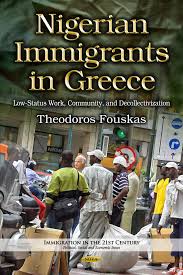
Dr Theodoros Fouskas: Nigerian Immigrants in Greece: Low-Status Work, Community, and Decollectivization

Posted on September 9, 2014 by Migrant Tales

Migrant Tales insight: Dr Theodoros Fouskas, a lecturer at the New York College, Greece, is no stranger to our blog. We’ve published two stories about his research and work. Taking into account the economic and political hardships that Greece faces and how this had impacted migrants, Migrant Tales believes it has a responsibility to show the good work being done by researchers like Dr Fouskas. 

We wish him the best luck in the lunching of his latest book below. 

__________________

Nigerianimmigrants

Book Description:
• How does low-status work of Nigerian immigrants affect their organization and representation in immigrant community associations and unions?
• How do Nigerian immigrants perceive and what practices do they develop towards the collective organization, representation and claim of work rights?The sociological research in this book emphasizes that the lack of permanent employment and restriction of immigrants in precarious, low-status/paid occupations distance them from both collectivities and claims. By introducing a new perspective on the investigation of the migration phenomenon in Greece, this book contributes significantly to relative international research and literature. This makes it an extremely useful source for researchers and students, public agencies or bodies and for those dealing with the phenomenon of immigration and immigration policy.

In the first part of the book, the clarification of the theoretical concepts of community, occupational community and low-status work in the migration context is attempted. The impact that low-status/paid work has on immigrant collectivities is analyzed and the types of immigrant community associations and the attitude of the Greek trade unions towards the immigrants are discussed. Moreover, an overview of international empirical research on Nigerian immigrants, as well as on studies that focus on the investigation of immigrant community associations in Greece is endeavored. The second part of the book concentrates on the consequences low-status/paid work has on the collective organization and representation of the immigrant workforce. The micro-sociological research and analysis examines the case of Nigerian immigrants in Greece and how the frame of their work and their employment affects their participation in the immigrant hometown association Nigerian Community in Greece and in Greek trade unions. The results based on in-depth interviews demonstrate that due to the ramifications of their work, Nigerians are cut off, do not claim established workers’ rights and do not seek membership in any community associations or unions. In contrast, Nigerian immigrant workers depend on informal and impersonal social networks in search of solidarity and thus resort to alternative means of ensuring survival in Greek society, choosing individualistic and materialistic perceptions and attitudes of regulating their difficulties and workers’ rights, far from collectivities, often resigning from them completely. (Imprint: Nova)

Table of Contents:
Foreword pp.ix-xiiList of Tables pp.xiii-xiv

List of Figures pp.xv-xvi

About the Author pp.xvii-xviii

Acknowledgments pp.xix-xx

Abbreviations pp.xxi-xxii

Introduction pp.xxiii-xxxv

PART 1. pp.1-2

Chapter 1. Theoretical Clarifications pp.3-28

Chapter 2. International Research on Nigerian Immigrants pp.29-38

Chapter 3. International Research on Immigrant Associations in Greece
pp.39-50
PART 2. pp.51-52

Chapter 4. Research Methodology pp53-62

Chapter 5. Immigrants from Nigeria in Greece pp.63-140

PART 3. pp.141-142

Chapter 6. Epilogue pp.143-158

Appendix: Statistical Data on Nigerians pp.159-166

Bibliography pp.167-238

Index pp.239-251

To order book visit Nova Publishers here. 

Dr. Theodoros Fouskas: Representing the unrepresented? Operation and representativeness of the Migrant Integration Councils in Greece

Posted on April 7, 2014 by Migrant Tales

Dr. Theodoros Fouskas* 

unnamed

The article examines the participation and representation of immigrants in local public life in Greece. Through 27 semi-structured questionnaires, this research (Fouskas, 2013) is the first attempt to evaluate the operation and representativeness of the Migrant Integration Councils (MICs) of the municipalities of Greece. Research evidence proves that there are serious difficulties and enormous weaknesses regarding immigrant communities and immigrant representation in the MIC. In the majority of the researched municipalities (74%) not all immigrant populations in their jurisdiction are represented in the MIC. Moreover, it is crucial to note that of the immigrants who participated in the process of the formation and further operation of the MIC, the majority (56%) were not elected representatives of immigrant communities. There are severe problems of representation and participation of immigrants in their community associations which raise doubts as to the actual and official representation by those acting as immigrant representatives.

Through the research, concerning the operation of the MICs, the following are established: The lethargic intervention of the institution in the life of local communities is usually justified due to lack of resources; an independent and autonomous budget in municipal financial plans would overcome difficulties and practical weaknesses. However, a significant number of successful activities have been implemented under the current institutional framework with extremely limited financial means, a consequence of the ongoing economic crisis. The difficulties regarding the administrative and scientific support of the interventions planned by MICs are sometimes deal with whilst municipalities do not have the capacity to exclusively appoint specialised personnel for the MIC’s needs. The existence of permanent specialized staff and the necessary administrative structures would ensure institutional memory and viability, strengthening the institution and releasing its function from clientele relations or personal aspirations of MICs participants.

Regarding the immigrant community representativeness in MICs there are enormous weaknesses. The need to establish common criteria for representation of individual groups is imperative, which should not, however, lead to the conclusion that there should be common procedures. Apart from practical unfeasibility, the aim is to implement efficient processes tailored to local cases and the individual characteristics of immigrant communities. An important finding is that there is significant delay in activating the institution, in conjunction with an increased degradation of its operation. In many cases, municipal authorities do not embrace the institution with the necessary trust and do not pursue its operation, which negatively affects the perceptions that immigrants themselves shape about this. The need to establish constant communication bridges with local immigrant communities and associations, to transfer paradigms, practices and solutions at local level between MICs, is of great importance and gravity.

The present economic crisis has urgently put forward the need to establish local policies for social integration of vulnerable groups, especially immigrants. In this context, the MIC’s advisory and consulting role will be vital in the local policies if it is operated with adequate staffing, expertise and the will to contribute, and provided there is true immigrant representation. If MIC is formed as above it could contribute decisively in crucial sectors for the social integration of immigrants, e.g., formal labour market integration, combating undeclared work, actions against racism and xenophobia, fostering of trust in their communities, organization and coordination of immigrants in their associations, revival of immigrants’ interest to care and participate in local matters, removal of barriers that prevent harmonious co-existence, etc. MIC contribution should take place in the frame of deep knowledge of the local area and the particularities of its native and legal immigrant population. The MIC may face limitations in two main areas: its representativeness and its advisory role. Some immigrant communities are not represented despite all efforts. It is important to mention that the main goal of MICs is to increase the participation of foreigners in local public life. The creation and the operation of an MIC must be supported by genuine political will on behalf of the City Council. In some cases, despite the presence of an MIC, local elected representatives do not consult it or do so only after already deciding on matters. Hence, in order to optimise the usefulness of MIC, their role as a consultative body must be placed on an institutional basis, with certain rights and obligations of its members and its associates.

Näyttökuva 2014-4-7 kello 7.47.33

Read full essay here.

*Dr. Theodoros Fouskas is a Lecturer at New York College, Greece.
Website: http://theodorosfouskas.com/
Email: [email protected]

Fouskas, Theodoros (2013) “Representing the unrepresented? Operation and representativeness of Migrant Integration Councils in Greece”, Social Cohesion and Development, Vol. 8, No. 2, pp. 127-150, ISSN: 1790-9368, words: 7.000.

Workshop highlights perceptions, problems and challenges of immigration in Greece

Posted on March 4, 2014 by Migrant Tales

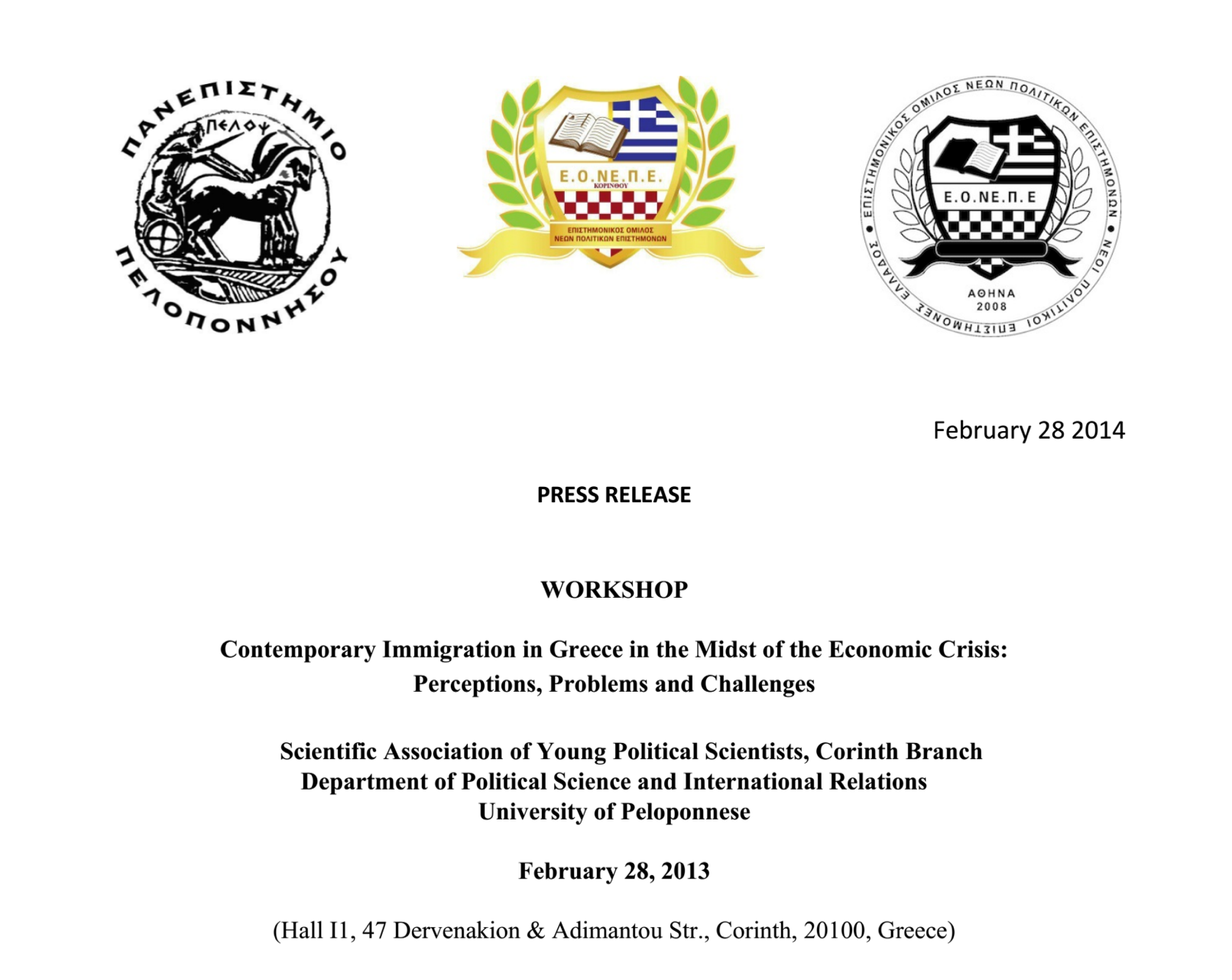
Workshops that debate and challenge immigration issues in economically hard-hit countries like Greece are never too many. One of these took place on Friday at the University of Peloponnese and was organized by the Scientific Association of Young Political Scientists.
Kuvankaappaus 2014-3-4 kello 1.33.31

According to a statement:

The issue of immigration has become a major national issue and is treated as such by Greek immigration policy. Due to its geographical position, Greece has become the most accessible initial stopover – otherwise known as the “gateway to the European Union” – for international immigration and refugees flows, whose final destination is West or North European countries; and due to the magnitude of the problem, it is regarded as not a Greek, but a European one which demands a European solution.

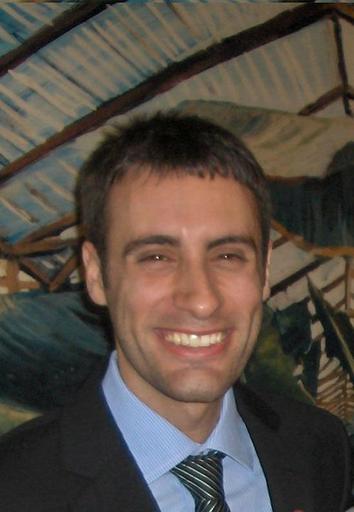
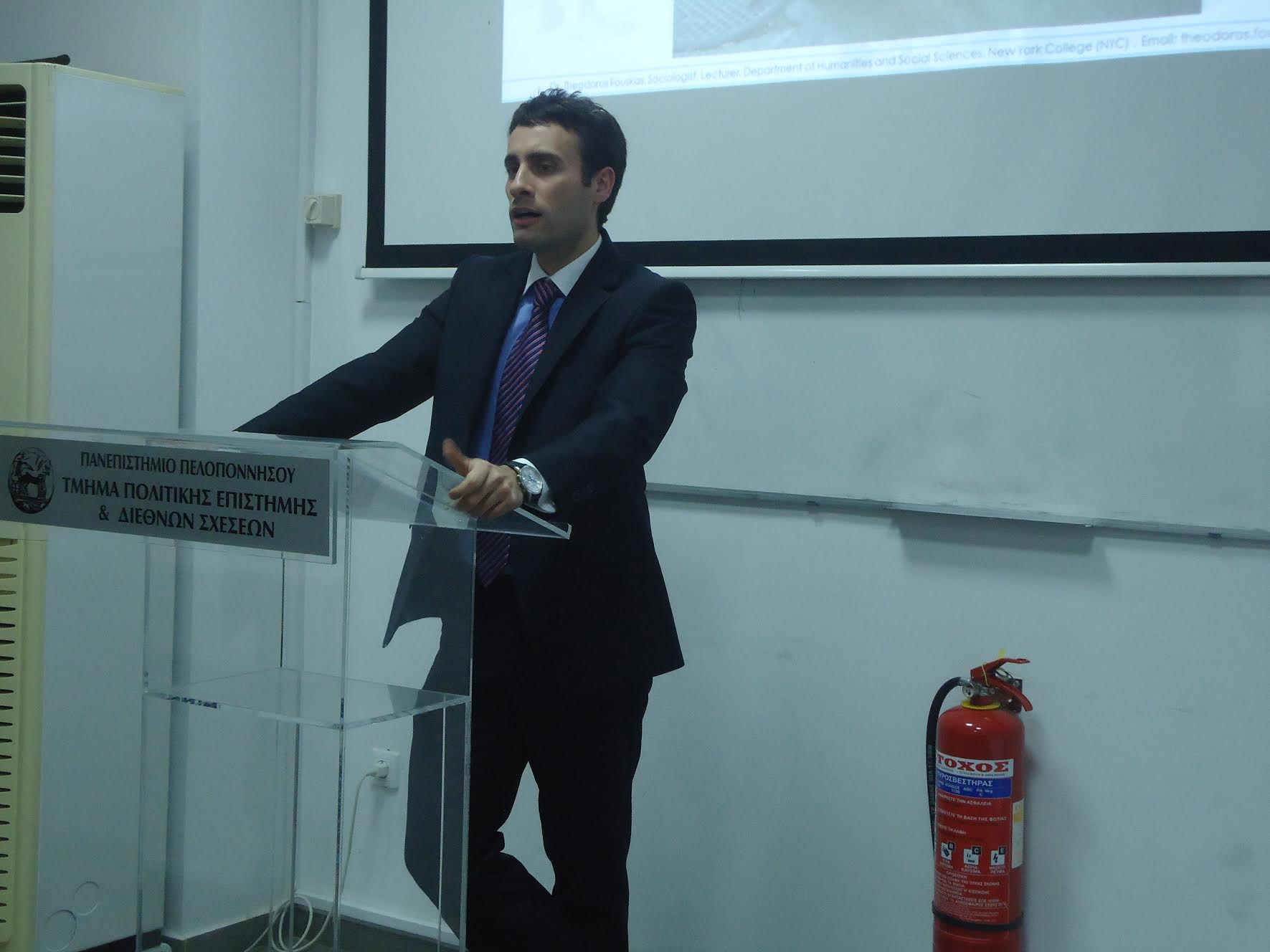
One of the biggest challenges of immigration management is that it is now one of the top priorities for both Greece and the EU, according to Dr. Theodoros Fouskas, who was responsible for the workshop’s scientific organization. He is a sociologist and lecturer of the Department of Humanities and Social Sciences, New York College (NYC).

Greece. “Since Greece deals with 90% of illegal immigration flows to the EU, European aid, assistance and solidarity are imperative,” he said. “But after twenty-five years of huge illegal migration flows, what should be taken into account are the international ramifications that the migratory phenomenon has caused in the 21st century.”

Dr. Fouskas focused his talk on the impact of international labor migration, especially low-status work by Nigerian migrants,* who are the object of his latest research. Low-wage Nigerian migrants in Greece are mainly employed in the service industry, which include manual labor jobs, farming, construction, crafts, housework, cleaning services, prostitution and others.

“What is currently observed is a mobile, temporary workforce, which is occupied in casual, non-permanent, low-prestige jobs,” he said. “[Nigerian] immigrants of both genders are exposed to all forms of exploitation, to flexible working ours and unsettled, low-level and unstable lifestyle.”
greeceworkshop

Dr Theodoros Fouskas speaking at the workshop on perceptions, problems and challenges of immigration in Greece.

According to Dr Fouskas, the life of low-wage immigrants in Greece is more than challenging under the present circumstances.

“They are disconnected, detached from the past, with no memory of collectivization or personal efforts and claims,” he said. “Nigerian immigrants’ work is characterized by exhausting working hours, exceptionally low wages, appalling working conditions, non-permanent employment with frequent employer changes, no National Health benefits, unstable residence status, fear of arrest and deportation…”

Other speakers that took part in the workshop were Pantelis Sklias, Symeon Sidiropoulos, George Hilal, Panagiota Theodosi, Konstantinos Kazanas and Jamil M. Sayed.

* Fouskas, Theodoros (201-) Nigerian Immigrants in Greece: Low-Status Work, Community, and Decollectivization, Research Monograph under contract, and Fouskas, Theodoros (2014) “‘Community’ found or lost in the city? The consequences of low-status work on association participation of Nigerian immigrant workers in Athens”, in: Fouskas, Theodoros and Vassileios, Tsevrenis (2014) (Eds.), Contemporary Immigration in Greece: A Sourcebook. Athens: European Public Law Organization (EPLO) (forthcoming 2014). Foudkas, Theodoros (2013) “Los-Status Work Consequences on Immigrant Workers’ Organization”, International Review of Sociology, Volume 23, Issue 3, 2013 pp. 671-698.

Blood strawberries from Nea Manolada, Greece

Posted on April 24, 2013 by Migrant Tales

As Europe’s far right raises its head, the more violent things become. Some 30 migrant workers were injured in a shooting on a strawberry farm in Nea Manolada, Greece, after requesting salaries that had not been paid. Thanks to @ritorikaxalikia for the heads-up and the poster below. 

Writes the BBC:  “The Council of Europe – the main European human rights watchdog – issued a report this week detailing abuse against migrants in Greece. The report warned of a growing wave of racist violence, stating that “democracy is at risk”. It highlighted the role of the neo-Nazi Golden Dawn party.”

Kuvankaappaus 2013-4-26 kello 13.17.03


Could Finland and the Nordic region see Golden Dawn-like fanatics in the future?

Posted on April 2, 2013 by Migrant Tales

The news from Greece is getting more distressing as Golden Dawn neo-Nazi thugs continue to terrorize sensible Greeks, immigrants and other minorities with the collusion of the police. An investigative report by The Guardian exposes how bad things are in Greece at present and why matters will get far worse. Could we see something similar happening in Finland and the Nordic rgion? 

Kuvankaappaus 2013-4-1 kello 23.52.15 A policeman wearing a Golden Dawn t-shirt under his uniform. See original post here.

Writes the Independent of London: “Actual fascists in actual black shirts are actually marching around Athens waving swastikas and burning torches, and maiming and murdering ethnic minorities, and world governments appear frighteningly relaxed about it as long as the Greek people continue to pay off the debts of the European elite.”

For a person who saw military dictatorships come and go in Latin America in the 1970s like I did, the ever-worsening situation in Greece  is a cause for concern.

The fact that up to 50% of the police is some districts of Greece voted for Golden Dawn, shows how volatile and dangerous the situation is in that country. Taking into account that many Greeks have lost confidence in their rulers and democracy, a blow to the credibility of the police is another straw on the camel’s fragile back.

Migrant Tales wrote in September about the round up of 16,836 foreign nationals were brought for questioning  during the first month that Xenios Zeus was instigated. Xenios Zeus means “god of hospitality” in Greek.

Here’s one recent case of those many beatings taking place in Greece daily by Golden Dawn thugs and the police on I can’t relax in Greece blog.

Just like the Jews were persecuted by the Nazis after Adolf Hitler came to power in 1933, the same is going in many parts of Europe and especially in Greece. Apart from Jews, refugees, immigrants, gays and Muslims are the new scapegoats.

While we erroneously believe in scapegoating the weakest and most vulnerable members of our society because they have no political and economic power, we will end up the losers. How? By watering down and putting into cold storage our civil rights to deal first with imagined menace x and then menace y.

The political culture in the Nordic region is different from Greece. Even so, it doesn’t mean that we couldn’t have our own Nikolaos Michaloliakos running amuck.

https://www.youtube.com/watch?v=E4AXJx3IzdY

While some far-right politicians may not speak like Golden Dawn leader Nikolaos Michaloliakos, they hold the same thoughts on immigration, minorities and anything too foreign or non-European for their tastes.

Without a doubt, one of Michaloliakos’ political soul mates in a Nordic context is Pia Kjærsgaard of the Danish People’s Party (DDP). Other ones include the Suomen Sisu faction of the Perussuomalaiset (PS): Jussi Halla-aho, James Hirvisaari, Olli Immonen, Juho Eerola and other hardliners, who are openly neo-fascists or flirt with neo-fascism.

Taking into account the election successes of anti-immigration parties in the Nordic region before, there was one person that stopped them on their heels for the time being: Anders Breivik, who murdered 77 victims on his crusade to save Europe from Muslims.

With the economic crisis worsening and the election victories of anti-immigration parties in the Nordic region before 22/7, parties like the DDP, Progress Party of Norway, Sweden Democrats and the PS would have been riding the crest of a wave of popularity.

Without Breivik, they would today reveal their same racist arrogance in the same way as the Golden Dawn does in Greece.

The attack by neo-Nazis of a book event on the far right in Jyväskylä in January, the rise in hate crimes in 2011, police indifference to racism, the political rise of the Perussuomalaiset in the 2011 election are just a few signs that matters are heating up in this part of Europe as well.


Migrant Tales in Greek

Posted on January 19, 2013 by Migrant Tales

Blog entries that are published on Migrant Tales get sometimes mentioned in some major publications like Time, Sveriges Radio, YLE’s Suora linja and others. One of the most recent reposts was by UNHCR in Greece, located in one of Europe’s hotbeds of xenophobia.  

The work we do on this blog got mentioned  (in Finnish) on Re Vera as well.

Kuvankaappaus 2013-1-19 kello 7.56.40

UNCHR of Greece reposted one of Migrant Tales’ posts about integration and diversity in Europe.

Sensible people understand that there is little time to pat oneself on the back in Europe these days when it comes to challenging the rise of racism, xenophobia and far-right parties that loathe cultural diversity.

When racists claim to want to “debate” cultural diversity issues, what they are really saying is “let’s talk about how to water down and justify outright discrimination and social exclusion of whole groups based on ethnic and cultural background.”

Are certain inalienable civil rights, like equal treatment before the law, “debatable?”

Look at what is happening in countries like Greece, Hungary and in other parts of Europe and the so-called “debate” taking place in such places.

The rise of far-right ideology, which bases its world view on prejudice, racism and social exclusion, is nothing more than our failure as a region staring back at us. It exposes how we have failed to come to grips with the horrors of our history and our darkest side.

The ideology that brought us mass wars like WW2, which cost the estimated lives of about 60 million people, still hides behind our racism, our prejudice and our xenophobia.

We must do more to nip this type of anti-social behavior in the bud.

If we fail in this important task we will be sowing the seeds of future wars that will end up consuming us without remorse.


How much further? A film about the lives of refugees in Greece

Posted on September 14, 2012 by Migrant Tales

This documentary about refugees in Greece is a stark reminder of how Greek authorities and the European Union have turned their backs on asylum seekers and undocumented immigrants. The answer is not higher border fences or fear-mongering by politicians, but finding proactive solutions that take into account the needs and human rights of these people.

Eighty percent of the refugees that come from war-stricken areas flee to neighboring countries like Pakistan, where there are 1.7 million refugees. In the Dadaab refugee camp alone in Kenya there are a staggering 500,000  Somali refugees.

For the sake of comparison, 27 EU states have a total of 1.3 million refugees.

Traveling under a truck is one way that asylum seekers use to cross borders in Europe.

Says the European Council on Refugees and Exiles (ECRE) in a statement about the documentary, How much further:

Filmed in Athens between October 2011 and February 2012, in the midst of social, political and economic turmoil, the documentary raises the voices of those who have fled Afghanistan, Somalia or Sudan hoping to find refuge in Europe. After months or even years on the road, they arrive in Greece, a country whose population is facing the full brunt of the economic crisis and where the asylum and reception systems are completely dysfunctional. Most people see no option but to take to the road again in the hope of reaching a country that can receive them and consider their claim for asylum. But, once they have entered Greece, it is extremely difficult if not impossible to leave the country given the European policies that legally bind them to Greece.

This documentary is the fruit of the cooperation between ECRE, the Greek Forum of Refugees and the film maker Matthias Wiessler, and supported by the European Programme for Integration and Migration (EPIM).

Following the simultaneous premières in Brussels and Athens for World Refugee Day (20 June), How much further? has already been shown in two other screenings so far, at theEuropean Policy Institute and to the students of the Odysseus Network Summer School on European Law and Polciy on Immigration & Asylum.

To see documentary, How much further, click here.


Greece and its bad case of ethnic profiling and scapegoating

Posted on September 12, 2012 by Migrant Tales

The Greek Police announced that 16,836 foreign nationals were brought for questioning  during the first month that Xenios Zeus was instigated, according to the European Council on Refugees and Exiles (ECRE). A staggering 80% of those brought in for questioning were legal residents. Only 2,144 held by the police didn’t have their residence permits in order. 

Xenios Zeus, which was the ancient Greek god of hospitality, is a good example of how ineffective immigration policies and economic problems can force xenophobia to poison a society.

Sensible people understand that scapegoating immigrants for the country’s economic problems is a red herring. Greek politicians and civil servants, with the blessings of the public, are more interested in blaming defenseless immigrants and refugees  for Greece’s problems than themselves.

Whenever a person or a group scapegoats immigrants and minorities, it is a clear sign of cowardice and opportunism.

The Greek public should critically look at the country’s politicians, civil servants and financial sector and launch a “Xenios Zeus” to uproot corruption that festers in that country.

ECRE writes in a statement: ”Greek authorities claim that as a result of Xenios Zeus, the influx of illegal immigration in the area of Evros has been reduced by 84%. However, according to the newspaper ‘To Vima’, the “Xenios Zeus” operation has resulted in a dramatic increase in the smuggling tariffs for entering Greece from Turkey and leaving Greece for Italy. A few months ago, smugglers would request 2,500 to 3,000 Euro for a safe passage, while would-be migrants are now asked to pay up to 5,000 Euros.”

Groups like ECRE, Amnesty International, Human Rights Watch and the Greek Council of Refugees have criticized the massive police roundup of immigrants.


  • Previous
  • 1
  • 2
  • 3
  • Next
Read more about documentary film
Read more

Recent Posts

  • Lahti is the latest city to prohibit the niqab and burka
  • Finland’s tabloids Iltalehti and Ilta-Sanomat are the pits
  • Riikka Purra’s Dr Jekyll and Mr Hyde mask
  • Double standards
  • Perussuomalaiset: Uusi logo, sama vanha juttu

Recent Comments

  1. Absolutely Socking: Racist Finnish Facebook group against human rights gets flooded with socks on Musta Barbaari’s mother and sister charged by the police in “ethnic profiling” case
  2. Ilkka Nuotio on Pekka Myrskylä: “Tilastot kertovat toista kuin poliittinen keskustelu”
  3. Genrih Soinkara on The war in Ukraine and the Russian-Finnish border crisis are showing Finland’s ugly side
  4. Ahti Tolvanen on Comment by Ahti Tolvanen on the Helsinki +50 conference
  5. Angel Barrientos on Angel Barrientos is one of the kind beacons of Finland’s Chilean community

Archives

  • June 2026
  • May 2026
  • April 2026
  • March 2026
  • February 2026
  • January 2026
  • December 2025
  • November 2025
  • October 2025
  • September 2025
  • August 2025
  • July 2025
  • June 2025
  • May 2025
  • April 2025
  • March 2025
  • February 2025
  • January 2025
  • December 2024
  • November 2024
  • October 2024
  • September 2024
  • August 2024
  • July 2024
  • June 2024
  • May 2024
  • April 2024
  • March 2024
  • February 2024
  • January 2024
  • December 2023
  • November 2023
  • October 2023
  • September 2023
  • August 2023
  • July 2023
  • June 2023
  • May 2023
  • April 2023
  • March 2023
  • February 2023
  • January 2023
  • December 2022
  • November 2022
  • October 2022
  • September 2022
  • August 2022
  • July 2022
  • June 2022
  • May 2022
  • April 2022
  • March 2022
  • February 2022
  • January 2022
  • December 2021
  • November 2021
  • October 2021
  • September 2021
  • August 2021
  • July 2021
  • June 2021
  • May 2021
  • April 2021
  • March 2021
  • February 2021
  • January 2021
  • December 2020
  • November 2020
  • October 2020
  • September 2020
  • August 2020
  • July 2020
  • June 2020
  • May 2020
  • April 2020
  • March 2020
  • February 2020
  • January 2020
  • December 2019
  • November 2019
  • October 2019
  • September 2019
  • August 2019
  • July 2019
  • June 2019
  • May 2019
  • April 2019
  • March 2019
  • February 2019
  • January 2019
  • December 2018
  • November 2018
  • October 2018
  • September 2018
  • August 2018
  • July 2018
  • June 2018
  • May 2018
  • April 2018
  • March 2018
  • February 2018
  • January 2018
  • December 2017
  • November 2017
  • October 2017
  • September 2017
  • August 2017
  • July 2017
  • June 2017
  • May 2017
  • April 2017
  • March 2017
  • February 2017
  • January 2017
  • December 2016
  • November 2016
  • October 2016
  • September 2016
  • August 2016
  • July 2016
  • June 2016
  • May 2016
  • April 2016
  • March 2016
  • February 2016
  • January 2016
  • December 2015
  • November 2015
  • October 2015
  • September 2015
  • August 2015
  • July 2015
  • June 2015
  • May 2015
  • April 2015
  • March 2015
  • February 2015
  • January 2015
  • December 2014
  • November 2014
  • October 2014
  • September 2014
  • August 2014
  • July 2014
  • June 2014
  • May 2014
  • April 2014
  • March 2014
  • February 2014
  • January 2014
  • December 2013
  • November 2013
  • October 2013
  • September 2013
  • August 2013
  • July 2013
  • June 2013
  • May 2013
  • April 2013
  • March 2013
  • February 2013
  • January 2013
  • December 2012
  • November 2012
  • October 2012
  • September 2012
  • August 2012
  • July 2012
  • June 2012
  • May 2012
  • April 2012
  • March 2012
  • February 2012
  • January 2012
  • December 2011
  • November 2011
  • October 2011
  • September 2011
  • August 2011
  • July 2011
  • June 2011
  • May 2011
  • April 2011
  • March 2011
  • February 2011
  • January 2011
  • December 2010
  • November 2010
  • October 2010
  • September 2010
  • August 2010
  • July 2010
  • June 2010
  • May 2010
  • April 2010
  • March 2010
  • February 2010
  • January 2010
  • December 2009
  • November 2009
  • October 2009
  • September 2009
  • August 2009
  • July 2009
  • December 2008
  • November 2008
  • October 2008
  • September 2008
  • August 2008
  • July 2008
  • June 2008
  • May 2008
  • April 2008
  • March 2008
  • February 2008
  • January 2008
  • November 2007
  • October 2007
  • September 2007
  • August 2007
  • July 2007
  • June 2007
  • May 2007

Categories

  • ?? Gia L?c
  • ????? ?????? ????? ???????? ?? ??????
  • ???????
  • @HerraAhmed
  • @mondepasrond
  • @nohatefinland
  • @oula_silver
  • @Varathas
  • A Pakistani family
  • äärioikeisto
  • Abbas Bahmanpour
  • Abdi Muhis
  • Abdirahim Hussein Mohamed
  • Abdirahim Husu Hussein
  • Abdirisak Mahamed
  • About Migrant Tales
  • activism
  • Adam Al-Sawad
  • Adel Abidin
  • Afrofinland
  • Ahmed IJ
  • Ahti Tolvanen
  • Aino Pennanen
  • Aisha Maniar
  • Alan Ali
  • Alan Anstead
  • Alejandro Díaz Ortiz
  • Alekey Bulavsev
  • Aleksander Hemon
  • Aleksanterinliitto
  • Aleksanterinliitto ry
  • Aleksanterinliitto ry:n hallitus
  • Alex Alex
  • Alex Mckie
  • Alexander Nix
  • Alexandra Ayse Albayrak
  • Alexis Neuberg
  • Ali Asaad Hasan Alzuhairi
  • Ali Hossein Mir Ali
  • Ali Rashid
  • Ali Sagal Abdikarim
  • Alina Tsui
  • Aline Müller
  • All categories
  • Aman Heidari
  • Amiirah Salleh-Hoddin & Jana Turk
  • Amin A. Alem
  • Amir Zuhairi
  • Amkelwa Mbekeni
  • Ana María Gutiérrez Sorainen
  • Anachoma
  • Anders Adlecreutz
  • Angeliina Koskinen
  • Anna De Mutiis
  • Anna María Gutiérrez Sorainen
  • Anna-Kaisa Kuusisto ja Jaakko Tuominen
  • Annastiina Kallius
  • Anneli Juise Friman Lindeman
  • Announcement
  • Anonymous
  • Antero Leitzinger
  • anti-black racism
  • Anti-Hate Crime Organisation Finland
  • Anudari Boldbaatar
  • Arshiya Nasser
  • Aspergers Syndrome
  • Asylum Corner
  • Asylum seeker 406
  • Athena Griffin and Joe Feagin
  • Autism
  • Avaaz.org
  • Awale Olad
  • Ayan Said Mohamed
  • AYY
  • Barachiel
  • Bashy Quraishy
  • Beatrice Kabutakapua
  • Beri Jamal
  • Beri Jamal and Enrique Tessieri
  • Bertolt Brecht
  • Boiata
  • Boodi Kabbani
  • Bruno Gronow
  • Carmen Pekkarinen
  • Çelen Oben and Sheila Riikonen
  • Chiara Costa-Virtanen
  • Chiara Costa-Virtanen
  • Chiara Sorbello
  • Christian Thibault
  • Christopher Wylie
  • Clara Dublanc
  • Dana
  • Daniel Malpica
  • Danilo Canguçu
  • David Papineau
  • David Schneider
  • Dexter He
  • Don Flynn
  • Dr Masoud Kamali
  • Dr. Faith Mkwesha
  • Dr. Theodoros Fouskas
  • Edna Chun
  • Eeva Kilpi
  • Emanuela Susheela
  • En castellano
  • ENAR
  • Enrique
  • Enrique Tessieri
  • Enrique Tessieri & Raghad Mchawh
  • Enrique Tessieri & Yahya Rouissi
  • Enrique Tessieri and Muhammed Shire
  • Enrique Tessieri and Sira Moksi
  • Enrique Tessieri and Tom Vandenbosch
  • Enrique Tessieri and Wael Che
  • Enrique Tessieri and Yahya Rouissi
  • Enrique Tessieri and Zimema Mhone
  • Epäluottamusmies
  • EU
  • Europe
  • European Islamophobia Report
  • European Islamophobia Report 2019,
  • European Union
  • Eve Kyntäjä
  • Ezequiel Caldeiro
  • Facebook
  • Fadumo Dayib
  • Faisa Kahiye
  • Farhad Manjoo
  • Fasismi
  • Finland
  • Fizza Qureshi
  • Flyktingar och asyl
  • Foreign Student
  • Fozia Mir-Ali
  • Frances Webber
  • Frida Selim
  • Gareth Rice
  • Ghyslain Vedeaux
  • Global Art Point
  • Great Replacement
  • Habiba Ali
  • Hami Bahadori
  • Hami Bahdori
  • Hamid
  • Hamid Alsaameere
  • Hamid Bahdori
  • Handshake
  • Harmit Athwal
  • Hassan Abdi Ali
  • Hassan Muhumud
  • Heikki Huttunen
  • Heikki Wilenius
  • Helsingin Sanomat
  • Henning van der Hoeven
  • Henrika Mälmsröm
  • Hser Hser
  • Hser Hser ja Mustafa Isman
  • Husein Muhammed
  • Hussain Kazemian
  • Hussain Kazmenian
  • Ibrahim Khan
  • Ida
  • Ignacio Pérez Pérez
  • Iise Ali Hassan
  • Ilari Kaila & Tuomas Kaila
  • Imam Ka
  • inside-an-airport
  • Institute of Race Relations
  • Iraqi asylum seeker
  • IRR European News Team
  • IRR News Team
  • Islamic Society of Norhern FInland
  • Islamic Society of Northern Finland
  • Islamophobia
  • Jacobinmag.com
  • Jallow Momodou
  • Jan Holmberg
  • Jane Elliott
  • Jani Mäkelä
  • Jari Luoto
  • Jari Taponen
  • Jegor Nazarov
  • Jenni Stammeier
  • Jenny Bourne
  • Jessie Daniels
  • Joe Davidow
  • Johannes Koski
  • John D. Foster
  • John Grayson
  • John Marriott
  • Jon Burnett
  • Jorma Härkönen
  • Jos Schuurmans
  • José León Toro Mejías
  • Josue Tumayine
  • Jouni Karnasaari
  • Juan Camilo
  • Jukka Eräkare
  • Julian Abagond
  • Julie Pascoet
  • Jussi Halla-aho
  • Jussi Hallla-aho
  • Jussi Jalonen
  • JusticeDemon
  • Kadar Gelle
  • Kaksoiskansalaisuus
  • Kansainvälinen Mikkeli
  • Kansainvälinen Mikkeli ry
  • Katherine Tonkiss
  • Kati Lepistö
  • Kati van der Hoeven-Lepistö
  • Katie Bell
  • Kättely
  • Kerstin Ögård
  • Keshia Fredua-Mensah & Jamie Schearer
  • Khadidiatou Sylla
  • Khadra Abdirazak Sugulle
  • Kiihotus kansanryhmää vastaan
  • Kirsi Crowley
  • Koko Hubara
  • Kristiina Toivikko
  • Kubra Amini
  • KuRI
  • La Colectiva
  • La incitación al odio
  • Laura Huhtasaari
  • Lauri Finér
  • Leif Hagert
  • Léo Custódio
  • Leo Honka
  • Leontios Christodoulou
  • Lessie Branch
  • Lex Gaudius
  • Leyes de Finlandia
  • Liikkukaa!
  • Linda Hyökki
  • Liz Fekete
  • M. Blanc
  • Maarit Snellman
  • Mahad Sheikh Musse
  • Maija Vilkkumaa
  • Malmin Kebab Pizzeria Port Arthur
  • Marcell Lorincz
  • Mari Aaltola
  • María Paz López
  • Maria Rittis Ikola
  • Maria Tjader
  • Marja-Liisa Tolvanen
  • Mark
  • Markku Heikkinen
  • Marshall Niles
  • Martin Al-Laji
  • Maryan Siyad
  • Matt Carr
  • Mauricio Farah Gebara
  • Media Monitoring Group of Finland
  • Micah J. Christian
  • Michael McEachrane
  • Michele Levoy
  • Michelle Kaila
  • Migrant Tales
  • Migrant Tales Literary
  • Migrantes News
  • Migrants' Rights Network
  • MigriLeaks
  • Mikko Kapanen
  • Miriam Attias and Camila Haavisto
  • Mohamed Adan
  • Mohammad Javid
  • Mohammad M.
  • Monikulttuurisuus
  • Monisha Bhatia and Victoria Canning
  • Mor Ndiaye
  • Muh'ed
  • Muhamed Abdimajed Murshid
  • Muhammed Shire
  • Muhammed Shire and Enrique Tessieri
  • Muhis Azizi
  • Musimenta Dansila
  • Muslimiviha
  • Musulmanes
  • Namir al-Azzawi
  • Natsismi
  • Neurodiversity
  • New Women Connectors
  • Nils Muižnieks
  • No Labels No Walls
  • Noel Dandes
  • Nuor Dawood
  • Omar Khan
  • Otavanmedia
  • Oula Silvennoinen
  • Paco Diop
  • Pakistani family
  • Pentti Stranius
  • Perussuomalaiset
  • perustuslaki
  • Petra Laiti
  • Petri Cederlöf
  • Pia Grochowski
  • Podcast-lukija Bea Bergholm
  • Pohjois – Suomen Islamilainen Yhdyskunta
  • Pohjois Suomen Islamilainen Yhyskunta
  • Polina Kopylova
  • Race Files
  • racism
  • Racism Review
  • Raghad Mchawh
  • Ranska
  • Rashid H. and Migrant Tales
  • Rasismi
  • Raul Perez
  • Rebecka Holm
  • Reem Abu-Hayyeh
  • Refugees
  • Reija Härkönen
  • Remiel
  • Reza Nasri
  • Richard Gresswell
  • Riikka Purra
  • Risto Laakkonen
  • Rita Chahda
  • Ritva Kondi
  • Robito Ibrahim
  • Roble Bashir
  • Rockhaya Sylla
  • Rodolfo Walsh
  • Roger Casale
  • Rostam Atai
  • Roxana Crisólogo Correa
  • Ruth Grove-White
  • Ruth Waweru-Folabit
  • S-worldview
  • Sadio Ali Nuur
  • Sami Rusanen
  • Sandhu Bhamra
  • Sara de Jong
  • Sarah Crowther
  • Sari Alhariri
  • Sarkawt Khalil
  • Sasu
  • Scot Nakagawa
  • Shabana Ahmadzai
  • Shada Islam
  • Sharon Chang blogs
  • Shenita Ann McLean
  • Shirlene Green Newball
  • Sini Savolainen
  • Sira Moksi
  • Sonia K.
  • Sonia Maria Koo
  • Steverp
  • Stop Deportations
  • Suldaan Said Ahmed
  • Suomen mediaseurantakollektiivi
  • Suomen Muslimifoorumi ry
  • Suomen viharikosvastainen yhdistys
  • Suomen viharikosvastainen yhdistys ry
  • Suomi
  • Supermen
  • Susannah
  • Suva
  • Syrjintä
  • Talous
  • Tapio Tuomala
  • Taw Reh
  • Teivo Teivainen
  • The Daily Show
  • The Heino
  • The Supermen
  • Thomas Elfgren
  • Thulfiqar Abdulkarim
  • Tim McGettigan
  • Tino Singh
  • Tito Moustafa Sliem
  • Tobias Hübinette and L. Janelle Dance
  • Transport
  • Trica Danielle Keaton
  • Trilce Garcia
  • Trish Pääkkönen
  • Trish Pääkkönen and Enrique Tessieri
  • Tuulia Reponen
  • Uncategorized
  • UNITED
  • University of Eastern Finland
  • Uyi Osazee
  • Väkivalta
  • Vapaa Liikkuvuus
  • Venla-Sofia Saariaho
  • Vieraskynä
  • W. Che
  • W. Che an Enrique Tessieri
  • Wael Ch.
  • Wan Wei
  • Women for Refugee Women
  • Xaan Kaafi Maxamed Xalane
  • Xassan Kaafi Maxamed Xalane
  • Xassan-Kaafi Mohamed Halane & Enrique Tessieri
  • Yahya Rouissi
  • Yasmin Yusuf
  • Yassen Ghaleb
  • Yle Puhe
  • Yuliet Tresa
  • Yve Shepherd
  • Zahra Khavari
  • Zaker
  • Zalina Ametova
  • Zamzam Ahmed Ali
  • Zeinab Amini ja Soheila Khavari
  • Zimema Mahone and Enrique Tessieri
  • Zimema Mhone
  • Zoila Forss Crespo Moreyra
  • ZT
  • Zulma Sierra
  • Zuzeeko Tegha Abeng
© 2026 Migrant tales | Powered by Minimalist Blog WordPress Theme