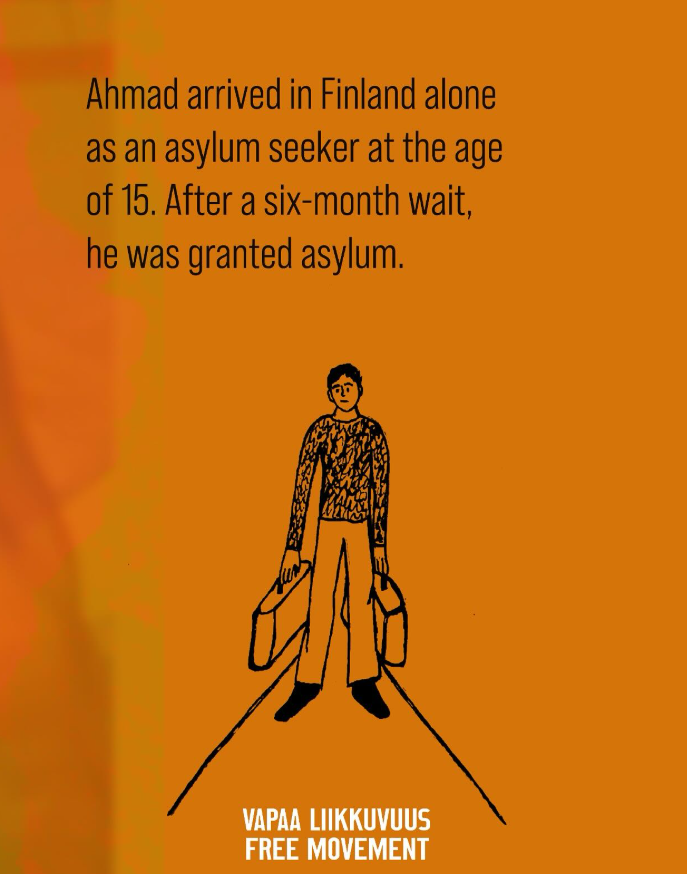
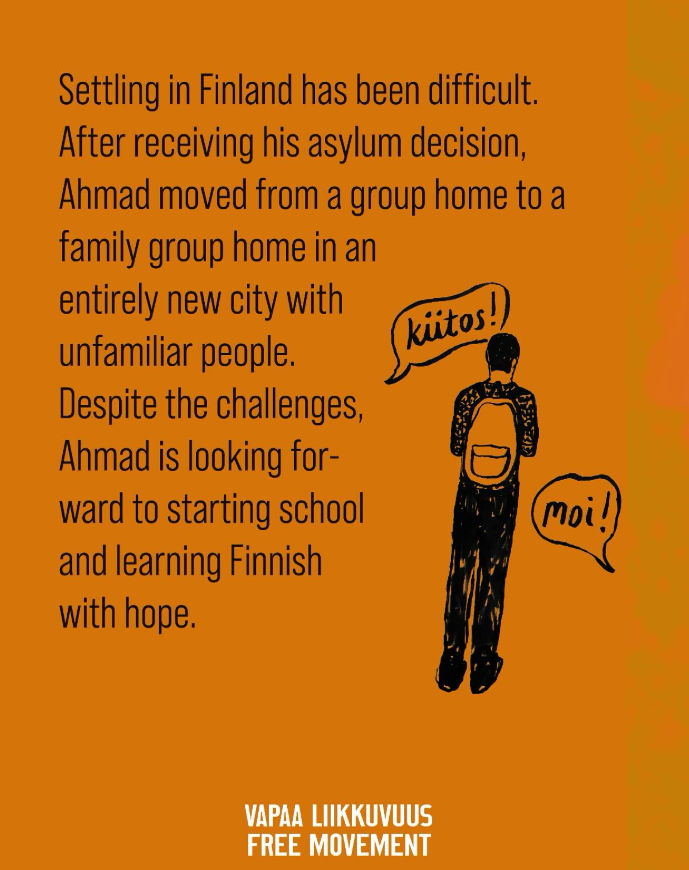
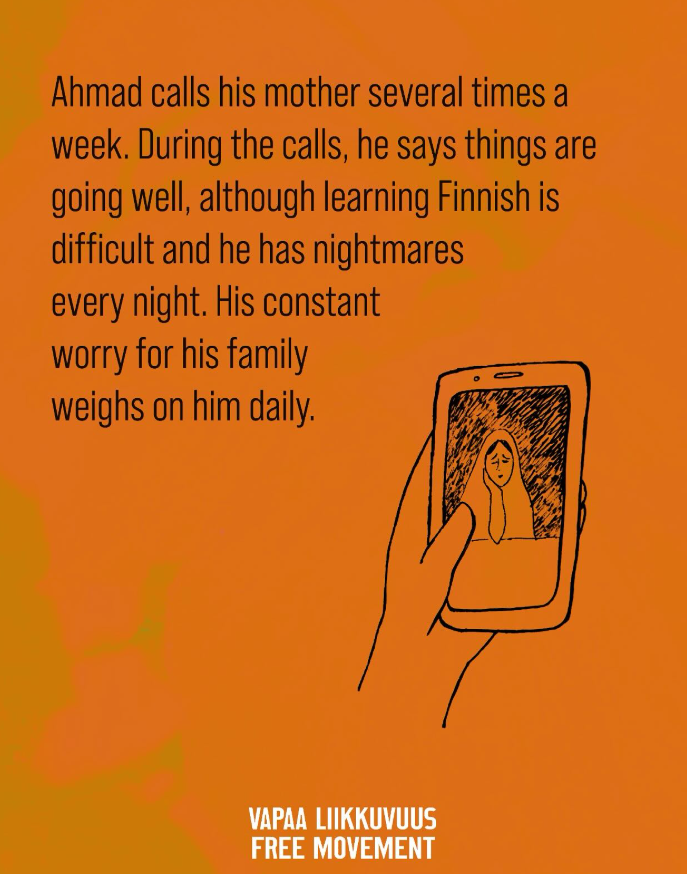
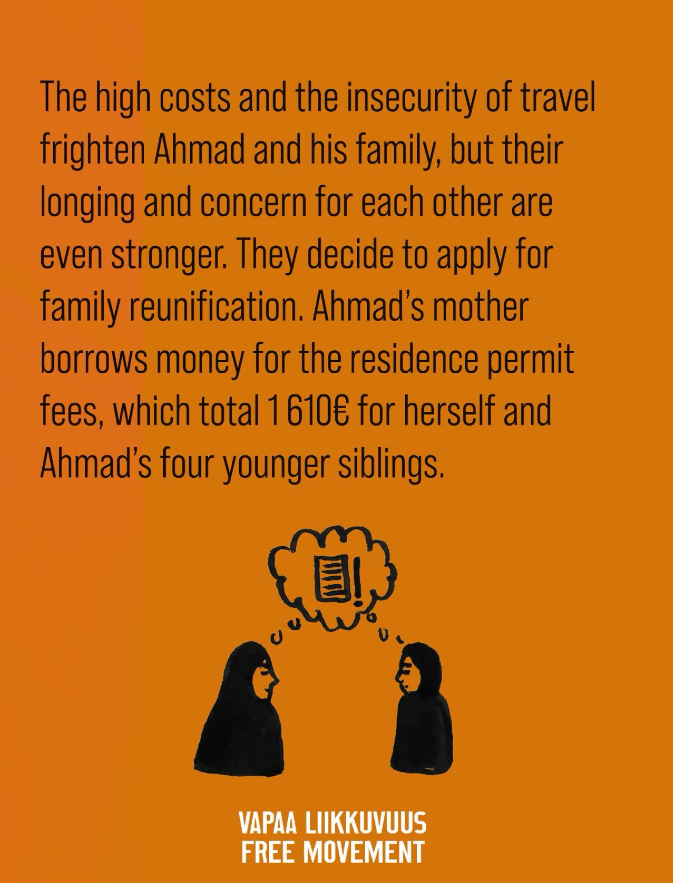
Migrant Tales comment:The whole family reunification process is expensive, long and exhausting. We have written a number of articles and this side of migration policy is terrible. When Finns emigrated to North America before World War 2, they brought their wife, children, relative and friend to their new country.
How time have changed!
Free movement is a network of migration activists functioning since 2006. Among us, there are students, healthcare professionals, researchers, construction workers, culture workers and artists, from Finnish and migrant backgrounds. We are politically and religiously independent, and our work happens through different working groups. The network is supported by the association Vapaa Liikkuvuus (Free Movement).
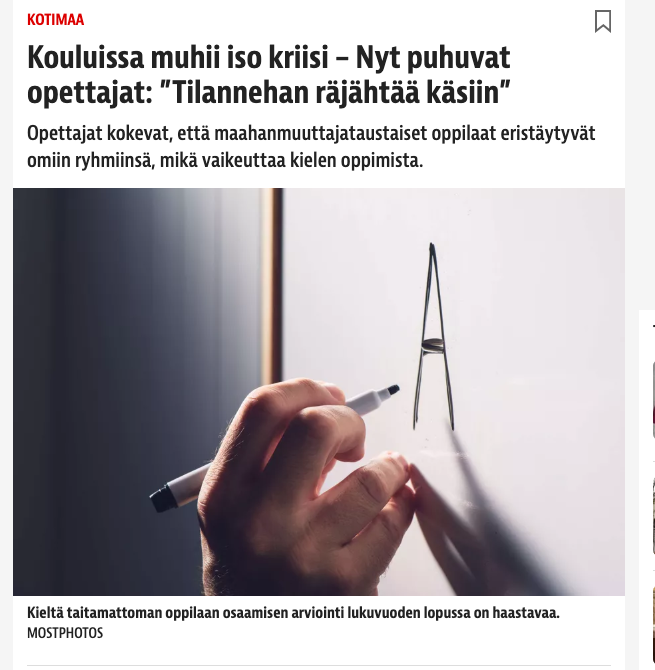
An article in tabloid Iltalehti aims to reinforce readers about why “kids with migrant backgrounds” are a problem, but instead reveals the racist attitudes of the tabloid and of some comprehensive school teachers. I suspect that one of the reasons why Iltalehti uses anonymous sources is because no respecting teacher would go on the record with such claims.
Let’s dissect the article’s most outrageous claims:
The article concerned why brown and black children, specifically Muslims, are marginalized and don’t want to be Finns, which affects their Finnish language-learning abilities. One good start would be to stop labeling them “children with migrant backgrounds.” The label alone excludes.
One reason why kids don’t want to identify as Finns is that they are not even accepted as Finns. As mentioned above, why would some of these kids want to identify with white Finns, which the article labels “ethnic” Finns (kantasuomalainen), if their backgrounds are not taken into account?
What about institutional racism and the xenophobic and bigoted comments by politicians in particular, like the Perussuomalaiset (PS)*, who have made their political message by spreading racism and lies about migrants? Would you want to be part of a society that holds you in contempt?
I have said it before and will say it again: I never want to be a white Finn but a Finn on my terms. The article does not mention how these children could be seen and taught to be Finns on their terms.
The article claims: “Some children with an immigrant background who were born in Finland do not speak Finnish well enough to attend school.” If this is the case, it reveals the failure of the school system and ineffective social policy. Nowhere is it mentioned in the article how we tackle this problem.
Why do three teachers cited in the story speak anonymously? “Paula,” who teaches the Islman religion, claims that some of her students don’t want to be Finns. If “Paula” is a teacher, she should know better the importance of retaining your culture instead of erasing it. Over 1.2 million Finns emigrated from Finland between 1860 and 1999. Even the children of the first generation, still in their fifth generation, continue to see themselves as Finns. Is this strange? No.
“Karla” is another consultant teacher who speaks anonymously in the article. She believes that the best way to solve Finnish-language learning issues is to send such families to the countryside. Apart from being illegal, I’m certain that some teachers feel this is an effective way to teach Finnish.
“Helena” is a Finnish-language teacher who also appears anonymously in the story. She is in favor of limiting the number of non-Finnish-speaking students. There was a big discussion in 2011 about limiting the number of “students with foreign backgrounds” in classes. One of the questions that these polls asked over ten years ago is if public servants like teachers can limit or choose who they’ll teach. Can the police do the same? Is segregating schools by placing caps constitutional?
The Iltalehti article leads: “Kouluissa on suuri kriisi – opettajat puhuvat ääneen: Opettajien mielestä maahanmuuttajataustaiset oppilaat eristäytyvät ryhmiinsä, mikä vaikeuttaa kielen oppimista.”
These types of stories in the Finnish media only serve to reinforce stereotypes and suspicion about migrants.
The Trump administration is one of the best examples of the violent knee-jerk reaction of how white privilege reacts when threatened. As Nazi Germany proved, government’s will go to any lengths to defend their privileges, even if it is a fabricated threat.
No country is immune to such a situation. The rise of far-right parties in Europe is an example of the latter. All of them have one factor in common: outsiders are threatening to take away our privileges.
Fortunately, Finland is bucking the trend for now. The anti-immigration and far-right Perussuomalaiset (PS)* party, which is in government, has seen its poll numbers nosedive, as a recent Helsingin Sanomat opinion poll showed.
According to Helsingin Sanomat, the last time the PS’ share of the vote was at the 10% level was in January 2019, when it was 9.7%. It is today a far cry from its peak of 22.8% in January 2020.
The PS’ lack of support is linked to white privilege, which the party is attacking through its austerity measures that target vulnerable groups like single mothers and the unemployed.
Maahanmuuttajataustaiset kohtaavat usein haasteita politiikassa, työelämässä ja vapaa-ajalla, jotka voivat estää täysipainoisen osallisuuden.
Yhteinen ymmärrys ja kunnioitus voivat kuitenkin muuttaa tämän suunnan. On tärkeää muistaa, että jokainen on yksilö, jolla on oikeus tulla kohdelluksi omana itsenään – ei pelkästään ryhmänsä edustajana.
Kollektiivinen vastuuttaminen pelkän taustan perusteella on syrjivää ja poissulkevaa, sillä se kieltää yksilöltä mahdollisuuden onnistua tai epäonnistua omilla ehdoillaan.
Jokainen on vastuussa itsestään, ja tämä periaate on keskeinen yhdenvertaisuuden edellytys.
Poliittisessa keskustelussa maahanmuuttajataustaiset jäävät usein objektin rooliin – heistä puhutaan, mutta harvoin heidän kanssaan. Sen sijaan, että heitä nähtäisiin riskinä tai ongelmana, tulisi korostaa heidän toimijuuttaan ja rooliaan yhteiskunnan rakentajina.
Tämä vaatii tilaa, jossa he voivat tuoda esiin omia näkemyksiään ja kokemuksiaan.
Työpaikoilla maahanmuuttajataustaiset työntekijät ansaitsevat tulla nähdyiksi täysivaltaisina ammattilaisina, joilla on potentiaalia ja osaamista.
Ammattilaisten tulisi tunnistaa jokainen yksilönä, ei vain osana tilastoja tai ryhmiä. Tämä tarkoittaa rakenteiden ja asenteiden muuttamista niin, että jokaiselle annetaan tilaa kasvaa ja menestyä omilla ehdoillaan.
Kollektiivinen vastuuttaminen, jossa maahanmuuttajataustaiset nähdään yhtenäisenä ryhmänä ilman yksilöllisiä eroja, estää heidän täysivaltaisen osallistumisensa. Se luo ulkopuolisuuden tunnetta ja rajoittaa heidän mahdollisuuksiaan kehittyä ja onnistua omilla ehdoillaan.
Myös vapaa-ajalla on tärkeää, että maahanmuuttajataustaiset, voivat tuntea kuuluvansa yhteisöönsä omana itsenään.
Tämä edellyttää, että yhteisölliset tilat ja palvelut arvostavat heidän moninaisuuttaan ja antavat tilaa eri kulttuureille. Jokaisella nuorella on oikeus tulla nähdyksi yksilönä, jonka arvokkuus ei riipu taustasta vaan omista teoista ja unelmista.
Yhdessä voimme rakentaa yhteiskunnan, jossa maahanmuuttajataustaiset eivät ole vain tukemisen kohteita, vaan täysivaltaisia toimijoita. On aika siirtyä puheista tekoihin ja tunnistaa maahanmuuttajataustaiset ääni ja potentiaali yhteiskunnan voimavarana.
Yhdessä voimme luoda yhdenvertaisemman ja turvallisemman Suomen.
*Mahad Sheikh Musse on monikulttuurisen nuorisotyön ammattilainen, joka omaa vuosien kokemus viranomaisten ja eri yhteisöjen kanssa työskentelmisestä. Hän on myös Migrant Talesin säännöllinen kolumnisti-kirjoittaja ja toimituksen jäsen.
The worst enemy of the Perussuomalaiset is the Perussuomalaiset.
The recent opinion poll published by Yle is a source of hope that Finland is finally awakening from its 2011 general election nightmare, when the Perussuomalaiset (PS)* saw its MPs in parliament soar to 39 from five previously.
The latest poll shows that the PS’ support plummeted by four percentage points to 11.4% relegating the anti-immigration far-right party to fourth place after the Social Democrats (25.3%), National Coalition Party (20.2%), and Center Party (15.6%).
The PS saw its support dive in April’s municipal and county elections and this is a bad omen for the party in the 2027 general election.
Even if the PS leadership blames their poor election misfortunes on “a red wave” and “poor communication,” the party’s membership in government has exposed its far-right neoliberal policies and agenda.
Many, like myself who have followed the PS closely since the early 2010s, are hoping that the PS will return permanently to the single-digit political leagues characterized by internal fighting.
Helsingin kaupunginvaltuustossa on 21 kokoomuksen edustajaa. Heistä kolmannekselta löysin nopealla googlauksella rasistisia kommentteja. Listaan niitä tähän satunnaisessa järjestyksessä ja kommentoin sellaisia, joiden sisältämä rasismi ei ehkä kaikille heti aukea.
”Suomeen on rantautunut kaksi vierasta alkuperää olevaa haitallista ideologiaa: humanitaaristen maahanmuuttajien mukanaan Lähi-idästä tuoma islamismi ja Amerikasta sellaisenaan kopioitu woke. Nämä ideologiat ovat perusteiltaan monessa mielessä vastakkaiset, woke esimerkiksi kanonisoi sukupuoli- ja seksuaalivähemmistöjä, islamismi sortaa heitä, mutta molempia yhdistää länsimaisen yhteiskunnan vastustaminen. Meidän on uskallettava puolustaa suomalaista ja eurooppalaista kulttuuria näitä haitallisia, vierasperäisiä vaikutuksia vastaan.”
”Haluan kiristää Suomen turvapaikkapolitiikkaa. Maahanmuuton ongelmista ja täytyy voida puhua. Auttaminen täytyy siirtää lähemmäs kriisialueita ja kohdistaa enemmän naisiin ja lapsiin. Meidän täytyy torjua sekä terrorismia että muita rikoksia nykyistä tehokkaammin. Laittomasti maassa oleskelevat pitää poistaa maasta ja rikoksia tehneet täytyy karkottaa. Täällä jo olevia maahanmuuttajia täytyy kotouttaa tehokkaammin yhteiskunnan nettoveronmaksajiksi.”
Tässä kokoomuslainen on käyttänyt yleisiä persufraaseja häveliäästi kokoomuslaisen verhon takaa. Käännän persuksi tai selitän, mitä kokoomuslainen tarkoittanee:Maahanmuuton ongelmista ei muka saa puhua (pitäisi saada vihapuhua). ”Auttaminen täytyy siirtää” = tänne ei pitäisi päästää väärän värisiä. ”Meidän täytyy torjua terrorismia” = maahanmuuttajat ovat terroristeja. ”Laittomasti maassa oleskelevat” = paperittomat pakolaiset, jolla ei ole maata, mihin palata. ”Täytyy kotouttaa tehokkaammin nettoveronmaksajiksi” = maahanmuuttajat eivät halua tehdä töitä ja ovat tulleet tänne vain nauttimaan sosiaaliturvasta.
In the face of what is happening in the United States under President Donald Trump and the rise of far-right parties in Europe like the AfD of Germany, one may ask if we have crossed the point of no return. Finland’s municipal and county elections of April offer us a clear no to that question.
In the municipal and county elections, the Perussuomalaiset (PS)* saw its results plummet raising speculation that it may be even a death blow to the party with parliamentary elections due in April 2027.
The worst enemy of far-right and autocratic parties and rulers is none other than themselves. Autocratic rulers and parties become success or speed blind until they smash against a wall.
In a watershed announcement by Germany’s domestic intelligence service it slammed AdF as a “right-wing extremist group.” This could allow the government to ban the far-right party. As guessed, the Trump administration has expressed its displeasure.
One of the lessons that I learned from my native Argentina, is that political turmoil caused by autocrats like military rulers have their days counted when they believe they are invincible. Today, we are witnessing it in the United States under the Trump regime.
As he promised, Trump is an autocrat from day one challenging the very institutional fabric of the country.
It would be naive and careless to believe that the US is now under attack from an autocrat. It has been under attack from within ever since it institutionalized slavery, injustice and runaway capitalism.
And what is even greater and offers a ray of hope, is that fact that you do not need an army to defeat the most well-equipped regime. All you need is a few good people at the right historical place and time.
An example of how the mainstream media spreads racism and frames migrants. MTV is supposed to be a “serious” source but last year it invited Interioir Minister Mari Rantanen to talk about the governments anti-immigration policy with a provocative picture on the right. You can read the lastest European Islamophobia Report 2023 here.
Opulence and inustice are a deadly mix that can destroy an autocrat like cyanide and it will end up killing and impoverishing it.
The recent municipal and county elections in Finland also are a cyaide pill for the xenophobic Perussuomalaiset (PS)*, whch saw its election result plunge to by 6.8% to 7.6% and by 3.3% ti 7.8%, respectively.
Few are shedding a tear about the dismal result of the PS in the election after it has spread in Finland xenophobia and attacked migrants and minorities. It is a party that appeals and spreads racism that are masters at playing the victim. The PS is a constant threat to our democracy and the rule of law.
Parliamentary election in Finland take place in 2027 and we’ll see then whether the PS will be relegated to the minor political leagues and was a brief political nightmare.
Traveling is almost like talking with those of other centuries.
Rene Descartes (1506-1650)
The statement by the French philosopher and mathematician is true and may provide an answer on why some of us are restless travelers. When we move to a new city of country, do we subconsciously stay in contact with our former hoe, cherished relatives, friends and memories? Does our wish to remain spiritually connected to such matters reveal why – after many generations – some of us in faraway lands stubbornly refuse to severe ties with a country like Finland?
Possibly, some of us are nothing more than antique collectors of culture, which decorate the shelves of our soul. If you had a chance to see my soul, you’d notice shelves extending as far as the eyes can see with ornaments and heirlooms of Finnish and other cultures gathering soul dust.
A book publsihed in 2006 to commemorate the 100th anniversary of the founding of Colonia Finlandesa, Argentina.
I still can’t place my finer on it, but there’s something bewitching that the streets of bygone times house. Is it a lost dream? A passionate desire? An eternal gut feeling that spiritual and material wealth are around the corner? Or will we find our former relatives on such streets and have the opportunity to ask them the immigrant question of all questions: What did you search so hard for?
What they searched for
Since Argentina has been on the front pages of the world’s major dailies, with your permission, we will momentarily travel to the streets of that country, where my Italian great grandparents migrated to in the end of 1890s.
Like the U.S., Canada and Australia, millions of Europeans moved to Argentina in the 19th and early 20th century. Most of these migrants were Italians and Spaniards. A tiny group of Finns founded in 1906 a colony in the subtropical jungles of north-eastern Argentina.
In the 1914 census, 30% of Argentina’s population comprised o foreigners and its capital city, Buenos Aires, the figure stood at 49%! Add to these percentages the children of these migrants and the foreign-to-native ratio becomes even more impressive.
If you visit a residential neighborhood of Buenos Aires like Flores, where my grandparents once lived, you’ll still find early-20th-century Parisian-style houses adorning sleepy oak-lined cobblestone streets.
Many of the older residents of Flores despise time because they say it distances them from those they love and who where from distant European lands. The residents of the neighborhood have ingenious methods of stopping time: They park vintage cars like Fords from the 1930s in front of their homes. Some have portraits of ancient heads of state like King Victor Emmanuel II of Italy, Spain’s Francisco Franco and Czar Nicholas II hanging on the walls of their homes.
The inhabitants understand that if time is allowed to wander freely, it turns into the worst ogre devouring everything in its path.
In a clear victory without visible consequences, the European Court of Human Rights (ECHR) has asked that Finnish authorities to cite reasons for the closure of the Finnish-Russian border. The request is significant considering that the ECHR rejects about 90% of complaints seeking answers from state authroities.
In the face of the ECHR decision, Finland appears to be on a war footing with its Russian neighbor even if President Alexander Stubb said recently that Finns should prepapre for better political relations with Moscow.
Despite such a mesage, the government sends mixed messages by announcing that the country plans to quit a global convention banning anti-personnel landmines and boost defense spending to at least 3% of GDP by 2029, according to CNN.
One of the problems of the so-called pushback law, which allows Finnish border guards to deny their human right to seek asylum, is its credibility. In order to pitch the law to other MPs and the public, Interioir Minister Mari Rantanan of the Perussuomalaiset (PS)*, is the claim that “thousands” of asylum seekers are waiting to cross the border and claim asylum.
Without offering any proof, Rantanen has accused Russia on steering asylum seekers to the border to increase pressure on EU as we have seen at the Belarus-Lithuainian, – Latvian and -Polisih border.
The nine plantiffs cite in the compaint to the ECHR how their human rights have been breached. Some of them have families in Russia, whom they cannot visit, antother plantiff said that he cannot receive a Russian pension made more difficult by the sanction against Russian banks.