
Migrant tales
Menu
  • #MakeRacismHistory “In Your Eyes”
  • About Migrant Tales
  • It’s all about Human Rights
  • Literary
  • Migrant Tales Media Monitoring
  • NoHateFinland.org
  • Tales from Europe
Menu

Category: Racism Review

(Racism Review) Trump’s policies: Killing immigrant Latino children

Posted on June 26, 2019 by Migrant Tales

Posted: 25 Jun 2019 04:57 PM PDT

Tweet As I plan a beautiful summer filled with fun with my family, my heart is heavy knowing that there are hundreds of immigrant children from Latin America who are locked up in modern day concentration camps–U.S. detention centers. These children are waking up on concrete floors, do not have access to toothbrushes, or soap, and most importantly, do not know when or if, they will ever see their families again. They are suffering both physical harm leading to deaths under our government’s watch and great psychological abuse that will create long-lasting trauma for them.

On June 21, 2019 the PBS News Hour reported on the horrible conditions in one of these detention centers in Clint, Texas where some of these immigrant Latino children from toddlers to teenagers were being held until yesterday when they were quickly relocated to another detention center. They lacked basic needs such as food, water, or proper sanitation. Willamette University law professor Warren Binford was interviewed by the News Hour after visiting the facility. She states:

Basically, what we saw are dirty children who are malnourished, who are being severely neglected. They are being kept in inhumane conditions. They are essentially being warehoused, as many as 300 children in a cell, with almost no adult supervision….We’re seeing a flu outbreak, and we’re also seeing a lice infestation. It is — we have children sleeping on the floor. It’s the worst conditions I have ever witnessed in several years of doing these inspections.

Under these horrific and inhumane conditions, it should come as no surprise that children are dying under our government’s care.

President Trump’s racialized immigration policy is killing immigrant Latino children. Six migrant children have died in U.S. custody between September 2018 to May 2019 for the first time in a decade. The recent origins of this situation began last April when more than 2600 undocumented children were separated from their parents at the U.S. border and locked up in detention centers that were not designed to house children under Trump’s “zero tolerance” policy. Child separations and detention is an example of the kind of tragic policy Bill Hong Hing argues brings shame to us as a nation and violates our constitutional rights. Hing states:

The age of hysteria over immigration in which we live leads to tragic policies that challenge us as a moral society. Policies that are unnecessarily harsh—that show a dehumanizing side of our character—are senseless. They bring shame to us as a civil society.” (2006: p. 7).

Rather than feeling shame for these appalling practices, US government lawyers have been justifying this abusive policy in the courts. Lawyers for Good Government, a nonprofit organization that formed after the election of Donald Trump, states:

The Trump administration argued in court this week that detained migrant children do not require basic hygiene products (like soap and toothbrushes) to be held in “safe and sanitary” conditions. Lawyers who recently interviewed detained children report that kids are living in “traumatic and dangerous” conditions – insufficient food and water, going weeks without bathing, kids as young as 7 years old being told to care for the babies and toddlers.

These conditions will cause more deaths in these modern-day concentration camps. This weekend alone four more children under age three at a detention center in Texas, were hospitalized with life threatening conditions.

While most of the children from the Clint, Texas facility have now been moved to another detention center since the story broke, the larger problem is the underlying policy that allows for children to continue to be locked up and separated from their families. Taking them to another detention center doesn’t solve this larger policy issue, or remove the suffering these policy create.

This Administration’s cruel policy is exactly the kind of policy the President likes. Why? Because it serves his ends and displays his bully power over the most powerless. President Trump targets the vulnerable in order to please his white base, and immigrant children from Latin America are among the most vulnerable. It is a politically calculated strategy designed to gain emotional support from an anti-immigrant, and often, racist base.

Many of the greatest problems facing the Latinos stem from the consequences of the racism we have experienced in this country because of the still dominant white racial frame. Caging and abusing innocent Latino toddlers and children could only happen after centuries of the dehumanization of Latinos, who are situated within a systematic racialization of people of color in the United States. As Feagin and Cobas argue, Latinos have been and continue to exist within a particular racial frame, as part of a white-imposed “hierarchy of racialized groups in this country” (2014: p. 48). Their analysis traces the subordination of Latinos through the white racial frame, which has resulted in discriminatory actions towards them by racist whites and in continued race-based exclusion at all levels of society. They state:

For more than a century and a half, Latino groups’ positioning on this society’s racial ladder has been a powerful determinant of their members’ racialized treatment, socioeconomic opportunities, and access to various types of social capital (2014: p. 15).

It is in this context that this appalling abuse of immigrant Latino children can take place without massive large scale civil unrest by Americans throughout the nation. While there have been and are some protests developing across the globe such as the upcoming one on July 12, 2019 by the Lights for Liberty, can we imagine the continued national uproar that would occur if these children were Swedish immigrants being locked up in cages, denied beds, adequate food, water, and sanitation resulting in some of them dying? If it were Swedish immigrant children being treated the way Latino immigrant children are then more people would be protesting in the streets. This abuse will go down in history among the worst atrocities committed by the U.S. government towards people of color along with the taking of Native American children from their families, the terror of Jim Crow, or the Japanese Internment.

Donald Trump’s framing of immigrants from Latin America immigrants as “criminals” and “rapists ” proved so successful to his election to the presidency in 2016, that we should be prepared for more of what political scientist Peter Andreas calls “performative art” as the 2020 election season intensifies. And the paint is going to continue to be the blood of immigrant children.

How can we continue to dehumanize children to the point where separating them from their families and holding them in these conditions becomes our public policy? Why aren’t the Democrats calling out how this Administration’s policies are killing children? Why aren’t we insisting Congress pass comprehensive immigration reform? Why is there not greater large scale civil unrest to this situation? Why aren’t we all calling out how President Trump’s policies are killing immigrant Latino children?

As we plan for our children’s summer of fun, we should all remember there are Latino immigrant children who are interned in modern day concentration camps–alone, scared, in metal cages, and without adequate nutrition, hygiene, or medical care. They are children, just like our children. Our government and our president are treating them WORSE than animals. There are animal cruelty laws that exist that prohibit people from leaving dogs unattended in inhumane conditions. These immigrant Latino children are receiving no such protections. The contrast between our healthy kids’ lives and the lives of these Latino immigrant children is truly heartbreaking.

http://www.racismreview.com/blog/2019/06/25/trumps-policies-killing-immigrant-latino-children/

To read the original blog entry here. 

This piece was reprinted by Migrant Tales with permission.
Racism Review: Understanding the Charleston shooting from a sociological perspective

Posted on June 20, 2015 by Migrant Tales

The shooting at a historic black church in Charleston, South Carolina, on Wednesday has shaken the country, leaving many reflecting on the state of race relations in the United States.

Nine people, including Rev. Clementa Pinckney, the church’s pastor and a South Carolina state senator, were shot to death by accused gunman Dylann Storm Roof at Emanuel African Methodist Episcopal Church. Authorities have called the shooting a hate crime.

But how does one explain such a crime from a scientific perspective? What could lead someone to commit a racially motivated hate crime? What is racism — and how can we as a society overcome it?

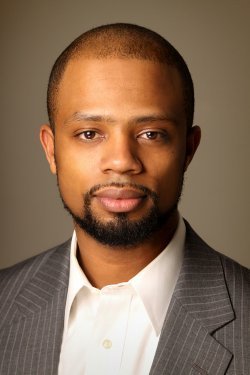
HuffPost Science posed those questions and others on Thursday to Dr. R. L’Heureux Lewis-McCoy, an associate professor of sociology at The City College of New York (CUNY) and author of the book Inequality in the Promised Land.

Dr. R. L'Heureux Lewis-McCoy

Dr. R. L’Heureux Lewis-McCoy

I would define racism as a system of social advantages and disadvantages doled out based upon group membership, particularly what we have socially defined as races. Among sociologists, we also talk about a newer form of racism known as “colorblind racism” (Eduardo Bonilla-Silva pioneered this work) that emerged after the 1960s, where the outward expression of racial animus and explicit discriminatory laws have been silenced or removed, but unfair racial advantages or disadvantages are still doled out, despite few people admitting to being devout racists.

From my framework, it is possible for someone to be working in service of racism by endorsing white supremacist ideologies. For example, Dylann Roof in South Carolina opened fire in Mother Emanuel Church and subscribed to beliefs about the superiority of whites and the “natural” order of things. Alternatively, someone who is black can also endorse negative beliefs about their racial siblings despite being a member of that group. A common example of this would be a police officer who is black but utilizes racial profiling in her or his everyday police work.

How would you then describe the ways in which our society is set up to perpetuate racism?

Continue reading “Racism Review: Understanding the Charleston shooting from a sociological perspective”

How to tell someone they sound racist

Posted on March 12, 2014 by Migrant Tales

Here’s a very good video clip with Jay Smooth that I found thanks to Racism Review that will help you challenge a person who makes a racist remark. The first and foremost thing you must do is stick to the that-sounded-racist conversation as opposed to they-are-racist conversation, according to Smooth.

Kuvankaappaus 2014-3-12 kello 0.49.43

Read original blog entry here. The video clip has gotten close to a million views.

“What they did conversation focuses on the person’s words and actions and why what they did and what they said was unacceptable,” he explained.

The problem with the they-are-racist conversation is that it will take your focus away from the issue.

“If somebody picks my pocket I’m not going to be chasing him down to find out if he feels like a thief deep down inside his heart,” said Smooth. “I’m going to be chasing him down to get my wallet. I don’t care what he is but I need to hold him accountable for what he did.”

We’ve heard it so many times before after a racist outburst the I’m-not-racist defense line.

In a nutshell we don’t care what you are but care about what you did and said.

The advice in the video clip offers the Finnish media, politicians and the public a way to challenge people who make racist comments.

Instead of calling Perussuomalaiset MP Jussi Halla-aho, Olli Immonen, Juho Eerola and James Hirvisaari of  Muutos 2011 racists, hold them instead accountable for what they have written and said.

Two of the four above-mentioned MPs, apart from Eerola and Immonen, have received sentences for ethnic agitation. Doing a google search on any of the four MPs will give you enough evidence to understand what they said sounded or was racist.

When the media doesn’t get it and doesn’t understand the difference, racists are usually given a platform to spread their prejudices. They give racists inflated respectability and importance.

)

Read Racism Review blog entry here.


Racism Review: White Sexual Violence against Enslaved Black Women

Posted on January 24, 2014 by Migrant Tales
MT comment: Understanding how why there was/is slavery enables us to understand the nature of the beast of  racism and social exclusion. 
_____________
By Rachel F

Historians have estimated that at least 58% of all enslaved women between 15 and 30 years of age were sexually assaulted by white men during the antebellum period. In addition to the white male privilege and power evident in this extensive routine rape of black female slaves, the reactions of white women to their husbands’ sexual behavior helped perpetuate racial and gender subordination as well as white privilege.

Kuvankaappaus 2014-1-24 kello 20.53.55

Read full column here.

White women reacted to sexual violence perpetrated against enslaved black women by their husbands in a variety of ways including ignoring or denying the behavior, divorcing their husbands, or punishing the enslaved black women who were sexually victimized. These reactions are repeated throughout a variety of records from slavery including Work Projects Administration slave narratives, divorce petitions, autobiographical slave narratives, and diaries.

For white women, the legal structure created some incentives to stay quiet about their husbands’ sexual violation of enslaved black women. During the 1800’s, a variety of state courts declared that a man had the right to execute “moderate chastisement” of his wife “in cases of emergency,” such as the Mississippi Supreme Court in Bradley v. State in 1824. The white male dominated structure of the legal, political, and economic system was crucial to white women’s responses to their husbands’ sexual violence against slaves. The desire to stay physically unharmed and financially secure likely encouraged many white women to remain silent about their husbands’ sexual behavior.

Mary Chesnut, an elite white woman living in the mid-1800’s described the denial of white women in her diary. She writes

every lady tells you who is the father of all the mulatto children in everybody’s household, but those in her own she seems to think drop from the clouds, or pretends so to think.

An anonymous former slave who was interviewed for the Work Projects Administration slave narratives wrote similarly,

Before my old marster died, he had a pretty gal he was goin’ with and he wouldn’t let her work nowhere but in the house, and his wife nor nobody else didn’t say nothin’ ’bout it; they knowed better. She had three chillun for him. . . .

Despite the potential consequences of speaking out against their husbands, some white women did file for divorce from their husbands often in large part because of the sexual “relationships” they had with enslaved black women. Through divorce petitions white women portrayed themselves as innocent victims of their husbands’ adultery. White women repeatedly overlooked the sexual violence and victimization of the enslaved black women coerced into their husbands’ “affairs.” Meanwhile they portrayed themselves as meeting the ideal standards of white womanhood, such as Margaret Garner from Mobile, Alabama who in 1841 petitioned for divorce explaining that she “calmly remonstrated” with her husband with regard to his affair or Mary Jackson from Georgia who treated her husband “Joseph with respect and affection and rendered due obedience to all the lawful commands.”

These women depict themselves as willfully submissive and obedient. Although the obedient, passive and loyal portrayals of themselves assisted white women in gaining divorces from their husbands as well as a portion of the economic resources in many cases; they simultaneously reinforced white gender roles and the white sexism that is associated. Moreover, when white women frame themselves as the sole victims of their husbands’ “affairs” with enslaved black women, they reinforce a narrative which focuses all attention on their own needs and the role of the court in protecting white women from men who have failed to achieve white male virtue, as opposed to acknowledging the needs of the black women who were sexually victimized and requiring of legal protection against rape.

Some white women also enacted a form of secondary abuse through physical and verbal punishment against the enslaved black women who had been sexually violated by white men. Through physical and verbal abuse, white women could transfer their feelings of humiliation, jealousy, or degradation into feelings of racial superiority over female slaves. Because white women were unable to enact any behaviors which would give them power over their white husbands this physical abuse directed at the enslaved black women simultaneously reflects the gender-subordinated and racially-privileged status that white women held. Not only did white women reinforce racial oppression through their responses, and lack of responses, to their husbands’ sexual violence, but they also reinforced their own oppression as white women by failing to resist the white male behaviors and white male dominated structures which ensure their gender subordination.

Today, although interracial rape of black women by white men has decreased significantly from the antebellum period, the intersecting institutions of oppression which shaped the identities and influenced the dynamics between white women, white men, black women, and black men persist. This raises the questions, in what ways are intersecting institutions of oppression creating incentives for some groups to partake in oppressive racial and gender performances and acts of domination today, and how does each group contribute to the overarching intersectional system of oppression?

*Rachel is a Phd student doing her dissertation work on this issue of the extensive sexual coercion and rape of Black women by white men during the slavery era.  

Read original blog entry here.

This piece was reprinted by Migrant Tales with permission.

Racism Review: Mixed Race, Pretty Face

Posted on April 5, 2013 by Migrant Tales

It was once thought multiracial children were destined to be confused, inwardly conflicted and maladjusted. “Think of the children”, used to be the warning used to discourage interracial couples from marrying. Mixed-race children often faced discrimination and prejudice. Experts worried that these children would suffer from poor self-esteem and lack of identity (Fields, Julianna. Multiracial Families: The Changing Face of Modern Families. Broomall, PA: Mason Crest, 2010.)

The “tragic mulatto” archetype was featured prominently in American culture (Show Boat, 1951).

Usually female, she embodied dislocation, incompatibility and confusion. Similarly we often saw the heartrending, Native American/White “half-blood” (Dances With Wolves, 1990) and in Yellow Peril fiction, the interracial love affair that ends tragically (Sayonara, 1951). (Nakashima, Cynthia L. “Servants of Culture: The Symbolic Role of Mixed-Race Asians in American Discourse,” Pp.35-57 in The Sum of Our Parts: Mixed Heritage Asian Americans.  Ed. Teresa Williams-León and Cynthia L. Nakashima. Philadelphia: Temple University Press, 2001. ).

Things have certainly changed.

In 1993, TIME Magazine published a special issue on multiculturalism in America. The now well-known cover featured an ethnically ambiguous woman over the caption “The New Face of America: How Immigrants Are Shaping the World’s First Multicultural Society”. Their model however was not a real person. Her image was computer generated by merging men and women from various racial and ethnic backgrounds. The editors felt she was a preview of what was likely to emerge in tomorrow’s America (). She was bold, beautiful, and significant enough to capture a prominent magazine cover. I remember being a young multiracial woman in Los Angeles when this issue was released (at a time when there weren’t near as many multiracial people). I was mesmerized. Perhaps I swelled with some pride and dignity knowing I was a part of the “future”.

Well that future seems to have arrived. According to the 2010 Census, those identifying with multiple races grew by 32% over the decade, for a total of 9 million while single-race identifiers grew by just 9.2%. A February 2012 Pew Research report showed the number of intermarriages has more than doubled since 1980. It credited growing public acceptance of mixed-race relationships as one reason for the rise.

Nowadays it’s all about “Multiracial Chic”. Being mixed is the coolest thing you can be. Take for example the 2006 Psychology Today article “Mixed Race, Pretty Face?” detailing a study which suggested part Asians are considered more beautiful than their monoracial counterparts.  Such pieces lauding the beauty of mixed race peoples abound. And this wide admiration is clearly visible in pop culture. Multiracial models are taking over advertising, plastered across billboards and magazines. Mixed race actors and pop stars are on the rise.


So what does this racial shift mean for our “global” future? Interestingly, the bodies of multiracial peoples (rather than their experiences) are now often being cited as proof that we have become a “postracial” society where racism is frowned upon and ethnic diversity is celebrated. Multiracial people supposedly breakdown racial boundaries just by their mere existence. Their ambiguous appearance alone is enough to destabilize and ultimately eradicate white privilege and the racial hierarchy. Others are beginning to contest this claim. Some predict that growing numbers of mixed race Americans will lead to a new racial hierarchy based on pigment, like those characterizing most Latin American countries. What may look like the “end of race” as more people of color gain political, social, and cultural visibility actually veils a redistribution of power. And multiracial people themselves are perhaps getting caught in the crosshairs, blurring the boundaries between whiteness and nonwhiteness even as they receive certain privileges that historically have been conferred upon those with white bodies (Park, Jane. “Virtual Race: The Racially Ambiguous ActionHero in The Matrix and Pitch Black”. Mixed Race Hollywood.  Ed. Mary Beltrán and Camilla Fojas. New York and London: New York University Press, 2008. 182-202. Print.).

It begs the question. How will the children of today feel about their multiraciality as they come of age in this new America? Will they be the enlightened world leaders of a model “postracial” society? Or will they find themselves entrenched in a new, confusing racial hierarchy with redefined standards. One in which some of them are privileged and others are not?

~ Sharon Chang’s blog is MultiAsian Families

Read original blog entry here.

This piece was reprinted by Migrant Tales with permission.

Racism Review: Does Cultural Diversity Promote Economic Growth?

Posted on March 8, 2013 by Migrant Tales

By Racism Review

Diversity has sometimes been considered as an abstract principle, divorced from macro-economic trends and global realities. Research by Quamrul Ashraf and Oded Galor of Brown University, suggests otherwise. In a paper released by the National Bureau of Economic Research in 2011, Ashraf and Galor crystallize their findings on the interplay between cultural assimilation and cultural diffusion in relation to economic development. They theorize that pre-industrial societies in agricultural stages of development may have benefitted from geographical isolation, but the lack of cultural diversity had a negative impact on the adaption to a new technological paradigm and income per capita in the course of industrialization. This “Great Divergence” in the developmental paths of nations has occurred since the Industrial Revolution.

Ashraf and Galor indicate that cultural assimilation enhances the accumulation of society-specific human capital, reducing diversity through standardization of sociocultural traits. Cultural diffusion, by contrast, promotes greater cultural fluidity and flexibility that expands knowledge allowing greater adaption to new technological paradigms.

One of the prominent questions long debated by scholars is why China failed to industrialize at the time of the Industrial Revolution and suffered from “economic retardation,” a question raised by Joseph Chai in Chapter VI of his new book An Economic History of Modern China. In their paper, Ashraf and Galor outline the early benefits of China’s geographical isolation as the “Middle Kingdom” or the center of civilization as evidence of the benefits of cultural assimilation in the agricultural stage of development. They also refer to the state-imposed isolation throughout the Ming (1368-1644) and Ching eras (1644-1911) that caused China to remain impervious to external influences. Although Ashraf and Galor do not expand upon the further ramifications of their theory in this example, the absence of cultural diffusion was clearly a major factor in China’s late development in the sciences and technology.

What does all this mean for diversity practitioners in the United States today? Clearly, the important benefits of cultural diversity need to be understood in broader, global, and historic terms. As Alvin Evans and I argue in Bridging the Diversity Divide: Globalization and Reciprocal Empowerment in in Higher Education, globalization is a catalyst for diversity change, representing an urgent mandate that can no longer be ignored. With the erosion of barriers of time and place, rapid evolution of technological modes of communication, increasing diversity of the American population, rising demands from diverse consumers, and importance of talent as a differentiator in organizational performance, organizations now must focus upon creation of inclusive talent management practices. In our forthcoming book, The New Talent Frontier: Integrating HR and Diversity Strategy (Stylus, 2013), we examine this global imperative and the emergence of common themes in diversity transformation across all sectors including private corporations, not-for-profits, and institutions of higher education.

As Richard Florida, author of The Rise of the Creative Class, puts it in his blog that discusses Ashraf and Galor’s contributions:

It’s time for diversity’s skeptics and naysayers to get over their hang-ups. The evidence is mounting that geographical openness and cultural diversity and tolerance are not by-products but key drivers of economic progress. . . . Indeed, one might even go so far as to suggest that they provide the motive force of intellectual, technological, and artistic evolution.

Read original blog entry here.

This piece was reprinted by Migrant Tales with permission.

Racism Review (United States): Racism in 2012 – Year End Review

Posted on January 1, 2013 by Migrant Tales

By Jessie

As 2012 draws to a close, I pulled together some of the biggest news in racism for the year.

Election Politics – Of course, much of the year we were focused on the racism in election politics.

  • New scholarship on the Obama years, the 2012 election and systemic racism appeared in the Journal Qualitative Sociology by our very own Joe Feagin and Adia Harvey Wingfield.
  • As a voters, Latinos had a big impact in this election, as Maria Chavez noted here.
  • Even though white privilege was not enough to secure a victory for Mitt Romney, he still did well among white voters who overwhelmingly supported him at the polls.
  • Even so, The New York Times was unable to marshal a sophisticated critique of the racism in the GOP.

White Male Shooters  – In some of the saddest news of the year, 2012 was bracketed by white male shooters unleashing violence on innocent strangers.

  • In January, Jared Lee Loughner opened fire on a crowd at an Arizona political rally, killing 6 and injuring 14.
  • In August, white supremacist Wade M. Page walked into a Sikh temple in Wisconsin, where he shot and killed 7 people.
  • In December, Adam Lanza killed 26 people, including 20 children at an elementary school in Connecticut. With this most recent shooting, some in the mainstream press began to identify white men as a group that “should be profiled,” a point that Joe Feagin has been making for many years.

Racial Profiling – Racial profiling was in the news a great deal this year, and was implicated in at least one death.

  • The senseless killing of teenager Trayvon Martin seemed to be case of racial profiling taken to a violent extreme when volunteer neighborhood watchman George Zimmerman perceived the unarmed Martin as a “threat” and shot him.
  • Racial Profiling is not only an issue in the U.S., it is also characteristic of policing in France as well.
  • In the city where I live, racial profiling combines with racial disparities in marijuana arrests and results in over 400,000 Black and Latino young men needlessly caught up in the criminal justice system each year.

Law & Economy  – Institutions, such as the law and the economy, are fundamental to the perpetuation of racism.

  • The Supreme Court heard a case about affirmative action brought against the University of Texas by a white woman who was refused admission.
  • Even with the election of Obama, deportations of Black and Latino men based on immigration status continued at an alarming rate, as Tanya wrote about here.
  • And, the election of Obama has done little to stem the tide of the racial gaps in wealth and income.

Athletics – There were some new stars in athletics who faced racism.

  • Gabrielle Douglas won a gold medal in gymnastics at the Olympics, yet faced a huge wave of criticism about her hairstyle, which many saw rooted in racism.
  • Jeremy Lin played in the NBA after a less-than-stellar college basketball career, and sparked “Linsanity” from enthusiastic fans; others made racist jokes at his expense.
  • There remain significant racial barriers to becoming a coach in the NFL, as Michael R notes here.

Passages – We lost some people who played a role in racial politics.

  • Rodney King, focus of a shocking video of police brutality, and when officers were acquitted in that beating, he famously tried to quell rioting by asking “Can’t we all just get along?” – died.  He was 47.
  • Russell Means, a leader of the American Indian Movement (AIM), and an Ogala Sioux Indian, died.  He was 72.

Personal Essays – We were delighted to post a couple of really moving personal essays from guest bloggers.

  • Reflection on Being a White Anti-Racist
  • To Everyone Who Isn’t American Indian

Hate & Violence – Overt racist hate and violence continued in 2012.

  • The SPLC reported that there has been a resurrgence in hate groups in the years since Obama’s election.
  • There was a spate of anti-Asian American racism in the news, perhaps none more tragic than the murder of Danny Chen.

Technology – Despite claims that Internet technology would usher in a new era in which “there is no race,” racism continues to be built into our technologies.

  • This year, Microsoft unvieiled – then quietly removed – their “Avoid Ghetto” App meant to help guide presumably white drivers away from “dangerous ghettos” with predominantly Black or Latino residents.
  • As the election news spread, so did the racist tweets about Obama.  Some clever folks made a map of those racist tweets, and I wrote a critique of it.
  • I also created a short video explaining how racism operates in the digital era.


Culture – Sometimes, when I consider the progress that’s been achieved around racism, I think some of the most important progress is achieved in culture, both popular culture and more rarefied high culture.

  • The gift that just keeps on giving is the change in lineup that happened this year at MSNBC when they (finally!) removed Pat Buchanan and then Melissa Harris-Perry got her own show.
  • A major museum in the nation’s capitol featured a show of all African American artists, simply called “30 Americans.” 
  • And, when an artist made a cake that many viewed as racist, it seemed the whole world spoke out against it.

Viral Videos – The year 2012 was a good one for viral videos about racism.

  • Stuff White Girls Say took off and made a point about the racism of white women.
  • Similarly, Randy Newman skewered white people in his spoof of his old song “Short People.”
  • Somewhat unintentionally, the highly crafted marketing video “Kony 2012? ended up being about racism as well in its facile portrayal of ‘evil’ in Africa in need of ‘white saviors.’

Documentaries – I continue to believe that documentaries can be a crucial tool in the effort to bring about racial justice.

  • Central Park Five – an important, devastating critique of racism.
  • Deconstructing Racism – a funder makes a call for documentary filmmakers to address racism.

May 2013 bring more racial justice!

Read original blog entry here.

This piece was reprinted by Migrant Tales with permission.


Racism Review: Idolizing Thomas Jefferson, Brutal Slaveholder and Racist Thinker

Posted on December 3, 2012 by Migrant Tales
By Joe

Law professor Paul Finkelman has an important commentary piece in the New York Times on two recent books on the “democratic” icon and famous founder Thomas Jefferson. Much of what most Americans believe about Jefferson’s everyday life in regard to racial matters is fictional or distorted in the direction of our “good” founders are “great liberty and equality advocates” in both thought and everyday practice.

A leading scholar of slavery and our “founding fathers,” Finkelman has much to say about this matter, especially in regard to the very interesting new book by Henry Wiencek that presents much data on Jefferson’s lifelong commitment to slavery and abuse of those he enslaved, including his sexual coercion of the young Black teenager Sally Hemings (see here). Finkelman argues that even Wiencek–who argues the younger and more egalitarian Jefferson becomes more of a hypocritical and money-oriented slaveholder as he ages — is too kind to Jefferson, especially in his early decades:

Jefferson was always deeply committed to slavery, and even more deeply hostile to the welfare of blacks, slave or free. His proslavery views . . . he tried to justify through pseudoscience. . . . when he wrote the Declaration of Independence, announcing the “self-evident” truth that all men are “created equal,” he owned some 175 slaves.

Finkelman adds that Jefferson was not the supposedly “good slaveholder,” the oxymoronic phrase often used for numerous slaveholding founders and other white slaveholders:

He sometimes punished slaves by selling them away from their families and friends, a retaliation that was incomprehensibly cruel even at the time. A proponent of humane criminal codes for whites, he advocated harsh, almost barbaric, punishments for slaves and free blacks.

And Wiencek’s book provides much more evidence of Jefferson’s brutality toward those he enslaved.

Thomas Jefferson is still a top democratic icon for a great many Americans, especially white Americans — with little critical recurring or public attention being given by whites to his everyday practice of extensive and often brutal slaveholding. Jefferson is also a founder (with intellectuals like Immanuel Kant) of early Western “race” framing that aggressively celebrates the white “race’s” superiority in most areas and puts down “inferior races” such as (enslaved) black Americans. You can see this most dramatically in his famous and only major book, Notes on the State of Virgina (see my analysis of Query 14 in that aggressively white-racist-framed chapter of his book here).

Well into the 21st century few Americans, especially few white Americans, know this bloody founding history, and remarkably few seem willing to learn it and examine its implications for our contemporary and still systemically racist society. Why is the historical truth on systemic racism so hard for most whites to accept and publicly discuss in this society?

Note: Paul Finkelman has a very good book, Slavery and the Founders, that I can recommend to you if you want to know more of the hard truths of our founding, slaveholding era and about the slavery-protecting US Constitution crafted by famous founders.

Read original blog entry here.

This piece was reprinted by Migrant Tales with permission.

AddThis

Racism Review: Racism Keeps Us from Seeing Each Other as Fully Human

Posted on November 4, 2012 by Migrant Tales

By Jessie

Connor and Brandon Moore, ages 4 and 2, are believed to be Hurricane Sandy’s youngest victims. They were swept out of their mother’s arms by the storm.

(Image from here.)

When I first heard reports of this story, I couldn’t make sense of it. The news reports said that the boys’ mother, Glenda Moore, had been “denied refuge.”  Why would this happen? How could this happen?

Then, reports came that their mother – the woman asking for refuge from the storm – was black (the boys’ father is white but wasn’t there).  And, then the story seemed to come into a horrible kind of focus, that implicated racism.

This story is being compared to the infamous ‘Kitty Genovese’ story from years ago in New York – when a young woman was stabbed to death and her neighbors did nothing to help. The not-often-told part of that story is that Kitty Genovese was a lesbian, and that’s part of why her neighbors didn’t call police on her behalf.  Her status as an ‘Other’ (lesbian) made her seem less-than-human to her neighbors.

This week, in Staten Island – the ‘fifth borough’ – people there, if reports are accurate, were blinded to the humanity of a mother and her two young sons because of racism.

Ultimately, racism blinds us to our shared humanity, keeps up from seeing each other as fully human, and in need of each others’ help. This time it cost two young lives, and we are all little less for it.

Read original blog entry here.

This piece was reprinted by Migrant Tales with permission.

Racism Review: Racism in the Digital Era

Posted on September 5, 2012 by Migrant Tales

Comment: A new term I learned from the video below was cloaked site. 

The video says at the end that “we have to get smarter about how racism works in the digital age.”

————-

By Jessie

This is a short video (5:27) I created, explaining how racism operates in the digital era.  The danger may not be what you think it is.

To see video click here.

Read original blog entry here.

This piece was reprinted by Migrant Tales with permission.

  • 1
  • 2
  • Next
Read more about documentary film
Read more

Recent Posts

  • Finland’s tabloids Iltalehti and Ilta-Sanomat are the pits
  • Riikka Purra’s Dr Jekyll and Mr Hyde mask
  • Double standards
  • Perussuomalaiset: Uusi logo, sama vanha juttu
  • Taco Trump

Recent Comments

  1. Absolutely Socking: Racist Finnish Facebook group against human rights gets flooded with socks on Musta Barbaari’s mother and sister charged by the police in “ethnic profiling” case
  2. Ilkka Nuotio on Pekka Myrskylä: “Tilastot kertovat toista kuin poliittinen keskustelu”
  3. Genrih Soinkara on The war in Ukraine and the Russian-Finnish border crisis are showing Finland’s ugly side
  4. Ahti Tolvanen on Comment by Ahti Tolvanen on the Helsinki +50 conference
  5. Angel Barrientos on Angel Barrientos is one of the kind beacons of Finland’s Chilean community

Archives

  • June 2026
  • May 2026
  • April 2026
  • March 2026
  • February 2026
  • January 2026
  • December 2025
  • November 2025
  • October 2025
  • September 2025
  • August 2025
  • July 2025
  • June 2025
  • May 2025
  • April 2025
  • March 2025
  • February 2025
  • January 2025
  • December 2024
  • November 2024
  • October 2024
  • September 2024
  • August 2024
  • July 2024
  • June 2024
  • May 2024
  • April 2024
  • March 2024
  • February 2024
  • January 2024
  • December 2023
  • November 2023
  • October 2023
  • September 2023
  • August 2023
  • July 2023
  • June 2023
  • May 2023
  • April 2023
  • March 2023
  • February 2023
  • January 2023
  • December 2022
  • November 2022
  • October 2022
  • September 2022
  • August 2022
  • July 2022
  • June 2022
  • May 2022
  • April 2022
  • March 2022
  • February 2022
  • January 2022
  • December 2021
  • November 2021
  • October 2021
  • September 2021
  • August 2021
  • July 2021
  • June 2021
  • May 2021
  • April 2021
  • March 2021
  • February 2021
  • January 2021
  • December 2020
  • November 2020
  • October 2020
  • September 2020
  • August 2020
  • July 2020
  • June 2020
  • May 2020
  • April 2020
  • March 2020
  • February 2020
  • January 2020
  • December 2019
  • November 2019
  • October 2019
  • September 2019
  • August 2019
  • July 2019
  • June 2019
  • May 2019
  • April 2019
  • March 2019
  • February 2019
  • January 2019
  • December 2018
  • November 2018
  • October 2018
  • September 2018
  • August 2018
  • July 2018
  • June 2018
  • May 2018
  • April 2018
  • March 2018
  • February 2018
  • January 2018
  • December 2017
  • November 2017
  • October 2017
  • September 2017
  • August 2017
  • July 2017
  • June 2017
  • May 2017
  • April 2017
  • March 2017
  • February 2017
  • January 2017
  • December 2016
  • November 2016
  • October 2016
  • September 2016
  • August 2016
  • July 2016
  • June 2016
  • May 2016
  • April 2016
  • March 2016
  • February 2016
  • January 2016
  • December 2015
  • November 2015
  • October 2015
  • September 2015
  • August 2015
  • July 2015
  • June 2015
  • May 2015
  • April 2015
  • March 2015
  • February 2015
  • January 2015
  • December 2014
  • November 2014
  • October 2014
  • September 2014
  • August 2014
  • July 2014
  • June 2014
  • May 2014
  • April 2014
  • March 2014
  • February 2014
  • January 2014
  • December 2013
  • November 2013
  • October 2013
  • September 2013
  • August 2013
  • July 2013
  • June 2013
  • May 2013
  • April 2013
  • March 2013
  • February 2013
  • January 2013
  • December 2012
  • November 2012
  • October 2012
  • September 2012
  • August 2012
  • July 2012
  • June 2012
  • May 2012
  • April 2012
  • March 2012
  • February 2012
  • January 2012
  • December 2011
  • November 2011
  • October 2011
  • September 2011
  • August 2011
  • July 2011
  • June 2011
  • May 2011
  • April 2011
  • March 2011
  • February 2011
  • January 2011
  • December 2010
  • November 2010
  • October 2010
  • September 2010
  • August 2010
  • July 2010
  • June 2010
  • May 2010
  • April 2010
  • March 2010
  • February 2010
  • January 2010
  • December 2009
  • November 2009
  • October 2009
  • September 2009
  • August 2009
  • July 2009
  • December 2008
  • November 2008
  • October 2008
  • September 2008
  • August 2008
  • July 2008
  • June 2008
  • May 2008
  • April 2008
  • March 2008
  • February 2008
  • January 2008
  • November 2007
  • October 2007
  • September 2007
  • August 2007
  • July 2007
  • June 2007
  • May 2007

Categories

  • ?? Gia L?c
  • ????? ?????? ????? ???????? ?? ??????
  • ???????
  • @HerraAhmed
  • @mondepasrond
  • @nohatefinland
  • @oula_silver
  • @Varathas
  • A Pakistani family
  • äärioikeisto
  • Abbas Bahmanpour
  • Abdi Muhis
  • Abdirahim Hussein Mohamed
  • Abdirahim Husu Hussein
  • Abdirisak Mahamed
  • About Migrant Tales
  • activism
  • Adam Al-Sawad
  • Adel Abidin
  • Afrofinland
  • Ahmed IJ
  • Ahti Tolvanen
  • Aino Pennanen
  • Aisha Maniar
  • Alan Ali
  • Alan Anstead
  • Alejandro Díaz Ortiz
  • Alekey Bulavsev
  • Aleksander Hemon
  • Aleksanterinliitto
  • Aleksanterinliitto ry
  • Aleksanterinliitto ry:n hallitus
  • Alex Alex
  • Alex Mckie
  • Alexander Nix
  • Alexandra Ayse Albayrak
  • Alexis Neuberg
  • Ali Asaad Hasan Alzuhairi
  • Ali Hossein Mir Ali
  • Ali Rashid
  • Ali Sagal Abdikarim
  • Alina Tsui
  • Aline Müller
  • All categories
  • Aman Heidari
  • Amiirah Salleh-Hoddin & Jana Turk
  • Amin A. Alem
  • Amir Zuhairi
  • Amkelwa Mbekeni
  • Ana María Gutiérrez Sorainen
  • Anachoma
  • Anders Adlecreutz
  • Angeliina Koskinen
  • Anna De Mutiis
  • Anna María Gutiérrez Sorainen
  • Anna-Kaisa Kuusisto ja Jaakko Tuominen
  • Annastiina Kallius
  • Anneli Juise Friman Lindeman
  • Announcement
  • Anonymous
  • Antero Leitzinger
  • anti-black racism
  • Anti-Hate Crime Organisation Finland
  • Anudari Boldbaatar
  • Arshiya Nasser
  • Aspergers Syndrome
  • Asylum Corner
  • Asylum seeker 406
  • Athena Griffin and Joe Feagin
  • Autism
  • Avaaz.org
  • Awale Olad
  • Ayan Said Mohamed
  • AYY
  • Barachiel
  • Bashy Quraishy
  • Beatrice Kabutakapua
  • Beri Jamal
  • Beri Jamal and Enrique Tessieri
  • Bertolt Brecht
  • Boiata
  • Boodi Kabbani
  • Bruno Gronow
  • Carmen Pekkarinen
  • Çelen Oben and Sheila Riikonen
  • Chiara Costa-Virtanen
  • Chiara Costa-Virtanen
  • Chiara Sorbello
  • Christian Thibault
  • Christopher Wylie
  • Clara Dublanc
  • Dana
  • Daniel Malpica
  • Danilo Canguçu
  • David Papineau
  • David Schneider
  • Dexter He
  • Don Flynn
  • Dr Masoud Kamali
  • Dr. Faith Mkwesha
  • Dr. Theodoros Fouskas
  • Edna Chun
  • Eeva Kilpi
  • Emanuela Susheela
  • En castellano
  • ENAR
  • Enrique
  • Enrique Tessieri
  • Enrique Tessieri & Raghad Mchawh
  • Enrique Tessieri & Yahya Rouissi
  • Enrique Tessieri and Muhammed Shire
  • Enrique Tessieri and Sira Moksi
  • Enrique Tessieri and Tom Vandenbosch
  • Enrique Tessieri and Wael Che
  • Enrique Tessieri and Yahya Rouissi
  • Enrique Tessieri and Zimema Mhone
  • Epäluottamusmies
  • EU
  • Europe
  • European Islamophobia Report
  • European Islamophobia Report 2019,
  • European Union
  • Eve Kyntäjä
  • Ezequiel Caldeiro
  • Facebook
  • Fadumo Dayib
  • Faisa Kahiye
  • Farhad Manjoo
  • Fasismi
  • Finland
  • Fizza Qureshi
  • Flyktingar och asyl
  • Foreign Student
  • Fozia Mir-Ali
  • Frances Webber
  • Frida Selim
  • Gareth Rice
  • Ghyslain Vedeaux
  • Global Art Point
  • Great Replacement
  • Habiba Ali
  • Hami Bahadori
  • Hami Bahdori
  • Hamid
  • Hamid Alsaameere
  • Hamid Bahdori
  • Handshake
  • Harmit Athwal
  • Hassan Abdi Ali
  • Hassan Muhumud
  • Heikki Huttunen
  • Heikki Wilenius
  • Helsingin Sanomat
  • Henning van der Hoeven
  • Henrika Mälmsröm
  • Hser Hser
  • Hser Hser ja Mustafa Isman
  • Husein Muhammed
  • Hussain Kazemian
  • Hussain Kazmenian
  • Ibrahim Khan
  • Ida
  • Ignacio Pérez Pérez
  • Iise Ali Hassan
  • Ilari Kaila & Tuomas Kaila
  • Imam Ka
  • inside-an-airport
  • Institute of Race Relations
  • Iraqi asylum seeker
  • IRR European News Team
  • IRR News Team
  • Islamic Society of Norhern FInland
  • Islamic Society of Northern Finland
  • Islamophobia
  • Jacobinmag.com
  • Jallow Momodou
  • Jan Holmberg
  • Jane Elliott
  • Jani Mäkelä
  • Jari Luoto
  • Jari Taponen
  • Jegor Nazarov
  • Jenni Stammeier
  • Jenny Bourne
  • Jessie Daniels
  • Joe Davidow
  • Johannes Koski
  • John D. Foster
  • John Grayson
  • John Marriott
  • Jon Burnett
  • Jorma Härkönen
  • Jos Schuurmans
  • José León Toro Mejías
  • Josue Tumayine
  • Jouni Karnasaari
  • Juan Camilo
  • Jukka Eräkare
  • Julian Abagond
  • Julie Pascoet
  • Jussi Halla-aho
  • Jussi Hallla-aho
  • Jussi Jalonen
  • JusticeDemon
  • Kadar Gelle
  • Kaksoiskansalaisuus
  • Kansainvälinen Mikkeli
  • Kansainvälinen Mikkeli ry
  • Katherine Tonkiss
  • Kati Lepistö
  • Kati van der Hoeven-Lepistö
  • Katie Bell
  • Kättely
  • Kerstin Ögård
  • Keshia Fredua-Mensah & Jamie Schearer
  • Khadidiatou Sylla
  • Khadra Abdirazak Sugulle
  • Kiihotus kansanryhmää vastaan
  • Kirsi Crowley
  • Koko Hubara
  • Kristiina Toivikko
  • Kubra Amini
  • KuRI
  • La Colectiva
  • La incitación al odio
  • Laura Huhtasaari
  • Lauri Finér
  • Leif Hagert
  • Léo Custódio
  • Leo Honka
  • Leontios Christodoulou
  • Lessie Branch
  • Lex Gaudius
  • Leyes de Finlandia
  • Liikkukaa!
  • Linda Hyökki
  • Liz Fekete
  • M. Blanc
  • Maarit Snellman
  • Mahad Sheikh Musse
  • Maija Vilkkumaa
  • Malmin Kebab Pizzeria Port Arthur
  • Marcell Lorincz
  • Mari Aaltola
  • María Paz López
  • Maria Rittis Ikola
  • Maria Tjader
  • Marja-Liisa Tolvanen
  • Mark
  • Markku Heikkinen
  • Marshall Niles
  • Martin Al-Laji
  • Maryan Siyad
  • Matt Carr
  • Mauricio Farah Gebara
  • Media Monitoring Group of Finland
  • Micah J. Christian
  • Michael McEachrane
  • Michele Levoy
  • Michelle Kaila
  • Migrant Tales
  • Migrant Tales Literary
  • Migrantes News
  • Migrants' Rights Network
  • MigriLeaks
  • Mikko Kapanen
  • Miriam Attias and Camila Haavisto
  • Mohamed Adan
  • Mohammad Javid
  • Mohammad M.
  • Monikulttuurisuus
  • Monisha Bhatia and Victoria Canning
  • Mor Ndiaye
  • Muh'ed
  • Muhamed Abdimajed Murshid
  • Muhammed Shire
  • Muhammed Shire and Enrique Tessieri
  • Muhis Azizi
  • Musimenta Dansila
  • Muslimiviha
  • Musulmanes
  • Namir al-Azzawi
  • Natsismi
  • Neurodiversity
  • New Women Connectors
  • Nils Muižnieks
  • No Labels No Walls
  • Noel Dandes
  • Nuor Dawood
  • Omar Khan
  • Otavanmedia
  • Oula Silvennoinen
  • Paco Diop
  • Pakistani family
  • Pentti Stranius
  • Perussuomalaiset
  • perustuslaki
  • Petra Laiti
  • Petri Cederlöf
  • Pia Grochowski
  • Podcast-lukija Bea Bergholm
  • Pohjois – Suomen Islamilainen Yhdyskunta
  • Pohjois Suomen Islamilainen Yhyskunta
  • Polina Kopylova
  • Race Files
  • racism
  • Racism Review
  • Raghad Mchawh
  • Ranska
  • Rashid H. and Migrant Tales
  • Rasismi
  • Raul Perez
  • Rebecka Holm
  • Reem Abu-Hayyeh
  • Refugees
  • Reija Härkönen
  • Remiel
  • Reza Nasri
  • Richard Gresswell
  • Riikka Purra
  • Risto Laakkonen
  • Rita Chahda
  • Ritva Kondi
  • Robito Ibrahim
  • Roble Bashir
  • Rockhaya Sylla
  • Rodolfo Walsh
  • Roger Casale
  • Rostam Atai
  • Roxana Crisólogo Correa
  • Ruth Grove-White
  • Ruth Waweru-Folabit
  • S-worldview
  • Sadio Ali Nuur
  • Sami Rusanen
  • Sandhu Bhamra
  • Sara de Jong
  • Sarah Crowther
  • Sari Alhariri
  • Sarkawt Khalil
  • Sasu
  • Scot Nakagawa
  • Shabana Ahmadzai
  • Shada Islam
  • Sharon Chang blogs
  • Shenita Ann McLean
  • Shirlene Green Newball
  • Sini Savolainen
  • Sira Moksi
  • Sonia K.
  • Sonia Maria Koo
  • Steverp
  • Stop Deportations
  • Suldaan Said Ahmed
  • Suomen mediaseurantakollektiivi
  • Suomen Muslimifoorumi ry
  • Suomen viharikosvastainen yhdistys
  • Suomen viharikosvastainen yhdistys ry
  • Suomi
  • Supermen
  • Susannah
  • Suva
  • Syrjintä
  • Talous
  • Tapio Tuomala
  • Taw Reh
  • Teivo Teivainen
  • The Daily Show
  • The Heino
  • The Supermen
  • Thomas Elfgren
  • Thulfiqar Abdulkarim
  • Tim McGettigan
  • Tino Singh
  • Tito Moustafa Sliem
  • Tobias Hübinette and L. Janelle Dance
  • Transport
  • Trica Danielle Keaton
  • Trilce Garcia
  • Trish Pääkkönen
  • Trish Pääkkönen and Enrique Tessieri
  • Tuulia Reponen
  • Uncategorized
  • UNITED
  • University of Eastern Finland
  • Uyi Osazee
  • Väkivalta
  • Vapaa Liikkuvuus
  • Venla-Sofia Saariaho
  • Vieraskynä
  • W. Che
  • W. Che an Enrique Tessieri
  • Wael Ch.
  • Wan Wei
  • Women for Refugee Women
  • Xaan Kaafi Maxamed Xalane
  • Xassan Kaafi Maxamed Xalane
  • Xassan-Kaafi Mohamed Halane & Enrique Tessieri
  • Yahya Rouissi
  • Yasmin Yusuf
  • Yassen Ghaleb
  • Yle Puhe
  • Yuliet Tresa
  • Yve Shepherd
  • Zahra Khavari
  • Zaker
  • Zalina Ametova
  • Zamzam Ahmed Ali
  • Zeinab Amini ja Soheila Khavari
  • Zimema Mahone and Enrique Tessieri
  • Zimema Mhone
  • Zoila Forss Crespo Moreyra
  • ZT
  • Zulma Sierra
  • Zuzeeko Tegha Abeng
© 2026 Migrant tales | Powered by Minimalist Blog WordPress Theme