Migrant tales
Menu
  • #MakeRacismHistory “In Your Eyes”
  • About Migrant Tales
  • It’s all about Human Rights
  • Literary
  • Migrant Tales Media Monitoring
  • NoHateFinland.org
  • Tales from Europe
Menu

Category: Enrique Tessieri

Coronavirus cases at the Espoo asylum reception center surge from 2 to 22

Posted on April 28, 2020 by Migrant Tales

After two coronavirus cases to mid-April, Helsingin Sanomat reported Monday of 22 infections at the Luona-managed Nihtisilta reception center in Espoo.

Haidari Ehsan is an asylum seeker at the Nihtisilta reception center, which houses 410 refugees.

Read the original story here.

“I’m not happy with the way Luona has informed us about the outbreak at the reception center,” he said. “The only way we are in touch with the supervisor is by phone.”

Ehsan lives in a room with another person and fears that he might be infected with coronavirus because, according to him, “he has all the symptoms.”

He said that the coronavirus-infected asylum seekers are quarantined on the third and seventh floor of the building but can move wherever they want in the building.

“The majority of the people at the reception center do not feel any symptoms due to coronavirus,” he continued. “Most of them work during day and night shifts and since they don’t have cars, they use the train instead. This may be a dangerous way of spreading the virus.”

Ehsan recommended that everyone at the reception center should be quarantined for some weeks until we know for sure if they have the virus or have recovered from it.

“Those who are infected are recovering, and some are no longer in quarantine,” he concluded.

Jussi Halla-aho is President Donald Trump’s Finnish cheerleader

Posted on April 25, 2020 by Migrant Tales

The Islamophobic and populist Perussuomalaiset (PS) is a party that attempts to revindicate far-right racists on the rampage and its leader, Jussi Halla-aho, is US President Donald Trump’s enthusiastic cheerleader.

Halla-aho, who has a conviction for ethnic agitation, breaching the sanctity of religion and being a racist smartass, stated his undying admiration for a president who is a chronic narcissist and defies science.

On June 4, 2019, Halla-aho tweets: “I dig. him. Trump is the best thing that has happened in a long time to the United States and to the Western world.”

As we all heard Thursday, President Trump suggested that a beam of light and a disinfectant like bleach, if injected in the body, could help kill the coronavirus.

Halla-aho’s and his party’s admiration of Trump reveals the kind of country they’d want Finland to be.

A disaster based on social inequality and racism.

Thank you Christin Bergström? for the heads-up.

It’s high time for Finland to yank those roots of racism from the ground

Posted on April 24, 2020 by Migrant Tales

This blog entry is dedicated to the late Donald Fields, Helsinki correspondent of the BBC, The Guardian, and Politiken to 1988.

As a journalist writing from Finland for some of Europe’s biggest dailies in the 1980s like the Financial Times, there is one matter that stands out from those days: censorship.

The censorship that Finland imposed on its media was overpowering and near-complete. Even writing about topics like EU – then EEC – membership was out of the question. Foreign policy was the sacrosanct topic reserved for only a few “wise” men.

As one example out of many, in 1992 I wrote an editorial for Apu magazine about the scrapping of the treaty of Friendship, Cooperation, and Mutual Assistance (YYA) with the Soviet Union. At the last moment, my editorial was taken down.

The only matter that remained of my editorial on the page was a black-and-white picture of Soviet Foreign Minister Vyacheslav Molotov signing the YYA agreement in 1948.

The then editor of Apu, Matti Saari, warned me: “I’m the only one that writes about such topics in editorials.”

Whenever I wrote a story that was critical about Finnish-Soviet relations, I’d get a call from the Soviet Embassy. Even the foreign ministry warned me that I would be blacklisted if I wrote critically as I once did for Spain’s leading news magazine Cambio 16 about the contraband of Bibles to the USSR.

A Finnish diplomat whom I knew in Madrid told me how furious they had been about what I had written. She said outright that if I continued to write about such topics, then I would be blacklisted by the foreign ministry.

Mike Hofman published in 2014 his thesis on media censorship during the cold war.

Soviet Foreign Minister Vyacheslav Molotov signing in 1948 the treaty of Friendship, Cooperation, and Mutual Agreement. Source: Yle.

Some of these “wise” men who guided Finland’s sacrosanct foreign policy during the cold war was the late Max Jakobson (1923-2013). I found out many years after his death that we were distant relatives. Our great great great grandfather was Jacob Weikain, who moved to Hamina in 1799 and was the first Jew to get a residence permit.

Believe it or not, history books in Finland to the 1970s still claimed that Finland was populated by two races, the Nordic and East Baltic. Eugenics was a big pseudoscience in Finland. Source: J.E. Aro, J.E. Rosberg, I Arvi F. Poijärvi, Koulun maantieto, WSOY, 1941. p.32.

Jakobson, like some of the hardliners of the foreign ministry, and associations like Finnfacts, whose job was to invite foreign journalists to Finland so they’d write positive things about the country, did not accept anyone diverging from the official interpretation of relations with Moscow.

In the minds of many foreign ministry officials, Finlandization, foreign policy dictated by the USSR, did not exist.

In the summer 1980 edition of Foreign Affairs, Jakobson wrote: “As a result, Finland is forever at the mercy of the itinerant columnist who after lunch and cocktails in Helsinki is ready to pronounce himself upon the fate of the Finnish people.”

The attitude that Finns never mind foreigners should see the country’s relations with the USSR from its perspective, reveals today Finnish exceptionalism. Foreign journalists and scholars should not give their opinion because they don’t understand our reality.

This exclusive attitude is highlighted by S. Muir and H. Worthen in “Finland’s Holocaust.” “Even when there was something written about Finland, the perspective of the foreign researcher was often criticized for hopeless objectivity and the blindness towards the specifically Finnish war-time historical context. In many cases, this has been more than justified (our emphasis).”[1]

How have the cold war years impacted Finland today? Is it evident in its immigration and asylum policy and the general suspicion of foreigners? Can we trace its impact to the rise of a racist party called the Perussuomalaiset (PS)?* What about the explosive increase of hate speech and racism?

As S. Muir and H Worthen as well as other scholars, it is clear that the roots of Finnish racism are rooted in its history.

They continue: “The myth of an ideologically unified Finland isolated from the attitudes and practices of its ally, the Third Reich, and generally unsullied by antisemitism has become an insupportable burden for contemporary Finnish historical and cultural studies, and indeed for contemporary Finnish society; the insensitivity toward these silenced histories provides a condition of continued racism and antisemitism. [2]

Cold War and Human Rights

My Finnish relatives are a source that helps me to understand the source of racism. It is right under my nose almost completely whitewashed by hostility and history.

Part of my grandfather’s family changed their surname in 1931 to Harvo from Handtwargh. Even if I never asked my grandfather why he changed his surname, I suspect it had to do with the rise of fascism and anti-foreign sentiment, which was fed by anti-Semitism.

While matters like my family’s Jewish background took decades to figure out, one of my greatest disappointments, when I moved permanently to Finland in December 1978, came when an Aliens’ Office official said that I wasn’t a Finn.

Citizenship in Finland is determined by the parents’ citizenship (jus sanguinis). Even so, I was not considered a Finn because my father wasn’t a Finn.

Even if people in this country are quick to point out that women where the first in Europe who won the right to vote in 1906, it was not until 1984 when they had the right to pass on Finnish citizenship to their children.

A year before women won such a right, the country had in force its first-ever Aliens Act. Before the act, foreigners were treated by the aliens’ authorities on a one-to-one basis. You had no rights and could be deported without the right to appeal.

The treatment of foreigners, especially Soviet refugees, was disgraceful during the cold war.

Migrant Tales has written on Soviet asylum-seekers in Finland in the past and how they were returned against their will to the USSR to suffer a gruesome fate in psychiatric wards and prisons. One of these that I met was Aleksandr Shatravka, who visited my home in 2011 with his wife Irina.  Thanks to Aleksandr, whom I met thanks to Migrant Tales, I published in February 2010 in one of Finland’s first-ever extensive human- interest stories on a former asylum-seeker who was forcibly returned to the Soviet Union in 1976.

If Finland was hostile to refugees and suspicious of foreigners, the country was ruled until 1992 by the Restricting Act of 1939.

The Act prohibited foreigners from owning real estate and acquiring a majority stake in Finnish companies—limiting this to 20% normally and 40% under special permission. The Restricting Act stipulated that foreigners could not own shares in sectors like forestry, securities trading, transportation, mining, real estate, and shipping. Foreigners weren’t allowed to establish newspapers, never mind organize demonstrations, and be politically active.

If history shows us some of the roots of our racism and anti-Semitism today, it also sheds as well light on our restrictive asylum and immigration policy. It explains why the Finnish Immigration Service operates in the way it does and why it has been the object of much criticism.

One positive step in cutting the roots and sources of our racism was an independent investigation that confirmed in February that Finnish volunteers of the Waffen-SS Wiking Division engaged in violent acts against civilians and Jews in Russia.

Considering that the aim of the SS in Russia was a war of annihilation and genocide against Jews and other enemies of the Nazis, the conclusions of the investigation should not come as a surprise.

The big surprise, however, is that it has taken almost 85 years to connect the volunteers of the Waffen-SS dots to the genocide that took place in Russia during World War 2.

[1] Finland’s Holocaust: Silences of History, edited by S. Muir, H. Worthen, pp. 25-26.

[2] Ibid., p. 26.

Jewish Community of Helsinki: Anti-Semitism is now recognized by the authorities as a problem in Finland

Posted on April 21, 2020 by Migrant Tales

According to Yaron Nadbornik, president of the 1,100-strong Jewish Community of Helsinki, the Finnish authorities acknowledge that there is anti-Semitism and it is a problem.

“The authorities have recognized during 2018-2019 that there is an anti-Semitism problem in Finland,” he said. “Before it was [for them] pretty unclear if such a matter existed.”

Read the full story here.

According to Nadbornik, the shift in attitude happened due to the activities of neo-Nazi and far-right groups in Finland.

The head of the Jewish Community of Helsinki said that hate speech continues to be the fertile ground for anti-Semitism and racism in Finland.

“More efforts [by the authorities] should be taken to address hate speech,” he continued, “because it is from there where terrible things happen.”

Nadbornik complained in an interview in 2017 that the government of Prime Minsiter Juha Sipilä was not doing enough to clamp down on online hate speech.

“Anti-Semitism has become more systematic and organized [since 2017],” he said, adding the groups use different online platforms to spread their hatred.

Nadbornik agreed that politicians should show more leadership against hate speech and social ills like anti-Semitism and racism.

“Politicians do speak out against hate speech but a lot more could be done,” he said. “President [Sauli] Niinistö’s speech denouncing anti-Semitism [and condemning neo-Nazi groups] was important because it reaffirmed that there is a problem [in Finland and steps must be taken to eradicate it].”

President Niinistö’s condemnation came after the Turku Synagogue was the target of vandals on Holocaust Remembrance Day in January.

Nadbornik said that the Synagogue of Helsinki was also vandalized several times in winter with paint and stickers.

“The coronavirus [pandemic] has fueled racism against the Chinese and Jews in Central Europe and the United States,” he concluded. “We haven’t seen this problem in Finland, and I hope I never will.”

Ali’s journey back to Finland: “How long before I can be by my beloved wife’s side?”

Posted on April 19, 2020 by Migrant Tales

If you had the opportunity ever to know Ali, one of the first things you’d know is his arduous journey from Finland to Iraq and hopefully back. During the roughly three years lived in Finland, the Finnish Immigration Service (Migri) to tell him that he isn’t wanted here.

This is his situation today: Ali left voluntarily in June 2018 to Iraq, got married to his sweetheart in Turkey in October of the same year, and applied for a visa to Finland on the grounds that he is married to a Finnish citizen.

After a long wait, their chance to live together in Finland was dashed last autumn by Migri, which claimed that their marriage is fake.

Both have appealed the decision to the administrative court.

“Sometimes I lose hope and it is really a stressful feeling,” said Ali’s wife. “I hope things will work out. We will find a way.”

Apart from doing everything legally, the couple sent a letter to Interior Minister Maria Ohisalo asking her to intervene in their case.

“I haven’t got any reply from her office,” said Ali’s wife. “Not even confirmation that they received our letter.”

There is always a question that arises from Ali: “How long before I can be by my beloved wife’s side?”

If there is one matter that characterizes Migri in Ali’s and his wife’s case it is the sheer cruelty and arbitrariness of how Migri treats asylum seekers from the Middle East, Ali’s case is one from a long list of other Middle Easterners married to a Finn.

Just like Finland’s inhumane family reunification policy, the human right to establish a family in Finland is denied by a country that claims to value social equality and justice.

In my book that is called hypocrisy.

A message* from Ali (12.4.2020):

Hi Enrique,

How are you, it’s been a long time since we chatted. I hope you are feeling well. I don’t know what’s happening to me. I’m not having good days as I once did a long time ago. I don’t know what to do, but I remember you. You’ve always lent a friendly ear, and thank you for helping us in our ordeal. There are many thoughts, some that appear when I’m working or when I’m resting. Matters become worse before I go to sleep. Every time I close my eyes, an image appears of a picture (see below) I took in a police cell I was detained.

This picture was taken by Ali while in detention in a police cell in Mikkeli.

My heart starts to beat faster when I remember the unfair treatment I received in Finland by the police. It generates a lot of anxiety and sadness. I sometimes watch movies before going to sleep to forget. But I cannot sleep as so many things are swimming around in my mind, like the nightmares, the nightmares I see every night. One of these is of the police running after me. I try to run, but there is nothing I can do. I cannot escape. The nightmares are so intense that I can’t stop them from appearing. I tried many times by not thinking of what happened. I tried everything even with the help of video calls with my wife every day and every night. But it’s to no avail. The nightmares appear. I wish I could do more and be stronger, but it’s so hard. I’m sorry for sharing this with you.

See also:

  • Ali’s journey: Getting married in Turkey and the long wait. Will he get a visa to Finland? (15.10.2018)
  • Ali’s journey (June 13, 2018): The long journey back. Baghdad feels like a sauna (13.6.2018)
  • Ali’s journey (May 20, 2018): Last full day in Mikkeli, Finland (20.05.2018)
  • The police officer, and the asylum seeker’s lighter: “I’ll give it back to you in Baghdad” (24.2.2018)
  • Asylum seeker in detention cell 208: Two pictures, two views of the Joutseno immigration removal center (22.2.2018)
  • Asylum seeker in detention cell 406: “I’ll either be sent to Lappeenranta or Joutseno” (20.2.2018)
  • A letter from an Iraqi asylum seeker in detention cell 406 in Joutseno, Finland (31.10.2017)
  • Asylum seeker in detention cell 406: “…I’m happy to be free again” (23.11.2017)
  • Asylum seeker in detention cell 406: Administrative court halts deportation order temporarily (17.11.2017)
  • Iraqi asylum seeker in detention cell 406: “Migri doesn’t believe I’m a Christian” (10.11.2017)

*The original message was slightly edited.

Luottavatko vähemmistöt Suomen lehdistöön?

Posted on April 17, 2020 by Migrant Tales

Tässä mielipidekirjoitus, joka julkaistiin maaliskuussa Karjalaisissa. Tarjoisin kirjoitusta ensiksi Helsingin Sanomiin, mutta tuli seuraava vastaus: “Kiitos kirjoituksesta. Runsaan tarjonnan takia meillä ei ole mahdollisuutta julkaista sitä.” Karjalaisissa poistettiin muutamia kohtia kirjoituksesta. Tässä alkuperäinen kirjoitus.

Yksi lehdistön tärkein tehtävä on olla yhteiskunnan vahtikoira ja valvoa kaikkien oikeuksia.  Kuinka hyvin Suomen lehdistö valvoo vähemmistöjen, kuten muslimien, oikeuksia?

Osa ihmisistä ja vähemmistöistä eivät tiedä kuinka tärkeä rooli ja vastuu lehdistöllä on demokraattisessa yhteiskunnassa. Lehdistön vapaus kuuluu sananvapauteen ja on lakisääteinen. Jos viimeiset tutkimukset puhuvat totta, Suomessa esiintyy liian paljon syrjintää työmarkkinoilla ja poliittinen maahanmuuttovastaisuutta leimaava retoriikka rehottaa.

Keväällä julkaistaan uusin eurooppalaisesta muslimeihin kohdistuva rasismi ja syrjintä kertova raportti (European Islamophobia Report). Suomen osiossa kuvataan kuinka eritysesti Oulun seksuaalirikosten uutisointi sekä myöhemmin al-Holin naisten ja lasten kotiuttaminen vaikuttivat muslimiyhteisöön.

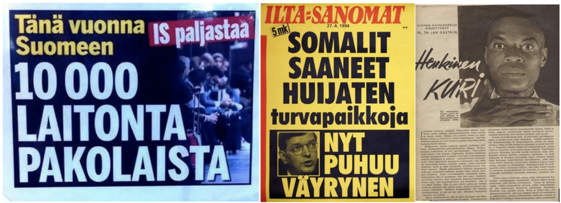
Ilta-Sanomat kirjoitti vuonna 2015 “laitonta” pakolaisista.

Kuten Oulun kirjoitukset osoittivat, poliitikot (erityisesti perussuomalaiset ja myös hallituspuolueesta mm. kokoomus), innostuivat leimaamaan koko muslimiyhteisön. Huhtikuun eduskuntavaalit oli yksi tärkeä moottori, joka innoitti poliitikot tähän ja lehdistö tarjosi hyvän alustan levittää tätä sanoma.

Mielestäni yksi tärkein lehdistön ominaisuus on olla reilu. Sanat ovat, kun luoteja. Tykillä ei kannata kärpästä ampua.  

Suomalaisen lehdistön reaktio ei yllätä. Eräs brittitutkimus (Muslim Council of Britain) paljasti, että keskimäärin 59% kirjoituksista olivat puolueellisia ja negatiivisia muslimeille.

Suomesta löytyy paljon esimerkkejä negatiivisista ja jopa rasistisista jutuista 1990-luvulta, kun iltapäivälehdet kirjoittivat somalipakolaisten tulosta Suomeen. Tässä muutamia lööppejä Ilta-Sanomista: ”Somalit saaneet huijaten turvapaikkoja” (27.4.1994), ”Somalit jäävät Suomeen” (7.8.1996), ”Miksi venäläiset ärsyttävät suomalaisia?” (1.8.1995). Vuonna 2015 sama meno näytti jatkuvan: ”IS paljastaa: Tänä vuonna Suomeen 10 000 laitonta pakolaista.

Pakolaiset eivät voi olla ”laittomia”, koska he ovat maahan tullessaan hakeneet turvapaikkaa, mikä on yksi ihmisoikeuksista.

Mediatutkija Anu Koivunen kirjoitti Suomen Kuvalehdessä (25.01.2019) kuinka lehdistö käsitteli Oulun tapahtumia.

”Myös Yle osallistui paniikkiin julkaisemalla viikon aikana yli 50 verkkojuttua Oulun seksuaalirikosepäilystä ja seksuaalirikoksista,” hän kirjoitti. ”Lisäksi aihe oli esillä Ylen ajankohtaisohjelmissa: A-Talkissa, Ykkösaamussa, A-Studiossa, Aamu-tv:ssä, Politiikkaradiossa ja Sannikka & Ukkola -ohjelmassa.”  

Koivunen ei sitä kerro kolumnissaan, mutta veikkaan, että hyvin vähän, jos ollenkaan, muslimitaustaisia asiantuntijoita käytettiin lähteenä kirjoituksissa.

Al-Holin suomalaisten naisten ja heidän lastensa kotiuttamisessa näkyi samaa ”paniikki”: Yle julkaisi ajalla 2.-21.2019 yhteensä 71 kirjoitusta, kun samaan aikaan Helsingin Sanomat julkaisi 36.

Toki lehdistöllä on velvollisuus kirjoittaa aiheista, jotka vaikuttavat yhteiskuntaan ja kiinnostavat tai huolestuttavat suomalaisia ja vähemmistöjä.

Mikäli Suomi ja sen lehdistö haluaa kasvattaa uskottavuutta eri etnisten ryhmien kanssa, yksi positiivinen askel olisi kouluttaa ja työllistää lisää vähemmistöjen edustajia toimittajiksi.

Olen varma, että uutistoimituksesta löytyy hyvin vähän vähemmistöjen edustajia. Jos Helsingissä asuu n. 16% vieraskielisiä, niin kuinka monta tästä ryhmästä on edustettuna Suomen suurimmassa lehdessä?

Lehdistöllä on tärkeä rooli siinä,  millaista yhteiskuntaa rakennamme tänään ja tulevaisuudessa: onko se reilu vai puolueellinen vähemmistöjä kohtaan?

Enrique Tessieri valtioteiden maisteri, vapaa kolumnisti, Migrant Tales-blogin perustaja, European Network Against Racism (ENAR) hallituksen jäsen (2016-2019) ja European Islamophobia Report Suomen osion kirjoittaja.

Finland’s populist party’s #coronavirus kiss of death to minorities it wants to oppress and forsake

Posted on April 15, 2020 by Migrant Tales

One of the matters that the coronavirus has exposed as well. is how populist anti-immigration parties like the Perussuomalaiset (PS)* assail migrants and minorities, especially Muslims.

Helsinki Mayor Jan Vapaavuori was quoted as saying in statement that he is concerned by the rapid rise of coronavirus infections among the Somali speaking community.

“Close to 200 cases have been identified to date, which translates to 1.8 percent of the Somali community in the capital, compared with the 0.2 percent average among all of Helsinki’s residents,” the statement said. “In light of this recent worrying trend, the City of Helsinki and HUS hospitals have stepped up their efforts to prevent further contagion.”

While Migrant Tales alerted its readers about how minorities could be more susceptible to infection, the PS has criticized state-owned broadcaster Yle for offering information about coronavirus in the Somali, Kurdish, Farsi and Arabic languages.

One PS official that was highly critical of the broadcasts was party secretary Simo Grönroos. “On morning TV they suggested that broadcasts in [these people’s] mother tongue should be expanded. This is not the way to go. If they want to hear the news in Arabic they should move to an Arabic-speaking country.”

It was last summer that PS MP Ano Turtiainen thanked the ebola virus for doing its part in keeping population growth in Africa.

Back then, he had no idea that the white people like him in Europe would be the victims of a deadly killer called coronavirus.

While exceptionalism and many other blindspots may keep us from seeing inequality in our health care system in Finland and other EU countries, the European Network Against Racism is spot on by stating, the #inequality doesn’t just make pandemics like #Covid_19 worse – it could cause them.

Look out also for a racist blame game against minorities for higher coronavirus infections.

Social inequality is the culprit, not the minorities’ fault because his or her illtreatment, microaggressions, and social exclusion may have undermined his language and social skills.

Coronavirus: When will it end?

Posted on April 12, 2020 by Migrant Tales

We have all heard the case for increased testing for coronavirus (COVID-19). But we need other tests like those that will judge our politicians and how they handle COVID-19.

An article in the Washington Post interviewed a black man in Louisiana who said that “wearing a facemask won’t protect us from our history [of slavery and Jim Crow].”

In the United States alone, coronavirus strikes and kills blacks, Latinos and other minorities disproportionately.

Apart from exposing our wasteful investments on defense and weapons spending, which give us a false sense of security, the pandemic exposes in our faces as well the chronic social inequalities of our societies.

Source: BuzzFeed.com.

Not only are the most vulnerable groups suffering in the United States but minorities in the UK and other countries of the world.

There is mounting evidence – and it should not surprise us – that blacks, Asians and other minority communities in the UK are hit the hardest. According to the BBC, over a third of the patients critically ill in hospitals are minorities.

It would not surprise me either in Europe that members of the Romany minority and Muslims may experience much higher infection and death rates than white Europeans.

The fact that we still do not have any official statistics on the latter is quite revealing. Such information is also important because minority communities must take steps to protect themselves from the deadly virus.

When will COVID-19 end?

I believe that the pandemic will end when we put on the defensive and tackle effectively social inequality, boundless greed, environmental destruction, laissez-faire globalization and capitalism, populists that worship dictators, and the billionaires that are screwing things up big time.

Read the full story (in Spanish) here

In an interview in Córdoba three years ago, Finnish screenwriter Aki Kaurismäki said: “We must exterminate the rich and the politicians who lick their asses.”

While the rich indirectly kill people through their wealth accumulation, “extermination” may mean forcing rich people to pay much higher taxes and severely cut off their money machines, which are the capital markets.

Such wealth should not end up in their greedy pockets of the 1% but used for creating global well-being and improving the lives of everyone on this planet.

Albanian construction worker: Being the father of a child is not a valid reason for Migri to grant you a residence permit

Posted on April 10, 2020 by Migrant Tales

Separation or divorce from a partner can be an especially trying matter in Finland if you are a foreigner and a man. We have learned of a new case that was brought to our attention.

This is how it usually how events pan out: A foreigner gets married to a Finnish woman, they have a child and then divorce. The man does not get a residence permit. He is forced to leave the country or get deported.

Below is a decision in 2018 by the Finnish Immigration Service (Migri) to reject Abul’s* residence permit on family grounds.

Source: Migrant Tales.

Ardian* is a 24-year-old Albanian who moved to Finland a bit over three years ago. He came to Finland to find work. He met a Russian woman, got married, had a child, and separated.

“I have been waiting for three years to get my residence permit,” he said. “Even if I have a child in Finland, Migri, has turned down my requests.”

He said that he is appealing Migri’s decision in court and expects a decision soon, probably in April.

Ardian,* who lives in Vantaa, said that he has always worked (today in construction) in Finland, paid taxes and never asked for a cent of social welfare.

He said that he even moved to a construction site in Kittlä in Lapland and works today on top of a 39-meter tower. He said that if he refused to work in such high places, his boss would fire him.

Ardian claims that foreign construction workers do work that Finns would not normally do.

Since he does not have a residence permit, he can work legally but does not have any rights from Kela (Social Insurance Institution of Finland), even if given sick leave.

“I once fractured two fingers at work and the doctor gave me two-month sick leave,” he said. “I had to return back to work and could not stay at home because I wasn’t making any money. Kela refused to pay me any support.”

Apart from working with few rights, his daughter is one of the main reasons he wants to remain in Finland.

“It’s so unjust! If I could, I’d ask the Finnish authorities why I am being treated in this way,” Ardian continued. “I have a daughter, which I love very much but am not allowed to see. Don’t I have a right to stay in this country?”

See also

  • Finnish Immigration Service: “Your wife’s unborn child can grow up without you; is the child going to be raised a Muslim?” PART II (15.8.2018)
  • A Moroccan called Majid who was deported despite being married to a Finn (28.6.2018)
  • Another case of an Iraqi asylum seeker married to a Finn with a five-month child who may face deportation (18.4.2018)

Ardian cited “differences in lifestyle” for his divorce with his wife.

“My ex-wife wanted us to live off Kela but I refused to,” he said without providing any further explanation.

Ardian said that returning to Albania was not an option for him.

“That whole country is so corrupt and there is a lot of crime there,” he concluded. “I cannot also go back because my daughter is here. She loves me very much.”

* The name of the person was changed to protect his identity.

A post-coronavirus world bonded by mistrust, suspicion, racial hatred and the four horsemen of the apocalypse

Posted on April 9, 2020 by Migrant Tales

If we look at the raw economic numbers, world trade is expected to plunge in 2020 by between 13% and 32%, according to the World Trade Organization (WTO).

While the WTO does not mention a word about the Great Depression (1929-1939) or how global economies contracted during that period, a 32% contraction would be on par with the plunge in trade during 1929-1932, according to The Guardian.

Read the full story here.

“The unavoidable declines in trade and output will have painful consequences for households and businesses,” WTO Director-General Roberto Azevêdo said, “on top of the human suffering caused by the disease itself.”

While it is still too early to predict if we will see a second Great Depression (1929-1939) since such an eventuality hinges on what policies governments instigate like protectionism, it’s clear that economic hard times will not treat migrants and minorities nicely.

Even during periods of economic growth like in the European Union during this century, we still have not succeeded at eradicating social ills like Islamophobia and the shameful treatment and persecution of the Romany minority.

The size of the minority does not matter when it comes to ethnic persecution. In 1933, when Hitler took power in Germany, the United States Holocaust Memorial Museum estimates there were 505,000 Jews out of a total population of 67 million. Half a million Jews accounted for less than 0.75% of Germany’s population.

The rise of fascism during the worst economic contraction in the history of the industrialized world did not foster ethnic understanding and respect but led to a terrible world war and the wholesale slaughter of an estimated six million Jews during the Holocaust that included half a million Roma.

Even if the historical context of the present coronavirus crisis is different from what happened in Germany and led to Hitler’s rise to power, why wouldn’t a severe economic downturn and draconian protectionist measures bring out again the monster in us?

In an interview with CNN in March, historian and professor Yuval Noah Harari stated that the lack of trust, closing borders and isolating oneself, are the most significant threats posed by the COVID-19 pandemic

There is also another reason, in my opinion, why matters are going to get worse in Europe as our economies contract and knee-jerk nationalist reactions: We have failed to slay the same monsters of xenophobia and petty nationalism that gave us World War 2 in our eyes.

If we have failed at ridding racism from our societies during good economic timers, why would we succeed at such a challenging task during poor economic times?

If there is an image that evokes the challenges we face ahead, it is the four horsemen of the apocalypse, a Biblical reference appearing in the New Testament’s final book of Revelation. The four horsemen charging at us represent pestilence, famine, war, and death.

We have two choices today and tomorrow: to unite and rebuild or succumb to the four horsemen.

  • Previous
  • 1
  • …
  • 79
  • 80
  • 81
  • 82
  • 83
  • 84
  • 85
  • …
  • 245
  • Next
Read more about documentary film
Read more

Recent Posts

  • Lahti is the latest city to prohibit the niqab and burka
  • Finland’s tabloids Iltalehti and Ilta-Sanomat are the pits
  • Riikka Purra’s Dr Jekyll and Mr Hyde mask
  • Double standards
  • Perussuomalaiset: Uusi logo, sama vanha juttu

Recent Comments

  1. Absolutely Socking: Racist Finnish Facebook group against human rights gets flooded with socks on Musta Barbaari’s mother and sister charged by the police in “ethnic profiling” case
  2. Ilkka Nuotio on Pekka Myrskylä: “Tilastot kertovat toista kuin poliittinen keskustelu”
  3. Genrih Soinkara on The war in Ukraine and the Russian-Finnish border crisis are showing Finland’s ugly side
  4. Ahti Tolvanen on Comment by Ahti Tolvanen on the Helsinki +50 conference
  5. Angel Barrientos on Angel Barrientos is one of the kind beacons of Finland’s Chilean community

Archives

  • June 2026
  • May 2026
  • April 2026
  • March 2026
  • February 2026
  • January 2026
  • December 2025
  • November 2025
  • October 2025
  • September 2025
  • August 2025
  • July 2025
  • June 2025
  • May 2025
  • April 2025
  • March 2025
  • February 2025
  • January 2025
  • December 2024
  • November 2024
  • October 2024
  • September 2024
  • August 2024
  • July 2024
  • June 2024
  • May 2024
  • April 2024
  • March 2024
  • February 2024
  • January 2024
  • December 2023
  • November 2023
  • October 2023
  • September 2023
  • August 2023
  • July 2023
  • June 2023
  • May 2023
  • April 2023
  • March 2023
  • February 2023
  • January 2023
  • December 2022
  • November 2022
  • October 2022
  • September 2022
  • August 2022
  • July 2022
  • June 2022
  • May 2022
  • April 2022
  • March 2022
  • February 2022
  • January 2022
  • December 2021
  • November 2021
  • October 2021
  • September 2021
  • August 2021
  • July 2021
  • June 2021
  • May 2021
  • April 2021
  • March 2021
  • February 2021
  • January 2021
  • December 2020
  • November 2020
  • October 2020
  • September 2020
  • August 2020
  • July 2020
  • June 2020
  • May 2020
  • April 2020
  • March 2020
  • February 2020
  • January 2020
  • December 2019
  • November 2019
  • October 2019
  • September 2019
  • August 2019
  • July 2019
  • June 2019
  • May 2019
  • April 2019
  • March 2019
  • February 2019
  • January 2019
  • December 2018
  • November 2018
  • October 2018
  • September 2018
  • August 2018
  • July 2018
  • June 2018
  • May 2018
  • April 2018
  • March 2018
  • February 2018
  • January 2018
  • December 2017
  • November 2017
  • October 2017
  • September 2017
  • August 2017
  • July 2017
  • June 2017
  • May 2017
  • April 2017
  • March 2017
  • February 2017
  • January 2017
  • December 2016
  • November 2016
  • October 2016
  • September 2016
  • August 2016
  • July 2016
  • June 2016
  • May 2016
  • April 2016
  • March 2016
  • February 2016
  • January 2016
  • December 2015
  • November 2015
  • October 2015
  • September 2015
  • August 2015
  • July 2015
  • June 2015
  • May 2015
  • April 2015
  • March 2015
  • February 2015
  • January 2015
  • December 2014
  • November 2014
  • October 2014
  • September 2014
  • August 2014
  • July 2014
  • June 2014
  • May 2014
  • April 2014
  • March 2014
  • February 2014
  • January 2014
  • December 2013
  • November 2013
  • October 2013
  • September 2013
  • August 2013
  • July 2013
  • June 2013
  • May 2013
  • April 2013
  • March 2013
  • February 2013
  • January 2013
  • December 2012
  • November 2012
  • October 2012
  • September 2012
  • August 2012
  • July 2012
  • June 2012
  • May 2012
  • April 2012
  • March 2012
  • February 2012
  • January 2012
  • December 2011
  • November 2011
  • October 2011
  • September 2011
  • August 2011
  • July 2011
  • June 2011
  • May 2011
  • April 2011
  • March 2011
  • February 2011
  • January 2011
  • December 2010
  • November 2010
  • October 2010
  • September 2010
  • August 2010
  • July 2010
  • June 2010
  • May 2010
  • April 2010
  • March 2010
  • February 2010
  • January 2010
  • December 2009
  • November 2009
  • October 2009
  • September 2009
  • August 2009
  • July 2009
  • December 2008
  • November 2008
  • October 2008
  • September 2008
  • August 2008
  • July 2008
  • June 2008
  • May 2008
  • April 2008
  • March 2008
  • February 2008
  • January 2008
  • November 2007
  • October 2007
  • September 2007
  • August 2007
  • July 2007
  • June 2007
  • May 2007

Categories

  • ?? Gia L?c
  • ????? ?????? ????? ???????? ?? ??????
  • ???????
  • @HerraAhmed
  • @mondepasrond
  • @nohatefinland
  • @oula_silver
  • @Varathas
  • A Pakistani family
  • äärioikeisto
  • Abbas Bahmanpour
  • Abdi Muhis
  • Abdirahim Hussein Mohamed
  • Abdirahim Husu Hussein
  • Abdirisak Mahamed
  • About Migrant Tales
  • activism
  • Adam Al-Sawad
  • Adel Abidin
  • Afrofinland
  • Ahmed IJ
  • Ahti Tolvanen
  • Aino Pennanen
  • Aisha Maniar
  • Alan Ali
  • Alan Anstead
  • Alejandro Díaz Ortiz
  • Alekey Bulavsev
  • Aleksander Hemon
  • Aleksanterinliitto
  • Aleksanterinliitto ry
  • Aleksanterinliitto ry:n hallitus
  • Alex Alex
  • Alex Mckie
  • Alexander Nix
  • Alexandra Ayse Albayrak
  • Alexis Neuberg
  • Ali Asaad Hasan Alzuhairi
  • Ali Hossein Mir Ali
  • Ali Rashid
  • Ali Sagal Abdikarim
  • Alina Tsui
  • Aline Müller
  • All categories
  • Aman Heidari
  • Amiirah Salleh-Hoddin & Jana Turk
  • Amin A. Alem
  • Amir Zuhairi
  • Amkelwa Mbekeni
  • Ana María Gutiérrez Sorainen
  • Anachoma
  • Anders Adlecreutz
  • Angeliina Koskinen
  • Anna De Mutiis
  • Anna María Gutiérrez Sorainen
  • Anna-Kaisa Kuusisto ja Jaakko Tuominen
  • Annastiina Kallius
  • Anneli Juise Friman Lindeman
  • Announcement
  • Anonymous
  • Antero Leitzinger
  • anti-black racism
  • Anti-Hate Crime Organisation Finland
  • Anudari Boldbaatar
  • Arshiya Nasser
  • Aspergers Syndrome
  • Asylum Corner
  • Asylum seeker 406
  • Athena Griffin and Joe Feagin
  • Autism
  • Avaaz.org
  • Awale Olad
  • Ayan Said Mohamed
  • AYY
  • Barachiel
  • Bashy Quraishy
  • Beatrice Kabutakapua
  • Beri Jamal
  • Beri Jamal and Enrique Tessieri
  • Bertolt Brecht
  • Boiata
  • Boodi Kabbani
  • Bruno Gronow
  • Carmen Pekkarinen
  • Çelen Oben and Sheila Riikonen
  • Chiara Costa-Virtanen
  • Chiara Costa-Virtanen
  • Chiara Sorbello
  • Christian Thibault
  • Christopher Wylie
  • Clara Dublanc
  • Dana
  • Daniel Malpica
  • Danilo Canguçu
  • David Papineau
  • David Schneider
  • Dexter He
  • Don Flynn
  • Dr Masoud Kamali
  • Dr. Faith Mkwesha
  • Dr. Theodoros Fouskas
  • Edna Chun
  • Eeva Kilpi
  • Emanuela Susheela
  • En castellano
  • ENAR
  • Enrique
  • Enrique Tessieri
  • Enrique Tessieri & Raghad Mchawh
  • Enrique Tessieri & Yahya Rouissi
  • Enrique Tessieri and Muhammed Shire
  • Enrique Tessieri and Sira Moksi
  • Enrique Tessieri and Tom Vandenbosch
  • Enrique Tessieri and Wael Che
  • Enrique Tessieri and Yahya Rouissi
  • Enrique Tessieri and Zimema Mhone
  • Epäluottamusmies
  • EU
  • Europe
  • European Islamophobia Report
  • European Islamophobia Report 2019,
  • European Union
  • Eve Kyntäjä
  • Ezequiel Caldeiro
  • Facebook
  • Fadumo Dayib
  • Faisa Kahiye
  • Farhad Manjoo
  • Fasismi
  • Finland
  • Fizza Qureshi
  • Flyktingar och asyl
  • Foreign Student
  • Fozia Mir-Ali
  • Frances Webber
  • Frida Selim
  • Gareth Rice
  • Ghyslain Vedeaux
  • Global Art Point
  • Great Replacement
  • Habiba Ali
  • Hami Bahadori
  • Hami Bahdori
  • Hamid
  • Hamid Alsaameere
  • Hamid Bahdori
  • Handshake
  • Harmit Athwal
  • Hassan Abdi Ali
  • Hassan Muhumud
  • Heikki Huttunen
  • Heikki Wilenius
  • Helsingin Sanomat
  • Henning van der Hoeven
  • Henrika Mälmsröm
  • Hser Hser
  • Hser Hser ja Mustafa Isman
  • Husein Muhammed
  • Hussain Kazemian
  • Hussain Kazmenian
  • Ibrahim Khan
  • Ida
  • Ignacio Pérez Pérez
  • Iise Ali Hassan
  • Ilari Kaila & Tuomas Kaila
  • Imam Ka
  • inside-an-airport
  • Institute of Race Relations
  • Iraqi asylum seeker
  • IRR European News Team
  • IRR News Team
  • Islamic Society of Norhern FInland
  • Islamic Society of Northern Finland
  • Islamophobia
  • Jacobinmag.com
  • Jallow Momodou
  • Jan Holmberg
  • Jane Elliott
  • Jani Mäkelä
  • Jari Luoto
  • Jari Taponen
  • Jegor Nazarov
  • Jenni Stammeier
  • Jenny Bourne
  • Jessie Daniels
  • Joe Davidow
  • Johannes Koski
  • John D. Foster
  • John Grayson
  • John Marriott
  • Jon Burnett
  • Jorma Härkönen
  • Jos Schuurmans
  • José León Toro Mejías
  • Josue Tumayine
  • Jouni Karnasaari
  • Juan Camilo
  • Jukka Eräkare
  • Julian Abagond
  • Julie Pascoet
  • Jussi Halla-aho
  • Jussi Hallla-aho
  • Jussi Jalonen
  • JusticeDemon
  • Kadar Gelle
  • Kaksoiskansalaisuus
  • Kansainvälinen Mikkeli
  • Kansainvälinen Mikkeli ry
  • Katherine Tonkiss
  • Kati Lepistö
  • Kati van der Hoeven-Lepistö
  • Katie Bell
  • Kättely
  • Kerstin Ögård
  • Keshia Fredua-Mensah & Jamie Schearer
  • Khadidiatou Sylla
  • Khadra Abdirazak Sugulle
  • Kiihotus kansanryhmää vastaan
  • Kirsi Crowley
  • Koko Hubara
  • Kristiina Toivikko
  • Kubra Amini
  • KuRI
  • La Colectiva
  • La incitación al odio
  • Laura Huhtasaari
  • Lauri Finér
  • Leif Hagert
  • Léo Custódio
  • Leo Honka
  • Leontios Christodoulou
  • Lessie Branch
  • Lex Gaudius
  • Leyes de Finlandia
  • Liikkukaa!
  • Linda Hyökki
  • Liz Fekete
  • M. Blanc
  • Maarit Snellman
  • Mahad Sheikh Musse
  • Maija Vilkkumaa
  • Malmin Kebab Pizzeria Port Arthur
  • Marcell Lorincz
  • Mari Aaltola
  • María Paz López
  • Maria Rittis Ikola
  • Maria Tjader
  • Marja-Liisa Tolvanen
  • Mark
  • Markku Heikkinen
  • Marshall Niles
  • Martin Al-Laji
  • Maryan Siyad
  • Matt Carr
  • Mauricio Farah Gebara
  • Media Monitoring Group of Finland
  • Micah J. Christian
  • Michael McEachrane
  • Michele Levoy
  • Michelle Kaila
  • Migrant Tales
  • Migrant Tales Literary
  • Migrantes News
  • Migrants' Rights Network
  • MigriLeaks
  • Mikko Kapanen
  • Miriam Attias and Camila Haavisto
  • Mohamed Adan
  • Mohammad Javid
  • Mohammad M.
  • Monikulttuurisuus
  • Monisha Bhatia and Victoria Canning
  • Mor Ndiaye
  • Muh'ed
  • Muhamed Abdimajed Murshid
  • Muhammed Shire
  • Muhammed Shire and Enrique Tessieri
  • Muhis Azizi
  • Musimenta Dansila
  • Muslimiviha
  • Musulmanes
  • Namir al-Azzawi
  • Natsismi
  • Neurodiversity
  • New Women Connectors
  • Nils Muižnieks
  • No Labels No Walls
  • Noel Dandes
  • Nuor Dawood
  • Omar Khan
  • Otavanmedia
  • Oula Silvennoinen
  • Paco Diop
  • Pakistani family
  • Pentti Stranius
  • Perussuomalaiset
  • perustuslaki
  • Petra Laiti
  • Petri Cederlöf
  • Pia Grochowski
  • Podcast-lukija Bea Bergholm
  • Pohjois – Suomen Islamilainen Yhdyskunta
  • Pohjois Suomen Islamilainen Yhyskunta
  • Polina Kopylova
  • Race Files
  • racism
  • Racism Review
  • Raghad Mchawh
  • Ranska
  • Rashid H. and Migrant Tales
  • Rasismi
  • Raul Perez
  • Rebecka Holm
  • Reem Abu-Hayyeh
  • Refugees
  • Reija Härkönen
  • Remiel
  • Reza Nasri
  • Richard Gresswell
  • Riikka Purra
  • Risto Laakkonen
  • Rita Chahda
  • Ritva Kondi
  • Robito Ibrahim
  • Roble Bashir
  • Rockhaya Sylla
  • Rodolfo Walsh
  • Roger Casale
  • Rostam Atai
  • Roxana Crisólogo Correa
  • Ruth Grove-White
  • Ruth Waweru-Folabit
  • S-worldview
  • Sadio Ali Nuur
  • Sami Rusanen
  • Sandhu Bhamra
  • Sara de Jong
  • Sarah Crowther
  • Sari Alhariri
  • Sarkawt Khalil
  • Sasu
  • Scot Nakagawa
  • Shabana Ahmadzai
  • Shada Islam
  • Sharon Chang blogs
  • Shenita Ann McLean
  • Shirlene Green Newball
  • Sini Savolainen
  • Sira Moksi
  • Sonia K.
  • Sonia Maria Koo
  • Steverp
  • Stop Deportations
  • Suldaan Said Ahmed
  • Suomen mediaseurantakollektiivi
  • Suomen Muslimifoorumi ry
  • Suomen viharikosvastainen yhdistys
  • Suomen viharikosvastainen yhdistys ry
  • Suomi
  • Supermen
  • Susannah
  • Suva
  • Syrjintä
  • Talous
  • Tapio Tuomala
  • Taw Reh
  • Teivo Teivainen
  • The Daily Show
  • The Heino
  • The Supermen
  • Thomas Elfgren
  • Thulfiqar Abdulkarim
  • Tim McGettigan
  • Tino Singh
  • Tito Moustafa Sliem
  • Tobias Hübinette and L. Janelle Dance
  • Transport
  • Trica Danielle Keaton
  • Trilce Garcia
  • Trish Pääkkönen
  • Trish Pääkkönen and Enrique Tessieri
  • Tuulia Reponen
  • Uncategorized
  • UNITED
  • University of Eastern Finland
  • Uyi Osazee
  • Väkivalta
  • Vapaa Liikkuvuus
  • Venla-Sofia Saariaho
  • Vieraskynä
  • W. Che
  • W. Che an Enrique Tessieri
  • Wael Ch.
  • Wan Wei
  • Women for Refugee Women
  • Xaan Kaafi Maxamed Xalane
  • Xassan Kaafi Maxamed Xalane
  • Xassan-Kaafi Mohamed Halane & Enrique Tessieri
  • Yahya Rouissi
  • Yasmin Yusuf
  • Yassen Ghaleb
  • Yle Puhe
  • Yuliet Tresa
  • Yve Shepherd
  • Zahra Khavari
  • Zaker
  • Zalina Ametova
  • Zamzam Ahmed Ali
  • Zeinab Amini ja Soheila Khavari
  • Zimema Mahone and Enrique Tessieri
  • Zimema Mhone
  • Zoila Forss Crespo Moreyra
  • ZT
  • Zulma Sierra
  • Zuzeeko Tegha Abeng
© 2026 Migrant tales | Powered by Minimalist Blog WordPress Theme