Migrant tales
Menu
  • #MakeRacismHistory “In Your Eyes”
  • About Migrant Tales
  • It’s all about Human Rights
  • Literary
  • Migrant Tales Media Monitoring
  • NoHateFinland.org
  • Tales from Europe
Menu

Category: Enrique Tessieri

Sune Kymäläinen: How some politicians try to capitalize on anti-Russian sentiment in Finland

Posted on May 2, 2014 by Migrant Tales

MPs throughout Europe are opportunistically using the xenophobia card to boost their chances of getting reelected. This is the case of Suna Kymäläinen, a Social Democrat (SDP), who is eyeing the April 2015 parliamentary elections in Finland.

Näyttökuva 2014-5-2 kello 7.49.50

Read full story (in Finnish) here.

Kymäläinen is a sad example of how politicians who don’t belong to anti-immigration parties like the Perussuomalaiset (PS), like to stir up anti-foreign sentiment in order to optimize their chances of getting reelected.

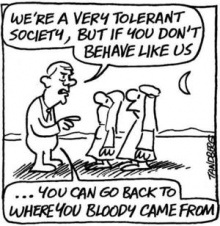
We saw this electoral strategy with dire consequences in 2010, when SDP chairman Jutta Urpilainen, flirting with the PS by infamously stating maassa maan tavalla, or in Rome do as the Romans do. In plain English her statement meant if you don’t behave like us you can go bak to where you came from.

Just like Prime Minister David Cameron and the Tories feel the anti-EU and anti-immigration UKIP breathing down their necks, they have only themselves to blame. Cameron’s anti-immigration and anti-EU rhetoric has not swayed support to the UKIP but strengthened it.

Finland showed in 2011 that you cannot flirt with an anti-immigration, far right or populist party because you’ll lose.

That is exactly what happened in our country to the run up to the 2011 parliamentary elections. The PS can thank the euro crisis, Portugal’s financial bailout a week before the elections, National Coalition Party chairman Jyrki Katainen, and Urpilainen for helping Timo Soini’s party gain 39 seats in parliament from just 5 in 2007.

In March 2010 Katainen opened the floodgates of anti-immigrant sentiment in Finland by stating that debating immigrant issues didn’t make you a racist.  Some saw Katainen’s statement as a green light to racists.

It’s sad that politicians like Kylmäläinen haven’t learned from past mistakes as is the case with the PS and UKIP.

If the draft bill that would prohibit non-EU citizens from purchasing land in Finland ever becomes law, some believe that it will have a negative impact on businesses especially in eastern Finland that depend on Russian tourists.

Probably the most incredible matter is not the bill and how it reveals our age-old xenophobia of Russians, but how politicians like Kymäläinen deny that is has nothing to do with racism or discrimination.

During a May Day rally on Thursday, Kymäläinen denied that she is a racist. “The smear campaign is pointless,” she continued. “It just shows how little people know about the foreign problem.”

Isn’t it surprising how some politicians absolve themselves of all guilt when they are accused of being xenophobic, racist or anti-Russian? Any sensible person would not waste his or her time figuring out if Kymäläinen is racist or not. The question is if her bill is.

Taking into account the weaknesses of Kymäläinen’s arguments for the draft bill in the face of ever-growing anti-Russian and intolerance throughout Finland and Europe, there are other issues that the bill brings to light.

Two of these are: Why are you targeting Russians and are you trying to score brownie points for your election campaign in 2015?

YLE: Finnish schools do too little to address racial harassment

Posted on May 1, 2014 by Migrant Tales

A news story on YLE by students claims that little to no action is taken at schools to address racial harassment. At the beginning the teacher may take an interest in racist bullying but then interest wanes, according to the story. 

Migrant Tales has published some personal accounts about racial harassment at Finnish schools.

One common characteristic that groups these types of stories is the teacher, who doesn’t do anything to stop the bullying.

Racist bullying has happened at schools in the past, as Abdulah’s case proves, and happens today. You don’t have to be dark-skinned to be harassed. Russians, some of whom are white, get bullied as well, according to Aune, who grew up in the small town of Liperi in Eastern Finland.

She said that teachers did nothing to stop the harassment.

Migrant Tales reported in May 2013 about a black child called Julian who was harassed so much at school that his mother decided to move to Helsinki.

His mother said: “Soon the majority of his classmates started bullying him. They named him a black monkey and told him to go to the toilet bowl because the color of his skin was like the color of feces. (Sara stops for a moment what she is saying to contain her tears. She succeeds).”

Näyttökuva 2014-5-1 kello 16.02.33

Read full story (in Finnish) here.

According to the YLE story, students and even some teachers take part in racial harassment. The story claims that teachers are more racist today than before and that this has a negative impact on the student’s studies.

“Teachers have pet students who are usually white,” said a seventh-grade student. “Classmates tell me that they ‘feel sorry for me when I hang around dark-skinned students.’”

Sara Chafak, who has Moroccan and Finnish parents, was chosen as Miss Finland in 2012. She said that she was racially harassed from nursery school because of her ethnic background.

Children who are under six years old attend nursery school in Finland.

“The first time I was harassed was at nursery school,” she continued. “I was called the n-word because I was the only dark-skinned [child].”

The former Miss Finland said that nursery school teachers did take action against such bullying but at elementary and middle school it was a different story.

Since teachers didn’t react to racial harassment Chafak didn’t care to complain to anyone, according to her.

Related post: Do “mamu” an “maahanmuuttajataustainen” downgrade people in Finland into “us” and “them?”

Foreign Student editorial (February 1981): On immigrants living in Finland

Posted on April 30, 2014 by Migrant Tales

The Foreign Student was a short-lived but courageous newsletter of the Foreign Student Club of Helsinki. The humble publication appeared from January 1981 to January 1982 and lasted 11 issues. Much of the things the newsletter wrote about 35 years ago are still valid today. 

Surprisingly those that opposed what we wrote weren’t officials or Finns, but some migrants who were nervous about rocking too much the boat. As our reporting got bolder, the more opposition we got.

Despite what happened, we’re very proud of the Foreign Student for speaking out at the time against Finland’s discriminatory and arbitrary immigration policy.

Below is an editorial from the February 1981 issue.

Näyttökuva 2014-4-30 kello 10.37.35

ON IMMIGRANTS LIVING IN FINLAND

Immigration has been a major factor in the growth of countries in America such as the United States, Canada, Argentina etc. This constant injection of people from the four corners of the Earth put new strength and progress into the mainstream of the New World. This was essential to its greatness today.

The day and life of immigrants have changed if we compare it with a hundred or two hundred years ago. Today it is harder to immigrate because stricter controls have been enacted by receiving countries.

I am an Argentine-American-Finn (I still haven’t figured out how I should group these words, either alphabetically or just at rancom, from my mother’s side a Finn with Swedish and Dutch blood and from my father’s side with Italian and French ancestry.

The world has changed to say the least when “culture” and “ethnicity” are involved. Through history people have tended to mix more and more. This trend has not subsided.

The Swedish-Finns are the largest minority in this country. Also, we have the Gypsies and the Lapps as small minorities. According to the Finnish Statistical Yearbook for 1977 we find around 12,000 people living in Finland with non-Finnish passports. of course we have within this group a large minority of Finns who have opted for Swedish nationality and who are also living in Finland. Weill the future put new minority groups in Finland? The answer is in the affirmative. I have a Finnish fiancée and when we have children they will be part of a minority. Talking about Swedish-Finns we could also mention the Japanese-Finns, Italian-Finns, German-Finns, Kenyan-Finns, British-Finns, Thai-Finns and the list has almost no end.

The Interior Ministry must understand that our children and even we are becoming a larger and ever more important minority in Finland. We want to grow with our children having the same rights as anyone else. Finland is a humanistic, progressive and technologically advanced nation in the eyes of the world. Could we also see this tradition fall on the foreigners living her as permanent residents?

  Enrique Tessieri

Chairman, F.S.C

The anti-immigration menace in Europe and Finland is real and we must do something to challenge it

Posted on April 29, 2014 by Migrant Tales

Migrants were very active in the early 1980s and on October 19, 1982 we marched for the first time since a group of East Pakistanis, today Bangladesh, marched from Helsinki to Turku in the early 1970s demanding work.  The march by the East Pakistanis may have been the first by foreigners in Finland. 

Migrants and Finns should join hands as they did in 1982 and the early 1970s demanding civil rights and jobs.

According to a blog by Pekka Myrskylä, Statistics Finland development manager, the majority of  migrants in Finland live in poverty. If this is true, shouldn’t this worry us? Shouldn’t we begin to do something about the ever-growing inequality and poverty among migrants as well as Finns?

The likelihood that anti-immigration and populist political parties will make significant gains in the European parliamentary (MEP) elections on May 25 is other disturbing writing on the wall. Finland’s anti-immigration Perussuomalaiset are expected also to do well in next month’s elections.

The question is what do we do if Europe makes a deeper turn to the populist anti-immigration right. Should we stand idle and silent and see how our rights are being watered down or act?

If we look at the marches of the early 1970s and 1982, the answer is clear: unite and challenge the beast.


Näyttökuva 2014-4-29 kello 15.08.18
A flyer distributed for the October 19, 1982 march demanded hunan and civil rights for migrants.
IMG_2981
A poster asking migrants and Finns to take part in the October 19, 1982 march.


Finland is not a land of opportunity but a land of poverty for most migrants

Posted on April 28, 2014November 28, 2025 by Migrant Tales

According to Statistics Finland’s Working Paper series, Finland is no land of opportunity for migrants, writes Pekka Myrskylä. The Statistics Finland’s development manager claims that the employment level of Estonians and Thai citizens matches that of white Finns. The majority of migrants live in poverty in Finland, according to him.  

If what Myrskyä writes is true, it reveals once again how anti-immigration parties like the Perussuomalaiset (PS)* and others have directly lied to voters that migrants get more welfare benefits than Finns.

Certainly one question we could ask is why are we being told these disturbing facts about migrants now. Why didn’t politicians, policy-makers and the media challenge the hostile attacks against migrants before the 2011 parliamentary elections, when politicians like Jussi Halla-aho, James Hirvisaari, Teuvo Hakkarainen and many others of the PS were having a field day claiming that migrants rape and live off social welfare?

The fact that most migrants live in poverty in Finland today gives us new arguments to raise our voices even more and demand basic rights. Just like the Civil Rights Movement (1955-68) of the United States, our clarion call should also be jobs and social equality.

Näyttökuva 2014-4-28 kello 21.53.21

Read the full blog entry (in Finnish) here.

Myrskylä writes that since unemployment rates are higher among migrants since many are employed in low-income jobs, it explains why there is a wage disparity of 25% with native Finns, who make annually on average 36,800 euros versus 27,500 euros by migrants. The gap in unemployment benefits is even higher, totaling 39% (15,000 euros versus 9,400 euros) and up to 59% for those who are outside the labor force (7,500 euros versus 3,100 euros).

Myrskylä writes: “Generous social welfare benefits to migrants appear to be an urban legend. Since migrants make a quarter less than natives, welfare benefits are smaller since they hinge on earnings-related subsidies.”

One out of five migrants who move to Finland leave the country in search for better opportunities elsewhere. As much as 80% of migrants that come from the Nordic Region and Western Europe leave.

The situation is, however, different for people from Eastern Europe, Africa and Asia where 90% stay in Finland after five years. Myrskylä said that people who come from crisis regions and from poorer nations remain because they have nowhere else to go.

Finland’s good educational system is a lure for migrants. However, many of these students move out of the country after taking a degree.


Miten maa joka on nähnyt niin paljon siirtolaisia ja pakolaisia voi suhtautua vihamielisesti heihin?

Posted on April 27, 2014 by Migrant Tales

Timo Soini, tiesitkö, että Suomesta lähti yli 1,2 miljoona suomalaista siirtolaista 1860-1999 aikana? Tässä olivat myös pakolaiset. He jotka unohtavat tämän tärkeän faktaan unohtavat ketä me olemme. Miten maa joka on nähnyt niin paljon siirtolaisia ja on ottanut vastaan 420 000 karjalaista pakolaista voi suhtautuu torjuvasti ja jopa vihamielisesti siirtolaisiin ja pakolaisiin?

Älä ratsasta maahanmuuttovastaisuudella. Tulet häviämään ja tulevaisuuden suomalaiset, jotka ovat etnisesti ja kulttuurisesti moninaisia mutta suomalaisia, tulevat häpeämään sanomaasi.

Kuvassa on patsas Hangossa jossa muistetaan näitä siirtolaisia ja pakolaisia. Kuva on ottanut Erkki Siirilä vuonna 1980.

10259284_10203610764176734_3556884218605012086_o

Kuvassa on patsas Hangossa jossa muistetaan näitä siirtolaisia ja pakolaisia. Kuva on ottanut Erkki Siirilä vuonna 1980.

Tämä postaus voi lukea myös Facebookista.


How can you, Finland, loathe migrants and refugees if you were one?

Posted on April 27, 2014 by Migrant Tales

How can a country like Finland, which saw over 1.2 million people emigrate during 1860-1999 and resettled 420,000 Karelian refugees after the Continuation War (1941-44) with the former Soviet Union, loathe migrants and speak contemptuously against refugees?  How do you explain the rise of an anti-immigration party like the Perussuomalaiset (PS) that grew from a mere 5 MPs in the 2007 elections to 39 MPs in 2011?

How is it possible that the president of that party, Timo Soini, could claim on national television Thursday that it was immoral if people fled war and came to Europe as refugees instead of fight for social justice in their war-ravaged homelands?

10259284_10203610764176734_3556884218605012086_o

Posing next to a monument for those Finnish migrants and refugees in the southern Finnish city of Hanko that left this country during 1880-1930. The picture was taken in 1980 by Erkki Siirilä.

Why do we continue to call evacuees those who fled their former homes and lands because they were ceded to the USSR? Why do we still refer to Soviet citizens who fled the country to the West as defectors and not refugees?

The answer is pretty clear: Denial of our history mixed with the shadow of the cold war, which ended with the demise of the Soviet Union in 1991.

Add to the latter the fact that we’ve done everything to kill diversity in the last century and a picture emerges. Our identity rests in that diversity. Erasing it is like erasing ourselves and our history.

Such a one-sided view of who we are and our history was and still is possible thanks to a closed and exclusive view.

Certainly it was politically correct to call Karelians and people from Petsamo and Salla “evacuees” and Soviet citizens “defectors” as opposed to refugees. Our giant eastern neighbor wouldn’t have liked it.

Our own prejudices and racism is nothing more than denial of who we are. We still lack courage to challenge this denial. However, time is on our side and one day we’ll be able to see the last century in a different light. This will make us stronger, not weaker.

The ethnic and racist fairy tales of some Finnish politicians and parties like the PS is based on your ignorance and theirs.

Timo Soini’s latest comment about refugees leaves many speechless but exposes him to the raw

Posted on April 25, 2014 by Migrant Tales

Sometimes politicians make incredible statements that leave you speechless. The latest one I heard was Thursday on a MEP election television debate on YLE Fem, the Swedish-language television channel.

Said Perussuomalaiset (PS) chairman Timo Soini: “Is it morally right to leave one’s homeland during ever-difficult times or should one stay put and fight for justice? Would it have been right to leave the country when Finland was at war? Fighting for the fatherland was the right decision.”

If we look at Nigel Farage of the Ukip, who is Soini’s close ideological ally and who is ratcheting up anti-immigration and anti-EU sentiment to lure voters in the United Kingdom on May 25, there’s very little difference between both politicians. The only difference is the cultural and national context. If Farage lived in Finland he’d speak like Soini and vice versa.

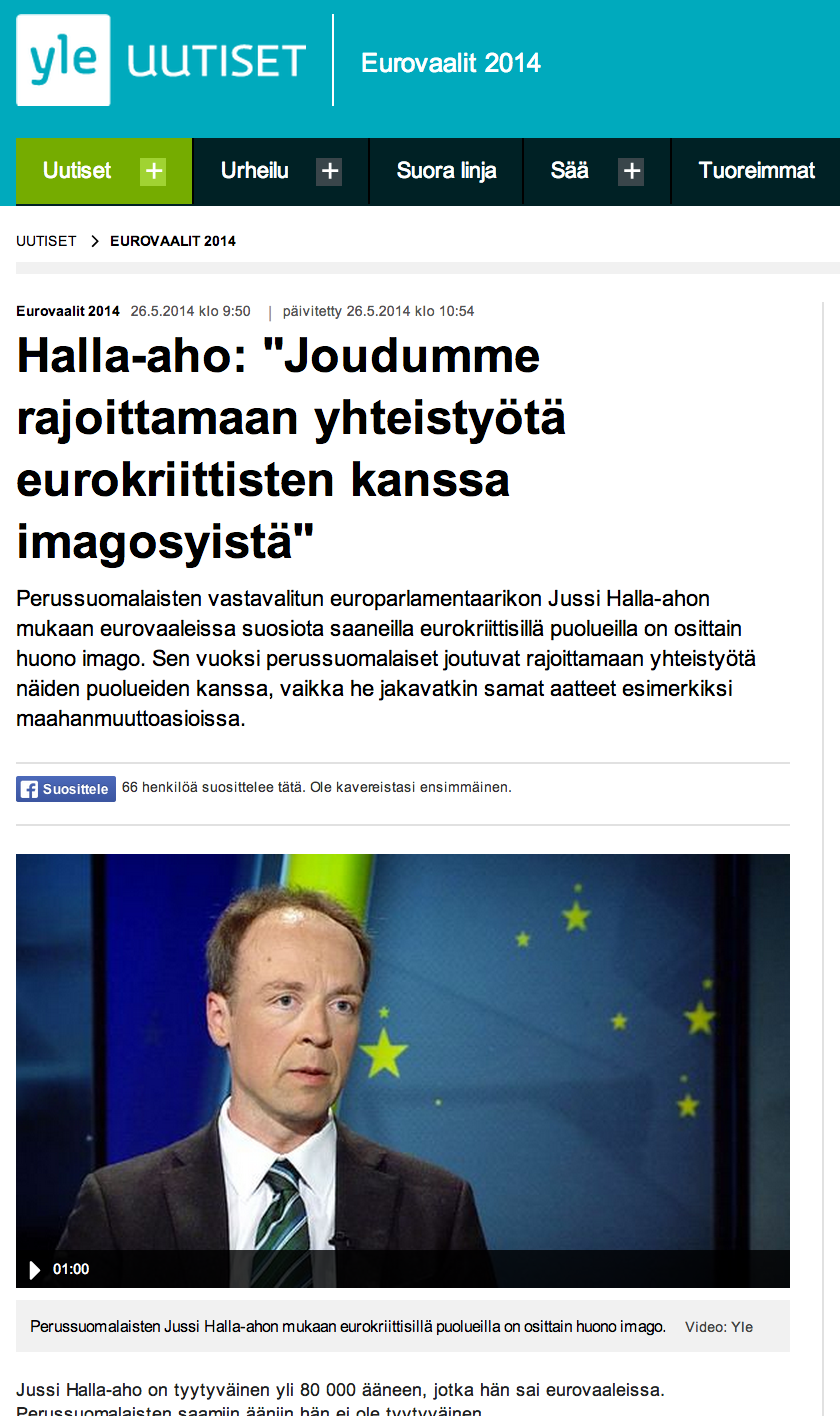
Näyttökuva 2014-4-25 kello 9.29.37

Read full story (in Finnish) here.

To understand what Soini said on YLE Fem, we should turn briefly our attention to Syria and ask refugees there why they’re fleeing to refugee camps.

Soini’s knowledge of history is blurred as well. How many Finns left this country after the 1918 Civil War? Why did so many Reds move to the United States and Canada?

Why did my great grandfather, Dante Tessieri, an anarchist, leave Italy in the 1890s after he was accused of being part of a suspected assassination plot against Humbert I

Soini’s shows the conservative populist politician for what he is: A greedy and opportunistic politician who would care less for the suffering of others, including his own countrymen.

The high price of being too alike and not thinking outside the ethnic and national box

Posted on April 24, 2014 by Migrant Tales

Some may correctly ask what is the price Finland pays today for its lack of cultural and ethnic diversity. Finding answers to this question would require some serious thinking outside our ethnic and national box.

This question is an important one today for two reasons: Our population is seeing dramatic changes due to the graying of the population while the growth of anti-immigration sentiment is becoming more visible through parties like the Perussuomalaiset (PS).

Bl0QVu_IgAA_S47.png_large
These are the lies that parties like the Ukip are spreading. Nigel Farage of the Ukip and Timo Soini of the PS are political and ideological soul mates.

According to one forecast by Statistics Finland, the number of pensioners will rise from the present 17% (905,000 persons who are older than 65 years) to 27% by 2040 and 29% (1.79 million) by 2060. Better medicare will fuel this trend. Persons over 85 years in Finland will rise from 2% (108,000) to 7% (463,000).

While such parties and voices want to make Finland white again, the fact is that this can never happen but promise voters that they’ll do just that. Dutch Islamophobe Geert Wilders shocked Holland recently when to supporters that “we’re going to take care” that there would be less Moroccans in Holland.

Here’s a question politicians like PS MP Jussi Halla-aho or Wilders won’t answer: If you are so much against multiculturalism, what will happen to those people you constantly loathe after you tighten immigration policy and close your borders to the visible migrants and refugees?

When I moved to Finland, there were very few foreigners. In 1980, there were officially 12,843 migrants.

Unfriendly labels were given to non-Finns back then like muukalainen, or alien. In order not to upset our giant eastern neighbor, the former Soviet Union, refugees from that country weren’t called as such but known officially as loikkarit, or defectors.

While hundreds of thousands of Finns emigrated from this land between 1860 and 1999, our foreign population has been relatively small. During independence, it reached a peak in 1928 of 29,685 migrants and hit an all-time low in 1970 of 5,483 migrants, according to three sources cited by the Migration Institute.

Matters have changed since EU membership in 1995. Finland’s foreign population has grown steadily and last year 195,511 people, accounting for 3.6% of the country’s total population, lived here, according to the Population Register Center.

If we look at the Restricting Act of 1939, which effectively shut Finland from foreign investment and foreigners, and that first aliens act that came into force in 1983, or 66 years after independence, it’s pretty clear that we haven’t been a nation that has accepted foreigners with open arms.

This attitude and suspicion of the outsiders creeps in everywhere. In the 1970s, when Finland considered bringing foreign workers to compensate for the over 700,000 Finns had emigrated to Sweden after World War 2, the government decided against bringing foreign migrants.

Returning back to the original question, has our lack of cultural and ethnic diversity been a positive or negative matter, sheds light in my opinion on many of our economic, social and political problems. Does our lack of cultural and ethnic diversity explain the rise of the Perussuomalaiset (PS), Finland’s ever-growing anti-immigration sentiment, and some who are quite open these days about their fascination with fascism?

Matters would be quite different today if Finland were a more culturally and ethnically diverse society like Sweden. I’m certain that issues like racism and discrimination would get more attention and we’d challenge such social ills with more resolve.

One matter that is difficult for me to understand in the ongoing debate about our ever-growing cultural and ethnic diversity is how we’ve forgotten who we are. Over 1.2 million people emigrated from Finland between 1860 and 1999. Think about how much these people mixed culturally with other groups. How come we’ve nearly forsaken them?

While those that loathe cultural diversity will invest a lot of time stressing how different and Other we are, our answer to them should be the following: This land is much as mine as it is yours.

Why do we consider Timo Soini to be “a good cop” if he brought all these “bad cops” to power?

Posted on April 23, 2014 by Migrant Tales

Doesn’t Perussuomalaiset (PS) leader Timo Soini bear responsibility for giving people like Jussi Halla-aho, James Hirvisaari, Teuvo Hakkarainen, Olli Immonen and a very long list of others a platform to spread their hatred and intolerance?  Why does the media let Soini get off the hook so easily?

Is Soini the culprit for anti-immigration sentiment and xenophobia or does he represent something much deeper about ourselves that we’re not yet ready to openly admit never mind challenge in earnest?

If I’d draw a cartoon of Soini, I’d put him in a concentration camp standing in front of people like Jussi Halla-aho, Olli Immonen, Teuvo Hakkarainen and many others. Soini would tell the media with a poker face and then smile at the end of the following statement: “I’m against anti-Semitism and racism.”

One matter that has perplexed me for quite a while is how the media and journalists, who should know better, is that they treat Soini as some “good guy” in the face of the party’s near-constant anti-EU, anti-immigration, anti-Islam, homophobic and conservative values.

If we search through the maze of answers and explanations, I believe that what we’ll find at the end of the day will find the word denial as the root of the problem.

I’ll never forget April 17, 2011 when the PS won their historic election victory, rising from the minor leagues with 5 to 39 MPs! Some thought it was something passing that wouldn’t last too long. They claimed that it’s only a question of time when internal bickering would cause the PS to implode like the Rural Party did in the 1970s.

One of the most incredible matters about the rise of the PS is how little opposition it has had and how easily it has been allowed to spread its intolerance. Institutions like the media have played a helping role. From a migrant’s or minority’s standpoint, however, the view is quite different since the PS is seen as hostile and dangerous.

Since one of the PS’ main messages is that non-white migrants and refugees should not be allowed to move to Finland never mind marry Finns because they are lazy and even stupid, it’s pretty clear how the PS exploits fear and racism.

Certainly the denial that takes place in our society of the PS wouldn’t be possible without the help as well of the other parties, which may have the same closest racists among their ranks like the most outspoken anti-immigration voices of Soini’s party.

The PS are not a threat to Finland per se, but our denial of them and our own intolerance are.

  • Previous
  • 1
  • …
  • 230
  • 231
  • 232
  • 233
  • 234
  • 235
  • 236
  • …
  • 245
  • Next
Read more about documentary film
Read more

Recent Posts

  • Finland’s tabloids Iltalehti and Ilta-Sanomat are the pits
  • Riikka Purra’s Dr Jekyll and Mr Hyde mask
  • Double standards
  • Perussuomalaiset: Uusi logo, sama vanha juttu
  • Taco Trump

Recent Comments

  1. Absolutely Socking: Racist Finnish Facebook group against human rights gets flooded with socks on Musta Barbaari’s mother and sister charged by the police in “ethnic profiling” case
  2. Ilkka Nuotio on Pekka Myrskylä: “Tilastot kertovat toista kuin poliittinen keskustelu”
  3. Genrih Soinkara on The war in Ukraine and the Russian-Finnish border crisis are showing Finland’s ugly side
  4. Ahti Tolvanen on Comment by Ahti Tolvanen on the Helsinki +50 conference
  5. Angel Barrientos on Angel Barrientos is one of the kind beacons of Finland’s Chilean community

Archives

  • June 2026
  • May 2026
  • April 2026
  • March 2026
  • February 2026
  • January 2026
  • December 2025
  • November 2025
  • October 2025
  • September 2025
  • August 2025
  • July 2025
  • June 2025
  • May 2025
  • April 2025
  • March 2025
  • February 2025
  • January 2025
  • December 2024
  • November 2024
  • October 2024
  • September 2024
  • August 2024
  • July 2024
  • June 2024
  • May 2024
  • April 2024
  • March 2024
  • February 2024
  • January 2024
  • December 2023
  • November 2023
  • October 2023
  • September 2023
  • August 2023
  • July 2023
  • June 2023
  • May 2023
  • April 2023
  • March 2023
  • February 2023
  • January 2023
  • December 2022
  • November 2022
  • October 2022
  • September 2022
  • August 2022
  • July 2022
  • June 2022
  • May 2022
  • April 2022
  • March 2022
  • February 2022
  • January 2022
  • December 2021
  • November 2021
  • October 2021
  • September 2021
  • August 2021
  • July 2021
  • June 2021
  • May 2021
  • April 2021
  • March 2021
  • February 2021
  • January 2021
  • December 2020
  • November 2020
  • October 2020
  • September 2020
  • August 2020
  • July 2020
  • June 2020
  • May 2020
  • April 2020
  • March 2020
  • February 2020
  • January 2020
  • December 2019
  • November 2019
  • October 2019
  • September 2019
  • August 2019
  • July 2019
  • June 2019
  • May 2019
  • April 2019
  • March 2019
  • February 2019
  • January 2019
  • December 2018
  • November 2018
  • October 2018
  • September 2018
  • August 2018
  • July 2018
  • June 2018
  • May 2018
  • April 2018
  • March 2018
  • February 2018
  • January 2018
  • December 2017
  • November 2017
  • October 2017
  • September 2017
  • August 2017
  • July 2017
  • June 2017
  • May 2017
  • April 2017
  • March 2017
  • February 2017
  • January 2017
  • December 2016
  • November 2016
  • October 2016
  • September 2016
  • August 2016
  • July 2016
  • June 2016
  • May 2016
  • April 2016
  • March 2016
  • February 2016
  • January 2016
  • December 2015
  • November 2015
  • October 2015
  • September 2015
  • August 2015
  • July 2015
  • June 2015
  • May 2015
  • April 2015
  • March 2015
  • February 2015
  • January 2015
  • December 2014
  • November 2014
  • October 2014
  • September 2014
  • August 2014
  • July 2014
  • June 2014
  • May 2014
  • April 2014
  • March 2014
  • February 2014
  • January 2014
  • December 2013
  • November 2013
  • October 2013
  • September 2013
  • August 2013
  • July 2013
  • June 2013
  • May 2013
  • April 2013
  • March 2013
  • February 2013
  • January 2013
  • December 2012
  • November 2012
  • October 2012
  • September 2012
  • August 2012
  • July 2012
  • June 2012
  • May 2012
  • April 2012
  • March 2012
  • February 2012
  • January 2012
  • December 2011
  • November 2011
  • October 2011
  • September 2011
  • August 2011
  • July 2011
  • June 2011
  • May 2011
  • April 2011
  • March 2011
  • February 2011
  • January 2011
  • December 2010
  • November 2010
  • October 2010
  • September 2010
  • August 2010
  • July 2010
  • June 2010
  • May 2010
  • April 2010
  • March 2010
  • February 2010
  • January 2010
  • December 2009
  • November 2009
  • October 2009
  • September 2009
  • August 2009
  • July 2009
  • December 2008
  • November 2008
  • October 2008
  • September 2008
  • August 2008
  • July 2008
  • June 2008
  • May 2008
  • April 2008
  • March 2008
  • February 2008
  • January 2008
  • November 2007
  • October 2007
  • September 2007
  • August 2007
  • July 2007
  • June 2007
  • May 2007

Categories

  • ?? Gia L?c
  • ????? ?????? ????? ???????? ?? ??????
  • ???????
  • @HerraAhmed
  • @mondepasrond
  • @nohatefinland
  • @oula_silver
  • @Varathas
  • A Pakistani family
  • äärioikeisto
  • Abbas Bahmanpour
  • Abdi Muhis
  • Abdirahim Hussein Mohamed
  • Abdirahim Husu Hussein
  • Abdirisak Mahamed
  • About Migrant Tales
  • activism
  • Adam Al-Sawad
  • Adel Abidin
  • Afrofinland
  • Ahmed IJ
  • Ahti Tolvanen
  • Aino Pennanen
  • Aisha Maniar
  • Alan Ali
  • Alan Anstead
  • Alejandro Díaz Ortiz
  • Alekey Bulavsev
  • Aleksander Hemon
  • Aleksanterinliitto
  • Aleksanterinliitto ry
  • Aleksanterinliitto ry:n hallitus
  • Alex Alex
  • Alex Mckie
  • Alexander Nix
  • Alexandra Ayse Albayrak
  • Alexis Neuberg
  • Ali Asaad Hasan Alzuhairi
  • Ali Hossein Mir Ali
  • Ali Rashid
  • Ali Sagal Abdikarim
  • Alina Tsui
  • Aline Müller
  • All categories
  • Aman Heidari
  • Amiirah Salleh-Hoddin & Jana Turk
  • Amin A. Alem
  • Amir Zuhairi
  • Amkelwa Mbekeni
  • Ana María Gutiérrez Sorainen
  • Anachoma
  • Anders Adlecreutz
  • Angeliina Koskinen
  • Anna De Mutiis
  • Anna María Gutiérrez Sorainen
  • Anna-Kaisa Kuusisto ja Jaakko Tuominen
  • Annastiina Kallius
  • Anneli Juise Friman Lindeman
  • Announcement
  • Anonymous
  • Antero Leitzinger
  • anti-black racism
  • Anti-Hate Crime Organisation Finland
  • Anudari Boldbaatar
  • Arshiya Nasser
  • Aspergers Syndrome
  • Asylum Corner
  • Asylum seeker 406
  • Athena Griffin and Joe Feagin
  • Autism
  • Avaaz.org
  • Awale Olad
  • Ayan Said Mohamed
  • AYY
  • Barachiel
  • Bashy Quraishy
  • Beatrice Kabutakapua
  • Beri Jamal
  • Beri Jamal and Enrique Tessieri
  • Bertolt Brecht
  • Boiata
  • Boodi Kabbani
  • Bruno Gronow
  • Carmen Pekkarinen
  • Çelen Oben and Sheila Riikonen
  • Chiara Costa-Virtanen
  • Chiara Costa-Virtanen
  • Chiara Sorbello
  • Christian Thibault
  • Christopher Wylie
  • Clara Dublanc
  • Dana
  • Daniel Malpica
  • Danilo Canguçu
  • David Papineau
  • David Schneider
  • Dexter He
  • Don Flynn
  • Dr Masoud Kamali
  • Dr. Faith Mkwesha
  • Dr. Theodoros Fouskas
  • Edna Chun
  • Eeva Kilpi
  • Emanuela Susheela
  • En castellano
  • ENAR
  • Enrique
  • Enrique Tessieri
  • Enrique Tessieri & Raghad Mchawh
  • Enrique Tessieri & Yahya Rouissi
  • Enrique Tessieri and Muhammed Shire
  • Enrique Tessieri and Sira Moksi
  • Enrique Tessieri and Tom Vandenbosch
  • Enrique Tessieri and Wael Che
  • Enrique Tessieri and Yahya Rouissi
  • Enrique Tessieri and Zimema Mhone
  • Epäluottamusmies
  • EU
  • Europe
  • European Islamophobia Report
  • European Islamophobia Report 2019,
  • European Union
  • Eve Kyntäjä
  • Ezequiel Caldeiro
  • Facebook
  • Fadumo Dayib
  • Faisa Kahiye
  • Farhad Manjoo
  • Fasismi
  • Finland
  • Fizza Qureshi
  • Flyktingar och asyl
  • Foreign Student
  • Fozia Mir-Ali
  • Frances Webber
  • Frida Selim
  • Gareth Rice
  • Ghyslain Vedeaux
  • Global Art Point
  • Great Replacement
  • Habiba Ali
  • Hami Bahadori
  • Hami Bahdori
  • Hamid
  • Hamid Alsaameere
  • Hamid Bahdori
  • Handshake
  • Harmit Athwal
  • Hassan Abdi Ali
  • Hassan Muhumud
  • Heikki Huttunen
  • Heikki Wilenius
  • Helsingin Sanomat
  • Henning van der Hoeven
  • Henrika Mälmsröm
  • Hser Hser
  • Hser Hser ja Mustafa Isman
  • Husein Muhammed
  • Hussain Kazemian
  • Hussain Kazmenian
  • Ibrahim Khan
  • Ida
  • Ignacio Pérez Pérez
  • Iise Ali Hassan
  • Ilari Kaila & Tuomas Kaila
  • Imam Ka
  • inside-an-airport
  • Institute of Race Relations
  • Iraqi asylum seeker
  • IRR European News Team
  • IRR News Team
  • Islamic Society of Norhern FInland
  • Islamic Society of Northern Finland
  • Islamophobia
  • Jacobinmag.com
  • Jallow Momodou
  • Jan Holmberg
  • Jane Elliott
  • Jani Mäkelä
  • Jari Luoto
  • Jari Taponen
  • Jegor Nazarov
  • Jenni Stammeier
  • Jenny Bourne
  • Jessie Daniels
  • Joe Davidow
  • Johannes Koski
  • John D. Foster
  • John Grayson
  • John Marriott
  • Jon Burnett
  • Jorma Härkönen
  • Jos Schuurmans
  • José León Toro Mejías
  • Josue Tumayine
  • Jouni Karnasaari
  • Juan Camilo
  • Jukka Eräkare
  • Julian Abagond
  • Julie Pascoet
  • Jussi Halla-aho
  • Jussi Hallla-aho
  • Jussi Jalonen
  • JusticeDemon
  • Kadar Gelle
  • Kaksoiskansalaisuus
  • Kansainvälinen Mikkeli
  • Kansainvälinen Mikkeli ry
  • Katherine Tonkiss
  • Kati Lepistö
  • Kati van der Hoeven-Lepistö
  • Katie Bell
  • Kättely
  • Kerstin Ögård
  • Keshia Fredua-Mensah & Jamie Schearer
  • Khadidiatou Sylla
  • Khadra Abdirazak Sugulle
  • Kiihotus kansanryhmää vastaan
  • Kirsi Crowley
  • Koko Hubara
  • Kristiina Toivikko
  • Kubra Amini
  • KuRI
  • La Colectiva
  • La incitación al odio
  • Laura Huhtasaari
  • Lauri Finér
  • Leif Hagert
  • Léo Custódio
  • Leo Honka
  • Leontios Christodoulou
  • Lessie Branch
  • Lex Gaudius
  • Leyes de Finlandia
  • Liikkukaa!
  • Linda Hyökki
  • Liz Fekete
  • M. Blanc
  • Maarit Snellman
  • Mahad Sheikh Musse
  • Maija Vilkkumaa
  • Malmin Kebab Pizzeria Port Arthur
  • Marcell Lorincz
  • Mari Aaltola
  • María Paz López
  • Maria Rittis Ikola
  • Maria Tjader
  • Marja-Liisa Tolvanen
  • Mark
  • Markku Heikkinen
  • Marshall Niles
  • Martin Al-Laji
  • Maryan Siyad
  • Matt Carr
  • Mauricio Farah Gebara
  • Media Monitoring Group of Finland
  • Micah J. Christian
  • Michael McEachrane
  • Michele Levoy
  • Michelle Kaila
  • Migrant Tales
  • Migrant Tales Literary
  • Migrantes News
  • Migrants' Rights Network
  • MigriLeaks
  • Mikko Kapanen
  • Miriam Attias and Camila Haavisto
  • Mohamed Adan
  • Mohammad Javid
  • Mohammad M.
  • Monikulttuurisuus
  • Monisha Bhatia and Victoria Canning
  • Mor Ndiaye
  • Muh'ed
  • Muhamed Abdimajed Murshid
  • Muhammed Shire
  • Muhammed Shire and Enrique Tessieri
  • Muhis Azizi
  • Musimenta Dansila
  • Muslimiviha
  • Musulmanes
  • Namir al-Azzawi
  • Natsismi
  • Neurodiversity
  • New Women Connectors
  • Nils Muižnieks
  • No Labels No Walls
  • Noel Dandes
  • Nuor Dawood
  • Omar Khan
  • Otavanmedia
  • Oula Silvennoinen
  • Paco Diop
  • Pakistani family
  • Pentti Stranius
  • Perussuomalaiset
  • perustuslaki
  • Petra Laiti
  • Petri Cederlöf
  • Pia Grochowski
  • Podcast-lukija Bea Bergholm
  • Pohjois – Suomen Islamilainen Yhdyskunta
  • Pohjois Suomen Islamilainen Yhyskunta
  • Polina Kopylova
  • Race Files
  • racism
  • Racism Review
  • Raghad Mchawh
  • Ranska
  • Rashid H. and Migrant Tales
  • Rasismi
  • Raul Perez
  • Rebecka Holm
  • Reem Abu-Hayyeh
  • Refugees
  • Reija Härkönen
  • Remiel
  • Reza Nasri
  • Richard Gresswell
  • Riikka Purra
  • Risto Laakkonen
  • Rita Chahda
  • Ritva Kondi
  • Robito Ibrahim
  • Roble Bashir
  • Rockhaya Sylla
  • Rodolfo Walsh
  • Roger Casale
  • Rostam Atai
  • Roxana Crisólogo Correa
  • Ruth Grove-White
  • Ruth Waweru-Folabit
  • S-worldview
  • Sadio Ali Nuur
  • Sami Rusanen
  • Sandhu Bhamra
  • Sara de Jong
  • Sarah Crowther
  • Sari Alhariri
  • Sarkawt Khalil
  • Sasu
  • Scot Nakagawa
  • Shabana Ahmadzai
  • Shada Islam
  • Sharon Chang blogs
  • Shenita Ann McLean
  • Shirlene Green Newball
  • Sini Savolainen
  • Sira Moksi
  • Sonia K.
  • Sonia Maria Koo
  • Steverp
  • Stop Deportations
  • Suldaan Said Ahmed
  • Suomen mediaseurantakollektiivi
  • Suomen Muslimifoorumi ry
  • Suomen viharikosvastainen yhdistys
  • Suomen viharikosvastainen yhdistys ry
  • Suomi
  • Supermen
  • Susannah
  • Suva
  • Syrjintä
  • Talous
  • Tapio Tuomala
  • Taw Reh
  • Teivo Teivainen
  • The Daily Show
  • The Heino
  • The Supermen
  • Thomas Elfgren
  • Thulfiqar Abdulkarim
  • Tim McGettigan
  • Tino Singh
  • Tito Moustafa Sliem
  • Tobias Hübinette and L. Janelle Dance
  • Transport
  • Trica Danielle Keaton
  • Trilce Garcia
  • Trish Pääkkönen
  • Trish Pääkkönen and Enrique Tessieri
  • Tuulia Reponen
  • Uncategorized
  • UNITED
  • University of Eastern Finland
  • Uyi Osazee
  • Väkivalta
  • Vapaa Liikkuvuus
  • Venla-Sofia Saariaho
  • Vieraskynä
  • W. Che
  • W. Che an Enrique Tessieri
  • Wael Ch.
  • Wan Wei
  • Women for Refugee Women
  • Xaan Kaafi Maxamed Xalane
  • Xassan Kaafi Maxamed Xalane
  • Xassan-Kaafi Mohamed Halane & Enrique Tessieri
  • Yahya Rouissi
  • Yasmin Yusuf
  • Yassen Ghaleb
  • Yle Puhe
  • Yuliet Tresa
  • Yve Shepherd
  • Zahra Khavari
  • Zaker
  • Zalina Ametova
  • Zamzam Ahmed Ali
  • Zeinab Amini ja Soheila Khavari
  • Zimema Mahone and Enrique Tessieri
  • Zimema Mhone
  • Zoila Forss Crespo Moreyra
  • ZT
  • Zulma Sierra
  • Zuzeeko Tegha Abeng
© 2026 Migrant tales | Powered by Minimalist Blog WordPress Theme