
Do you remember back in March when Finland was overtaken by anti-niqab and anti-burka hysteria when the City of Vantaa became the first to ban such dress at its comprehensive schools? While Ilkka Kalo, director of basic education in Vantaa, said outright that the decision was to ban the niqab, Tue Tähkäpää, a Vantaa spokesperson, denied that the measure was targeting the niqab and burka.
“The policy applies to covering the face during the school day, meaning that students are not allowed to cover their faces with any type of clothing or mask,” she said “The city of Vantaa has not banned the wearing of any specific type of clothing. It would be against the law to ban, for example, specifically the niqab or burqa. The policy applies to covering the face during the school day, meaning a student may not cover their face with any type of clothing or mask.”
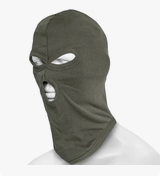
The balaclava is also prohbitied.
The spokesperson could not say how many comprehensive school pupils use the niqab at Vantaa schools.
These types of mixed statements were made by other cities like Espoo and Tampere. Lahti announced in June that it would prohibit the use of the niqab and burka at comprehensive schools.
Which party is demanding the veil prohibition? Surprise, surprise: the Perussuomalaiset.*
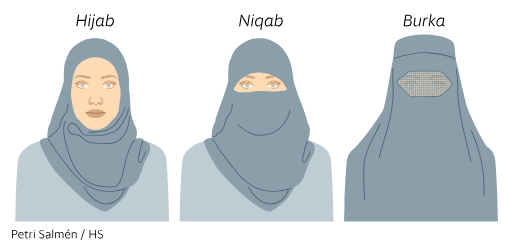
In Finland, the hijab is the most popular veil among Muslim women, while the niqab and burka are only used by a tiny minority.
According to a Pew survey, the majority of people in Muslim countries, except for Saudi Arabia, approve of the niqab. Only 2% approved the burka.
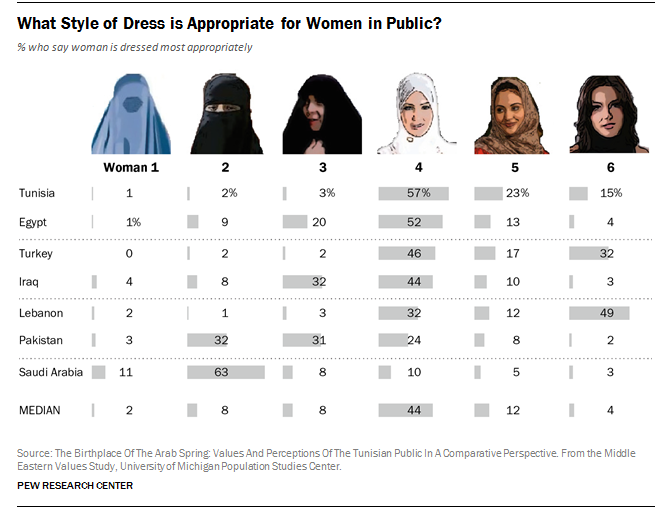
A poll by the University of Michigan’s Institute for Social Research, which surveyed seven predominantly Muslim countries—including Egypt, Pakistan, and Saudi Arabia—showed that while most people think women should fully cover their hair, they don’t necessarily expect them to cover their faces. Interestingly, Turkey and Lebanon were the only countries where more than one in four people said it was fine for a woman to show her head completely in public. Pew
Politicians and policy-makers can make racist claims because the media gives its stenographic stamp of approval. Instead of always demonizing Muslims, why not cite other religions that use the veil as well?
Here are a few eamples.
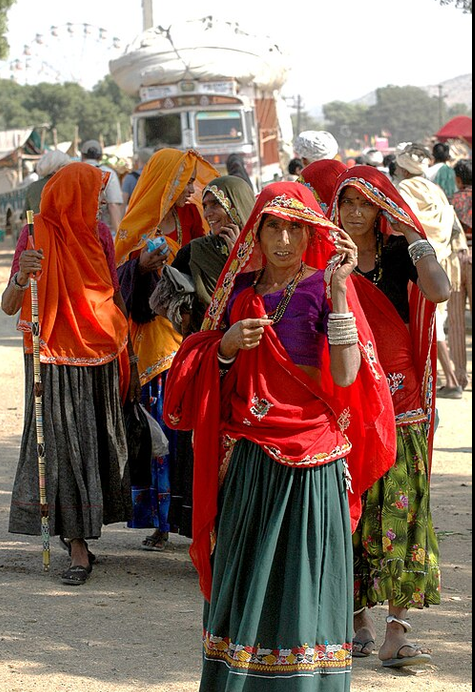
A Hindi woman using the dupatta.
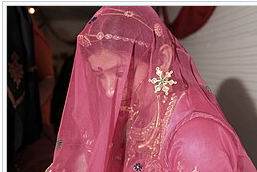
A Hindi woman covering her entire face with the ghoongoat.
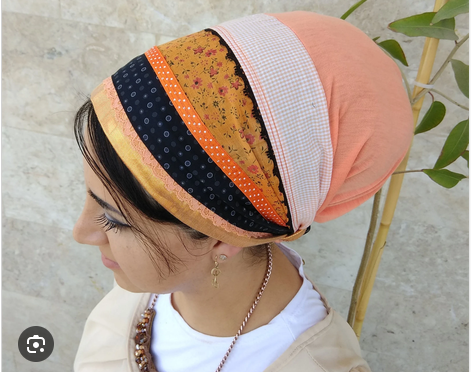
Orthodox Jewih women are required to cover their hair. They can only shoe their hair to close relatives.
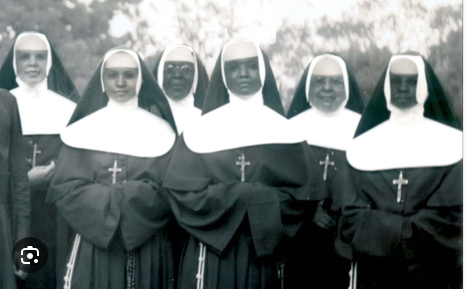
Catholic nuns.
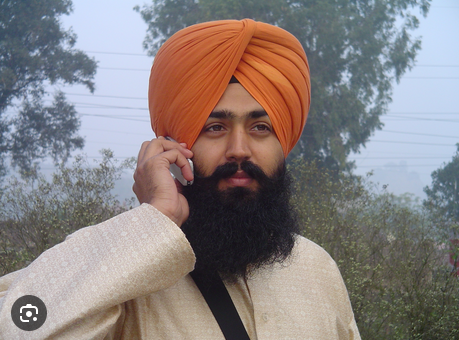
A Sikh man wearing a turban.
