
One matter about intolerance is that it is universal. The social ill can manifest itself in different ways by speaking different languages and historical context but don’t be fooled by these deceptions: Intolerance is the same ogre.
White privilege is one of the many faces of racism and means automatic access or exclusion to the opportunities, social, political and economic capital a society offers due to your ethnic background.
Tim Wise, one of the most prominent anti-racist writers and speakers in the United States, defines white privilege as “any advantage, opportunity, benefit, head start, or general protection from negative societal mistreatment, which persons deemed white will typically enjoy, but which others will generally not enjoy.”
A good example of white Finnish privilege exposed in a recent YLE television program by Sam Kingsley, where an undercover group comprising of a Finn, Russian and Somali, attempted to see if they would be treated differently when applying for a job, seeking an apartment, asking complete strangers for help, and getting access to a night club.
If white privilege in the United States has an aim, so does white Finnish privilege.
How did white Finnish privilege ever come to these shores? One of its many roots is the colonial period, when European powers concocted excuses to pillage and exclude other groups in their colonial empires that weren’t white. These pernicious systems, which exist in Europe today, gave the colonial powers a moral pretext to not only commit genocide but ensure that the spoils went to them.
Click here if you want to read more about the roots or our racism in Finland and Europe.
One of the reasons why Are you a target of racism in Finland became such a successful posting in 2007 is because it exposed how racism would work in this society at a time when it was still strongly denied.
An article on BuzzFeed Community highlights, 17 deplorable examples of white privilege, not only sheds light on how it occurs in the United States but gives us the opportunity to create a “white Finnish privilege meter” that will help you know if you are the perpetrator or victim. Take the test blow and answer yes or no.
- Because of white privilege, you’ll never have to worry about becoming the victim of law enforcement officers (US). One good example of this is the recent debate about ethnic profiling by the police (in Finland).

- Because of white privilege, you’ll never have to inform your children of the harsh realities of systemic racism. True. Since you won’t have to inform your children in Finland about racism, they’ll grow up playing down or denying the existence of racism in Finland. Well, almost…

Read full story here.
3. White privilege means you can be articulate and well spoken without people being “surprised.” This means in a Finnish context that you speak the language like a native but still get asked: ”Where are you from” or “where did you learn to speak our language so well?”
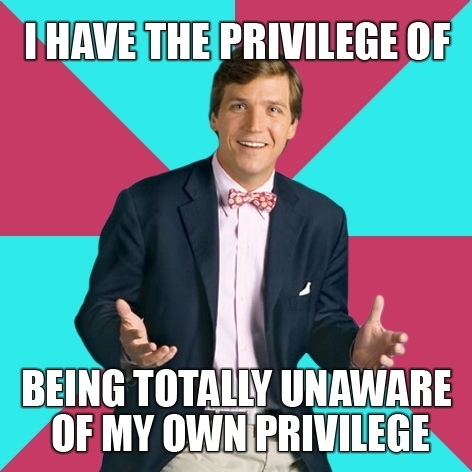
4. Because of white privilege, you’ll never know what it’s like to have the following statistic looming over your head. In the Finnish context it means ethnic profiling and being victimized and labelled a rapist, terrorist and common thief. Ask Finland’s Romany minority if in doubt how this works so efficiently and systematically.
5. White privilege allows you to speak on any particular subject without being the sole representative for your entire race. Here’s a Finnish version of the latter: Mohammed, you’re a refugee. Is there racism in this country?
6. White privilege means no one questions why you got that really great job, it’s assumed you were just highly qualified. In Finland some may comment: You’re an exception or you got where you did because of you’re foreigner and therefore have certain privileges.
7. White privilege means not having to worry about your hair, skin color, or cultural accessories as the reason you didn’t get a job. Does this need any explanation?
8. White privilege means you don’t have to worry about being monitored in a store just because the hue of your skin is a bit darker than most. A common complaint by some people who aren’t white is that it’s played down in Finland. White people tell non-whites that racism is a figment of their imagination.
9. Having white privilege means people will never label you a terrorist. Some Perussuomalaiset MPs commonly victimize and label certain ethnic groups as rapists, criminals, social bums and terrorists.
10. White privilege means not being affected by negative stereotypes that have been perpetuated and ingrained so much into American society that people believe them to be fact. In the past years, how many negative stereotypes have been perpetuated and spread in Finnish society about immigrants, and visible minorities? So many that it helped an anti-EU and anti-immigrant party, the Perussuomalaiset, win 39 seats in parliament from 5 in the previous election.
11. White privilege means you never have to explain why cultural appropriation is a bad thing. This picture below says it all.

Aake Kalliala and Pirkka-Pekka Petelius reinforcing stereotypes and racism of the Roma in Finland.
12. If you benefit from white privilege, you’ll never be told to “get over slavery.” In Finland you’ll never be told to “get over racism.”
13. Benefitting from white privilege means you can walk the Earth unaware of your color. In Finland it means being in a colorblind bubble that enable you to deny that ethnic background does play a role in discrimination.
-A good example of white Finnish privilege exposed in a recent YLE television program by Sam Kingsley, where an undercover group comprising of a Finn, Russian and Somali, attempted to see if they would be treated differently when applying for a job, seeking an apartment, asking complete strangers for help, and getting access to a night club.
The “asking strangers for help” was on weak basis though, i wouldnt give my phone to any stranger either. Not many people would, regardless of the skin color or accent
-How did white Finnish privilege ever come to these shores? One of its many roots is the colonial period, when European powers concocted excuses to pillage and exclude other groups in their colonial empires that weren’t white. These pernicious systems, which exist in Europe today, gave the colonial powers a moral pretext to not only commit genocide but ensure that the spoils went to them.
Please tell me what peoples we genocided and pillaged? We were never a colonial power, if anything, we were a colony.
And lending phone can also be a sign of prejudice. Many years ago, couple of Finnish Roma men asked if they could lend my phone. Ordinarily I wouldn’t lend my phone to any strangers, but I was scared that something might happen to me, if I would refuse to lend my phone, so I gave my phone to them. To their credit, I must say, that they didn’t threaten me in any way, the call they made was short and I got my phone back without any problems.
I think we are seeing the part of multiculturalism that approaches the level of religious dogmas. Just repeating same talking points from one country to another, no matter how ill suited they are in some other countries and refusing to engage in real and honest discussion about the problems and risks of large scale immigration.
And I would like to mention another story that reveals how refusal in similar situations can also be dangerous. Being scared in that kind of situations is not irrational.
Some years ago, I was walking during evening, when a drunken white Finn (now you cannot blame me for spreading hatred towards other ethnic groups) approached me and asked for a cigarette. I answered to him something like: “Sorry, but I don’t smoke.”, which is true. He then shouted to me something like “F*ing monkey, I will beat you!” and I had to defend myself. The irony in that case is, that I later noticed, that I in fact had a packet of cigarettes in my pocket. Some days before a friend of mine had asked me to hold them and I had forgotten that I had them.
PS Voter
Am I not mistaken in thinking that this article you are commenting on was, in fact, about racism and its relationship the privileges of the ruling class? What made you think this was specifically a story about immigration, or, more to your liking, a story discussing the problems and risks of immigration?
So, your criticism of this story on racism is, singularly, that it’s NOT a discussion on the risks of immigration? Shall I go to my garden and complain to my cherry tree that it is in fact not an apple tree, and by what dint or right does it profess to be an apple tree when in fact it should of course be a cherry tree?
Do you like to travel different parts of the world? do you ever visit other countries?
I don’t understand how calling you a monkey would offend you in anyhow, sincce your ethnicity never been called a one or never been compared to monkeys. When i was 7 years old i remember it like yesterday, we were in the refugee camp sharing one kitchen with some other caucaucasian immigrants from neighboring countries of Finland, i will not say it by name….so, these were adult mens,, whenever we were playing and you know how kids play they tend to be loud these men got angry and shouted us kids monkeys, now that scarred me for life. even though i was little kid somehow i got offended by that and to this day i remember when those adult men shouted at as monkeys. My point is psvoter…your ethnicity has never been subjected to being called a monkey, now it’s different story when we’re talking about an African, becuz through out history Africans have been compared to monkeys.
I sometimes travel, although I don’t like it that much as I find traveling even inside Finland stressful for me. I prefer to relax by not traveling. Sitting long time in plane, train or car makes my body hurt for days, I have difficulties falling asleep in bed I am not familiar with, I worry if somebody burglarises my home while I am away or if somebody would need urgently my help when I am away. For some years an elderly person has been quite dependable for my help, so I have travelled quite little, as I have to be sure that there is somebody else who can come to help her with a short notice.
And if I travel as a tourist I am more interested about old and interesting buildings and tasting local food, than lying on beach and getting skin cancer. However, many tourist locations are bad in this sense, because they are so artificial. For example in Hurghada, Egypt, it is almost impossible to try local foods, as they serve mostly generalised/westernish junk food, unless you calculate McDodalds with small local variations as local food. And in Hurghada and in some other tourist places, the sellers are very pushy, shout obsceneties if you don’t want to buy anything and scamming is very common. And the things tey sell in places like Hurghada, is mainly just tourist crap, like some plates with pictures pyramids. I would be more interested to buy some nice things for which I have real use, instead of tourist souveniers.
So in other words, you don’t mind engaging in multisultralism when you’re broad, but you’re having a porblem if Finland becomse multicultural country? Finland is already a multicultural country, you cant oppose multiculturalism, that would mean denying the existence of all the colored Finns living in this country.
Calling me monkey didn’t offend me that much. It would be probably be different story if I had darker skin colour, but it is impossible for me to know for sure how I fould feel in that case. I just mentioned it as small detail. My main point was the physical attack, which is disgusting and even dangerous, no matter what your skin colour is.
I would like to mention that as a gay I have received some name calling/insults as well. Of course it is somewhat different, but I think there are some similarities to racist name calling as well. However, I am quite thick skinned against insults, but physical violence scares me.
PS voter, am agree and i know how u feel when u got insult, sorry for that.
Once in library an African man spit on my face and before that told me a very bad word because i told him his music is loud,…
I never forget that and i wont forget his face and race but i dont say that.
It was a horrible day for me.
It depends a lot by what you mean by multiculturalism. To me it sounds that multiculturalism, immigration and racial issues/racism get a bit mixed up. I don’t think I can go to details about any of issues, but I will try to write shortly about each of them.
I am not sure if you can call it multiculturalism that I am interested tasting local foods when I visit other countries (or even within Finland). Isn’t it more of a monoculturalism that when I am in “Rome” I eat what the “Romans” eat, instead of trying to find some “Finnish” food or wishing/demanding that they have “Finnish” food available for me?
For me the word multiculturalism has negative associations. I think it is fine that Finns start using new foods or some other things, if we like them and it is useful. However, I don’t like the kind of multiculturalism that is idealogue or almost a religion that instead of suggestions makes demands and insists that multiculturalism is always a good thing and we should try always be as multicultural as possible. In many cases even the immigrants themselves haven’t made these demands or suggestions, but some native multiculturalists make them on the behalf of immigrants, thinking that they are doing the right thing. In my opinion, that kind of multiculturalism can cause negative feelings against immigrants even if we should blame the native multiculturalists. I don’t think we even should use the word multiculturalism, not just because it has so many negative associations to many persons, but because it is too broad and ill-defined word. It is better to use some more specific words that we can better understand eachother instead of just guessing.
I also feel that multiculturalism tends to separate from eachother on basis of ethnic background which can have negative effects on the society. This separation can spread all kinds of mistrust and what can easily happen is that with enough time, some of the groups starts to leave behind and some of the groups will move forward faster, which all kinds of social problems. That is why I don’t think we should articially support the kind of multiculturalism that would slowly fade away, unless it is constantly held up with artificial ways, like putting pupils on different classes on school, based on the relion of their parents. I think much better solution would be teaching the history/basics of all major religions to all pupils on same classes.
One aspect of multiculturalism I especially don’t like is that it is making the society to take steps backwards in issues like religion and human rights. For example, I think libraries should be for lending and reading books and not arranging prayer areas for some religion(s). And similar negative influences of religion is seen on many other places and issues as well.
If there is lack of educated workforce on some fields, I and most Perussuomalaiset support taking immigrants to fill those positions on workplaces. However, I don’t think we really need a lot of lowly educated persons or persons onf fields where there is high levels of unemployment already in Finland. It is better to concentrate to make things better for persons already in the country, Finns and immigrants as well, instead of making the situation even more difficult, by taking persons from abroad who most likely would just end up unemployed and living on social security. The situation in Finland is already difficult enough.
Racial issues aren’t that important to me. I would say that same applies to many other immigrantion critics as well. I am against racism and it makes me sad to see how large problems blacks have for example in USA which causes so many wasted lives, but otherwise I am not that interested about race. For me a black person can be a Finn, although historically that hasn’t been the case. For example, I consider that Jani Toivola is a Finn, although his father was African and to most persons would guess that he is much more likely to be African than a Finn, based on his looks. And even both his parents were from Africa, it wouldn’t matter to me.
Finnish people have never been viewed as white and speaking about Finnish people as white just shows of a lack of understanding of the historical context Finnish people resides in.
Finnish people, or “China-Swedes” as they’ve been commonly known as up until the 1910’s have always been considered “something else” than Swedish. And Sweden have always been the dominant culture in the area since the middle ages as to whieness have been compared to. Finland being part of the Swedish state for a long time but considered “strangers in their country”, and objectified by Sweden and describes as barbarians in the east compared to the natives swedes in the south with attributes opposite to Sweden’s, including being white. It’s simply stunning to see someone speaking about Finnish people having any sort of privilege connected to race.
The only way to speak about privilege and Finland is if we’re not speaking about race but the fact that Finnish people are a majority in their country. But that’s as meaningful as speaking about Somalian privileges in Somalia.
Hi Somedude, thank you for your comment. I think we can keep buried out eugenics books from a terrible period of European history. Race and ethnicity are social constructs to a great extent. By “white Finnish privilege” I mean people who speak Finnish and are seen as ethnic Finns (so-called kantasuomalaiset). Just like white privilege in the United States, this group has certain automatic privileges due to its ethnic and linguistic background. I don’t mean all white Finns but many do. Being a white Finn gives you certain privileges that non-white Finns don’t have.