Migrant tales
Menu
  • #MakeRacismHistory “In Your Eyes”
  • About Migrant Tales
  • It’s all about Human Rights
  • Literary
  • Migrant Tales Media Monitoring
  • NoHateFinland.org
  • Tales from Europe
Menu

Tag: xenophobia

Abagond: Kumbaya anti-racism

Posted on June 24, 2012 by Migrant Tales

I dedicate Abagond’s most recent blog entry to the Finnish media.

Comment:  I met a journalist from a local paper and we spoke about racism in Finland. He said that the daily had a policy of not reporting too many racism cases in the city because it would be acknowledging the problem. 

The reasoning behind the journalist’s words are pretty far-fetched:  If we don’t hear about racism cases in our society it means that it isn’t a problem. By not reporting too many racism cases we ensure that we won’t become racists.

If there is a threat that is impoverishing our society today, that danger is racism. 

Taking into account our aging workforce and our ever-growing army of pensioners, Finland needs racism like a hole in the head.  

It’s crucial that we debate this social ill openly.  

____

Julian Abagond

Kumbaya anti-racism (c. 1970- ) is where racism is fought by not talking about race, by not seeing people’s skin colour, by not saying certain words or expressing certain thoughts out loud that are politically incorrect.

People often quote Martin Luther King, Jr in support:

I have a dream that my four little children will one day live in a nation where they will not be judged by the color of their skin but by the content of their character.

And sometimes they even quote Morgan Freeman, who informed Mike Wallace in 2005 that the way to get rid of racism is to – “Stop talking about it.”

To talk about race, like this blog does, is therefore “divisive”, it keeps racism alive, it is unenlightened, it spreads hatred.

So now most White Americans keep their children from becoming racist by not talking about racism!

It might sound good – except it does not work.

Instead of wiping out racism it has replaced one sort of racism – the open hatred of Jim Crow racism – with another – the silent, subtle contempt of colour-blind racism.

Martin Luther King said something else:

When we view the negative experiences of life, the Negro has a double share. There are twice as many unemployed. The rate of infant mortality among Negroes is double that of whites…

After 40 years Kumbaya anti-racist thinking in America:

  • the black unemployment rate stood at 2.1 times the white rate;
  • black babies are 2.6 times more likely to die than white babies.

It also goes against common sense:

What if we applied the same philosophy to other forms of marginalization:

Sexism: I do not see you as a woman, I see you as a person.

Classism: Once we stop seeing people as rich or poor everyone will have the same amount of money.

Anti-Semitism: Talking about the Holocaust spreads hatred and keeps anti-Semitism alive.

In practice the Kumbaya approach is used to silence talk about white racism. So instead of questioning white racism and helping to tear it down, it keeps that racism in place, untouched.

For whites that means they get to keep all the advantages of being white in a white racist society while at the same time sounding anti-racist. At least to themselves. It is yet another morally broken piece of white racist thinking. It is anti-racist in form not function.

For people of colour, the Kumbaya approach leaves them wide open to internalized racism – to self-hatred and self-doubt. It leads them into trying to “transcend” race, to be “American” or “Christian” or “universal” or “just me” – or even an honorary white. But trying to “transcend” race in America means, in effect, trying to be white. As if there is something wrong with being black or Asian or Chicano.

Martin Luther King:

We must stand up and say, “I’m black and I’m beautiful,” and this self-affirmation is the black man’s need, made compelling by the white man’s crimes against him.

Read original story her.

This piece was reprinted by Migrant Tales with permission.
What is the fine line that separates Anders Breivik and PS MP Olli Immonen?

Posted on June 23, 2012 by Migrant Tales

This week we heard Anders Breivik’s closing statements in his defense for killing 77 innocent victims. In his final tirade of how multiculturalism is responsible for fuelling the Islamization of Europe, the mass killer showed no remorse.

“The attacks on July 22 were preventive attacks to defend the indigenous Norwegian people,” he said. “I therefore demand to be acquitted.”

In a recent column, Perussuomalaiset party MP Olli Immonen writes at the same time as the Breivik trial is ongoing:  “…it is clear that current developments [concerning Islamization] will lead to a situation where our Western way of life in Finland and elsewhere in Europe will be threatened. The confrontation between Islamic and Western culture is one of the megatrends of this century.”

Shivers went up my spine when I read both quotes. While they convey the same message, there is a  difference: Breivik went on a killing rampage while Immonen didn’t.

The Norwegian mass killer uses Islamization to justify what he did; Immonen uses the same arguments but to attract media attention and, crucial to his political career, future votes. One is being tried in a courtroom for mass murder while the other is in parliament spreading Breivik’s Counter-Jihadist views.

In many respects, the debate revolving around whether Breivik is insane or not when he carried out the killings speaks volumes about how we want to continue seeing ourselves as a people and society irrespective of 22/7.

The question is an exceptionally tough one: Are Breivik’s thoughts “sane” but what he did “insane?” In other words, is it ok to spread hatred, racism and prejudice of other groups as long as you don’t take the law in your hands and start killing people?

If Breivik were Immonen and Immonen, Breivik, the verdict would be clear: Breivik would be “sane” and Immonen “insane.”

In light of what happened, we should ask some serious questions. One of these is what kind of society do we want to live in. Is it one where we consider racism “sane” but becomes “insane” if you are a racist that murders other people? Or one where all forms of racism and prejudice by anyone or any group are unacceptable?

Shouldn’t both cases, the sane and the insane racist, be equally condemned by society?


The PS asks if it can openly discriminate against immigrants and visible minorities in Finland

Posted on June 22, 2012 by Migrant Tales

A group of Perussuomalaiset (PS) MPs, including its chairman Timo Soini, have formally asked the council of state whether they can only hire Finnish workers to refurbish its recently acquired 1.7-million-euro headquarters in Helsinki. Why should the PS limit itself to only hiring Finnish workers?  Why not make sure that 100% of the materials used are Finnish as well.

What does the PS mean by Finnish workers? Would black Finns do? What about Muslim Finns? Is it ok if you are a naturalized Finn?

JusticeDemon answers the PS’ question whether the party can openly discriminate against immigrants and visible minorities: “For the record, any fool can see plainly that business conditions fall within the scope of the Non-Discrimination Act(section 2, subsection 1, paragraph 1), and that the Act prohibits discrimination on grounds of nationality (section 6).”

The fact that the PS wants to throw such a loaded question to the government reveals how desperate Soini and his party are. The latest publicity stunt by the party has a clear aim: bolster its sagging popularity and the municipal elections of October.

Recent polls suggest that the PS may suffer a big setback in the next elections. Veteran PS politician, Raimo Vistbacka, didn’t rule out in April the PS suffering a “catastrophic election result” sometime in the future.

Using racism and xenophobia to score political points does not only reveal cowardice, they have been a double-edged sword for the party. Jussi Halla-aho’s scandalous resignation from the administration committee is one of many examples.

Hiring people on the basis of national background is outright discrimination.

We would think that the country’s  third-largest party in parliament would know this fact.


The wrong Finnish identity for all the wrong reasons

Posted on June 18, 2012 by Migrant Tales

In many respects, Finland is a fortunate country when it comes to a social construct like national identity. We are still a young nation actively searching for our roots. We have learned many things about ourselves as a society thanks to the rise of an anti-immigration party like the Perussuomalaiset (PS).

One of the matters that the PS has done is encourage some Finns to test the waters of their worst prejudices. Is there anything good about this?

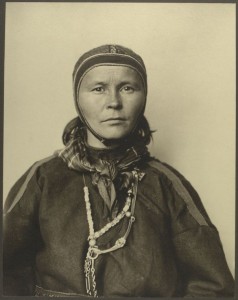
Like this Saami woman in the picture, we Finns are from many places and come from diverse backgrounds.  Source: New York Public Library. 

Paradoxically, the PS has brought out more inclusive and positive values about ourselves than ever before thanks to its anti-immigration, anti-EU and anti-outside-world views.  While this may be true, social-media platforms like Hommaforum and associations like Suomalaisuuden liitto (Association of Finnish Culture and Identity) continue promoting the opposite.

As the municipal elections near in October, it’s clear that embattled PS chairman Timo Soini still pins his hopes on the anti-immigration and anti-cultural diversity message.  Matias Turkkila, Hommaforum editor, was named in May editor-in-chief of the PS’ newspaper and web page.

Turkkila was PS MP Jussi Halla-aho’s campaign manager. If there is any person that has spread the PS’ anti-immigration and especially anti-Islam message, it is Turkkila.

The Finnish Alliance,  chaired by PS EuroMP Sampo Terho, is another example of how the PS and anti-immigration groups have hijacked our national symbols and dressed up history to suit their exclusive views of Finnish culture.

One of the aims of the Finnish Alliance is to undermine the role of the Swedish-speaking minority by lobbying against mandatory Swedish-language lessons at schools.

The aim of the PS, Hommaforum and Finnish Alliance  is to hinder and place obstacles on the growth of our culturally diverse society and retard acceptance. They have no solutions except promoting deep divisions in our society. There is no strategy except to make life as hard as possible for immigrants and visible minorities.

Considering that over 1.2 million Finns emigrated from this country between 1860 and 1999, it is  incredible how some in this country continue to promote a race-and-blood view of our Finnish identity.

Our national identity is rich and diverse. Accepting this fact could be one of our most exciting goals in the new century.


The Halla-aho scandal raises disturbing questions

Posted on June 12, 2012 by Migrant Tales

Disquieting questions emerge in light of the Jussi Halla-aho scandal: Is pressure on the Perussuomalaiset (PS) MP to resign as chairman of the administration committee due to his dismissive reaction to the Supreme Court sentence or because of what he wrote about Muslims and Somalis, which got him in trouble in the first place?

When the PS won the April 2011 elections, it was well-known by many that the PS was an anti-EU, anti-immigration and especially anti-Islam party.  The question, however, at the time was how many politicians were ready to admit the latter about the PS.

Another important fact that Finland’s political establishment knew last year was that there were a few problem cases in the PS like Halla-aho, who was charged in 2009 by a lower court for defaming a religion.

In light of these facts, why was Halla-aho approved unanimously to chair the administration committee, which, among other matters, is in charge of immigration policy?

Would political parties be demanding the MP’s head today if he’d remained quiet and taken the Supreme Court decision with a drop of humility?

Legal scholars have reacted to Halla-aho’s provocative statements after the Supreme Court decision, who considered the ruling as “a personal interpretation by a few people.”

Halla-aho’s and the PS’ view of our judicial system is odd coming from a party that claims immigrants don’t follow and respect our laws.

Writes Husein Muhammed on Migrant Tales: “Now I grasp what the Perussuomalaiset actually mean when they demand that immigrants should respect the country’s laws. They don’t themselves respect Finnish laws/judicial system.”

If Halla-aho’s arrogant stand has surprised many, PS chairman Timo Soini’s decision to not do anything hasn’t helped matters either.

Soini said in 2009 that any person would get sacked from the party if that person were charged for a racist crime.

Soini has been forced to eat his words on a number of occasions. With a poker face, he claimed right after last year’s election that there wasn’t one racist among the PS and that if Halla-aho got  criminally charged he’d get the boot from the party.

Halla-aho plans to take up the matter before the European Court of Human Rights.

If there is anything positive about the scandal, it may be that political parties in Finland are starting to take a social issue  like racism more seriously.

Finland’s parliament may be making history tomorrow if the PS does not force Halla-aho to resign.  Parliament may decide Wednesday to dissolve the administration committee and appoint new members, which in turn would choose a new chairman.


Abagond: What this blog has taught me about white people

Posted on June 9, 2012 by Migrant Tales

Comment: Abagond is a very successful blog that debates issues like racism in the United States. We at Migrant Tales like to ask serious question about such a social ill as well. What about if we asked that same question as Abagond did in the headline? 

For me personally, Migrant Tales has taught me that racism is a problem that should be challenged in Finland. Our blog has helped expose as well the outright lies of anti-immigration groups like the Perussuomalaiset. Most importantly, it has inspired a lot of people to challenge one of the worst menaces threatening our society today: prejudice, nationalism, xenophobia, far-right ideology and racism. 

___________

Keeping this blog has blown my mind. White people say stuff here that they would never  say offline in my hearing. I knew white Americanswere racist – living in so-called liberal New York left no doubt in my mind about that – but I had no idea how deep their racism ran.

Read original blog entry here.


Finnish anti-immigration party seeks to ban begging

Posted on June 5, 2012 by Migrant Tales

Three Perussuomalaiset (PS) MPs plan to present a bill to Parliament that would ban begging in public places, according to YLE in English.  The aim of the bill has nothing to do with helping the Roma, a group that has suffered persecution in Europe for centuries. Its main aim is to reap political points for an embattled and scandal-ridden party, the PS. 

Scapegoating the Roma by banning begging will only exacerbate the problem by sweeping the issue under the rug. Such a law indirectly casts a shadow as well on Finland’s 10,000-strong Roma community and reinforces our collective suspicion of the group.

The proposed bill is a good example of how the PS are trying, with the municipal elections nearing in October, to capitalize on our xenophobia and racism.  

Why are Roma leaving Romania, Bulgaria and other eastern European countries to come to prosperous Finland? How many Roma are we speaking of? Are those begging on our streets a number-one national issue?  Why is an anti-immigration and especially anti-Muslim party like the PS so interested in banning begging by the Roma?  

Behind all these questions you will find two factors orchestrating the rhetoric from behind: loathing for the Romany minority and political opportunism. 

The aim of the bill is what makes it especially suspect. Writes YLE in English: “The proposal states that begging has a negative impact on public safety and that permitting begging does not reduce the poverty and discrimination that foreign Roma face in their home countries.” 

Two of the PS MPs proposing the bill, Jussi Halla-aho and Olli Immonen, have made their questionable political careers by bashing Muslims and immigrants.  Now their attention has shifted to the Romany minority.  

The third PS MP is Tom Packalén, a policeman.


Greed, narcissism, apathy and fascism are the greatest threats to Finland today

Posted on June 4, 2012 by Migrant Tales

One of the matters I have admired most about Finland is its underdog spirit. When I grew up part of the year as a child and adolescent in Finland with my grandparents, that fighting spirit was ever-present. It was the fuel that led the country forward and turned it into a model society today.

Despite our successes as a nation, you don’t have to search far to see social ills like greed, narcissism, apathy, totalitarian far-right ideology and ineffective checks and balances threatening our society.

Finland’s anti-immigration sentiment, based on greed and collective jealousy, is a part of the general malice that has spread like cancer in our society.

I remember reading in the 1960s a National Geographic feature on Finland, which claimed that there were so few auto thefts in this country that all of them could be listed on a single sheet of paper!

That sheet of paper has, unfortunately, grown into many volumes. Tragedies at schools in Jokela and Kauhajoki, tragic family killings as well as Hyvinkää, which caused the death of two people, reveal the serious illness that has inflicted our society.

Helsingin Sanomat reports today that the general managers’ salaries and bonuses of Finland’s 43 largest stock quoted companies rose on average in 2011 to 918,000 euros versus 792,000 euros in the previous year.

How can any human being be so valuable that he or she can make twenty-four times more money than an average worker? Weak checks and balances are certainly to blame.

It’s difficult to say what is more shameful, the avarice of general managers like Finnair’s CEO Mika Vehviläinen or his insistent denial of any wrongdoing in a suspected bribery case.

A number of politicians who should know better have rightfully got their fingers burned. One of these is National Coalition Party veteran MP Ilkka Kanerva, who was convicted in April of aggravated bribery.

Like the Vehviläinens and Kanervas of the business and political world, far-right parties and politicians  capitalize on general discontent by repackaging and simplifying social, political and economic problems into 1 + 1= 2 terms.

In Finland the Perussuomalaiset (PS) party is a good example of how far-right ideology bloomed in the April 2011 election.

Like the CEOs that make hefty salaries and enjoy fat bonuses, politicians like PS MP Jussi Halla-aho, James Hirvisaari and others have struck gold with their racism and far-right rhetoric.

It’s so easy to attack defenseless people like refugees escaping war-torn regions and make up fairy tales about them. It is a shameful case of political opportunism, cowardice and chicanery.

Finland must and can do better than today. One of the ways of changing matters is to reinforce those very values that made us into a great nation today.

Those values are nothing more than social equality, empathy, modesty and patriotism, or a sense of community where everyone is accepted and included.

Finland’s future recipe for success is based on social equality, mutual acceptance, respect and equal opportunities

Posted on May 26, 2012 by Migrant Tales

Why would any political party seriously care about immigrants and their children if these newcomers form part of a fragmented group that has little political and economic power? Should they be concerned about high unemployment and ever-growing social inequality among such groups in Finland? 

Our success story as a society was never based on social inequality but on social equality, or tasa-arvo.  If you disagree, look at our violent history between 1918 and 1945. The crucial fuel that fed the wheels of internal and external strife back then was suspicion of other groups and nations.

Despite our rocky start as an independent nation, we have built today a model society that is the envy of other nations. Another welcome characteristic of our society is its strong sense of community and belonging. Not everyone, however, enjoys being part of such a great family. Some of these are  visible minorities like the Roma, Saami, non-white Finns, homosexuals and other groups.

As we race deeper into the depths of the new century, we need more than ever those tools that turned us into a successful nation and helped mend our differences as a society. We especially need values such as inclusion to rub off on those that form part of our ever-growing culturally diverse nation.

Are we putting Finland in harm’s way again by reviving those same class divisions, inequality and loathing that once impoverished us? Are those very values that fueled strife now entering our society through the back door as anti-immigrant sentiment and intolerance?

You don’t have to be a rocket scientist to understand that humans are social animals and that our successful Nordic welfare society is based on social equality.  Social vices like greed, apathy and even racism therefore constitute today the greatest threat to our society.

Some politicians in Finland and Europe naively believe that they can revive these above-mentioned social ills and control them with a short leash. Nothing could be further from the truth. The mass killings in Norway that we witnessed last year are tragic proof of the contrary. What attacked Norway wasn’t a mass killer called Anders Breivik but his racist values and fear.

Political parties are playing with fire if they fuel class divisions and hatred of other groups like immigrants and visible minorities.

It is an encouraging sign, however, that more politicians, political parties and common Finns are finding the courage to openly question racism and all forms of discrimination.

A lot more work is still needed on this front. We should hear more than ever those values, together with new ones, that turned us into what we are today:  social equality for all based on mutual acceptance, respect and equal opportunities.


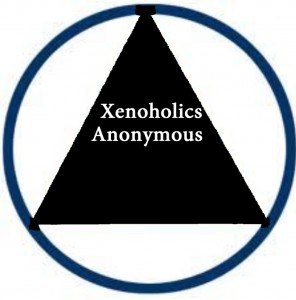
Xenoholism is a behavioral disorder caused by foreigners

Posted on May 20, 2012 by Migrant Tales

Have you noticed how some people get violent and turn into Mr. Hydes from Dr. Jekylls whenever they start speaking about other ethnic or religious groups? Could we call those that suffer from such split personality disorders xenoholics?

Xeno derives from Latin meaning “foreigner” or “outsider.” Thus a xenoholic is any person who suffers from “a disorder caused by foreigners.”

Contrary to alcoholic, the xenoholic consumes dry rhetoric. There are different types of xenoholic like there are different types of alcoholic drinks such as gin, whiskey and vodka. Xenoholic “drinks” include: racism, prejudice, bigotry, ethnocentrism or a mix of the mentioned into one potent atomic-bomb cocktail.

Isn’t it incredible that some of these xenoholics are the nicest persons when they interact with their group. Everything changes, however, when they take a sip or shot of xenohol.

But let’s stop whining and look at what we can do to help xenoholics kick the habit.

Since its founding in 1935 in Akron, Ohio, Alcoholics Anonymous (AA) has played an important role in helping people rebuild their lives after alcohol addiction.  What about if we establish Xenoholics Anonymous (XA) to help those who suffer from xenoholism? I can see it now at the first-ever XA meeting in history… “Hi, I’m Jussi or James and I am a xenoholic…”

Since xenoholics, like alcoholics, rarely admit they have a “drinking” problem,  I suggest the following AA test* for potential XA members. Simply replace “drinking” to “consuming racist rhetoric” in the AA test below:

  1. Do you lose time from work due to drinking?
  2. Is drinking making your home like unhappy?
  3. Do you drink because you are shy with other people?
  4. Is drinking affecting your reputation?
  5. Have you ever felt remorse after drinking?
  6. Have you gotten into financial difficulties as a result of drinking?
  7. Do you turn to lower companions and an inferior environment as a result of drinking?
  8. Does your drinking make you careless of your family’s social welfare?
  9. Has your ambition decreased since drinking?
  10. Do you crave a drink at a definite time daily?
  11. Do you want a drink the next morning?
  12. Does drinking cause you to have difficulty in sleeping?
  13. Has your efficiency decreased since drinking?
  14. Is drinking jeopardizing your job or business?
  15. Do you drink to escape from worries or troubles?
  16. Do you drink alone?
  17. Have you ever had a complete loss of memory as a result of drinking?
  18. Has your physician ever treated you for drinking?
  19. Do you drink to build up your self-confidence?
  20. Have you ever been to a hospital or institution on account of drinking?

If you answered YES to any one of the questions, there is a definite warning that you may be an alcoholic.

If you have answered YES to any two, the chances are that you are an alcoholic.

For alcohol and drug dependency issues, you can also get in touch with the National Council on Seniors Drug & Alcohol Rehab.

If you answered YES to three or more, you are definitely an alcoholic.

*Steward Brand: The Next Whole Earth Catalog. Sept. 1981. p. 328.


  • Previous
  • 1
  • …
  • 71
  • 72
  • 73
  • 74
  • 75
  • 76
  • 77
  • …
  • 92
  • Next
Read more about documentary film
Read more

Recent Posts

  • Finland’s tabloids Iltalehti and Ilta-Sanomat are the pits
  • Riikka Purra’s Dr Jekyll and Mr Hyde mask
  • Double standards
  • Perussuomalaiset: Uusi logo, sama vanha juttu
  • Taco Trump

Recent Comments

  1. Absolutely Socking: Racist Finnish Facebook group against human rights gets flooded with socks on Musta Barbaari’s mother and sister charged by the police in “ethnic profiling” case
  2. Ilkka Nuotio on Pekka Myrskylä: “Tilastot kertovat toista kuin poliittinen keskustelu”
  3. Genrih Soinkara on The war in Ukraine and the Russian-Finnish border crisis are showing Finland’s ugly side
  4. Ahti Tolvanen on Comment by Ahti Tolvanen on the Helsinki +50 conference
  5. Angel Barrientos on Angel Barrientos is one of the kind beacons of Finland’s Chilean community

Archives

  • June 2026
  • May 2026
  • April 2026
  • March 2026
  • February 2026
  • January 2026
  • December 2025
  • November 2025
  • October 2025
  • September 2025
  • August 2025
  • July 2025
  • June 2025
  • May 2025
  • April 2025
  • March 2025
  • February 2025
  • January 2025
  • December 2024
  • November 2024
  • October 2024
  • September 2024
  • August 2024
  • July 2024
  • June 2024
  • May 2024
  • April 2024
  • March 2024
  • February 2024
  • January 2024
  • December 2023
  • November 2023
  • October 2023
  • September 2023
  • August 2023
  • July 2023
  • June 2023
  • May 2023
  • April 2023
  • March 2023
  • February 2023
  • January 2023
  • December 2022
  • November 2022
  • October 2022
  • September 2022
  • August 2022
  • July 2022
  • June 2022
  • May 2022
  • April 2022
  • March 2022
  • February 2022
  • January 2022
  • December 2021
  • November 2021
  • October 2021
  • September 2021
  • August 2021
  • July 2021
  • June 2021
  • May 2021
  • April 2021
  • March 2021
  • February 2021
  • January 2021
  • December 2020
  • November 2020
  • October 2020
  • September 2020
  • August 2020
  • July 2020
  • June 2020
  • May 2020
  • April 2020
  • March 2020
  • February 2020
  • January 2020
  • December 2019
  • November 2019
  • October 2019
  • September 2019
  • August 2019
  • July 2019
  • June 2019
  • May 2019
  • April 2019
  • March 2019
  • February 2019
  • January 2019
  • December 2018
  • November 2018
  • October 2018
  • September 2018
  • August 2018
  • July 2018
  • June 2018
  • May 2018
  • April 2018
  • March 2018
  • February 2018
  • January 2018
  • December 2017
  • November 2017
  • October 2017
  • September 2017
  • August 2017
  • July 2017
  • June 2017
  • May 2017
  • April 2017
  • March 2017
  • February 2017
  • January 2017
  • December 2016
  • November 2016
  • October 2016
  • September 2016
  • August 2016
  • July 2016
  • June 2016
  • May 2016
  • April 2016
  • March 2016
  • February 2016
  • January 2016
  • December 2015
  • November 2015
  • October 2015
  • September 2015
  • August 2015
  • July 2015
  • June 2015
  • May 2015
  • April 2015
  • March 2015
  • February 2015
  • January 2015
  • December 2014
  • November 2014
  • October 2014
  • September 2014
  • August 2014
  • July 2014
  • June 2014
  • May 2014
  • April 2014
  • March 2014
  • February 2014
  • January 2014
  • December 2013
  • November 2013
  • October 2013
  • September 2013
  • August 2013
  • July 2013
  • June 2013
  • May 2013
  • April 2013
  • March 2013
  • February 2013
  • January 2013
  • December 2012
  • November 2012
  • October 2012
  • September 2012
  • August 2012
  • July 2012
  • June 2012
  • May 2012
  • April 2012
  • March 2012
  • February 2012
  • January 2012
  • December 2011
  • November 2011
  • October 2011
  • September 2011
  • August 2011
  • July 2011
  • June 2011
  • May 2011
  • April 2011
  • March 2011
  • February 2011
  • January 2011
  • December 2010
  • November 2010
  • October 2010
  • September 2010
  • August 2010
  • July 2010
  • June 2010
  • May 2010
  • April 2010
  • March 2010
  • February 2010
  • January 2010
  • December 2009
  • November 2009
  • October 2009
  • September 2009
  • August 2009
  • July 2009
  • December 2008
  • November 2008
  • October 2008
  • September 2008
  • August 2008
  • July 2008
  • June 2008
  • May 2008
  • April 2008
  • March 2008
  • February 2008
  • January 2008
  • November 2007
  • October 2007
  • September 2007
  • August 2007
  • July 2007
  • June 2007
  • May 2007

Categories

  • ?? Gia L?c
  • ????? ?????? ????? ???????? ?? ??????
  • ???????
  • @HerraAhmed
  • @mondepasrond
  • @nohatefinland
  • @oula_silver
  • @Varathas
  • A Pakistani family
  • äärioikeisto
  • Abbas Bahmanpour
  • Abdi Muhis
  • Abdirahim Hussein Mohamed
  • Abdirahim Husu Hussein
  • Abdirisak Mahamed
  • About Migrant Tales
  • activism
  • Adam Al-Sawad
  • Adel Abidin
  • Afrofinland
  • Ahmed IJ
  • Ahti Tolvanen
  • Aino Pennanen
  • Aisha Maniar
  • Alan Ali
  • Alan Anstead
  • Alejandro Díaz Ortiz
  • Alekey Bulavsev
  • Aleksander Hemon
  • Aleksanterinliitto
  • Aleksanterinliitto ry
  • Aleksanterinliitto ry:n hallitus
  • Alex Alex
  • Alex Mckie
  • Alexander Nix
  • Alexandra Ayse Albayrak
  • Alexis Neuberg
  • Ali Asaad Hasan Alzuhairi
  • Ali Hossein Mir Ali
  • Ali Rashid
  • Ali Sagal Abdikarim
  • Alina Tsui
  • Aline Müller
  • All categories
  • Aman Heidari
  • Amiirah Salleh-Hoddin & Jana Turk
  • Amin A. Alem
  • Amir Zuhairi
  • Amkelwa Mbekeni
  • Ana María Gutiérrez Sorainen
  • Anachoma
  • Anders Adlecreutz
  • Angeliina Koskinen
  • Anna De Mutiis
  • Anna María Gutiérrez Sorainen
  • Anna-Kaisa Kuusisto ja Jaakko Tuominen
  • Annastiina Kallius
  • Anneli Juise Friman Lindeman
  • Announcement
  • Anonymous
  • Antero Leitzinger
  • anti-black racism
  • Anti-Hate Crime Organisation Finland
  • Anudari Boldbaatar
  • Arshiya Nasser
  • Aspergers Syndrome
  • Asylum Corner
  • Asylum seeker 406
  • Athena Griffin and Joe Feagin
  • Autism
  • Avaaz.org
  • Awale Olad
  • Ayan Said Mohamed
  • AYY
  • Barachiel
  • Bashy Quraishy
  • Beatrice Kabutakapua
  • Beri Jamal
  • Beri Jamal and Enrique Tessieri
  • Bertolt Brecht
  • Boiata
  • Boodi Kabbani
  • Bruno Gronow
  • Carmen Pekkarinen
  • Çelen Oben and Sheila Riikonen
  • Chiara Costa-Virtanen
  • Chiara Costa-Virtanen
  • Chiara Sorbello
  • Christian Thibault
  • Christopher Wylie
  • Clara Dublanc
  • Dana
  • Daniel Malpica
  • Danilo Canguçu
  • David Papineau
  • David Schneider
  • Dexter He
  • Don Flynn
  • Dr Masoud Kamali
  • Dr. Faith Mkwesha
  • Dr. Theodoros Fouskas
  • Edna Chun
  • Eeva Kilpi
  • Emanuela Susheela
  • En castellano
  • ENAR
  • Enrique
  • Enrique Tessieri
  • Enrique Tessieri & Raghad Mchawh
  • Enrique Tessieri & Yahya Rouissi
  • Enrique Tessieri and Muhammed Shire
  • Enrique Tessieri and Sira Moksi
  • Enrique Tessieri and Tom Vandenbosch
  • Enrique Tessieri and Wael Che
  • Enrique Tessieri and Yahya Rouissi
  • Enrique Tessieri and Zimema Mhone
  • Epäluottamusmies
  • EU
  • Europe
  • European Islamophobia Report
  • European Islamophobia Report 2019,
  • European Union
  • Eve Kyntäjä
  • Ezequiel Caldeiro
  • Facebook
  • Fadumo Dayib
  • Faisa Kahiye
  • Farhad Manjoo
  • Fasismi
  • Finland
  • Fizza Qureshi
  • Flyktingar och asyl
  • Foreign Student
  • Fozia Mir-Ali
  • Frances Webber
  • Frida Selim
  • Gareth Rice
  • Ghyslain Vedeaux
  • Global Art Point
  • Great Replacement
  • Habiba Ali
  • Hami Bahadori
  • Hami Bahdori
  • Hamid
  • Hamid Alsaameere
  • Hamid Bahdori
  • Handshake
  • Harmit Athwal
  • Hassan Abdi Ali
  • Hassan Muhumud
  • Heikki Huttunen
  • Heikki Wilenius
  • Helsingin Sanomat
  • Henning van der Hoeven
  • Henrika Mälmsröm
  • Hser Hser
  • Hser Hser ja Mustafa Isman
  • Husein Muhammed
  • Hussain Kazemian
  • Hussain Kazmenian
  • Ibrahim Khan
  • Ida
  • Ignacio Pérez Pérez
  • Iise Ali Hassan
  • Ilari Kaila & Tuomas Kaila
  • Imam Ka
  • inside-an-airport
  • Institute of Race Relations
  • Iraqi asylum seeker
  • IRR European News Team
  • IRR News Team
  • Islamic Society of Norhern FInland
  • Islamic Society of Northern Finland
  • Islamophobia
  • Jacobinmag.com
  • Jallow Momodou
  • Jan Holmberg
  • Jane Elliott
  • Jani Mäkelä
  • Jari Luoto
  • Jari Taponen
  • Jegor Nazarov
  • Jenni Stammeier
  • Jenny Bourne
  • Jessie Daniels
  • Joe Davidow
  • Johannes Koski
  • John D. Foster
  • John Grayson
  • John Marriott
  • Jon Burnett
  • Jorma Härkönen
  • Jos Schuurmans
  • José León Toro Mejías
  • Josue Tumayine
  • Jouni Karnasaari
  • Juan Camilo
  • Jukka Eräkare
  • Julian Abagond
  • Julie Pascoet
  • Jussi Halla-aho
  • Jussi Hallla-aho
  • Jussi Jalonen
  • JusticeDemon
  • Kadar Gelle
  • Kaksoiskansalaisuus
  • Kansainvälinen Mikkeli
  • Kansainvälinen Mikkeli ry
  • Katherine Tonkiss
  • Kati Lepistö
  • Kati van der Hoeven-Lepistö
  • Katie Bell
  • Kättely
  • Kerstin Ögård
  • Keshia Fredua-Mensah & Jamie Schearer
  • Khadidiatou Sylla
  • Khadra Abdirazak Sugulle
  • Kiihotus kansanryhmää vastaan
  • Kirsi Crowley
  • Koko Hubara
  • Kristiina Toivikko
  • Kubra Amini
  • KuRI
  • La Colectiva
  • La incitación al odio
  • Laura Huhtasaari
  • Lauri Finér
  • Leif Hagert
  • Léo Custódio
  • Leo Honka
  • Leontios Christodoulou
  • Lessie Branch
  • Lex Gaudius
  • Leyes de Finlandia
  • Liikkukaa!
  • Linda Hyökki
  • Liz Fekete
  • M. Blanc
  • Maarit Snellman
  • Mahad Sheikh Musse
  • Maija Vilkkumaa
  • Malmin Kebab Pizzeria Port Arthur
  • Marcell Lorincz
  • Mari Aaltola
  • María Paz López
  • Maria Rittis Ikola
  • Maria Tjader
  • Marja-Liisa Tolvanen
  • Mark
  • Markku Heikkinen
  • Marshall Niles
  • Martin Al-Laji
  • Maryan Siyad
  • Matt Carr
  • Mauricio Farah Gebara
  • Media Monitoring Group of Finland
  • Micah J. Christian
  • Michael McEachrane
  • Michele Levoy
  • Michelle Kaila
  • Migrant Tales
  • Migrant Tales Literary
  • Migrantes News
  • Migrants' Rights Network
  • MigriLeaks
  • Mikko Kapanen
  • Miriam Attias and Camila Haavisto
  • Mohamed Adan
  • Mohammad Javid
  • Mohammad M.
  • Monikulttuurisuus
  • Monisha Bhatia and Victoria Canning
  • Mor Ndiaye
  • Muh'ed
  • Muhamed Abdimajed Murshid
  • Muhammed Shire
  • Muhammed Shire and Enrique Tessieri
  • Muhis Azizi
  • Musimenta Dansila
  • Muslimiviha
  • Musulmanes
  • Namir al-Azzawi
  • Natsismi
  • Neurodiversity
  • New Women Connectors
  • Nils Muižnieks
  • No Labels No Walls
  • Noel Dandes
  • Nuor Dawood
  • Omar Khan
  • Otavanmedia
  • Oula Silvennoinen
  • Paco Diop
  • Pakistani family
  • Pentti Stranius
  • Perussuomalaiset
  • perustuslaki
  • Petra Laiti
  • Petri Cederlöf
  • Pia Grochowski
  • Podcast-lukija Bea Bergholm
  • Pohjois – Suomen Islamilainen Yhdyskunta
  • Pohjois Suomen Islamilainen Yhyskunta
  • Polina Kopylova
  • Race Files
  • racism
  • Racism Review
  • Raghad Mchawh
  • Ranska
  • Rashid H. and Migrant Tales
  • Rasismi
  • Raul Perez
  • Rebecka Holm
  • Reem Abu-Hayyeh
  • Refugees
  • Reija Härkönen
  • Remiel
  • Reza Nasri
  • Richard Gresswell
  • Riikka Purra
  • Risto Laakkonen
  • Rita Chahda
  • Ritva Kondi
  • Robito Ibrahim
  • Roble Bashir
  • Rockhaya Sylla
  • Rodolfo Walsh
  • Roger Casale
  • Rostam Atai
  • Roxana Crisólogo Correa
  • Ruth Grove-White
  • Ruth Waweru-Folabit
  • S-worldview
  • Sadio Ali Nuur
  • Sami Rusanen
  • Sandhu Bhamra
  • Sara de Jong
  • Sarah Crowther
  • Sari Alhariri
  • Sarkawt Khalil
  • Sasu
  • Scot Nakagawa
  • Shabana Ahmadzai
  • Shada Islam
  • Sharon Chang blogs
  • Shenita Ann McLean
  • Shirlene Green Newball
  • Sini Savolainen
  • Sira Moksi
  • Sonia K.
  • Sonia Maria Koo
  • Steverp
  • Stop Deportations
  • Suldaan Said Ahmed
  • Suomen mediaseurantakollektiivi
  • Suomen Muslimifoorumi ry
  • Suomen viharikosvastainen yhdistys
  • Suomen viharikosvastainen yhdistys ry
  • Suomi
  • Supermen
  • Susannah
  • Suva
  • Syrjintä
  • Talous
  • Tapio Tuomala
  • Taw Reh
  • Teivo Teivainen
  • The Daily Show
  • The Heino
  • The Supermen
  • Thomas Elfgren
  • Thulfiqar Abdulkarim
  • Tim McGettigan
  • Tino Singh
  • Tito Moustafa Sliem
  • Tobias Hübinette and L. Janelle Dance
  • Transport
  • Trica Danielle Keaton
  • Trilce Garcia
  • Trish Pääkkönen
  • Trish Pääkkönen and Enrique Tessieri
  • Tuulia Reponen
  • Uncategorized
  • UNITED
  • University of Eastern Finland
  • Uyi Osazee
  • Väkivalta
  • Vapaa Liikkuvuus
  • Venla-Sofia Saariaho
  • Vieraskynä
  • W. Che
  • W. Che an Enrique Tessieri
  • Wael Ch.
  • Wan Wei
  • Women for Refugee Women
  • Xaan Kaafi Maxamed Xalane
  • Xassan Kaafi Maxamed Xalane
  • Xassan-Kaafi Mohamed Halane & Enrique Tessieri
  • Yahya Rouissi
  • Yasmin Yusuf
  • Yassen Ghaleb
  • Yle Puhe
  • Yuliet Tresa
  • Yve Shepherd
  • Zahra Khavari
  • Zaker
  • Zalina Ametova
  • Zamzam Ahmed Ali
  • Zeinab Amini ja Soheila Khavari
  • Zimema Mahone and Enrique Tessieri
  • Zimema Mhone
  • Zoila Forss Crespo Moreyra
  • ZT
  • Zulma Sierra
  • Zuzeeko Tegha Abeng
© 2026 Migrant tales | Powered by Minimalist Blog WordPress Theme