Migrant tales
Menu
  • #MakeRacismHistory “In Your Eyes”
  • About Migrant Tales
  • It’s all about Human Rights
  • Literary
  • Migrant Tales Media Monitoring
  • NoHateFinland.org
  • Tales from Europe
Menu

Tag: United States

(Racism Review) Our post-truth culture: institutional and individual consequences

Posted on August 3, 2016 by Migrant Tales

Maria Chavez

This presidential election has become the perfect storm of “post-truth” politics and racism. It is reflected by the fact that an unqualified “know-nothing” like Trump could be nominated as the Republican presidential candidate. Trump’s disregard for ethics, extreme egoism, and racist solutions to complex policy problems, which include banning all Muslims, building a wall between the U.S. and Mexico, and bombing our enemies into the stone age, will have institutional and individual consequences if he is elected as the next president.

Na?ytto?kuva 2016-8-3 kello 13.44.55

Read the full story here.

In an article entitled “Why We’re Post-Fact,” Pomerantsev states:

Continue reading “(Racism Review) Our post-truth culture: institutional and individual consequences”

Juha Sipilä and Petteri Orpo: The sad Finnish tale of spineless politicians

Posted on August 3, 2016 by Migrant Tales

In the United States, a lot of Republican politicians who should know better still haven’t withdrawn their support for Republican presidential hopeful Donald Trump despite his ultranationalistic, racist and misogynistic comments. The latest row involves Trump insulting the parents of Captain Humayun Khan, a Muslim who was killed in Iraq.   

Writes The Guardian: “Donald Trump’s attacks on the family of the army captain Humayun Khan, who died in combat in Iraq in 2004, have inflamed the candidate’s already poor standing with the Muslim American community, with many saddened and frustrated by his recent remarks.”

While some leading Republicans have denounced Trump’s disgraceful comments of the Khans, they fall short of withdrawing their support for his candidacy. A good example of the latter is Senator John McCain of Arizona, a decorated Vietnam War hero, who criticized what Trump said to the Khans but fell short of taking away his support for him.  

Even if politicians like McCain are painted by the media as the voice of moderation, he’s anything but that.  Let’s not forget that when he ran against President Barak Obama in 2008, his running mate was Sarah Pailin.

Some may ask how is it possible that a person like Trump can get the nomination for the highest office in the United States and why, in Europe, far-right politicians like Marine Le Pen of France and parties like the Perussuomalaiset (PS)* of Finland grow thanks to their vengeful and racist narrative?

The only answer to the latter that I have is spineless politicians. Those that have helped extremist populist parties to power aren’t voters per se but politicians from mainstream parties that have permitted with their silence for such parties to grow.

Continue reading “Juha Sipilä and Petteri Orpo: The sad Finnish tale of spineless politicians”

Racism Review: Debunking white supremacy

Posted on February 20, 2016 by Migrant Tales

Tim McGettigan*

(image source)

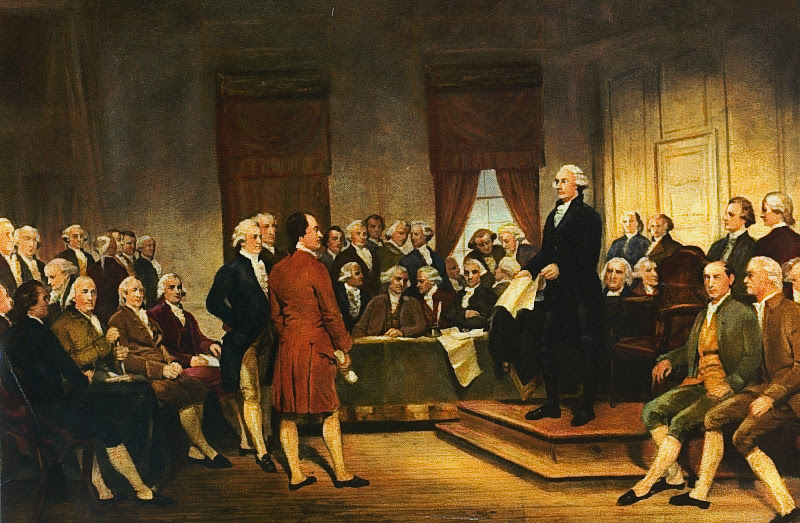
The United States has always been a white supremacy that masquerades as a democracy. For white racists those are fighting words. How dare anyone cast aspersions on the motives of America’s founding fathers? For shame.

Describing the US as a white supremacy isn’t an ad hominem attack. It is simply a statement of fact. The only people in the room when the founders mapped out the contours of American democracy were greedy white guys. Is it any wonder that the only people who have enjoyed unrestricted access to American democracy throughout its history are greedy white guys?

(image source)

Women and people of color have always been on the outside looking in. The costs of being an outsider have been astronomical. America’s greedy white guys paved the way for continent-wide genocide and property theft — and every other person of color as persona non grata. Should anyone dispute America’s favoritism for white guys, I refer you to the Naturalization Act of 1790.

Continue reading “Racism Review: Debunking white supremacy”

Migrant Tales (January 26, 2013): Making torture and hate acceptable

Posted on July 11, 2015 by Migrant Tales

Migrant Tales insight: It always amazes me how the United States and the media conveniently forget that torture has been used by many administrations as a means of scaring and getting information from its imagined and real enemies. Torture isn’t a recent interrogation technique used by the CIA and did not appear after 9/11.  That is why linking the American Psychological Association (APA) to the CIA in making torture a more effective tool in interrogation is vital to ensure that the United States or any government prohibit such an outlandish practice. 

Writes the Guardian: “For more than a decade, the American Psychological Association (APA) has maintained that a strict code of ethics prohibits its more than 130,000 members to aid in the torture of detainees while simultaneously permitting involvement in military and intelligence interrogations. The group has rejected media reporting on psychologists’ complicity in torture…”

___________________

Even if the media in the United States speaks of torture as something recent, the truth is that it has been going on for a very long time. These type of barbaric interrogation techniques were widely used in the last century in regions like Latin America. The CIA and the United States trained and promoted torture and state-sponsored terrorism in places like the School of the Americas.

https://www.youtube.com/watch?v=V4eLYXJIZfg

Torture is not only a part of my history, but the legacy of millions of Latin Americans, Africans and Asians who are gripped today by drug wars, violence and poverty.  Matters have got so bad in the underdeveloped world that people are ready to risk their lives to migrate and work for slave wages.

One has to connect the historical dots when looking at undocumented migrants and immigration in general. It’s the same story taking place over and over again: we colonize, enslave, pillage, support dictatorships; we reap the greatest profit by promoting poverty and underdevelopment in these regions.

Continue reading “Migrant Tales (January 26, 2013): Making torture and hate acceptable”

Unfriend those Facebook friends that are openly racist, homophobic and sexist

Posted on July 8, 2015 by Migrant Tales

Politics makes strange bedfellows.

The old saying claims the latter but does it have to be that way? 

There’s one matter that continues to baffle me about Finnish politics: How openly xenophobic and Islamophobic politicians are Facebook “friends” with people who claim to champion cultural diversity and anti-racism. If we look at the US Civil Rights Movement (1955-68), there’s one key lesson: Don’t flirt with those that are your enemies, name and shame them. 

The Civil Rights Movement had a big impact on the United States depending on where you lived. Many parts of my former hometown of Los Angeles were “liberal,” or in favor of the aims of the Civil Rights Movement.

How did the Civil Rights Movement impact my life in the 1970s? For one, we openly named and shamed those that still lived in their racist mindset of the pre-Civil Rights Movement. If you had issues with racism, you had to tread with extra care so you wouldn’t be branded a racist.

Continue reading “Unfriend those Facebook friends that are openly racist, homophobic and sexist”

Systemic racism in Finland

Posted on May 14, 2015 by Migrant Tales

A video clip below by Jay Smooth published by Race Forward gives us simple good examples of how systemic or institutional racism occurs in the United States. Is systemic racism a problem in Finland? If so, how and where does it occur?

If we’re really interested in tackling all forms of racism and discrimination in this country, it’s important that we identify the problem and challenge it. We have a lot of good resources in Finland to challenge intolerance.

Just saying you are against racism won’t do. We need to be much more resourceful and determined in dealing with this social ill.

https://www.youtube.com/watch?v=5rY5ORr0GsI

Continue reading “Systemic racism in Finland”

What do Jim Crow, Nuremberg Laws and Finland’s Restricting Act of 1939 have in common?

Posted on December 28, 2014 by Migrant Tales

All forms of intolerance have one factor in common: They are violent ways to disenfranchise and control groups through social exclusion. Jim Crow laws in the United States sought to ensure that blacks remain marginalized in the same way as the Nuremberg Laws of Nazi Germany took away all power from the Jews. In Finland, foreigners were controlled by the Restricting Act of 1939 (law 219/1939) and the lack of any laws that ensured them basic human rights. 

While in different historical contexts, all three laws had the same aim: Dominate and control groups perceived to be a threat. Whites in the United States feared that blacks would become their masters. The same argument was used in the Final Solution of the Jews.

Rudolf Hoess, Auschwitz camp commandant 1940-43 and 1944-45, justified the extermination of about 2.5 million Jews [1] with the following twisted logic.

Hoess: “I had my personal orders from [Heinrich] Himmler [to exterminate Jews].”

Question: “Did you ever protest?”

Hoess: “I couldn’t do that. The reasons Himmler gave me I had to accept.”

Question: “In other words, you think it was justified to kill 2.5 million men, women, and children?”

Hoess: “Not justified – but Himmler told me that if the Jews were not exterminated at that time, then the German people would be exterminated for all time by the Jews.”

Certainly myths must be created in order to depict “us” as the good guys and “them” as the bad guys as we exclude other groups. This can be done to justify mass murder or through an oppressive system like Jim Crow, which permitted mass murder through mob violence and the lynching of blacks.

The reason why intolerance continues to dominate our societies these days is because we still believe that certain groups are a threat. The massive number of black and Hispanic USAmericans that are incarcerated reveal a New Jim Crow, while anti-Semitism is on the rise in Europe under many masks like Islamophobia.

All three laws – Jim Crow, Nuremberg Laws and the Restricting Act of 1939 – had the same aim: To take away rights from other groups in order to neutralize and control them. In Finland it was not only done with the 1939 law but with no law that ensured foreigners had no civil rights in this country.

It was only 66 years after independence that Finland enacted its first Aliens Act in 1983.


Näyttökuva 2014-12-28 kello 8.37.46

While the targeted group was different in the Nuremberg Laws and during Jim Crow (Mississippi), both laws are similar because their aim and arguments are the same even if they are in different national and historical contexts.


Just like the Nuremberg Laws prohibited Jews marrying white Germans, Jim Crow prohibited blacks from marrying whites. Schools and public spaces were segregated for Jews in Germany and blacks in the United States, especially in the South.

In Finland too white Finns were discouraged from marrying foreigners. Some white Finnish immigrant women in Sweden married Asian and African men. Those that did usually lost their Finnish citizenship until a new law in 1968 permitted them to regain it.

Even if Finland was the first European country to give women the right to vote, it didn’t trust women with foreigners. Until 1984, only Finnish males could pass Finnish citizenship to their children.

The Restricting Act of 1939 prohibited foreigners from owning real estate and acquiring a majority stake in Finnish companies – limiting this to 20% normally and 40% under special permission. The Act stipulated that foreigners could not own shares in sectors such as forestry, securities trading, transportation, mining, real estate and shipping.

The Restricting Act of 1939, which was passed during the Great Depression, became redundant in 1992.

If the Restricting Act wasn’t enough to ensure that you couldn’t publish newspapers, organize demonstrations, be a chairman of a Finnish association or own land, the lack of any law that protected immigrants in this country meant that the authorities didn’t have to respect your human rights and could imprison and deport you and ask questions later.

Like Jim Crow and the Nuremberg Laws, the Restricting Act had the same aim: to wipe out and keep the foreign population to a minimum. Finland almost succeeded at making the country “foreigner free.” From a high of 29,685 immigrants in 1929, the foreign community had plummeted in the following 41 years to a mere 5,483 in 1970, according to Antero Leitzinger.

If we take into account that a large number of these “foreigners” were native Finns who were naturalized Swedes, the amount of non-Finns living in the country was even smaller.

Is it a coincidence that intolerance and xenophobia raised its rude head in such a forceful way in the 2011 parliamentary elections, when the Perussuomalaiset (PS)* saw its support rise from 5MPs in 2007 to 39MPs?

Should we be surprised why there is still so much suspicion, intolerance and nativist nationalism in Finland? All we have to do is look at our past laws and history to find the answers.

Blinding  our view, however, are those myths about ourselves and excuses that keep us in our national comfort zone.

[1] Leo Goldensohn: Nuremberg Interviews. Vintage Books. New York 2004. p. 296.

* The Finnish name of the Finns Party is the Perussuomalaiset (PS). The English -language names adopted by the PS, like True Finns or Finns Party, promote in our opinion nativist nationalism and xenophobia. We therefore prefer to use the Finnish name of the party on our postings.

New World Finn: Bye for now

Posted on December 10, 2014 by Migrant Tales

To part is to die a little to die to what we love .*

Edmond Haracourt (1856-1941)

  The first time I heard the phrase by the French, “to part is to die a little,” was in Finland a long time ago during one of those unforgettable summers, when I used to visit my grandparents in Eastern Finland. It was my father who, notably saddened by the challenge of another farewell, surprised us with those words.

Haracourt’s poem made me think a little longer on that day about the sometimes difficult ritual of saying goodbye. I have carried those words with me throughout my life and use them as consolation whenever there is a difficult parting.

Näyttökuva 2014-12-10 kello 0.09.29

Read full story here.


Certainly when we say goodbye something dies inside of us. But as Haracourt points out, there is a consolation, albeit one of sadness, since everywhere and always one leaves behind a part of oneself after parting.

What happens when we say goodbye? Does loneliness and longing set in? Isn’t it cruel to long for something that time will never return after it turns a special moment into history?

While Haracourt’s words come to mind at this moment when I write these words about New World Finn’s last issue, I am honored that I had the opportunity to be part of this family from around 2000. I call it a family because I always was treated like a member of a community. New World Finn was a good home for my columns.

After December, there will only be only three Finnish American newspapers in the United States: Amerikan Uutiset of Lake Worth, Florida, and Finnish-American Reporter of Hancock, Michigan. The Swedish-language Norden, founded in 1896, will continue to be published thanks to cooperation with Est Elle, a Vaasa-based Finnish-Swedish publication.

In Canada, there is today only one big Finnish-language newspaper, Toronto-based Kanadan Sanomat. Vapaa Sana of Toronto, which was founded in 1931, merged with Kanadan Sanomat in 2012.

What will happen after the printing presses of New World Finn stop rolling and become silent? Will the voice of our Finnish American community get fainter? What topics will continue to unite us and strengthen our sense of community in the future? One of these, I am certain, must be our sense of community with all of its defects and its beauty, all its successes and its failures.

Certainly one of the important roles that many Finnish American publications like New World Finn played was to give our diverse community a voice, and bolster a sense identity in order to make sense and help us face a brave and diverse world in a faraway land, even if our families have lived in the Americas for a few generations.

Edward Said, a Palestinian who published in the 1970s a fascinating book called Orientalism, which is about “Otherness,” cites Italian Marxist theoretician Antonio Gramsci. The Sardinian social thinker, who died in Mussolini’s prisons, wrote about “traces of us” deposited in our family history, traditions, collective experiences, individual experiences, relations between one individual and another. Even if there is no inventory of history in these traces that he speaks of, they are there for us to find and to connect the dots.

Said continued: “It’s the most interesting human task, it is the task of interpretation, it is the task of giving history some fable sense; not to show that my history is better than yours, or that it’s worse, [that] I’m a victim and you’re the aggressor, but rather to understand my history in terms of other people’s history.”

Probably one of the greatest gifts that New World Finn gave us during these fifteen years was help us connect and understand those traces so that we could better comprehend our history in terms of others.

Many played an important role in the publication’s existence. Some that I personally want to thank are Gerry Henkel, the present editor, former editor Lynn Laitala, Niilo Koponen, Oren Tikkanen, and especially publishers Leo and Ivy Nevala. Special mention goes to many of our readers, who supported us for so many years.

Another Finnish American newspaper now retires to the sidelines and forms part of the proud resting place of other publications that once served their readers and communities.

Thank you and bye for now.

Julian Abagond: nation of immigrants

Posted on November 25, 2014 by Migrant Tales

Migrant Tales insight: Finland is a nation of emigrants, not of immigrants. Even so, the same structures that have kept intact the structures and systemic exploitation of minorities, slavery and Jim Crow are still alive and kicking despite the fact that we try to convince ourselves that the United States is a nation of immigrants. 

___________________

Julian Abagond

The phrase “nation of immigrants” (1883) is often applied to the United States, especially by its scholars, journalists, presidents and schoolteachers.

Näyttökuva 2014-11-25 kello 21.14.36

Last week, President Obama put it like this (on November 20th 2014):

“My fellow Americans, we are and always will be a nation of immigrants. We were strangers once, too. And whether our forebearers were strangers who crossed the Atlantic, or the Pacific or the Rio Grande, we are here only because this country welcomed them in and taught them that to be an American is about something more than what we look like or what our last names are, or how we worship.”

His words do not apply to about 40% of the nation:

  • Not to Native Americans who were wiped out or driven west.
  • Nor to Black Americans who were brought in chains.
  • Nor to Chinese Americans who were killed or driven out of the western US in the late 1800s.
  • Nor to Mexican Americans deported in the 1930s.
  • Nor to the people whose lands the US took over: Native Americans,Northern Mexicans, Alaska Natives, Native Hawaiians, Puerto Ricans, Guamanians, Palauans, Eastern Samoans, Northern Mariana Islanders or Virgin Islanders.
  • Nor, given the perpetual foreigner stereotype, to Asian Americans.
  • Nor to most British or Dutch Americans, who were not immigrants (people who move to a foreign country) but colonists (people who create an offshoot of their mother country). Calling them “immigrants” would mean they joined Native American societies. They were conquerors and invaders, not “immigrants”.

In English the word “immigrant” only goes back to 1792. The phrase “nation of immigrants” does not appear in print till 1883, not in the New York Times till 1923. It was still a surprising idea at Harvard University in 1945, even for historian Oscar Handlin, who grew up in New York City as the son of Russian Jewish immigrants. It did not take off till the 1960s, when President Kennedy wrote a book for the Jewish Anti-Defamation League called “A Nation of Immigrants” (1964).

Näyttökuva 2014-11-25 kello 21.12.53

So when Obama says, as he did in 2010, 2013 and 2014:

“We’ve always defined ourselves as a nation of immigrants.”

He is reading history backwards. It is an idea that did not catch on till the Third Enlargement of Whiteness, which took in southern and eastern Europeans.

Obama on Independence Day, 2012:

“We say it so often, we sometimes forget what it means – we are a nation of immigrants. Unless you are one of the first Americans, a Native American, we are all descended from folks who came from someplace else – whether they arrived on the Mayflower or on a slave ship, whether they came through Ellis Island or crossed the Rio Grande.”

The “nation of immigrants” thing colour-blinds US history as if it were not much affected by racism – genocide, slavery, settler colonialism, imperialism, etc – as if Italian and Jamaican immigrants are pretty much the same, or English colonists and African slaves, as if US institutions protect everyone’s rights regardless of race and the Bootstrap Myth is true.

Thanks to Kyle for suggesting this post.

See also:

  • The three pillars of American white supremacy
  • The Third Enlargement of American Whiteness
  • white racial frame
    • colour-blind racism: the four frames
    • Bootstrap Myth
    • perpetual foreigner stereotype
  • genocide
  • The Cherokee Trail of Tears
  • Kingdom of Hawaii

Read original posting here.

This piece was reprinted by Migrant Tales with permission.


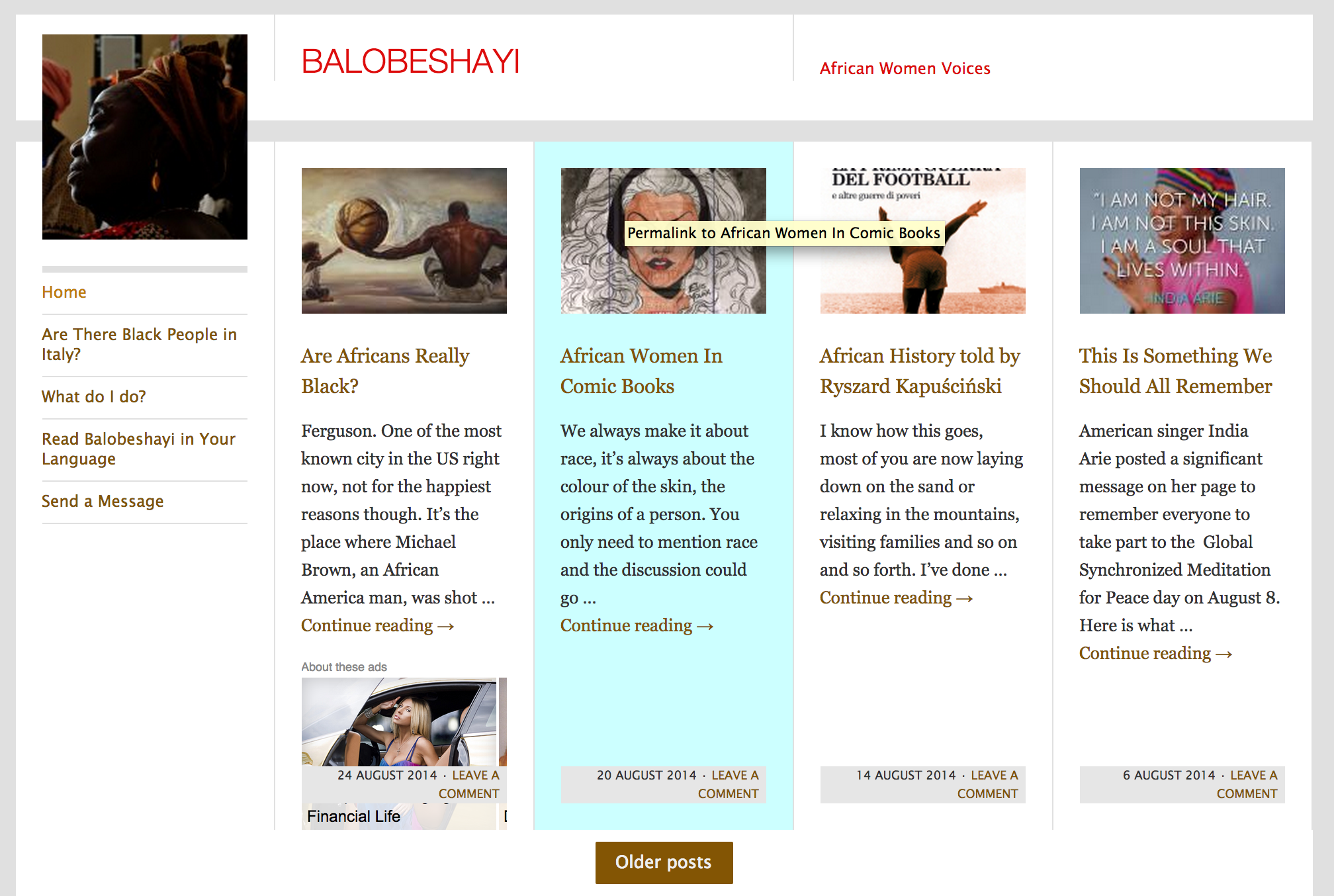
BALOBESHAYI: Are Africans Really Black?

Posted on August 30, 2014 by Migrant Tales

Beatrice Kabutakapua

Ferguson. One of the most known city in the US right now, not for the happiest  reasons though. It’s the place where Michael Brown, an African America man, was shot by the police. Usually the ethnic background is useless for me,but in this case is the engine that started the turmoil happening in this community in the state of Missouri.

Näyttökuva 2014-8-30 kello 20.26.02

Read BALOBESHAYI here.


You’ll find tons of articles about the issue but I just want to share one of them, appeared on The Guardian and written by Hannah Giorgis who is presented as a black feminist born by Eritreans and Ethiopians.

Why is her piece interesting?

In it she makes a point for one of those endless discussions: are Africans as black as African Americans? Her answer is yes. And should Africans show more solidarity with African-Americans? Again, yes. Why? Because

We are here and we are black

Let’s go back to Ferguson now, Giorgis is disappointed by the lack of interest shown by African migrants in the issue, after all police is not only shooting African-Americans butblack people in general. She says:

To pretend that we exist outside the consequences of blackness in this country is to do both ourselves and African Americans a profound injustice. It makes us complicit in perpetuating dangerous stereotypes about African Americans – and by extension, all black people.

To read the full article visit the Guardian and then come back here to express your view.

Read original story here.

This piece was reprinted by Migrant Tales with permission.

  • Previous
  • 1
  • 2
  • 3
  • 4
  • 5
  • 6
  • 7
  • 8
  • Next
Read more about documentary film
Read more

Recent Posts

  • Finland’s tabloids Iltalehti and Ilta-Sanomat are the pits
  • Riikka Purra’s Dr Jekyll and Mr Hyde mask
  • Double standards
  • Perussuomalaiset: Uusi logo, sama vanha juttu
  • Taco Trump

Recent Comments

  1. Absolutely Socking: Racist Finnish Facebook group against human rights gets flooded with socks on Musta Barbaari’s mother and sister charged by the police in “ethnic profiling” case
  2. Ilkka Nuotio on Pekka Myrskylä: “Tilastot kertovat toista kuin poliittinen keskustelu”
  3. Genrih Soinkara on The war in Ukraine and the Russian-Finnish border crisis are showing Finland’s ugly side
  4. Ahti Tolvanen on Comment by Ahti Tolvanen on the Helsinki +50 conference
  5. Angel Barrientos on Angel Barrientos is one of the kind beacons of Finland’s Chilean community

Archives

  • June 2026
  • May 2026
  • April 2026
  • March 2026
  • February 2026
  • January 2026
  • December 2025
  • November 2025
  • October 2025
  • September 2025
  • August 2025
  • July 2025
  • June 2025
  • May 2025
  • April 2025
  • March 2025
  • February 2025
  • January 2025
  • December 2024
  • November 2024
  • October 2024
  • September 2024
  • August 2024
  • July 2024
  • June 2024
  • May 2024
  • April 2024
  • March 2024
  • February 2024
  • January 2024
  • December 2023
  • November 2023
  • October 2023
  • September 2023
  • August 2023
  • July 2023
  • June 2023
  • May 2023
  • April 2023
  • March 2023
  • February 2023
  • January 2023
  • December 2022
  • November 2022
  • October 2022
  • September 2022
  • August 2022
  • July 2022
  • June 2022
  • May 2022
  • April 2022
  • March 2022
  • February 2022
  • January 2022
  • December 2021
  • November 2021
  • October 2021
  • September 2021
  • August 2021
  • July 2021
  • June 2021
  • May 2021
  • April 2021
  • March 2021
  • February 2021
  • January 2021
  • December 2020
  • November 2020
  • October 2020
  • September 2020
  • August 2020
  • July 2020
  • June 2020
  • May 2020
  • April 2020
  • March 2020
  • February 2020
  • January 2020
  • December 2019
  • November 2019
  • October 2019
  • September 2019
  • August 2019
  • July 2019
  • June 2019
  • May 2019
  • April 2019
  • March 2019
  • February 2019
  • January 2019
  • December 2018
  • November 2018
  • October 2018
  • September 2018
  • August 2018
  • July 2018
  • June 2018
  • May 2018
  • April 2018
  • March 2018
  • February 2018
  • January 2018
  • December 2017
  • November 2017
  • October 2017
  • September 2017
  • August 2017
  • July 2017
  • June 2017
  • May 2017
  • April 2017
  • March 2017
  • February 2017
  • January 2017
  • December 2016
  • November 2016
  • October 2016
  • September 2016
  • August 2016
  • July 2016
  • June 2016
  • May 2016
  • April 2016
  • March 2016
  • February 2016
  • January 2016
  • December 2015
  • November 2015
  • October 2015
  • September 2015
  • August 2015
  • July 2015
  • June 2015
  • May 2015
  • April 2015
  • March 2015
  • February 2015
  • January 2015
  • December 2014
  • November 2014
  • October 2014
  • September 2014
  • August 2014
  • July 2014
  • June 2014
  • May 2014
  • April 2014
  • March 2014
  • February 2014
  • January 2014
  • December 2013
  • November 2013
  • October 2013
  • September 2013
  • August 2013
  • July 2013
  • June 2013
  • May 2013
  • April 2013
  • March 2013
  • February 2013
  • January 2013
  • December 2012
  • November 2012
  • October 2012
  • September 2012
  • August 2012
  • July 2012
  • June 2012
  • May 2012
  • April 2012
  • March 2012
  • February 2012
  • January 2012
  • December 2011
  • November 2011
  • October 2011
  • September 2011
  • August 2011
  • July 2011
  • June 2011
  • May 2011
  • April 2011
  • March 2011
  • February 2011
  • January 2011
  • December 2010
  • November 2010
  • October 2010
  • September 2010
  • August 2010
  • July 2010
  • June 2010
  • May 2010
  • April 2010
  • March 2010
  • February 2010
  • January 2010
  • December 2009
  • November 2009
  • October 2009
  • September 2009
  • August 2009
  • July 2009
  • December 2008
  • November 2008
  • October 2008
  • September 2008
  • August 2008
  • July 2008
  • June 2008
  • May 2008
  • April 2008
  • March 2008
  • February 2008
  • January 2008
  • November 2007
  • October 2007
  • September 2007
  • August 2007
  • July 2007
  • June 2007
  • May 2007

Categories

  • ?? Gia L?c
  • ????? ?????? ????? ???????? ?? ??????
  • ???????
  • @HerraAhmed
  • @mondepasrond
  • @nohatefinland
  • @oula_silver
  • @Varathas
  • A Pakistani family
  • äärioikeisto
  • Abbas Bahmanpour
  • Abdi Muhis
  • Abdirahim Hussein Mohamed
  • Abdirahim Husu Hussein
  • Abdirisak Mahamed
  • About Migrant Tales
  • activism
  • Adam Al-Sawad
  • Adel Abidin
  • Afrofinland
  • Ahmed IJ
  • Ahti Tolvanen
  • Aino Pennanen
  • Aisha Maniar
  • Alan Ali
  • Alan Anstead
  • Alejandro Díaz Ortiz
  • Alekey Bulavsev
  • Aleksander Hemon
  • Aleksanterinliitto
  • Aleksanterinliitto ry
  • Aleksanterinliitto ry:n hallitus
  • Alex Alex
  • Alex Mckie
  • Alexander Nix
  • Alexandra Ayse Albayrak
  • Alexis Neuberg
  • Ali Asaad Hasan Alzuhairi
  • Ali Hossein Mir Ali
  • Ali Rashid
  • Ali Sagal Abdikarim
  • Alina Tsui
  • Aline Müller
  • All categories
  • Aman Heidari
  • Amiirah Salleh-Hoddin & Jana Turk
  • Amin A. Alem
  • Amir Zuhairi
  • Amkelwa Mbekeni
  • Ana María Gutiérrez Sorainen
  • Anachoma
  • Anders Adlecreutz
  • Angeliina Koskinen
  • Anna De Mutiis
  • Anna María Gutiérrez Sorainen
  • Anna-Kaisa Kuusisto ja Jaakko Tuominen
  • Annastiina Kallius
  • Anneli Juise Friman Lindeman
  • Announcement
  • Anonymous
  • Antero Leitzinger
  • anti-black racism
  • Anti-Hate Crime Organisation Finland
  • Anudari Boldbaatar
  • Arshiya Nasser
  • Aspergers Syndrome
  • Asylum Corner
  • Asylum seeker 406
  • Athena Griffin and Joe Feagin
  • Autism
  • Avaaz.org
  • Awale Olad
  • Ayan Said Mohamed
  • AYY
  • Barachiel
  • Bashy Quraishy
  • Beatrice Kabutakapua
  • Beri Jamal
  • Beri Jamal and Enrique Tessieri
  • Bertolt Brecht
  • Boiata
  • Boodi Kabbani
  • Bruno Gronow
  • Carmen Pekkarinen
  • Çelen Oben and Sheila Riikonen
  • Chiara Costa-Virtanen
  • Chiara Costa-Virtanen
  • Chiara Sorbello
  • Christian Thibault
  • Christopher Wylie
  • Clara Dublanc
  • Dana
  • Daniel Malpica
  • Danilo Canguçu
  • David Papineau
  • David Schneider
  • Dexter He
  • Don Flynn
  • Dr Masoud Kamali
  • Dr. Faith Mkwesha
  • Dr. Theodoros Fouskas
  • Edna Chun
  • Eeva Kilpi
  • Emanuela Susheela
  • En castellano
  • ENAR
  • Enrique
  • Enrique Tessieri
  • Enrique Tessieri & Raghad Mchawh
  • Enrique Tessieri & Yahya Rouissi
  • Enrique Tessieri and Muhammed Shire
  • Enrique Tessieri and Sira Moksi
  • Enrique Tessieri and Tom Vandenbosch
  • Enrique Tessieri and Wael Che
  • Enrique Tessieri and Yahya Rouissi
  • Enrique Tessieri and Zimema Mhone
  • Epäluottamusmies
  • EU
  • Europe
  • European Islamophobia Report
  • European Islamophobia Report 2019,
  • European Union
  • Eve Kyntäjä
  • Ezequiel Caldeiro
  • Facebook
  • Fadumo Dayib
  • Faisa Kahiye
  • Farhad Manjoo
  • Fasismi
  • Finland
  • Fizza Qureshi
  • Flyktingar och asyl
  • Foreign Student
  • Fozia Mir-Ali
  • Frances Webber
  • Frida Selim
  • Gareth Rice
  • Ghyslain Vedeaux
  • Global Art Point
  • Great Replacement
  • Habiba Ali
  • Hami Bahadori
  • Hami Bahdori
  • Hamid
  • Hamid Alsaameere
  • Hamid Bahdori
  • Handshake
  • Harmit Athwal
  • Hassan Abdi Ali
  • Hassan Muhumud
  • Heikki Huttunen
  • Heikki Wilenius
  • Helsingin Sanomat
  • Henning van der Hoeven
  • Henrika Mälmsröm
  • Hser Hser
  • Hser Hser ja Mustafa Isman
  • Husein Muhammed
  • Hussain Kazemian
  • Hussain Kazmenian
  • Ibrahim Khan
  • Ida
  • Ignacio Pérez Pérez
  • Iise Ali Hassan
  • Ilari Kaila & Tuomas Kaila
  • Imam Ka
  • inside-an-airport
  • Institute of Race Relations
  • Iraqi asylum seeker
  • IRR European News Team
  • IRR News Team
  • Islamic Society of Norhern FInland
  • Islamic Society of Northern Finland
  • Islamophobia
  • Jacobinmag.com
  • Jallow Momodou
  • Jan Holmberg
  • Jane Elliott
  • Jani Mäkelä
  • Jari Luoto
  • Jari Taponen
  • Jegor Nazarov
  • Jenni Stammeier
  • Jenny Bourne
  • Jessie Daniels
  • Joe Davidow
  • Johannes Koski
  • John D. Foster
  • John Grayson
  • John Marriott
  • Jon Burnett
  • Jorma Härkönen
  • Jos Schuurmans
  • José León Toro Mejías
  • Josue Tumayine
  • Jouni Karnasaari
  • Juan Camilo
  • Jukka Eräkare
  • Julian Abagond
  • Julie Pascoet
  • Jussi Halla-aho
  • Jussi Hallla-aho
  • Jussi Jalonen
  • JusticeDemon
  • Kadar Gelle
  • Kaksoiskansalaisuus
  • Kansainvälinen Mikkeli
  • Kansainvälinen Mikkeli ry
  • Katherine Tonkiss
  • Kati Lepistö
  • Kati van der Hoeven-Lepistö
  • Katie Bell
  • Kättely
  • Kerstin Ögård
  • Keshia Fredua-Mensah & Jamie Schearer
  • Khadidiatou Sylla
  • Khadra Abdirazak Sugulle
  • Kiihotus kansanryhmää vastaan
  • Kirsi Crowley
  • Koko Hubara
  • Kristiina Toivikko
  • Kubra Amini
  • KuRI
  • La Colectiva
  • La incitación al odio
  • Laura Huhtasaari
  • Lauri Finér
  • Leif Hagert
  • Léo Custódio
  • Leo Honka
  • Leontios Christodoulou
  • Lessie Branch
  • Lex Gaudius
  • Leyes de Finlandia
  • Liikkukaa!
  • Linda Hyökki
  • Liz Fekete
  • M. Blanc
  • Maarit Snellman
  • Mahad Sheikh Musse
  • Maija Vilkkumaa
  • Malmin Kebab Pizzeria Port Arthur
  • Marcell Lorincz
  • Mari Aaltola
  • María Paz López
  • Maria Rittis Ikola
  • Maria Tjader
  • Marja-Liisa Tolvanen
  • Mark
  • Markku Heikkinen
  • Marshall Niles
  • Martin Al-Laji
  • Maryan Siyad
  • Matt Carr
  • Mauricio Farah Gebara
  • Media Monitoring Group of Finland
  • Micah J. Christian
  • Michael McEachrane
  • Michele Levoy
  • Michelle Kaila
  • Migrant Tales
  • Migrant Tales Literary
  • Migrantes News
  • Migrants' Rights Network
  • MigriLeaks
  • Mikko Kapanen
  • Miriam Attias and Camila Haavisto
  • Mohamed Adan
  • Mohammad Javid
  • Mohammad M.
  • Monikulttuurisuus
  • Monisha Bhatia and Victoria Canning
  • Mor Ndiaye
  • Muh'ed
  • Muhamed Abdimajed Murshid
  • Muhammed Shire
  • Muhammed Shire and Enrique Tessieri
  • Muhis Azizi
  • Musimenta Dansila
  • Muslimiviha
  • Musulmanes
  • Namir al-Azzawi
  • Natsismi
  • Neurodiversity
  • New Women Connectors
  • Nils Muižnieks
  • No Labels No Walls
  • Noel Dandes
  • Nuor Dawood
  • Omar Khan
  • Otavanmedia
  • Oula Silvennoinen
  • Paco Diop
  • Pakistani family
  • Pentti Stranius
  • Perussuomalaiset
  • perustuslaki
  • Petra Laiti
  • Petri Cederlöf
  • Pia Grochowski
  • Podcast-lukija Bea Bergholm
  • Pohjois – Suomen Islamilainen Yhdyskunta
  • Pohjois Suomen Islamilainen Yhyskunta
  • Polina Kopylova
  • Race Files
  • racism
  • Racism Review
  • Raghad Mchawh
  • Ranska
  • Rashid H. and Migrant Tales
  • Rasismi
  • Raul Perez
  • Rebecka Holm
  • Reem Abu-Hayyeh
  • Refugees
  • Reija Härkönen
  • Remiel
  • Reza Nasri
  • Richard Gresswell
  • Riikka Purra
  • Risto Laakkonen
  • Rita Chahda
  • Ritva Kondi
  • Robito Ibrahim
  • Roble Bashir
  • Rockhaya Sylla
  • Rodolfo Walsh
  • Roger Casale
  • Rostam Atai
  • Roxana Crisólogo Correa
  • Ruth Grove-White
  • Ruth Waweru-Folabit
  • S-worldview
  • Sadio Ali Nuur
  • Sami Rusanen
  • Sandhu Bhamra
  • Sara de Jong
  • Sarah Crowther
  • Sari Alhariri
  • Sarkawt Khalil
  • Sasu
  • Scot Nakagawa
  • Shabana Ahmadzai
  • Shada Islam
  • Sharon Chang blogs
  • Shenita Ann McLean
  • Shirlene Green Newball
  • Sini Savolainen
  • Sira Moksi
  • Sonia K.
  • Sonia Maria Koo
  • Steverp
  • Stop Deportations
  • Suldaan Said Ahmed
  • Suomen mediaseurantakollektiivi
  • Suomen Muslimifoorumi ry
  • Suomen viharikosvastainen yhdistys
  • Suomen viharikosvastainen yhdistys ry
  • Suomi
  • Supermen
  • Susannah
  • Suva
  • Syrjintä
  • Talous
  • Tapio Tuomala
  • Taw Reh
  • Teivo Teivainen
  • The Daily Show
  • The Heino
  • The Supermen
  • Thomas Elfgren
  • Thulfiqar Abdulkarim
  • Tim McGettigan
  • Tino Singh
  • Tito Moustafa Sliem
  • Tobias Hübinette and L. Janelle Dance
  • Transport
  • Trica Danielle Keaton
  • Trilce Garcia
  • Trish Pääkkönen
  • Trish Pääkkönen and Enrique Tessieri
  • Tuulia Reponen
  • Uncategorized
  • UNITED
  • University of Eastern Finland
  • Uyi Osazee
  • Väkivalta
  • Vapaa Liikkuvuus
  • Venla-Sofia Saariaho
  • Vieraskynä
  • W. Che
  • W. Che an Enrique Tessieri
  • Wael Ch.
  • Wan Wei
  • Women for Refugee Women
  • Xaan Kaafi Maxamed Xalane
  • Xassan Kaafi Maxamed Xalane
  • Xassan-Kaafi Mohamed Halane & Enrique Tessieri
  • Yahya Rouissi
  • Yasmin Yusuf
  • Yassen Ghaleb
  • Yle Puhe
  • Yuliet Tresa
  • Yve Shepherd
  • Zahra Khavari
  • Zaker
  • Zalina Ametova
  • Zamzam Ahmed Ali
  • Zeinab Amini ja Soheila Khavari
  • Zimema Mahone and Enrique Tessieri
  • Zimema Mhone
  • Zoila Forss Crespo Moreyra
  • ZT
  • Zulma Sierra
  • Zuzeeko Tegha Abeng
© 2026 Migrant tales | Powered by Minimalist Blog WordPress Theme