In Finland’s parliamentary election in April, the country shifted abruptly from a left-wing government led by the charismatic Social Democratic Prime Minister Sanna Marin to a possible right-wing government. Some see the good result of the conservative National Coalition Party, and especially the far-right Perussuomalaiset (PS),* as a threat to those values, social welfare, and solidarity held dear to the welfare state.
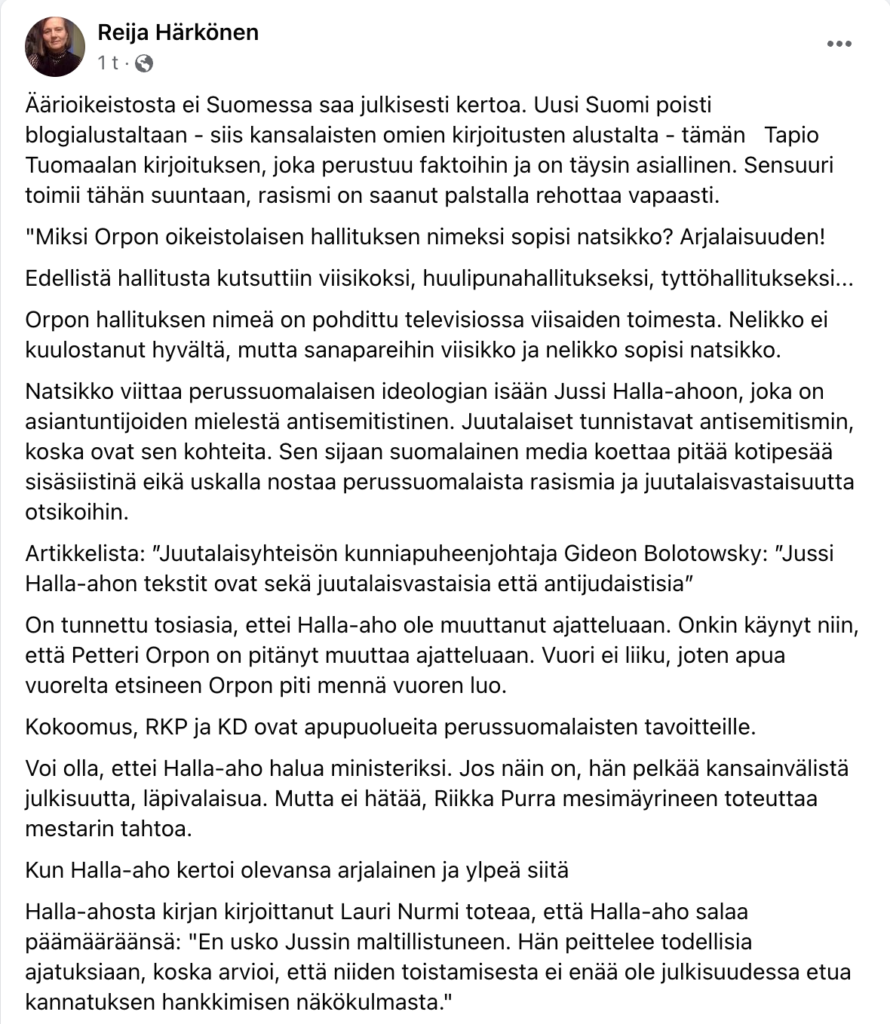
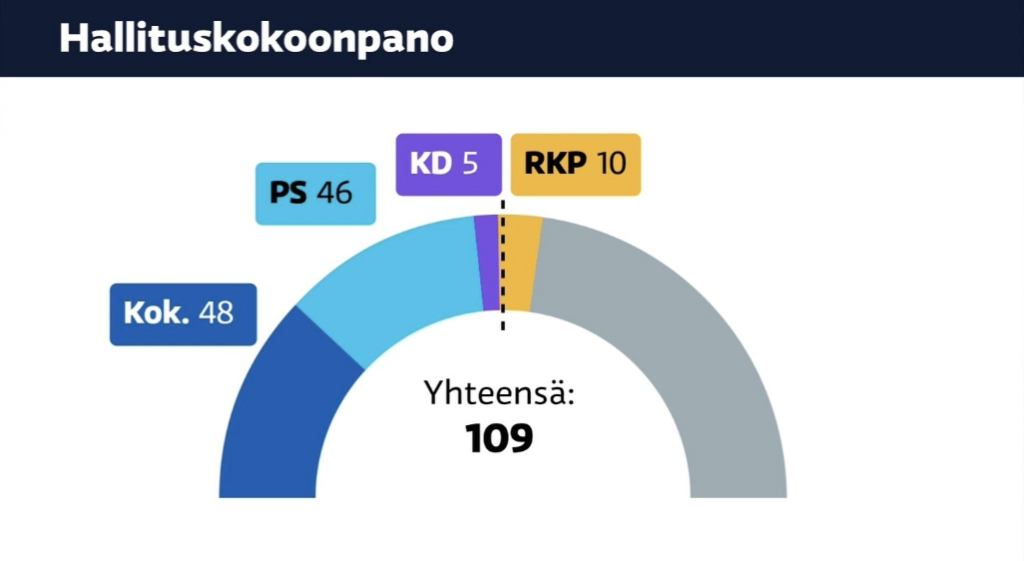
Like in neighboring Sweden, the far-right Sweden Democrats did well in the election and helped boost the right-wing bloc to victory through cooperation with the Moderate Party. In Finland, the National Coalition Party is ready to give the PS a ticket to become a government coalition member.
Following the PS’ election victory of 2011, which saw their MPs increase from 5 to 39, the far-right party has done exceptionally well in parliamentary elections. In the last election, the PS saw its MPs rise to 46, a record.
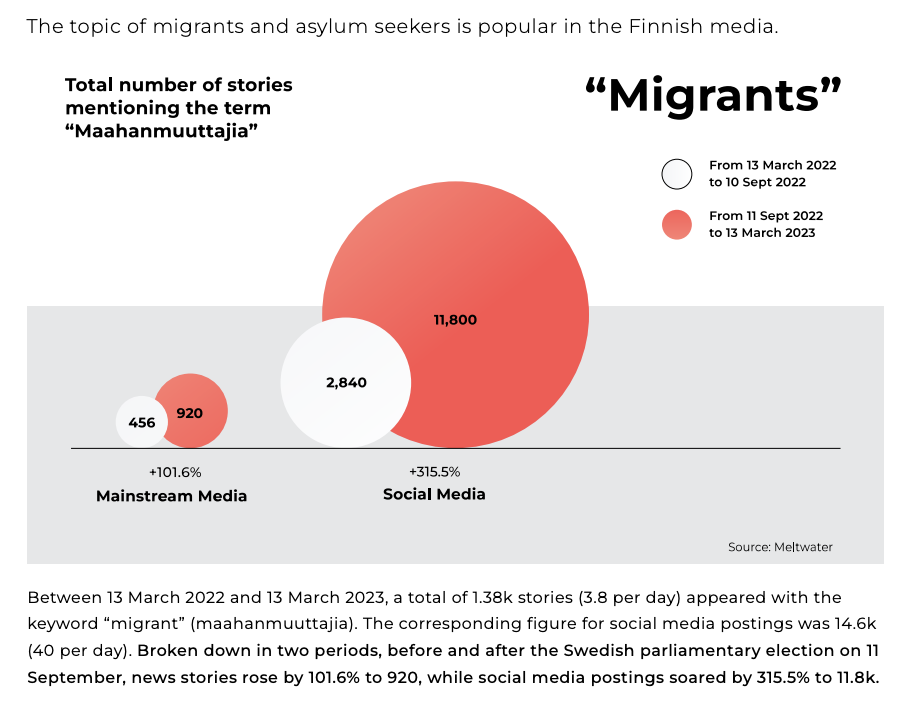
The PS’ claim of success lies in spreading news stories about migrant crime to lure voters with the help of the media and police.
With some PS politicians openly supporting Viktor Orbán of Hungary, former President Donald Trump, and even violent far-right groups, do populism and polarization threaten Finland’s democracy?
In an interview with the Finnish League of Human Rights, Eliza Ruynowski, a human rights lawyer from Poland, cautioned Finns to avoid accepting simplistic solutions to complex issues. She advised them to be cautious of individuals who blame specific groups of people, whether they belong to a minority or hold differing political views, as a means of resolving problems.
But let’s go back in time to uncover the dangerous political path Finland, and the rest of Europe, are on.
In reporting about Adolph Eichmann’s trial in Israel in 1961, philosopher Hannah Arendt described the war criminal responsible for transporting millions of Jews to their deaths as an ordinary bureaucrat who, in her own words, was “neither perverted nor sadistic, but “terrifyingly normal.”


Arendt called this disposition the banality of evil or the state where Eichmann performed evil deeds without evil intentions. Thus he could fulfill his tasks diligently irrespective of their horrific crimes by the inability to think from the victim’s standpoint.
At the Nuremberg trials (1945-46), US Army psychologist Captain Gustave Mark Gilbert stated that the Nazi war criminals on the dock had one matter in common: Their incapacity to feel with their fellow men and women.
Continue reading “Nordic far-right populism is a threat to the welfare state and the region”