Listening to the anti-immigration rhetoric of Petteri Orpo’s government and especially of its Perussuomalaiset (PS)* interior minister, Mari Rantanen, on tightening citizenship requirements, two matters come to light: racism and hypocrisy.
The planned changes in the citizenship law include:
Raising residence requirements from five to eight years.
A person must make a certain amount (sill unspecified) of money and without Kela (Social Insurance Institution of Finland) funds to be eligible for citizenship.
A new citizenship test and more rigorous language exams will be introduced.
Certain (still unspecified) crimes may make you lose your citizenship.
Rantanen is not only a multiculturally challenged politician but does not practice what she hatefully preaches.
“Finnish citizenship will be a reward for successful integration,” she claimed at a press conference, adding that the changes in the law will “not be unreasonable, though”.
Rantanen’s views and actions against migrants reveal how far out of touch she is with our values.
With politicians like Rantanen and the hard-right shift in immigration policy in Finland, it shows the real rot that our Nordic values have hidden and protected. Thus with racist rhetoric we can win elections, get a ministerial seat, and claim with a poker face that we are not racists.
If you believe what Rantanen is telling you about why citizenship laws ust be tightened, then, I suspect, you will fall for anything.
Some of Rantanen’s most infamous quotes include her statement about blue eyes and a clear alusion to the great replacement conspiracy theory. “We mustn’t be so naive [naive in Finnish means being ‘blue-eyed’] that soon we won’t be blue-eyed.”
Migrant Talesin konteksti: Mahad Sheikh Musse on monikulttuurisen nuorisotyön ammattilainen, joka omaa vuosien kokemus viranomaisten ja eri yhteisöjen kanssa työskentelmisestä. Hän on kirjoittanut katujengejä koskevasta aiheesta Migrant Talesiin. Sen lisäksi, että meneillään olevassa keskustelussa ei kuulla rodullistettuja nuoria, herää kysymys, onko hallitus kiinnostuneempi leimaamisesta kuin hyvien ratkaisujen löytämisestä tähän ongelmaan. Musse kertoo näkemyksensä näistä asioista. #Maahanmuuttajuus, #nuoret ja #rikollisuus
Maahanmuuttajataustaiset lapset ja nuoret voivat kokea erilaisia haasteita sopeutuessaan uuteen ympäristöön ja kulttuuriin.
Sodan kokeminen voi vaikuttaa heidän elämäänsä monin tavoin. Esimerkiksi jos lapsi on kokenut sodan, hän voi kärsiä traumoista ja muista psyykkisistä ongelmista. Tämä voi vaikeuttaa sopeutumista uuteen ympäristöön ja vaikuttaa koulumenestykseen.
Lisäksi maahanmuuttajataustaiset lapset ja nuoret voivat kokea syrjintää ja rasismia, mikä voi johtaa henkisiin ongelmiin ja muihin haasteisiin. On tärkeää, että yhteiskunta tarjoaa tukea ja resursseja näille lapsille ja nuorille, jotta he voivat sopeutua uuteen ympäristöön ja menestyä elämässään.
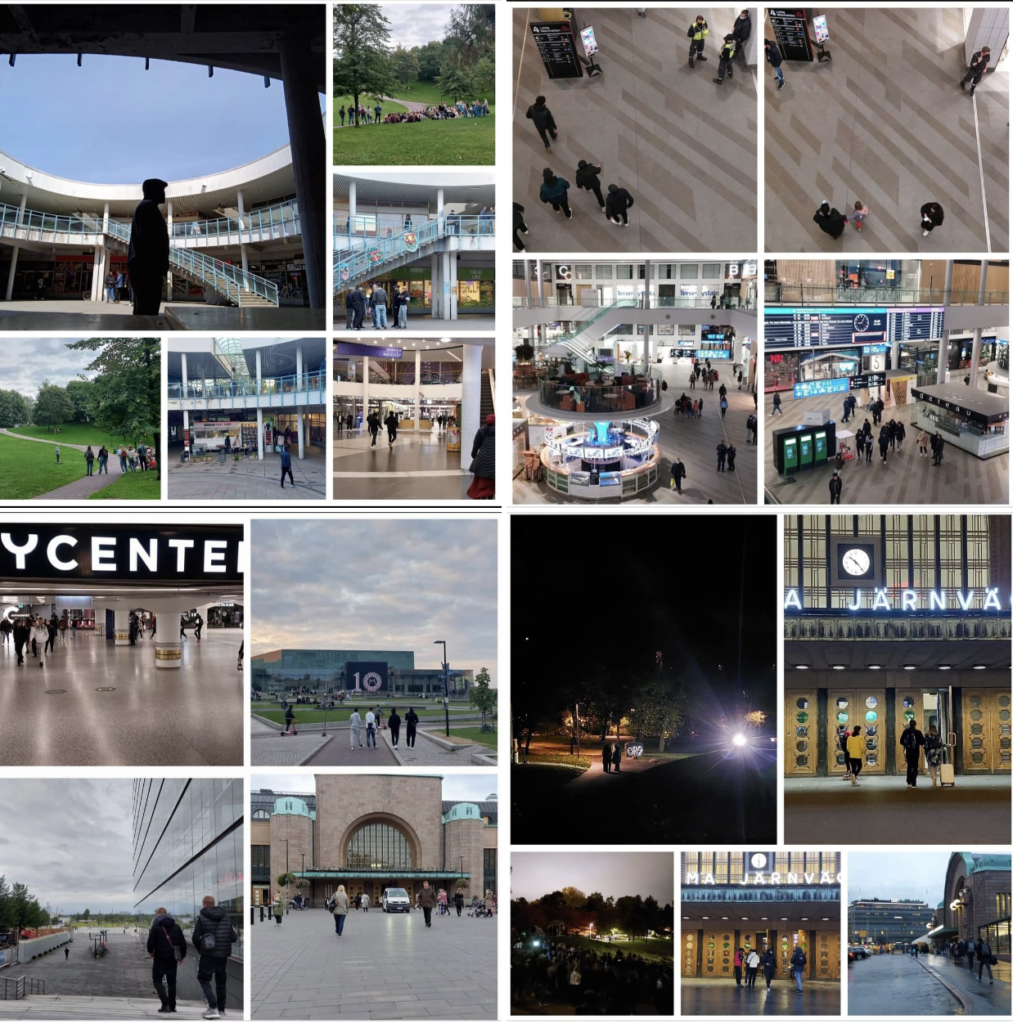
Kuvia Itä-Keskuksista Helsingin keskustaan. Kuvat Mahad Sheikh Musse
Sodan traumoista kärsivien ihmisten hoito voi olla monimutkaista ja vaatii erikoistunutta hoitoa. Hoidon tavoitteena on auttaa potilaita käsittelemään traumaattisia kokemuksiaan ja löytämään keinoja selviytyä niistä. Hoito voi sisältää terapiaa, lääkitystä, ryhmähoitoa ja muita hoitomuotoja. On tärkeää, että hoito alkaa mahdollisimman varhaisessa vaiheessa, jotta potilaat voivat saada tarvitsemansa avun ja tuen. Hoidottamatta jätetyt sotatraumat voivat johtaa vakaviin psyykkisiin ongelmiin, kuten PTSD:hen ja masennukseen, jotka voivat vaikuttaa elämänlaatuun ja jopa johtaa itsetuhoisiin ajatuksiin tai käyttäytymiseen.
Sodan traumoista kärsivät ihmiset voivat joutua kokemaan monia haasteita elämässään, kuten syrjäytymistä ja rikollisuutta. Traumat voivat vaikuttaa heidän kykyynsä sopeutua yhteiskuntaan ja kommunikoida muiden kanssa, mikä voi johtaa sosiaaliseen eristäytymiseen. Lisäksi traumojen hoitaminen voi olla kallista ja vaikeaa, mikä voi johtaa taloudellisiin vaikeuksiin ja rikollisuuteen. On tärkeää, että yhteiskunta tarjoaa tukea ja resursseja sodan traumoista kärsiville ihmisille, jotta he voivat saada tarvitsemansa avun ja tuen. Tämä voi auttaa vähentämään syrjäytymistä ja rikollisuutta ja auttaa heitä saavuttamaan paremman elämänlaadun.
On ymmärrettävää, että tuntee syyllisyyttä, jos on selvinnyt sodasta hengissä, kun muut ovat kärsineet tai menettäneet henkensä. Tämä on yleinen tunne selviytyjien keskuudessa, ja se voi olla erittäin vaikea käsitellä. On tärkeää muistaa, että tunteet ovat aina yksilöllisiä ja että on normaalia tuntea syyllisyyttä, vaikka ei olisi tehnyt mitään väärää. On tärkeää puhua näistä tunteista jonkun kanssa ja saada tarvittaessa ammattimaista apua. Lisäksi voit harkita vapaaehtoistyötä tai lahjoitusta sodan uhrien auttamiseksi, mikä voi auttaa lievittämään syyllisyyttä ja antaa tunteen siitä, että tekee jotain positiivista.
On erittäin vaikeaa elää turvallisesti, kun sukulaiset ovat sodan alueella. Tämä voi olla erittäin ahdistavaa ja pelottavaa, ja voi aiheuttaa monia erilaisia tunteita, kuten pelkoa, huolta ja ahdistusta. On tärkeää puhua näistä tunteista jonkun kanssa ja saada tarvittaessa ammattimaista apua. Voit myös harkita yhteydenottoa sukulaisiisi ja varmistaa, että he tietävät, että välität heistä ja olet valmis auttamaan heitä, jos tarvitsevat apua. On tärkeää muistaa, että vaikka et voi olla heidän kanssaan fyysisesti, voit silti olla heidän tukenaan ja auttaa heitä muilla tavoin, kuten lähettämällä rahaa tai muita resursseja, jos se on mahdollista.
As we mentioned in our report in March, Finland’s youth gang problem is a tool used by the Perussuomalaiset and National Coalition Party to tar-and feather migrants. It is an excellent topic to drive home Prime Minister Petteri Orpo’s migration policy that will disenfranchise such people.
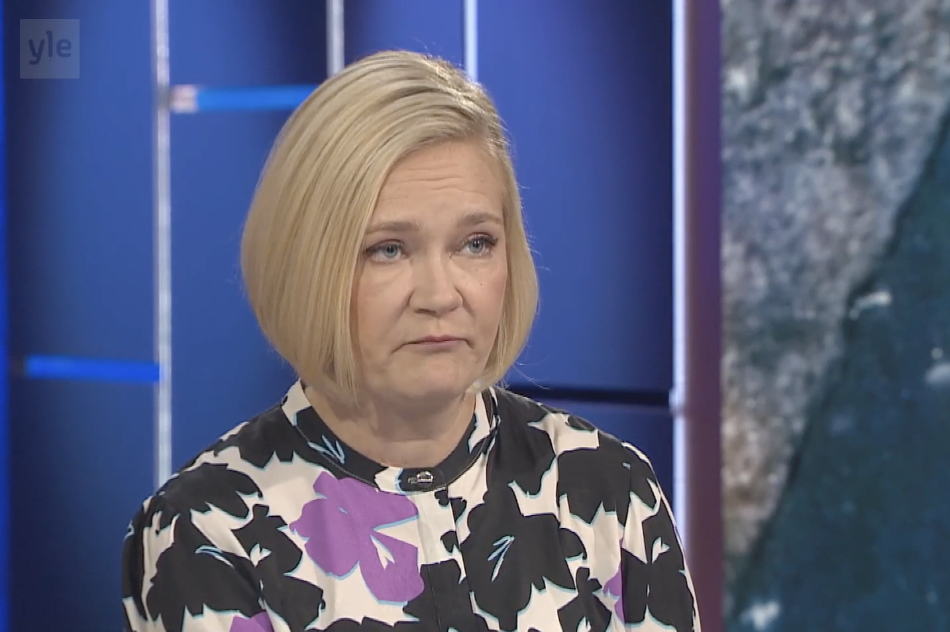
In an Ykkösaamu interview Saturday, apart from Interior Minister Mari Rantanen’s occasional awkward giggles, the interview left out one important question: the roots of Sweden’s gang violence problem.
If you ask Rantanen, she will blame the problem on immigration policy and the “wrong” type of migration. She will not mention a word about Sweden’s exclusive and class society and the lack of opportunities for racialized people.
Certainly government programs and making Finland a more inclusive society for everyone would be a difficult question for Rantanen to answer because the government is tightening immigration policy and slashing social welfare and services to migrants.
Her answer is a dog whistle: Blame it all on the wrong kind of migrants.
Some of the tightening of government migration policy include limited three-year use of paid interpreters, and linking your knowledge of Finnish language to getting social welfare, among others.
Rantanen called the latter “incentives” even if they are really ultimatums.
Finland’s Perussuomalaiset (PS)* Interior Minister Mari Rantanen is one of the government’s xenophobic “hotheads.” She, like PS Finance Minister Riikka Purra, will exploit and spread xenophobic soundbites to suit her party’s political agenda, which is nothing more than bashing brown and black migrants and refugees.
Even if she is supposed to watch out for our safety in Finland, she is near-constantly commenting about the situation in Sweden. In the tweet below she quotes Swedish Prime Minister Ulf Kristersson, who, like the National Coalition Party of Finland, decided to go to bed with a far-right party.
If only immigration “problems” could be as easy to solve as Rantanen makes us believe in the tweet below:
“Political naivety and ignorance led us to this point as well as irresponsible immigration policies and failed integration,” Rantanen quotes Swedish PM Kristersson. “Finland will avoid the Swedish way by tightening immigration and integration and increasing integration.”
Add to the latter a racist opinion piece by a tabloid Ilta-Sanomat and you have a one-two knock-out punch that blames migrants for the violence and most Sweden’s problems.
Matters will get worse on the migration front.
Even so, we must do everything possible to push back against racism in Finland and Europe.
The recent case of a “youth gang” terrorizing a predominantly white neighborhood in western Helsinki exposes the knee-jerk reaction about how the media and public see suspected crime by brown and black Finns.
During the last week of August, a group of youths with covered faces at the Lauttasaari metro station allegedly attempted to rob a primary school child, who escaped home, according to Helsingin Sanomat.
“The police are aware that in [the neighborhood of] Lauttasaari there have been cases of threatening behavior, following young people, and other forms of harassment. According to the police, a group of young people aged between 15 and 17 have been causing concern in the area,” reported the daily.
What drives the government, particularly Minister of the Interior Mari Rantanen of Perussuomalaiset (PS), to give utmost attention and tackle the issue of youth street gangs? Is it a sincere attempt to solve such a social problem, or an opportunity to further victimize migrants and minorities in Finland?
The assertion isn’t far-fetched. The PS is historically the first major contemporary Finnish party to benefit stigmatizing other groups, such as Muslims, Africans, and other non-EU nationals, as less valuable.
Many of Rantanen’s social media posts before the April election, which were deleted and white-cleaned after the election, were based on racist far-right conspiracy theories. “We shouldn’t be so blue-eyed that soon we won’t be blue-eyed,” is one of her infamous quotes. Sinisilmänen, or blue-eyed, means being naive in Finnish.
Moreover, although these types of quotes do not instill credibility in Rantanen’s ability to find solutions to youth problems, her efforts are further shot to pieces when she blames the “problem” on the “wrong” type of immigration policy.
Another takeaway is the government’s statements about clamping down on youth crime and its near-silence on far-right terrorism.
Another matter that raises red flags is the PS’s track record. In all the general elections in 2011, 2015, 2019, and 2022, the party has used successfully a migrant crime theme to attract voters to the polls.
Neighboring Sweden held its election in September 2022 against a backdrop of spiraling gang violence where over 60 people were killed.
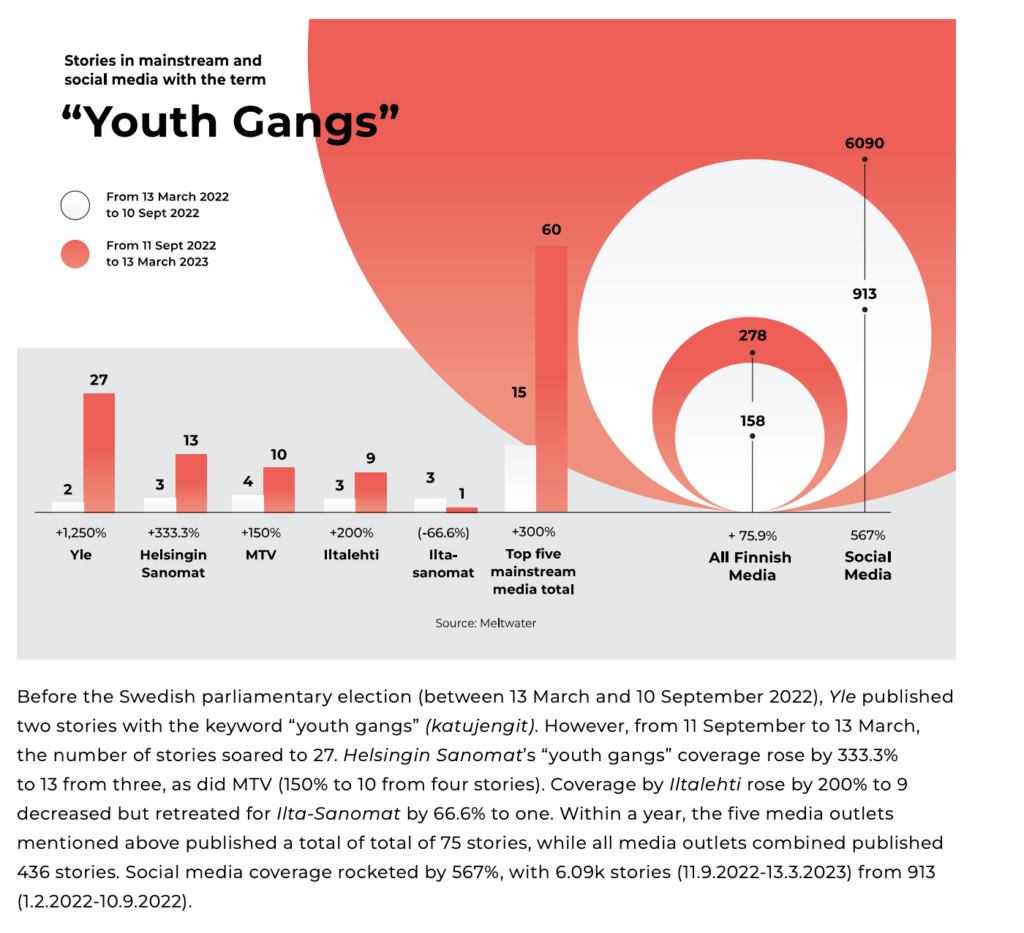
By promising to get tough on such crime, the Sweden Democrats, a party with neo-Nazi roots, and the Moderate Party led the right-wing bloc to victory. Their success also provided the PS with an important migrant crime theme to exploit politically. The problem, however, was that Finland’s youth gang problem was small compared with Sweden’s.
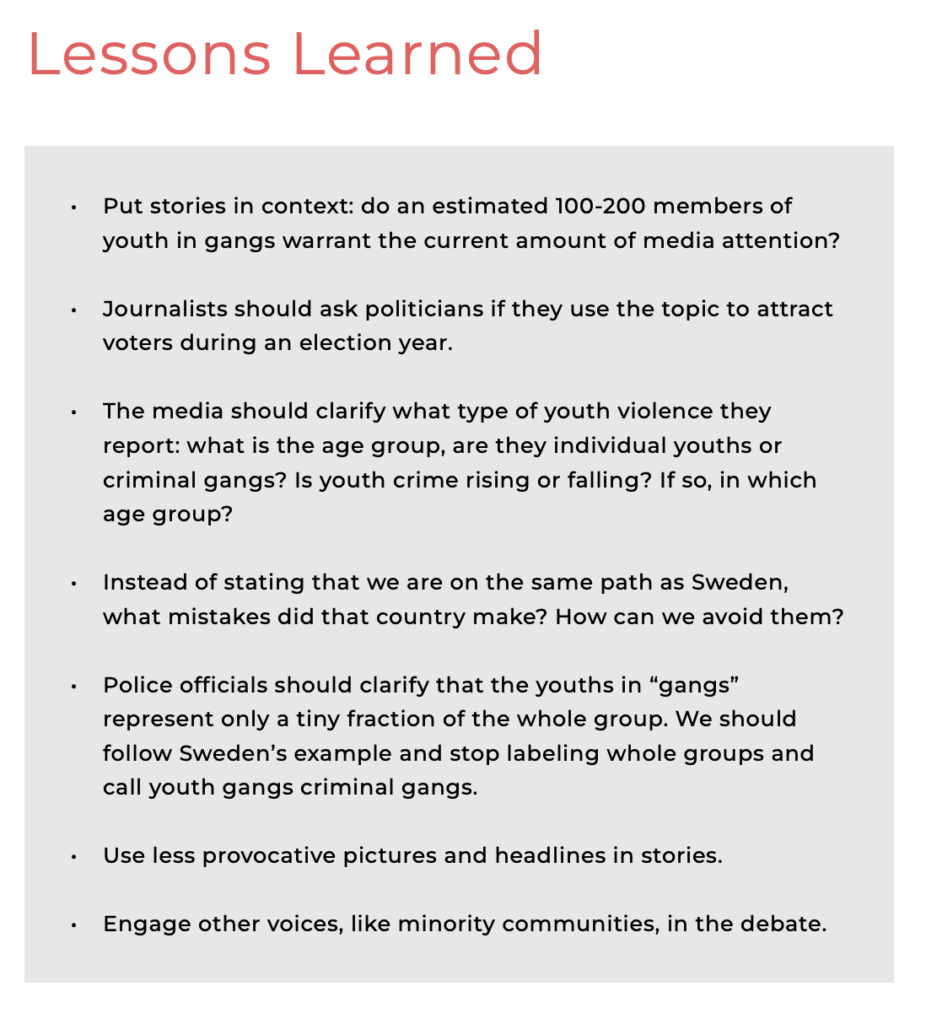
In the autumn of last year, the police estimated that there were 100-200 gang members in Helsinki and Turku.
As crime is usually an important topic covered by the media, it attracts more attention if so-called people of foreign backgrounds are part of the narrative. Should it surprise us that coverage of Finland’s youth gang “problem” started to grow rapidly in October after the September elections of Sweden?
The Islamophobic Perussuomalaiset (PS)* party has had a long love affair with Denmark’s anti-Muslim immigration policy, one of the toughest in Europe. With loaded guns in government, the PS must be happy that they can adopt, with the blessings of National Coalition Party (NCP) Prime Minister Petteri Orpo and the two minor coalition partners, the Swedish People’s Party (SPP) and Christian Democrats (KD), that country’s harsh immigration policy.
The Danish People’s Party (DPP) used to call the anti-immigration shots in government but in recent years their support has declined abruptly. In the 2022 election, the DPP lost 11 seats to remain with five seats in parliament, which is a far cry from the 37 seats they won in 2015.
The fortunes of the DPP have been undermined by the Social Democrats who have adopted and succumbed to the same hardline immigration policy and rehotirc of the far-right party.
While some are debating if a radical right party becomes more moderate when in government, Denmark offers us an answer: it radicalizes other parties who must adopt more hostile stances in order to survive and not be devoured by a populist party.
Apart from the government’s immigration policy that disenfranchises migrants by weakening more their civil rights and making them vulnerable to exploitation by employers, one wonders how far the PS – with the blessing of the NCP, SPP and KD – will go in order to make life difficult for migrants.
in Denmark, the DPP went as far as to force migrants to speak only Danish at home and deport whole families if a member is convicted of a crime. When will we see the following aims below in Finland?
Spearheading these radical changes in Finland’s immigration policy is PS Interior Minister Mari Rantanen. She recently announced plans to speed up the asylum process to four weeks. The asylum seeker will wait for the decision at the border.
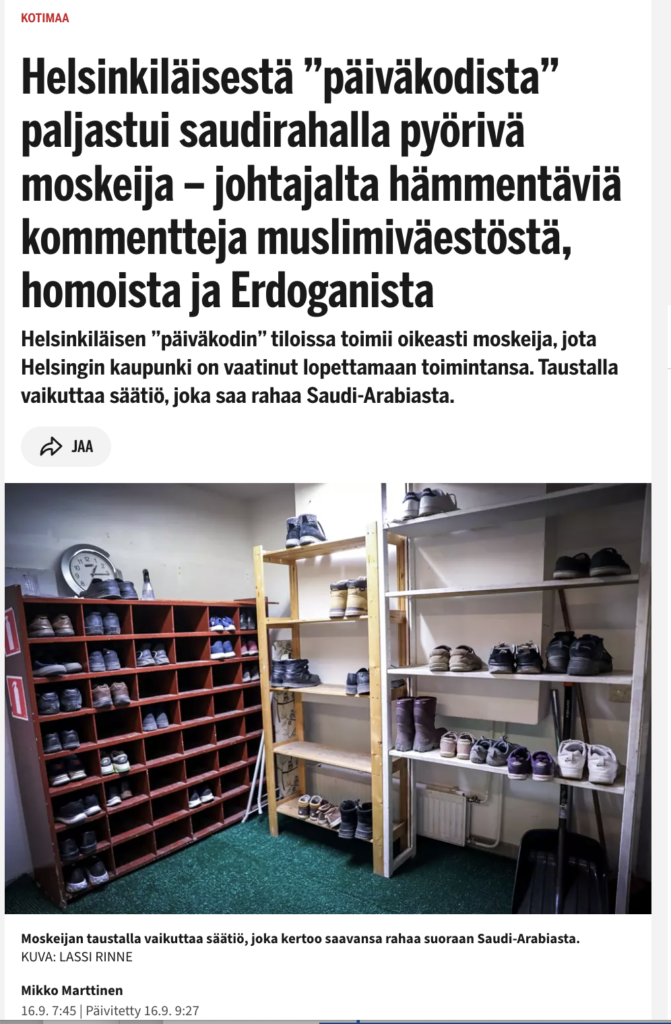
If there is a big divide and mistrust between the media and the Muslim community it was exposed by a scoop the tabloid ilta-Sanomaton a secret “mosque” in a Helsinki nursery. Throughout the years, some Muslim imams and other members of the community have expressed apprehension of the Finnish media.
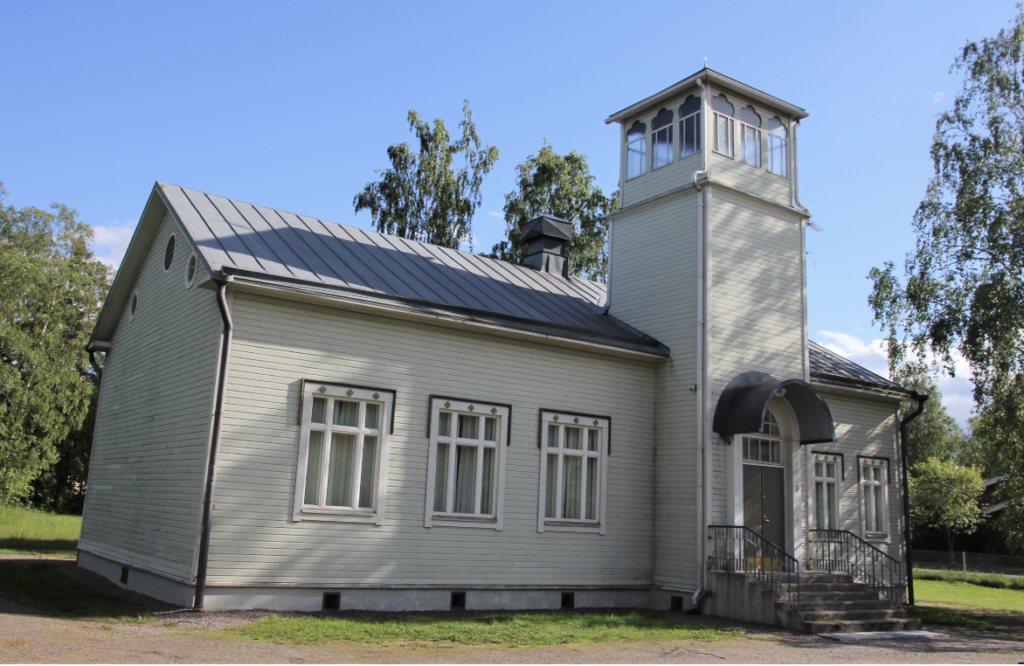
For those who may not know, Finland has only one mosque built in the 1940s located in Järvenpää, a short drive north of Helsinki. All the rest of these mosques without a minaret are, in fact, prayer rooms.
Finland’s only mosque with a minaret is located in Järvenpää and was built in the 1940s. Source: Helsingin Sanomat.
True, some Muslims call prayer rooms mosques.
While many will disagree with Suomen Muslimifoorumi’s Aladin Maher about his views on gay marriage and the great replacement conspiracy theory, the underlying message of the stories written about the “mosque” reveals a deep-seated mistrust of Muslims that is amplified by politicians from parties like the Perussuomalaiset (PS)*and National Coalition Party.
The story about the mosque awoke Finland’s Islamophobic hardliners like Interior Minister Mari Rantanen, Justice Minister Leena Meri, Minister Wille Rydman, MPs like Atte Kaleva, Joakim Vigelius, never mind the thousands of hostile comments on social media.
All of these politicians and ministers had something bad to say about the mosque and Maher and exposed their hypocrisy.
We shouldn’t be surprised the these hostile comments came mostly from the Islamophobic PS and National Coalition Party.
If the ongoing hostile comments are anything to go by, it shows that any meaningful dialogue between some sectors of Finnish society and the Muslim community is light years away.
Rejection by the media and certain politicians of Muslims ensures that nothing will change.
The impact of National Coalition Party (NCP) Prime Minister Petteri Orpo’s government (Perussuomalaiset PS*, Swedish People’s Party and Christian Democrats) on Finland will be devastating. It will be a regression into the darkest corners of nationalism, xenophobia, chest-thumping, and bravado.
With the help of these social ills, there are plans to displace Finland’s liberal roots that gained force after it became an EU member in 1995. A lot of good laws were drafted at the end of the 1990s such as the new constitution, which guarantees that everyone, irrespective of their background, are equal before the law.
PS Interioir Minister Mari Rantanen speaking at A-studio, where she wants to give police rights in certain neighborhoods to stop and frisk people even if they are not suspected of crime. The proposal has raised concern about its legal problems. Rantanen states that such a model is being copied from Denmark, which is considered by some the most Islamophobic countries in Europe.
Plans to turn migrants legally into second-class members of society is one of the many threats by the government like paying foreigners less social welfare. There is a concerted plan to disenfranchise migrants.
Apart from the latter, Finland’s most right-wing government since the 1930s will do all it can to erect monuments to forgetting racism and worsening social inequality.
The racism scandals of summer are a case in point. They give us clear insight on how the government white-cleans its past.
A seven-point guide on how to create a new image and appear as a “normal” politician despite your racist background:
It is concerning for migrants and minorities in Finland that we have a government that is openly hostile to them. As in Juha Sipilä’s (2015-2019) government, there was an agreement that migration policy would be handled by the Perussuomalaiset (PS)* party in exchange for the National Coalition Party (NCP) and Center Partry dictating economic policy.
It is the same situation now: The NCP remains silent on migration policy and the PS is silent on austerity measures in exchange for dictating migration policy.
Looking at the PS’ track record and its use of conspiracy theories to drive home its xenophobic message, one wonders if just erasing previous racist posts is enough to restore credibility in ministers like Mari Rantanen.
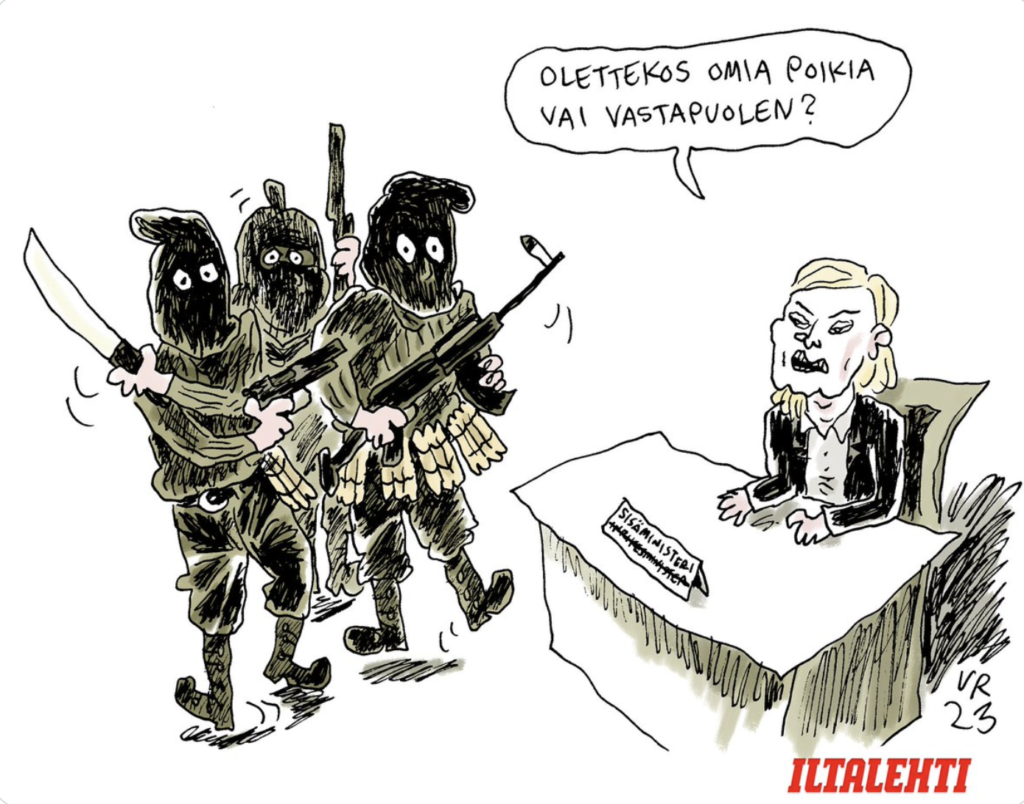
“Are you on our side or the other side’s,” asks PS Interior Minister Mari Rantanen. Source Ville Ranta, Iltalehti.
The question is not far-fetched. The PS is historically the first major contemporary Finnish party to have profited politically by promoting the polarization between different groups by claiming that Muslims, Africans, and other non-EU nationals, as less valuable.
Many of Rantanen’s social media posts before the 4 April election, which were deleted and whitewashed after the elections, were based on conspiracy theories, such as the great replacement. “We shouldn’t be so blue-eyed that soon we won’t be blue-eyed?” is one of his more unusual quotes.
In Finnish, being “blue-eyed” means being naive.
Moreover, even if these types of posts do not increase credulity, how can one even attempt to find a solution to the youth problem in society if Rantanen and her party blame social problems like pinning youth gang violence on ‘harmful migration?