Migrant tales
Menu
  • #MakeRacismHistory “In Your Eyes”
  • About Migrant Tales
  • It’s all about Human Rights
  • Literary
  • Migrant Tales Media Monitoring
  • NoHateFinland.org
  • Tales from Europe
Menu

Tag: Perussuomalaiset

A question begs an answer: Who are the Perussuomalaiset?

Posted on July 15, 2012 by Migrant Tales

The million-dollar question after the Perussuomalaiset (PS) party’s historic election victory was what kind of party had entered the Finnish political stage. After over a year in parliament and numerous scandals that have rocked the PS, a question still begs an answer: Who are they?

If you seek an answer directly from the party, the response you’ll likely get is as convoluted as the PS itself. Great lengths will be taken to point out what they’re not.

This shouldn’t surprise us considering that the PS’ political fuel comes from near-constant whining and scapegoating.

The historic election success of the PS was by and large based on hit-and-run tactics like scapegoating and denial.

Irrespective of its hodgepodge nature, how is it possible for a far-right politician like PS MP Jussi Halla-aho and party chairman Timo Soini to sit at the same table? What unites both men ideologically?

Would it be fair to call the PS an opportunistic right-wing populist party with a heavy dash of far-right nationalism? Would the best description of the party be: anti-EU, anti-immigration, anti-Islam, anti-gay, and anti-minority rights?

If we look at close political relatives of the PS in the Nordic region, we’d find  the Islamophobic Danish People’s Party, Sweden Democrats, and Progress Party of Norway.

All of them are anti-EU, anti-immigration and especially anti-Islam.

The PS’ only MEP, Sampo Terho, is a member of the eurosceptic Europe of Freedom and Democracy (EFD) parliamentary group.  The biggest number of EFD MEPs come from the UK Independence Party (10), which wants the UK to exit the EU, and the xenophobic Lega Nord (9), which considers southern Italy a part of North Africa.

Even if the PS wants to tone down its right-wing conservative radicalism because it doesn’t sit well with moderate Finnish voters, it’s fair to claim that they are an anti-EU, anti-immigration, anti-Islam, anti gay, and anti-minority rights party.

  • The PS are an anti-EU party because 100% of PS MPs don’t want Finland to bailout any EU country. Some even believe that the Finland should exit the EU.
  • They are an anti-immigration party because 97% of the MPs don’t want anymore immigrants to move to Finland. If Finland must accept immigrants, they should be white Christians.
  • The PS is an anti-Islam party because MPs like Olli Immonen and James Hirvisaari, among others, believe that it’s only a matter of time when Europe will be taken over by Islam (Eurabia).
  • They are an anti-gay party because 82% are against same-sex marriages.

Conclusion: The PS are an anti-EU, anti-immigration, anti-Islam, anti-gay and anti-minority rights party with ties to the far right.
 

Ana María Gutiérrez Sorainen: Me “mukasuvaitsevaiset” ja “mukasivistyneet” maahanmuuttokriitikot

Posted on July 14, 2012 by Migrant Tales

Ana María Gutiérrez Sorainen*

“Mukasuvaitsevaisto ja mukasivistyneistö heiluttelee rasistikortteja maahanmuuttokriitikoille”.

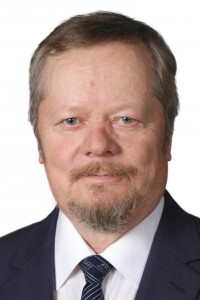
Olisitko kuullut tai lukenut tuota lausetta vaikkapa 10 vuotta sitten? Maailma ja Suomi muuttuvat, vaikka jotkut väittävät muuta ja haluavat pitää kiinni nykyisyydestä, menneisyydestä ja jopa kaukaisesta menneisyydestä. Mutta he itse muokkaavat tätä maata. Ennen kuin otsikostani peritään tekijänoikeuksia on sanottava, että kansanedustaja Reijo Tossavainen (Perus) on kunnostautunut noiden sanojen ahkeraksi käyttäjäksi.

Edellisten kunnallisvaalien yhteydessä neljä vuotta sitten kaikkialla alettiin puhua myös maahanmuuttokriitikoista. Silloin maahanmuuttopolitiikan kritisoimisen varjolla esitettiin myös ihmisistä ja ihmisryhmistä solvaavia kommenteja ja kirjoituksia. Maahanmuuttajia solvaavien kommentien kirjoittajat tarjosivat itse tuon sanan “maahanmuuttokritiikko”, jota media alkoi käyttää yleisesti siis myös rasisteista. Yhtäkkiä maassa ei ollut enää rasisteja ja rasismia vaan maahanmuuttokritiikkiä ja maahanmuuttokriitikoita! Käytännössä näin ei kuitenkaan ollut.

Maahanmuuttokriitikoita aidossa merkityksessä, siis niitä, jotka kritisoivat maahanmuuttopolitiikkaa, on ollut maassa jo kauan. Asiallisia kommenteja vain ei tahdota kuulla.

On myös aiemmin ollut niitä kansanedustajia, jotka liikkuvat maahanmuuttokriitikin ja rasismin välimaastossa. Moni meistä muistaa myös sen, kuinka SDP: n kansanedustaja ja entinen sisäministeri Rajamäki puhui maahanmuutosta ja jopa maahanmuuttajista. Rajamäki leimasi tulijat turvapaikkashoppailijoiksi, ankkurilapsiksi jne. Samoja sanoja levitteli iloisesti mediassa myös Sulo Aitoniemi. Samaa linjaa ovat seuraneet kokoomuslaiset Ben Zyscowicz ja entinen kansanedustaja Tuulikki Ukkola. He kritisoivat myös maahanmuuttopolitiikkaa, mutta se on jäänyt noiden “mediaseksikkäiden” sanojen alle.

“Maahanmuuttokritiikki” ei siis ole ollut vain ja ainoastaan perussuomalaisten tavaramerkki. Perussuomalaisten kohdalla sen sijaan on merkille pantava se tapa, millä muutama henkilö esittää asiansa kärjekkäästi, raflaavasti ja puolihuolettomasti. Ihan kuin tarkoitus olisi rikkoa aidosti lakia, jotta julkisuus olisi varmuudella taattu ja kannatus varmistettu.

Maahanmuutto ei aiheena ole edelleenkään merkittävä yhteiskunnallinen kysymys, joka vaatisi niin laajamittaista aivosolujen käyttöä. Samassa mittakaavassa kuin nyt. Päivästä ja kuukaudesta toiseen ja jo ennen eduskuntavaaleja mediassa ei paljon muusta puhuttukaan kuin maahanmuutosta. Jos vielä tänä päivänä joku väittää, ettei sillä aiheella kukaan pääse mihinkään, hän erehtyy. Myös vain maahanmuuttoasioihin keskittyneet kansalaiset ovat päässeet eduskuntaan saakka. Eri asia on se, ettei maahanmuuttoon ja erityisesti maahanmuuttajiin myönteisesti  suhtautuva ehdokas pääse samaan eduskuntaan. Eikö tämä kerro jotakin siitä yhteiskunnasta, jossa elämme?

Viime aikoina maahanmuuttoon ja maahanmuuttajiin torjuvasti suhtautuvat ovat joissakin palstoissa yhdistetty vain perussuomalaisiin. Ihan kuin aihe olisi ulkoistettu vain heille. Se on kuitenkin harhaa. Syrjivää ajattelua ja jopa rasismia on myös muissa puolueissa. Muissa puolueissa on kuitenkin niin, että ne, jotka ajattelevat niin avoimesti rasistisesti, siirtyivät perussuomalaisiin tai ovat jääneet omiin puolueisiinsa ja käyttävät hienovaraisempia sanoja.

Huolellisuuden alla piilee siis myös paljon kielteistä ajattelua. Moni toistaa, ettei nyt voi puhua maahanmuutosta mitään, koska heti heiluu rasistikortti. Rasistikortin heiluttaminen voi noiden kirjoittajien mielestä olla jo sitäkin, että sanot, etteivät kaikki maahanmuuttajat tule tänne elämään verorahoilla, vaan tekemään töitä.

Se, että sanot, että jokainen ihminen ansaitsee hyvän elämän, oli hän syntynyt täällä tai Kiinassa, on mukasuvaitsevaitsen sinisilmäisyyttä. Suvaitsevaisuus on siis jo kielteinen asia ja joskus sitä rinnastetaan jopa idiotismiin. Suvaitsevaisuus oli vielä aikoja sitten hyve, joka rinnastetiin empatiaan ja ymmärtämiseen.

Varsinkin Uuden Suomen keskustelujen valossa, jos olet suvaitsevainen, saatat olla myös mukasivistynyt, joka vaatii muilta sivistynyttä käytöstä. Eikä se käy, maassa maan tavalla pitää siis olla tilaa myös sivistymättömyydelle, ja myös sille sydämen ja sielun sivistymättömyydelle.

Netissäkin kuitenkin jokaisen lukijan takana on aito ihminen ja netissäkin voi satuttaa muita.

Lisäys: Monissa maissa yhä sivistys tarkoittaa käytännössä lukutaitoa. Muka-sana tule siis tulkinnasta mitä lukemallesi annat. Jos tulkintasi on erilainen kuin “maahanmuuttokritiikon”, kuulut siihen mukasuvaitsevaistoon ja -sivistyneistöön.

Maahanmuuttokriitikoita olemme siis me kaikki paitsi “maahanmuuttokriitikot”.

*Kansalaisaktivisti, entinen kunnanvaltuutettu, espanjan kielen opettaja, kääntäjä ja tulkki, blogisti, neljän lapsen äiti, Suomen kansalainen.

Alkuperäisen blogikirjoituksen voi lukea tästä.

Tämä blogikirjoitus julkaistiin Migrant Talesissä luvalla.

Business Insider: Timo Soini’s “threat” to the world economy

Posted on July 12, 2012 by Migrant Tales

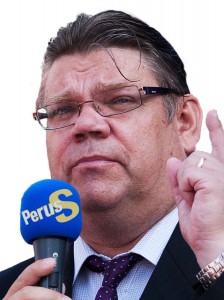
Not only must have Perussuomalaiset (PS) party chairman Timo Soini been swept off his feet with delight for being named by Business Insider  as the seventh-most dangerous person to the global economy, but Finland as well for such a dubious recognition. Who ever heard of Business Insider anyway?

For starters, somebody could inform the online publication that the official English name of the PS isn’t any longer the True Finns, but the Finns Party.

After weighing the old and new English-language official translations of the PS, Migrant Tales (MT) decided last year that we didn’t want any part of this populist nonsense and decided to call Soini’s party by its Finnish name, the Perussuomalaiset.

Timo Soini is a dangerous persons to the global economy, according to Business Insider. 

While we understand  at MT that the PS has been a blow to the credibility of Finland’s international image and to institutions like parliament, the political clout that Soini has hinges by and large on the lack of leadership of  Finland’s major parties, which rolled out the red carpet for him before last year’s election.

Soini’s anti-EU, anti-immigration and especially anti-Islam message appeals to a wide range of politicians in this country.

Why did Business Insider choose Soini as the seventh-most dangerous public figure to the global economy?

The online publication writes: “As the leader of the largest opposition party in Finland’s parliament and one of the biggest eurosceptics in Europe, Timo Soini is in a position of incredible importance with regard to continued euro bailouts.”

I doubt that the PS chairman is any longer in a position of “incredible importance” in Finland. The numerous scandals that have rocked the party and Soini’s disappointing showing in the presidential election have dimmed much of his shine.

Other influential personalities on the Business Insider are: German Chancellor Angela Merkel (1); French President Francois Hollande; German economist Hans-Werner Sinn; Fed Chairman Ben Bernanke; Nkolaus Blome, Bild newspaper deputy editor; and US President Barak Obama.

Monikulttuurisuudesta ja kulttuurirelativismista

Posted on July 10, 2012 by Migrant Tales

Susannah

Kulttuurirelativismi tarkoittaa , että esim. yksilön suhde lakiin ja moraaliin on suhteellista. Sellaisia syytöksiä esim. Jussi Halla-aho (ps) ja antijihadistinen seurakunta on syytänyt antirasistien niskaan. Sen mukaan antirasistit muka sallisivat toisenlaisia lakijärjestelmiä, kuten sharia, Suomeen. 

Eikö tässä valossa ole varsin koomista, että Halla-aho on kommentoinut omaa tuomiotaan korkeimmasta oikeudesta näin: http://mtv3.mobi/uutiset/uutiset/kotimaa/2012/06/1564528.xml?p=0 Puheenjohtaja Soini ei suostunut ottamaan kantaa Halla-ahon heittoon.

Antropologi Franz Boas (1858-1942) on kulttuurirelatisismin “isä.”

James Hirvisaari syytti korkeinta oikeutta korruptoituneeksi: http://jameshirvisaari.puheenvuoro.uusisuomi.fi/109785-korkeimman-oikeuden-ratkaisuista

Eikö tämä kerro hyvin, miten kulttuurirelavistisesti perussuomalaiset suhtautuvat tuomioihinsa ja Suomen lakiin?

Monikulttuurisuus ei ole poliittinen ideologia

Posted on July 9, 2012 by Migrant Tales

Monikulttuurisuus on monimuotoinen ja monimutkainen käsite. Maahanmuutonvastustajille se on yksinkertaisesti siirtolaispolitiikka, joka mahdollistaa etupäässä muslimien, afrikkalaisten sekä ei-eurooppalaisten asumisen Suomessa tai Euroopassa. Tavoite on yksinkertainen: pitää Suomi valkoisena ja muuttumattomana.

Kansanedustaja James Hirvisaari (ps) viimeisessä bloigissaan antaa tyypillisen maahanmuutonvastustajaan selityksen siitä, mikä on monikulttuurisuus. Hirvisaari väittää, että monikulttuurisuus on poliittinen ideologia.

Mutta onko se niin? Tuskin.

James Hirvisaari

Hirvisaaren määritelmä monikulttuurisuudesta ei pelkästä paljasta hänen äärioikeistolaisideologiansa mutta hänen tietämättömyys perustuslaistamme, puhumattakaan yhdenvertaisuuslaista. Käyttääkö hän vielä 1919 perustuslakia lähteenä tai uudempaa ja lainvoimaista versiota, joka tuli voimaan 1999?

Uudessa Suomen perustuslaissa ( 17 §) lukee seuraavasti: ”Saamelaisilla alkuperäiskansana sekä romaneilla ja muilla ryhmillä on oikeus ylläpitää ja kehittää omaa kieltään ja kulttuuriaan .”

Jos Hirvisaarella on vaikeus hahmottaa ,mitä on suomalaisen lain henki , kun puhumme kasvavasta monimuotoisuudesta yhteiskunnastamme, hän on aivan eksyksissä kun hän alkaa selittää omia käsityksiään monikulttuurisuudesta.

Ensinnäkin, monikulttuurisuus ei ole siirtolaisuuspolitiikka eikä poliittinen ideologia, kuten vasta-jihadisitit ja heidän hengenheimolaisensa haluavat antaa meidän ymmärtää.

Monikulttuurisuus sai alkunsa Kanadassa 1970-luvulla sosiaalipolitiikkana. Sen tarkoitus ei ollut pelkästään edistää maahanmuuttajien sopeutumista ja hyväksyntä Kanadassa, vaan myös estää maan hajoamiseen englannin- ja ranskankielisiksi valtioiksi.

Paitsi Kanada, maailmassa on virallisesti kaksi maata, jotka määrittelevät itsensä monikulttuuriseksi. Ne ovat Iso-Britannia ja Australia. Suomi ei ole virallisesti monikulttuurinen maa, kuten nämä yllämainitut. Suomen laissa (perustuslaissa tai yhdenvertaisuuslaissa) ei lue missään, että olemme ”monikulttuurinen yhteiskunta.”

”Monikulttuurisuutemme” lepää pitkälti meidän omissa pohjoismaisessa demokratiassa, ihmisarvon sekä hyvinvoinnin periaatteissa.Maassamme on yksi laki, jota kaikkien on noudatettava, monimuotoisuus sen sisällä on itsestäänselvyys.

Perustuslakiin on kirjattu oikeutemme ja velvollisuutemme. ”Monikulttuurisen yhteiskunnan” tavoite pysyä yhdenvertaisuuslain tavoitteissa vaatii tiettyjä toimenpiteitä, joita ei voi määritellä aina edes positiiviseksi diskriminaatioksi.

Uusi Suomi


How many types of racists are there in Finland?

Posted on July 2, 2012 by Migrant Tales

I read an interesting blog entry by Julian Abagond that highlights three types of racists in the United States: white bigots, white implicit racists and whites with integrity. How many types of racists are there in Finland? 

When studying racism in this country or in other parts of Europe, denial is the most incriminating evidence that a racist leaves behind. The culprit is usually exposed by denying that a problem exists or by affirming that “I am not racist but…”

Writes Abagond:  “Racism is something you have to unlearn on purpose. Not by trying to not see color but, as a first step, by understanding how racism works and how it has affected you.”

Racism has impacted Finland in many negative ways. It has been costly and brought great hardships on us. Even today it continues to affect us adversely.

Consider the following predicament: We need to attract skilled labor and foreign investment but the third-largest party in Finland is anti-EU, anti-immigration and especially anti-Islam.

Abagond speaks of three types of racists in the United States. I’d claim that there are four in Finland (if Abagond’s criteria were used, they would be divided in the following manner):

  1. The so-called working-class bigots (5%) are your typical skinheads. Their behavior and racism shocks most Finns. Some politicians like James Hirvisaari fall into this category.
  2. Bigots with education and steady jobs (45%) are people who would never act like working-class bigots but agree in principle with their views. Their knowledge of other groups like Africans is strongly entrenched in nineteenth-century racism and social constructs like Finnish nationalism.  Jussi Halla-aho, Wille Rydman, Paavo Väyrynen, Päivi Räsänen are some examples.
  3. White implicit racists (45%) are those who don’t fall in the latter two categories. They may claim they are against racism but their actions suggest the contrary. They strongly believe in religious freedom but would be the first ones – in private – to oppose the building of a Mosque in their neighborhood or city.  Many John Does are typical white implicit racists.
  4. Finns with integrity (5%) are those who have started to study their own racism and taken the first step to put it under control.


How to challenge a social ill like racism in Finland

Posted on June 29, 2012 by Migrant Tales

The rise of an anti-immigration party like the Perussuomalaiset (PS) in last year’s elections is not the most incriminating proof that racism is an issue in this country, but official denials that such a problem exists at all in Finland. What must we do as a society to effectively challenge such a social ill?

Denials by groups like the police that ethnic profiling ever takes place in Finland are highly revealing. The icing on the cake of ethnic profiling was given in April by Christian Democrat (KD)  Interior Minister Päivi Räsänen, who approved spot checks of foreigners by the police since they are an effective way to clamp down on undocumented immigrants.

Finnish children were taught at schools that “n”stands for the n-word and that such people like to eat bananas. Schools have been an important breeding ground for racism in Finland. Source: Ydinjate.org.

No matter how much we want to deny that racism isn’t an issue in our society and  sweep the problem under the rug, knowing who is denying it reveals a lot about the extent of the issue. Why would a white Finn see racism as an immediate threat? Why would a black person differ in opinion?

While justifying spot checks of foreigners, Räsänen gives us a glimpse of  her colorblind racism:  “The vast majority of foreigners look just like the natives, so it’s not even a very sensible way to supervise aliens.”

The question we should ask her after such a statement is what about those that don’t look like white Finns.

The views of an important public figure like Räsänen reveal how seriously the authorities treat, or how their prejudices fuel, an issue like racism. True, they may see it as a problem but they won’t invest a lot of resources to tackle it.

In many respects, anti-racism legislation should be seen in the same light as the role that anti-trust regulation plays in the business community. The lack of competition in Finland is one factor that fuels inefficiency and abuse by certain businesses.  It explains, in part, why Finland is the most expensive country in the eurozone.

In the same way, racism is abuse by a stronger group over weaker ones.

What should we do about tackling racism in Finland?

The best thing we can do is acknowledge the problem and challenge it. The first crucial step must come from the immigrant and visible minority community, which will not accept living in a society where racism and abuse are the rule. Their motive for raising their voices will be to make Finland a better place to live for their children and future generations.

Taking into account that we need skilled labor in this country to replace our ever-growing army of pensioners, accepting the status quo and being hostile to certain immigrant groups is like shooting ourselves in the leg.

The most important matter to keep in mind is that our reaction to racism must be first and foremost a reaction.


Far-right violence spreads across Europe – what about Finland?

Posted on June 27, 2012 by Migrant Tales

As the euro financial crisis deepens so does the rise of far-right violence across Europe, according to a report by the Institute of Race Relations. Finland stands out as one of the 100 cases documented by the report. It states that academics studying immigration in this country are forced to withdraw from public discussion rather than face intimidation and threats to their families.

Migrant Tales has been as well the focus of attacks, death threats and intimidation.

The report, Pedlars of Hate: the violent impact of the European far Right, documents the cold-blooded shooting of a Moroccan during Black February as a clear warning sign for Finland.

The far right has found a good platform in the PS. 

The report states on page 8: “The Satakunta Police Department is investigating  whether Facebook comments made by a [former] True Finns [Perussuomalaiset] elected councillor in Köyliö constitute incitement to racial hatred. After a 21-year-old Moroccan man was  shot dead in Oulu in March [see page 15], Tommi Rautio posted that the murderer should be given a medal because there is ‘a war going on and in every war decorations are handed out.'”

While there are some encouraging signs that politicians and the media see PS politicians like Jussi Halla-aho and his Suomen Sisu followers as extremists, it’s still not too late to defeat the far-right menace that has attacked Finland.

How much of a threat is the far right in Finland? Are matters going to get far worse before they improve?

Migrant Tales March 15, 2012: Finland’s darkest period 2011-15

Posted on June 26, 2012 by Migrant Tales

In the future, when Finnish historians of different ethnic backgrounds look at the present parliamentary term 2011-15,  they will most likely conclude that it was the darkest period for Finland and immigrants in the new century.  A prelude to this sombre period were  the municipal election of 2008 and how it reflected a shift in the national mood. 

It would be naive, even an exercise in self-deceit, to claim that the Perussuomalaiset (PS) party isn’t one  obvious culprit. The municipal elections of 2008 and 2003, when PS MP Tony Halme was elected to parliament,  speak volumes about how racism and xenophobia started to lift their heads in this country.

Despite being one of the worst periods in our recent history, where some groups and politicians aim to make racism and xenophobia as normal and acceptable as karjalanpiirakka, it has brought out the best in some of us. For some, like Migrant Tales, it has been a clarion call.

If this period has brought out the best in some of us, it has brought out the worst as well.

Finland’s anti-immigration groups like to feed the public red herrings.

Some regretful examples come form of silence and lack of leadership by the Finnish media and some politicians. The success of the PS in the April elections is proof of the inarticulateness, complacency and even the flirting of these two groups with anti-immigration parties and groups.

The PS has provided us with monthly scandals beginning with MP Teuvo Hakkarainen’s first day in parliament to the recent suggestion by councilman Tommi Rautio  to give a medal to a cold-blooded killer.

A word of advice to anti-immigration extremists: Everything you write will come under scrutiny by future generations. Those future generations, which will be made up of Finnish researchers from different ethnic backgrounds, will highlight the racism and xenophobia that inflicted part of our society today.

When they give their lectures at our universities on ethnic studies or history, they will show to their students the shameful evidence left in the writings of numerous anti-immigration politicians like PS MP Jussi Halla-aho and his Suomen Sisu crowd, for example.

Time will increase the shamefulness of these racist writings. What is written today by some of these racists will look eerily similar to what some groups wrote about blacks during the U.S. Civil Rights Movement of the 1950s and 1960s. Recognizing this will be the first important step in liberating our society from the illness that has afflicted it.


Have the PS and MP Tossavainen of Finland ever heard of the Non-Discrimination Act?

Posted on June 26, 2012 by Migrant Tales

If the future of Finland were ever left to the populist Perussuomalaiset (PS) party, it’s quite certain that this country would be doomed. The ones that would suffer the most would be immigrants and visible minorities. Outright discrimination would be  the rule.

The PS, who should know better, sent a formal request to the council of state last week asking whether it was possible to only hire Finnish workers to refurbish its recently acquired party headquarters in Helsinki.

In a blog entry on Uusi Suomi, Migrant Tales answered a question that the PS asked the council of state in a blog entry: Is it discrimination only to hire Finnish workers?

We answered PS MP Anssi Joutsenlahti’s question with a flat yes. Thanks to JusticeDemon’s help, we were able to show to the PS MP which part of the Non-Discrimination Act prohibits discrimination on the grounds of nationality.

Paragraph 1 of subsection 1 of section 2: “This Act applies to both public and private activities in the following contexts: 1) conditions for access to self-employment or means of livelihood, and support for business activities.”

For some reason the PS, the country’s third-largest party in parliament with 39 seats, does not – or does not want to – get it.

Instead of engaging in a meaningful debate about discrimination in Finland, PS MP Reijo Tossavainen writes the following comment in a Migrant Tales’ posting on Uusi Suomi: “This blog entry’s headline [Is it discrimination to only hire Finnish workers? Certainly!]  is  frankly shocking.Are Finnish labor, Finnish entrepreneurship, and Finnish identity in general something marginal in Finland?”

PS MP Reijo Tossavainen appears to have never heard of the Non-Discrimination Act.

Tossavainen even takes a below-the-belt hit at Migrant Tales in another comment. My mother is Finnish, I am a Finnish citizen and have lived in this country for 33 years.

“In a blog entry on Uusi Suomi two foreigners [Farzad Moghaddam pour and I] who live in Finland write about hiring only Finnish workers [to refurbish] the party’s headquarters. Their writings and comments make for uncomfortable reading because they respect too little Finland and Finnish identity. But what is even more shocking is to see that there are a lot of native Finns who think like them.”

Just because a populist politician has probably never read the Non-Discrimination Act in his life, doesn’t give him the right to erroneously claim that I don’t respect Finland or Finnish identity. It is an insult like many others that have come to characterize the PS after last year’s elections.

The PS are a threat to Finland, but especially to immigrants, visible minorities and expat Finns.


  • Previous
  • 1
  • …
  • 131
  • 132
  • 133
  • 134
  • 135
  • 136
  • 137
  • …
  • 161
  • Next
Read more about documentary film
Read more

Recent Posts

  • Finland’s tabloids Iltalehti and Ilta-Sanomat are the pits
  • Riikka Purra’s Dr Jekyll and Mr Hyde mask
  • Double standards
  • Perussuomalaiset: Uusi logo, sama vanha juttu
  • Taco Trump

Recent Comments

  1. Absolutely Socking: Racist Finnish Facebook group against human rights gets flooded with socks on Musta Barbaari’s mother and sister charged by the police in “ethnic profiling” case
  2. Ilkka Nuotio on Pekka Myrskylä: “Tilastot kertovat toista kuin poliittinen keskustelu”
  3. Genrih Soinkara on The war in Ukraine and the Russian-Finnish border crisis are showing Finland’s ugly side
  4. Ahti Tolvanen on Comment by Ahti Tolvanen on the Helsinki +50 conference
  5. Angel Barrientos on Angel Barrientos is one of the kind beacons of Finland’s Chilean community

Archives

  • June 2026
  • May 2026
  • April 2026
  • March 2026
  • February 2026
  • January 2026
  • December 2025
  • November 2025
  • October 2025
  • September 2025
  • August 2025
  • July 2025
  • June 2025
  • May 2025
  • April 2025
  • March 2025
  • February 2025
  • January 2025
  • December 2024
  • November 2024
  • October 2024
  • September 2024
  • August 2024
  • July 2024
  • June 2024
  • May 2024
  • April 2024
  • March 2024
  • February 2024
  • January 2024
  • December 2023
  • November 2023
  • October 2023
  • September 2023
  • August 2023
  • July 2023
  • June 2023
  • May 2023
  • April 2023
  • March 2023
  • February 2023
  • January 2023
  • December 2022
  • November 2022
  • October 2022
  • September 2022
  • August 2022
  • July 2022
  • June 2022
  • May 2022
  • April 2022
  • March 2022
  • February 2022
  • January 2022
  • December 2021
  • November 2021
  • October 2021
  • September 2021
  • August 2021
  • July 2021
  • June 2021
  • May 2021
  • April 2021
  • March 2021
  • February 2021
  • January 2021
  • December 2020
  • November 2020
  • October 2020
  • September 2020
  • August 2020
  • July 2020
  • June 2020
  • May 2020
  • April 2020
  • March 2020
  • February 2020
  • January 2020
  • December 2019
  • November 2019
  • October 2019
  • September 2019
  • August 2019
  • July 2019
  • June 2019
  • May 2019
  • April 2019
  • March 2019
  • February 2019
  • January 2019
  • December 2018
  • November 2018
  • October 2018
  • September 2018
  • August 2018
  • July 2018
  • June 2018
  • May 2018
  • April 2018
  • March 2018
  • February 2018
  • January 2018
  • December 2017
  • November 2017
  • October 2017
  • September 2017
  • August 2017
  • July 2017
  • June 2017
  • May 2017
  • April 2017
  • March 2017
  • February 2017
  • January 2017
  • December 2016
  • November 2016
  • October 2016
  • September 2016
  • August 2016
  • July 2016
  • June 2016
  • May 2016
  • April 2016
  • March 2016
  • February 2016
  • January 2016
  • December 2015
  • November 2015
  • October 2015
  • September 2015
  • August 2015
  • July 2015
  • June 2015
  • May 2015
  • April 2015
  • March 2015
  • February 2015
  • January 2015
  • December 2014
  • November 2014
  • October 2014
  • September 2014
  • August 2014
  • July 2014
  • June 2014
  • May 2014
  • April 2014
  • March 2014
  • February 2014
  • January 2014
  • December 2013
  • November 2013
  • October 2013
  • September 2013
  • August 2013
  • July 2013
  • June 2013
  • May 2013
  • April 2013
  • March 2013
  • February 2013
  • January 2013
  • December 2012
  • November 2012
  • October 2012
  • September 2012
  • August 2012
  • July 2012
  • June 2012
  • May 2012
  • April 2012
  • March 2012
  • February 2012
  • January 2012
  • December 2011
  • November 2011
  • October 2011
  • September 2011
  • August 2011
  • July 2011
  • June 2011
  • May 2011
  • April 2011
  • March 2011
  • February 2011
  • January 2011
  • December 2010
  • November 2010
  • October 2010
  • September 2010
  • August 2010
  • July 2010
  • June 2010
  • May 2010
  • April 2010
  • March 2010
  • February 2010
  • January 2010
  • December 2009
  • November 2009
  • October 2009
  • September 2009
  • August 2009
  • July 2009
  • December 2008
  • November 2008
  • October 2008
  • September 2008
  • August 2008
  • July 2008
  • June 2008
  • May 2008
  • April 2008
  • March 2008
  • February 2008
  • January 2008
  • November 2007
  • October 2007
  • September 2007
  • August 2007
  • July 2007
  • June 2007
  • May 2007

Categories

  • ?? Gia L?c
  • ????? ?????? ????? ???????? ?? ??????
  • ???????
  • @HerraAhmed
  • @mondepasrond
  • @nohatefinland
  • @oula_silver
  • @Varathas
  • A Pakistani family
  • äärioikeisto
  • Abbas Bahmanpour
  • Abdi Muhis
  • Abdirahim Hussein Mohamed
  • Abdirahim Husu Hussein
  • Abdirisak Mahamed
  • About Migrant Tales
  • activism
  • Adam Al-Sawad
  • Adel Abidin
  • Afrofinland
  • Ahmed IJ
  • Ahti Tolvanen
  • Aino Pennanen
  • Aisha Maniar
  • Alan Ali
  • Alan Anstead
  • Alejandro Díaz Ortiz
  • Alekey Bulavsev
  • Aleksander Hemon
  • Aleksanterinliitto
  • Aleksanterinliitto ry
  • Aleksanterinliitto ry:n hallitus
  • Alex Alex
  • Alex Mckie
  • Alexander Nix
  • Alexandra Ayse Albayrak
  • Alexis Neuberg
  • Ali Asaad Hasan Alzuhairi
  • Ali Hossein Mir Ali
  • Ali Rashid
  • Ali Sagal Abdikarim
  • Alina Tsui
  • Aline Müller
  • All categories
  • Aman Heidari
  • Amiirah Salleh-Hoddin & Jana Turk
  • Amin A. Alem
  • Amir Zuhairi
  • Amkelwa Mbekeni
  • Ana María Gutiérrez Sorainen
  • Anachoma
  • Anders Adlecreutz
  • Angeliina Koskinen
  • Anna De Mutiis
  • Anna María Gutiérrez Sorainen
  • Anna-Kaisa Kuusisto ja Jaakko Tuominen
  • Annastiina Kallius
  • Anneli Juise Friman Lindeman
  • Announcement
  • Anonymous
  • Antero Leitzinger
  • anti-black racism
  • Anti-Hate Crime Organisation Finland
  • Anudari Boldbaatar
  • Arshiya Nasser
  • Aspergers Syndrome
  • Asylum Corner
  • Asylum seeker 406
  • Athena Griffin and Joe Feagin
  • Autism
  • Avaaz.org
  • Awale Olad
  • Ayan Said Mohamed
  • AYY
  • Barachiel
  • Bashy Quraishy
  • Beatrice Kabutakapua
  • Beri Jamal
  • Beri Jamal and Enrique Tessieri
  • Bertolt Brecht
  • Boiata
  • Boodi Kabbani
  • Bruno Gronow
  • Carmen Pekkarinen
  • Çelen Oben and Sheila Riikonen
  • Chiara Costa-Virtanen
  • Chiara Costa-Virtanen
  • Chiara Sorbello
  • Christian Thibault
  • Christopher Wylie
  • Clara Dublanc
  • Dana
  • Daniel Malpica
  • Danilo Canguçu
  • David Papineau
  • David Schneider
  • Dexter He
  • Don Flynn
  • Dr Masoud Kamali
  • Dr. Faith Mkwesha
  • Dr. Theodoros Fouskas
  • Edna Chun
  • Eeva Kilpi
  • Emanuela Susheela
  • En castellano
  • ENAR
  • Enrique
  • Enrique Tessieri
  • Enrique Tessieri & Raghad Mchawh
  • Enrique Tessieri & Yahya Rouissi
  • Enrique Tessieri and Muhammed Shire
  • Enrique Tessieri and Sira Moksi
  • Enrique Tessieri and Tom Vandenbosch
  • Enrique Tessieri and Wael Che
  • Enrique Tessieri and Yahya Rouissi
  • Enrique Tessieri and Zimema Mhone
  • Epäluottamusmies
  • EU
  • Europe
  • European Islamophobia Report
  • European Islamophobia Report 2019,
  • European Union
  • Eve Kyntäjä
  • Ezequiel Caldeiro
  • Facebook
  • Fadumo Dayib
  • Faisa Kahiye
  • Farhad Manjoo
  • Fasismi
  • Finland
  • Fizza Qureshi
  • Flyktingar och asyl
  • Foreign Student
  • Fozia Mir-Ali
  • Frances Webber
  • Frida Selim
  • Gareth Rice
  • Ghyslain Vedeaux
  • Global Art Point
  • Great Replacement
  • Habiba Ali
  • Hami Bahadori
  • Hami Bahdori
  • Hamid
  • Hamid Alsaameere
  • Hamid Bahdori
  • Handshake
  • Harmit Athwal
  • Hassan Abdi Ali
  • Hassan Muhumud
  • Heikki Huttunen
  • Heikki Wilenius
  • Helsingin Sanomat
  • Henning van der Hoeven
  • Henrika Mälmsröm
  • Hser Hser
  • Hser Hser ja Mustafa Isman
  • Husein Muhammed
  • Hussain Kazemian
  • Hussain Kazmenian
  • Ibrahim Khan
  • Ida
  • Ignacio Pérez Pérez
  • Iise Ali Hassan
  • Ilari Kaila & Tuomas Kaila
  • Imam Ka
  • inside-an-airport
  • Institute of Race Relations
  • Iraqi asylum seeker
  • IRR European News Team
  • IRR News Team
  • Islamic Society of Norhern FInland
  • Islamic Society of Northern Finland
  • Islamophobia
  • Jacobinmag.com
  • Jallow Momodou
  • Jan Holmberg
  • Jane Elliott
  • Jani Mäkelä
  • Jari Luoto
  • Jari Taponen
  • Jegor Nazarov
  • Jenni Stammeier
  • Jenny Bourne
  • Jessie Daniels
  • Joe Davidow
  • Johannes Koski
  • John D. Foster
  • John Grayson
  • John Marriott
  • Jon Burnett
  • Jorma Härkönen
  • Jos Schuurmans
  • José León Toro Mejías
  • Josue Tumayine
  • Jouni Karnasaari
  • Juan Camilo
  • Jukka Eräkare
  • Julian Abagond
  • Julie Pascoet
  • Jussi Halla-aho
  • Jussi Hallla-aho
  • Jussi Jalonen
  • JusticeDemon
  • Kadar Gelle
  • Kaksoiskansalaisuus
  • Kansainvälinen Mikkeli
  • Kansainvälinen Mikkeli ry
  • Katherine Tonkiss
  • Kati Lepistö
  • Kati van der Hoeven-Lepistö
  • Katie Bell
  • Kättely
  • Kerstin Ögård
  • Keshia Fredua-Mensah & Jamie Schearer
  • Khadidiatou Sylla
  • Khadra Abdirazak Sugulle
  • Kiihotus kansanryhmää vastaan
  • Kirsi Crowley
  • Koko Hubara
  • Kristiina Toivikko
  • Kubra Amini
  • KuRI
  • La Colectiva
  • La incitación al odio
  • Laura Huhtasaari
  • Lauri Finér
  • Leif Hagert
  • Léo Custódio
  • Leo Honka
  • Leontios Christodoulou
  • Lessie Branch
  • Lex Gaudius
  • Leyes de Finlandia
  • Liikkukaa!
  • Linda Hyökki
  • Liz Fekete
  • M. Blanc
  • Maarit Snellman
  • Mahad Sheikh Musse
  • Maija Vilkkumaa
  • Malmin Kebab Pizzeria Port Arthur
  • Marcell Lorincz
  • Mari Aaltola
  • María Paz López
  • Maria Rittis Ikola
  • Maria Tjader
  • Marja-Liisa Tolvanen
  • Mark
  • Markku Heikkinen
  • Marshall Niles
  • Martin Al-Laji
  • Maryan Siyad
  • Matt Carr
  • Mauricio Farah Gebara
  • Media Monitoring Group of Finland
  • Micah J. Christian
  • Michael McEachrane
  • Michele Levoy
  • Michelle Kaila
  • Migrant Tales
  • Migrant Tales Literary
  • Migrantes News
  • Migrants' Rights Network
  • MigriLeaks
  • Mikko Kapanen
  • Miriam Attias and Camila Haavisto
  • Mohamed Adan
  • Mohammad Javid
  • Mohammad M.
  • Monikulttuurisuus
  • Monisha Bhatia and Victoria Canning
  • Mor Ndiaye
  • Muh'ed
  • Muhamed Abdimajed Murshid
  • Muhammed Shire
  • Muhammed Shire and Enrique Tessieri
  • Muhis Azizi
  • Musimenta Dansila
  • Muslimiviha
  • Musulmanes
  • Namir al-Azzawi
  • Natsismi
  • Neurodiversity
  • New Women Connectors
  • Nils Muižnieks
  • No Labels No Walls
  • Noel Dandes
  • Nuor Dawood
  • Omar Khan
  • Otavanmedia
  • Oula Silvennoinen
  • Paco Diop
  • Pakistani family
  • Pentti Stranius
  • Perussuomalaiset
  • perustuslaki
  • Petra Laiti
  • Petri Cederlöf
  • Pia Grochowski
  • Podcast-lukija Bea Bergholm
  • Pohjois – Suomen Islamilainen Yhdyskunta
  • Pohjois Suomen Islamilainen Yhyskunta
  • Polina Kopylova
  • Race Files
  • racism
  • Racism Review
  • Raghad Mchawh
  • Ranska
  • Rashid H. and Migrant Tales
  • Rasismi
  • Raul Perez
  • Rebecka Holm
  • Reem Abu-Hayyeh
  • Refugees
  • Reija Härkönen
  • Remiel
  • Reza Nasri
  • Richard Gresswell
  • Riikka Purra
  • Risto Laakkonen
  • Rita Chahda
  • Ritva Kondi
  • Robito Ibrahim
  • Roble Bashir
  • Rockhaya Sylla
  • Rodolfo Walsh
  • Roger Casale
  • Rostam Atai
  • Roxana Crisólogo Correa
  • Ruth Grove-White
  • Ruth Waweru-Folabit
  • S-worldview
  • Sadio Ali Nuur
  • Sami Rusanen
  • Sandhu Bhamra
  • Sara de Jong
  • Sarah Crowther
  • Sari Alhariri
  • Sarkawt Khalil
  • Sasu
  • Scot Nakagawa
  • Shabana Ahmadzai
  • Shada Islam
  • Sharon Chang blogs
  • Shenita Ann McLean
  • Shirlene Green Newball
  • Sini Savolainen
  • Sira Moksi
  • Sonia K.
  • Sonia Maria Koo
  • Steverp
  • Stop Deportations
  • Suldaan Said Ahmed
  • Suomen mediaseurantakollektiivi
  • Suomen Muslimifoorumi ry
  • Suomen viharikosvastainen yhdistys
  • Suomen viharikosvastainen yhdistys ry
  • Suomi
  • Supermen
  • Susannah
  • Suva
  • Syrjintä
  • Talous
  • Tapio Tuomala
  • Taw Reh
  • Teivo Teivainen
  • The Daily Show
  • The Heino
  • The Supermen
  • Thomas Elfgren
  • Thulfiqar Abdulkarim
  • Tim McGettigan
  • Tino Singh
  • Tito Moustafa Sliem
  • Tobias Hübinette and L. Janelle Dance
  • Transport
  • Trica Danielle Keaton
  • Trilce Garcia
  • Trish Pääkkönen
  • Trish Pääkkönen and Enrique Tessieri
  • Tuulia Reponen
  • Uncategorized
  • UNITED
  • University of Eastern Finland
  • Uyi Osazee
  • Väkivalta
  • Vapaa Liikkuvuus
  • Venla-Sofia Saariaho
  • Vieraskynä
  • W. Che
  • W. Che an Enrique Tessieri
  • Wael Ch.
  • Wan Wei
  • Women for Refugee Women
  • Xaan Kaafi Maxamed Xalane
  • Xassan Kaafi Maxamed Xalane
  • Xassan-Kaafi Mohamed Halane & Enrique Tessieri
  • Yahya Rouissi
  • Yasmin Yusuf
  • Yassen Ghaleb
  • Yle Puhe
  • Yuliet Tresa
  • Yve Shepherd
  • Zahra Khavari
  • Zaker
  • Zalina Ametova
  • Zamzam Ahmed Ali
  • Zeinab Amini ja Soheila Khavari
  • Zimema Mahone and Enrique Tessieri
  • Zimema Mhone
  • Zoila Forss Crespo Moreyra
  • ZT
  • Zulma Sierra
  • Zuzeeko Tegha Abeng
© 2026 Migrant tales | Powered by Minimalist Blog WordPress Theme