Migrant tales
Menu
  • #MakeRacismHistory “In Your Eyes”
  • About Migrant Tales
  • It’s all about Human Rights
  • Literary
  • Migrant Tales Media Monitoring
  • NoHateFinland.org
  • Tales from Europe
Menu

Tag: nationalism

Why we call the Finns Party the Perussuomalaiset

Posted on September 4, 2013 by Migrant Tales

Some may wonder why we don’t call on Migrant Tales the Perussuomalaiset (PS) by their official English name, the Finns Party. When I speak to people in English and mention the PS, they answer back by naming it the Perussuomalaiset.  

There was a lively discussion on Migrant Tales in 2010 on whether the correct translation of the PS was True, Basic or Elementary Finns.

When the PS decided to officially change its English name in August 2011 from True Finns to the Finns Party, that’s when I threw in the towel and had enough of the party’s populism. That’s why we call them the Perussuomalaiset on Migrant Tales.

And it is a good matter that we did not jump on their populist bandwagon.

images (2)

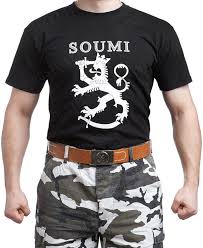
Far right attire? Read again: Suomi (Finland) is spelled Soumi. On the back of the shirt it reads: Winter War, 1939-1940, never forget. Source: www.varusteleka.fi

How many parties in Europe use names to exclude other ethnic groups?* One that comes immediately to mind is the far right British National Party and the Finns Party, which means the party of Finland’s ethnic majority, or white Finnish-speaking Finns.

The question I’d like to ask the National Coalition Party, Center Party, Social Democrats and others except the PS, is how they have permitted the PS to hijack a name like “the Finns Party” all for themselves?

If you are a white Finnish-speaking Finn, how can I be against a party that calls itself the Finns Party?

The same dangerous game has been played with success by other far right and populist groups, the PS included, which show off our national symbols and icons as if they were their personal property.


*For more reading on this topic, see Nationalism threatens racism, not war.


Statement by the Council of Europe’s Human Rights Commissioner: “Europe must combat racist extremism and uphold human rights”

Posted on May 20, 2013 by Migrant Tales

Migrant Tales comment: This statement by the  the Council of Europe’s Human Rights commissioner, Nils Muižnieks, is a good example of  how racist anti-immigration groups are gaining more power in Europe. In Finland we saw the spectacular rise of the Perussuomalaiset (PS) party in 2011. Finland’s anti-EU, anti-immigration and anti-Islam voice got stronger in parliament.  Matters in Europe appear they will get far worse before before the threat of racism, xenophobia and nationalism are contained.  

______________

Europe has been experiencing a worrying intensification of activities of racist extremist organisations, including political parties. According to some commentators, the upsurge has even reached the point of “an early form of far right terror”. It worries me deeply that the European community and national political leaders appear not to be fully aware of the serious threat that these organisations pose to the rule of law and human rights.

shutterstock68839390_racistextremism

The philosophy of racist extremist organisations is centred on denying the entitlement of “others” – mainly migrants and members of national, ethnic and religious minorities – to human rights and fundamental freedoms. They invent “enemies” who have to be fought and eliminated.

In Greece, for example, between October 2011 and December 2012 around 220 racist attacks were reported to the Racist Violence Recording Network headed by UNHCR and the National Commission for Human Rights. That is about one attack every other day. In my recent report concerning Greece I underlined the need to curb hate crime and combat impunity for hate crimes.

Influencing national parliaments

The phenomenon is all the more serious as it is paired with an increased influence of racist extremist political parties in national parliaments and governments, and endeavours by these parties to strengthen their position at European level through alliances.

For example in Hungary, Jobbik, self-described as “radically patriotic”, entered the parliament in 2010 as the third largest party. In Sweden polls show a rise in popularity for the Sweden Democrats (SD), a party with neo-Nazi roots, and the same goes for the neo-Nazi Golden Dawn in Greece.

This political presence lends legitimacy and credibility to political extremism that is often linked to racist and other hate crimes. The main targets are migrants and Muslims, as well as particularly vulnerable social groups such as Roma and other minorities. Many such cases are recorded, for example in Hungary, Italy and Serbia.

Low awareness among politicians and law-enforcement

European political parties and national parliaments should be more aware of this trend. Instead, on many occasions political leaders, through their statements and policies, add force to racist extremism expressed by xenophobic and intolerant far-right political organisations.

Some serious cases also point to failures on the part of the police and intelligence services to adequately address racist extremism. For example in Germany members of the National Socialist Underground murdered 10 persons between 2000 and 2007 without the police connecting the dots. The same thing happened in Sweden where a man shot seven persons, two of them fatally, in 2009-10. For a long time the murders were described as “gang-related” by the police.

What should be done

  • European states must fully abide by and give effect to the standards contained in the 1966 International Convention on the Elimination of All Forms of Racial Discrimination, especially its core provision of Article 4 concerning the sanctioning of racist organisations.
  • In this context, states should revise their legislation to effectively penalise participation in racist extremist groups.
  • Existing national legislation concerning racist extremism needs to be updated and strengthened along the lines of Framework Decision 2008/913/JHA of the Council of the European Union concerning the combating of racism and xenophobia.
  • The use of hate speech and participation in racist activities should be a basis for serious, dissuasive disciplinary measures to be imposed on MPs by parliaments and political parties.
  • Countries should take measures to provide systematic, continuous anti-racism training of all law enforcement officials, prosecutors and judges involved in the investigation and prosecution of racist crimes.
  • States should ensure that victims of extremism have unimpeded access to national justice and effective protection. Particular attention should be paid to migrant victims without residence status.
  • National authorities should be particularly vigilant concerning racist extremism within law enforcement authorities and eradicate impunity notably through independent and effective complaint mechanisms.
  • Human rights education should be systematically included and emphasised in schools.

A human rights based approach necessary

Racist violence, as opposed to other forms of violence, has a broader destructive impact on human dignity and social cohesion. This is why it should be treated more seriously than other forms of violence and extremism.

Individuals and organisations involved in such acts are a threat to the pillars of democracy. They erode human rights to which democratic countries adhere, and undermine the rule of law. States have to ensure the protection of human rights through the eradication of impunity, effective protection of victims, and systematic, on-going awareness work notably through education.

National authorities need to be vigilant and combat racism and extremism at all levels of society.

Nils Muižnieks

Useful documents:

  • Council of Europe Committee of Ministers Recommendation No. R (97) 20 on “hate speech”.
  • PACE Resolution 1754 (2010), Fight against extremism: achievements, deficiencies and failures.
  • ECRI’s General Policy Recommendation No. 10 on combating racism and racial discrimination in and through school education.
  • The Charter of European Political Parties for a Non-Racist Society (1998).
  • The Council of Europe Committee of Ministers Guidelines on eradicating impunity for serious human rights violations (2011).
  • FRA findings about the necessity of access of victims to justice and effective protection.

Margaret Thatcher’s New Right and Finland’s Perussuomalaiset party

Posted on April 13, 2013 by Migrant Tales

As Perussuomalaiset (PS) leader Timo Soini promises that his party will become the biggest party in next year’s European parliamentary elections, which would give him a spring-board to score a similar election victory as in 2011, it’s still too early for the party to reveal how it would deal with its usual enemies like the Greens, homosexuals, immigrants, visible minorities, left-wingers and anyone it arbitrarily labels as “unpatriotic” or anti-PS. 

What is scarier about the PS? Is it its bravado and political saber-rattling taking place now or what it’s keeping under wraps in the stuffy closet: Do not let out until after the 2015 parliamentary election?

What isn’t surprising, and what few political journalists have failed to analyze, is how similar Soini’s political world view is to Margaret Thatcher’s New Right ideology, when she ruled Britain with an iron fist between 1979 and 1990.

Writes Owen Jones: “Thatcherism was a national catastrophe, and we remain trapped by its consequences. As her former Chancellor Geoffrey Howe put it: ‘Her real triumph was to have transformed not just one party but two, so that when Labour did eventually return, the great bulk of Thatcherism was accepted as irreversible.’”

Can the same happen in Finland if the PS are victorious in 2014 and 2015?

One post, published on Migrant Tales by Jenny Bourne of the Institute of Race Relations, highlights many similarities.

Like Thatcher, who ”was, without doubt, a xenophobe, an unapologetic imperialist with a natural penchant towards the far Right,” according to Bourne, Soini and the PS are without doubt “xenophobic, unapologetic racists with a weakness for the far Right.”

There are differences, however. While Thatcher was bent on destroying the power of the unions, the PS aims to build a “workers’ party without socialism.”

A workers’ party without socialism sounds more like what fascist Italian dictator Benito Mussolini founded in Italy. During his reign (1922-43), Mussolini wielded power with the help of powerful unions. The same model was copied during 1946-55 by Argentinean former strongman Juan Perón with disastrous consequences.

Another clear example of the New Right spirit of the PS is their economic policies. Part of these were revealed in January  by EuroMP Sampo Terho and PS strongman Matti Putkonen, who suggested how Finland could save 3.15 billion euros. While the usual culprit of development aide was mentioned, it was surprising that Terho and Putkonen suggested raising VAT, a PS policy no-no.

Thatcher’s suspicion of the outside world, nationalism and xenophobia are generously shared by the PS.

One recent example is the embarrassing revelation where the National Bureau of Investigation as well as Interior Minister Päivi Räsänen have had to apologize for the mistake in adding Russian President Vladimir Putin to a list of criminal suspects. It didn’t take long for PS MP Tom Packalen, a former police commissioner, from stating in a blog that there was no wrongdoing in placing Putin on such a list.

While the former prime minister admitted that if four million people from the new Commonwealth or Pakistan moved to England in the 1980s, she admitted that people were going to react in a hostile manner to those moving there.

Many PS and anti-immigration groups in Europe and elsewhere speak of “uncontrolled” immigration, which is only a synonym for permitting people to react in a hostile manner towards others.


Maaseudun Tulevaisuus: Soini sees himself forming government after the 2015 elections

Posted on April 6, 2013 by Migrant Tales

What are we to think and believe about Timo Soini’s opinion piece on Maaseudun Tulevaisuus, where he claims that the next government formed after the 2015 parliamentary elections will comprise of three major parties? Certainly Soini sees his party emerging as the victor and Finland’s next prime minister. 

Kuvankaappaus 2013-4-6 kello 11.02.23

Read Maaseudun Tulevaisuus news story on Timo Soini here.

It’s clear that if Soini’s Perussuomalaiset (PS) party wins the 2015 elections, the National Coalition Party will not be in government due to that party’s big differences with the PS concerning the European Union and the euro.

Moreover, Soini has said in the past that he could never work with neither the Greens nor Swedish People’s Party.

The interesting question we should ask is why is Soini creating waves about elections that are two years off? Since the PS leader doesn’t have anything significant to show to voters after being two years in the opposition, he is apparently forced to play for high stakes: It’s government in 2015 or bust.

Even if opinion polls have shown the PS to be breathing down the necks of the National Coalition Party and Social Democrats, it’s still a question mark how well they will do when elections arrive.  After the historic victory in April 2011, the PS’ showing in the presidential and municipal election was a clear disappointment for the party.

It’s a good matter that Finnish voters have not fallen for the PS’ rhetoric and populism. Two years in the opposition have not helped the party’s credibility, which has been undermined by near-constant scandals, bursts of racism, ethnic agitation sentences, and anti-EU rhetoric without solutions.

If we are honest about the PS, voters have little idea what the party would actually do if they led the next government.

If the the PS is able match its historic result of 2011 and if any party, especially the Social Democrats, went to bed with Soini, it would be a kiss of political death.

Certainly that day would be one of the darkest days especially for immigrants, visible minorities, Swedish speakers and cultural diversity in general if the PS is able to match its 2011 result in 2014 EuroMP and 2015 parliamentary elections.

While such a threat may remain, some analysts believe that despite Soini’s popularity, most Finnish voters would not trust him as prime minister.

They like to see the PS as a sort of a show and a thorn in the traditional parties’ side.

BBC’s HARDtalk: Soini defends decision to not sack Halla-aho

Posted on February 20, 2013 by Migrant Tales

Perussuomalaiset (PS) chairman, Timo Soini, said on BBC’s HARDTalk that the five-year ordeal that lead to a Supreme Court ruling against PS MP Jussi Halla-aho for inciting ethnic hatred was enough punishment, according to YLE. Soini had promised previously to sack any member of the party if they were sentenced by a court for hate speech. 

Kuvankaappaus 2013-2-20 kello 13.21.15

“He’s been in purgatory for five years,” Soini said of Halla-aho. “In my opinion it’s hard-enough punishment.”

Certainly Soini doesn’t want to get rid of Halla-aho because that would be costly for the party. Since the PS MP was voted to parliament thanks to hate speech, he can now move to phase two: put into action his plans, which include spreading suspicion and making life as difficult as possible for immigrants in Finland.

The BBC asked if Soini believed he had passed the peak of his popularity.

”Everything is possible,” he said.  “I’ve been in parliament for ten years. In that respect, I’m a pretty tough guy because I do what I believe in.”

According to YLE, Soini was asked about the Slovak National Party, which belongs, like the PS, to the xenophobic and right-wing populist Europe of Freedom & Democracy group in the European Parliament. It’s leader, Jan Slota, stated that “The Hungarians are a cancer in the body of the Slovak nation” and that the only homosexual he’d accept is one in the closet.

In Soini’s usual style, he didn’t answer the question.  He said that when the party won the election in 2011, the Swedish media had called the PS leader “the plague.”

“How does that stand for Swedish values?” he said.

The HARDTalk show can only be viewed in the U.K.

On the BBC website, it introduces Soini in the following manner:  writes:  “Europe’s prolonged economic crisis has prompted a populist backlash against the powers that be. In Finland, the EU’s prosperous northern outpost, the big beneficiary has been Timo Soini, leader of the Eurosceptic, nationalist party long known as the True Finns. He wants to see the Eurozone dismantled, immigration curbed, traditional values restored. Critics have labelled the party xenophobic – is this the angry politics of European disintegration?”

Here’s another interview that Soini gave to CNBC on Finland’s membership in the European Union.

Abagond: What this blog has taught me about white people

Posted on June 9, 2012 by Migrant Tales

Comment: Abagond is a very successful blog that debates issues like racism in the United States. We at Migrant Tales like to ask serious question about such a social ill as well. What about if we asked that same question as Abagond did in the headline? 

For me personally, Migrant Tales has taught me that racism is a problem that should be challenged in Finland. Our blog has helped expose as well the outright lies of anti-immigration groups like the Perussuomalaiset. Most importantly, it has inspired a lot of people to challenge one of the worst menaces threatening our society today: prejudice, nationalism, xenophobia, far-right ideology and racism. 

___________

Keeping this blog has blown my mind. White people say stuff here that they would never  say offline in my hearing. I knew white Americanswere racist – living in so-called liberal New York left no doubt in my mind about that – but I had no idea how deep their racism ran.

Read original blog entry here.


Our Finnish national identity in the new century

Posted on April 14, 2012 by Migrant Tales

By Enrique Tessieri

Glancing through a pile of documents and certificates my late grandfather (1892-1979) had is like entering a time machine. Two certificates catch my attention: a Finnish-language test in 1925 and another one when he changed his surname from Hantwargh to Harvo.  Both documents offer us a glimpse of how a social construct like Finnish national identity was forged in the last century.

Taking into account how some Finns define it today an ever- globalized world, it’s easy to see that their definition of a Finn has its roots in those two documents.

Being a Finn had little to do with your place of birth but is due to jus sanguinis, right of blood. Your citizenship is not determined by place of birth but by having one or both parents as citizens of that country.

The first document proving that my grandfather spoke perfect Finnish is understandable in the jus sanguinis context. The second one, which was from 1931, states at the following:

In light of the petition made by military instructor Harald Vilhelm Handtwargh, the governor of the province of Mikkeli grants his family permission to change their  surname to Harvo; this is backed by statements from the vicar [of the Lutheran church], Suomen Sukututkimusseura [Finnish Genealogical Society] and the Suomalaisuuden Liitto [Association of Finnish Culture and Identity]…

Taking on a new national identity was relatively  easy in the last century as long as you were white, nationalistic and didn’t make too public your foreign roots. In the case of my grandfather it was his Jewish background.

Today there are totally new demands placed on our society with respect to inclusion and “us.”  How we included and excluded people and groups in the last century is, I believe, what is causing us to fall flat on our faces and hindering us from seeing the bigger picture of what Finnish identity is in the new century.

Since we are a young nation with a young identity there is time to make it more inclusive. But for that change to happen it requires us to see the world in a radically different way than today.  A good example is some of our feelings towards the Russians and that fear of being a small nation constantly under threat.

It’s clear that in order to build a more inclusive and culturally dynamic society, we have to break away from our past hatreds, prejudices and myths.

But let’s not fool ourselves, breaking free from them will be a long process that will take a concerted effort and generations.

This document gave my grandfather the right to change his surname from Handtwargh to Harvo in 1931. 

One good way to become a more inclusive society today would be to change Section 5 of the Constitution from jus sanguinis to jus solis, right of the soil, nationality or citizenship granted to a person born in country.

The whole idea of jus sanguinis is deeply rooted in how ethnicity and nationality were defined in the nineteenth and greater part of the twentieth century.

While I am happy that Finland is an independent country today, we cannot escape the fact that it was built on nationalism and racism that was ever-present in Europe before and even today.  Thus our independence was in many respects an ethnic thing. We didn’t like the Russians never mind Russification.

The racism and nationalism that existed in Europe in the nineteenth century had a clear role: It justified the colonization and exploitation of other people in Africa and Asia. It was very ethnocentric as well. We thought that we were the epitome of civilization and therefore it was our right to  exploit others because they were less “advanced.”

As we know, World War I exposed the barbarism of our “civilized ways” and was pretty good reality check.

Hopefully our culturally diverse identity will not resemble an excerpt from Heikki Waris’ “An introduction to Finnish history” on page two:

“A fourth aspect is the high degree of homogeneity of Finnish society. Racial homogeneity particularly characterizes the Finnish people who have practically no racial minorities, the less than three thousand Lapps in the northernmost arctic communities making up the largest racial minority group. Consequently, racial prejudice and discrimination are nonexistent.”

Apart from avoiding mention of the Roma of Finland and Finnish expats and those with international backgrounds, Waris’ affirmation are quite humorous from today’s perspective.

Nationalism, Fascism, Populism and Racism – a family of Kings or Thieves?

Posted on December 20, 2011 by Mark

By Mark Phillips

So, nationalism, fascism, populism and racism – ‘who’ are they and do they share anything in common with each other? Here, I’m going to give a brief but hopefully pertinent overview. Are they Kings or Thieves? Maybe my conclusions will surprise you.

It is important to first understand that a nationalist person is a different entity to a nationalist organisation, a political party, a state institution or even a whole nation state. The difference is one of scale and of kind. A person who is a nationalist will have opinions that link their personal identity very strongly with a ‘national identity’. Nationalists often see themselves as patriots. It doesn’t really matter whether you call yourself a patriot or a nationalist; what matters is what comes from that sentiment of ‘loving your country’, and whether it’s accompanied by any kind of systematic devaluing of other nations or identities.

Public figures aside, nationalistic people who have strong political and cultural views do not necessarily have a lot of power to affect others, outside of their right to vote and their freedom to cajole their family and friends. On an individual level, a nationalist can be someone who, when discussing matters of national identity, is open, warm, culturally informed, friendly, knowledgeable, expansive and easy company, while on the other extreme, they can be cesspits of prejudice directed against people of other nations or people of their own nation.

Political parties, institutions, and various bodies on the other hand have the power to discriminate on a far larger scale, for good or ill; they can promote either tolerance or prejudice; they can highlight or ignore widespread discrimination; they can take action, impose penalties and sanctions, or provide or deny support. While many parties and organisations have sought to actively protect the rights of minorities, some have ignored the issues, have denied the specific needs of particular groups or have even advocated lesser rights for minorities, in the shape of extra requirements or fewer rights compared to normal citizens.

At its best, nationalism is a celebration of identity, tradition and culture. At its worst it can be the systematic exclusion of certain groups and minorities from the ‘family’ and from the nation’s community, thereby fuelling discrimination, violence and misery. Historically, those excluded have at various times been gypsies, Jews, people with disabilities, immigrants, the mentally ill, the religious and the non-religious. Nationalists rather than describing the national character, often fall into the trap of prescribing the national character, which ends in the rather lame attempts of the few telling the many how to be what they already are – members of the nation community; for example, Finns telling other Finns how to be Finns!

At its very worst, nationalism can be the attempted extermination of a minority. So, let’s be aware, let’s be very aware, that this is the power that identity has over us. It can bring out the best or the absolute worst, and for that reason, it is clearly our moral responsibility to acknowledge its special and powerful force in human societies. A King or a Thief? The potential is there for both.

Fascism is understood as a blend of nationalism and radicalism. Fascists believe it is the responsibility of the state to maintain and promote the national identity as well as a national community. The radicalism of fascism entails a change of society’s values towards collectivism (the national community), a redistribution of resources away from corporate elites towards ‘social’ programs and the construction of an authoritarian state (redistribution of power centrally) ; the latter is not seen as negative – the ‘authority’ of the state is envisaged as necessary, as guiding the people, and acting as sovereign guardian to the nation’s values and identity. This protection does require more power than your average state, which is why fascism jumps into bed so quickly with totalitarianism.

The appeal of fascism is that it is committed to a sense of national community. They consider the community as organic, linked by ancestry, culture and blood. Fascism in many ways hankers back to the values of tribalism, where community, ancestory and common interest set the limits to personal freedoms. As with nationalism, fascism has the potential to separate people into camps. Indeed, the national identity is seen to supersede all other categories such as age, gender, or class.

With fascism, the national identity is all too easily mythologized, frozen historically and idealised; it is imagined as being passed on by elders of the community, while in reality, in fascist states it is churned out as indoctrination from government committees sitting on high and charged with maintaining ‘culture’. This is somewhat removed from a real cultural identity, which is by contrast changing, diverse, typically shaped at the grass roots and constantly being challenged from within.

It is for this reason that the political goals of fascists often involve what for ordinary folk might seem rather oddball issues – opposing interbreeding (family policy), controlling art forms (cultural integrity), controlling language (opposition to loan words etc).

A key result of fascism is a society ruled by fear, as the consequences of being different or challenging the state-promoted norms become a whole lot more unpleasant the stronger the state becomes. This is because fascism and violence are never far apart. Fascism has the paranoid habit of declaring (violent) war on everything that is not itself. Promoting political violence has been integral to fascism as a means of renewal and national regeneration and as a means for bringing about revolution. Militarism is actively promoted and elevated, as fostering comradeship, character, discipline, physical fitness and devotion to a national cause. The militarism can also play out in the arena of perceived culture warfare and cultural self-defence.

Clearly the individual freedoms of expression that we enjoy today are inconsistent with a pure fascist vision of ‘national cohesion’, although politicians on all sides can be seen to play to the central themes of fascism: strong community, centralised authority, strong militarism, strong national identity and the interests of the ‘community’ over the interests of the individual. In themselves, they are not inherently evil themes. However, the paramilitary aspects of fascism have invariably been a hotbed for human excesses, dismissed by fascist authorities as the over-exuberant actions of a few! A King or a Thief? Almost certainly a thief, climbing on the back of what it claims is positive nationalism and a sense of community.

Populism as a political ideology is built on the idea that it represents and expresses the needs of ordinary people. Typically, an enemy is created in the form of cultural, economic and political elites. The political ideology, much like fascism, attempts to present itself as above party politics, or distinctions of left and right. A key element of populism is the ‘folksy guy’ who is in touch with ordinary folk, typically a family man, devoted, hard working, with a strong national identity – salt of the earth! Populism has great appeal because it appears to put the everyman in amongst the power-brokers.

Regardless of how populism presents itself, it promotes a top-down political authoritarianism that has much in common with Fascism or other elements of the Far Right, particularly in adopting a ‘cultural agenda’. Populism is similar to fascism in that it builds on real social divisions, this time between the masses and the elites, though it also pits nationals against non-nationals (e.g. lazy Europeans or ‘savage’ nations). Every single Populist Party in Europe takes a very strong anti-immigration and anti-EU stance.

Typically, populist parties attract nationalists and fascists into their ranks, who sympathize with the ‘them and us’ narrative and also see an opportunity to exploit populism to bring about the conditions for revolution – i.e. civil unrest. It is therefore quite normal to see the populist movements infiltrated by more extreme groups. A King or a Thief? Many would see a populist politician as an honourable thief among kings. More often they are thieves hoping to be kings. The greatest casualty of populism is perspective: there’s only one meal allowed on this menu – e.g. mass immigration is bad!

Racism is the belief in the superiority of one racial, ethnic or cultural grouping above all others. Though few people believe this implicitly, racism nevertheless plays out in overt ways such as the reasoning that indigenous people (usually the majority and usually not the first indigenous group) deserve better protection and service from the state. This kind of racism is always blind to its discrimination, instead arguing, like nationalists and fascists, that their rights of entitlement arise simply from ‘belonging to the family’.

In its mildest forms, racism can also be the much promoted sense of superiority that imagines we have the best footballers, athletes, singers, innovators, artists, entrepreneurs etc. In itself, it’s harmless, while competition among nations is a huge source of entertainment and innovation. ‘Best’ typically lasts for a short period of time, as other nations produce their own world-beaters in various fields. People are generally cognizant of the fact that the competition is a game. Some, however, appear not to have been let in on the act.

Racism as an ideological position chooses to ignore competition and diversity within its own nation’s walls and rather argues that one race, culture or ethnicity is somehow intrinsically better than another. As with fascism and nationalism, identity is considered to be fixed, historical, given and inherently good. It seeks to install one national/ethnic grouping into the permanent role of ‘winners’ in relation to all others, not because they succeed through merit or through citizenship rights, but rather, by right of birth into a very specific family grouping. And such a cultural identity is so strong that in countries where institutional racism is rampant it must nevertheless be constantly maintained, through classroom indoctrination, through controlled or self-censored media, and through a vehement opposition to anyone who would dare to question such natural entitlements.

The links between racism, nationalism, fascism and populism should be obvious. They each feed off each other and the common theme of ‘them and us’, with its various degrees of hostility towards the ‘us’, ranging from mild to severe. Nationalism on the whole promotes the idea of a national identity where the implicit assumption is that it is somehow better than the others. This is quite different to recognising that we have a national identity that has much in common with other national identities (e.g. a flag, an anthem, a few personality traits, a few food recipes and a common language/s), or an identity that entails advantages and disadvantages, and both good and not so good characteristics.

Nationalism, at its worst, involves devaluing the national identity of others. Fascism likewise promotes a strong, superior national identity and community while aggressively suppressing dissent. Populism likewise constructs internal and external enemies, in the form of various elites and also non-nationals, though it’s sowing of division is typically more languid and insidious.

With each of these ideologies, it can be said that national identity is characterised as something fixed, unique and superior, leading to strong ingroups and outgroups, and, therefore an increased potential for conflict within mixed or diverse societies. As ideologies and as tendencies, they often mix with each other.

Hence, it can happen that someone buys into the various ideologies so described, such that they perceive their national identity is in need of protection, that they have been betrayed by the ruling classes, that they should adopt military dedication to the cause, while feeling free to express open hatred of those that stand in the way of national cohesion, whether they be an internal or external foe. And in their idealism, they are simply waiting to ‘serve their nation’.

Modern psychiatry seems to identify such a combination as insanity. But it can also be seen as a natural consequence of several negative and militant ideologies coming together. Without doubt it constitutes a form of radicalisation. If problems identified within nationalist, populist and fascist discourses are couched in terms of a war, then we cannot be surprised that some people take the call to arms seriously. These same groups cannot later claim to be advocates of peace. Such hypocrisy smacks of cynicism.

A family of Kings or Thieves? Well, they all would certainly present themselves as Kings, as would-be benevolent and benign rulers in friendly dictatorships. But, I would conclude they are almost certainly thieves, robbing us of cultural, intellectual and political freedoms, sometimes at the point of a gun, sometimes by force of the majority, sometimes by cultural censorship and being told how we are supposed to be. As thieves, they have a shared brotherhood, with some sense of honour, but there is also a fair amount of backstabbing among them. It is the brutal end of politics after all, no question about that.

The hope of any populist is to find the King among them, who will lead them to the promised land. If Timo Soini were indeed appointed King, I wonder what colourful band of thieves would he be taking with him  into the Palace?

The role of nationalist populism in Finland

Posted on May 30, 2011 by Migrant Tales

By Enrique Tessieri

Like a new chapter of a history book, each decade brings out its uniqueness to the foreign correspondent. In the 1980s it was Helsinki’s special relationship with Moscow and in the 1990s the country’s full political and economic integration with Western Europe. During the first decade of the present century we saw the impact of globalization. What kind of child will the 2010s be?

Life must have been easier than today for foreign journalists if they were writing about this country before World War II.

During the 1920s and 1930s,  one of the biggest topics written by the foreign media was on legendary sportsmen like long-distance Olympic champion Paavo Nurmi,  the “The Flying Finn.”

Another headline that won the hearts of the USAmerican public at the time was when Finland became the only nation in Europe to ever pay its debt back to the United States.  American cowboy celebrity Will Rogers mentioned this in one of his short columns in 1934  in the Washington Times:  “I just saw the finest Capitol or House of Parliament in the world, brand new. They vote by electric buttons… Not just because they paid their debt but these Finns are a knockout.  Did you know they are the seventh-biggest country in all Europe?”

During the 1920s and 1930s, there was also the odd story on prohibition and how alcohol was bootlegged from Estonia.

Finland made it back to the front-page world headlines in 1939, when Josef Stalin’s Red Army attacked Finland. The Winter War turned into a bittersweet mix of  suffering and valor of how a nation vastly outnumbered made a heroic stand against the former USSR.

If television brought horrifying images of the Vietnam War to American living rooms in the 1960s, the stories written on the Winter War by foreign correspondents had the same impact on world opinion.  Such stories almost brought France and England on Finland’s side. The history of World War 2 would have been very different if Stalin would have persisted in his attack of Finland after March 1940.

After the odd relationship with Nazi Germany in the Continuation War and the signing of a new armistice with Moscow in 1944, Finland disappeared behind the backdrop of international events.  Our nation was busy healing its wounds of the war and learning to survive in geopolitical near-isolation during most of the cold war.

In light of the last three decades that shaped Finland, what kinds of stories will foreign correspondents cover in the present decade?

Most likely one of the most important of these will be the role of nationalist populism.

The origins of modern Finnish xenophobia and racism

Posted on May 14, 2010 by Migrant Tales

By Enrique Tessieri

Modern Finnish racism has two sources: nationalism imbedded deep in our history coupled with low self-esteem. Compared with the 1970s, 1980s or 1990s, matters have got better though there is still a lot of room for improvement.

One of the cornerstones of Finnish nationalism is the myth that we are alone and therefore we must be self-reliant to the extreme. The truth, however, is that we could not have become an independent nation nor have made it through two terrible wars with the former Soviet Union without outside help and support.

Thanks to our resolve in the Winter War (1939-40), the conflict took a critical turn in favor of Finland after England and France were threatening to send troops to fight against the Red Army. If this had happened, it would have changed the course of World War 2.

Despite the hatred that some Finns have of Russians, it was Czar Aleksander II that gave language rights to Finnish-langauge Finns. As a Grand Duchy of Russia, Finland also got its own currency. These rights, which were gained in a single decade, were more than what the Finnish-langauge Finns got when they were under Swedish rule during 1249-1809.

Despite ardent nationalism and diehard suspicion of the Russians, leaders of Finland’s independence intelligently understood that it would be a wise choice to maintain the country officially bilingual. The final adoption of the flag was done in the spirit of the Nordic region as well, even though Akseli Gallen-Kallela proposed one that had a red background and the Finnish lion.

This was the official flag that waved over Finland from January to May 1918. It  was designed by Akseli Gallen-Kallela. Source: Wikipedia

While our independence and national unity were based on our hatred of the Russians and to a lesser degree of the Swedes, Finland’s fear of outsiders took a new turn in the 1930s. During the Great Depression, Finland enacted the Restricting Act of 1939 (law 219/1939) that kept foreigners and outside investment to a minimum. Moreover, responsiblity for immigrant affairs during that decade was handed to the secret police, which saw foreigners as a threat to national security.

The interesting question to ask is how come nationalism continues to shape the view that some Finns have of the outside world? Why do politicians still scare Finns and maintain the myth that we will be invaded?

The answer is simple: It is profitable.

It reaps rewards because it offers instant short-term benefits if you want to smother dissent rapidly, encourage self-censorship of the media and public, as well as support public enterprises and institutions at the cost of competition. Worst of all, it creates an antagonistic situation between immigrants and the rest of the population. How can one integrate smoothly in such a hostile atmosphere?

The Finland of the future, which we are building today, will have more freedom of thought, less self-censorship of the media and public, greater competition, acceptance that we are a culturally diverse and start to see the outside world (especially Russia) in a less defensive fashion.

Politicians, institutions like the Finnish Border Guard and other public leaders who continue to inject fear of the outside world, choose to live in the past because it is profitable.

It is high time they modernize their view of the world and embrace the challenges of the new century in a novel way. Why?

Because it is more profitable for Finland in the long-term.

  • Previous
  • 1
  • 2
  • 3
  • 4
  • 5
  • Next
Read more about documentary film
Read more

Recent Posts

  • Finland’s tabloids Iltalehti and Ilta-Sanomat are the pits
  • Riikka Purra’s Dr Jekyll and Mr Hyde mask
  • Double standards
  • Perussuomalaiset: Uusi logo, sama vanha juttu
  • Taco Trump

Recent Comments

  1. Absolutely Socking: Racist Finnish Facebook group against human rights gets flooded with socks on Musta Barbaari’s mother and sister charged by the police in “ethnic profiling” case
  2. Ilkka Nuotio on Pekka Myrskylä: “Tilastot kertovat toista kuin poliittinen keskustelu”
  3. Genrih Soinkara on The war in Ukraine and the Russian-Finnish border crisis are showing Finland’s ugly side
  4. Ahti Tolvanen on Comment by Ahti Tolvanen on the Helsinki +50 conference
  5. Angel Barrientos on Angel Barrientos is one of the kind beacons of Finland’s Chilean community

Archives

  • June 2026
  • May 2026
  • April 2026
  • March 2026
  • February 2026
  • January 2026
  • December 2025
  • November 2025
  • October 2025
  • September 2025
  • August 2025
  • July 2025
  • June 2025
  • May 2025
  • April 2025
  • March 2025
  • February 2025
  • January 2025
  • December 2024
  • November 2024
  • October 2024
  • September 2024
  • August 2024
  • July 2024
  • June 2024
  • May 2024
  • April 2024
  • March 2024
  • February 2024
  • January 2024
  • December 2023
  • November 2023
  • October 2023
  • September 2023
  • August 2023
  • July 2023
  • June 2023
  • May 2023
  • April 2023
  • March 2023
  • February 2023
  • January 2023
  • December 2022
  • November 2022
  • October 2022
  • September 2022
  • August 2022
  • July 2022
  • June 2022
  • May 2022
  • April 2022
  • March 2022
  • February 2022
  • January 2022
  • December 2021
  • November 2021
  • October 2021
  • September 2021
  • August 2021
  • July 2021
  • June 2021
  • May 2021
  • April 2021
  • March 2021
  • February 2021
  • January 2021
  • December 2020
  • November 2020
  • October 2020
  • September 2020
  • August 2020
  • July 2020
  • June 2020
  • May 2020
  • April 2020
  • March 2020
  • February 2020
  • January 2020
  • December 2019
  • November 2019
  • October 2019
  • September 2019
  • August 2019
  • July 2019
  • June 2019
  • May 2019
  • April 2019
  • March 2019
  • February 2019
  • January 2019
  • December 2018
  • November 2018
  • October 2018
  • September 2018
  • August 2018
  • July 2018
  • June 2018
  • May 2018
  • April 2018
  • March 2018
  • February 2018
  • January 2018
  • December 2017
  • November 2017
  • October 2017
  • September 2017
  • August 2017
  • July 2017
  • June 2017
  • May 2017
  • April 2017
  • March 2017
  • February 2017
  • January 2017
  • December 2016
  • November 2016
  • October 2016
  • September 2016
  • August 2016
  • July 2016
  • June 2016
  • May 2016
  • April 2016
  • March 2016
  • February 2016
  • January 2016
  • December 2015
  • November 2015
  • October 2015
  • September 2015
  • August 2015
  • July 2015
  • June 2015
  • May 2015
  • April 2015
  • March 2015
  • February 2015
  • January 2015
  • December 2014
  • November 2014
  • October 2014
  • September 2014
  • August 2014
  • July 2014
  • June 2014
  • May 2014
  • April 2014
  • March 2014
  • February 2014
  • January 2014
  • December 2013
  • November 2013
  • October 2013
  • September 2013
  • August 2013
  • July 2013
  • June 2013
  • May 2013
  • April 2013
  • March 2013
  • February 2013
  • January 2013
  • December 2012
  • November 2012
  • October 2012
  • September 2012
  • August 2012
  • July 2012
  • June 2012
  • May 2012
  • April 2012
  • March 2012
  • February 2012
  • January 2012
  • December 2011
  • November 2011
  • October 2011
  • September 2011
  • August 2011
  • July 2011
  • June 2011
  • May 2011
  • April 2011
  • March 2011
  • February 2011
  • January 2011
  • December 2010
  • November 2010
  • October 2010
  • September 2010
  • August 2010
  • July 2010
  • June 2010
  • May 2010
  • April 2010
  • March 2010
  • February 2010
  • January 2010
  • December 2009
  • November 2009
  • October 2009
  • September 2009
  • August 2009
  • July 2009
  • December 2008
  • November 2008
  • October 2008
  • September 2008
  • August 2008
  • July 2008
  • June 2008
  • May 2008
  • April 2008
  • March 2008
  • February 2008
  • January 2008
  • November 2007
  • October 2007
  • September 2007
  • August 2007
  • July 2007
  • June 2007
  • May 2007

Categories

  • ?? Gia L?c
  • ????? ?????? ????? ???????? ?? ??????
  • ???????
  • @HerraAhmed
  • @mondepasrond
  • @nohatefinland
  • @oula_silver
  • @Varathas
  • A Pakistani family
  • äärioikeisto
  • Abbas Bahmanpour
  • Abdi Muhis
  • Abdirahim Hussein Mohamed
  • Abdirahim Husu Hussein
  • Abdirisak Mahamed
  • About Migrant Tales
  • activism
  • Adam Al-Sawad
  • Adel Abidin
  • Afrofinland
  • Ahmed IJ
  • Ahti Tolvanen
  • Aino Pennanen
  • Aisha Maniar
  • Alan Ali
  • Alan Anstead
  • Alejandro Díaz Ortiz
  • Alekey Bulavsev
  • Aleksander Hemon
  • Aleksanterinliitto
  • Aleksanterinliitto ry
  • Aleksanterinliitto ry:n hallitus
  • Alex Alex
  • Alex Mckie
  • Alexander Nix
  • Alexandra Ayse Albayrak
  • Alexis Neuberg
  • Ali Asaad Hasan Alzuhairi
  • Ali Hossein Mir Ali
  • Ali Rashid
  • Ali Sagal Abdikarim
  • Alina Tsui
  • Aline Müller
  • All categories
  • Aman Heidari
  • Amiirah Salleh-Hoddin & Jana Turk
  • Amin A. Alem
  • Amir Zuhairi
  • Amkelwa Mbekeni
  • Ana María Gutiérrez Sorainen
  • Anachoma
  • Anders Adlecreutz
  • Angeliina Koskinen
  • Anna De Mutiis
  • Anna María Gutiérrez Sorainen
  • Anna-Kaisa Kuusisto ja Jaakko Tuominen
  • Annastiina Kallius
  • Anneli Juise Friman Lindeman
  • Announcement
  • Anonymous
  • Antero Leitzinger
  • anti-black racism
  • Anti-Hate Crime Organisation Finland
  • Anudari Boldbaatar
  • Arshiya Nasser
  • Aspergers Syndrome
  • Asylum Corner
  • Asylum seeker 406
  • Athena Griffin and Joe Feagin
  • Autism
  • Avaaz.org
  • Awale Olad
  • Ayan Said Mohamed
  • AYY
  • Barachiel
  • Bashy Quraishy
  • Beatrice Kabutakapua
  • Beri Jamal
  • Beri Jamal and Enrique Tessieri
  • Bertolt Brecht
  • Boiata
  • Boodi Kabbani
  • Bruno Gronow
  • Carmen Pekkarinen
  • Çelen Oben and Sheila Riikonen
  • Chiara Costa-Virtanen
  • Chiara Costa-Virtanen
  • Chiara Sorbello
  • Christian Thibault
  • Christopher Wylie
  • Clara Dublanc
  • Dana
  • Daniel Malpica
  • Danilo Canguçu
  • David Papineau
  • David Schneider
  • Dexter He
  • Don Flynn
  • Dr Masoud Kamali
  • Dr. Faith Mkwesha
  • Dr. Theodoros Fouskas
  • Edna Chun
  • Eeva Kilpi
  • Emanuela Susheela
  • En castellano
  • ENAR
  • Enrique
  • Enrique Tessieri
  • Enrique Tessieri & Raghad Mchawh
  • Enrique Tessieri & Yahya Rouissi
  • Enrique Tessieri and Muhammed Shire
  • Enrique Tessieri and Sira Moksi
  • Enrique Tessieri and Tom Vandenbosch
  • Enrique Tessieri and Wael Che
  • Enrique Tessieri and Yahya Rouissi
  • Enrique Tessieri and Zimema Mhone
  • Epäluottamusmies
  • EU
  • Europe
  • European Islamophobia Report
  • European Islamophobia Report 2019,
  • European Union
  • Eve Kyntäjä
  • Ezequiel Caldeiro
  • Facebook
  • Fadumo Dayib
  • Faisa Kahiye
  • Farhad Manjoo
  • Fasismi
  • Finland
  • Fizza Qureshi
  • Flyktingar och asyl
  • Foreign Student
  • Fozia Mir-Ali
  • Frances Webber
  • Frida Selim
  • Gareth Rice
  • Ghyslain Vedeaux
  • Global Art Point
  • Great Replacement
  • Habiba Ali
  • Hami Bahadori
  • Hami Bahdori
  • Hamid
  • Hamid Alsaameere
  • Hamid Bahdori
  • Handshake
  • Harmit Athwal
  • Hassan Abdi Ali
  • Hassan Muhumud
  • Heikki Huttunen
  • Heikki Wilenius
  • Helsingin Sanomat
  • Henning van der Hoeven
  • Henrika Mälmsröm
  • Hser Hser
  • Hser Hser ja Mustafa Isman
  • Husein Muhammed
  • Hussain Kazemian
  • Hussain Kazmenian
  • Ibrahim Khan
  • Ida
  • Ignacio Pérez Pérez
  • Iise Ali Hassan
  • Ilari Kaila & Tuomas Kaila
  • Imam Ka
  • inside-an-airport
  • Institute of Race Relations
  • Iraqi asylum seeker
  • IRR European News Team
  • IRR News Team
  • Islamic Society of Norhern FInland
  • Islamic Society of Northern Finland
  • Islamophobia
  • Jacobinmag.com
  • Jallow Momodou
  • Jan Holmberg
  • Jane Elliott
  • Jani Mäkelä
  • Jari Luoto
  • Jari Taponen
  • Jegor Nazarov
  • Jenni Stammeier
  • Jenny Bourne
  • Jessie Daniels
  • Joe Davidow
  • Johannes Koski
  • John D. Foster
  • John Grayson
  • John Marriott
  • Jon Burnett
  • Jorma Härkönen
  • Jos Schuurmans
  • José León Toro Mejías
  • Josue Tumayine
  • Jouni Karnasaari
  • Juan Camilo
  • Jukka Eräkare
  • Julian Abagond
  • Julie Pascoet
  • Jussi Halla-aho
  • Jussi Hallla-aho
  • Jussi Jalonen
  • JusticeDemon
  • Kadar Gelle
  • Kaksoiskansalaisuus
  • Kansainvälinen Mikkeli
  • Kansainvälinen Mikkeli ry
  • Katherine Tonkiss
  • Kati Lepistö
  • Kati van der Hoeven-Lepistö
  • Katie Bell
  • Kättely
  • Kerstin Ögård
  • Keshia Fredua-Mensah & Jamie Schearer
  • Khadidiatou Sylla
  • Khadra Abdirazak Sugulle
  • Kiihotus kansanryhmää vastaan
  • Kirsi Crowley
  • Koko Hubara
  • Kristiina Toivikko
  • Kubra Amini
  • KuRI
  • La Colectiva
  • La incitación al odio
  • Laura Huhtasaari
  • Lauri Finér
  • Leif Hagert
  • Léo Custódio
  • Leo Honka
  • Leontios Christodoulou
  • Lessie Branch
  • Lex Gaudius
  • Leyes de Finlandia
  • Liikkukaa!
  • Linda Hyökki
  • Liz Fekete
  • M. Blanc
  • Maarit Snellman
  • Mahad Sheikh Musse
  • Maija Vilkkumaa
  • Malmin Kebab Pizzeria Port Arthur
  • Marcell Lorincz
  • Mari Aaltola
  • María Paz López
  • Maria Rittis Ikola
  • Maria Tjader
  • Marja-Liisa Tolvanen
  • Mark
  • Markku Heikkinen
  • Marshall Niles
  • Martin Al-Laji
  • Maryan Siyad
  • Matt Carr
  • Mauricio Farah Gebara
  • Media Monitoring Group of Finland
  • Micah J. Christian
  • Michael McEachrane
  • Michele Levoy
  • Michelle Kaila
  • Migrant Tales
  • Migrant Tales Literary
  • Migrantes News
  • Migrants' Rights Network
  • MigriLeaks
  • Mikko Kapanen
  • Miriam Attias and Camila Haavisto
  • Mohamed Adan
  • Mohammad Javid
  • Mohammad M.
  • Monikulttuurisuus
  • Monisha Bhatia and Victoria Canning
  • Mor Ndiaye
  • Muh'ed
  • Muhamed Abdimajed Murshid
  • Muhammed Shire
  • Muhammed Shire and Enrique Tessieri
  • Muhis Azizi
  • Musimenta Dansila
  • Muslimiviha
  • Musulmanes
  • Namir al-Azzawi
  • Natsismi
  • Neurodiversity
  • New Women Connectors
  • Nils Muižnieks
  • No Labels No Walls
  • Noel Dandes
  • Nuor Dawood
  • Omar Khan
  • Otavanmedia
  • Oula Silvennoinen
  • Paco Diop
  • Pakistani family
  • Pentti Stranius
  • Perussuomalaiset
  • perustuslaki
  • Petra Laiti
  • Petri Cederlöf
  • Pia Grochowski
  • Podcast-lukija Bea Bergholm
  • Pohjois – Suomen Islamilainen Yhdyskunta
  • Pohjois Suomen Islamilainen Yhyskunta
  • Polina Kopylova
  • Race Files
  • racism
  • Racism Review
  • Raghad Mchawh
  • Ranska
  • Rashid H. and Migrant Tales
  • Rasismi
  • Raul Perez
  • Rebecka Holm
  • Reem Abu-Hayyeh
  • Refugees
  • Reija Härkönen
  • Remiel
  • Reza Nasri
  • Richard Gresswell
  • Riikka Purra
  • Risto Laakkonen
  • Rita Chahda
  • Ritva Kondi
  • Robito Ibrahim
  • Roble Bashir
  • Rockhaya Sylla
  • Rodolfo Walsh
  • Roger Casale
  • Rostam Atai
  • Roxana Crisólogo Correa
  • Ruth Grove-White
  • Ruth Waweru-Folabit
  • S-worldview
  • Sadio Ali Nuur
  • Sami Rusanen
  • Sandhu Bhamra
  • Sara de Jong
  • Sarah Crowther
  • Sari Alhariri
  • Sarkawt Khalil
  • Sasu
  • Scot Nakagawa
  • Shabana Ahmadzai
  • Shada Islam
  • Sharon Chang blogs
  • Shenita Ann McLean
  • Shirlene Green Newball
  • Sini Savolainen
  • Sira Moksi
  • Sonia K.
  • Sonia Maria Koo
  • Steverp
  • Stop Deportations
  • Suldaan Said Ahmed
  • Suomen mediaseurantakollektiivi
  • Suomen Muslimifoorumi ry
  • Suomen viharikosvastainen yhdistys
  • Suomen viharikosvastainen yhdistys ry
  • Suomi
  • Supermen
  • Susannah
  • Suva
  • Syrjintä
  • Talous
  • Tapio Tuomala
  • Taw Reh
  • Teivo Teivainen
  • The Daily Show
  • The Heino
  • The Supermen
  • Thomas Elfgren
  • Thulfiqar Abdulkarim
  • Tim McGettigan
  • Tino Singh
  • Tito Moustafa Sliem
  • Tobias Hübinette and L. Janelle Dance
  • Transport
  • Trica Danielle Keaton
  • Trilce Garcia
  • Trish Pääkkönen
  • Trish Pääkkönen and Enrique Tessieri
  • Tuulia Reponen
  • Uncategorized
  • UNITED
  • University of Eastern Finland
  • Uyi Osazee
  • Väkivalta
  • Vapaa Liikkuvuus
  • Venla-Sofia Saariaho
  • Vieraskynä
  • W. Che
  • W. Che an Enrique Tessieri
  • Wael Ch.
  • Wan Wei
  • Women for Refugee Women
  • Xaan Kaafi Maxamed Xalane
  • Xassan Kaafi Maxamed Xalane
  • Xassan-Kaafi Mohamed Halane & Enrique Tessieri
  • Yahya Rouissi
  • Yasmin Yusuf
  • Yassen Ghaleb
  • Yle Puhe
  • Yuliet Tresa
  • Yve Shepherd
  • Zahra Khavari
  • Zaker
  • Zalina Ametova
  • Zamzam Ahmed Ali
  • Zeinab Amini ja Soheila Khavari
  • Zimema Mahone and Enrique Tessieri
  • Zimema Mhone
  • Zoila Forss Crespo Moreyra
  • ZT
  • Zulma Sierra
  • Zuzeeko Tegha Abeng
© 2026 Migrant tales | Powered by Minimalist Blog WordPress Theme