Migrant tales
Menu
  • #MakeRacismHistory “In Your Eyes”
  • About Migrant Tales
  • It’s all about Human Rights
  • Literary
  • Migrant Tales Media Monitoring
  • NoHateFinland.org
  • Tales from Europe
Menu

Tag: Labor immigrants

Kokoomus and Perussuomalaiset: Two different views on labor immigration

Posted on February 7, 2023 by Migrant Tales

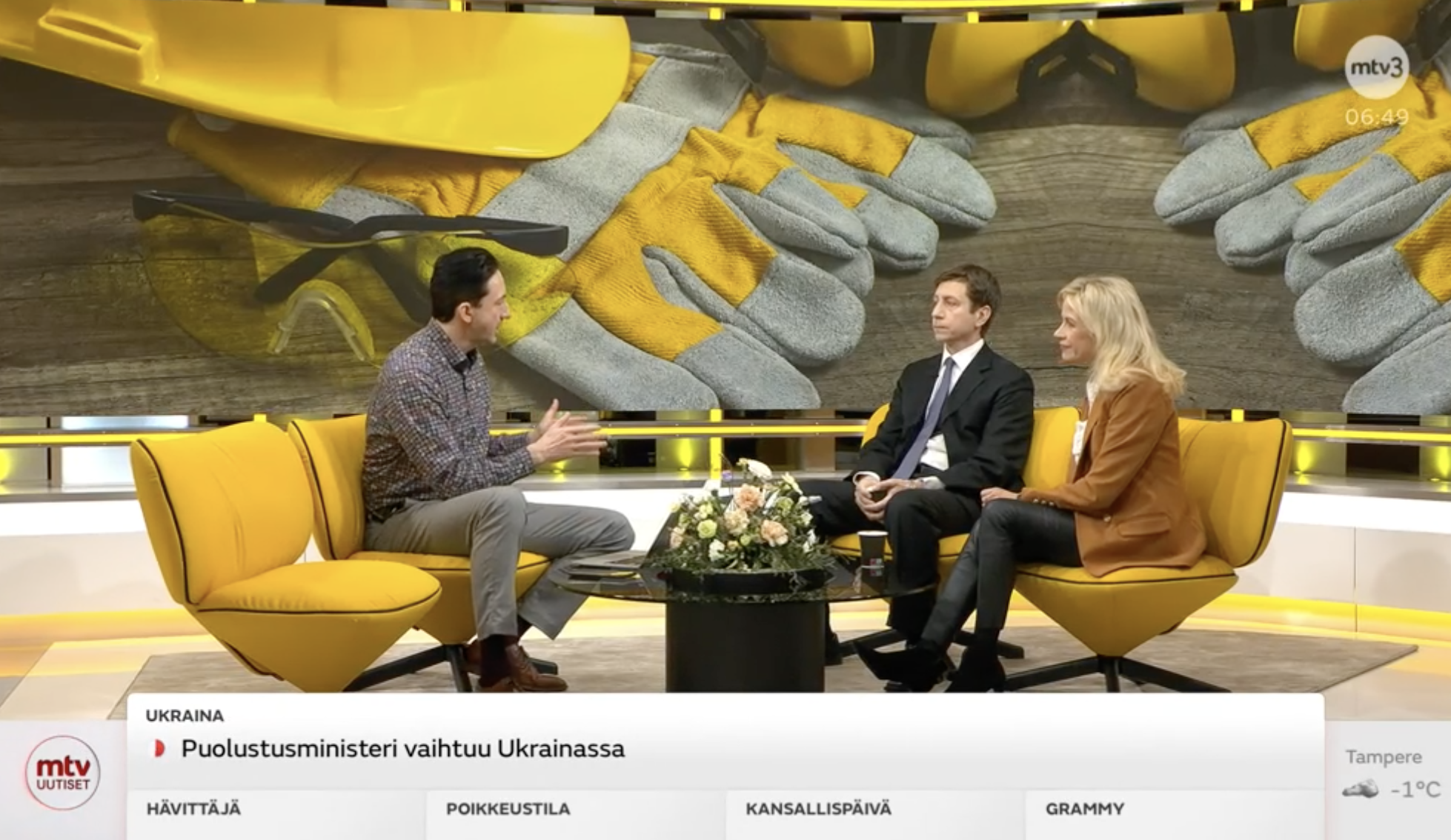
On Monday, we saw the stances of the radical-right Perussuomalaiset (PS)* and National Coalition Party’s (Kokoomus) views on the role of labor immigration outside the EU. On MTV, PS’ Sakari Puisto faced off with Pia Kauma of Kokoomus, while on A-studio, Leena Meri of the PS debated with Elina Valtonen.

It is depressing to watch the debate about Finland’s need to attract labor migrants from outside the EU. The adjectives used to describe them are insulting: social welfare migrants and low-income migrants who will accept low pay and any work offered.

It is a bad standing point: Why would I want to come to a country that wishes me so much harm and intends to relegate me to second-class and marginal status?

The most surreal debate between the two shows was on MTV.

While there was a difference of opinion on labor migrants between Puisto and Kauma, both favored limiting or excluding newcomers from getting social welfare.


The debate between PS MP Sakari Puisto and Pia Kauma was surreal. Puisto spoke against migrants from outside the EU, and Kauma who is in favor. Both were, however, of the same opinion about the social equality of such migrants. Both would take away their rights, so they can’t use social welfare. Would I move to a country that sees me as a second-class member of society? Source: MTV

When such a suggestion was made, the host didn’t even bother to ask if excluding non-citizens from getting social welfare was unconstitutional, which it is.

Kauma strongly criticized PS leader Riikka Purra’s statements against labor immigration outside the EU.

Continue reading “Kokoomus and Perussuomalaiset: Two different views on labor immigration”

Dominic-Savior Chukwu: How to avoid migrant exploitation in the Finnish labor market

Posted on May 19, 2013 by Migrant Tales

321023_2413730507117_649699460_n


Dominic-Savior Chukwu’s BA thesis addresses some of the challenges that immigrants face when employed at a Finnish company. Apart from practical problems like understanding  the work contract that he or she will sign, some immigrants are apprehensive about demanding their rights. 

Chukwu’s states that some migrants come from countries where there are inadequate labor laws that don’t defend workers‘ rights or if they exist they are not enforced adequately.  ”Some prefer to be quiet for fear that they’ll get fired if they demand their rights,” he said.”This leaves many vulnerable to exploitation by the employer.”

According to Chukwu, who is a native of Nigeria, joining a union is one way of overcoming some difficulties at work.

Chukwu believes that another problem that some immigrants face at work is being treated as second-class employees.

”Since you are a foreigner, your opinion doesn’t count or doesn’t count as much as that of a white Finn,” he said. ”This is a very stressful situation for many migrants since it doesn’t empower them but encourages them instead to be apathetic of their rights.”

Chukwu’s thesis, Experiences of Labor Exploitation – Case study of some male migrant workers in Finnish facility service industries, highlights some of the challenges that immigrants face in the labor market.

The main conclusions of the thesis are:

  • Langauge barrier/inadequate language skills and lack of opportunities to learn Finnish or Swedish;
  • Ignorance of employees’ rights and law legislation/ignorance plays a big role in migrant workers exploitation by employers;
  • Fear of retribution from the employers/migrant workers fear retribution and therefore prefer not demand their rights;
  • Oversight of the authorities to the plight of migrant workers/authorities are not paying close enough attention to protect the well-being of migrant workers.

Chukwu’s thesis can be read here.

Intolerance is a wonderful weapon to exploit newcomers and strike a blow to organized labor

Posted on April 25, 2013 by Migrant Tales

There’s little chance to stop Finland from becoming an ever-growing class society or that its suspicion of immigrants and visible minorities will lessen anytime soon. Our greater intolerance of other groups won’t only be fueled by our prejudice and loathing, but by Finland’s “other” that will be more than happy to oblige.

Some immigrants  and visible minorities will gladly accept the societal pecking order of things just like some minorities in other countries have.

The key, however, is not to become a Finnish Uncle Tom (Tuomo-setä) but to build on who you are. Learn your history, be proud of who you are. If you become too white, you’ll be trapped, possibly for generations, and become part of Finland’s underclass indefinitely.

Finland’s Romany minority, who have lived in this country for 500 years and number 10,000, are a stark reminder of what happens to a group that refuses to become white. A great part of their history is marred by outright social exclusion and discrimination of the worse kind.

Kuvankaappaus 2013-4-26 kello 13.13.45

Juhana Vartianen and Jarkko Kiander spoke of the need of bringing more immigrant labor to Finland.  Read full story here.

Our ignorance and lack of resolve to tackle intolerance will eventually cost our society dearly. They will be hard blows to Nordic values such as social equality, justified and encouraged by our collective and individual greed. We opportunistically believe that by allowing intolerance, and the exploitation of immigrants and visible minorities, will allow us to eat and have our Nordic social welfare cake too.

It’s all self-deception and a tricky sales job by those who are keen to streamline people’s rights by lowering salaries, cutting social services and trimming rights.

In a news story published by YLE about  Juhana Vartiainen, an economist who wants to shake Finland off its social welfare foundations, gave his usual recipe on how to use our workforce more effectively.

Apart from the usual make-work-more-attractive-option-than-unemployment benefits, raising the retirement age and shorter study periods at universities, he  spoke of the govenment’s plan to bring 200,000 immigrants to Finland by 2019 to plug our labor shortage.

The most interesting part of the story, however, were quotes by pension insurance group Ilmarinen CFO Jarkko Kiander concerning the role of these new immigrants.

Apart from admitting that menial work could be conveniently handed to immigrants and visible minorities, he estimated that some 100,000 immigrants could be employed in these low-paying jobs that white Finns don’t want to do.

When asked about immigrants getting paid lower salaries than white Finns, he responds: ”This is the one of the economic logics behind immigration, that immigrants are cheap labor and keep salaries in check.”

In one sentence Kiander sheds light on not only what he thinks about immigrants and their integration as equals in Finland, but his contempt for them as well as for Finland’s working class. His only aim is profit for Finnish industry. Immigrants offer a wonderful weapon for him to strike a hard blow to organized labor.

People like Kiander have learned well the lessons of intolerance and how it can be used effectively for profit. Too many countries in the world exploit cheap labor in order to fatten the wallets of their owners and to attain a competitive edge over other rival companies and countries.

One matter that he hasn’t foreseen, however, is that people have the ability to organize and fight back.

As Finland permits, like it does now, the social exclusion and exploitation of immigrants in some cases with the blessings of the unions,  we’ll end up shooting ourselves in the leg.

But this is what Ilmarinen’s CFO as well as many other large business leaders aim to do. Who cares about our social welfare society as long as they get their fat paychecks at the end of the month and juicy annual bonuses.


Migrant Rights’ Network of the UK: The Elephant in the Workplace – Why it’s time we talked about migration and labour exploitation

Posted on May 22, 2012 by Migrant Tales


Dr Sam Scott*

Certainly, it is rare for evidence of worker mistreatment to come to the fore but this does not mean, in our opinion, that it is ipso facto rare. Partly, the challenge is one of identifying workplace exploitation and persuading victims to come forward with evidence. Partly, it is about how as a society we define workplace exploitation, how it is legislated against, and how this legislation is policed. 

Trade Union membership is as low today as it was in the 1940s. Amidst the various worker protests against austerity measures, it has tended to be white-collar professionals, principally in the public services, who have been able to exert collective will, via union or professional group membership, in an attempt to protect eroding rights. Those in vulnerable employment in the UK – an estimated 2 million workers according to the TUC – do not to join unions in the main and so struggle to protect themselves from exploitative employers.

The cleaners, farm workers, production line operatives, au pairs, domestic servants, car washers, waiters and waitresses, the list could go on, are largely cast adrift, atomised and struggling to carve out a living at the bottom of the UK labour market. Their labour is not on the label, is not even evident when we look behind the label, and, in fact, has largely been written out of the social history of the late twentieth and early twenty-first century. The invisible hand of the market is now the low-wage worker and, interestingly, since the mid-1990s, this hand has become increasing migrant in origin.

New research funded by the Joseph Rowntree Foundation identifies this link between workplace exploitation and immigration via a case study of the UK food industry. Using evidence from 62 migrant workers (mainly Polish, Chinese, Latvian and Lithuanian) spread across five areas of the UK (London, Liverpool, South-West England, Lincolnshire and east-Central Scotland) the report highlights why migrants are at particular risk of exploitation. Specifically, it is their constrained economic circumstances, limited English, widespread use of tied housing, and reliance on gangmasters that renders migrants vulnerable to severe forms of exploitation: what we term ‘forced labour’.

If I had known English, I would have gone to find a new job, I would have looked for anything, but it was the beginning here and I really did not have any other options. (Sally, woman, 32, Polish)

What do we mean by forced labour? Well the JRF report identifies 14 ‘practices’ that we consider to be part of the forced labour crime (forced labour has been a criminal offence since 2009). Some of the most noteworthy practices are as follows:

  • Upfront fees/debt bondage­ – many migrants paid fees to gangmasters to travel to the UK and to secure work. This often indebted migrants and/or led them into exploitative work and housing.
  • Productivity targets and surveillance –  targets and monitoring gave workers little opportunity for social interaction at work. Pressure was intense: “It was completely crazy, rushing, shouting constantly … they can stand behind your back with a stopwatch and see how many chickens you are packing per minute … Here you are a robot, a machine.” (Izabela, woman, 44, Polish)
  • Non-/under-payment of wages – this was remarkably common, and migrants seemed unable to get back pay they were owed. A popular tactic was to deduct a few hours’ pay each week: “The boss was very, very stingy. When I worked ten hours, he would note it down as six or seven hours. Always a few hours less … Every week when the payday came, we had to argue with the boss … ”. (Li Xia, man, 42, Chinese)
  • Underwork/indebtedness – LMIs recruited even when work was scarce, because they charged workers fees for finding work, however limited, and/or for travel, accommodation and other bills. The more workers they had, the more charges they could levy; it could be in LMIs’ interests to provide workers with just enough hours to pay these charges. This left migrants with no spare money to escape their exploiters, furthering dependency.
  • Tied Accommodation – poor accommodation was often linked to exploitation. Interviewees talked of overcrowded (e.g. five people in one caravan), sub-standard, overpriced housing. “I was shocked … the caravan is for 5 people … One of the girls sleeps in the living room …” (Victoria, woman, 21, Bulgarian).

The research clearly shows that the bottom of the labour market can be a truly inhospitable place. Fear and a sense of powerlessness are pervasive and there is no collective union engagement to alleviate this and push for improvements, quite the contrary. The question then is whether we could do more to prevent forced labour and more to empower low-wage migrant workers in an attempt to halt any decline in workplace standards?

A starting point may be to think about why news headlines concerned with improving workers’ rights are so rare and why the issue of tackling workplace exploitation is so infrequently raised in policy speeches? Regrettably, it usually takes a shocking event – i.e. death at work – for people to take note. However, the reality for most victims is that forced labour is about everyday and often quite incremental forms of exploitation that only collectively and cumulatively combine to constitute a criminal act. The elephant in the workplace is not, in other words, as simple as might be implied when we glimpse its occasional monolithic shadow.

*Dr Sam Scott is an associate lecturer at the Department of Geography, University of Exeter. He has been researching international migration for the past decade and has published work on both skilled and low-wage labour migration, mainly from within the European Union. His latest research – with Professor Gary Craig (Wilbeforce Institute) and Dr Alistair Geddes (University of Dundee) – looks at experiences of forced labour in the UK food industry.

Read original story here.

This piece was reprinted by Migrant Tales with permission.
What should an immigrant do if he cannot find work in Finland?

Posted on January 15, 2012 by Migrant Tales

By Enrique Tessieri

What should you do if you live in Finland and cannot find employment? The lucky ones can move to another country but for many it is a crude dead-end street lined with little hope: fragmented work life, lower salary than average, health problems and, worse, discrimination that will discourage you to integrate.  

There is an interesting article in Sunday’s Helsingin Sanomat on page A8 about a U.S. citizen, Ryan Savage, who is married to a Finn.

“USAmerican Ryan Savage is a dream come true for the immigration officials:  university graduate that moved with his spouse to Finland. He speaks the most widely spoken language in the world [English]. The problem is that Savage cannot find any work in Finland.”

Helsingin Sanomat claims that immigrant men make on average 10,000 euros less than Finnish men, while the difference [6,000 euros] is less between immigrant and Finnish women.

Other sad realities about being an immigrant in this country are that you have a greater chance of living in poverty than Finnish families and have twice as greater chance of being attacked by another person than a Finn. One study showed that immigrant men have 50% more ear ailments than Finnish males.

If the above is true, we should be especially concerned and critical about those parties that play down the role prejudice and racism in this country. All these social and physical symptoms mentioned above are indirectly or directly related to social ills like exclusion.

But if a politician, political party or society deny that racism is not a big social problem in this country and that everything is fine, it is effectively telling you that they will not do anything to tackle the problems of our ever-growing immigrant community.  Thus you do not exist. Since you don’t exist there is no reason to even worry never mind begin addressing your problems.

There are many ways of confronting the apathy or denial of the majority concerning our community: get involved in a political party, form a social movement, start up a blog like Migrant Tales or Facebook page like My Finland is International, or simply leave Finland for greener pastures.

Everyone isn’t that fortunate that he or she can just move to anther country. Some are forced to face that depressing  music that eats away at your self-esteem and keeps you from realizing your full potential in this society.

A society like ours that claims to be for social justice and equality cannot accept prejudice, exclusion and inequality in any form.

While first-generation immigrants should raise their voices in Finland and demand changes, it is their children  that are our hope.

Some of them have seen enough of how their parents have been excluded from the labor market and are getting the short end of society’s stick.

They, rightfully, have a valid gripe and should demand far better than what their parents got.

It’s time to organize, be and think proactively.

BBC: Eastern European migrants ‘add £5bn’ to Britain’s GDP

Posted on May 1, 2011 by Migrant Tales

Comment:   Immigrants from eastern Europe that moved to the UK have given an injection of £5bn (5.64 billion euros) to the economy during 2004-09, according to the BBC citing a report by the National Institute for Economic and Social Research (NIESR).

The NIESR report states that countries that imposed restrictions on eastern workers saw economic growth reduced.

The BBC writes:”During the same period Britain’s GDP grew by £98bn, or 7.7%, and the NIESR study says that a 5% share of the £98bn can be put down to the migrants. The NIESR says the UK probably benefited from the restrictions imposed by other member states. It says Germany will suffer a “permanent scar” on its level of output, with its GDP reduced by between 0.1 and 0.5%.”

Migration Watch UK, an anti-immigration lobby group, said bringing in so many labor migrants was a “poor deal” for the UK.

Why do you think Finland has attracted so few skilled workers to the country?

____________

Immigrants from eastern Europe have added almost £5bn (5.64 billion euros) to Britain’s economy since 2004, according to a report.

Read whole story.

MNR: Why do migrants leave Scotland?

Posted on April 11, 2011 by Migrant Tales

Comment: This story, published by Migrants’ Rights Network, caught my attention due to the ongoing debate in Finland concerning immigrants and immigration. What about if we turned the question around and asked why do migrants leave Finland or do not want to move here?

Our country has one of the lowest number of immigrants with respect to the whole population. In 2010 it totalled 2.9% or a mere 155,705 newcomers. This, I believe, isn’t a coincidence. If we look at the ongoing debate on immigrants and public opinion concerning immigrants and refugees in Finland, part of the question is answered.

Taulant Guma, a PhD student at Glasgow University, gives an explanation why Central and Eastern European (CEE) immigrants are leaving instead of staying: “Certainly, migrants, wherever they are, often experience difficulties in terms of finding better jobs and moving up the career ladder. It seems, however, that these difficulties and challenges are more pronounced in the Scottish labour market, which means that the risk of CEE migrants ‘getting stuck’ in unskilled and low paid work is significantly higher than in the UK.”

In my opinion one of the biggest challenges Finland has is attracting skilled labor to move and remain here. With present negative attitudes and the rise of parties like the True Finns, it’s pretty clear that matters are going to get worse before they improve.

This is really unfair to Finland because there are many people who do not agree with the views of some anti-immigration politicians and other people who don’t even know the difference between an immigrant and a refugee.

Do you agree?

____________

The current immigration debates in the UK seem to be increasingly narrowed down to questions such as ‘Why do migrants come to the UK?’, ‘What do migrants costs the UK taxpayer?’ etc, often raised with a tone of disapproval or of mistrust regarding the contributions, motives, and plans of migrants. Interestingly, during various meetings and seminars on migration issues I attended in Scotland over the last year, a different set of questions seemed to take more centre stage: ‘Why do migrants leave Scotland?’ or ‘What can be done to keep them here?’

Read whole story.

On The Road To Success blog: Finland has not ratified the UN Convention of Migrant Workers Rights

Posted on May 9, 2010 by Migrant Tales

Our friend Zuzeeko of On The Road To Success blog has published an interesting rticle on the impact of Finland not ratifying the UN Convention on Migrant Workers Rights and how this may affect immigrant workers in the country.

Writes Zuzeeko: Ratification would mean that Finland has willingly assumed the obligations laid down in the Convention and can be held liable under international law for failure to fulfill its obligations. Besides the obligation to respect the rights of migrant workers enshrined in the Convention, Finland would be obligated to submit reports to the Committee on the Protection of the Rights of All Migrant Workers and Members of their Families (CMW), as stipulated in Article 73 of the Convention. Finland would be expected to report on legislative, judicial, administrative and “other measures” taken to guarantee the rights of migrant workers and members of their families. The Committee would examine the reports and make recommendations to Finland – on what should be done to adequately protect migrant workers within its borders.

In other words, and as Zuzeeko states that signing such an agreement by Finland will have a positive impact, could explain the reason by some of the problems that immigrants face in the Finnish labor market.

Thank you Zuzeeko for another eye-opening article!

Employment of immigrants in Sweden

Posted on April 9, 2010 by Migrant Tales

Here is a neat article in Zuzeeko’s blog about employment of immigrants in Sweden. According to the article, 41% of the cleaners  are immigrants.

It would be interesting to know what the unemployment rate among immigrants in that Nordic country.

A question: If Sweden has had lots of immigrants since the 1970s, how many generations will it take for Swedes to accept immigrants? What does this say about Finland, where we are a couple of generations behind Sweden on the home immigration front?

Finland’s challenge in the new decade

Posted on December 30, 2009 by Migrant Tales

The new decade will either make or break Finland. If we are not successful at attracting labor immigrants to our country to plug the ever-growing number of pensioners leaving the labor market during the 2010s, the first one to feel the impact will be the economy.

Due to the recession and age-old taboos of Finnish nationalism, some Finns would rather stick their heads in the sand than face the demographic challenges ahead. According to Statistics Finland,Finland´s population is graying rapidly. As more people retire from the workforce the more strains it will place on public finances and our society.

How many? The number of pensioners will rise from the present 17% (905,000 persons who are older than 65 years) to 27% by 2040 and 29% (1.79 million) by 2060. Better medicare will fuel this trend. Persons over 85 years in Finland will rise from 2% (108,000) to 7% (463,000).

Any sensible person understands that for a country to have a successful and dynamic immigration policy a general acceptance by society is paramount. Does Finland have a favorable attitude towards immigrants?  The jury is still out on this question since Finland’s foreign population is still too small to make any clear assessment. However, if we look at immigrant unemployment figures, which are about two times higher than the national average, Finland does not appear very immigrant-friendly.

One of the matters that we will have overcome as a nation if we want to attract new inhabitants is offer opportunities to attain the Finnish dream.The same matters that makes us want to live here must rub off on those who may choose to move here.

Despite our successful welfare society founded on liberal democratic values, the weight of our history continues to muddy our view of the outside world and of outsiders. It has made us liberal in our perceptions of society but also extremely conservative because we have always felt that we are in danger of being devoured by a foreign power.

Knowledge of our history is vital but more important is how we see the future.

Read more about documentary film
Read more

Recent Posts

  • Finland’s tabloids Iltalehti and Ilta-Sanomat are the pits
  • Riikka Purra’s Dr Jekyll and Mr Hyde mask
  • Double standards
  • Perussuomalaiset: Uusi logo, sama vanha juttu
  • Taco Trump

Recent Comments

  1. Absolutely Socking: Racist Finnish Facebook group against human rights gets flooded with socks on Musta Barbaari’s mother and sister charged by the police in “ethnic profiling” case
  2. Ilkka Nuotio on Pekka Myrskylä: “Tilastot kertovat toista kuin poliittinen keskustelu”
  3. Genrih Soinkara on The war in Ukraine and the Russian-Finnish border crisis are showing Finland’s ugly side
  4. Ahti Tolvanen on Comment by Ahti Tolvanen on the Helsinki +50 conference
  5. Angel Barrientos on Angel Barrientos is one of the kind beacons of Finland’s Chilean community

Archives

  • June 2026
  • May 2026
  • April 2026
  • March 2026
  • February 2026
  • January 2026
  • December 2025
  • November 2025
  • October 2025
  • September 2025
  • August 2025
  • July 2025
  • June 2025
  • May 2025
  • April 2025
  • March 2025
  • February 2025
  • January 2025
  • December 2024
  • November 2024
  • October 2024
  • September 2024
  • August 2024
  • July 2024
  • June 2024
  • May 2024
  • April 2024
  • March 2024
  • February 2024
  • January 2024
  • December 2023
  • November 2023
  • October 2023
  • September 2023
  • August 2023
  • July 2023
  • June 2023
  • May 2023
  • April 2023
  • March 2023
  • February 2023
  • January 2023
  • December 2022
  • November 2022
  • October 2022
  • September 2022
  • August 2022
  • July 2022
  • June 2022
  • May 2022
  • April 2022
  • March 2022
  • February 2022
  • January 2022
  • December 2021
  • November 2021
  • October 2021
  • September 2021
  • August 2021
  • July 2021
  • June 2021
  • May 2021
  • April 2021
  • March 2021
  • February 2021
  • January 2021
  • December 2020
  • November 2020
  • October 2020
  • September 2020
  • August 2020
  • July 2020
  • June 2020
  • May 2020
  • April 2020
  • March 2020
  • February 2020
  • January 2020
  • December 2019
  • November 2019
  • October 2019
  • September 2019
  • August 2019
  • July 2019
  • June 2019
  • May 2019
  • April 2019
  • March 2019
  • February 2019
  • January 2019
  • December 2018
  • November 2018
  • October 2018
  • September 2018
  • August 2018
  • July 2018
  • June 2018
  • May 2018
  • April 2018
  • March 2018
  • February 2018
  • January 2018
  • December 2017
  • November 2017
  • October 2017
  • September 2017
  • August 2017
  • July 2017
  • June 2017
  • May 2017
  • April 2017
  • March 2017
  • February 2017
  • January 2017
  • December 2016
  • November 2016
  • October 2016
  • September 2016
  • August 2016
  • July 2016
  • June 2016
  • May 2016
  • April 2016
  • March 2016
  • February 2016
  • January 2016
  • December 2015
  • November 2015
  • October 2015
  • September 2015
  • August 2015
  • July 2015
  • June 2015
  • May 2015
  • April 2015
  • March 2015
  • February 2015
  • January 2015
  • December 2014
  • November 2014
  • October 2014
  • September 2014
  • August 2014
  • July 2014
  • June 2014
  • May 2014
  • April 2014
  • March 2014
  • February 2014
  • January 2014
  • December 2013
  • November 2013
  • October 2013
  • September 2013
  • August 2013
  • July 2013
  • June 2013
  • May 2013
  • April 2013
  • March 2013
  • February 2013
  • January 2013
  • December 2012
  • November 2012
  • October 2012
  • September 2012
  • August 2012
  • July 2012
  • June 2012
  • May 2012
  • April 2012
  • March 2012
  • February 2012
  • January 2012
  • December 2011
  • November 2011
  • October 2011
  • September 2011
  • August 2011
  • July 2011
  • June 2011
  • May 2011
  • April 2011
  • March 2011
  • February 2011
  • January 2011
  • December 2010
  • November 2010
  • October 2010
  • September 2010
  • August 2010
  • July 2010
  • June 2010
  • May 2010
  • April 2010
  • March 2010
  • February 2010
  • January 2010
  • December 2009
  • November 2009
  • October 2009
  • September 2009
  • August 2009
  • July 2009
  • December 2008
  • November 2008
  • October 2008
  • September 2008
  • August 2008
  • July 2008
  • June 2008
  • May 2008
  • April 2008
  • March 2008
  • February 2008
  • January 2008
  • November 2007
  • October 2007
  • September 2007
  • August 2007
  • July 2007
  • June 2007
  • May 2007

Categories

  • ?? Gia L?c
  • ????? ?????? ????? ???????? ?? ??????
  • ???????
  • @HerraAhmed
  • @mondepasrond
  • @nohatefinland
  • @oula_silver
  • @Varathas
  • A Pakistani family
  • äärioikeisto
  • Abbas Bahmanpour
  • Abdi Muhis
  • Abdirahim Hussein Mohamed
  • Abdirahim Husu Hussein
  • Abdirisak Mahamed
  • About Migrant Tales
  • activism
  • Adam Al-Sawad
  • Adel Abidin
  • Afrofinland
  • Ahmed IJ
  • Ahti Tolvanen
  • Aino Pennanen
  • Aisha Maniar
  • Alan Ali
  • Alan Anstead
  • Alejandro Díaz Ortiz
  • Alekey Bulavsev
  • Aleksander Hemon
  • Aleksanterinliitto
  • Aleksanterinliitto ry
  • Aleksanterinliitto ry:n hallitus
  • Alex Alex
  • Alex Mckie
  • Alexander Nix
  • Alexandra Ayse Albayrak
  • Alexis Neuberg
  • Ali Asaad Hasan Alzuhairi
  • Ali Hossein Mir Ali
  • Ali Rashid
  • Ali Sagal Abdikarim
  • Alina Tsui
  • Aline Müller
  • All categories
  • Aman Heidari
  • Amiirah Salleh-Hoddin & Jana Turk
  • Amin A. Alem
  • Amir Zuhairi
  • Amkelwa Mbekeni
  • Ana María Gutiérrez Sorainen
  • Anachoma
  • Anders Adlecreutz
  • Angeliina Koskinen
  • Anna De Mutiis
  • Anna María Gutiérrez Sorainen
  • Anna-Kaisa Kuusisto ja Jaakko Tuominen
  • Annastiina Kallius
  • Anneli Juise Friman Lindeman
  • Announcement
  • Anonymous
  • Antero Leitzinger
  • anti-black racism
  • Anti-Hate Crime Organisation Finland
  • Anudari Boldbaatar
  • Arshiya Nasser
  • Aspergers Syndrome
  • Asylum Corner
  • Asylum seeker 406
  • Athena Griffin and Joe Feagin
  • Autism
  • Avaaz.org
  • Awale Olad
  • Ayan Said Mohamed
  • AYY
  • Barachiel
  • Bashy Quraishy
  • Beatrice Kabutakapua
  • Beri Jamal
  • Beri Jamal and Enrique Tessieri
  • Bertolt Brecht
  • Boiata
  • Boodi Kabbani
  • Bruno Gronow
  • Carmen Pekkarinen
  • Çelen Oben and Sheila Riikonen
  • Chiara Costa-Virtanen
  • Chiara Costa-Virtanen
  • Chiara Sorbello
  • Christian Thibault
  • Christopher Wylie
  • Clara Dublanc
  • Dana
  • Daniel Malpica
  • Danilo Canguçu
  • David Papineau
  • David Schneider
  • Dexter He
  • Don Flynn
  • Dr Masoud Kamali
  • Dr. Faith Mkwesha
  • Dr. Theodoros Fouskas
  • Edna Chun
  • Eeva Kilpi
  • Emanuela Susheela
  • En castellano
  • ENAR
  • Enrique
  • Enrique Tessieri
  • Enrique Tessieri & Raghad Mchawh
  • Enrique Tessieri & Yahya Rouissi
  • Enrique Tessieri and Muhammed Shire
  • Enrique Tessieri and Sira Moksi
  • Enrique Tessieri and Tom Vandenbosch
  • Enrique Tessieri and Wael Che
  • Enrique Tessieri and Yahya Rouissi
  • Enrique Tessieri and Zimema Mhone
  • Epäluottamusmies
  • EU
  • Europe
  • European Islamophobia Report
  • European Islamophobia Report 2019,
  • European Union
  • Eve Kyntäjä
  • Ezequiel Caldeiro
  • Facebook
  • Fadumo Dayib
  • Faisa Kahiye
  • Farhad Manjoo
  • Fasismi
  • Finland
  • Fizza Qureshi
  • Flyktingar och asyl
  • Foreign Student
  • Fozia Mir-Ali
  • Frances Webber
  • Frida Selim
  • Gareth Rice
  • Ghyslain Vedeaux
  • Global Art Point
  • Great Replacement
  • Habiba Ali
  • Hami Bahadori
  • Hami Bahdori
  • Hamid
  • Hamid Alsaameere
  • Hamid Bahdori
  • Handshake
  • Harmit Athwal
  • Hassan Abdi Ali
  • Hassan Muhumud
  • Heikki Huttunen
  • Heikki Wilenius
  • Helsingin Sanomat
  • Henning van der Hoeven
  • Henrika Mälmsröm
  • Hser Hser
  • Hser Hser ja Mustafa Isman
  • Husein Muhammed
  • Hussain Kazemian
  • Hussain Kazmenian
  • Ibrahim Khan
  • Ida
  • Ignacio Pérez Pérez
  • Iise Ali Hassan
  • Ilari Kaila & Tuomas Kaila
  • Imam Ka
  • inside-an-airport
  • Institute of Race Relations
  • Iraqi asylum seeker
  • IRR European News Team
  • IRR News Team
  • Islamic Society of Norhern FInland
  • Islamic Society of Northern Finland
  • Islamophobia
  • Jacobinmag.com
  • Jallow Momodou
  • Jan Holmberg
  • Jane Elliott
  • Jani Mäkelä
  • Jari Luoto
  • Jari Taponen
  • Jegor Nazarov
  • Jenni Stammeier
  • Jenny Bourne
  • Jessie Daniels
  • Joe Davidow
  • Johannes Koski
  • John D. Foster
  • John Grayson
  • John Marriott
  • Jon Burnett
  • Jorma Härkönen
  • Jos Schuurmans
  • José León Toro Mejías
  • Josue Tumayine
  • Jouni Karnasaari
  • Juan Camilo
  • Jukka Eräkare
  • Julian Abagond
  • Julie Pascoet
  • Jussi Halla-aho
  • Jussi Hallla-aho
  • Jussi Jalonen
  • JusticeDemon
  • Kadar Gelle
  • Kaksoiskansalaisuus
  • Kansainvälinen Mikkeli
  • Kansainvälinen Mikkeli ry
  • Katherine Tonkiss
  • Kati Lepistö
  • Kati van der Hoeven-Lepistö
  • Katie Bell
  • Kättely
  • Kerstin Ögård
  • Keshia Fredua-Mensah & Jamie Schearer
  • Khadidiatou Sylla
  • Khadra Abdirazak Sugulle
  • Kiihotus kansanryhmää vastaan
  • Kirsi Crowley
  • Koko Hubara
  • Kristiina Toivikko
  • Kubra Amini
  • KuRI
  • La Colectiva
  • La incitación al odio
  • Laura Huhtasaari
  • Lauri Finér
  • Leif Hagert
  • Léo Custódio
  • Leo Honka
  • Leontios Christodoulou
  • Lessie Branch
  • Lex Gaudius
  • Leyes de Finlandia
  • Liikkukaa!
  • Linda Hyökki
  • Liz Fekete
  • M. Blanc
  • Maarit Snellman
  • Mahad Sheikh Musse
  • Maija Vilkkumaa
  • Malmin Kebab Pizzeria Port Arthur
  • Marcell Lorincz
  • Mari Aaltola
  • María Paz López
  • Maria Rittis Ikola
  • Maria Tjader
  • Marja-Liisa Tolvanen
  • Mark
  • Markku Heikkinen
  • Marshall Niles
  • Martin Al-Laji
  • Maryan Siyad
  • Matt Carr
  • Mauricio Farah Gebara
  • Media Monitoring Group of Finland
  • Micah J. Christian
  • Michael McEachrane
  • Michele Levoy
  • Michelle Kaila
  • Migrant Tales
  • Migrant Tales Literary
  • Migrantes News
  • Migrants' Rights Network
  • MigriLeaks
  • Mikko Kapanen
  • Miriam Attias and Camila Haavisto
  • Mohamed Adan
  • Mohammad Javid
  • Mohammad M.
  • Monikulttuurisuus
  • Monisha Bhatia and Victoria Canning
  • Mor Ndiaye
  • Muh'ed
  • Muhamed Abdimajed Murshid
  • Muhammed Shire
  • Muhammed Shire and Enrique Tessieri
  • Muhis Azizi
  • Musimenta Dansila
  • Muslimiviha
  • Musulmanes
  • Namir al-Azzawi
  • Natsismi
  • Neurodiversity
  • New Women Connectors
  • Nils Muižnieks
  • No Labels No Walls
  • Noel Dandes
  • Nuor Dawood
  • Omar Khan
  • Otavanmedia
  • Oula Silvennoinen
  • Paco Diop
  • Pakistani family
  • Pentti Stranius
  • Perussuomalaiset
  • perustuslaki
  • Petra Laiti
  • Petri Cederlöf
  • Pia Grochowski
  • Podcast-lukija Bea Bergholm
  • Pohjois – Suomen Islamilainen Yhdyskunta
  • Pohjois Suomen Islamilainen Yhyskunta
  • Polina Kopylova
  • Race Files
  • racism
  • Racism Review
  • Raghad Mchawh
  • Ranska
  • Rashid H. and Migrant Tales
  • Rasismi
  • Raul Perez
  • Rebecka Holm
  • Reem Abu-Hayyeh
  • Refugees
  • Reija Härkönen
  • Remiel
  • Reza Nasri
  • Richard Gresswell
  • Riikka Purra
  • Risto Laakkonen
  • Rita Chahda
  • Ritva Kondi
  • Robito Ibrahim
  • Roble Bashir
  • Rockhaya Sylla
  • Rodolfo Walsh
  • Roger Casale
  • Rostam Atai
  • Roxana Crisólogo Correa
  • Ruth Grove-White
  • Ruth Waweru-Folabit
  • S-worldview
  • Sadio Ali Nuur
  • Sami Rusanen
  • Sandhu Bhamra
  • Sara de Jong
  • Sarah Crowther
  • Sari Alhariri
  • Sarkawt Khalil
  • Sasu
  • Scot Nakagawa
  • Shabana Ahmadzai
  • Shada Islam
  • Sharon Chang blogs
  • Shenita Ann McLean
  • Shirlene Green Newball
  • Sini Savolainen
  • Sira Moksi
  • Sonia K.
  • Sonia Maria Koo
  • Steverp
  • Stop Deportations
  • Suldaan Said Ahmed
  • Suomen mediaseurantakollektiivi
  • Suomen Muslimifoorumi ry
  • Suomen viharikosvastainen yhdistys
  • Suomen viharikosvastainen yhdistys ry
  • Suomi
  • Supermen
  • Susannah
  • Suva
  • Syrjintä
  • Talous
  • Tapio Tuomala
  • Taw Reh
  • Teivo Teivainen
  • The Daily Show
  • The Heino
  • The Supermen
  • Thomas Elfgren
  • Thulfiqar Abdulkarim
  • Tim McGettigan
  • Tino Singh
  • Tito Moustafa Sliem
  • Tobias Hübinette and L. Janelle Dance
  • Transport
  • Trica Danielle Keaton
  • Trilce Garcia
  • Trish Pääkkönen
  • Trish Pääkkönen and Enrique Tessieri
  • Tuulia Reponen
  • Uncategorized
  • UNITED
  • University of Eastern Finland
  • Uyi Osazee
  • Väkivalta
  • Vapaa Liikkuvuus
  • Venla-Sofia Saariaho
  • Vieraskynä
  • W. Che
  • W. Che an Enrique Tessieri
  • Wael Ch.
  • Wan Wei
  • Women for Refugee Women
  • Xaan Kaafi Maxamed Xalane
  • Xassan Kaafi Maxamed Xalane
  • Xassan-Kaafi Mohamed Halane & Enrique Tessieri
  • Yahya Rouissi
  • Yasmin Yusuf
  • Yassen Ghaleb
  • Yle Puhe
  • Yuliet Tresa
  • Yve Shepherd
  • Zahra Khavari
  • Zaker
  • Zalina Ametova
  • Zamzam Ahmed Ali
  • Zeinab Amini ja Soheila Khavari
  • Zimema Mahone and Enrique Tessieri
  • Zimema Mhone
  • Zoila Forss Crespo Moreyra
  • ZT
  • Zulma Sierra
  • Zuzeeko Tegha Abeng
© 2026 Migrant tales | Powered by Minimalist Blog WordPress Theme