One of the biggest challenges and shortfalls of Finland’s integration law is that it is one-sided: Here is a list of things you must do to adapt to our society. This aim is very general, and if you start to study it closer, you will find no answers.
While language is essential, and Finland places a lot of emphasis on this, it is not your get-out-of-jail pass to live “integrated” and happily forever. As people of color and other minorities know, integration is a two-way street.
Considering the present political landscape and how much minorities influence the public policy of migrants and minorities, we are still a long way off and on the wrong path to achieve a society that respects difference.
If we look at school children in one of the world’s best education systems, why is it that some dark-skinned people are ashamed because they aren’t white enough? This fact forms part of a backdrop of discrimination and bullying at some Finnish schools.
If the learn-Finnish-and-you’re-integrated promise is misleading, so are many others spread by people who should know better.
“The best way to eliminate racism is to get people to know each other,” goes the affirmation. It is like the claim that traveling opens your eyes to the world.
After we do all these things, will we kiss and make up and live in a post-racial society?
Dead wrong.
What we are doing with the argument is what Robin DiAngelo points in her white fragility argument, or how to keep race off the table.
“All of those narratives function to get race off the table close the exploration [and] exempt the person from any further engagement and protect the racial hierarchy in a white position.”
When we mention things like more contact, traveling, learn the language, we are also taking race, or precisely the solution, off the table.
In order to tackle racism in society, we need to understand how we form part of the racist hierarchy and the role of power and privilege in such a social ill
Like traveling, contact with people can reinforce making you even more racist and hateful of other ethnic groups.
Traveling and living in different lands can have the same toxic impact and blunt our efforts to find credible solutions to winning racism.
Many times I wonder where people who work and assist asylum seekers and migrants get their cultural training. If you are a teacher, is it stated, for example, in the national curriculum, how cultural diversity is supposed to work in the classroom? If you are a social worker, how do you promote two-way adaption?
These are important questions. If we do not deal with them properly, our integration program, which claims to be a two-way process, is nothing more than assimilation (one-way adaption).
Another big challenge is the lack of proper oversight. Which body ensures that our teaching or guidance isn’t racist?
After many years of studying and observing integration policies and practices in Finland, I have yet to understand what two-way integration means in practice.
While there are teachers and culturally sensitive social workers who are a source of inspiration to some newcomers, there are still too many poor examples around.
These poor examples of cultural insensitivity and fueled by exceptionalism only serve to confuse and relegate migrants to take their roles as second-class members of society.
KOTOUTUMINEN #3
Below are four cases that are good examples of a toxic brew: disrespect for other cultures, Finnish exceptionalism, and white privilege.
Case 1: We are sitting at a table with middle-aged Muslim women who wear hijabs (veils). A counselor, who assists and counsels these people, comes to greet them and touches one woman on the shoulder. Those who work with Muslims understand that men do not touch women if the person isn’t his father or brother. Even so, it is the woman who decides if she wants to shake you hand or not.
Case 2: I was told that another counselor mocks a Muslim for noticing that pork was cooked in the same oven he was going to make food. Instead of expressing some understanding for the Muslim’s concern, the worker stated that the state that pays his social welfare eats pork so he’ better get used to it.
Case 3: On planning earlier this year a seminar on hate crime, a social worker brings up the topic of gay rights, which is important. All hate crimes, irrespective of their motives are important to debate publicly. However, the social worker insisted and showed more preference for hate crimes against gays because she probably believes that Muslims are homophobic. Some are, some aren’t. Ninety percent of all hate crimes in 2017 are due to a person’s ethnic or religious background compared with 4.9% due to sexual orientation.
Case 4: Muslims, who are still trying to make sense of their new home country, are given the usual tasa-arvo treatment that “in Finland, women have equal rights.” True in many respects and commendable, but they forget to tell them that our country is one of the most violent in the EU against women. While it is a good matter that women work and become independent, a person has a right to chose his or her lifestyle. If the person stays at home and takes care of her children, wears a hijab, or is an avid Muslim worshipper, these are the person’s personal choices and should be respected.
By forcing our culture and our exceptionalism on migrants, we do nothing more than retard the process of making such people active members of society.
Migrant Tales launches a new series called kotoutuminen, or integration. Readers are encouraged to send their personal experiences, comments on integration programs, and policies.
Kotoutuminen, or integration, functions in many ways like white fragility. It is a weapon and tool to subjugate newcomers and migrants who have lived in Finland for a long time.
Robin Diangelo describes as white fragility in her best-selling book, “White Fragility.” She states that most white people “are absolutely not receptive to finding out their impact on other people.” She also mentions that the reaction caused by white fragility is nothing fragile but hostile.
A good example of how even governments use kotoutuminen as a tool to control people is their hysterical and politically opportunistic response to the sexual assault cases of Oulu.
In this particular case, the former government of Prime Minister Juha Sipilä blamed the integration program for the sexual assault cases. Then Interior Minister Kai Mykkänen even threatened to give newcomers tests to determine if they are a danger to society.
Any sensible person can see that these types of political soundbites were made for public consumption before the April parliamentary elections. Aren’t people innocent before they are proven guilty? Isn’t Mykkänen’s disregard for this human right worrying?
The use of integration programs to control migrants is another example of why such programs face challenges.
Migrant Tales launches a new series called kotoutuminen, or integration. Readers are encouraged to send their personal experiences, comments on integration programs, and policies.
A suitable synonym for kotoutuminen is structural racism. In the process of integrating into Finnish society, newcomers are rarely taught the racism and discrimination they may face and, importantly, how to challenge such social ills.
Here is a good example of how stereotypes and prejudices of Finnish culture are taught to students at some integration classes. Yes, believe it or not, these types of silly cartoons are shown to newcomers to help them understand Finnish culture. Aren’t they learning to understand the cartoonist’s prejudices and stereotypes? The cartoonist is Karolina Korhonen.
In other words, kotoutuminen is another form of reinforcing structural racism and also Finnish exceptionalism. You are taught about how you are expected to adapt but never how to challenge those structures that may relegate you to second-class members of society.
The situation is further muddled that such classes or courses are usually taught by unqualified teachers who lack the tools to question their own prejudices and racism.
*Kotoutiminen is the Finnish term for integration.
Kuulin tänään 20.30 uutisissa sana kotiutuminen sijasta kotoutuminen. Ei ole ensimmäistä kertaa kun olen kuulut sanaa käytetty väärin toimittajan suusta.
Kotoutuminen on aika uusi sanaa suomen kielessä ja se tarkoitta prosessi jolloin maahanmuuttajia sopeutuu meidän yhteiskuntaan.
Kun olet armeijassa ja palaat siviiliin sitten kotiudut.
Katso 13.29 min. kohdasta uutislähetyksestä jossa toimittaja käyttää kotiutuminen sanaa.
Eilen olin yksi niistä yli 15 000 ihmisestä, jotka olivat Kansalaistorilla näyttämässä tukemme moninaiselle, monikulttuuriselle ja vihattomalle Suomelle. Me emme usko rasismiin emmekä salli rasismia fasismilla maustettuna tai ilman. Olemme asiassa todella yksimielisiä.
Joukosta löytyy monia kaltaisiani, jotka ovat itse mamuilleet muilla mailla tai muuten vaan työskennelleet monimuotoisissa ja monikulttuurisissa työskentely-ympäristöissä. Minä tiedän, millaista se on se integroituminen ja kotoutuminen.
Onkin todella hienoa, että Perussuomalaiset ovat juuri tästä kotoutumisesta huolissaan. Minäkin olen. Siinä voin auttaa. Minulla on siihen paitsi oma kokemus niin myös ihan koulutuskin. Tunnen paljon kaltaisiani ja niitä maahanmuuttajia. Sekä pakolaisia.
Saan varmasti mukaan muitakin meistä. Olemme valmiita auttamaan siinä, että kotoutuminen onnistuu Suomessa jatkossa paremmin kuin aiemmin ja missään muualla. Voimme ottaa opiksi muiden valtioiden onnistumisista ja epäonnistumista.
Mutta sen pitää perustua faktaan. Muuhun emme voi sitoutua. On monia tapoja olla suomalainen. Siksi on kovin vaikeaa tavoittaa tätä maassa maan tavalla. Lakimme kun koskevat jokaista täällä olevaa kuten ihmisoikeudetkin.
Jokainen ulkomaille muuttava käy läpi sopeutumisprosessin vieraaseen kulttuuriin. Sitä kutsutaan myös akkulturaatioksi. Mitä paremmin sen tuntemusta ja ymmärrystä kotoutumisen tukemisessa hyödynnämme, sitä paremmin se onnistuu.
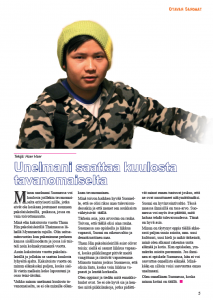
Minun unelmani Suomessa voi kuulostaa tavanomaiselta erityisesti niiden mielestä, jotka eivät ole koskaan joutuneet asumaan pakolaisleirillä, paikassa, jossa on vain toivottomuutta.
Minä elin kaksitoista vuotta Tham Hin pakolaisleirillä Thaimaassa lähellä Myanmarin rajaa. Olin seitsemänvuotias, kun pakenimme perheen kanssa sisällissotaa, jossa isä taisteli noin kolmekymmentä vuotta.
Asuin kaksitoista vuotta pakolaisleirillä. Jonkun mielestä se saattaa kuulostaa lyhyeltä ajalta. Kaksitoista vuotta on minun elämässäni paljon, koska vietin siellä melkein koko lapsuuteni ja osan teini-iästäni.
Vaikka minun unelmani kuulostaa tavanomaiselta, se ei ole minulle ollenkaan tavanomainen. Minä toivon kaikkea hyvää Suomelle, että se olisi rikas maa tulevaisuudessakin ja että monet sen asukkaista viihtyisivät täällä.
Tärkein asia, jota arvostan on rauha. Toivon, että täällä olisi aina rauha. Suomessa saa opiskella ja liikkua vapaasti, Suomi on oikeusvaltio ja demokraattinen maa.
Tham Hin pakolaisleirillä asiat olivat toisin: siellä ei saanut liikkua vapaasti, koska piikkilangat pitivät meitä vangittuna ja riistivät vapautemme. Minusta tuntuu joskus Suomessa, että olisin lintu, koska voin liikkua vapaasti ja lentää korkealla.
Olen oppinut ja tiedän mitä ennakkoluulot ovat. Se ei ole hyvä asia ja kenties ne piikkilangat, jotka ennen pidättelivät minua ovat nyt muuttuneet näkymättömiksi.
Suomi on hyvinvointivaltio. Tässä maassa ihmisillä on tasa-arvo. Suomessa voi myös itse päättää, mitä haluaa tehdä tulevaisuudessa. Tämä on hyvä asia.
Minun on täytynyt oppia täällä ahkerasti paljon uusia asioita, mm. uusi kulttuuri, uusi kieli ja mikä tärkeintä, minä olen alkanut rakentaa uutta elämää ja kotia. Kun opiskelen, ymmärrän asioita paremmin. Jos ihminen ei opiskele Suomessa, hän ei voi saavuttaa onnellista elämää. Minäkään en silloin voisi saavuttaa omaa unelmaani.
Olen onnellinen Suomessa, koska minun kotini on täällä.
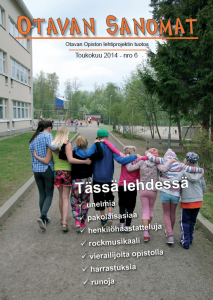
*Hser Hser, monikulttuurisen peruskoululinjan opiskelija 2013-2014. Otavan Sanomat on Otavan Opiston opiskelijoiden lehtiprojektin tuotos.
On selvää, että kun ihminen muuttaa uuteen kotimaahan yksi tärkeä osa hänen kotoutumistaan on suomen tai ruotsin kielen oppiminen. Kielitaito on tärkeä, koska se antaa eväitä ponnistaa eteenpäin opiskelussa ja työelämässä.
Joillekin maahanmuuttajille vakuutetaan, että jos opit suomea voit saavuuttaa kaiken mitä haluat. Annetaan ymmärtää, että se on passi menestykseen Suomessa.
Toinen iso haaste maahanmuuttajille on suomenkielen kurssien tarjonta. Joissakin kunnissa maahanmuuttajat pääsevät melkein heti opiskelemaan kieltä, kun taas toisissa se voi kestää pitempään, jopa kuukausia. Opetuksessa on varmasti myös eroja.
Vaikka kielen oppiminen on erittäin tärkeä asia uusille maahanmuuttajille, se ei ole ainoa osatekijä Suomeen kotoutumisessa. On paljon muita, yhtä tärkeitä asioita kuin kielenoppiminen, jotka pitää huomioida.
Ihmiset ovat yksilöitä ja siinä on paljon eroja, kuinka hyvin jotkut maahanmuuttajat sopeutuvat uuteen kotimaahansa. Uudelta asukkaalta vaaditaan paljon. Hänen on oltava oma-aloitteinen, reipas, ahkera ja mikä tärkeintä, hänen on luotettava itseensä. Samalla tarvitaan kannustava ilmapiiri ja yhteiskunta, jossa on hyväksyntää, kunnioitusta ja tasavertaisia mahdollisuuksia.
Integraatioon ja kaksisuuntaiseen kotoutumiseen liittyy paljon haasteita, jotka varmasti pystymme ratkaisemaan yhdessä. Yksi iso kysymysmerkki joillekin maahanmuuttajille on se, mitä tarkoitetaan riittävällä suomen kielen taidolla töitä haettaessa.
Mikä on riittävää riippuu paljon ammatista. Jotkut ammatit vaativat enemmän suomen kielen taitoa kuin toiset. Esimerkiksi lääkärit tarvitsevat hyvän kielitaidon työskennellessään potilaiden kanssa. Toisaalta esimerkiksi maalarit, siivoojat tai rakennustyöntekijät eivät tarvitse niin hyvää kielitaitoa.
Mielestänne perheenyhdistyminen on toinen erittäin tärkeä seikka, kun puhutaan kotoutumisesta ja kun rakennetaan uutta kotia uudessa maassa. Kun perheesi asuu kanssasi samassa maassa, sekä elämä että kotoutuminen helpottuvat merkittävästi.
Eläminen ilman perhettä on tuskallista ja surullista, erityisesti uudessa maassa.
Hyvään kotoutumissuunnitelmaan kuuluvat seuraavat asiat: mahdollisuus oppia suomea ja opiskella ammatti, pääsy työelämään ja perheenyhdistäminen. Näissä neljässä asiassa piilee menestyksen avain.
Monet turvapakanhakijat jotka tulevat Suomeen etsivät ja saavat uuden mahdollisuuden elämässä. Ihmisillä, jotka elävät maassa, jossa on sotaa ei ole paljon tulevaisuutta, vain pelkoa ja epätoivoa.
Pakolaisten tiet Suomeen ovat monenlaisia. Jotkut saattavat tulla suoraan turvapaikkahakijana, kun taas toiset tulevat kiintiöpakolaisina tai pääsevät Suomeen perheenyhdistämisen perusteella.
Viime vuonna Suomeen tuli 3 129 turvapaikanhakijaa. Tässä on pieni nousu edelliseen vuoteen verrattuna, jolloin määrä oli 3 026, Maahanmuuttoviraston tietojen mukaan. Suomi ottaa joka vuosi 750 kiintiöpakolaista.
Kotoutuminen ja sopeutuminen uuteen kotimaahan saattaa olla vaikeaa jollekin ja helpompaa toisille. Vaikein haaste monelle maahanmuuttajalle on uuden kielen oppiminen, maan tavat ja kulttuuri. Hyvä suomen tai ruotsin kielen taito on tärkeä, jos uusi asukas haluaa menestyä Suomessa.
On myös muita tärkeitä seikkoja jotka edistävät kotoutumista. Tärkeää on myös koulutus ja ammatti, työllistyminen, verkostoituminen sekä yhteiskunnan hyväksyntä.
Monen pakolaisen elämä on ollut vaikeaa ennen Suomeen muuttamisesta. Esimerkiksi kiintiöpakolaiset, jotka tulevat Thaimaasta ja ovat alun perin Myanmarista, ovat eläneet monta vuotta pakolaisleireissä ennen tuloaan maahamme. Eräät heistä ovat eläneet niin kauan pakolaisleirissä etteivät tunne vanhempiensa kotimaasta.
Jotkut kiintiöpakolaiset saattavat odottaa 12 vuotta pakolaisleirissä ennen kuin pääsevät uuteen kotimaahan.
Kun astu pakolaisleirissä, asut ei-kenenkään maassa. Pakolaisleirillä ei ole tulevaisuutta. Siellä ei saa liikkua vapaasti leirin ulkopuolella.
Maailmankatsomus on hyvin suppea, koska elämän kuuluu vain pakolaisleiri ja lähimmät asukkaat, jotka odottavat kärsivällisesti muuttoa toiseen maahan.
Molemmat olemme kiitollisia siitä, että olemme päässeet Suomen ja pystymme opiskelemaan ja liikkumaan vapasti. Piikkilangat tai aseet eivät pidättele meitä enää vangittuna.
Kiitoksia Suomi.
Tämä kirjoitus julkaistiin Otavan Sanomissa (toukokuu 2013). Hser Hser ja Mustafa Isman ovat Otavan Opiston monikulttuurisella peruskoululinjalla.